
Search Results for: demo | Momvity

Joint Genesis Review: An Honest Beginner’s Guide to the Mobilee Joint Supplement

Affiliate Notice: Some of the links included in this article are affiliate links. If you click on one of these links and make a purchase, we may earn a small commission. This will not result in any additional cost to you.

Suppose you plan to watch a football match once a week; you are sitting on a folding chair by the pitch with your child on your lap. Before the match—or even the half-time—is over, you begin to feel pain in your knees. You might start to wonder why these issues seem to be getting worse over time, and you may ask yourself: what should be done to address them?
To address these issues, a supplement that has gained significant popularity is known as Joint Genesis. But can this supplement actually deliver the results claimed in its advertisements? This discussion is intended specifically for those who are unsure about where to begin, how to source products, or how to understand the ins and outs of returns and return policies. If you have never purchased joint pain supplements before, you will need to familiarise yourself with the product labels, usage instructions, and the official website; however, if you are new to this, you might find the process somewhat confusing.

Below, we will discuss in detail ‘Joint Genesis’ by BioDynamix. I will discuss how this supplement works, what its ingredients are, and also cover various scientific studies related to it. Along with this, I will try to provide precise information regarding its price, the target audience for whom such supplements are created, and the situations in which one should avoid using them. Once you have finished reading this entire discussion, you will be able to decide for yourself whether or not you need to take the supplement.

Joint Genesis Review in 60 Seconds

If you only have a minute between school pickup and dinner, here is the short version of this joint genesis review.

Question Short Answer 
What is it? A daily joint supplement from BioDynamix 
Main ingredient Mobilee®, a hyaluronic acid matrix 
How do you take it? One capsule per day 
Is the finished formula clinically tested? No independent trial of the full product was found 
Price range $39 to $59 per bottle, depending on package 
Refund window 180 days, as advertised 
Who should ask a doctor first? Anyone pregnant, breastfeeding, on medication or with a diagnosed condition 

What Is Joint Genesis?

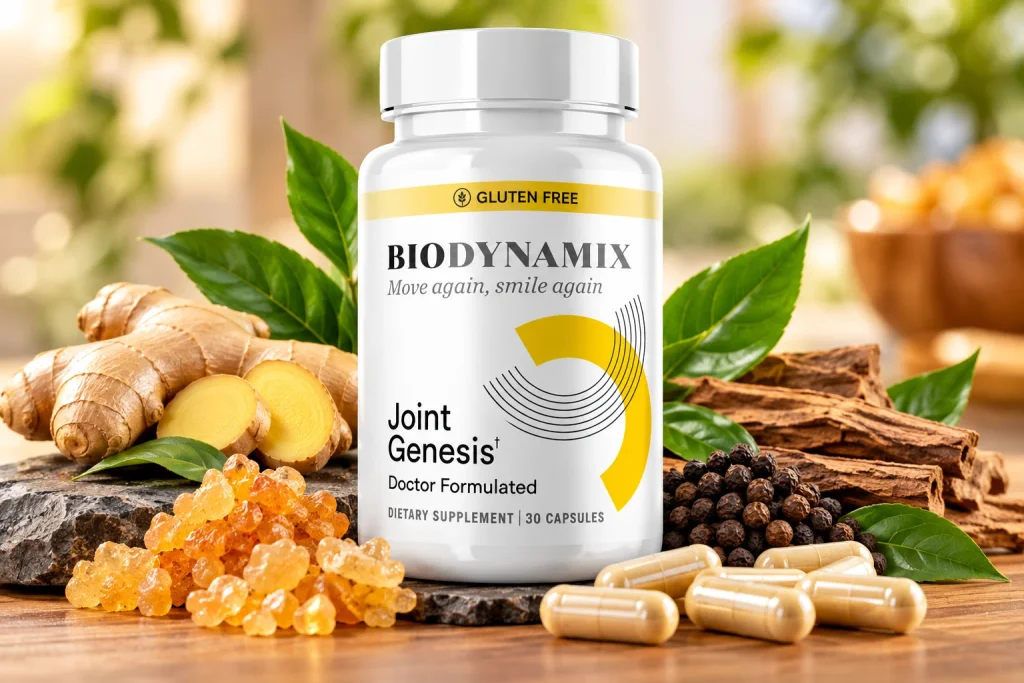
Joint Genesis is a dietary supplement produced under the Biodynamix brand. This supplement has been specially formulated to provide relief from joint pain in humans, and it comes with a tagline that says: “Move again, smile again.” Each bottle of this supplement contains 30 capsules, to be taken at a rate of one per day according to specific instructions; each bottle is designed to last for one month.

Its official site explicitly states that the product is gluten-free and formulated by doctors. This same trend has been observed in several advertisements; however, in none of the products we have handled or reviewed does it appear that any doctor is involved. No clinical test reports are available yet; therefore, this can be considered merely a one-sided promotional claim within the context of marketing—it is insufficient to substantiate the quality or effectiveness of the supplement.

How Joint Genesis Claims to Work

A Beginner’s Guide to Joint Fluid

Every joint in your body is contained within a fluid-filled capsule known as a synovial capsule. Every joint, including your knees and hips, remains filled with this fluid. You could describe this as a factor that contributes to the joint’s own regression. Let’s clarify this with a simple example: just as grease is used to ensure a bicycle chain moves smoothly, a similar thick, slippery substance allows bones—which are covered in cartilage—to glide over one another with minimal friction. This is why, initially, you do not experience joint pain.

Hyaluronan is marketed in an acid form; it is one of the primary factors responsible for the gel-like consistency of synovial fluid. Researchers have previously demonstrated, through numerous studies, that the substance hyaluronan plays a crucial role in maintaining the health of joints.

Where the Claim Stops

Here is the part sales pages tend to skip. Knowing that hyaluronan matters inside the joint is very different from proving that a swallowed capsule increases it by a meaningful amount. Your digestive system breaks down much of what you eat before it ever reaches a joint.

So the idea behind Joint Genesis is reasonable, but it is still an idea. A fair joint genesis review has to say clearly that the finished product has not been shown to raise joint fluid levels in buyers.

Read more: The Brain Song Reviews for Busy Moms

Joint Genesis Ingredients, Explained Simply

Below is the Supplement Facts panel listed for one capsule. Compare it with the bottle you receive, because manufacturers can update formulas.

Ingredient Amount What It Is in Plain English 
Ginger powder (root) 200 mg The kitchen spice, studied for joint discomfort 
French maritime pine bark extract 150 mg A tree bark extract rich in plant antioxidants 
Boswellia serrata extract (65% boswellic acid) 100 mg A resin known as Indian frankincense 
Mobilee® hyaluronic acid matrix 80 mg Hyaluronic acid blended with polysaccharides and collagen 
BioPerine® black pepper extract 5 mg Piperine, added to support absorption 

The capsule itself is made from cellulose, with magnesium stearate and silica as other ingredients.

Why Mobilee Gets Top Billing

Mobilee is a branded ingredient from the Spanish company Bioiberica. According to them, it is extracted from a specific part of a rooster’s anatomy and contains hyaluronic acid, along with other polysaccharides and collagen—a highly effective combination of ingredients. And if you follow a vegetarian diet or adhere to similar dietary restrictions, it is very important to be aware of the aforementioned source. Therefore, please be sure to take this into consideration before ordering this supplement.

The Supporting Cast

There has been significant prior research on the use of a specific, high-quality natural extract of Boswellia for various symptoms of osteoarthritis. An interesting source of polyphenols is the bark of the French maritime pine tree. This is a plant compound developed through research for its antioxidant activity. We know that BioPerine primarily aids in the absorption of various substances, but piperine can also significantly alter the mechanisms by which certain medications are absorbed.

What Does Science Say? A Beginner-Friendly Look

This is the most important part of any joint genesis review, because it separates what is known from what is marketed. A common beginner mistake is seeing a study next to an ingredient name and assuming the whole product has been proven. Let’s look at what the research actually covers.

Study or Review What Was Tested What It Means for You 
Mobilee yogurt trial 40 adults with mild knee discomfort ate Mobilee in yogurt for 90 days Some knee-strength measures improved vs. placebo, in a food form 
NIH (NCCIH) Boswellia summary Several small studies Encouraging hints, but larger trials are needed 
Cochrane review of herbal therapies 49 studies with 5,980 people Results depend heavily on the extract and study quality 
Oral hyaluronic acid trial 60 adults with early knee osteoarthritis Applies to that regimen, not to Joint Genesis 
The finished Joint Genesis capsule No independent trial found No proven success rate exists 

How to Read a Study Like a Smart Shopper

Ask four simple questions whenever a product quotes research. Was the ingredient in the same form? Was the dose the same? Did people take it for the same length of time? Were the participants similar to you?

Take the Cochrane review as an example. Two studies with 85 people found that an enriched Boswellia extract at 100 mg over 90 days produced an average 17-point drop on a 0 to 100 pain scale compared with placebo. That sounds impressive, but it applies to that specific extract under trial conditions. It doesn’t tell you what Joint Genesis will do for you.

It’s also worth knowing that much of the Mobilee research was supported by Bioiberica, the company that makes it. Industry-funded studies are normal in this field, but independent confirmation carries more weight.

How Joint Genesis Compares With Other Joint Options

Beginners often wonder whether a supplement is even the right first step. No joint genesis review is complete without that context, so here is how it fits next to other common choices.

Option What You Do Cost Evidence Snapshot 
Joint Genesis Take one capsule daily 39–59 per month Ingredient studies only; finished formula untested 
Glucosamine and chondroitin Take capsules daily Usually lower monthly cost Major U.S. rheumatology guidance advises against them for knee and hip osteoarthritis 
Regular exercise and strength work Walk, stretch, build leg muscles Free or low cost Strongly recommended by arthritis guidelines 
Weight management Gradual, steady changes Varies Strongly recommended for knee and hip osteoarthritis 
Doctor-guided treatment Medical evaluation and care Varies with insurance The right path for diagnosed conditions 

The honest takeaway is that Joint Genesis is not competing with exercise. Movement and strength work have the strongest support for joint comfort. A supplement, if you choose one, belongs alongside those habits rather than in place of them.

What to Expect in Your First 90 Days

Supplement results, when they happen, are usually slow and subtle. Here is a realistic way to think about the first three months.

Timeframe What’s Realistic What to Do 
Weeks 1–2 Most people notice little or nothing Build the habit and watch for stomach upset 
Weeks 3–6 Some people notice small changes; many don’t Keep a simple comfort journal 
Weeks 7–12 A fair point to judge whether it’s worth continuing Compare your notes with week one 

Keep a Simple Joint Journal

In today’s discussion, we will examine the ingredients of Joint Genesis and what scientific research says about their efficacy. We will also analyse user reviews to determine whether individuals have experienced any benefits after using the supplement, or if there has been little to no change in their condition. Additionally, we will cover details such as pricing, purchasing terms, and other important aspects. However, should one decide to purchase a supplement based solely on the positive experiences of others? To answer this, it is necessary to look beyond promotional material and consider reliable information. Therefore, the purpose of this article is not to advertise Joint Genesis, but rather to help you make an informed, realistic decision—based on its potential benefits, scientific evidence, and cost—regarding whether it is the right fit for your specific needs.

Pros and Cons of Joint Genesis

What We Like What Gives Us Pause 
Simple one-capsule routine No independent trial of the finished product 
Clear Supplement Facts with listed doses Mobilee comes from rooster comb, so it isn’t vegetarian 
Focus on joint fluid is different from typical formulas Single bottle costs more than many joint supplements 
Long advertised 180-day refund window “Doctor Formulated” isn’t explained 
Gluten free Piperine and herbs may interact with some medications 

Joint Genesis Price: Which Package Makes Sense?
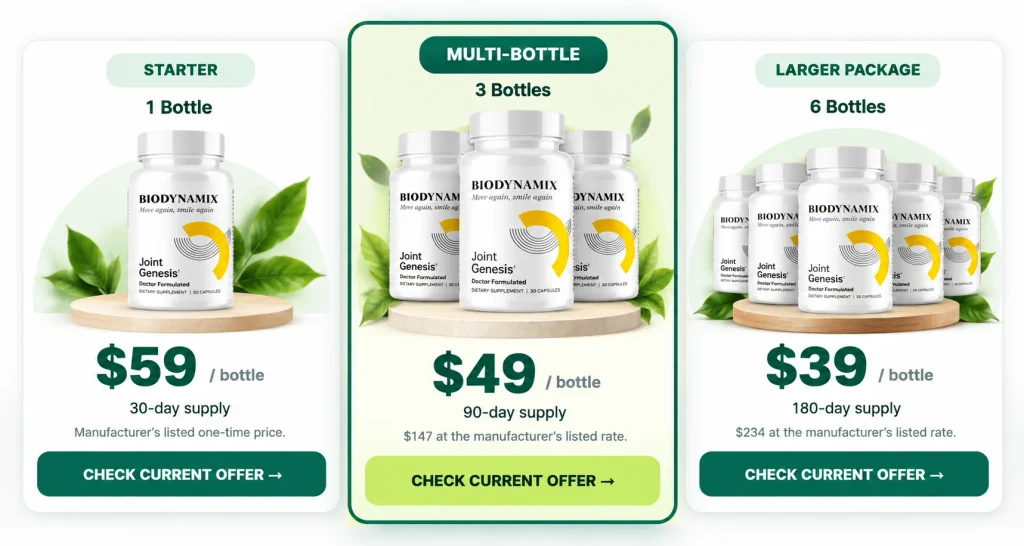
These one-time prices were listed by the manufacturer at the time of writing.

Package Per Bottle Total Supply 
1 bottle $59 $59 30 days 
3 bottles $49 $147 90 days 
6 bottles $39 $234 180 days 

For a first-time buyer, the three-bottle option lines up neatly with the 90-day test period described above. The six-bottle package has the lowest per-bottle cost, but it’s a bigger upfront commitment for a product you haven’t tried. Whichever you choose, check the final total at checkout and confirm whether you’ve selected a one-time purchase or a recurring subscription. Taxes, shipping and discounts may differ from these figures.

Understanding the 180-Day Guarantee

BioDynamix advertises a six-month money-back guarantee that includes an empty-bottle policy. Before ordering, read the exact rules: the refund deadline, whether bottles must be returned, who pays return shipping and how to contact support. Save your order confirmation email in a folder you can find later, because you’ll need it for any refund request.

Side Effects and Safety: Who Should Talk to a Doctor First

“Natural” doesn’t mean risk-free. Ginger, Boswellia, pine bark and piperine can cause side effects in some people and may interact with medicines, especially those where absorption or bleeding risk matters.

Please check with a healthcare professional before taking Joint Genesis if you are pregnant, trying to conceive or breastfeeding, if you take prescription medication, if you have a diagnosed medical condition, or if you have surgery coming up. As with any supplement, store the bottle well out of reach of children.

Some joint symptoms need medical attention rather than a supplement. Pain that keeps getting worse, noticeable swelling, warmth, redness or a sudden loss of movement should be checked by a doctor. Joint Genesis is a dietary supplement, not an established treatment for arthritis, and it shouldn’t replace any care your doctor has prescribed.

Our Verdict: Is Joint Genesis Worth Trying?

After examining the research behind this supplement and reading genuine reviews of ‘Joint Genesis,’ it is clear that customer feedback is mixed. Some users reported an improvement in their physical condition, while others stated that it failed to provide any such benefit—and, furthermore, that they encountered significant issues when attempting to utilise the refund policy. Joint Genesis is a capsule-form supplement that is easy to use on a daily basis, and it has been formulated with a focus on ingredients that support mobility. This substance has been researched previously, and somewhat positive results were obtained. However, this supplement has not undergone any independent clinical trial testing.

When you’re ready, you can Check the Current Joint Genesis Offer → and confirm the latest price and package. Affiliate link · Pricing and terms are confirmed at checkout · Individual results vary.

Health note: This article is for general information only and is not medical advice. Dietary supplements are not intended to diagnose, treat, cure or prevent any disease. Please speak with a qualified healthcare provider about any health concerns.

Frequently Asked Questions

Is this joint genesis review based on personal testing?
No. This review is based on the manufacturer’s product information, the Supplement Facts label and published research on the ingredients. We did not run a clinical test of the product.

What is the main ingredient in Joint Genesis?
The main ingredient is Mobilee®, a hyaluronic acid matrix that also contains polysaccharides and collagen. Each capsule lists 80 mg.

Can Joint Genesis replace my arthritis medication?
No. It’s a dietary supplement, not an arthritis treatment. Never stop or change prescribed medication without talking to your doctor.

Is Joint Genesis safe during pregnancy or breastfeeding?
Ask your OB, midwife or doctor before using it. The formula includes several herbal ingredients, and their safety should be reviewed by someone who knows your health history.

Is Joint Genesis sold in stores?
BioDynamix promotes buying through its official sales page. If you see it elsewhere, confirm the seller is legitimate and compare the label with the official one.

How long should I try Joint Genesis before deciding?
A fair trial is about 8 to 12 weeks, which fits within the advertised 180-day refund window. Keeping a short weekly journal makes that decision much easier.
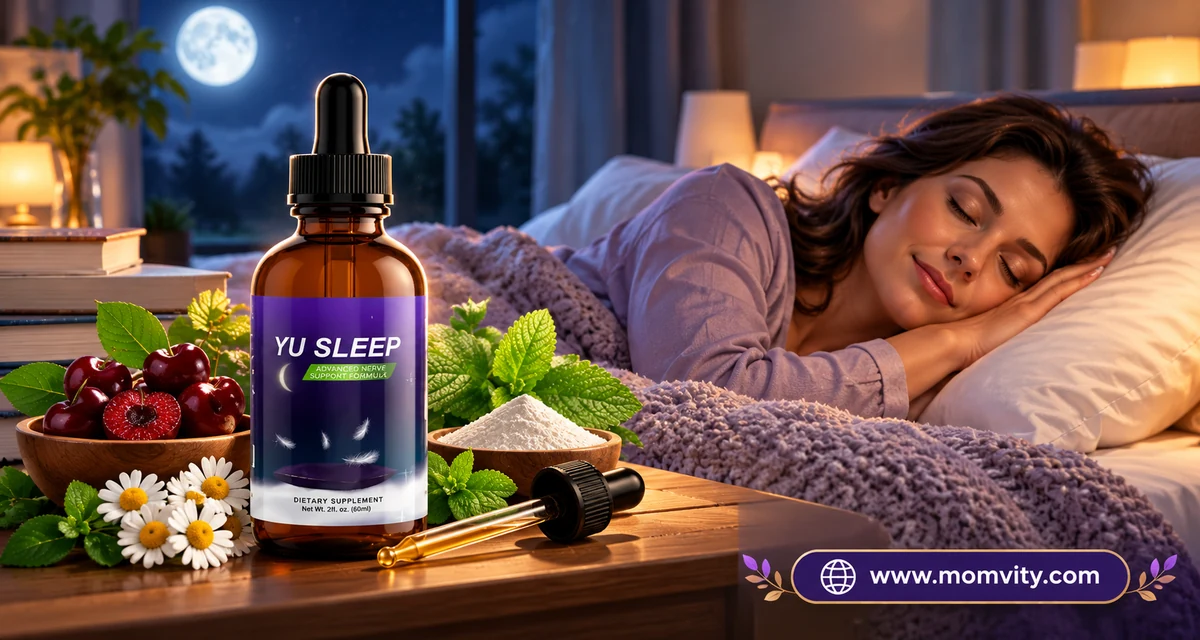

Yu Sleep

YU SLEEP and the Tired Mom: An Honest Look at the Liquid Bedtime Formula

If you were to ask parents what they miss most about their life before having children, many would say: an uninterrupted, peaceful night’s sleep. Between late-night feedings, waking up at 3:00 AM to tend to a child, managing school runs, and balancing work, many mothers suffer from a chronic lack of sleep for years. Even when the rest of the family is fast asleep, a mother’s mind often continues to race. In the midst of such exhaustion, if you come across an advertisement for a product that promises a good night’s sleep with just a few drops, can it truly provide relief? It is this very question that sparks interest in YU SLEEP.

This article explores the ‘YU SLEEP‘ product from a parent’s perspective, providing various insights into it; it also details the materials used in its construction and explains their potential impact on sleep. You will learn in detail when you should use this product and when you should avoid it. Additionally, detailed information will be provided on how to use the product during pregnancy, along with safety precautions and the importance of keeping it out of the reach of curious children. You can read this article to get comprehensive information, including a full list of products and details regarding their packaging.

However, just because an advertisement highlights only the positive aspects and promises a good night’s sleep, it does not mean that the product will work the same way for everyone or that it is safe for every individual; it is certainly not wrong to consider this.

What YU SLEEP Actually Is

The aforementioned supplement is a liquid dietary supplement that is administered using a dropper and is marketed in a bottle. The creators of this product or supplement claim that taking it regularly will help establish a nighttime sleep routine. However, if you consider this to be a medicine, you are completely mistaken, as it has not been marketed as a treatment for sleep problems. You can purchase this product directly from its official page via ClickBank, without any hassle. When purchasing from the product’s official website, be sure to familiarize yourself with the details regarding bonuses and the refund process, in accordance with the terms and conditions stated on the page at the time of your order.

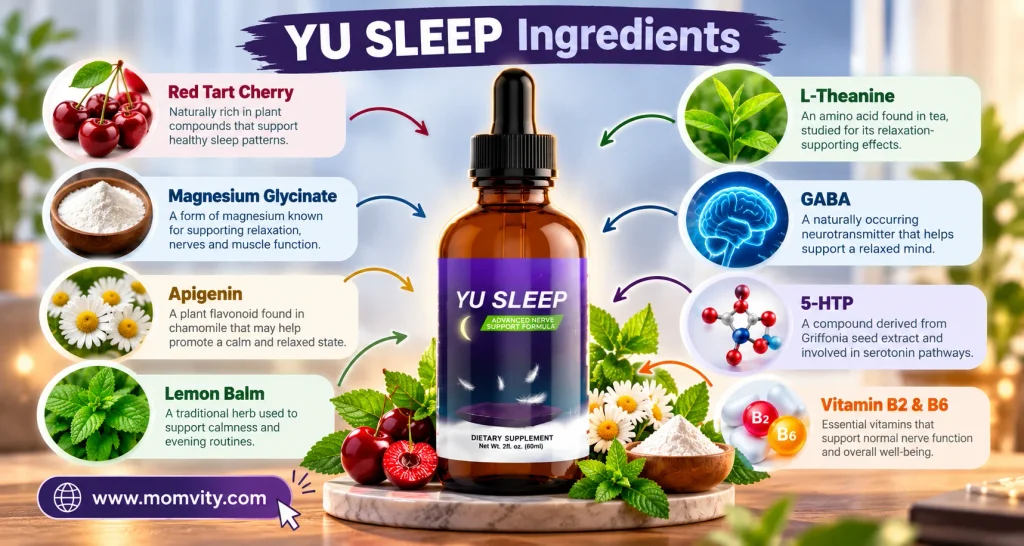
What Is in One 2 mL Serving Amount 
Melatonin 0.9 mg 
Vitamin B2 0.5 mg 
Vitamin B6 0.5 mg 
Proprietary blend 637 mg total 

The proprietary blend includes red tart cherry concentrate, magnesium glycinate, apigenin, lemon balm extract (Melissa officinalis), L-theanine, GABA and 5-HTP from Griffonia seed extract. The individual amount of each of these seven ingredients is not published.

Why Moms End Up Searching for Sleep Help

Lack of sleep during motherhood is rarely due to a single cause. In the first few months, mothers often have to wake up repeatedly to feed their newborns or soothe them when they cry. However, even as a baby’s sleep patterns evolve over time, a mother may continue to struggle with her own sleep. If you find yourself unable to sleep even when your baby is resting soundly through the night, what could be the reason?

People today are increasingly prone to waking up in the middle of the night—sometimes due to worries about work—which makes it difficult for them to fall back asleep. This issue can also be triggered by mental stress. Additionally, hormonal changes following childbirth can lead to sleep disturbances.

That difference matters when thinking about a product like YU SLEEP. A supplement cannot do anything about a baby who needs feeding at night, and it should never be used in a way that makes it harder for you to wake when your child needs you. Where it might fit, for some mothers who are not pregnant or breastfeeding and have no medication conflicts, is the “tired but wired” problem, when the body is exhausted but the mind will not settle.

Check Current VisiFlora Offer

A Closer Look at the YU SLEEP Ingredients Through a Parent’s Lens

The formula can be easier to understand if you think of its ingredients in three loose groups, each linked to a different side of sleep research. All of the research mentioned below refers to individual ingredients, not to the finished YU SLEEP product.

Melatonin and Your Body Clock

Melatonin is a hormone the body makes as evening light fades. It acts more like a signal telling your internal clock that night has arrived than a knockout sedative. The National Center for Complementary and Integrative Health notes that melatonin has its clearest support for body-clock problems such as jet lag and delayed sleep timing, while the benefit for general insomnia in adults appears to be small.

The 0.9 mg serving in YU SLEEP is at the lower end of the over-the-counter range, where many products contain anywhere from 1 mg to 10 mg. For a parent, a lower dose may sound appealing because higher doses are more often linked with next-morning grogginess in some people. Still, any melatonin product can make you drowsy, which is a real consideration if you are the one responding to a child during the night.

The Wind-Down Ingredients

Lemon balm is a medicinal herb with a long-standing tradition of use as a soothing tea. Several studies have already been conducted on certain extracts of this plant in relation to its calming and sleep-inducing effects—effects that are largely comparable to those of valerian. This supplement is formulated using L-theanine—an amino acid found in green and black tea—which has been used in research to promote relaxation without causing excessive drowsiness. And in each study, approximately 200 mg of L-theanine was used.

We should also be aware that GABA serves as the brain’s primary calming signal, and this has been demonstrated even in small-scale studies involving oral GABA supplements. Although researchers have not yet been able to determine how much of the tablet reaches the brain after it is taken orally.


Research on magnesium and sleep has produced mixed results, much of it in older adults.

The Pathway Ingredients

Tart cherry naturally contains small amounts of melatonin, and a few small studies have looked at tart cherry juice in relation to sleep. 5-HTP is the building block your body uses to make serotonin, which is later converted into melatonin. Vitamin B6 helps with the step that turns 5-HTP into serotonin, and vitamin B2 helps the body activate vitamin B6. On paper, this is a logical chain.

The Proprietary Blend Question

Because the 637 mg blend is shared between seven ingredients with no individual amounts listed, it is impossible to tell whether any one of them reaches the amounts used in research. If studies on L-theanine often use around 200 mg, for example, the label alone cannot tell you whether this formula gets anywhere near that. The same uncertainty applies to magnesium and lemon balm.

That does not prove the product will not help anyone. It simply means you cannot judge its likely effect by reading studies on the separate ingredients. The one sleep-related number you can rely on is the 0.9 mg of melatonin.

Pregnancy, Breastfeeding and YU SLEEP

This is the section many general reviews skip, and it is the one that matters most for a parenting audience.

Pregnant and breastfeeding women should talk to a doctor before using YU SLEEP. Melatonin, 5-HTP, GABA and several of the herbal ingredients have not been well studied in pregnancy or during breastfeeding, and some ingredients may pass into breast milk. The lack of safety data is reason enough to treat this as a conversation for your obstetrician, midwife or pediatrician rather than a decision to make alone. The fact that a product is described as plant-based or natural does not establish that it is safe during pregnancy or nursing.

Sleep trouble in pregnancy and the postpartum period also deserves its own attention. Discomfort, heartburn, restless legs, frequent urination and anxiety can all disturb sleep while pregnant, and new parents can develop postpartum depression or anxiety, which often shows up first as an inability to sleep even when the baby is asleep. If you are lying awake with racing worries, feeling persistently low or hopeless, or not recognizing yourself, please speak with your healthcare provider. That is a medical concern, not a supplement problem.

When You Are the Night-Time Parent

Even if you are not breastfeeding, think honestly about your night role before taking any sleep supplement. If you are the parent who hears the baby monitor, comforts a toddler after a bad dream or checks on a sick child, anything that makes you groggier could affect how quickly and clearly you respond.

Infant safe-sleep guidance from the American Academy of Pediatrics specifically warns against bed-sharing when a parent has taken anything that causes drowsiness. If your baby sometimes ends up in your bed during the night, that is an important reason to avoid sleep supplements or to talk it through with your pediatrician first. Some couples handle this by deciding that only the off-duty parent on a given night would consider a supplement, but that is a personal decision best made with medical advice.

Keep YU SLEEP Out of Reach of Children

A small dropper bottle can look a lot like children’s medicine, and liquids are easy for a child to drink quickly. The Centers for Disease Control and Prevention has reported a sharp rise in accidental melatonin ingestions among young children over the past decade, many of them involving products found at home.

Store YU SLEEP high up, out of sight and away from the bathroom counter or bedside table, close the cap fully after each use, and never refer to any supplement as a treat or “sleepy juice” in front of children. If a child swallows some, call your local poison control center or seek medical help right away. The product is designed for adults and should not be given to children.

Medications and Health Conditions to Think About

Sleep deprivation during motherhood is rarely the result of a single cause. In the first few months after a baby is born, mothers often have to wake up repeatedly to feed their infant or soothe them when they cry. Even as the baby’s sleep patterns evolve over time, the mother may continue to struggle with sleep. If you find yourself unable to sleep—even when your baby is resting soundly through the night—what could be the reason?

In fact, you should avoid anything that might impair your ability to wake up when your baby needs you. For mothers who are not pregnant, not breastfeeding, and for whom there is no risk of adverse interactions with other medications, it is important to carefully evaluate the underlying causes of their sleep issues and the safety of the product before making a decision. After all, the reasons why the mind remains restless—even when the body is exhausted—can vary significantly from person to person.

Who YU SLEEP May Suit and Who Should Pass

May Be Worth Discussing With Your Doctor If You Probably Not the Right Choice If You 
Are not pregnant or breastfeeding Are pregnant, trying to conceive or nursing without medical approval 
Struggle mainly to switch off at night Take antidepressants or serotonergic medicines without medical advice 
Prefer a liquid over capsules Need to wake fully and quickly for a baby or child at night 
Want a lower melatonin dose Sometimes share your bed with an infant 
Are comfortable with an undisclosed blend Want every ingredient amount clearly listed 

How YU SLEEP Is Meant to Be Used

The manufacturer’s published directions are to take 2 mL, about two full droppers, around 30 minutes before bedtime, or to follow the directions printed on the bottle. If the label you receive differs from information online, the bottle’s directions should take priority.

For a mom, timing matters more than many people realize. Taking it at the same time each evening, once the children are settled and you are actually ready for bed, makes more sense than taking it early and then staying up folding laundry. Melatonin works best alongside darkness, so dimming lights and putting your phone away fits naturally with the 30-minute window.

Small Habits That Help Tired Parents Sleep

No supplement can replace the basics, and for many mothers these simple changes make a bigger difference than any product.

Try to keep a fairly regular bedtime, even on weekends, and protect the last half hour before bed from work emails and social media. Cut off caffeine by early afternoon, since the coffee that rescues you at 3 p.m. may still be working at 11 p.m. A short “brain dump” before bed, writing tomorrow’s to-do list on paper, can quiet the mental replay that keeps many parents awake. Keep the bedroom cool, dark and quiet as far as family life allows. If you have a partner, sharing night duties on a rota can give each of you some protected stretches of sleep, which often helps more than anything taken from a bottle.

YU SLEEP Cost and What It Means for a Family Budget

Previously published offers listed the following packages. These are historical reference prices only, and the current price, shipping and any bonuses must be checked on the official offer page before you order.

Package Approximate Supply Previously Published Price Approximate Cost Per Night 
1 bottle About 1 month $69 $2.30 
3 bottles About 3 months $177 $1.97 
6 bottles About 6 months $234 $1.30 

The six-bottle package has the lowest cost per night, but it is a larger upfront spend for a product you have not tried yet. For most first-time buyers, especially those who have never taken melatonin or 5-HTP, starting with a smaller order is the more cautious approach.

The manufacturer’s August 2026 announcement describes a 60-day return period starting from the purchase date. You must contact support for approval before sending anything back, and all bottles from the order must be returned, including used or empty ones. Return shipping costs and any deductions should be confirmed directly with the vendor. Note your purchase date, save your order confirmation and read the terms attached to your specific order, particularly if the checkout offers a subscription. You can review the package options and the link to the current offer on the YU SLEEP review page.

Buying from the official offer page is the safest option, since listings on third-party marketplaces may not be covered by the vendor’s return policy.

YU SLEEP Customer Reviews

Final Thoughts on YU SLEEP for Moms

YU SLEEP is a liquid bedtime formula built around a modest 0.9 mg melatonin dose, vitamins B2 and B6 and a seven-ingredient blend focused on relaxation. The ingredient choices make sense on paper, but the undisclosed amounts in the 637 mg blend and the absence of an independent clinical trial on the finished product mean expectations should stay realistic.

For a mother who is not pregnant or breastfeeding, takes no conflicting medication, is not the one waking for a child at night and mainly struggles to quiet her mind at bedtime, YU SLEEP may be worth discussing with a healthcare provider, with the 60-day return window offering some reassurance. For mothers who are expecting, nursing, taking antidepressants or caring for a baby overnight, the safer path is to speak with a doctor first and focus on routine, support and proper care for any ongoing sleep problem.

This article contains affiliate links, and Momvity may earn a commission at no extra cost to you. It is for general information only and does not replace advice from a qualified healthcare professional.

Frequently Asked Questions

Can I take YU SLEEP while pregnant?

Pregnant women should talk to their doctor or midwife before using YU SLEEP. Several of its ingredients, including melatonin and 5-HTP, have limited safety research in pregnancy. A doctor can help you weigh any risks and look at other causes of poor sleep.

Is YU SLEEP safe while breastfeeding?

Breastfeeding mothers should speak with a healthcare provider before using YU SLEEP. Some ingredients may pass into breast milk, and safety data during nursing are limited. Your doctor or pediatrician is the right person to advise you.

Can YU SLEEP help with postpartum sleep problems?

YU SLEEP has not been studied for postpartum sleep, and it cannot address night feeds or hormonal and emotional changes after birth. Trouble sleeping even when the baby is asleep can be a sign of postpartum anxiety or depression. Please raise it with your healthcare provider.

How much melatonin is in YU SLEEP?

Each 2 mL serving contains 0.9 mg of melatonin, according to the manufacturer’s August 2026 disclosure. This is lower than many over-the-counter melatonin products. Always check the label on the bottle you receive.

Is it safe to take YU SLEEP if I care for my baby at night?

Any supplement that causes drowsiness may make it harder to wake fully and respond quickly. Safe-sleep guidance warns against bed-sharing with an infant after taking anything sedating. Talk to your doctor before using it if you are the night-time caregiver.

Can YU SLEEP be taken with antidepressants?

People taking antidepressants or other serotonergic medicines should consult a healthcare professional first. YU SLEEP contains 5-HTP, which affects serotonin and can interact with these medicines. Melatonin may also interact with several other prescriptions.

Can children take YU SLEEP?

No. YU SLEEP is intended for adults and should be kept out of children’s reach. If a child swallows any, contact poison control or seek medical help right away.

How much does YU SLEEP cost?

Previously published prices were $69 for one bottle, $177 for three bottles and $234 for six bottles. These are historical figures only. Check the official offer page for current pricing, shipping and bonuses.

What is the YU SLEEP return policy?

The manufacturer describes a 60-day return period from the purchase date. You must contact support for approval and return all bottles from the order, including empty ones. Confirm return shipping costs and any deductions with the vendor before sending anything back.

VisiFlora Reviews

VisiFlora Reviews: What Buyers Should Know Before Ordering

It has to be started in a very calm, composed, and clear manner. After working for several hours at a laptop or computer screen, if you look at a wall clock on the other side of the room, the numbers appear somewhat blurred, or it takes a few seconds for them to come into focus. Alternatively, it could be that you are over 40 and now need to wear the glasses—which you previously used only occasionally—all the time. This is precisely the time when many people start looking for eye supplements, so we should read the reviews carefully and gather the relevant information. VisiFlora reviews help people explore these details. VisiFlora is now available in the global market as a vision-enhancing supplement that aims to support eye health from within the body, particularly through the gut. This is creating an unconventional perspective in today’s competitive world; therefore, one must certainly exercise caution regarding this matter.

Today’s discussion highlights three important points in an easy-to-understand format, simplifying concepts that were challenging to comprehend from the supplement’s original pages. There are three main things to examine: the manufacturer’s statements about the supplement, the scientific evidence supporting those claims, and the information that is still missing. For the sake of discussion, we would like to inform you that we have not personally used Visiflora, nor are we speaking from our own personal experience.

What Is VisiFlora?

VisiFlora is a highly effective supplement designed for once-daily use; it is important to remember that it should be taken only once a day. This supplement has been marketed globally as the ’22-in-1 Vision Essential Formula’. This supplement is formulated using 21 ingredients, including well-known eye-health nutrients, various antioxidants, botanicals, and components considered highly beneficial for supporting gut health. The manufacturer’s website highlights four features of the product: non-GMO ingredients, no stimulants, suitability for vegetarians, and processing in a certified facility. 

Detail What the Official Page Says 
Product type Vision and gut-eye dietary supplement 
Format Capsules 
Daily use One capsule daily with a meal and a glass of water 
Formula Marketed as 22-in-1; 21 ingredients are individually named 
Disclosed dose Zinc 11 mg (other amounts not listed on the sales page) 
Dietary claims Non-GMO, stimulant-free, vegetarian-friendly 
Retailer ClickBank 
Billing name ClickBank or CLKBANK*COM 
Subscription Brand says one-time purchase with no auto-ship 
Guarantee 60 days from the date you receive the order 
Clinical trial of the finished formula None published 

The first point that requires our special attention is that the official website lists 21 ingredients used in the product; however, the specific quantities of these ingredients are not clearly indicated—only the quantity of one ingredient has been disclosed. This is a crucial point; in the field of nutritional science, the dosage of the ingredients determines how effective a supplement or medication will be—otherwise, there is no way to gauge its efficacy.

The Gut-Eye Connection Behind the Formula

In most reviews of Visiflora, we have observed a specific mention of the “gut-eye axis”—a concept indicating a unique connection between the gut (the digestive system) and our eyes. However, a particular question might arise in your mind: how could the secret to improving eyesight be linked to the health of the digestive system?

Various studies have demonstrated that the bacteria present in our digestive system play a significant role in disease prevention and are also effective in controlling various types of inflammatory conditions. This is presented as a real-world example within a study; an article published on the PubMed website in 2023 explores how microorganisms in the digestive system can help in treating complex and challenging eye conditions. The research also draws attention to a possible link between the gut microbiome and conditions such as age-related macular degeneration, uveitis, and glaucoma. 

Now, another question that might arise here is: how does this supplement leverage this particular connection? The ‘gut-eye barrier complex’ used in this product does not contain any probiotics; instead, it incorporates various natural extracts, such as antioxidants derived from grape seeds, among others. This antioxidant component provides specific protection to cells against oxidative damage and plays an integral role in various normal bodily functions. However, the mere fact that all these ingredients are mentioned here does not necessarily mean that they can cure various types of eye problems.

Visit For More Review

VisiFlora Ingredients: A Closer Look

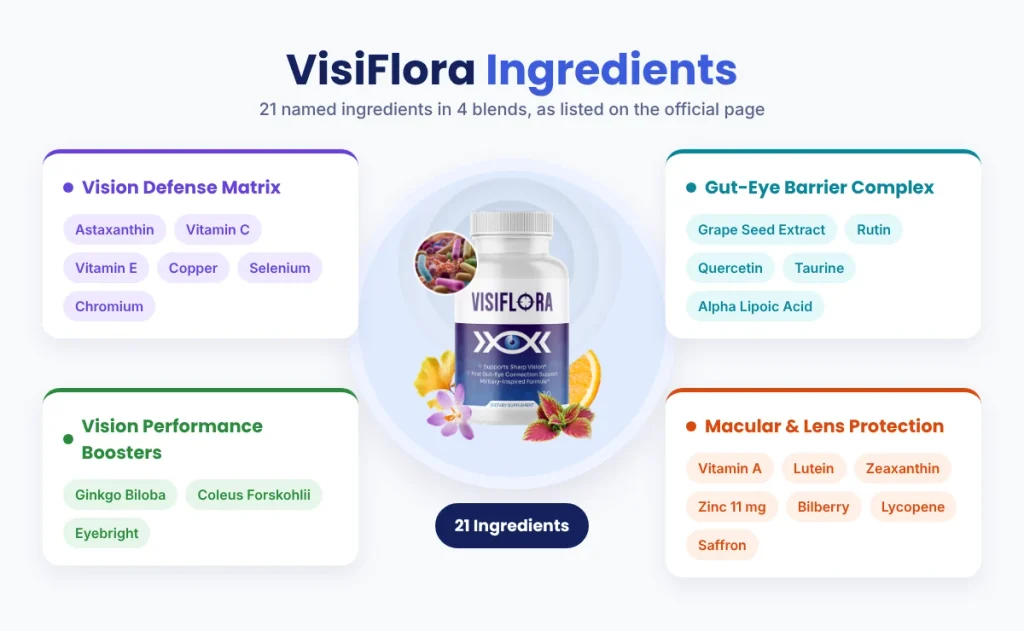
The brand groups its ingredients into four blends. Here is the full named list, with a plain-English note on how each ingredient is usually discussed in research. These notes describe the ingredient in general, not proven effects of VisiFlora.

Blend Ingredients What the Research Generally Looks At 
Vision Defense Matrix Astaxanthin, vitamin C, vitamin E, copper, selenium, chromium Antioxidant defense; vitamin C, E and copper also appear in the AREDS2 formula 
Gut-Eye Barrier Complex Grape seed extract, rutin, quercetin, taurine, alpha lipoic acid Bioflavonoids and antioxidants studied for vascular and cellular support; taurine is abundant in the retina 
Vision Performance Boosters Ginkgo biloba, coleus forskohlii, eyebright Ginkgo has been studied for circulation; coleus forskohlii is studied mainly for eye pressure in eye-drop form; eyebright is a traditional herb with limited modern evidence 
Macular & Lens Protection Blend Vitamin A (beta carotene), lutein and zeaxanthin (from marigold), zinc (11 mg), bilberry, lycopene, saffron Lutein and zeaxanthin are the best-studied macular pigments; saffron has small trials in early macular degeneration; bilberry evidence for night vision is mixed 

The strongest names on this list are lutein, zeaxanthin, zinc and the antioxidant vitamins, because they connect to the large AREDS and AREDS2 trials run by the U.S. National Eye Institute. Most of the ingredients used to create this supplement provide vitamins and natural probiotics that are highly important for eye health; however, some of the claims—such as those regarding the herb eyebright and the fruit bilberry—are not as well-supported. It is a common belief in various folk traditions that these fruits are highly effective for improving night vision; however, no scientific evidence has been found to support this. Therefore, there is no basis to strongly believe this claim.

And since the official website does not specify the quantities for 20 of the 21 ingredients used in the product, it would be neither logical nor wise to base a purchasing decision solely on the reviews found on that site. However, if you still wish to purchase this product, try to understand the ‘supplement facts’ panel provided on it; if necessary, you can also request the full label from the customer support center.

How VisiFlora Compares With the AREDS2 Formula

When people read VisiFlora reviews, they often wonder how it stacks up against the eye formula that doctors actually recommend for certain patients. The following comparison reflects the ingredient amounts used in the National Eye Institute’s AREDS2 study. 

Nutrient AREDS2 Formula VisiFlora (Official Page) 
Vitamin C 500 mg Included, amount not disclosed 
Vitamin E 400 IU Included, amount not disclosed 
Lutein 10 mg Included, amount not disclosed 
Zeaxanthin 2 mg Included, amount not disclosed 
Zinc 80 mg (25 mg also tested) 11 mg 
Copper 2 mg Included, amount not disclosed 
Beta carotene Removed Included as vitamin A source 
Astaxanthin, saffron, bilberry, ginkgo and others Not part of the formula Included 

However, upon reviewing the aforementioned points, we have observed two things. First, the level of zinc used in VisiFlora is significantly lower than that found in the AREDS formulation. A lower dosage does not necessarily mean the supplement is of poor quality; it simply means that one should not consider using VisiFlora as a substitute for the AREDS-2 formulation. Another significant change worth noting is the complete removal of beta-carotene from the original AREDS2 formula. The primary reason for this is that administering this component to smokers—or those who have smoked in the past—increases their risk of developing cancer.

The benefits of this research generally applied to a specific group of people, including those with intermediate-stage age-related macular degeneration (AMD) or those who have developed advanced-stage AMD in one eye. However, we can be certain that this formula helps prevent AMD in people with healthy eyes, and it has not been tested in any published clinical trial.

What VisiFlora Reviews Get Right and What They Leave Out

A lot of what you find online under VisiFlora reviews is not independent. Currently, many websites have published detailed articles about this supplement; among these are several sites that make one-sided claims based solely on reviews, without citing any sources.

However, those who conduct in-depth research are able to provide an accurate understanding of several aspects—for instance, the formula incorporates ingredients that have already been the subject of scientific study. Additionally, purchasing a larger pack will result in a significant reduction in the overall cost. You also get a 60-day money-back guarantee here, which is considered sufficient time for you to make your decision.

However, several issues remain unresolved; for instance, this supplement has not undergone any clinically tested trials. Through various reviews, we have gathered information from customers, some of whom have reported that their issues began to show signs of improvement within just a few days of using the product.

Reading VisiFlora reviews with those gaps in mind will save you from expecting too much.

Who Might Consider VisiFlora

Consider a realistic situation. A 46-year-old accountant spends nine hours a day on two monitors, eats lunch at her desk and rarely eats leafy greens. Her eye doctor has told her that her eyes are healthy, but she wants a simple daily habit that adds lutein, zeaxanthin and antioxidants she is probably not getting from food.

Glare and blur at night often come from early cataract changes, an outdated prescription or dry eye, and all of those need an eye exam first. Supplements may complement medical care, but they cannot replace the care recommended by a healthcare professional. 

Who Should Be Cautious

Some ingredients in VisiFlora may interact with certain medications or affect existing health conditions. For instance, Ginkgo biloba and vitamin E can increase the risk of bleeding—particularly for individuals taking blood-thinning medications like Warfarin or those preparing for surgery. Meanwhile, chromium and alpha-lipoic acid can lower blood sugar levels; therefore, it is essential for those taking diabetes medication to consult a doctor beforehand. Additionally, individuals who currently smoke or have a history of smoking should carefully consider the risks associated with taking supplements that contain beta-carotene.


These signs may suggest retinal damage, such as a tear or detachment, which cannot be corrected by taking capsules. 

How to Take It and What to Track

The brand’s instructions call for one capsule a day, taken with a meal and water. 

If you decide to try VisiFlora, treat the first 60 days as a period for observing your own experience, rather than relying on blind faith. Make a note of a few points at the start so that you can easily tell later on whether any changes have occurred.

1)How much discomfort do you feel in your eyes at the end of the day?

2)How many times a day do you use eye drops?

3)How is your vision when driving at night?

After four and seven weeks, compare your new experiences with the notes you made at the beginning. However, it cannot be stated with certainty that any observed changes are solely due to VisiFlora. Therefore, try to keep your other habits as consistent as possible during the trial period. If you were to simultaneously start taking a new supplement, begin using blue-light-blocking glasses, or adjust your monitor’s brightness, it would become difficult to determine which specific change is responsible for the benefits you are experiencing.

A few common mistakes are worth avoiding. People often skip doses and then judge the product, take it on an empty stomach with only coffee, or expect a stronger prescription to disappear. A supplement cannot reshape the eye or reverse refractive error. Others ignore the 20-20-20 habit, which means looking at something about 20 feet away for 20 seconds every 20 minutes, even though it costs nothing and directly targets screen strain.

VisiFlora Price, Packages and Bonuses

These were the prices on the official sales page when we checked in October 2026. The “$99” reference price and the savings figures are the brand’s own calculations. Prices change, so confirm them at checkout.

Package Bottles Price per Bottle Total Shipping 
Starter 2 $79 $158 Small shipping fee 
Advanced 3 $59 $177 Free US shipping 
Ultimate 6 $49 $294 Free US shipping 

Every package currently includes three digital ebooks. They are downloads, not physical items.

Bonus Brand’s Stated Value What It Covers 
The Vision Protection Manual $97 Daily eye exercises and lifestyle habits for strain, focus and night vision 
The Gut-Eye Nutrition Protocol $67 A 7-day nutrition plan with 21 recipes 
The 48-Hour Vision Jump-Start $50 Quick tips for tired eyes and comfort 

The sales page does not state the number of capsules per bottle. Since the dose is one capsule a day, it is reasonable to ask support how many days one bottle lasts before choosing a package, especially if you plan to test the product within the 60-day window.

Shipping and Refund Policy

According to the official shipping policy, orders ship within 24 to 48 hours after payment is confirmed, and you receive a tracking link by email.

Destination Shipping Fee Delivery Time 
Mainland USA $9.95 or free, depending on quantity 5 to 8 business days 
Alaska and Hawaii $9.95 or free, depending on quantity 12 to 20 business days 
Canada $19.95 12 to 20 business days 
UK and Ireland $19.95 12 to 20 business days 
Australia and New Zealand $19.95 12 to 20 business days 

The refund window starts on the day you receive your package, not the day you submit your order. To get your money back, you must return all the items you received to the warehouse at 19655 E 35th Dr #100, Aurora, CO 80011, USA. Return shipping is at your expense, and the refund will be issued after deducting applicable shipping charges. The policy says a package sent on day 59 is still accepted even if it arrives a few days later.

VisiFlora Pros and Cons

Pros Cons 
Includes lutein, zeaxanthin, zinc and antioxidant vitamins with real research history No published clinical trial of the finished formula 
Simple one-capsule daily routine Only one ingredient dose (zinc 11 mg) disclosed on the sales page 
Vegetarian-friendly, non-GMO and stimulant-free according to the brand Contains beta carotene, a concern for smokers and former smokers 
Lower price per bottle on larger packages Several ingredients may interact with blood thinners or diabetes medication 
60-day refund window from delivery Buyer pays return shipping and refund excludes shipping fees 
Brand states no subscription or auto-ship Not a replacement for AREDS2 when an eye doctor recommends it 

Final Verdict on VisiFlora Reviews

After weighing the official claims against the published science, our reading of VisiFlora reviews is cautiously balanced. VisiFlora brings together several eye nutrients that are worth having in your diet and wraps them in a genuinely interesting research idea, the gut-eye axis. What it does not offer yet is direct evidence that this particular formula improves vision, and the lack of full dose information makes it harder to judge than it should be.

If you are an adult with healthy eyes who wants a convenient nutritional add-on, you have checked the label for interactions, and you understand the refund terms, VisiFlora may be a reasonable product to try for 60 days with clear notes on how you feel. If you have macular degeneration, glaucoma, diabetes-related eye disease or any new vision symptoms, start with your eye doctor, not a supplement.

For the full breakdown of the evidence and the latest offer details, see our main VisiFlora Review. If you decide to buy, you can Check Current VisiFlora Offer. This is a sponsored affiliate link, and we may receive compensation for purchases made through it. VitalWellGuide does not sell VisiFlora, process orders or issue refunds.

Medical Disclaimer: The content of this article is intended for general educational purposes and does not replace advice from a qualified healthcare professional. No dietary supplement is intended to diagnose, treat, cure, or prevent any disease. Check with your doctor or eye care specialist before adding a supplement to your routine, particularly if you take prescription medicines, are pregnant or nursing, or have an existing health issue. 

Frequently Asked Questions

Are VisiFlora reviews trustworthy?
Some may be, but that does not apply to many others. A large share of online reviews come from affiliate sites, and the official testimonials use changed names with results the brand itself says are not typical. Look for reviews that cite independent science and clearly separate brand claims from evidence.

What is VisiFlora supposed to do?
The brand says it supports eye comfort, clarity and overall eye wellness by combining eye nutrients with ingredients tied to the gut-eye connection. These are marketing claims, and the finished formula has not been tested in a published clinical trial.

What ingredients are in VisiFlora?
The sales page names 21 ingredients, including lutein, zeaxanthin, zinc, astaxanthin, vitamins A, C and E, saffron, bilberry, ginkgo biloba, quercetin, taurine and alpha lipoic acid. Only zinc has a disclosed dose, at 11 mg.

Does VisiFlora contain probiotics?
No probiotic strain is listed on the official sales page. The gut-supporting blend features plant compounds and antioxidants, including grape seed extract, rutin, quercetin, taurine, and alpha-lipoic acid. 

Does VisiFlora contain the same formula as AREDS2 supplements?
No. AREDS2 uses specific doses, including 80 mg of zinc and 10 mg of lutein, and leaves out beta carotene. VisiFlora uses 11 mg of zinc, does not disclose its lutein dose and includes beta carotene, so it should not replace AREDS2 if your eye doctor recommended it.

How much does VisiFlora cost?
In October 2026, the official page listed 2 bottles for $158, 3 bottles for $177 and 6 bottles for $294. The two larger packages include free US shipping, while the smaller one adds a shipping fee.

How does the VisiFlora refund work?
The return period lasts 60 days from the date your order is delivered. Customers must cover the cost of returning all items to the Aurora, Colorado warehouse, and shipping fees will not be included in the refund.

Is VisiFlora safe to take with medication?
It may not be for everyone. Ginkgo and vitamin E can raise bleeding risk with blood thinners, chromium and alpha lipoic acid can affect blood sugar, and beta carotene is a concern for smokers. Check with your doctor first if you take any regular medication.

When might you begin to notice the effects?

 The brand says some people notice changes within a few weeks, but that is not a verified or typical result. If you try it, give it a consistent trial within the 60-day refund window and track how your eyes feel.

Is VisiFlora effective for blurry vision, and can it replace eyeglasses?

 No supplement can reverse nearsightedness, farsightedness or the natural loss of close focus with age. Any noticeable increase in blurred vision should be assessed by an eye specialist, while sudden vision changes should never be ignored and require urgent care. 

abusive head trauma in children

The essential points to know about abusive head trauma in children along with its prevention and management

Abusive head trauma is importantly a serious form of abuse and it can happen at any time in the family.It also remains as the potential one to cause severe together with life threatening injury to the child.Abnormal and violent shaking with forceful strikes of the child can raise certain health issues to the child as they remain prone not to tolerate such incidents.

As the neck musculature is weak in comparison with large head size may make them more susceptible to acquire head trauma.That is why it is very essential for you to know the causes,risk factors,warning signs and some effective preventive measures in order to tackle such incidents.That’s why it is mandatory for us to ensure a safe environment for the guardians and care givers of the child.

In this article,we try to cover all the important aspects of abusive head trauma that help make you knowledgeable about the causes,risk factors and preventive measures of abusive head trauma in children.

What is the usual understanding of an abusive head trauma to your child?

Abusive head trauma refers to head, neck or brain injury that happens when someone shakes or hits a baby on their own purpose and it can easily hurt a baby. It only takes 1 or 2 hard shakes to seriously hurt a baby’s brain that result in development of shaken baby syndrome,a type of abusive head trauma.

Babies have large and heavy heads in comparison with their bodies, and their necks remain vulnerable to getting injured easily.They can’t have the full control over their head movement as easily as older children or adults do.If you shake a baby,it can vigorously move their head backward and forward in a very quick succession.

This action can shake the baby’s brain and can be very dangerous simultaneously.Rough play like tossing your baby in the air or onto a soft bed are  just as dangerous as you throwing them in air with anger or frustration.No parent or other caregiver should ever shake a baby in order to ensure their brain’s safety or to prevent any abusive head trauma in children.

You may also Read

What things escalate the occurrence of abusive head trauma 

Various risk factors for AHT have been identified by experts that corelates with peculiarities of the child, the caregiver as well as the broader social environment.Though it is very challenging to understand these variables in order to guide the prevention, screening, and early intervention efforts of the abusive head trauma in children.

Child-related risk factors include the following:

  • Persistent crying is difficult to soothe and it is more prominent in children who are 6 to 8 weeks of age.
  • Infantile colic which means frequent episodes of prolonged crying without medical cause.
  • Delayed growth along with poor learning and abnormal movement. 
  • Ongoing health issues requiring medical attention.
  • History of prematurity or low birth weight
  • Multiple births like tweens,triplets births.
  • Unplanned pregnancy together with social and emotional difficulties.

The general contribution of Caregiver and family characteristics augment AHT risk

Caregiver and family-related factors may also augment the risk of happening of abusive head trauma in children who are still very young.These comprise young parents with limited social support, low socioeconomic status, low self-confidence, limited education, or lack of prenatal care with additional risks that may arise from limited childcare experience, difficulty managing stress or frustration.

Mental health challenges, substance use, single-caregiver situations, or previous involvement with child protective services also assist in the happening of abusive head trauma. Certain community-level factors that have the close association for further increased vulnerability are:

  • Social isolation with restrictive access to amusing spaces.
  • Poverty along with Unemployment. 
  • Exposure to domestic violence that comprise partner violence
  • Lack of adequate community support services. 

Incidence rate of abusive trauma to the child

The accurate proven rate of determination of abusive head trauma in children remains challenging and this is due to the absence of a centralized reporting system.It also accumulates the variability of clinical presentations.That is why there is frequent underrecognition of abuse in the family. Abusive head trauma often results from uninterrupted maltreatment rather than it generally having the association of a single acute event. 

In the United States (US), the approximate evidence based incidence of acute head trauma in children who are younger than 1 year generally calculates from 25 to 35 per 100,000 in each year.Abusive head trauma (AHT) is the most common cause of fatal physical abuse in children and the infants are the most vulnerable group who account for the majority of related deaths.

Age Variation who possess acute head trauma

The incidence of abusive head trauma in children actually has a peak age between 6 and 8 weeks and it lines up with the period of excessive infant crying, namely “purple crying period.” The report of mortality rates due to abusive head trauma in families ranges from 10% to 20% and it has a significant drop rate after 1 year of age.Thereby it makes the overall count approximately 3.8 per 100,000 annually.

Geographical distinction of abusive head trauma

Geographic distinction of abusive head trauma in children has been perceived within the entire US.The experts counted the highest incidence based on evidence in the Midwest and the lowest in the Northeast of the country. There is no clear or conclusive explanation that has been notified for these regional variations across the country. 

Sentinel Injuries of the child to cause abusive head trauma

Sentinel injuries frequently antecede a formal diagnosis of child ill-treatment.Consequently it almost counts nearly 25% of children who are later diagnosed with abuse present with previously unacknowledged injuries.Among the findings,bruising and intraoral trauma are the  common ones and it is more particularly in children younger than 3 years of age.As many as 20% of these cases may go unrecognized during initial medical evaluations.  

Variation in Clinical Practice

Clinical practice variation further has the effects on diagnosis of abusive head trauma in children and this is due to biases on caregiver demographics and socioeconomic status.Moreover ethnicity may also affect assessment verdicts.Standardized screening protocols can enhance the identification of abusive head trauma (AHT) and thereby help ensure more consistent evaluation and treatment when ultimately reduce variations and disparities in patient care. 

How abusive head trauma affects a child’s brain and bodily systems 

The factors like biomechanical forces are closely involved in AHT typically include combinations of rotational along with translational, and impact forces. These injury processes may be the outcome of violent shaking, blunt impact, or both simultaneously. Experimental studies comprising computational models, human surrogates together with animal research, and postmortem analyses have emerged the concept of how such forces injure your child’s brain. 

Infants are particularly more susceptible due to close associations of several anatomical and physiological features that favours the occurrence of head trauma.Thereby this also includes a relatively large head-to-body ratio, immature neck musculature,excessive ligamentous laxity, partially ossified skull, and higher intracranial fluid content. These characteristics help amplify the impacts of acceleration-deceleration and rotational forces and thus end up with increasing the risk for diffuse brain injury as well as making them prone to get abusive head trauma in children.

Possible outcomes of abusive head trauma to the child 

Constant shaking can cause the head and neck to move rapidly back and forth which thereby can help stretch and damage your child’s brain blood vessels.After that this may lead to bleeding such as subdural hematoma, subarachnoid hemorrhage, and brain swelling inside your baby’s skull. As pressure inside the skull increases, blood flow to the brain may fall than normal level and also cause injury. Similar to traumatic brain injury, diffuse axonal damage can also affect a baby’s brain function and result in fluctuation in coordination. Direct impact may also cause fractures or concussions. 

Why does abusive head trauma happen?

Many parents and caregivers experience exhaustion and frustration and there may be at times, you might have a temptation to shake your crying baby in order to stop them to cry.It’s important to remember or keep in mind that vigorous shaking can cause serious brain issues and causes abusive head trauma in children.In order to avoid these episodes of exhaustions,you can try try these tips.

  • Place the baby safely: Set them in their cot or crib.
  • Step away: Move out of hearing range for a short break.
  • Collect yourself: Take deep breaths to regain your calm.
  • Phone a friend: Call someone you trust for immediate support.

What are the best ways to comfort your baby who is crying non-stop? 

There are a few things you can try if there is no end in sight of your baby’s crying.

First,you need to check if the crying is due to something straightforward conditions.For instance:

  • Does their tummy need to fill up?
  • Are they uncomfortable because they need a change?
  • Are they feeling a bit under the uncomfortable weather or flushed?
  • Are there any painful gums that make them fussy?
  • Do they struggle to settle down because of exhaustion?

Some important tips to calm down your baby

If there is no clear cause of their continuous crying,then you can try these tricks that can help calm your baby.These are: 

  • Give them a warm hug.
  • Gently rub their back or tummy.
  • Push them back and forth in the stroller.
  • Softly sing a lullaby or talk to them while cradling them.

How can you ensure if your baby has got hurt by abusive head trauma?

It can be very hard to know or tell confidently that a baby has a head injury and it is due to abusive head trauma in children.Some important signs may indicate if there any kind of abusive head trauma or not.These comprise:

  • The baby may feel drowsiness than normal.
  • The baby may experience tremors sometimes with some episodes of vomitings.
  • There is also difficulty in breathing or facing problems in feeding.
  • The kin of the baby may be pale or blue coloured.

The injury can be life-threatening as well as there is risk of getting permanent brain damage.If you think a baby has been shaken vigorously with unsafe manners,you need to seek medical attention from the nearest emergency department as soon as possible.

What actually happens if you shake your baby?

It would be very fortunate for your babies if they experience several rough shakes or any kind of abusive head trauma in children that can make your baby’s brain and meninges hit the hard bone inside their skull.It then causes blood loss from the brain and it is likely due to continuous injury to the brain against the skull bone.

Shaken babies can have brain-related problems that comprise blindness,deafness,several seizures along with facing difficulty to eat or swallow something.Moreover they face leaning,behavioural together with space difficulties.

The Bottom Line

Abusive head trauma in children is actually a preventable but a very critical condition which can eventually mark lifelong health impacts on the child and thereby hamper their normal development.If the parent and care givers become able to recognise the causes,risk factors,early features,they can then be able to protect the vulnerable children as they handle the situation cautiously.

When we ensure a caring and secure environment, we can help assure every child receives the protection and care they fully deserve.Thus proper support along with safe caregiving practice ultimately bring goods to the family and also ensure your child does not get the abusive head trauma. 

Urine Leakage During Pregnancy Second Trimester

Urine Leakage During Pregnancy Second Trimester: Causes and What to Do 

Urine leakage during pregnancy second trimester is common. Learn the causes, how to manage it, and when to see a doctor for bladder control.

If you sneeze and release a light amount of urine, you’ll bow your head in shame, right?

Urine Leakage During Pregnancy Second Trimester

Many pregnant women experience this during the second trimester, but few dare to talk about it openly. Research on “Urine leakage during pregnancy second trimester” suggests that more than one-third of pregnant women experience some degree of urinary control during this time. This number may come as a surprise, as it’s a topic that is not usually discussed. In this article, we’ll explore why it happens, how to tell if it’s normal or a sign of something else, and some practical ways to deal with it in your daily life. The goal is not just to explain the reasons, but to provide some practical advice that can really help you in your daily life.

Why does urine leakage occur in the second trimester 

After the first three months of pregnancy, changes in the body become noticeable. 

The uterus then starts to grow rapidly, and the effect of this growth directly affects the surrounding organs. “Urine leakage in the second trimester of pregnancy” is actually a part of this normal physical change. 

During this time, additional pressure begins to be placed on the bladder and the muscles around it. As a result, what was previously easily controlled now sometimes gets out of hand. When something like this happens for the first time, many people are scared, assuming that a serious problem has arisen. However, there is no mystery behind this reaction of the body — it is a completely normal physiological process. 

While it may seem completely unfamiliar during the first child, many can predict what is going to happen during the second or third pregnancy, because the body follows a similar pattern.

Uterine pressure and bladder position 

The uterus is located just behind the bladder, so as the baby grows, the uterus also expands and starts to press on the bladder. Because of this pressure, the bladder is not able to store as much urine as before, resulting in the need to go to the bathroom more frequently. 

Not only does the capacity decrease — the bladder wall also becomes extra sensitive at this time, reacting quickly to even the slightest pressure.So even a slight sneeze or cough can cause a sudden increase in internal pressure, causing a small amount of urine to leak out. 

This is why many people first complain about “urine leakage during pregnancy second trimester” during a sudden sneeze. Studies have shown that while the normal capacity of the bladder is around four hundred milliliters in the first trimester, it gradually decreases in the second trimester due to the increasing size of the uterus. This is why the need to go to the toilet more frequently than before is felt.

Pelvic floor relaxation due to hormonal effects 

As progesterone levels increase during pregnancy, the ligaments and joints of the body gradually relax, so that the body can open more easily during childbirth. 

But this same relaxation also affects the pelvic floor muscles, which are responsible for holding urine in. When the muscles become weak, control over the urethra is also reduced. The result is involuntary leakage, which for many is a sudden and embarrassing experience. Although this hormonal effect is temporary, it remains more or less constant throughout pregnancy, especially as the body gains weight. It becomes more pronounced as the body gains weight.

Discover more here: spotting during the first trimester

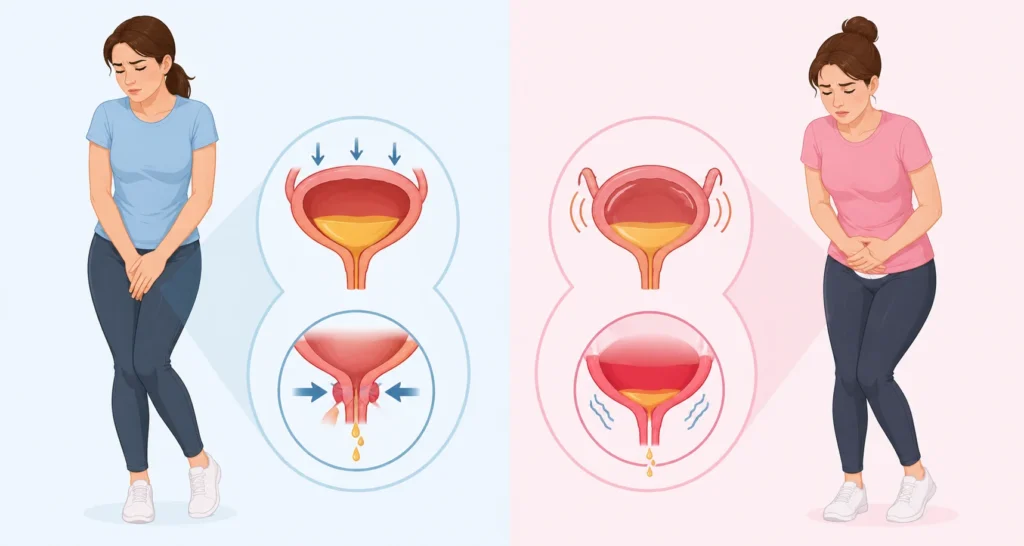
Stress Incontinence vs. Urge Incontinence 

The experience of urine leakage during pregnancy is not the same for every woman — some people experience a few drops of urine with a slight cough, while others experience such a sudden, intense pressure that it becomes difficult to control before reaching the toilet.

 Most of the discussion about “Urine leakage during pregnancy second trimester” revolves around these two types of leakage. Identifying which type of problem is causing the problem can help clarify the treatment or care options — because the causes behind the two types are different, and the ways to deal with them are also completely different.

How to recognize stress incontinence 

This type of leakage occurs due to physical stress. When the pressure inside the bladder suddenly increases, and the pelvic floor cannot hold that pressure, a small amount of urine leaks out. 

This is the most common problem during pregnancy. For many women, it is first noticed at a certain moment – maybe while walking in the market, or while trying to pick up the baby. After such an incident, many people shy away from the subject, but it is so common that doctors hear the same complaint every day.

When walking or standing 

Not only sneezing and coughing, but also standing for a long time or suddenly increasing your walking speed can cause leakage in some people. This shows how deep the weakness of your pelvic floor is, and sharing this information with your doctor makes it easier to get the right advice.

How to recognize urge incontinence 

In this problem, the urge to urinate comes on suddenly, and some of it leaks out before it reaches the toilet. The bladder muscles then start to contract on their own, and the body cannot stop it. Physical stress is not the cause here; the real cause lies in the disruption in the signals in the nervous system.

Sometimes stress and this problem occur together, which doctors call mixed incontinence.The doctor usually asks when exactly the urine is leaking, and how much. There are additional symptoms that you want to know about, because your support is showing up to take a stand for you. In reality, it’s quite difficult for many people to tell you exactly from memory. A simple clue can be found here — keeping a gap for a few days, exactly where this discharge is occurring.In this way, instead of going to the doctor and guessing, if you can show the written information directly, the diagnosis of the disease is also much faster and more accurate.

It is important to understand the difference between urine and amniotic fluid 

Many people have a fear in the second trimester—is it really urine or a sign of water breaking? This worry is not unfounded, because it is not always easy to understand the difference between the two.

Differentiating by color, smell, and quantity 

Normal urine is usually light yellow in color, and has a familiar ammonia-like odor. Amniotic fluid looks completely different — clear or light straw-colored, almost odorless, and in some cases, it may even have a slightly sweet taste. The difference in quantity is also noticeable. Urine usually comes out in small amounts and then stops on its own, but once amniotic fluid starts to come out, it cannot be stopped in any way.

There is an easy way to understand the difference between the two. If you try to hold it in for a while when you urinate, the fluid will stop coming out, because it is a voluntary process of the body. In the case of amniotic fluid, this technique does not work, no matter how hard you try, the fluid keeps coming out, because the body has no conscious control over it. Many people use pantyliners for a few days to see what color the fluid is, what kind of stain it looks like when it dries — these small observations often help in making a decision.

When to worry 

Urine leakage is usually a temporary side effect of pregnancy and resolves on its own after delivery. However, if you have any symptoms, it is important to talk to your doctor, and it is important for every pregnant woman to be aware of them. 

Management and Daily Care 

There is no magic solution to stop leakage completely, but some practices can make the situation much more bearable. The first thing that almost every doctor says when you ask for advice on “Urine leakage during pregnancy second trimester” is to start Kegel exercises. The reason is simple—this exercise directly strengthens the muscles of the pelvic floor. Contract the muscles as if you are holding urine while lying down, hold for three to five seconds, and then release completely—doing this simple exercise regularly can make a difference in a few weeks. Finding the right muscles can be a little difficult at first, so it is better to learn the correct method from a doctor or physiotherapist. 

Pressing the wrong muscles reduces the effectiveness of the exercise, so it is wise to practice under someone’s supervision for the first few times. You can start with ten three times a day, and gradually increase the number as you get used to it. Many people give up after noticing any changes in the first two or three weeks, but consistency is the key—it is not possible to see results in a few days of practice.

Some small changes in diet can also help. Caffeine overstimulates the bladder, so reducing the amount of tea and coffee you drink can also reduce the frequency of urination. It is also good to limit spicy or acidic foods for the same reason, because they create additional irritation on the bladder wall. 

Many people believe that drinking less water will reduce the problem, but in reality, the opposite is true. When the body is dehydrated, the bladder becomes more sensitive. So, there is no need to stop drinking water during the day, just drink a little less at night just before going to bed. If you drink water regularly during the rest of the day, the body stays healthy, and the bladder is also protected from unnecessary irritation. The same logic applies to carbonated drinks; it is better to avoid them as the gas in them can create additional pressure on the bladder. The habit of eating whole fruits instead of fruit juice also works here, because it fills the stomach and does not put additional pressure on the bladder.

There is a direct link to this problem with body weight. Being overweight increases the pressure on the bladder, so following the doctor’s advice and keeping your weight within a certain range during pregnancy can greatly reduce the severity of leakage. You also need to pay a little attention to your sitting or standing posture — sitting with your spine straight naturally reduces the pressure on the stomach. Making a habit of bending your knees instead of bending your waist when lifting heavy objects also helps to control the sudden pressure on your abdomen. Regular light walking keeps the blood circulation in the pelvic floor active, the benefits of which can be felt in the long term.

There is nothing to be ashamed of about using a pad — it is rather a practical way to continue your daily activities as normal. Putting a pad in your bag before going out can provide an extra sense of peace of mind, and that peace of mind often reduces unnecessary anxiety.

Conclusion

Urine leakage during the second trimester is nothing to be ashamed of, but rather a normal physiological reaction to pregnancy. As the uterus grows, there is additional pressure, and the way the pelvic floor relaxes under the influence of the moon — this is the main reason for the “glory level urine leakage in the second trimester”. No matter how much fear or embarrassment you have about this problem, the reality is that countless women’s group democracy appears in some way or another. Kegel exercises, small changes in diet and control can be managed. 

However, if you feel blocked, if there is a lot of fluid coming out, you should oppose the excitement and general leak. It is a matter of expressing your desire to the doctor openly about these changes by keeping quiet so that you don’t get me. No matter how embarrassed you feel about talking about this journey, it is an everyday and very familiar thing for doctors. There is no need for this single fight, for me, even talking to me openly can be a big burden. This problem of childbirth is usually understood by yourself, and this small habit can make life easier in a few days.

Frequently Asked Questions (FAQ)

Question1 : How long does it take to see results from Kegel exercises?

Answer: If done regularly, you can usually see a difference within a few weeks, but consistency is the most important thing here.

Question 2: How do I tell the difference between urine and amniotic fluid?

Answer: It can be understood by the smell and consistency – urination stops and has an ammonia smell, amniotic fluid flows continuously and is almost odorless.

Scroll to Top