

The first 12 weeks of pregnancy are called the first trimester or the first three months. This is the most important and sensitive period of pregnancy because it is during this time that the baby’s major body organs (heart, brain, arms and legs) begin to form.
First trimester mean the first three months of pregnancy. This period is considered the most sensitive because it is then that the baby start forming inside. Although not much can be understood from the outside big changes are going on inside the body. For many women, this period is a little difficult, their body is not feeling well and their mind restless. These are actually a normal part of the first trimester.
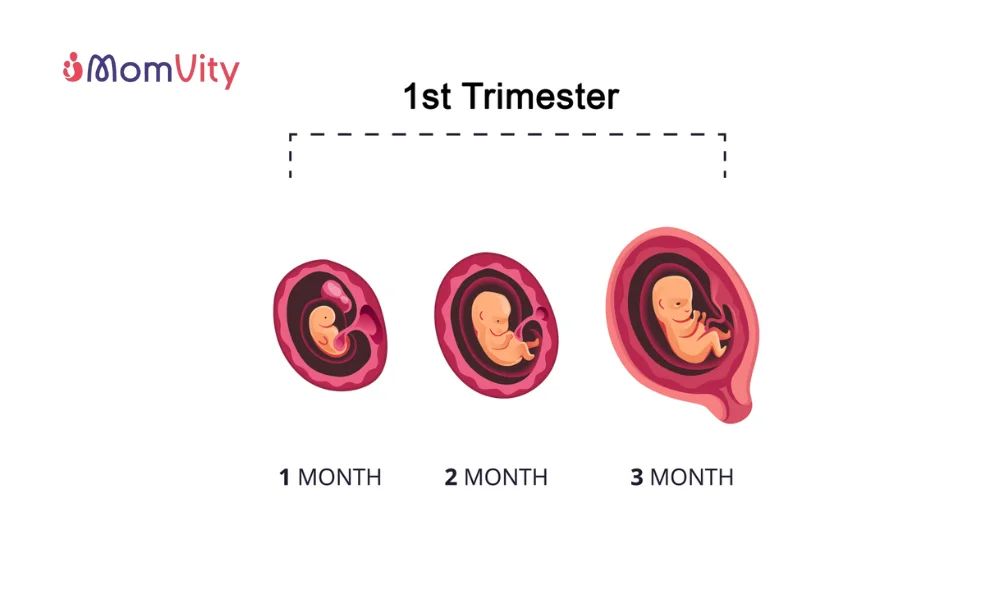
How long is the First Trimester?
Medically, pregnancy is divided into three parts or ‘trimesters’. The first 3 months of this are called the First Trimester.
However, its exact duration is calculated not only in months but also in weeks and days, which is important for you to know
Exact duration:
In terms of weeks: The first trimester is considered the period from the 1st week of pregnancy to the end of the 13th week.
In terms of days: This is a period of about 91 to 94 days.
In terms of months: This is from the first to the end of the third month of pregnancy.
When does this calculation start?
An interesting fact is that the calculation of your pregnancy start from the first day of your last period or menstrual period (LMP). That is, the calculation of your pregnancy days start about 2 weeks before the day you actually conceived.
Why is it considered up to 13 weeks?
After 13 weeks, the initial stage of the baby’s major body structures and organs is complete. This is followed by the ‘second trimester’, where the baby’s weight begins to increase rapidly and your initial discomforts (such as nausea) begin to subside.
What changes occur in the body during this time
In the first trimester or the first three months, although you may not see much change on the outside of your body, a huge hormonal ‘revolution’ continues inside. Your body is now complete changing i tself to grow a new life.
The main changes that you will experience during this time:
1. Breast changes
One of the first signs of pregnancy is breast changes. Due to the influence of hormones, the breasts become much softer, heavier and more sensitive to the touch. The area around the nipple (areola) start to grow larger and darker. This is actually a process of preparing the body for future breastfeeding.
2. Slowing down the digestive process
The hormone progesterone relaxes the muscles in your body. As a result, it delays the movement of food from the stomach. This can make you: You may feel a hollow stomach or gas. Constipation may occur. Heartburn or acidity may occur.
3. Increased blood circulation
The amount of blood in your body increases by about 30-50% so that the baby gets enough oxygen and nutrients. As a result:
Your heartbeat may be little faster than before. Your kidneys filter more blood, which makes you need to urinate more often. The blood vessels dilate, which can sometimes cause low blood pressure which can cause dizziness or fatigue.
4. Changes in sense of smell and taste

Your nose becomes more sensitive due to hormone. The smell of food that you use to like may now make you vomit. You may always have a metallic or coppery taste in your mouth.
5. Mood Swings

As the levels of estrogen and progesterone in your body increase suddenly, it can be difficult to control your emotions. It is very normal to cry for no reason get angry, or feel excessively anxious during this time.
6. Uterine growth

By the end of the first trimester, your uterus has grown to the size of a large lemon. Although the belly is not that big yet you may feel a little tight around the waist.
H2: Why does nausea occur in the first trimester
Morning sickness is common during the first three months of pregnancy. About 70% to 80% of pregnant women experience this. Many also consider it a ‘positive sign’ of pregnancy because it indicates the correct level of hormones in the body.
The main causes of nausea are listed below:
1. Increase in hCG hormone
After pregnancy, the body starts producing a special hormone called Human Chorionic Gonadotropin (hCG). The level of this hormone start doubling every two to three days after the embryo settles in the uterus. The sudden increase in this hormone mainly stimulates the vomiting control center in the brain.
2. Effect of estrogen and progesterone
Estrogen hormone levels also increase rapidly in early pregnancy. This makes your sense of smell and taste very sensitive. On the other hand, progesterone hormone relaxes the stomach muscles, which slows down the digestion process and cause nausea or acidity when food remains in the stomach for a long time.
3. Heightened Sense of Smell
Your nose becomes more than before due to the effects of hormones. Cooking spices, fish smells, and even perfume or cigarette smells can cause severe nausea. This reaction of the body is basically a protective mechanism so that the mother stays away from anything harmful if she smell it.
4. Mental and physical fatigue
Excessive work, stress, or lack of adequat sleep can increase nausea. In the first three months, the body uses a lot of energy, which make the body more fragile due to fatigue.
Is it harmful to the baby?
Normal nausea or vomiting 2-3 times a day does not harm the baby. However, if it happen that you are unable to keep even a drop of water in your stomach, your body is becoming very weak and you are losing weight, it is called Hyperemesis Gravidarum. In such a situation, it is important to consult a doctor immediately.
An interesting fact: Studies have shown that those who have nausea in early pregnancy have a slightly lower risk of miscarriage. Because it provides evidence of the presence of sufficient pregnancy-supporting hormones in the body.
H2: Why is fatigue so common?
In the first trimester, you may feel like you’ve been working day and night, but you may not have done much. This extreme fatigue or tiredness is a completely normal part of pregnancy. It’s called ‘pregnancy fatigue’.
Discover more here: Second Trimester
There are 3 main factors inside the body behind this:
1. The effect of the hormone progesterone
As soon as you get pregnant, the hormone progesterone starts to surge in the body. This hormone helps to keep your uterus calm and ensure the growth of the baby. However, it acts like a natural ‘sleeping pill’ that relaxes your nervous system and leave you feeling drowsy or tired all the time.
2. New blood and placenta formation
Your body is now a factory for creating new life. During this time:
Increase in blood volume: The body has produce a lot more blood to send oxygen and nutrients to the baby. As a result, your heart has to work or ‘pump’ much harder than before.
Placenta formation: The placenta is the organ that keeps the baby alive. The body spends an incredible amount of energy to make it. Remember that when you sleep, your body is doing inhuman physical labor inside.
3. Changes in blood pressure and metabolism
Due to the influence of hormones, many women’s blood pressure decreases slightly at the beginning of pregnancy. Along with this there are fluctuations in blood sugar levels. The effect of these two can make you feel suddenly weak or like giving up.
What is the way to overcome this fatigue?
Power nap: Whenever you get time during the day, close your eyes and rest for 10-15 minutes.
Going to bed early: Try to fall asleep at least 1-2 hours earlier than usual at night.
Small meals: Eat light nutritious foods (such as nuts, fruits or biscuits) every 2-3 hours after not eating for a long time. This will keep your blood sugar stable and give you energy.
Iron-rich foods: Sometime anemia can cause excessive fatigue. So keep iron-rich foods (raw vegetables, lentils liver) in your diet.
Is mild abdominal pain or cramping normal?
Mild abdominal discomfort cramping, or mild cramping is most common in the first trimester. It is a reaction to the huge changes your body is go through. However, it is important to understand the type of pain.
Why is this mild pain or cramping felt?
Implantation: When the embryo implants itself into the uterine wall in the very beginning of pregnancy, you may experience mild cramping similar to period pain.
Uterine enlargement: As your baby grows, your uterus also begins to expand. When the ligaments or muscles that hold the uterus in place stretch, you may feel a pulling pain in the lower abdomen or on both sides.
Hormones and gas: The hormone progesterone slows down the digestive process. This can lead to gas or constipation, which can sometimes cause discomfort or cramping pain in the abdomen.
When is this pain normal?
- If the pain is very mild and subsides after resting for a while.
- If there is a slight strain when sneezing, coughing or sudden movement.
- If there is no bleeding with the pain.
When to consult a doctor quickly?
Abdominal pain is not always to be taken lightly. If you see the following symptoms, contact a doctor quickly: 1. Severe pain: If there is severe stabbing or sharp pain on one side of the abdomen or in the entire abdomen that is unbearable. 2. Bleeding: If there is red blood or spotting in the vagina along with the pain. 3. Dizziness or loss of consciousness: Severe weakness or dizziness with the pain. 4. Fever and burning during urination: If there is fever with the pain or pain while urinating.
What is spotting or light bleeding?
Spotting or light bleeding is common in the first three months of pregnancy. Statistics show that about 25% of pregnant women experience light bleeding in the first trimester. While it is not always a cause for concern, it is important to be aware of the issue.
Why can there be light bleeding?
Implantation bleeding: This is the most common cause. Light pink or brown spotting may occur 10-14 days after conception, when the embryo implants itself in the uterine wall. It usually lasts for 1-2 days.
Cervical sensitivity: During pregnancy, blood flow to the cervix increases significantly. As a result, it is normal to have very light bleeding after intercourse or an internal checkup.
Hormonal changes: Due to major changes in hormone levels in the body a little blood can appear on the expected date of the period.
When can it be a cause for concern?
Not all bleeding is normal. In some cases, it can signal a bigger problem:
Miscarriage: If the bleeding is heavy (like a period) and accompanied by severe abdominal pain or a lump-like discharge.
Ectopic pregnancy: If the embryo starts to grow outside the uterus (such as in the fallopian tube). In this case, there may be severe pain and bleeding on one side. This is an emergency.
Infection: If there is an infection in the vagina, bleeding or discomfort may occur.
What should you do?
Use a pad: Use a pad to understand the extent of the bleeding. This will clearly indicate the color and amount of the blood. 2. Rest: If you experience spotting, stop heavy work and rest completely. 3. Tell your doctor: Do not ignore any type of bleeding during pregnancy. Even if you have light spotting tell your doctor by phone or in person. He or she may do an ultrasound or progesterone test to make sure everything is okay.
H2: What to avoid in the First Trimester
The first three months of pregnancy or the first trimester is a very sensitive time. During this time, even a small mistake on your part can affect the development of the baby. Therefore, it is important to avoid the following things to protect yourself and the baby:
Risky foods and drinks
Some foods can cause poisoning for the body during this time or increase the risk of
miscarriage
Raw papaya and pineapple: The latex in raw papaya and bromelain in pineapple can cause uterine contractions and damage.
Undercooked eggs or meat: They may contain bacteria called Salmonella or Listeria, which can cause infections.
Excess caffeine: Do not drink more than 1 cup of tea or coffee a day. Excess caffeine increases the risk of low birth weight or miscarriage.
Mercury-rich fish: Avoid large marine fish (such as tuna or large king mackerel) because the mercury in them can damage the baby’s brain.
Heavy work and high risk
Do not put excessive pressure on the body
Lifting heavy weights: Carrying buckets of water, heavy furniture or heavy bags is strictly prohibited. This can put pressure on the uterus and cause bleeding.
Excessive climbing of stairs: Do not use the stairs repeatedly without need.
Risky exercises: Do not do any exercises or heavy work that puts pressure on the stomach. However, it is better to walk lightly.
Medicines and chemicals
Medicines without a doctor’s advice: Do not take even simple headache or fever medicine without a doctor’s permission. Many medicine can cause birth defects in the baby.
Exposure to chemicals: Avoid strong-smelling cleaners, paints or pesticides. It is better not to do hair dye or strong chemical treatments during this time.
Bad habits and lifestyle
Smoking and drinking: This directly hinders the growth and development of the baby’s brain. Even the smoke of someone smoking nearby (passive smoking) is harmful to you.
Staying on an empty stomach for a long time: Nausea or gas increases on an empty stomach. So do not stay without food for a long time.
Excessively hot water: Avoid taking a long bath in very hot water or ‘sauna bath’ because high body temperature causes problems in the development of the baby.
Stress
Excessive anxiety or stress can disrupt your hormonal balance. Try to stay calm as much as possible and get enough rest.
What precautions are needed in the First Trimester and daily life
It is important to make changes in the lifestyle at the beginning of pregnancy. During this time, there are extensive hormonal changes in the body, which affect the mental and physical. In the first three months, lifting heavy objects or traveling excessively up the stairs should not be done at all. Keeping in mind what precautions are needed in the First Trimester, one should refrain from standing or bending over for a long time. Adequate sleep and mental peace are the biggest medicine at this time. Anxiety or stress can hinder the development of the baby. Therefore, it is better to take regular light walks and avoid caffeinated drinks or coffee. In addition, before taking any medicine, one must consult a specialist doctor, because the wrong medicine can seriously harm the fetus.
The correct rules of physical exertion
During this time, one should refrain from heavy exercise or running around, but it is not right to lie down or sit down at all, but rather, one can do housework in a light mood or yoga as per the advice of an expert.
Importance of adequate rest
To increase blood circulation in the body of a pregnant mother and for the proper growth of the fetus, it is very important to sleep at least 8 hours a day and rest for 2 hours in the afternoon.
Travel precautions
It is wise to avoid long and strenuous travel in early pregnancy, as it can put pressure on the uterus and increase the risk of bleeding, which can pose a danger to the mother and the baby.
Nutritious food and eating habits
The appetite for food decreases a lot in the first three months, but nutritious food is needed most during this time. What precautions are needed in the First Trimester can be understood by looking at the food list. It is mandatory to keep foods rich in folic acid, iron and calcium in your diet. Raw papaya or pineapple should be avoided during this time as they increase the risk of miscarriage. In addition, eating semi-cooked meat or eggs is strictly prohibited. Drink plenty of water to avoid dehydration. Avoid junk food or oily food from outside and develop the habit of eating fresh homemade food. Remember, a little awareness can give your child a healthy life.
Need for folic acid
For the proper development of the baby’s brain structure and spinal bones, taking green vegetables and folic acid supplements as prescribed by the doctor is a very important step.
Avoidance of toxic foods
You should completely stay away from fish with excess mercury, smoking, alcohol and processed foods as they are the main causes of birth defects in the baby.
Health check-ups and common complications
It is essential to have regular health check-ups or prenatal care in the early stages of pregnancy. Many times, mothers ignore some common symptoms such as light bleeding or abdominal pain. But if you know what precautions are required in the First Trimester, you will understand that you should consult a doctor immediately if you have any unusual symptoms. One of the main tasks at this time is to confirm the baby’s heartbeat and position through an ultrasound. In addition, thyroid, sugar and hemoglobin levels should be checked regularly. If you have excessive vomiting or cannot eat anything, you must take necessary measures under the advice of a doctor. In addition, keeping your surroundings clean and maintaining personal hygiene to avoid infection are important parts of this period.
- Regular ultrasounds.
- Regular blood pressure checks.
- Monitor weight gain.
- Take necessary vaccinations.
- Maintain personal hygiene.
When is it necessary to see a doctor?
It is normal to experience minor discomfort during the first three months of pregnancy, but there are some symptoms that can be a danger signal. If these symptoms appear, it is very important to consult a specialist doctor or go to the nearest hospital without wasting time.
Emergency symptoms that cannot be ignored:
Heavy bleeding or spotting: If there is bright red vaginal bleeding or blood clots, it can be a sign of miscarriage. It is safe to inform the doctor even if there is a little spotting.
Severe abdominal pain: If there is unbearable twisting pain or sharp pain on one side of the abdomen or in the lower abdomen, which does not subside even with rest. This can be a sign of ectopic pregnancy (pregnancy outside the uterus).
Excessive vomiting (Hyperemesis Gravidarum): Vomiting several times a day and not having any water or food in the stomach. This can cause dehydration, which requires rapid saline or medical treatment.
Severe headache and blurred vision: If you have a headache all the time and see blurry vision, it could be a sign of high blood pressure.
Burning sensation during urination: Pain, burning sensation or foul-smelling urine. This is a sign of a urinary tract infection (UTI), which is important to treat quickly during pregnancy.
High fever and chills: A fever of more than 100.4 degrees Fahrenheit. High temperatures during pregnancy can cause problems for the baby’s development.
Vaginal discharge: If you suddenly start to have a lot of watery fluid coming out of your vagina.
A little tip for you: When you are pregnant for the first time, many things can feel new. If you feel that “something is not right”—pay attention to that sixth sense or feeling. If any symptoms are causing you a lot of mental anxiety, talk to your doctor, even if it’s just to put your mind at ease.
Emergency numbers: Always keep your doctor’s phone number and the address of a nearby hospital with 24-hour emergency service handy or on your phone’s speed dial.
Conclusion: Preparing for a New Beginning
The first trimester of pregnancy is an amazing and transformative time. A new life is developing inside your body, which is why you are going through different experiences, both physically and mentally. Nausea, fatigue or mood swings are part of this journey. So it is most important to understand your body’s signals and take proper care of them during this time.
Some last special tips for you:
- Be patient: The discomforts of the first 3 months usually start to subside after 14 weeks. Just try to get through this time with patience.
- Prioritize rest: Your body needs rest more than before now. So maintain a balance between work and rest.
- Ensure proper nutrition: Eat foods rich in folic acid and iron regularly to help the baby’s organs develop.
- Be careful: Consult an experienced doctor before taking any medication or if you feel any discomfort.