By following Teenage Lifestyle Tips, you can learn about the various rules for developing healthy habits and master small habits. Which greatly help in ensuring long-term strength and well-being.

An important question that always comes to our minds is, “Is it really difficult to maintain a healthy body, a good mind, and focus on studies during adolescence?”
To be honest, this is the most important stage of human physical and mental development. As rapid physical changes occur at this age, so too do thinking, emotions, confidence, and daily decision-making abilities. Therefore, every habit developed at this age can bring about a lasting change in the future lifestyle.
At this age, adequate sleep and nutritious food should be ensured. Along with this, a habit of doing some physical exercise should be developed. All these things help in keeping the body healthy and increasing the normal functioning and learning ability of the brain.
On the other hand, if you use too much screen time, sleep irregularly, or develop unhealthy eating habits, the daily performance and attention of that teenager will gradually deteriorate.
However, you should never try to change everything at once. You should try to build small habits gradually. Regularly coming and following the habits will be most effective.
Small good habits create the foundation for big changes one day.
Why Is Healthy Living So Important In Adolescence?

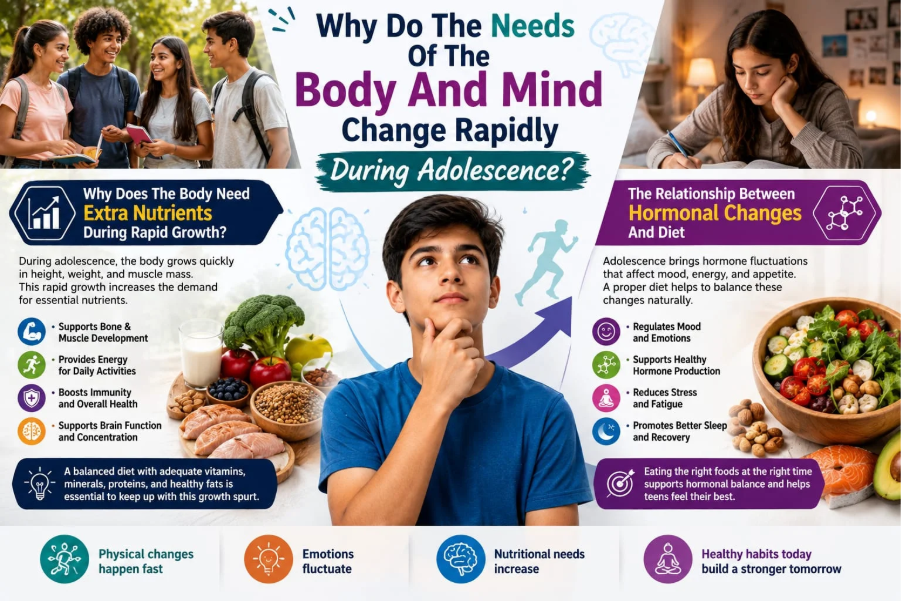
Following Teenage Lifestyle Tips makes it very easy to develop healthy habits in adolescence. Habits play an important role in future life. The body and brain develop very quickly during this teenage age. Adequate sleep, nutritious food and a mentally balanced lifestyle play a very effective role in increasing mental skills at this age.
Regular consumption of unhealthy foods can lead to various problems and complications in the long term. Therefore, if you can develop small but consistent habits during adolescence, it is possible to lay a strong foundation for living a healthy life in the future.
The Role Of Daily Habits In Physical And Mental Development
- Adequate sleep: Regular and adequate sleep helps in body growth, brain rest, memory and attention.
- Nutritious food: Balanced food provides the body with the necessary nutrients and helps in maintaining the energy required for daily work and studies.
- Regular physical activity: Walking, playing sports or exercising helps in keeping the body active as well as increasing mood and mental freshness.
- Control screen use: Spending long hours on mobile or other screens can disrupt the balance between sleep, physical activity and study time.
- Mental rest: Along with studies and responsibilities, adequate breaks, entertainment and spending time with family help in managing mental stress.
- Regular routine: Keeping a fairly fixed time for sleep, meals, studies and exercise every day makes it easier to maintain healthy habits.
- Consistency is the most important: Following small good habits regularly is more effective in the long run than making big changes in one day.
Long-Term Effects Of Adolescent Habits On Future Life
By following Teenage Lifestyle Tips, the habits developed during adolescence make future life much easier. The most important thing is that by following these small habits for a long time, both the body and the mind remain healthy.
Along with this, it becomes very easy to develop various habits in other stages of life. By following these rules, laziness is reduced and the body is always functional.
On the other hand, if life is lived irregularly during adolescence, then changing these habits in the future becomes very complicated. Therefore, small, consistent and realistic habits created during adolescence can build a strong foundation for health, performance and responsible living.
How Do Small Changes Gradually Become Permanent Habits?
When it comes to Teenage Lifestyle Tips, small steps are more effective than big changes. Going to bed at the same time every day and studying for a set amount of time will become your daily habits if you follow them for a long time.
| Small Change | How It Becomes a Habit | Long-Term Benefit |
| Fixed Sleep Time | Follow it daily | Better sleep routine |
| Daily Walking | Start with short walks | Improved physical activity |
| Study Schedule | Set a regular time | Better focus |
| Healthy Snacks | Keep nutritious options nearby | Better food choices |
| Screen Breaks | Take breaks at fixed intervals | Healthier screen habits |
| Regular Water Intake | Drink water throughout the day | Better hydration |
How Adequate Sleep Keeps The Body And Brain Fresh
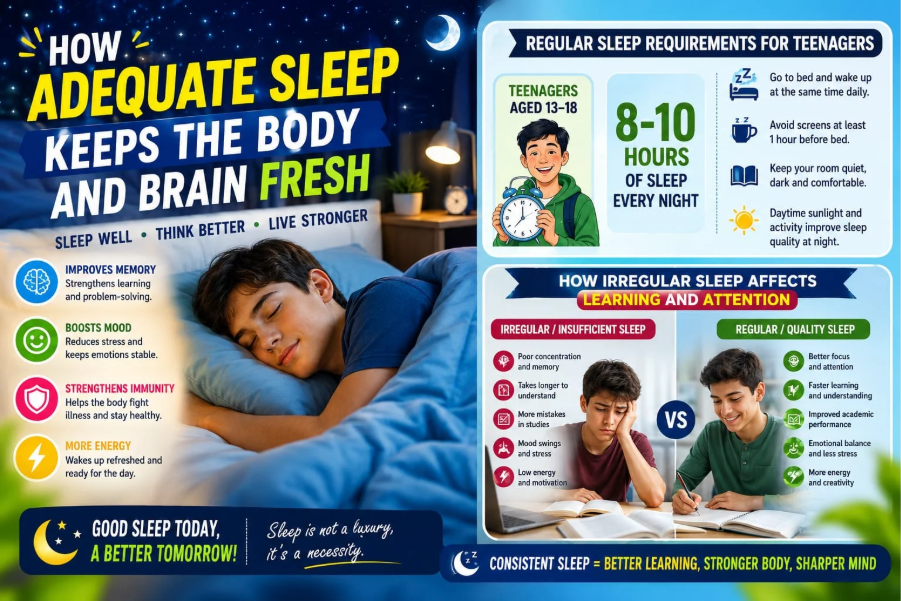
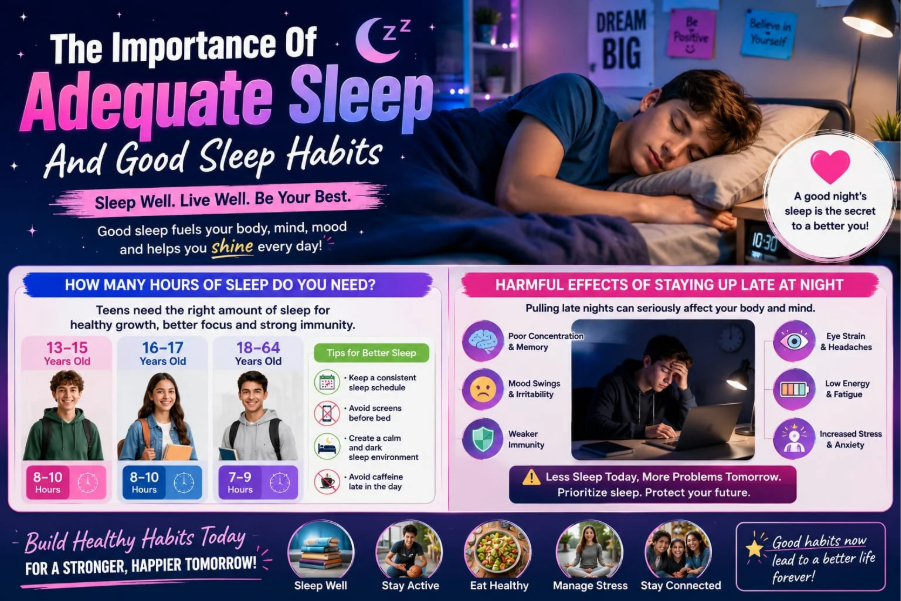
A certain amount of sleep is very important for every teenager. The main reason for this is that a certain amount of sleep activates the normal functions of the body and brain.
During sleep, in addition to resting the body, various complex internal processes are reconstructed and the body continues to develop. A certain amount of sleep also helps in increasing the attention span the next day. It is also very effective in maintaining memory and mood.
On the other hand, if there is a lack of sleep, you feel tired during the day, your mood is irritable, and it becomes very difficult to maintain attention in studies. Therefore, the habit of sleeping and waking up at a certain time is an important part of a healthy daily routine.
Regular Sleep Requirements For Teenagers
- 8–10 hours of sleep: Helps in the physical and mental development of adolescents.
- Brain freshness: Helps maintain memory, learning and attention.
- Energy boost: Maintains performance in daily work, studies and sports.
- Mood regulation: Helps control emotions by reducing fatigue and restlessness.
- Body protection: Supports normal immune function.
How Irregular Sleep Affects Learning And Attention
As an important part of Teenage Lifestyle Tips, regular lack of sleep can directly affect learning and concentration. If you form a habit of sleeping too late at night or sleeping at different times every day, you will feel tired in the morning.
At the same time, your alertness and attention to work will decrease completely. Then, even after reading the same information for a long time, it becomes impossible to remember the correct information. Maintaining a regular sleep schedule is therefore not only important for rest but also for maintaining learning skills and performance.
Simple And Realistic Night Routine For Good Sleep
| Night Routine | Practical Action | Why It Helps |
| 1 Hour Before Bed | Reduce screen use | Helps the mind wind down |
| 30 Minutes Before Bed | Do a calm activity | Prepares the body for sleep |
| Fixed Bedtime | Sleep at a similar time daily | Supports a consistent sleep rhythm |
| Comfortable Bedroom | Keep the room quiet and comfortable | Creates a better sleep environment |
| Avoid Late Caffeine | Skip caffeinated drinks in the evening | Reduces sleep disruption |
| Morning Routine | Wake up at a consistent time | Helps maintain a regular sleep schedule |
Why Nutritious Food Is Important For Healthy Growth And Strength

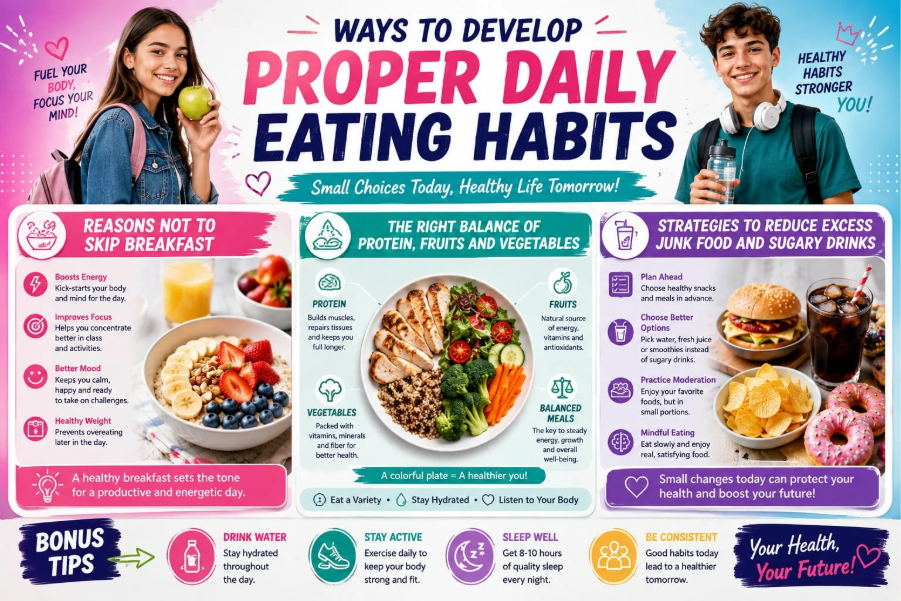
An important aspect of Teenage Lifestyle Tips is nutritious eating habits, as the body undergoes rapid growth and changes during adolescence. A balanced diet provides the body with protein, vitamins, minerals, and essential energy, which helps in growth, brain function, and daily functioning. It is beneficial to have fruits, vegetables, pulses, eggs, fish, or other nutritious sources along with regular meals. On the other hand, excess fast food and sugary foods can disrupt the nutritional balance.
What Nutrients Should Be Included In Daily Diet?
- Protein: Eggs, fish, meat, milk, pulses and nuts help the body grow and build muscle.
- Carbohydrates: Rice, bread, potatoes and cereals provide the energy needed for daily tasks.
- Healthy fats: Fish, nuts, seeds and vegetable oils help in normal brain function and provide energy.
- Vitamins and minerals: Fruits and vegetables of different colors provide the body with essential vitamins, minerals and other nutrients.
- Calcium: Milk, yogurt and small fish are important for the normal development of bones and teeth.
- Iron: Iron is available from pulses, eggs, meat and vegetables, which is necessary for normal blood function.
- Water and fiber: Adequate water and vegetables, fruits and whole grains help in digestion and maintain normal body function.
The Problem Of Excess Junk Food And Sugary Foods
| Eating Habit | Possible Short-Term Effect | Long-Term Concern |
| Sugary Drinks | Quick energy, followed by a crash | Higher risk of excess calorie intake |
| Fast Food | Heavy feeling and low energy | Poor overall diet quality |
| Fried Snacks | High calorie intake | May contribute to unhealthy weight gain |
| Sweets & Desserts | Temporary energy boost | Increased risk of tooth decay |
| Frequent Processed Foods | Less nutritious meal choices | Nutrient gaps over time |
| Skipping Balanced Meals | Hunger and reduced concentration | Poor eating habits may become routine |
How Regular Physical Activity Keeps The Body And Mind Active

By following Teenage Lifestyle Tips, we can gain special knowledge about the importance of physical exercise. Regular physical exercise plays a very effective role in keeping the mind active and fresh during adolescence.
Regular walking, playing sports, regular muscle exercises and other exercises that help in normal development can keep the body free from diseases.
If you are physically healthy, your mind is in a good mood and you also develop the skills to handle stress. Therefore, instead of doing hard exercises, regular and enjoyable activities should be carried out the most.
The Real Benefits Of Daily Walking And Exercise
An important aspect of Teenage Lifestyle Tips is regular walking and exercise, which not only keeps teenagers physically active but also increases mental alertness. Some time every day walking, playing sports or age-appropriate exercise helps strengthen muscles and bones, reduce excessive sitting and maintain daily functioning. The habit of being regularly active can build the foundation for a healthy lifestyle in the future.
- Increases physical fitness
- Helps in bone and muscle development
- Helps in increasing attention and mental alertness
- Helps in maintaining good mood
- Maintains performance in daily tasks
- Reduces the harmful effects of sitting for long periods of time
The Role Of Daily Routine In Increasing Focus In Studies
One of the most important parts of Teenage Lifestyle Tips is to create a daily routine and manage your work day accordingly. An effective routine helps you to stay focused on various daily tasks including studies.
Along with this, this daily routine teaches you to use your time properly. Maintaining a fixed time for eating, resting and studying plays an effective role in keeping the brain calm and creative.
While studying, you should keep away from any kind of electronic media and take small breaks between studying and work. These small breaks are important strategies for maintaining focus. Not excessive pressure, but a consistent and realistic routine is more effective.
Creating A Balance Between Study Time And Rest
- Fixed reading time: Reading at a fixed time every day makes it easier to stay focused on work.
- Short breaks: Taking short breaks instead of reading continuously for long periods of time reduces mental fatigue.
- Adequate sleep: Instead of reducing sleep and studying excessively, adequate rest should be made a part of the routine.
- Breaks from screens: Instead of using mobile phones excessively during reading breaks, it is better to take a walk or rest your eyes.
- Realistic goals: Setting a daily reading goal within your ability reduces excess stress and maintains consistency.
Epilogue
Teenage Lifestyle Tips outlines the concept of a balanced lifestyle for teenagers to maintain healthy development, good attention and daily performance. Habits formed at this age not only affect current health, but can also lay the foundation for future lifestyles. Therefore, it is important to make adequate sleep, nutritious food, regular physical activity and mental rest a normal part of daily life.
At the same time, it is necessary to maintain a balance between study pressure, mobile and social media use and entertainment time. Instead of studying or using screens for long periods of time continuously, fixed-time work, short breaks and adequate rest can be more effective. However, no strict rule for a healthy lifestyle will work equally for everyone. It is more realistic to form habits according to age, physical ability, study schedule and family environment.