
Parents | Momvity

Parenting Advice

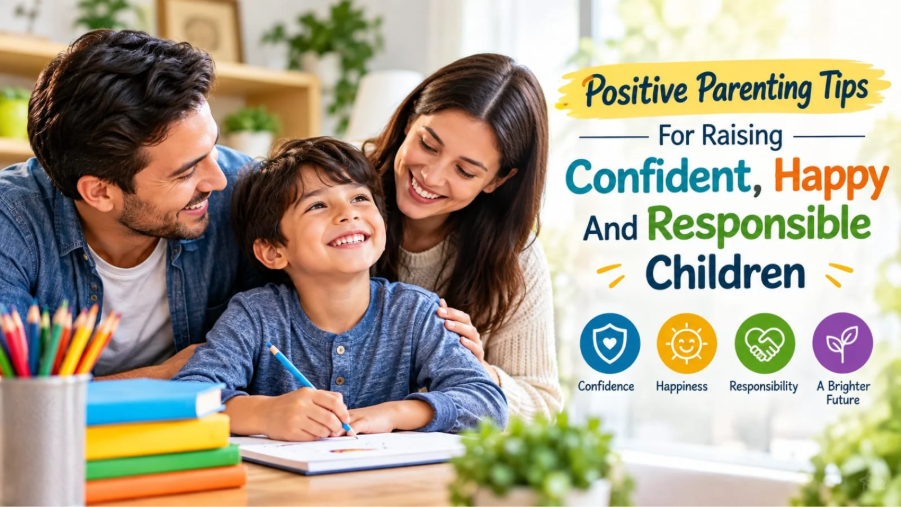
Effective Parenting Advice To Support Your Child’s Growth And Confidence 

According to Parenting Advice, learn about the most important and practical advice for parents to develop healthy child development, good habits and effective communication channels. 

As a parent, have you ever thought about how much your small daily behaviors can affect the formation of your child’s future personality? 

A child’s growth is not limited to food, clothing, education or ensuring a safe environment. His mental development, confidence, social skills and decision-making ability are equally important. How a child will speak, how he will react if he makes a mistake or how confident he will be in new situations – all these depend a lot on the family environment and the behavior of adults. Therefore, in addition to disciplining a child, it is also necessary to understand him, listen carefully and give him the opportunity to learn independently according to his age. 

So, instead of correcting every mistake of a child, would it be more effective to give him the opportunity to learn on his own? 

In reality, not all children learn in the same way or react in the same way. Some need more encouragement, while others need patience and regular guidance. Excessive pressure, comparison or harsh criticism can sometimes reduce self-confidence. On the contrary, love, clear boundaries, positive communication, and age-appropriate responsibilities help build a child’s self-reliance and confidence. 

The most effective education is not just teaching a child to be a good person, but also setting an example of being good through your own behavior. 

Why The Role Of The Family Is Important In The Healthy Development Of A Child 

Parenting Advice Understanding the role of the family in the healthy development of a child is an important aspect. A safe environment, love, regular communication, and age-appropriate independence help build a child’s confidence and mental skills. Parental behavior is also one of the main means of learning for a child. 

So does the family environment influence a child’s future behavior so much? 

Yes, because children learn a lot by observing daily experiences and the behavior of adults. Therefore, along with care, setting positive examples is also important. 

The Influence Of Family Environment On Physical And Mental Development 

  • Nutritious food and adequate sleep help a child grow healthy physically. 
  • A loving environment increases a child’s confidence and emotional security. 
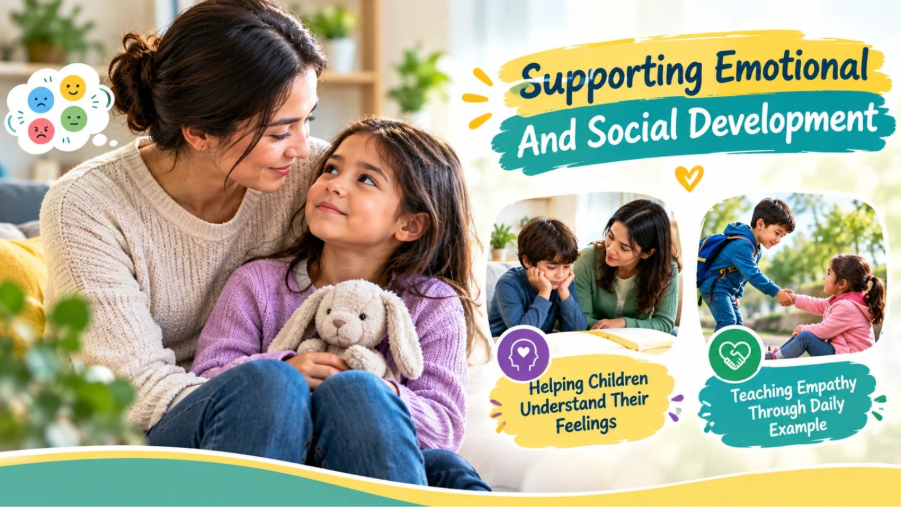
  • Positive communication helps to express emotions and develop social skills. 
  • Opportunities for play play a role in developing physical abilities and thinking skills. 
  • Avoiding comparisons and excessive criticism helps to maintain self-confidence. 
  • Positive behavior from parents sets real learning examples for the child. 

How A Safe And Loving Environment Builds Confidence 

An important aspect of Parenting Advice is to create an environment for the child where he feels loved, safe and accepted. When parents listen attentively and do not humiliate for mistakes, the child is brave enough to express his opinions. 

But does praise alone build confidence? 

No, along with regular encouragement, age-appropriate independence and opportunities to learn from mistakes are also needed. Because safe relationships gradually teach the child to believe in his own abilities. 

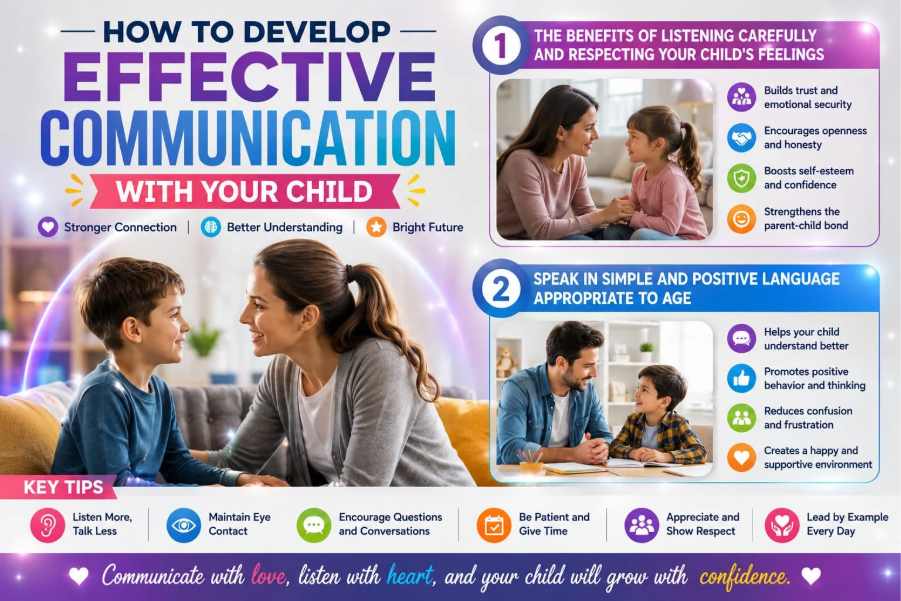
How To Develop Effective Communication With Your Child 

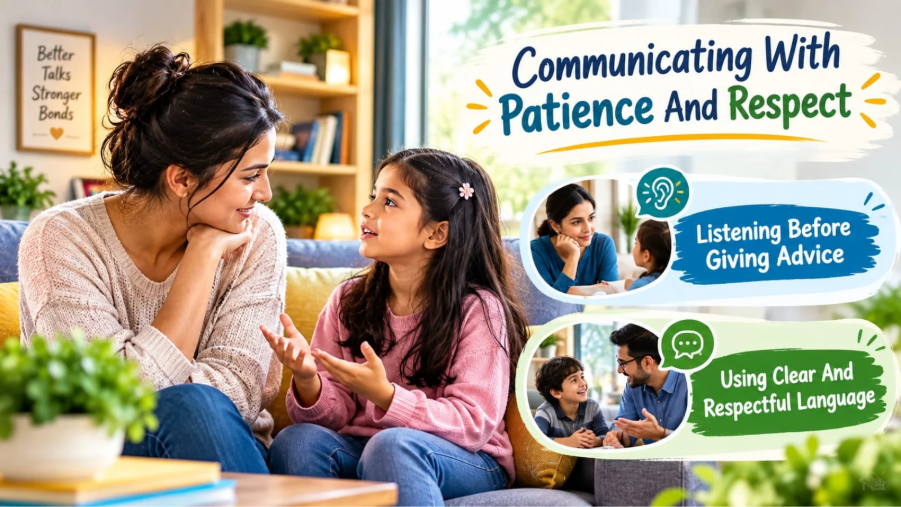
Good communication with children is not just about talking; it also involves listening attentively, making eye contact, giving importance to feelings, and explaining in simple language appropriate to the child’s age. 

But do we really listen to our children when they are talking, or do we quickly start giving advice? 

Active listening helps children feel valued and safe, and makes them more comfortable expressing their feelings. So the answer is—“Good communication starts with listening carefully, then explaining calmly and clearly as needed.” 

The Benefits Of Listening Carefully And Respecting Your Child’s Feelings 

  • Trust increases: the child learns to talk to his parents easily. 
  • Confidence increases: he becomes interested in expressing his feelings and opinions. 
  • Helps in controlling emotions: he learns to understand feelings of anger, fear or sadness. 
  • Misunderstandings decrease: it becomes easier to understand the real reason for the child’s behavior. 
  • Emotional security is created: the child feels valuable and accepted. 
  • Family bonds are strengthened: mutual understanding between parents and child increases. 

Speak In Simple And Positive Language Appropriate To Age 

In Parenting Advice, it is important to use simple language according to the child’s age and ability to understand. It is more effective to explain things clearly in short sentences to young children rather than giving them complex instructions. Making eye contact while speaking, listening patiently, and explaining the reasons instead of threatening them will increase their confidence. 

So, will speaking in difficult language help children learn faster? 

No, simple and positive language appropriate to their age helps children understand the subject, ask questions, and express their opinions with confidence. 

How To Control Your Speech When Angry Or Mistaken 

Situation Avoid Saying Better Approach Why It Helps 
Child gets angry “Stop crying!” “I can see you’re upset. Let’s talk.” Helps the child feel understood 
Child makes a mistake “You always do this!” “Mistakes happen. Let’s find a better way.” Builds confidence and learning 
Child refuses to listen “You’re so stubborn!” “Tell me why you don’t want to do it.” Encourages communication 
Child breaks a rule “You are a bad child.” “That behavior is not okay. Let’s discuss why.” Corrects behavior without attacking the child 
Parent feels angry Shouting or threatening Pause, breathe, then respond calmly Prevents unnecessary conflict 

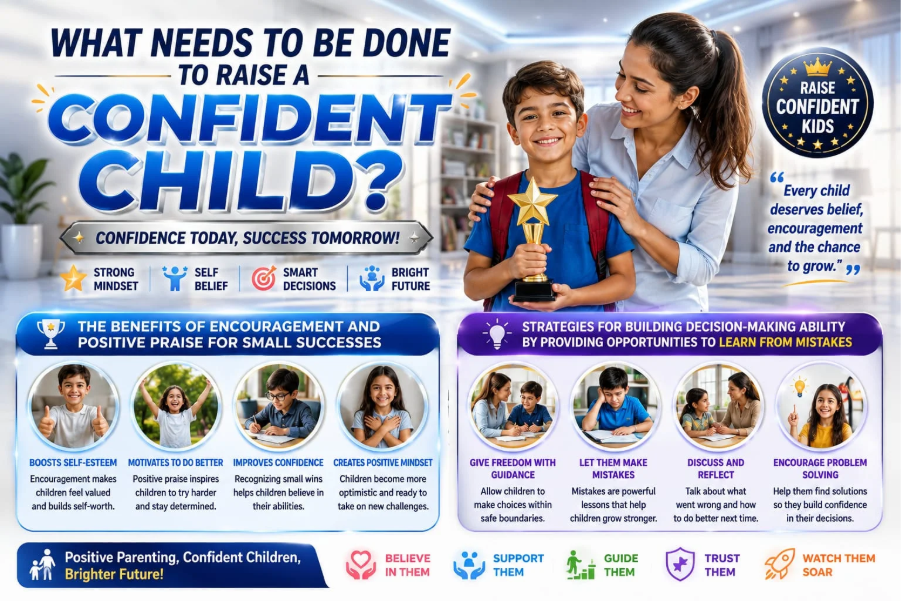
What Needs To Be Done To Raise A Confident Child? 

Parenting Advice teaches a balance of love, encouragement, and age-appropriate independence to build a child’s self-confidence. Paying attention to your child’s small successes, giving them opportunities to learn without being insulted when they make mistakes, and listening carefully to their opinions are effective in building their self-confidence. 

But how do you know if your encouragement is really working? 

The most tangible evidence of this is your child’s willingness to do their own work, the courage to try new things, and the mindset to try again after failure. So, freedom within safe limits, not excessive control, is an effective way to build self-confidence. 

The Benefits Of Encouragement And Positive Praise For Small Successes 

  • Increases self-confidence: The child builds faith in his own abilities. 
  • Reduces the fear of mistakes: Gives the courage to try again after failure. 
  • Develops positive behavior: Increases the desire to repeat good deeds. 
  • Builds self-reliance: Increases the confidence to do his own work. 
  • Strengthens relationships: The child feels security and acceptance from parents. 

Strategies For Building Decision-Making Ability By Providing Opportunities To Learn From Mistakes 

An important part of parenting advice is to give your child the opportunity to learn from mistakes, so that he gradually understands the consequences of his decisions. Instead of immediately scolding or correcting every mistake, let him think within safe limits. 

But does allowing a child to make mistakes make them more responsible? 

Yes, because learning from his own experience improves his decision-making skills. When parents ask questions, explain possible consequences, and provide guidance when necessary, children learn to make future decisions with confidence. 

Effective And Positive Ways To Teach Discipline 

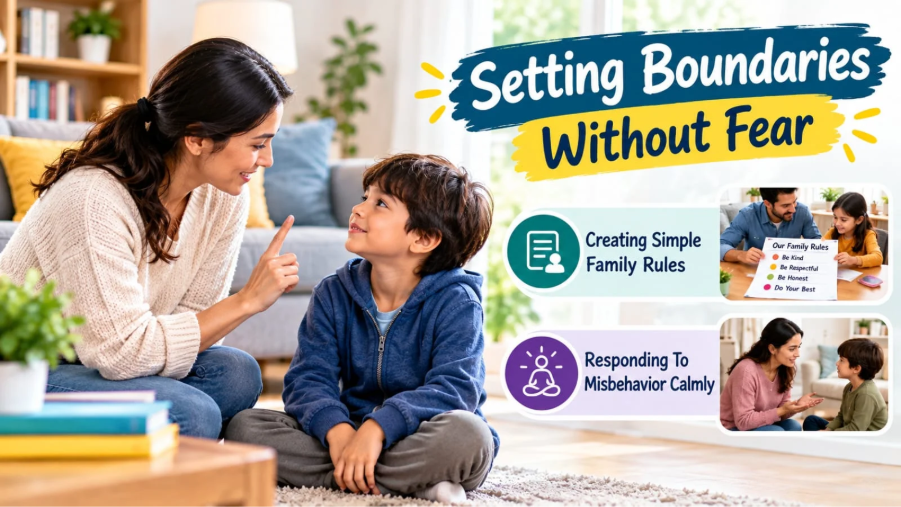
According to Parenting Advice, teaching discipline does not mean scaring or harshly punishing a child; rather, it means explaining correct behavior and giving them regular opportunities to practice it. Clear rules according to age, specific boundaries, and natural consequences for mistakes help children become responsible. 

So how is it most effective to correct them when they make a mistake? 

Calmly explaining the reason, showing alternative behavior, and setting reasonable consequences if necessary are the best methods. This not only teaches discipline, but also builds a child’s self-control and confidence. 

Important Information About Setting Clear Rules And Age-Appropriate Boundaries 

  • Keep the rules clear: Create simple and clear rules according to age. 
  • Explain the reasons: Don’t just forbid, explain the reason for the rule. 
  • Follow the same rules: It is important to be consistent in the rules of parents. 
  • Set reasonable limits: Set expectations according to the child’s age and ability. 
  • Praise good behavior: Give positive encouragement when the rules are followed. 
  • Give freedom as they grow older: Increase responsibilities by changing the boundaries over time. 

Emphasizing Responsibility And Consequences Instead Of Punishment 

Instead of punishing a child for misbehavior, it can be more effective to teach them the natural consequences of that behavior. For example, if they leave their toys lying around, they can be given the responsibility to tidy them up for a while. This helps the child not only obey the rules out of fear, but also learns to understand the consequences of their actions. 

How does this create a sense of responsibility? 

Because when children experience the consequences of their decisions, they gradually develop the habit of correcting mistakes and making better decisions in the future. Therefore, explaining responsibility and consequences is more educational in the long run than punishment. 

What To Avoid When Correcting Misbehavior 

Avoid Better Approach 
Shouting or yelling Stay calm and speak clearly 
Harsh punishment Use reasonable consequences 
Comparing children Focus on individual progress 
Name-calling Correct the specific behavior 
Public embarrassment Talk privately and respectfully 
Unrealistic expectations Set age-appropriate goals 

How To Increase Your Child’s Independence And Sense Of Responsibility 

An important part of parenting advice is to give children the opportunity to work independently and teach them a sense of responsibility according to their age. Folding their own clothes, putting away toys, or making small decisions increases self-reliance. 

How much freedom should be given to a child to keep them safe and responsible? 

The answer is to set clear boundaries and necessary guidelines with freedom. When parents encourage their children instead of always giving them work, they learn from their mistakes, learn to make decisions, and gradually become confident. 

Benefits Of Allowing Age-Appropriate Opportunities To Make Small Decisions 

  • Increases self-confidence: The opportunity to express one’s own choices and make decisions builds self-confidence in the child. 
  • Develops a sense of responsibility: Teaches to understand the consequences of one’s own decisions, builds a habit of responsibility. 
  • Improves problem-solving skills: The habit of making small decisions helps to handle complex situations in the future. 
  • Learns to think independently: Can form one’s own opinions without depending on parents for everything. 
  • Provides an opportunity to learn from mistakes: The experience of making mistakes within safe limits helps the child understand real situations. 
  • Improves communication skills: Develops the habit of expressing one’s own choices, reasoning, and feelings. 

Develop The Habit Of Being Responsible In Daily Tasks 

An important part of Parenting Advice is to give your child the opportunity to do small daily chores. Tasks like tidying up their toys, putting books away, clearing away plates after meals, or following a reading schedule build a sense of responsibility. 

Do parents have to do everything? 

No, giving children the opportunity to do things according to their age and ability increases their self-reliance and helps them understand the consequences of their actions. Therefore, giving them regular responsibilities within safe limits is an effective method. 

Why Is The Behavior Of Parents So Important? 

Children not only listen to their parents, they also closely observe their behavior and often imitate it without realizing it. Reactions when angry, the mentality of admitting mistakes, or respect for others—all become part of the child’s learning. 

So what is the most effective education in building a child’s confidence and behavior? 

The answer is, setting a positive example in everyday life. When parents speak calmly, apologize when they make mistakes, and behave responsibly, the child gradually acquires the same values 

Conclusion 

Parenting Advice is not just about teaching a child what to do; rather, it is a continuous process of giving the right direction in daily behavior and decisions to build his healthy development, confidence and future personality. In addition to love, a child needs a safe environment, clear boundaries, attentive listening and the opportunity to learn independently according to age. 

When a parent listens to the child carefully, tries to understand the reasons for mistakes without insulting them, and recognizes even small successes, then a sense of confidence and responsibility gradually builds in the child. Similarly, excessive comparison, intimidation, harsh criticism or the tendency to keep all decisions in one’s own hands can hinder the child’s natural self-reliance. Therefore, it is important to maintain a balance between discipline and independence. 

Change your own behavior before changing the child, because your daily example is one of the most important lessons in his life. 

Family Bonding Ideas

Easy Family Bonding Ideas To Spend More Quality Time Together 

Every moment spent with family gives rise to special feelings. This article will discuss in detail some wonderful Family Bonding Ideas, so that family relationships will be even sweeter and stronger. 

Have you ever felt that even though everyone in the family is staying in the same room, they are moving away from each other a lot? 

From morning to night, people nowadays spend their busy time in the office, school through smartphone screens. Due to all these problems, even though we live in the same room, we are moving away from each other mentally. Nowadays, it is not possible to open up a little with family or loved ones and share a smile or story like before. In all these thousands of busyness, day by day I am getting lost. 

However, there is no need to plan a big trip to reduce this distance from relationships. It is possible to re-establish the family in the same formula as before by changing some small, common habits of the day. For example, spending time with family and relatives at the dinner table at night or on lazy afternoons on holidays brings an indescribable joy. 

By expressing a little desire and love, it is possible to change the atmosphere of the house and put a smile on everyone’s face. 

In our article today, we will discuss all the simple, practical and effective ways to bring all the family members closer. Which will make your daily moments more colorful. 

Why Spending Time Together Is So Important 

Family Bonding Ideas reminds us that spending time with family is not only important for happiness, but also for human well-being. 

Spending some time every day talking to family, eating together, or sharing small tasks can help build trust and confidence. 

Studies have shown that regular family time can boost children’s self-confidence and reduce stress in adults. Even in the midst of busy lives, these times play a very effective role in strengthening family relationships. 

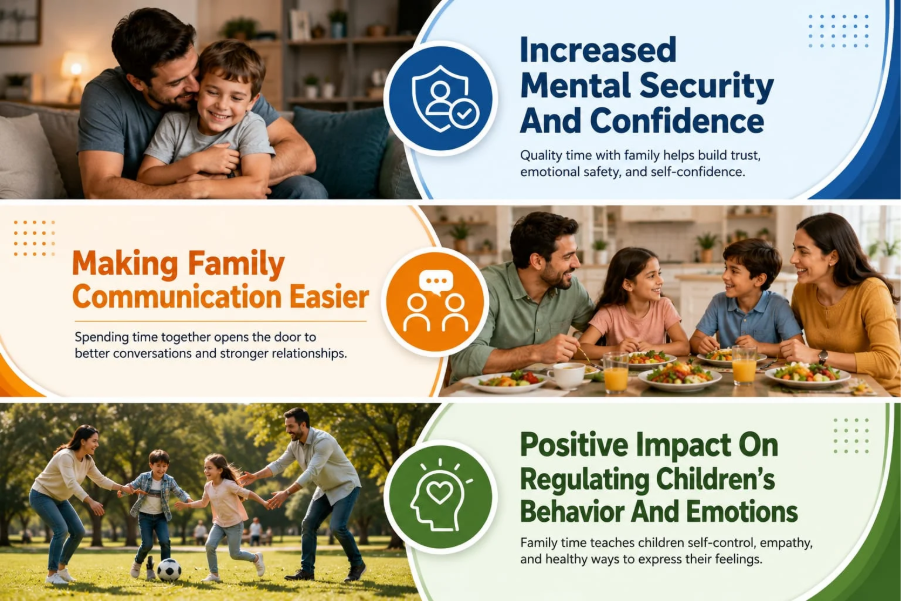
Increased Mental Security And Confidence 

The key to safety is to give importance to the opinions of family members effectively and to create a mindset of standing by them without criticizing their mistakes. If family members receive a lot of love and strong support, then everyone’s confidence increases. This confidence plays a very effective role in facing every challenge. 

Subject Key Steps Positive Impact 
To Speak Openly Listen attentively without judging. Fear of the mind is removed and the bond is strengthened. 
Admitting Mistakes Help them learn without scolding them if they make mistakes. Reducing the fear of failure increases confidence. 
Celebrate Small Successes Appreciate the small achievements of the family. Self-confidence and interest in work increase. 

Making Family Communication Easier 

Family Bonding Ideas play a major role in making communication easier and more natural among family members. When a family member spends so much time with his family, he is able to openly share his feelings and problems with the family members. 

As a result, the number of misunderstandings among family members is greatly reduced and the habit of listening to each other attentively is developed. Especially children and adolescents especially feel comfortable expressing their opinions fully in such an environment. 

As a result, trust and confidence increase among all family members. 

Positive Impact On Regulating Children’s Behavior And Emotions 

  • Proper emotional development: When children receive love, they can easily express fear or anger without holding back. 
  • Increasing tolerance: Family bonds keep children patient and calm in any situation. 
  • Reducing screen time: A beautiful home environment keeps children away from mobile or digital addiction. 
  • Behavioral changes: The habit of sharing, empathy, and respect for elders is easily formed. 
  •  Reducing loneliness and stubbornness: Adequate attention from parents removes stubbornness and loneliness in children. 

Simple Daily Habits That Strengthen Relationships 

Family Bonding Ideas Small daily habits play a very effective role in making your family relationship deeper and stronger. 

For example, greeting each other in the morning, knowing each other about the daily news, making a habit of eating together every day, and talking about all the family members after dinner at night, family relationships are very strong. Although these tasks may seem very small, these small tasks are very effective in strengthening the relationship. 

Teaching family members to appreciate each other, that is, praising each other in return for small help, creates a bridge of respect between each other. 

As a result, each family member can create their own feelings for each other and achieve mental peace even in the midst of a busy life. 

Find out more here: Mum-to-be household routine

Eat At Least One Meal Together 

At least one meal should be eaten together with family members. This creates natural communication and emotional connection with all family members. 

Talking about each day’s experiences and small successes and special concerns at the dinner table helps us understand each other better. At the same time, it is considered a helper for children’s language skills and confidence. 

The habit of eating together attentively without mobile or TV makes family relationships closer and more stable. 

10 Minutes Of Talking About The Day’s Experiences 

The easiest ways to get ideas are by following Family Bonding Ideas. For example, one should spend at least 10 to 15 minutes daily sharing one’s daily experiences with family members and listening to other family members’ daily experiences. 

Who learned what? Or who liked something of the day? Or a matter of the day is the reason for someone’s special concern? 

Constantly discussing all these issues increases mutual understanding. This small amount of time in the middle of a busy life goes a long way in reducing stress and helping everyone gain the ability to speak with confidence and a free mind. 

When such a habit is formed regularly, family members become more open, sympathetic and close to each other. 

Fun Activities To Do At Home 

Conducting enjoyable activities creates a natural connection between family members by laughing and spending time together, playing games together, watching old movies, or telling short stories. Also, every family should organize family quizzes, which can be organized at very low cost. 

If everyone participates in these activities together, the creativity of the children in the family increases and the stress of the adults also decreases a lot. 

If such time can be spent regularly, the atmosphere of the house will become more lively and lively. 

Board Games And Puzzle Games 

Playing board games and puzzles is one of the easiest and most enjoyable ways to engage in family bonding ideas. Games like Ludo, chess, or jigsaw puzzles teach family members to laugh, think, and cooperate together, which makes relationships closer and more vibrant. 

Game Name / Type Why Play? (Advantages) Who Is It Suitable For? 
Ludo And Carrom The rules are easy to understand and everyone can have great fun together. Everyone from children to adults 
Scrabble Along with learning new words, intelligence and talent develop. Children and adults 8+ years old 
Chess Attention increases and strategic thinking improves. Children and adults 10+ years old 
Fun Puzzles And Quizzes A cheerful atmosphere is created and quick thinking skills are enhanced. For everyone of all ages 

Organize A Family Movie Or Story Night 

As part of Family Bonding Ideas, family story night should be organized at least once a week. If they spend time together at night, they learn to laugh together and share their feelings with the whole family. 

  • Stress reduction: Spending a fun time together quickly relieves fatigue and mental stress throughout the day. 
  • Generation gap is reduced: The exchange of life stories of adults and thoughts of children bridges the gap. 
  • Creating memories and values: These family gatherings create beautiful memories and children learn moral lessons from educational stories. 
  •  Reduced personal screen time: The habit of spending time alone on mobile phones is reduced and the depth of communication between everyone increases. 

Effective Ways To Spend Time Outdoors 

There are many people among us who like to spend time outdoors but do not have good relationships within the family. An effective way for them is to practice outdoors, including the environment. 

That is, walking in the park with the family, sitting in an open area nearby and talking with all the family members, or playing light sports in the afternoon and planning a short trip on weekends are particularly useful in this regard. 

Nowadays, people spend most of their time in front of smart phones or bar display lights, practicing the above activities regularly teaches all the family members to enjoy natural light and fresh air. 

At the same time, the use of smartphones and TVs is greatly reduced. As a result, all the family members feel more comfortable talking to each other. 

Benefits Of Walking Or Going To The Park In The Evening 

By following Family Bonding Ideas, we will be able to know very well about the benefits of going to the park and going to the park in the evening. Spending time in the open environment of the park improves the mind and reduces excess stress from the brain. When excess stress is reduced from the brain, the body remains active and it is possible to maintain more attention in every task of daily life. 

  • Mental refreshment: Fresh air and green nature increase the body’s ‘happy hormones’, which instantly relieves the stress of the day. 
  • Opportunity to communicate openly: Easy and meaningful conversations can be had while walking without the distraction of any digital device. 
  • Physical benefits and better sleep: Light walking increases blood circulation and digestion and helps in deep sleep at night. 
  • Screen free time: This time of the evening keeps the eyes and brain calm from the harmful blue-light of mobile phones and TVs. 

Planning A Short Weekend Trip 

  • Closest place: Choose a place within 1-2 hours. 
  • Budget and Opinion: Consider everyone’s preferences and convenience. 
  • Light bag: Only bring emergency clothing and medicine. 
  • Food and water: Keep dry food and water with you. 
  • Flexible time: Relax without rushing. 

Strategies For Deepening Relationships By Age 

By following Family Bonding Ideas, we will learn about effective strategies to deepen the relationship between family members of all ages. By making some small changes in family rules, relationships can be deepened according to age. 

Playing games or telling stories with young children can help them bond with them and increase their sense of security. And an interesting way to deepen the relationship with teenage family members is to listen to them carefully and create opportunities for them to participate in decision-making. 

An effective way to deepen the relationship with adult family members is to share responsibilities with them and discuss openly and respect them. Also, giving an adult member a set time and helping with their daily tasks can create a strong sense of family connection. 

Practical Strategies For Maintaining Warm Relationships In The Long Term 

To maintain a good family relationship in the long term, you need to maintain constant communication and show mutual respect and small positive behaviors. If all family members gather together at some time every day, listen to each other carefully and express gratitude, the foundation of the relationship will be much stronger. 

Even in the midst of the current busy life, taking some time out and enjoying those times with the family actually provides mental peace and reduces family distance a lot. Even if there is a disagreement, discussing it calmly, avoiding insults or harsh language, trust and emotional security will be maintained for a long time. 

Conclusion 

Family Bonding Ideas reminds us that strong family relationships are built through small daily acts of care, attention, and time spent together. While it may be difficult to find time to spend together in a busy life, a few minutes of open conversation every day, eating together, going for a walk, or having a specific family activity each week can go a long way in keeping relationships strong. Children, teenagers, adults, and the elderly—everyone has different needs, so listening to and respecting their feelings is the most effective way to deepen relationships. 

Instead of waiting for a perfect plan, take small steps to spend quality time with your family today. This consistent practice will make family bonds deeper, warmer, and more lasting. 

Popular Posts

Latest Posts

abusive head trauma in children

The essential points to know about abusive head trauma in children along with its prevention and management

Abusive head trauma is importantly a serious form of abuse and it can happen at any time in the family.It also remains as the potential one to cause severe together with life threatening injury to the child.Abnormal and violent shaking with forceful strikes of the child can raise certain health issues to the child as they remain prone not to tolerate such incidents.

As the neck musculature is weak in comparison with large head size may make them more susceptible to acquire head trauma.That is why it is very essential for you to know the causes,risk factors,warning signs and some effective preventive measures in order to tackle such incidents.That’s why it is mandatory for us to ensure a safe environment for the guardians and care givers of the child.

In this article,we try to cover all the important aspects of abusive head trauma that help make you knowledgeable about the causes,risk factors and preventive measures of abusive head trauma in children.

What is the usual understanding of an abusive head trauma to your child?

Abusive head trauma refers to head, neck or brain injury that happens when someone shakes or hits a baby on their own purpose and it can easily hurt a baby. It only takes 1 or 2 hard shakes to seriously hurt a baby’s brain that result in development of shaken baby syndrome,a type of abusive head trauma.

Babies have large and heavy heads in comparison with their bodies, and their necks remain vulnerable to getting injured easily.They can’t have the full control over their head movement as easily as older children or adults do.If you shake a baby,it can vigorously move their head backward and forward in a very quick succession.

This action can shake the baby’s brain and can be very dangerous simultaneously.Rough play like tossing your baby in the air or onto a soft bed are  just as dangerous as you throwing them in air with anger or frustration.No parent or other caregiver should ever shake a baby in order to ensure their brain’s safety or to prevent any abusive head trauma in children.

You may also Read

What things escalate the occurrence of abusive head trauma 

Various risk factors for AHT have been identified by experts that corelates with peculiarities of the child, the caregiver as well as the broader social environment.Though it is very challenging to understand these variables in order to guide the prevention, screening, and early intervention efforts of the abusive head trauma in children.

Child-related risk factors include the following:

  • Persistent crying is difficult to soothe and it is more prominent in children who are 6 to 8 weeks of age.
  • Infantile colic which means frequent episodes of prolonged crying without medical cause.
  • Delayed growth along with poor learning and abnormal movement. 
  • Ongoing health issues requiring medical attention.
  • History of prematurity or low birth weight
  • Multiple births like tweens,triplets births.
  • Unplanned pregnancy together with social and emotional difficulties.

The general contribution of Caregiver and family characteristics augment AHT risk

Caregiver and family-related factors may also augment the risk of happening of abusive head trauma in children who are still very young.These comprise young parents with limited social support, low socioeconomic status, low self-confidence, limited education, or lack of prenatal care with additional risks that may arise from limited childcare experience, difficulty managing stress or frustration.

Mental health challenges, substance use, single-caregiver situations, or previous involvement with child protective services also assist in the happening of abusive head trauma. Certain community-level factors that have the close association for further increased vulnerability are:

  • Social isolation with restrictive access to amusing spaces.
  • Poverty along with Unemployment. 
  • Exposure to domestic violence that comprise partner violence
  • Lack of adequate community support services. 

Incidence rate of abusive trauma to the child

The accurate proven rate of determination of abusive head trauma in children remains challenging and this is due to the absence of a centralized reporting system.It also accumulates the variability of clinical presentations.That is why there is frequent underrecognition of abuse in the family. Abusive head trauma often results from uninterrupted maltreatment rather than it generally having the association of a single acute event. 

In the United States (US), the approximate evidence based incidence of acute head trauma in children who are younger than 1 year generally calculates from 25 to 35 per 100,000 in each year.Abusive head trauma (AHT) is the most common cause of fatal physical abuse in children and the infants are the most vulnerable group who account for the majority of related deaths.

Age Variation who possess acute head trauma

The incidence of abusive head trauma in children actually has a peak age between 6 and 8 weeks and it lines up with the period of excessive infant crying, namely “purple crying period.” The report of mortality rates due to abusive head trauma in families ranges from 10% to 20% and it has a significant drop rate after 1 year of age.Thereby it makes the overall count approximately 3.8 per 100,000 annually.

Geographical distinction of abusive head trauma

Geographic distinction of abusive head trauma in children has been perceived within the entire US.The experts counted the highest incidence based on evidence in the Midwest and the lowest in the Northeast of the country. There is no clear or conclusive explanation that has been notified for these regional variations across the country. 

Sentinel Injuries of the child to cause abusive head trauma

Sentinel injuries frequently antecede a formal diagnosis of child ill-treatment.Consequently it almost counts nearly 25% of children who are later diagnosed with abuse present with previously unacknowledged injuries.Among the findings,bruising and intraoral trauma are the  common ones and it is more particularly in children younger than 3 years of age.As many as 20% of these cases may go unrecognized during initial medical evaluations.  

Variation in Clinical Practice

Clinical practice variation further has the effects on diagnosis of abusive head trauma in children and this is due to biases on caregiver demographics and socioeconomic status.Moreover ethnicity may also affect assessment verdicts.Standardized screening protocols can enhance the identification of abusive head trauma (AHT) and thereby help ensure more consistent evaluation and treatment when ultimately reduce variations and disparities in patient care. 

How abusive head trauma affects a child’s brain and bodily systems 

The factors like biomechanical forces are closely involved in AHT typically include combinations of rotational along with translational, and impact forces. These injury processes may be the outcome of violent shaking, blunt impact, or both simultaneously. Experimental studies comprising computational models, human surrogates together with animal research, and postmortem analyses have emerged the concept of how such forces injure your child’s brain. 

Infants are particularly more susceptible due to close associations of several anatomical and physiological features that favours the occurrence of head trauma.Thereby this also includes a relatively large head-to-body ratio, immature neck musculature,excessive ligamentous laxity, partially ossified skull, and higher intracranial fluid content. These characteristics help amplify the impacts of acceleration-deceleration and rotational forces and thus end up with increasing the risk for diffuse brain injury as well as making them prone to get abusive head trauma in children.

Possible outcomes of abusive head trauma to the child 

Constant shaking can cause the head and neck to move rapidly back and forth which thereby can help stretch and damage your child’s brain blood vessels.After that this may lead to bleeding such as subdural hematoma, subarachnoid hemorrhage, and brain swelling inside your baby’s skull. As pressure inside the skull increases, blood flow to the brain may fall than normal level and also cause injury. Similar to traumatic brain injury, diffuse axonal damage can also affect a baby’s brain function and result in fluctuation in coordination. Direct impact may also cause fractures or concussions. 

Why does abusive head trauma happen?

Many parents and caregivers experience exhaustion and frustration and there may be at times, you might have a temptation to shake your crying baby in order to stop them to cry.It’s important to remember or keep in mind that vigorous shaking can cause serious brain issues and causes abusive head trauma in children.In order to avoid these episodes of exhaustions,you can try try these tips.

  • Place the baby safely: Set them in their cot or crib.
  • Step away: Move out of hearing range for a short break.
  • Collect yourself: Take deep breaths to regain your calm.
  • Phone a friend: Call someone you trust for immediate support.

What are the best ways to comfort your baby who is crying non-stop? 

There are a few things you can try if there is no end in sight of your baby’s crying.

First,you need to check if the crying is due to something straightforward conditions.For instance:

  • Does their tummy need to fill up?
  • Are they uncomfortable because they need a change?
  • Are they feeling a bit under the uncomfortable weather or flushed?
  • Are there any painful gums that make them fussy?
  • Do they struggle to settle down because of exhaustion?

Some important tips to calm down your baby

If there is no clear cause of their continuous crying,then you can try these tricks that can help calm your baby.These are: 

  • Give them a warm hug.
  • Gently rub their back or tummy.
  • Push them back and forth in the stroller.
  • Softly sing a lullaby or talk to them while cradling them.

How can you ensure if your baby has got hurt by abusive head trauma?

It can be very hard to know or tell confidently that a baby has a head injury and it is due to abusive head trauma in children.Some important signs may indicate if there any kind of abusive head trauma or not.These comprise:

  • The baby may feel drowsiness than normal.
  • The baby may experience tremors sometimes with some episodes of vomitings.
  • There is also difficulty in breathing or facing problems in feeding.
  • The kin of the baby may be pale or blue coloured.

The injury can be life-threatening as well as there is risk of getting permanent brain damage.If you think a baby has been shaken vigorously with unsafe manners,you need to seek medical attention from the nearest emergency department as soon as possible.

What actually happens if you shake your baby?

It would be very fortunate for your babies if they experience several rough shakes or any kind of abusive head trauma in children that can make your baby’s brain and meninges hit the hard bone inside their skull.It then causes blood loss from the brain and it is likely due to continuous injury to the brain against the skull bone.

Shaken babies can have brain-related problems that comprise blindness,deafness,several seizures along with facing difficulty to eat or swallow something.Moreover they face leaning,behavioural together with space difficulties.

The Bottom Line

Abusive head trauma in children is actually a preventable but a very critical condition which can eventually mark lifelong health impacts on the child and thereby hamper their normal development.If the parent and care givers become able to recognise the causes,risk factors,early features,they can then be able to protect the vulnerable children as they handle the situation cautiously.

When we ensure a caring and secure environment, we can help assure every child receives the protection and care they fully deserve.Thus proper support along with safe caregiving practice ultimately bring goods to the family and also ensure your child does not get the abusive head trauma. 

Scroll to Top