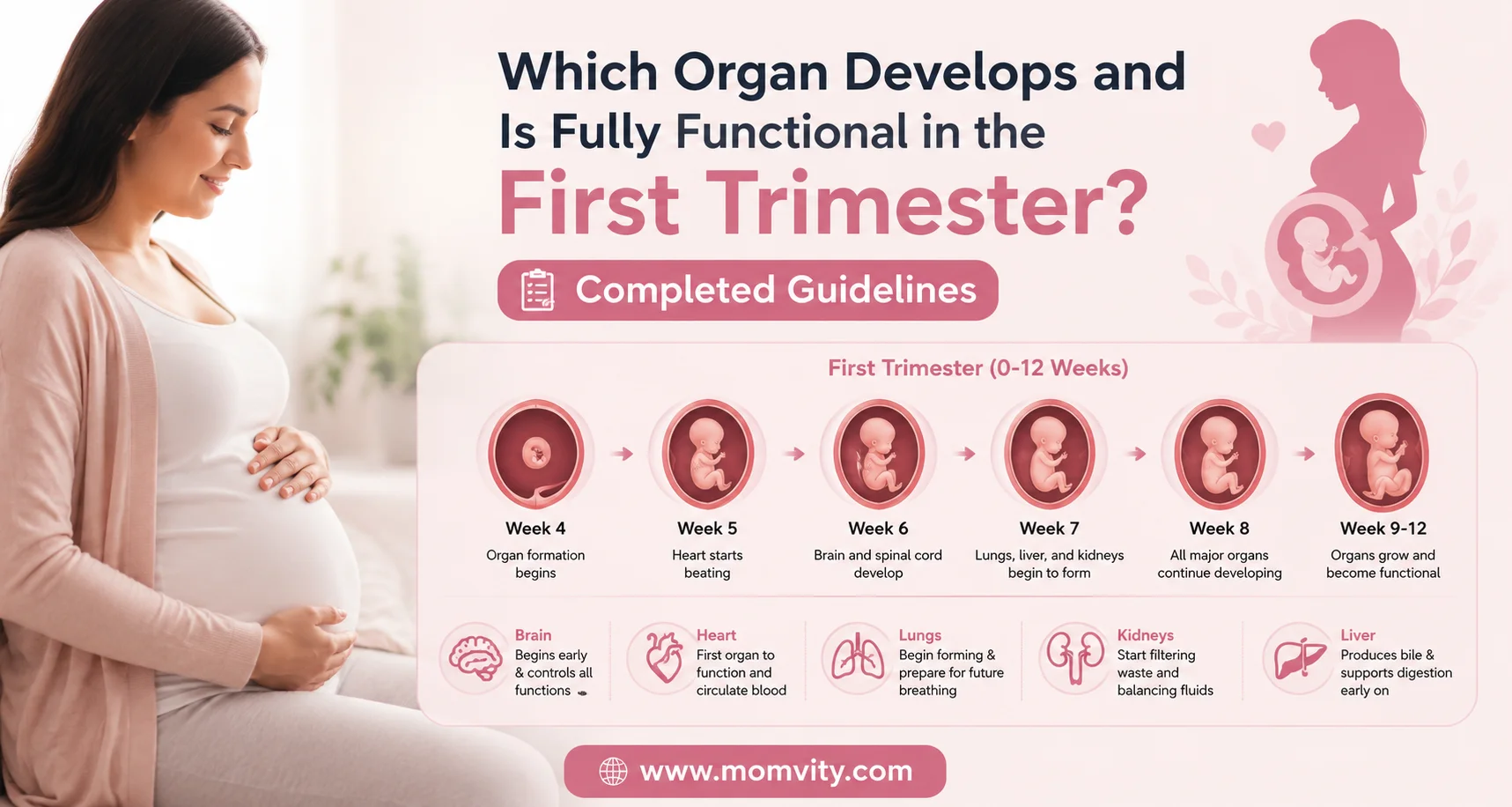

By following the IVF Cost Guide, you will be able to know in detail how much this treatment may cost or what is the percentage of success and you will be able to easily understand the important information required before starting the treatment.
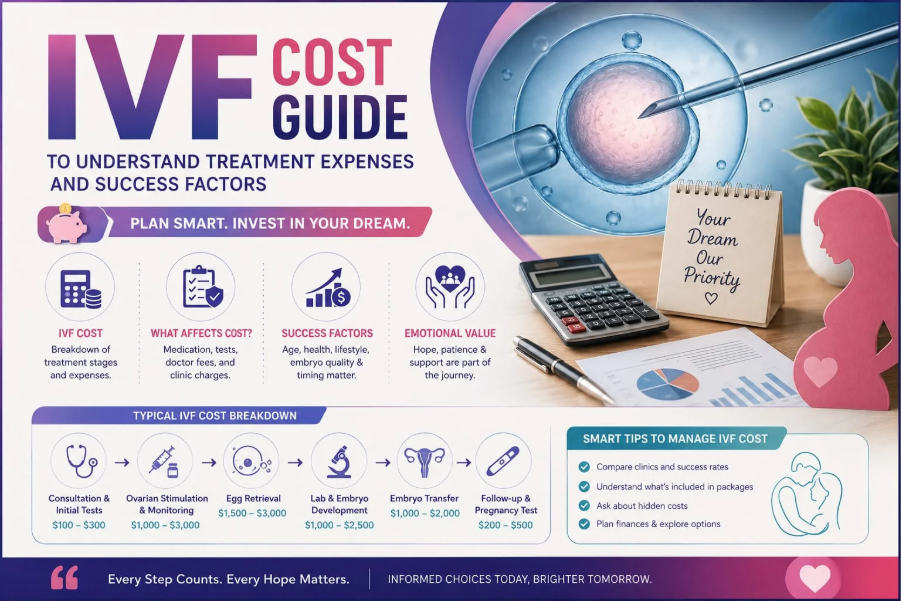
If you are unable to have a child as a happy married life even after trying for a long time, then you must go to a fertility doctor. The doctor’s advice can be your new light of hope.
Among these, in vitro fertilization or IVF is a widely used treatment method. However, we should gain detailed knowledge about it before starting the treatment. Before starting the treatment, many of us have several questions in our minds.
For example, what can the total cost of treatment be? Do we have to pay only the cost of the main treatment or do we have to spend something separately for tests and additional procedures?
In reality, the total cost of IVF is not the same for everyone. Your exact cost will depend on your age, physical condition, and whether you need the necessary tests or multiple cycles.
Similarly, the results of treatment do not only depend on money but also on age, egg and sperm quality. Also, its success depends on health factors.
Therefore, it is not enough to just know the cost before undergoing treatment. It is also very important to know exactly how much it may cost at what stage or what the chances of success are.
Visit For More Fertility Tips
What Is IVF Treatment And Why Can Its Cost Vary?
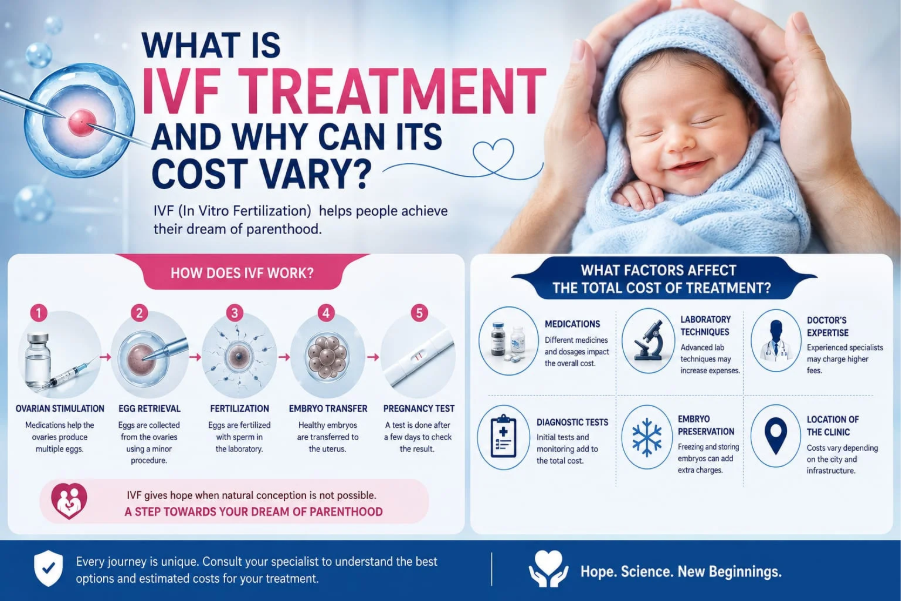
To understand the IVF Cost Guide, it is important to know that IVF or in vitro fertilization is the fertilization of eggs and sperm outside the body through various sophisticated technologies. It is then a special medical procedure to place the embryo produced in this process into the mother’s uterus.
The cost of this process is never the same for every person. The amount of expenditure required for age, medication, egg collection, embryo preservation and additional treatment may be more or less.
Along with this, the total cost also plays an important role on the physical condition of the patient and the type of treatment procedure. Therefore, before starting this treatment, it is necessary to get a full idea of the possible costs.
How Does IVF Work?
Through the IVF treatment method, multiple eggs are first matured using various effective drugs. Then these mature eggs are collected and brought to the laboratory. Then the process of fertilizing these eggs with sperm begins.
After the egg is fertilized, an embryo is created, and then these healthy embryos are kept under special observation for a few days. After the observation period, the suitable embryo is placed in the mother’s uterus.
Then, it is confirmed by testing whether pregnancy has occurred. Hormonal responses and embryo development are regularly monitored throughout the process, so that the doctor can determine the next step as needed.
What Factors Affect The Total Cost Of Treatment?
| Cost Factor | How It Can Affect IVF Cost |
| Age & Health | May require additional tests or treatment |
| Medications | Cost varies by type and duration |
| Number of IVF Cycles | Multiple cycles increase total expenses |
| Additional Procedures | ICSI, embryo freezing, or genetic testing may add costs |
| Clinic & Treatment Type | Fees vary by clinic and treatment approach |
Why Do Costs Vary For Different Patients?
According to the IVF Cost Guide, the main reason why treatment costs vary from patient to patient is that each patient’s age, physical condition, required tests, medications, and treatment complications vary. In some cases, additional procedures or multiple cycles may also increase the cost.
- Age and health: Additional tests or treatments may be needed.
- Type of medication: The number of medications and the duration of use vary in cost.
- Additional procedures: Procedures such as ICSI or embryo freezing may incur additional costs.
What Is Included In The Total Cost Of IVF Treatment?
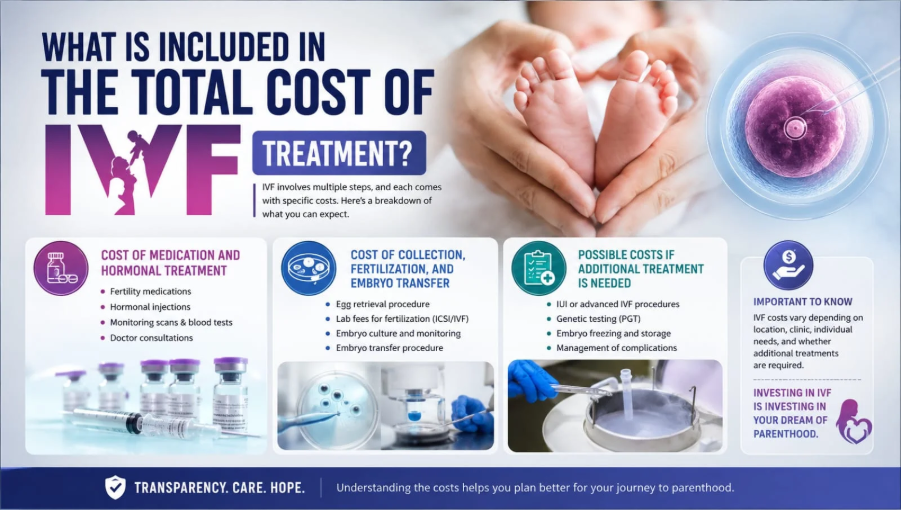
After following the IVF Cost Guide, we will be able to discuss the total treatment costs in detail. When we have to keep in mind that this treatment means only creating embryos, this is not the case. Basically, the costs are added through various steps and treatments from the beginning to the end.
Starting from the initial consultation to the necessary tests, hormonal drugs or egg collection, fertilization in the laboratory and placing the mature embryo back into the mother’s uterus, these steps cost a huge amount of money. Along with this, there may be separate costs for embryo storage.
In some circumstances, procedures such as ICSI or genetic testing are offered at an additional cost. Therefore, patients should make sure they know exactly what is included in the package and what additional costs may apply before treatment.
Cost Of Medication And Hormonal Treatment
| Treatment | Estimated Cost (USD) |
| Ovarian stimulation medicines | $900–$4,000 |
| GnRH antagonist / suppression medicines | $190–$800 |
| Trigger injection | $95–$300 |
| Progesterone support | $47–$300 |
| Other supportive medicines | $99–$500 |
| Estimated medication total | $1,331–$5,900 |
Note: These are general approximate ranges; actual costs may vary depending on the specific clinic, country, patient needs, and brand used.
Cost Of Collection, Fertilization, And Embryo Transfer
- Egg Retrieval: After medication, mature eggs are collected through a minor medical procedure. Estimated cost $800–$2,500.
- Fertilization: The collected eggs and sperm are fertilized in a laboratory to create an embryo. Typically, IVF laboratory costs can range from $1,000–$3,000.
- Embryo Transfer: A suitable embryo is placed in the uterus. Estimated cost $500–$1,500.
- Additional procedures: ICSI or embryo freezing may be added to the basic cost if needed.
Important: Many clinics include some or all of these steps in an IVF package, so it’s important to get the clinic’s full cost breakdown before assuming separate costs.
Possible Costs If Additional Treatment Is Needed
After following the IVF Cost Guide, in some cases, additional treatments may be required beyond the standard treatment. This increases the cost of treatment.
For example, ICSI, embryo freezing, frozen embryo transfer or necessary genetic testing may incur additional costs. The appropriate additional treatment varies according to the patient’s condition and the advice of the healthcare professional.
Therefore, we should get detailed information from the clinic authorities before starting the treatment.
What Factors Affect The Chances Of Success Of IVF?

To fully understand the IVF Cost Guide, it is important to consider the likelihood of success. This treatment is not only dependent on the additional cost but also depends on the age of a patient and the structural quality of the eggs and sperm.
- Age: Egg quality and chances of conception may change with age.
- Egg quality: Good quality eggs can increase the chances of successful fertilization.
- Sperm quality: The number, motility, and structure of sperm are important.
- Embryo quality: A healthy and fit embryo can affect the outcome of implantation.
- Uterine health: Uterine structure and other reproductive issues can play a role in success.
- Previous treatment history: Previous IVF or pregnancy experience is also considered in the treatment plan.
How Do Costs And Success Rates Change If Multiple IVF Cycles Are Needed?
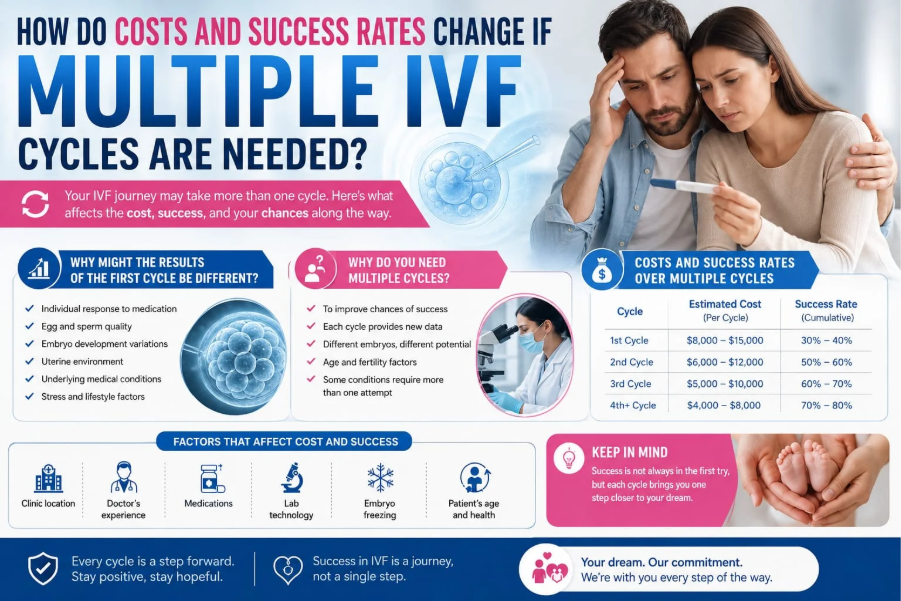
By following the IVF Cost Guide, we will know that the total cost of treatment can increase if multiple IVF cycles are required. The more cycles, the higher the cost, and this is normal.
With each cycle, the additional cost of medication, egg collection, and embryo transfer is added repeatedly. However, one thing we must keep in mind is that if the first time is not successful, we should not give up. We should try again because the results are not the same every time.
Why Might The Results Of The First Cycle Be Different?
- Age effects: The number and quality of eggs change with age, which can lead to differences in results.
- Egg quality: Not having enough healthy eggs can reduce the chances of creating a good embryo.
- Sperm quality: The number, motility, and structure of sperm can affect the outcome of fertilization.
- Embryo quality: Some fertilized eggs may stop developing or fail to form a viable embryo.
- Uterine preparation: The lining of the uterus and overall reproductive health play a role in the outcome of embryo implantation.
- Individual response to treatment: Everyone’s body may respond differently to hormonal medications.
- Other health factors: Some reproductive problems or previous medical history can also affect the outcome.
Why Do You Need Multiple Bicycles?
By following the IVF Cost Guide, you will know that in some patients, no mature eggs are found in the first cycle. In their case, a second cycle is required. Or, even if eggs are found, fertilization is not successful or the embryo does not implant properly in the uterus, pregnancy does not occur.
| Reason | Why Another Cycle May Be Needed |
| Low Egg Yield | Too few eggs may be retrieved for successful treatment |
| Fertilization Failure | Eggs may not fertilize successfully |
| Poor Embryo Quality | Suitable embryos may not develop |
| Failed Embryo Implantation | Pregnancy may not occur after transfer |
| Age-Related Factors | Egg quality may affect treatment outcomes |
| Individual Treatment Response | The body may respond differently to fertility medicines |
Possible Financial Plan For Additional Bicycles
- First cycle costs: Find out what services are included in advance.
- Additional cycles: Additional medications, tests, and treatment fees may apply.
- Additional procedures: Costs may increase if ICSI or embryo freezing is required.
- Emergency budget: It is a good idea to set aside money for potential additional expenses.
- Clinic fees: Confirm any costs outside of the package in advance.
How To Set Realistic Expectations For IVF Treatment?
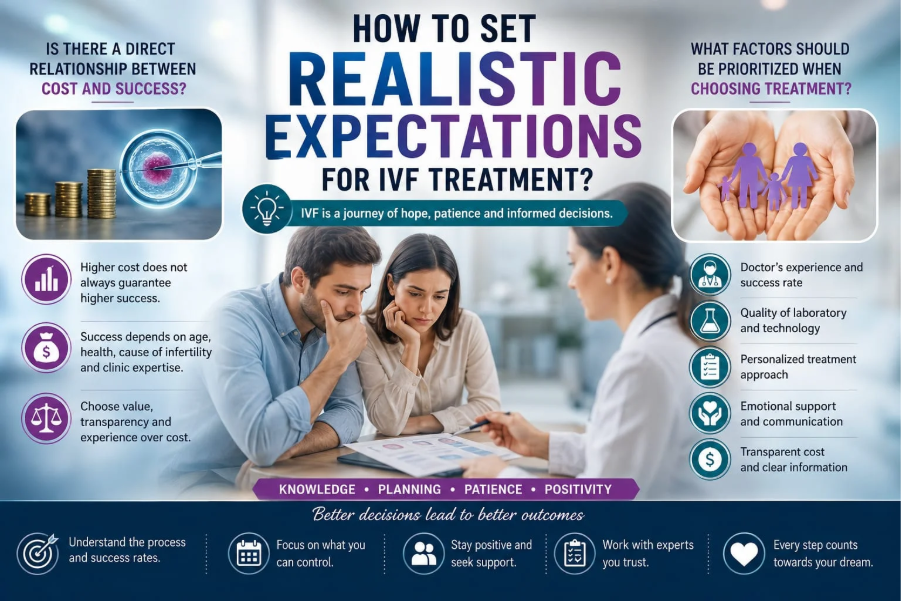
To set realistic expectations for IVF treatment, it is important to understand that not every couple will have the same results. Age, egg and sperm quality, embryo health, and overall reproductive well-being can all influence the likelihood of success. There is no guarantee that you will get pregnant on the first cycle.
Therefore, it is important to have a clear idea of the possible results, time, cost, and necessary next steps that your doctor will give you. This will make it easier to prepare mentally and financially for the entire treatment process.
Is There A Direct Relationship Between Cost And Success?
- Higher cost does not mean higher success. Expensive treatments do not guarantee pregnancy.
- Additional procedures are not always necessary. Additional technologies should be used only when necessary according to the doctor’s advice.
- A proper treatment plan is important. It is not only the cost that matters, but also the selection of appropriate treatment according to the patient’s needs.
- Cost and success are different things. Financial capacity may increase the chances of treatment, but it does not guarantee results.
What Factors Should Be Prioritized When Choosing Treatment?
While choosing this treatment method by following the IVF Cost Guide, it is not advisable to prioritize only the low cost. Rather, the most important thing here should be to analyze the actual experience of the doctor and the success data of the clinic.
Additionally, necessary medical care and treatment facilities should be provided without delay. At the same time, one should get a clear idea about the total possible cost and the cost at home due to additional procedures and the risks of this treatment.
Finally, it is safest to make a decision based on the doctor’s advice and evidence-based information.
Conclusion
The IVF Cost Guide shows that the cost of IVF treatment is not limited to a specific amount; the total cost can vary depending on the patient’s age, physical condition, necessary tests, medications, treatment methods, and the need for additional cycles. Therefore, it is important to clearly know which services are included in the clinic’s package and which costs will have to be paid separately before starting treatment.
Similarly, the chances of success of IVF should not be judged solely by the cost. The quality of the eggs and sperm, the quality of the embryo, age, uterine health, and previous medical history play an important role in the outcome. Instead of getting discouraged if the first cycle is not successful, it is necessary to analyze the previous results with the doctor and plan for the next one.
Planning based on accurate information and expert advice is the most effective way to proceed with IVF treatment more consciously.