

Third Trimester is the final stage of pregnancy where both the mother and the baby prepare for the upcoming labor. During the last three months of pregnancy, the body becomes heavy and various physical complications can occur, so the importance of proper rest and nutrition during this time is immense.
The period from 28 to 40 weeks of pregnancy is called the third trimester. This is a time when the weight of the unborn baby increases rapidly and every organ in its body starts to mature. During this time, the mother’s body is under extra pressure, which can lead to back pain, watery feet, or trouble sleeping. This last stage of the Third Trimester has to be passed with great patience and caution. Every small change or physical discomfort should be taken seriously so that no major complications arise during delivery.
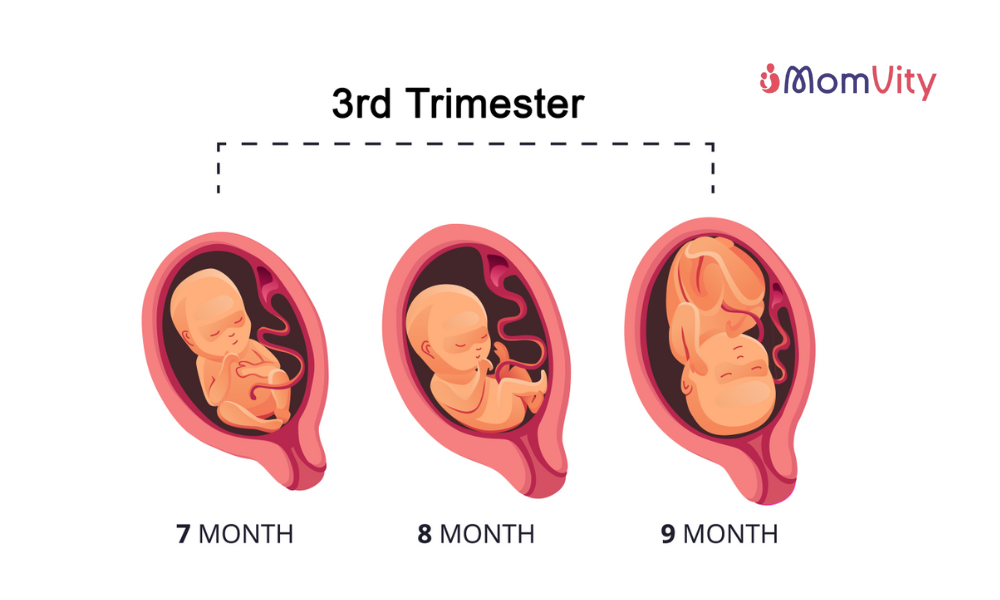
When does the third trimester start?
The third trimester begins from the 28th week of pregnancy and lasts until the birth of the baby. This is the final stage of your long 9-month journey. When you reach this stage after passing through early pregnancy, your body starts to fully prepare for the arrival of the baby. Usually this period is considered from 28 weeks to 40 weeks, but in many cases the baby can be born between 38 and 42 weeks.
Main characteristics of the third trimester
Several new changes occur in the body during this last stage of pregnancy:
Rapid growth of the baby: During this period, the baby gains weight very quickly and various organs of his body become complete. The baby’s movements are felt much stronger and clearer than in early pregnancy.
Braxton Hicks contractions: The body sometimes produces mild tightening or false labor pains in the lower abdomen to prepare for labor, which are completely different from the cramping of early pregnancy.
Sleep problems: The size of the abdomen and the need to urinate frequently can make it difficult to find a sleeping position at night.
Body weight and abdominal growth
As you enter the second trimester of pregnancy, your body weight starts to change significantly as your uterus is growing rapidly and your baby is taking up space. Gaining weight is not only normal during this time, but it is also a positive sign of your baby’s healthy development. Although you may not gain much weight in the first three months, you may gain about half a kilogram or more per week between weeks fourteen and twenty-seven, which is needed to meet the needs of your muscles, bones, and extra blood circulation. Your belly will now gradually start to round out, which is clearly visible from the outside, and this new physical change will give you a full sense of being a mother.
When does the Third Trimester start?
The last stage of pregnancy or the third trimester is the final waiting period to hold your baby in your arms. The beginning and duration of this stage are discussed in detail below:
Exact duration
In terms of weeks: The period from the beginning of the 27th week of pregnancy to the 40th week (or until the baby is born) is called the third trimester.
In terms of months: It extends from the beginning of the 7th month of pregnancy to the end of the 9th month or the beginning of the 10th month.
In terms of days: This stage begins from about the 183rd day of pregnancy.
H3: The importance of this period
At this stage, your baby starts growing very quickly and gaining weight. The baby’s bones are now strong, he can open his eyes and his lungs are getting ready to breathe in the outside world. Your body also starts preparing itself for labor through hormonal changes during this time.
H4: Things to note at this time
Baby’s movements: From 27 weeks, the baby’s movements or kicks become much stronger and more regular.
Weight gain: The mother’s weight increases the fastest during these 3 months.
Physical changes: Due to the large belly, some discomfort may begin to occur while walking and sleeping.
Why back and waist pain increases
Back and waist pain is a common complaint of almost every pregnant woman in the third trimester. As your baby grows, more pressure starts to be put on your bones and muscles.
The main reasons are discussed below:
Change in the center of gravity: As your baby grows, your uterus stretches forward. As a result, your body’s center of balance changes. To maintain this balance, you unconsciously lean backward or stand, which puts a lot of pressure on the muscles in your lower back.
Effect of hormones (Relaxin): During pregnancy, a hormone called relaxin is released in the body. It relaxes the ligaments and joints in your pelvic area so that the baby can come out easily during delivery. Due to this relaxation, the joints in the spine and waist become a little loose, resulting in pain.
Excess weight: In the third trimester, both the baby’s weight and your own weight increase rapidly. The entire responsibility of carrying this extra weight falls on your spine and waist.
Muscle stretching: Due to the growing uterus, your abdominal muscles (Rectus Abdominis) move to both sides and stretch. As a result, the abdominal muscles cannot support the spine as before, which further increases back pain.
Easy ways to reduce pain
To reduce pain, it is very important to practice sitting and standing in the right posture. Always try to sit with your back straight and put a cushion or small pillow behind you while sitting; also, change positions occasionally instead of standing for long periods of time.
Some tips for comfort
Hot or cold compresses: Applying a warm water bag or ice pack to the painful area can provide relief.
Proper shoes: Use comfortable low heels or sports shoes instead of high heels or completely flat shoes.
Sleeping on the left side: While sleeping, sleep on the left side with a pillow between your knees, this reduces pressure on the waist.
Discover more here: First trimester weeks
Why do you have sleep problems?
In the third trimester, it becomes almost impossible to sleep peacefully for a long time. Although it is very tiring, it is very normal in medical terms. The major changes inside your body are the main causes of your sleep disturbance.
The main causes of sleep problems are discussed below:
Lack of comfortable position: Your stomach is now very big and heavy, due to which it is impossible to sleep on your stomach or stomach. Even if you lie down on any side, it becomes difficult to get comfortable due to the weight of the stomach and the baby’s movements.
Frequent urination: The uterus grows and puts pressure directly on the bladder. As a result, you wake up to urinate frequently at night.
Heartburn and acidity: Pregnancy hormones slow down the digestive process and relax the stomach valve. When you lie down, stomach acid rises up into the throat, which increases heartburn and disrupts sleep.
Restless Legs: Many women experience leg cramps or discomfort at night, which worsens when they try to sleep.
Anxiety and nightmares: As labor approaches and the baby’s well-being becomes a subconscious concern. As a result, instead of falling asleep, they may experience repeated sleepiness or fearful dreams.
Ways to improve sleep quality
Finish your dinner at least 2-3 hours before bedtime and don’t drink too much water right before bed. Try to keep your bedroom dark and cool, and avoid using your phone or laptop before bed.
Some tips for better sleep
Pillow use: Use a long pillow (body pillow); place it under your stomach and between your knees to provide comfort to your spine and abdomen.
Sleeping on your left side: Doctors recommend sleeping on your left side during this time, which increases blood flow to the uterus and facilitates kidney function.
Bath in lukewarm water: Bathing in lukewarm water before going to bed relaxes the muscles and helps you fall asleep faster.
How are the baby’s movements?
In the third trimester, the baby’s movements become much stronger and more regular than before. At this time, you can clearly feel not only the baby’s kicks, but also his body rotation, hiccups or stretching of his arms and legs.
Movement patterns and changes:
Strong kicks and pushes: After 28 weeks, the baby’s bones start to harden and the muscles become stronger. As a result, when he pushes with his legs, you can clearly see it even through the belly.
Lack of space: After 33-34 weeks, the baby’s size has become much larger, so he cannot dig inside the uterus as before. At this time, twisting the body or bending the elbows and knees may be felt more than big pushes.
Hiccups: Sometimes a rhythmic pulsation is felt in the abdomen, which lasts for a few minutes. This is actually a baby’s hiccups, which are a healthy sign of his lungs maturing.
Sleep and wake cycle: The baby in the womb also develops a specific sleep routine. Usually, he can sleep for 20 to 40 minutes continuously, then no movement is felt. However, if you eat or lie down at night, the baby may become more active.
Kick count or movement counting rule
The easiest way to understand the well-being of the baby is to count his movements. At a certain time every day (usually after meals or during rest), sit quietly and notice how many times the baby moves; if you feel at least 10 movements in 2 hours, then you should understand that everything is fine.
When to tell the doctor
If the movement suddenly decreases: If you see that the baby is moving much less than before or has moved less than 10 times throughout the day.
If there is no response for a long time: If the baby does not move within 1 hour even after eating a sweet food or drinking cold water.
A radical change in movement pattern: If movements suddenly seem very unusual or irregular.
Shortness of breath or wheezing
Shortness of breath or panting with little exertion is a very common experience in the second trimester of pregnancy, which is mainly due to the increasing demands on your body and hormonal changes. During this time, your growing uterus puts upward pressure on the diaphragm below your lungs, which means your lungs don’t have enough room to expand as fully as they used to. In addition, due to the increased levels of the hormone progesterone in your blood, your brain sends signals to you to take deep breaths repeatedly so that your unborn baby can get enough oxygen. Although it may feel quite uncomfortable, in most cases it is a normal part of your baby’s development and there is nothing to worry about unless you have other serious physical problems.
Causes and physical effects of shortness of breath during pregnancy
Your body is now working harder than ever to provide enough oxygen for both you and your baby, which is why it is normal for your heart rate and breathing rate to increase slightly. As your uterus gradually rises towards your rib cage, you may feel that your lungs are compressed, making it difficult to breathe. Or you get tired even after a short walk. This stage usually starts in the middle of pregnancy and may remain mild until the baby descends before delivery. This is actually an adaptation process of your body that ensures that there is no shortage of oxygen in your growing baby’s blood and it also gradually increases the mother’s body’s tolerance.
What you can do if you feel shortness of breath
- Always try to sit up straight with your back straight and shoulders back so that your lungs have more space to breathe.
- While sleeping at night, sleeping with your head slightly elevated with a few extra pillows under your back will make it much easier to breathe.
- Practice walking slowly instead of doing any heavy work or running quickly so that your body’s oxygen demand does not increase suddenly.
- Doing yoga or light breathing exercises can help increase your lung capacity and provide mental peace.
Why does swelling occur?
Slight swelling of the hands, feet or face in this second stage of pregnancy is a very normal physical process, which is known in medical terms as ‘edema’. Your body is now producing about 50 percent more blood and fluid than usual to meet the needs of the baby, which helps to soften your tissues and expand the pelvis during delivery. This excess fluid often starts to accumulate in the lower part of the body, especially in the feet and ankles, due to gravity, which can make your shoes feel tight or your feet feel heavy at the end of the day. This is basically your body’s protective mechanism that ensures that you and your baby’s increasing fluid needs are met.
Causes of swelling and the role of hormones
During pregnancy, the effect of the progesterone hormone and the increasing pressure of the uterus slow down the blood flow through your veins, which increases the tendency for fluid to accumulate in the lower part of the body. This problem is usually felt more at the end of the day or after standing for a long time and can sometimes be more pronounced in hot weather, but it is mostly temporary and the swelling will go down on its own after delivery when the body expels this excess fluid.
What you can do to reduce swelling
- Avoid standing or sitting with your legs dangling for long periods of time and try to walk around occasionally.
- While resting or sleeping at night, keep your legs slightly elevated with one or two pillows under your feet to facilitate blood circulation.
- Drink plenty of water throughout the day because when the body is adequately hydrated, it does not feel the need to retain excess fluid.
- Avoid wearing socks or shoes that are too tight and wear comfortable flat shoes that will reduce pressure on your feet.
Signs of labor preparation

In the last weeks of pregnancy, your body starts preparing itself for labor. Some signs appear a few weeks before labor, while others indicate that labor is about to begin soon.
The main signs are discussed below:
Lightening of the baby: A few weeks or days before labor, the baby descends into your pelvis. This will reduce pressure on your lungs and make it easier to breathe, but may increase pressure on your lower back or bladder, causing frequent urination.
Cervical changes: As labor approaches, your doctor may notice during a checkup that your cervix has started to thin (effacement) and has begun to open (dilate).
Mucus plug (Bloody show): During pregnancy, a thick layer of mucus protects the cervix. Before labor, it may come out of the vagina, which looks like a light pink or bloody sticky discharge.
Increased Braxton Hicks or false pain: Abdominal muscle tightening or light twisting may become more regular than before. However, these may decrease with rest or walking.
Final sign of labor starting
When actual labor pains or ‘active labor’ begin, the contractions or contractions become much more intense, regular and frequent, which do not decrease even with rest. Also, if a lot of fluid or water suddenly comes out of the vagina (water breaks), then you should understand that the labor process has begun.
When to prepare to go to the hospital
Regular contractions: If the pain occurs every 5 minutes and each pain lasts at least 1 minute.
Water breaking: If your ‘water breaks’ or fluid starts to come out of the vagina.
Severe back pain: If the pain starts in the lower back and spreads to the front of the abdomen.
Bleeding: If bright red blood appears in the vagina.
Mental changes
In the third trimester, along with the physical pain, you also experience many emotions and feelings. As well as the joy of the arrival of the baby, there is also a kind of unknown fear or anxiety about the future responsibilities and delivery. The effects of hormones and lack of sleep further increase these mental changes.
The main mental changes are discussed below:
Birth Anxiety: Almost all expectant mothers have this thought about how difficult the delivery will be or whether everything will be fine. As the delivery time approaches, this anxiety can become more intense.
Nesting Instinct: This is a special mental state where the mother feels a strong urge to organize the house, clean or shop for the baby. This is basically a natural way of preparing herself mentally for the arrival of the baby.
Mood Swings: Like in the first trimester, you may suddenly become irritable or overly emotional due to hormones. It is very normal to cry or get upset for small reasons.
Lack of attention (Pregnancy Brain): Sometimes you may forget small things or have trouble concentrating on any task. This happens because the entire attention of the body and mind is now on the baby.
Ways to maintain mental peace
Share your fears or thoughts openly with your husband, family member or friend; this reduces the burden on the mind a lot. Getting enough rest and listening to light favorite songs or reading books works like magic to reduce stress.
Some tips to keep your mind healthy
Positive thinking: Read positive stories of childbirth and avoid negative talk.
Light exercise: Take a walk for some time every day as recommended by the doctor, which increases the ‘feel-good’ hormones in the body.
Adequate sleep: Lack of sleep makes you irritable, so take small ‘power naps’ during the day.
Time for yourself: Do a hobby that gives you pleasure.
What is important to keep in mind in the third trimester?
This last stage of pregnancy or the Third Trimester is the final stage of your long wait where, along with the rapid development of the baby, there are also major changes in your body. At this time, your uterus is now the most expanded, which puts pressure on the lungs and stomach, which can increase your physical discomfort a little. Your body will start giving signals to prepare for the baby to come into the world. So, this period of twenty-seven to forty weeks is very sensitive and alert. Your main task now is to keep a close eye on every movement of the baby and the smallest changes in the body, which will lead you to a safe and successful delivery.
Mental and physical precautions of the last stage
It is very normal to feel back pain and fatigue due to the rapid weight gain of the baby in the third trimester, but the most important thing is to pay attention to the baby’s movements or kick count, which is the main indicator of his well-being. During this time, you should check your blood pressure regularly because high blood pressure can pose risks like preeclampsia for you and the baby. In addition, your body is now experiencing false labor pains or Braxton Hicks contractions. Contractions will start the labor exercises which will help you understand the difference between real labor pains. Keeping yourself mentally calm and preparing for the postpartum period is one of the most important parts of this trimester which will make your new motherhood journey enjoyable.
Always try to turn to your left side while sleeping which helps the most in keeping the blood circulation of your uterus and baby normal.
Conclusion
This long and exciting journey of pregnancy is as joyful as it is a big test of your patience and awareness as a mother. Each trimester or stage brings new changes to your body, which may sometimes feel uncomfortable, but in fact it is your body’s great preparation for bringing a new life into the world. From controlling caffeine levels to careful monitoring of the last stages—every small step you take ensures a healthy future for your baby.