

Looking for a safe way to stay fit while pregnant? Discover the best low impact exercise during pregnancy to boost your energy and ease labor pain.
It is very important for pregnant mothers to keep their bodies fit.
These days, doctors advise light exercise more than sitting at home and spending idle time. If the body is active, the baby grows better and the pain during delivery is also reduced. However, doing any heavy work or jumping is not right at this time.
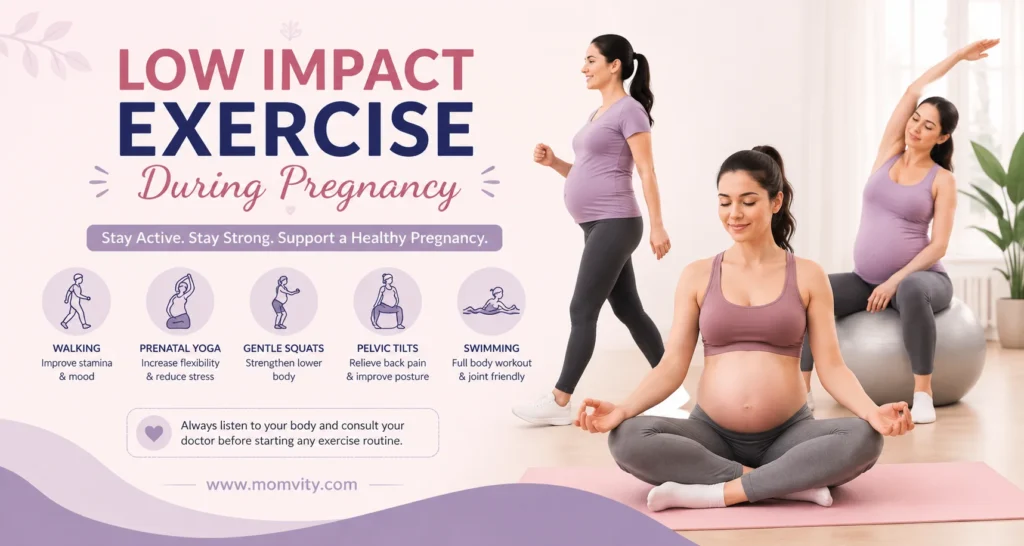
Thinking about the safety of the mother and the child, American doctors have given some special rules. If you want to take care of yourself from the very beginning, then it is mandatory for you to know these rules. Let’s find out how to keep your body healthy safely
How to keep your body healthy and safe.
Why is it so important to keep your body active during pregnancy?
During pregnancy, the body’s hormonal balance fluctuates. For this reason, many people’s minds are dead all the time, and their bodies also match. If you lie down and sit completely still during this time, the joints of the body will become stiff.
The strength that the body needs to endure that intense pain on the day of delivery cannot be obtained by lying down. For this reason, doctors emphasize the most on doing “low impact exercise during pregnancy” during this time. By doing this, your lungs will work better, blood circulation will be active, and your mind will also be relaxed.
1. Reducing back and waist pain
The bigger the baby, the more pressure on the mother’s waist increases. Light movements loosen the waist muscles and reduce pain.
2. Ways to sleep well at night
Many people do not get sleep at night during pregnancy. If you move your arms and legs a little during the day, your body gets tired, and if you put your head on the pillow at night, you will fall asleep.
3. Making the birth easier
If the pelvic or lower abdominal muscles are active, the chances of a normal delivery are greatly increased. If the body is flexible, it is easier to give birth to a child.
The top 3 light exercises preferred by American mothers
American gynecologists advise mothers to do something that puts less strain on the body. If you follow these rules, it is possible to keep the body strong without any danger. Let’s see the safe list.
1. Walk regularly every day
There is nothing better than walking from the first day to the last day of pregnancy. It doesn’t require any extra effort to do this, and you can also apply it to the fresh air outside.
2. Safe swimming
In water, the body weight feels like half of it. Swimming does not put any pressure on the joints or bones, and the whole body gets great comfort together.
3. Special Pregnancy Yoga
Yoga or yoga exercises keep the body balanced. It works like magic to remove the mental fears and anxieties of mothers.
What are the correct rules for doing yoga during pregnancy?

Not all yoga is for pregnant mothers. Lying on your back or doing postures that put pressure on the stomach should be completely avoided. Always take the advice of an experienced person and wear loose cotton clothes and do these postures.
What things should you keep in mind while exercising?
We will have to pay close attention to keeping our bodies healthy and to ensuring that no harm comes to the baby.Overexerting yourself is a big mistake at this time. The American Health Association has set some strict rules in this regard.
Don’t let your body get hot
While exercising, make sure that your body doesn’t sweat or get too hot. Being too hot can cause problems for your baby.
Drink water frequently
Always keep a water bottle with you while exercising. Taking a sip of water every 10-15 minutes prevents your body from getting dehydrated.
Understand your body’s fatigue
If your body says you can’t do it anymore, don’t force it for even a second. Whenever your body tells you to rest, lie down or sit down.
An urgent and cautionary list for you
It is very important to understand which exercise suits your body. By looking at the table below, you will easily understand which ones are good for you and which ones are absolutely forbidden.
Simple guidelines for choosing exercises
| Types of Exercise | Why? | Who is prohibited? |
| Walking for 30 minutes every day | Keeps the heart healthy and prevents fat accumulation. | Those who have been told by their doctor to stay on complete bed rest. |
| Light stretching at home | Relieves muscle stiffness and reduces back tension. | Those with a low-lying placenta. |
| Exercise in water | protects the body’s joints. | Those who have a history of water breaking or premature labor. |
How to use the information in the table?
What has been stated in this table are just some general rules. If you have any complications, it would be wise to consult this chart and get the green light from your own doctor.
When should you stop exercising completely during pregnancy?
Not all mothers’ bodies are the same. In some cases, if you experience some symptoms even while doing “low impact exercise during pregnancy”, you have to stop it immediately. If these symptoms appear, you should go to the hospital without delay.
1. Sudden dizziness or blackouts

If you suddenly feel dizzy or your chest is pounding while exercising, you should understand that your body is lacking oxygen.
2. Severe tension or pain in the lower abdomen
If you start feeling any kind of twisting or period-like pain in the abdomen, you should immediately lie down on the ground and stop moving.
3. Water or blood coming out of the body
This is the most dangerous symptom. If even a small amount of fluid or bleeding is seen, go straight to the doctor’s chamber without saying anything.
Discover more here: aromatherapy for labor and birth
What kind of exercise should you do in which month of pregnancy
The body feels sluggish for the first three months after the baby arrives. You cannot do anything heavy at this time. Doctors say that initially, the body needs time to adapt. However, after four months, the body’s strength returns.
During this time, it is safest and most comfortable to do “low impact exercise during pregnancy”. This increases blood circulation in the body and nutrients reach the baby properly. In the last three months, the stomach becomes very large, so it is difficult to stand for a long time. Then, you should focus on light arm and leg movements that can be done while sitting.
Simple rules for the first three months
During this time, the body makes room for the baby. So, you cannot take too much stress. Just walking for 10 minutes in the morning and afternoon indoors or on the balcony is enough.
Proper exercise in the middle three months
The body is at its best during the four to six months. Regularly doing “low impact exercise during pregnancy” during this time keeps weight under control and reduces the risk of diabetes.
Caution in the last three months
During this time, there is a lot of pressure on the waist and back. So, you should do light stretching like moving your fingers and toes while sitting on the bed or sofa.
Some special home advice from American doctors

Some special charts are given by the hospital for modern mothers in America. They keep their bodies fit through small household chores. There is no need to go to the gym separately. If you want to continue “low impact exercise during pregnancy” indoors, then practice wearing soft shoes. Walking barefoot on a hard floor can cause pain in the ankles. Always remember that your comfort is the main thing.
Using the familiar environment of the house
If you don’t have time to go outside, get a mat indoors and sit upright. The habit of breathing in and out long and long is a good “low impact exercise during pregnancy” that keeps the mind calm.
Light movements to the rhythm of music
To keep your mind good, play some soft music in the house. This makes the atmosphere of the house beautiful and provides a kind of positive energy to the body.
Bringing the body back to its previous form after delivery
After the birth of a child, the entire routine of mothers is turned upside down. They do not sleep properly at night and feel stressed all the time. Doctors in Europe say that one should not even think about heavy exercise immediately after delivery. The body should be given at least six to eight weeks to recover on its own. When your body overcomes the internal wounds, then “low impact exercise during pregnancy” can be slowly started. This keeps new mothers away from depression or mental illness.
Adjusting the hormones of the mother’s body
Due to hormonal changes after delivery, mothers get tired very quickly. Light movements increase the happy hormone in the body, which relieves fatigue.
Removing looseness of the lower abdomen
The skin and muscles of the abdomen become loose due to pregnancy. Starting light “low impact exercise during pregnancy” at the right time helps the muscles to become strong and tight again.
New habits of deep sleep
Taking care of the baby takes up most of your sleep. If you keep your arms and legs active for at least 15 minutes a day, even a short sleep will be very deep and comfortable.
Some secret tricks to increase the effectiveness of exercise
Not only do you have to move your arms and legs, you also have to pay close attention to your food. It is never a good idea to do any kind of exercise on an empty stomach. Again, exercising on a full stomach can cause vomiting. So, the rule is to do “Low impact exercise during pregnancy” after half an hour of eating something light. If you follow these small things, you will see very good results with your own eyes in a few days.
Eat a nutritious light breakfast
You can eat a banana or two dates before starting work. This gives the body instant energy and prevents dizziness.
The importance of adequate rest
As much time as you spend on exercise, you should completely relax your body and rest. Without rest, muscle fatigue will not go away.
Remove fear from your mind
The most important thing is that you cannot keep any fear in your mind. If you believe that this “Low impact exercise during pregnancy” is good for you and your baby, then the body will agree on its own.
Conclusion
This entire journey of pregnancy is the most beautiful and at the same time the most difficult time in a woman’s life. At this time, it is most important to understand your own body language. You cannot force your body by listening to the rules of any book or someone else’s words.
Modern medical science teaches us that the health of the mother is necessary first of all for a healthy baby. If you take care of yourself according to the rules every day, eat nutritious food and keep your mind happy, then that difficult day of delivery will become much easier for you. Trust yourself, put away worries and enjoy every moment of motherhood with joy.