
“Choking hazard foods for toddlers” — Dangerous foods for babies and warnings

Nusrat Ayaan

Published: 22/06/2026
Updated: 22/06/2026

Learn which choking hazard foods for toddlers are most dangerous in Europe and how to prepare meals safely to protect your child every day.
Mothers are terrified when their little ones eat. A little carelessness can lead to danger. Thousands of children across Europe are hospitalized every year after food gets stuck in their throats.
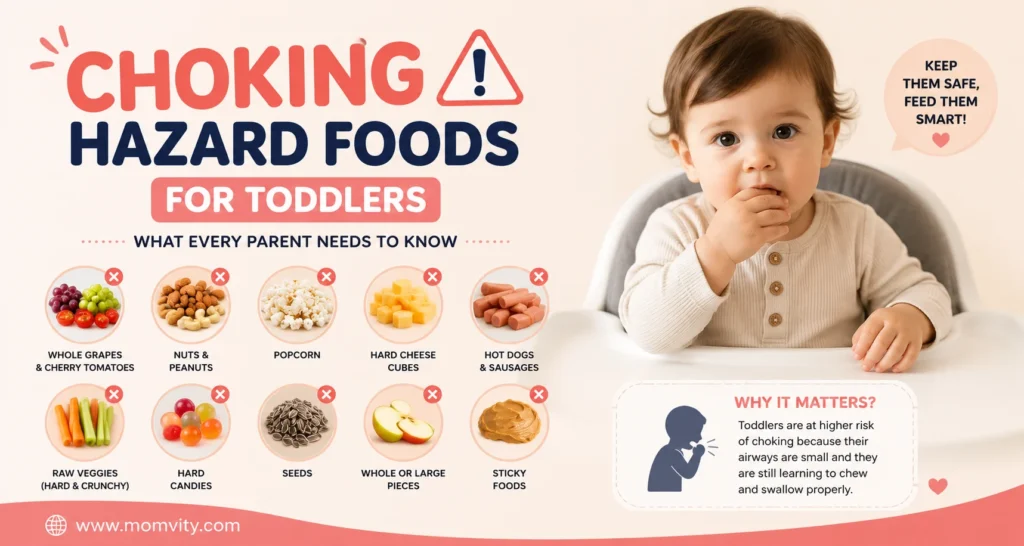
Doctors say that the teeth of children under the age of four are not yet fully developed. They cannot chew food properly. Therefore, even many common foods can be dangerous for them. Therefore, every parent needs to know which foods are risky for their children and how to make them safe.

Why is it so dangerous for a child to get food stuck in their throat? 

Many parents think that if the child coughs a little, it will be fine. But the truth is, food stuck in the throat often happens completely silently. The child does not cough or make a sound. Suddenly, the face turns blue.

Why is the body structure of a child different from that of an adult? 

When adults chew food, young children cannot do so. The back teeth of children under two years of age, called molars, have not yet erupted. These teeth are used to grind and soften hard food. Therefore, hard or round food goes completely into their throat and can block the airway.

Information on child choking in Europe 

According to the European Child Health Organization, one of the leading causes of death from trauma in children under four years of age is getting something stuck in the throat. Of these, food is the most common cause. That is why there are many awareness campaigns on child food safety in Europe.

Does choking always make a sound? 

No, absolutely not. That’s the scariest thing. The baby may be sitting quietly, looking like he’s playing, but in reality he can’t breathe. So you shouldn’t leave your baby alone while eating.

Which foods are the most dangerous? 

Choking hazard foods for toddlers” does not just include one or two foods, but many common foods. Below are the most dangerous foods separately.

Hot dogs and sausages 

Hot dogs are a favorite food for children in European countries. But it is the number one dangerous food for pediatricians. The round cylindrical shape is exactly the size of a child’s throat. So it can completely block the airway. If you have to give it, cut it lengthwise and then cut it into small pieces.

How to give hot dogs safely 

First cut the hot dog lengthwise into two. Then cut those long pieces into small pieces again. Do not cut them into round discs, because that is the most dangerous.

Grapes and cherry tomatoes 

Grapes may look small, but if you swallow them whole, they can block your throat. Cherry tomatoes are also equally dangerous. These two should always be cut into quarters. Just cutting it in half is not enough, you have to cut it into four pieces.

Nuts and seeds 

Peanuts, peanuts, cashews or any hard seeds should not be given to children under four years of age. If they are chewed, the whole piece can go down the throat. Peanut butter is also dangerous, because it can stick to the inside of the throat like glue and block breathing.

Other foods to be given with caution 

Not only the above foods, there are many other common foods that fall into the list of “Choking hazard foods for toddlers”.

Raw vegetables 

Carrots, cucumbers, celery — these are very hard in the raw state. When the baby chews, large pieces break off and enter the throat. These vegetables should be boiled and softened before giving them. Or they should be chopped very thinly.

Popcorn and hard candy 

The skin of popcorn gets stuck in the throat. Hard candy or lollipops can block the entire throat. It is absolutely not advisable to give these two before the age of four.

What can be given as an alternative to popcorn? 

If the baby wants to eat popcorn, you can give soft rice-muri or small cut fruits. These are also fun and safe to eat.

Chewing gum and toffee 

Chewing gum or toffee sticks like glue when it gets in the throat. It blocks the airway. These types of sweets should be kept away from small children.

List of dangerous and safe foods 

Dangerous foodHow to make it safe
Hot dog / sausageCut lengthwise into small pieces
Grape/cherry tomatoesCut into quarters
Almonds/Cashew nutsDo not give before 4 years of age
Raw carrotsBoil until soft
PopcornDo not give before four years of age
Peanut butterApply thinly
Hard CandyAvoid completely
Chewing gum/toffeeAvoid completely

What things should be kept in mind while feeding?

Avoiding “choking hazard foods for toddlers” does not mean just stopping certain foods. How you feed them is also no less important.

Stay with your child while feeding 

These days, many people sit with their phones while feeding their child. This is a big mistake. Just because a child is sitting quietly does not mean that he is fine. If something is stuck in his throat, he often cannot make a sound. So, when the child eats, sit in front of him. Do not take your eyes off him.

Do not feed while walking or playing 

In villages, mothers are seen running after their children and feeding them. It looks funny, but in reality it is dangerous. While the child is running and playing, he laughs and talks with food in his mouth — and that is when danger arises. Hold the child for a while, then feed him.

A small trick for feeding the child while sitting 

Designate a specific place for eating. Feed him in that place every day. After a few days, the child will understand that it is time to eat if he sits here. It’s even better if there’s a high chair — sitting there means less moving around, and you eat more slowly.

Cut food into small pieces 

Experts say that no matter the age of the child, the pieces of food should be a maximum of half an inch. It is not right to put pieces larger than this in the child’s mouth.

What to do if a child gets food stuck in their throat? 

The most important question is, what to do in case of danger? To avoid “choking hazard foods for toddlers”, you need to know not only precautions, but also first aid.

If the child can cough 

If the child can cough and breathe, let him cough. Do not pat him on the back forcibly, as this can be counterproductive. Stay calm and keep an eye on him.

If the child cannot cough 

If the child cannot breathe, the face turns blue, or there is no sound — immediately give five strong back blows. Then give five chest thrusts. This is an alternative method to the Heimlich maneuver for children. After that, immediately call 112 or the European emergency number.

What things should you keep in mind when preparing baby food? 

Many parents think that all you have to do is avoid dangerous foods. But the truth is, precautions need to start right from the moment you prepare food in the kitchen. Because the same food is safe if cut correctly, but dangerous if given incorrectly.

Why is the size and shape of food important? 

Pediatricians say that instead of cutting any food into a round or cylindrical shape, cut it into long and flat pieces. Round-shaped food can easily get stuck in the throat. But long and thin pieces can easily pass through the throat. So, whether it is vegetables or fruits, make a habit of cutting everything lengthwise.

Is it safe to cook? 

Yes, in many cases, cooking softens the food and reduces the danger. For example, raw carrots are dangerous, but well-cooked carrots become soft and children can eat them easily. Broccoli, sweet potatoes, beans — these are excellent safe foods when boiled.

Cool the food after cooking 

Children swallow large pieces when eating hot food quickly. So always cool the food a little and then give it. Children eat cold food slowly, which is much safer.

Keep water or liquid food nearby 
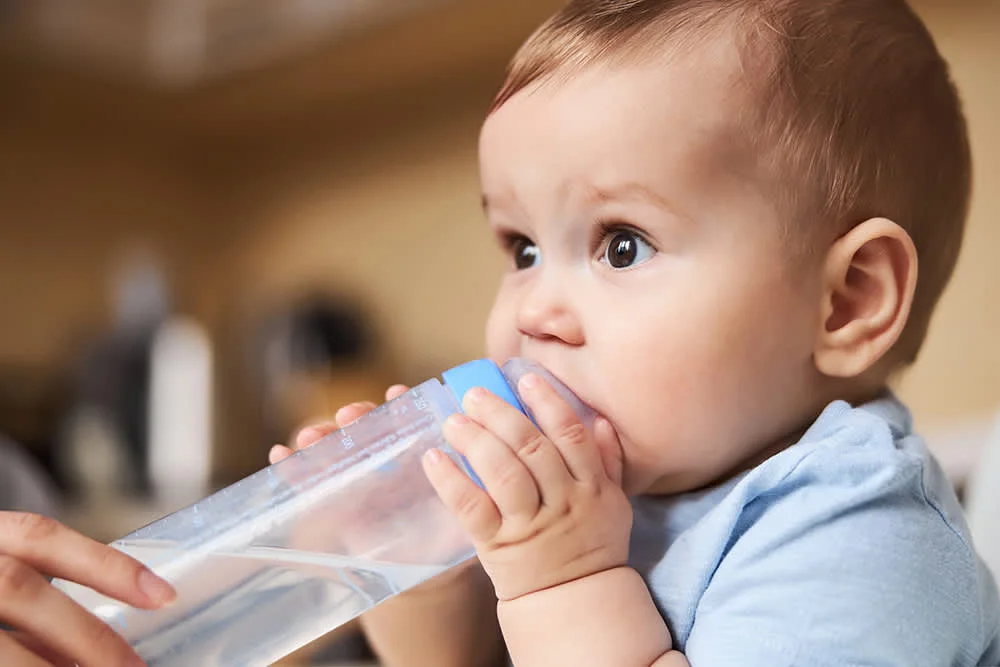
Always keep water nearby while eating. If your child drinks a little water while eating, the food will go down their throat more easily. However, it is better to give plain water instead of juice or sweet drinks between meals.

New guidelines on baby food safety in Europe 

Child health authorities in various European countries have recently issued new guidelines. According to these guidelines, kitchen staff in schools and childcare centers are now required to undergo mandatory training in baby food safety.

Advice for new parents 

First-time parents often don’t know what foods to offer. Most hospitals in Europe are now offering free workshops for new parents. These workshops teach how to introduce baby’s first foods, which foods to avoid and what to do in an emergency.

Warning about grandparents 

Many times, the elderly in the family, especially grandparents, lovingly feed babies various foods. They may not know that they are dangerous. Whole grapes, nuts, or hard candy — they love to give them. So explain this to the whole family. It’s not a matter of insult, it’s a matter of saving the child’s life.

Things to be careful about besides food 

“Choking hazard foods for toddlers” are not just a problem in the kitchen. There are many dangers lurking in other places in the house as well.

Pieces of food falling on the floor 

If there are older brothers or sisters at home, their pieces of food fall on the floor. Young children crawl and put them in their mouths. So clean the floor thoroughly after eating. Especially if there are pieces of nuts, candy or grapes, pick them up immediately.

Extra caution when going outside 

When feeding in the park or outside, babies are very restless. They eat while running and playing. The risk of danger is even higher at this time. When you go out, take simple, soft and cut food with you. Avoid giving hard or round food outside.

Conclusion

Raising a young child means not only feeding him well, but also feeding him safely. In many European countries, these days, new parents are taught from the hospital how to feed him. Because “Choking hazard foods for toddlers” — this topic has now become the most important chapter in child health.

Your child may have just learned to walk, learn to eat. This is the most beautiful time, but at the same time the most careful time. Cut hot dogs into four pieces, cut grapes, give nuts a little later — these small precautions will save your child from danger.

Remember, choking on food is not a small incident. It can become a big danger in an instant. So be aware from today. Spend a little more time in the kitchen, take a little more care when cutting food. A little caution on your part can keep your little darling safe. No matter which country in Europe you live in, child safety comes first.

FAQ — General Questions

1. Until what age should “Choking hazard foods for toddlers” be avoided?

Generally, this precaution should be followed until the age of four. Because before this age, the strength of the child’s teeth and jaw is not fully developed.

2. Can grapes not be given to children?

Yes, but they should be given in four pieces. Never give whole grapes.

3. Is peanut butter dangerous?

Yes, if you put it with a large spoon, it will stick in the throat. Spread it thinly on bread.

4. What should I do first if my child gets food stuck in his throat?

Tilt the child forward and give him five strong slaps on the back. If that doesn’t work, call emergency services immediately.

5. Can popcorn be given to children?

Popcorn should not be given before the age of four. Its shell and hard part can easily get stuck in the throat.


Related Articles

signs of gestational diabetes in third trimester

signs of gestational diabetes in third trimester Symptoms and current information

“Signs of gestational diabetes in third trimester” Learn about symptoms, risks, tests, costs, mistakes and things to do in easy Bangla with 2026-2027 updates for the safety of mother and baby.

Slug: signs-of-gestational-diabetes-third-trimester

signs of gestational diabetes in third trimester

The body undergoes many changes during the last three months of pregnancy. Many people ignore symptoms such as excessive thirst, frequent urination, and excessive fatigue as normal pregnancy symptoms.

There are some symptoms that, if present, should be checked to see if there is a possibility of gestational diabetes.This guide discusses signs of gestational diabetes in third trimester in simple terms, so that a mother can be alerted in time.

There is no need to be afraid of gestational diabetes, but it is not right to ignore it either. According to the CDC, it usually appears around the 24th week of pregnancy and many times there are no obvious symptoms; therefore, it is important to get tested between 24 and 28 weeks.

What is it? 

If a mother’s blood sugar levels rise above normal during pregnancy and are first detected during pregnancy, it is called gestational diabetes. Even if you don’t have diabetes before, pregnancy hormones can sometimes make your body unable to use insulin properly, causing blood sugar or glucose to rise.

According to the NIDDK, gestational diabetes can only occur during pregnancy and can cause health problems for both mother and baby; however, if managed properly, the risk can be greatly reduced. The baby’s growth is rapid in the third trimester, so it’s even more important to keep your blood sugar under control during this time.

How does gestational diabetes occur? 

As the baby grows during pregnancy, hormonal changes occur in the mother’s body, and these changes can sometimes affect blood sugar control.These changes help the baby grow and maintain the pregnancy, but sometimes they can also affect the mother’s blood sugar control. But these hormones can reduce the body’s ability to use insulin. Hormonal changes during pregnancy can increase the body’s need for insulin. Some mothers’ bodies can handle the extra demand, but some cannot produce enough insulin. This causes blood sugar levels to rise and puts them at risk for gestational diabetes.

The Mayo Clinic says that changes in hormone levels during pregnancy can make it difficult for the body to use glucose, and blood sugar can rise. This is why not only overeating, but also the normal hormone changes of pregnancy are associated with gestational diabetes.

What symptoms can be seen in the third trimester? 

Even if you have gestational diabetes in the last three months of pregnancy, the symptoms are often not very clear, so it’s difficult to be sure just by looking at the changes in your body.Many of the symptoms look like normal pregnancy symptoms.

 So if any of the symptoms seem excessive or unusual, it is safest to talk to your doctor, midwife or healthcare provider before making a decision on your own.

  • If you feel thirsty again and again even after drinking water, it is not a good idea to ignore it as a common pregnancy symptom.
  • A sudden increase in the amount of urine or a tendency to go to the bathroom frequently can also be a sign to watch out for.
  • If you feel weak even after getting enough rest or feel tired even after doing little, it is a good idea to inform your doctor.
  • If you experience blurred vision, sudden changes in vision, or difficulty seeing clearly for some time, you should seek medical advice immediately.
  • Having recurrent urinary tract infections or yeast infections.
  • Feeling very weak or uncomfortable even after eating.
  • Suspecting baby movement, body swelling, dizziness, or any other unusual changes.

Both the CDC and NIDDK say that gestational diabetes can often be asymptomatic or have mild symptoms, such as excessive thirst or urination. So whether you have symptoms or not, getting tested is the best way to be sure.

When to Pay Attention to Symptoms

Fatigue, frequent urination, or trouble sleeping are not uncommon during pregnancy. But if these symptoms increase suddenly, interfere with daily activities, or have never happened before, then it is important to pay attention to the matter.

It is not right to delay if symptoms such as excessive thirst, blurred vision, infection, dizziness or decreased baby movement appear at the end of pregnancy. If you have these symptoms, it is better to tell the doctor, because if you have gestational diabetes, you need to follow-up the mother’s sugar level and the baby’s health more carefully in the last three months.

Who is at higher risk and what will you need?

Any mother’s blood sugar can increase during pregnancy, but some mothers are at higher risk. Doctors usually advise you to be extra careful if you have had gestational diabetes before, have a family history of diabetes, were overweight before pregnancy, or have PCOS.

The risk may increase if you have had gestational diabetes before, have a family history of type 2 diabetes, were overweight before pregnancy, have PCOS, or had a high birth weight of a previous baby.

The Mayo Clinic lists risk factors as overweight, lack of physical activity, prediabetes, gestational diabetes in a previous pregnancy, PCOS, diabetes in a parent or sibling, and having a baby weighing more than 9 pounds or 4.1 kg. Therefore, if you have risk factors, it is best to inform your doctor from the beginning of your pregnancy.

Who should be more careful? 

Diabetes during pregnancy can happen to any pregnant mother, but some people are at a higher risk. For example, if you have had gestational diabetes before, it is considered a risk factor or if someone in your family has had diabetes, if you were overweight before pregnancy or have PCOS, the doctor usually tells you to be more careful. So, it is safest to confirm it through a blood test rather than just judging by the symptoms.

Pregnancy care is becoming more screening-focused in 2026–2027. The ADA’s 2026 Standards of Care have updated clinical recommendations for diabetes care, and the ADA says their Standards of Care are updated every year. Therefore, when planning a follow-up or treatment plan in 2027, you should follow the latest guidelines from your local doctor.

What to prepare before the test

A gestational diabetes test usually does not require very complicated paperwork. However, it is helpful to have a pregnancy record, previous blood sugar report, ultrasound report, medicine list, and doctor’s prescription with you. In many countries, an appointment or insurance information may be required, so it is better to find out the rules from the hospital or lab before taking the test.

What to do when you get the report

If the report is normal, you should continue with routine prenatal care. But if the report is abnormal, you should not panic and go to the doctor. Sometimes, if the first screening test is abnormal, an Oral Glucose Tolerance Test or OGTT is asked to be done to confirm. The Mayo Clinic says that if the sugar in the initial glucose challenge test is high, a follow-up glucose tolerance test may be done.

Step-by-step testing and what to do

The safest way to understand gestational diabetes is to get screened on time. According to ACOG, all pregnant women should get screened for gestational diabetes; if there are risk factors, the test can be done in early pregnancy, and if there is no risk, blood sugar is usually measured at 24 to 28 weeks.

First, during a prenatal checkup, the doctor may ask about your health history, family history, and previous pregnancy record. Then, a glucose screening test or OGTT may be given. If gestational diabetes is detected, a meal plan, physical activity, home blood sugar monitoring, and if necessary, medicine or insulin are planned.

Discover more here: Urine Leakage During Pregnancy Second Trimester

Test timing according to 2026–2027

A blood sugar test is usually done between 24 and 28 weeks to check for gestational diabetes. However, if a mother has had gestational diabetes before, is overweight, or has a family history of diabetes, her doctor may recommend testing earlier. So, even if you don’t have symptoms, it’s important to have regular prenatal checkups during this time.

The final guidelines for 2027 may not be published everywhere yet, as diabetes guidelines are usually updated regularly. So it’s good to understand the current guidance for 2026, but it’s safest to plan your testing based on the updated advice for 2027 from your country, hospital, and doctor.

Potential costs and time

The exact cost of a gestational diabetes test varies from place to place. The cost depends on the country you are testing in, whether you are going to a public or private hospital, and whether you have insurance. In the United States, if you have health insurance, you often don’t have to pay the full cost of a screening test for gestational diabetes out of pocket.

 In some cases, insurance covers the entire cost, while in other cases, a portion of the cost is covered.However, the cost can vary depending on the insurance plan, hospital or lab, and billing system.

In countries with public healthcare systems like Europe or the United Kingdom, gestational diabetes testing is often done as part of routine pregnancy care. However, if someone gets tested at a private hospital or lab, there may be a separate cost. So it is best to check with your hospital, clinic, or insurance provider before getting tested.

TopicGeneral Concept in USA/EuropeComments
Initial glucose screeningMay be covered or reduced if you have insurance/public systemVaries by local plan
OGTTMay be used if screening is abnormalThe test usually takes a few hours to complete
Doctor follow-upDifferent according to public/private systemFollow-up is important to understand the report
Home glucose meterMay be required for diagnosisStrips and lancets may have separate costs
Dietitian supportNot always mandatoryHelpful to understand meal plan
Medicine or insulinNot everyone needsDoctor decides

According to the Mayo Clinic’s diagnostic information, if the initial glucose challenge test results are high, a follow-up glucose tolerance test may be done, where blood sugar is measured several times. So it’s important to keep in mind not only the test fee, but also the time, follow-up visits, and monitoring costs.

Cost, common mistakes

Managing gestational diabetes does not just mean reducing sugar; balancing it while maintaining the safety of the mother and baby. According to the ADA’s pregnancy management guidance, diabetes in pregnancy care may include nutrition, lifestyle, physical activity, and if necessary, medicine or insulin. Therefore, reducing your diet on your own or taking medicine after looking at online advice can be dangerous.

Mayo Clinic says that if gestational diabetes is not controlled, the baby’s high birth weight, early birth, newborn low blood sugar and the mother’s high blood pressure, preeclampsia and C-section risk may increase. However, with timely diagnosis and care, many mothers can continue a healthy pregnancy.

Common mistakes and safe decisions

The most common mistake is to completely ignore the symptoms. Another mistake is to completely stop rice, bread, fruit or carbohydrates because of fear at the slightest symptom. Pregnancy requires nutrition, so do not reduce food; rather, the amount, time and quality of food should be adjusted according to the advice of a doctor or dietitian.

Another mistake is to ignore all subsequent symptoms even if the test is normal. You should also tell your doctor if you notice any new changes in your body. Follow-up after delivery is also important, as the CDC says that about half of women who have gestational diabetes will later develop type 2 diabetes.

FAQ

Can gestational diabetes be detected first in the third trimester?

Yes, it can be detected. Many people get screened at 24-28 weeks, but symptoms may be more noticeable in the third trimester. However, tests are needed to confirm the diagnosis.

Should I be worried immediately if I have signs of gestational diabetes in the third trimester?

There is no need to be worried, but it cannot be ignored. If I have excessive thirst, excessive urination, blurred vision, or unusual fatigue, I should talk to my doctor.

Is it necessary to get tested even if I have no symptoms?

Yes. Because gestational diabetes can often be asymptomatic. Both the CDC and ACOG emphasize the importance of screening at 24-28 weeks.

Is normal delivery possible with gestational diabetes?

In many cases, it is possible. However, the doctor plans the delivery by looking at the baby’s size, mother’s sugar control, blood pressure, and overall pregnancy condition.

Is diet alone enough to treat gestational diabetes?

In many cases, a healthy meal plan and physical activity may be enough. But some people may need medicine or insulin to keep their blood sugar in the target range. NIDDK says that insulin may be needed if healthy eating and activity are not enough.

Does gestational diabetes go away after delivery?

In many cases, sugar is normal after delivery, but the risk of type 2 diabetes increases in the future. Therefore, postpartum follow-up is essential.

Conclusion

Gestational diabetes is one of the issues of pregnancy that should not be taken lightly. Especially in the last three months, the baby grows rapidly, so it is very important to keep the mother’s blood sugar under control. If the blood sugar is high, some risks may arise for the mother and the baby, but many problems can be avoided if you take timely tests and take proper care. Therefore, knowing about the signs of gestational diabetes in third trimester does not mean being afraid; rather, understanding the changes in your body and making the right decisions in time.

Excessive thirst, frequent urination, excessive weakness, blurred vision or repeated infections during pregnancy should not be ignored as common problems. If such symptoms appear, it is safer to consult a doctor instead of starting a diagnosis or treatment yourself. Regular prenatal checkups, timely glucose screening and following the pregnancy care plan given by the doctor can keep the health of the mother and the baby much safer.

Scroll to Top