How early can a pregnancy test be done? When are the results most reliable?

Nusrat Ayaan

Published: 26/01/2026
Updated: 26/01/2026

How Early Can I Take a Pregnancy Test

A question that comes to many girls’ minds very quickly

How soon can I take a pregnancy test?

Especially when the body starts to feel a little different, you don’t want to wait any longer. But testing too early often doesn’t give accurate results. So it is very important to know when to test to get the best results.

This article will explain in simple terms how long after taking the test, what happens if you do it too early, and what is the best time to be sure.
How pregnancy tests actually work

Pregnancy test kits or pregnancy testing methods work based on a very interesting biological process. The key to this is a special hormone called (Human Chorionic Gonadotropin).

1. Role of hCG hormone

When a fertilized egg attaches itself to the wall of the uterus, the body starts producing this hormone called hCG. It is often called the ‘pregnancy hormone’ because it is not usually present in the body except during pregnancy. Over time, the levels of this hormone in the blood and urine increase rapidly.

2. The charisma of antibodies

A pregnancy test kit contains special antibodies. These antibodies are designed in such a way that they bind to the hCG hormone in the urine.

3. Result window from the reaction zone

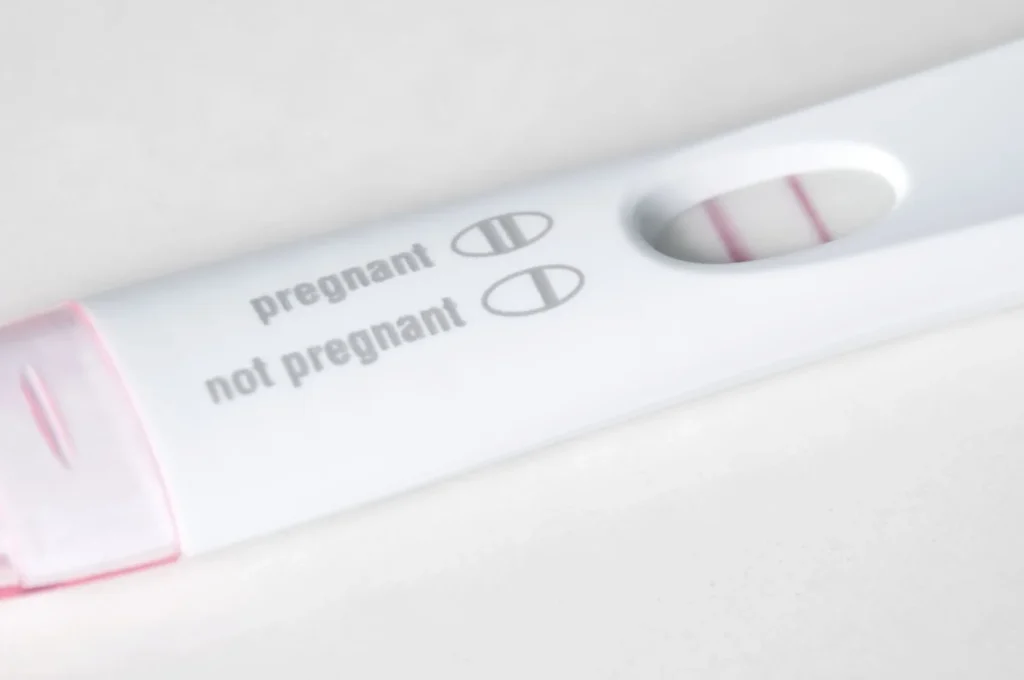
When you urinate on the kit, it is absorbed and flows through the strip inside the kit. There are three main stages:

Reaction zone: This is where the first antibodies that bind to hCG are found. If hCG is present, they start moving together.

Test zone: This is where some fixed antibodies are found. If hCG is present in the urine, they block the previous antibody-hCG complex. This is where the colored line appears through a chemical reaction.

Control zone: This is very important to understand whether the kit is working properly. A colored line will always appear in this area whether hCG is present in the urine or not. If no line appears here, it means that the test kit is damaged.

When is the earliest time to test?

The earliest time to take a pregnancy test depends on the type of test you are taking and how quickly your body is producing the hCG hormone. Here are the detailed timelines:

1. Blood test

This gives the fastest results. A blood test can confirm pregnancy within 7 to 12 days of intercourse or ovulation by going to a lab. It is much more sensitive than a urine test.

2. Home urine test

The following times are usually followed for testing with home kits:

Fastest: Some ‘early detection’ kits can give results 5-6 days before your missed period. However, the results are likely to be incorrect at this time.

Most accurate: Testing 1 day after your missed period is 99% accurate.

If you have irregular periods: If you are not sure about your period, you should test at least 21 days (3 weeks) after your last unprotected intercourse.

Why shouldn’t you test too early?

The level of hCG hormone in the body is very low right after conception. If you test too early, the kit may not detect the hormone even though you are pregnant (called a false negative). The level of this hormone doubles every day, so it is wisest to wait until you miss your period.

Some important tips when taking a quick test:

First morning urine: Test with your first urine after waking up early in the morning. This is when the hormone concentration is highest.

Don’t drink too much water: Drinking too much water before taking the test dilutes your urine, making it difficult to detect the hormone.

Can I take the test on the day I miss my period?

Yes, you can take a pregnancy test on the day of your missed period. However, there are some things you need to know to be 100% sure of the results.

Modern and ‘early detection’ kits available in the market are able to show results on the day of your missed period or 1-2 days before. Most kits claim that they can give up to 99% accurate results if you test on the day of your missed period.

However, keep in mind the following 3 things for accurate results:

1. Possibility of ‘false negative’

On the day of your missed period, your body may not have enough hormone levels (especially if your ovulation or ovulation is late). In this case, the kit may show a spot even though you are pregnant. This is called a ‘false negative’.

2. Use first morning urine

If you want to test on the day of your missed period, you must test with first morning urine. Because urine has been stored overnight, it has the highest concentration of hormones, which the kit can easily detect.

3. In case of irregular periods

If your period is not regular, it is difficult to accurately understand the day of your missed period. In that case, it is safest to test at least 21 days after unprotected sex.

What should you do next?

  • If it is positive (two lines): Congratulations! You should contact a gynecologist and confirm it with a blood test.
  • If it is negative (one line) but you do not have your period: Do not panic. Wait another 3 to 7 days and test again. If the hormone levels increase in the meantime, the result may be positive

When is the most reliable time?

Although everyone has different opinions about the most reliable or ideal time to take a pregnancy test, according to medical science, testing 1 week after a missed period is considered the most accurate.

1. Most reliable time: 7 days after a missed period

Although testing on the day of a missed period gives an accurate result in 99% of cases, sometimes the hormone levels in the body may be low due to late ovulation. If you test 1 week after a missed period, the amount of this hormone in the body increases so much that even a standard quality kit is unlikely to make a mistake.

2. Why is this time the best?

Hormone levels: Hormone levels double every 2-3 days after conception. These levels are much higher 1 week after a missed period.

Low risk of negative results: If you test too early, the kit can often come up negative even though you are pregnant. If you wait 1 week, this risk is almost non-existent.

  • What time of day is the best?
  • Although the test can be done at any time of day, the first morning urine is most reliable.
  • Hormone concentrations are highest in urine in the morning.
  • Drinking a lot of water at other times of the day can dilute the urine, making it difficult to detect the hormone.

 What problems can arise from testing too early?

There are no major physical risks to taking a pregnancy test too early, but it can cause you some confusion and emotional anxiety. The main problems are:

1. ‘False negative’

This is the most common problem. The hormone levels in the body are very low right after conception. If you test too early or before your period is missed, the kit cannot detect that small amount of hormone. As a result, the kit may show a line or a negative result even though you are pregnant.

2. ‘Chemical pregnancy’ and emotional stress

Sometimes, if you test too early, the result comes out positive but your period comes a few days later. This is called a ‘chemical pregnancy’. This means that the egg was implanted in the uterus for a very short time but then it was destroyed. If you tested too late, you may not have known that you were pregnant (it would have been considered a normal period). Knowing this early can often cause severe emotional distress.

3. Risk of kit damage or misreading

If you test too early, the test line is often so faint that it is difficult to see with the naked eye. Does this confuse you as to whether it is positive or negative? This leads to wasting money and unnecessary anxiety by buying kits again and again.

4. False confidence

If the test comes back negative and you think you are not pregnant, you may not take the necessary precautions in your lifestyle (such as taking medication or avoiding heavy work). When in fact, you may be pregnant.

Advice for you

If you want to test too early due to any suspicion or symptoms:

  • Test again after 3-4 days: If the first time comes back negative, try again after a few days.
  • Do a blood test: A blood test is much more sensitive than a urine test. It can give accurate results as early as 10-12 days after intercourse.

 Why is it better to test in the morning?

It is considered ideal to take a pregnancy test in the morning, especially after waking up in the early morning.

1. High concentration of hCG hormone

Pregnancy test kits mainly look for the presence of hCG hormone in urine. When you sleep all night, your urine is stored in the bladder for a long time. As a result, the concentration or amount of this hormone in the urine increases a lot. The higher the concentration of the hormone, the easier the test kit will be able to detect it.

2. There is no fear of urine becoming diluted

During the day, we drink tea, coffee, water or other liquids. As a result, the urine becomes diluted. If the urine is diluted, the concentration of hCG hormone decreases. In the very beginning of pregnancy (when the body already has low hormones), there is a possibility that the hormone will not be detected if the test is done during the day, which can give an incorrect or ‘false negative’ result.

3. Clear result or ‘die line’

When morning urine is used, the spots in the result window of the test kit are much clearer and darker. If you test at other times of the day, the spot often comes out very light or blurry, which can be confusing.

Some important information:

Are you careful about drinking water? If you want to test during the day, refrain from drinking water for at least 4 hours and try to hold your urine. This will slightly increase the concentration of hormones in the urine.

In the case of advanced kits: Currently, some well-known brands of ‘digital’ or ‘highly sensitive’ kits are available that can be used at any time of the day. However, for maximum certainty, doctors still prefer the first urine of the morning.

2: What to do if the first test comes back negative?

A negative test the first time does not mean that you are definitely not pregnant. Sometimes, the result can be negative because the hormone levels in the body are low at the very beginning of pregnancy.

If your result is negative but your period has not started, follow these steps:

1. Wait 3 to 5 days

This is the most important step. The hormone levels in the body double every 2-3 days in early pregnancy. Therefore, if you test again 3-5 days after the first test, there is a possibility that the hormone levels in the body have increased and the chances of the kit giving an accurate result increase.

2. Use the first urine of the morning

If you tested the first time at a different time of the day, then the second time you should definitely test with the first urine of the morning. This is when the hormone concentration is highest.

3. Recheck the kit usage instructions

Sometimes, even minor mistakes in using the kit can result in a negative result. Read the instructions on the kit package carefully and see how long it takes to see the results (. The results will no longer be accurate if the specified time has passed.

4. Get a blood test

If you miss your period and the home test repeatedly comes back negative, it is best to go to the lab and get a blood test done. Blood tests are much more sensitive and can detect pregnancy much earlier than urine tests.

5. Consult a doctor

If your period does not start after a week or more and the test comes back negative, consult a gynecologist. There may be other reasons for a late period besides pregnancy, such as:

  • Excessive stress or anxiety.
  • Hormonal imbalance.
  • Rapid weight loss or gain.
  • Side effects of illness or medication.

When is a blood test needed?

Blood tests are more sensitive and informative than urine tests for pregnancy testing. Doctors usually recommend blood tests in certain situations.

Blood tests are mainly needed in the following cases:

1. If you want to be sure very quickly

A blood test can be used to confirm pregnancy within 7 to 12 days of intercourse. If your urine test is still negative but you want to be sure very quickly, a blood test can be done.

2. Quantitative or beta hCG test

There are two types of blood tests, one that only tells you if you are pregnant and the other that measures the exact amount of hormone in the blood. The second is needed when:

To understand the stability of the pregnancy: Seeing whether the hormone levels are increasing properly can tell whether the fetus is healthy.

If there is a risk of miscarriage: If someone is bleeding, doctors check the blood every few days to see if the hormone levels are decreasing or increasing.

3. To identify an ectopic pregnancy

If the embryo grows outside the uterus (such as in the tube), it is called an ectopic pregnancy. This is an emergency. In this case, even if the urine test is positive, the level of the pregnancy in the blood is lower than normal or abnormal, which can be quickly detected through a blood test.

4. If the urine test results are unclear repeatedly

If your urine test results are very light or if you repeatedly get different results but your period has stopped, a blood test is done to make a final decision.

5. Before any special treatment

Before starting an operation or any strong medication that can harm the unborn baby, doctors recommend a blood test to be 100% sure.

Is it right to rely only on signs?

No, relying solely on symptoms is not right. Many early pregnancy symptoms (such as nausea, breast tenderness, fatigue, or bloating) are exactly the same as those experienced before your period.

Here are the main reasons why it is risky to base your decision solely on symptoms:

1. Similarities between PMS and pregnancy

A few days before your period, hormonal changes can cause mood swings, breast tenderness, or mild pain in the lower abdomen. These same symptoms are also caused by the increase in progesterone hormone in early pregnancy. So it is almost impossible to differentiate based on symptoms alone.

2. Effects of stress

If you want to have more children or are very worried about getting pregnant, your brain can create imaginary symptoms in your body. This is also called ‘pseudo-pregnancy’. Sometimes, excessive anxiety can cause your period to be late, which can confuse you.

3. Other physical causes

  • Nausea: This can also be due to gastric problems or food poisoning.
  • Fatigue: It can be due to anemia or excessive work pressure.
  • Missed period: Periods can also be missed due to hormonal imbalance, thyroid problems, PCOS or sudden weight changes.

What should you do if you experience symptoms?

If you notice changes in your body, follow the steps below instead of relying on guesswork:

Use a test kit: Take a pregnancy test at least 1 day after your missed period. This is the easiest and most reliable way.

Watch for light bleeding: Sometimes, a little spotting or blood spotting may occur before your missed period (called implantation bleeding). It is only possible to confirm whether it is your period or pregnancy through a test.

When is it best to talk to a doctor?

Regardless of the results of the pregnancy test, it is very important to consult a doctor in certain situations. The main goal should be not only to test but also to ensure the overall well-being of your body.

1. If the test is positive

As soon as two lines appear on the kit, your first task is to make an appointment with a gynecologist. Reasons:

  • Verification: The doctor will confirm the pregnancy through a blood test or ultrasonography.
  • Folic acid and vitamins: It is very important to take folic acid for the first three months for the development of the baby’s brain, which the doctor will prescribe for you.

         Initial checkup: Your blood pressure, weight and any other physical complications will be     checked.

2. Test negative but no period

If the test comes negative even after 1 week of missing the period and the period does not start, you should go to the doctor. The reasons for this may be:

  • Hormonal imbalance
  • Excessive stress or nutritional deficiency.
  • Pregnancy has occurred but the hormone levels are not detected in the blood.
  • 3. Severe pain or bleeding

If you have any of the following problems, whether you have symptoms of pregnancy or not, it may be a medical emergency:

  • Severe lower abdominal pain.
  • Unusual bleeding or spotting.
  • Dizziness or fainting.
  • These could be signs of an ectopic pregnancy (pregnancy outside the uterus), which can be dangerous if not treated quickly.

conclusion

Taking a pregnancy test is a sensitive and important process. The gist of what we have discussed here is:

Right time: It is wise to test 1 week after your missed period for the most accurate results.

First morning urine: For the best results, use the first urine after waking up in the morning as it contains the highest concentration of hormones.

Negative result: Don’t panic if you get a negative result the first time, test again after 3-5 days or get a blood test to confirm.

Tests are more important than symptoms: You cannot be sure based on symptoms like nausea or dizziness because these can also occur before your period. Only chemical tests give a definitive result.

Related Articles

pregnancy food guidelines

A huge guide to pregnancy food guidelines and the nectar of food on the way to the arrival of Sonamani

Don’t be afraid of pregnancy food guidelines or the right rules of eating during pregnancy, mother. In this new light of 20 Rome 2026, a detailed guide to which foods are nectar and which are poison for the good health of you and your baby.

pregnancy food guidelines

Listen, my dear mothers, that long nine-month journey of pregnancy has been like a worship. A miraculous miracle is now taking shape inside your body. A small soul, a piece of your liver, Sonamani is now building its own body from your bones, flesh and blood. This is a cosmic process, here your main tool is your eating plate. Whatever you put in your mouth, Sonamani will get exactly that nutrition. This is why it is so important to know about pregnancy food guidelines in our time. In the past, the mothers of Geram did not let them eat whatever they got, they would selectively feed them the good things. On this bright day of 20 Rome 2026, you will have to be a brave and fighting mother. If you do not know which food will build your baby’s brain and which will harm it, then your nine months of suffering may go in vain. Remember, mother, pregnancy does not mean eating food for two, but eating food with double the nutrition. Whatever you eat should be a blessing to every cell of your baby’s body. If you go, then with the touch of Geramya Maya, you will help your baby to step into this position with a smile.

The first step of pregnancy and the main basis of pregnancy food guidelines

Go understood, after receiving the news of Bean, a tide of joy started flowing in my heart. But amidst this joy, you will have to strengthen your food rules. Many people say, “Mother, eat more and more,” but I say, pay attention to quality rather than quantity. This is the first lesson of pregnancy food guidelines. Your food should have a beautiful combination of protein, calcium, iron and vitamins.

Folic acid and the formation of the baby’s nerves

Mothers, in the first three months of pregnancy, folic acid works like magic for the development of the baby’s bones and nerves. Green vegetables, pulses and citrus fruits are rich in it. If you eat a bowl of greens and pulses every day, the fear of your baby having birth defects will completely disappear. This is a very important part of pregnancy food guidelines. Are you putting green vegetables in your diet today, mother?

Iron power and elimination of anemia

Your body has a lot of blood during pregnancy. As your baby grows, your blood will become weak. There is no comparison between raw vegetables, liver, eggs and red meat to increase this blood. According to pregnancy food guidelines, you should include something rich in iron in your daily diet. If your blood is low, your body will become weak and you will not get energy during pregnancy.

The friendship of vitamin C and iron

Let me tell you a secret, mom, if you eat a little lemon juice or vitamin C fruits with iron-rich foods, the body can absorb that iron very quickly. These small tricks are the real beauty of pregnancy food guidelines.

Calcium reserves and protection of mother’s bones

When the baby grows inside the womb, it draws all the calcium from your body to build its bones. If you do not eat calcium properly, your teeth will become brittle and there will be permanent pain in your waist. This is why milk and dairy products are very important in pregnancy food guidelines.

The glory of milk, curd and cheese

Try to drink at least one glass of pure milk every day. If milk smells bad, then eat curd or cheese. Calcium will strengthen your baby’s bones and teeth and make your body like beans. These foods are absolutely royal ingredients in the list of pregnancy food guidelines.

Chew small fish and bones

Small fish of the sea like Mala, Dhela or Kachaki fish increase the brightness of your eyes and strengthen your bones. Chewing these fish with bones provides a lot of calcium. There is no alternative to fresh small fish from the market to ensure pregnancy food guidelines, mother.

The magic of protein or meat and the structure of the baby’s body

Every organ, muscle and liver of the baby is made of protein. If you eat less protein, the baby will be born very weak and limp. In pregnancy food guidelines, protein is called the foundation of life.

The need for eggs and chicken meat

Eggs are the cheapest and best protein in the world. At least one well-cooked egg a day is like nectar for you and the baby. Chicken or mutton also increases the strength of the body. However, keep in mind, mothers, that the meat should be cooked thoroughly. Raw or semi-cooked meat is strictly prohibited in pregnancy food guidelines.

Nutrition of pulses and grains

Those who eat less fish and meat should eat more pulses, chickpeas and nuts. Pulses are a unique food to meet the lack of protein. The more diverse food you eat, the more nutritious your baby will taste. This is the real lesson of pregnancy food guidelines.

Importance of water and liquid food

Mothers, do you know that your baby is surrounded by a clear bag of water? To maintain this water or amniotic fluid, you will have to drink a lot of water. In pregnancy food guidelines, lack of water is considered the biggest danger.

Relationship between constipation and water

Constipation or stomach cramps are very common during pregnancy. To avoid this problem, it is important to eat at least 10-12 glasses of water and fibrous foods (such as yam husk or fruit) a day. The more water you drink, the more toxins your body will get rid of. This is a silent medicine of pregnancy food guidelines.

Coconut water and fruit juice

Instead of drinking colorful juices from the market, drink coconut water or fresh fruit juice made at home. This will relieve the body’s fatigue and keep the mind alert. To ensure pregnancy food guidelines, mothers completely avoid dirty drinks from outside.

Keeping a clear mind and having affection for food

Mothers, eat whatever you eat with a happy heart. If you eat when you are bored or forcefully, the food does not taste good to your body. You create a strange affection for food. When you sit down to eat, talk to your child in your mind “Look, Dad/Mom, what a beautiful meal I have brought for you.”

Eat little by little and often

During pregnancy, eating too much at once can cause heartburn or vomiting. One of the best rules of pregnancy food guidelines is to eat little by little every two hours. This also makes the body feel light and the flow of nutrients to the child is also continuous.

Tips to avoid adulteration in the market

These days, vegetables contain a lot of poison. Soak them in salt water for at least half an hour before cooking. This awareness has become a modern part of pregnancy food guidelines. The responsibility of protecting your precious baby lies solely with you.

Ideal daily food list for pregnancy

Food CategoryExamplesWhy You Should Eat This
Main CarbohydratesRed/Brown rice, Whole wheat roti (Atar ruti).To provide a continuous supply of energy.
ProteinEggs, Chicken, Fish, Lentils (Dal).To build the baby’s body structure and muscles.
CalciumMilk, Yogurt (Doi), Cheese (Ponir), Small fish.To strengthen both mother’s and baby’s bones.
Vitamins & FiberLeafy greens, Colorful vegetables, Fruits.To increase blood count and prevent constipation.
Fluids / LiquidsPure water, Coconut water, Soup.To keep the body refreshed and maintain amniotic fluid.

Poisoning of forbidden foods and strict rules of pregnancy food guidelines

Listen, mom, during pregnancy, the mind often becomes confused. The taste of salty or sour foods makes the tongue water, and it is at this opportunity that we put something wrong in our mouth. But mother, nature is now keeping your body in a very sensitive state. There are some foods that are good during normal times, but they are absolutely poisonous during pregnancy. Recognizing these forbidden foods is the biggest test of pregnancy food guidelines.

Hidden dangers of raw papaya and pineapple

The elders of Geram do not mix, mom do not touch raw papaya and pineapple in the early stages of pregnancy. The skin of raw papaya contains latex which can cause uterine contractions and premature abortion or bleeding. Similarly, the bromelain present in pineapple softens the cervix. These two fruits are the forbidden foods written in red ink in the pregnancy food guidelines. Are you not giving these to your mouth by mistake, mother?

Death trap of raw and semi-cooked food

Many people like to eat semi-cooked eggs (poached) or semi-cooked meat. But mother, this semi-cooked food is the home of all the strange germs called ‘Salmonella’ or ‘Listeria’. These germs can reach the baby through your blood and veins and damage his heart and brain. For this reason, the pregnancy food guidelines have strict instructions – whatever you eat should be steaming hot and well-cooked.

Precautions while cooking fish

Do not eat fish if there is blood near the bones while cooking it. The fish will be hard and run away. Even raw fish, if not washed properly and cooked in a tight net, will be against the pregnancy food guidelines.

Mercury poisoning in sea fish and be vigilant

Fish is our main food, but not all sea fish are as good as your goldfish. Some large sea fish contain a type of poison called ‘methyl mercury’. This poison can completely destroy the development of the baby’s growing nervous system. This is why there is a special guideline for selecting sea fish in the pregnancy food guidelines.

Which fish should you avoid and why?

Large sea fish such as shark, swordfish, and king mackerel should be avoided completely. These fish take in a lot of ocean dirt and chemicals. Modern doctors in 2026 say that eating these fish is the same as eating poison. These are the harmful aspects of pregnancy food guidelines.

Praise for small fish and river fish

Instead, you can eat small sea fish (shrimp, salmon, rupchanda) or our native river fish. Omega-3 fatty acids help in the development of the baby’s brain, which is abundant in small fish. There is no alternative to fresh live fish to ensure pregnancy food guidelines, mother.

Open food on the roadside and toxic dust

Mothers, who doesn’t get mouth watering when you see fuchka, chatpati or roadside pickles during pregnancy! But those open foods contain thousands of flies and toxic dust on the road. Your liver is very delicate during pregnancy, so those foods can directly go against the pregnancy food guidelines and push you towards jaundice or typhoid.

Dangers of open syrup and rotten ice

The ice used in roadside sugarcane juice or lemon juice is often made with drain or dirty water. These syrups are strictly prohibited drinks in the pregnancy food guidelines. If you get thirsty, always keep boiled water with you at home. Coconut water is a real friend at this time.

The abundance of packaged foods and chemicals in the market

Colorful chips, noodles or packaged foods contain a large amount of preservatives or tasting salts. These chemicals directly attack the baby’s hormones. For this reason, the pregnancy food guidelines have asked to completely avoid processed foods or packaged foods. Fresh food prepared at home is the best gift for your precious baby.

Explore more here: what foods affect breast milk

The bad effects of tea, coffee and alcoholic beverages

Mothers, many have the bad habit of drinking tea or coffee all day long. But tea and coffee contain caffeine, which increases your baby’s heart rate and prevents the baby from gaining weight. This excess caffeine intake is against the pregnancy food guidelines.

Caffeine and sleep disturbance

It is better not to drink more than one cup of tea or coffee a day. Excess caffeine will disrupt your sleep and increase the baby’s restlessness. The more peacefully you sleep, the better your baby will be. Remember, mothers, anything intoxicating (such as drugs, tobacco or alcohol) can cause harm to your baby. These are the biggest warnings of the pregnancy food guidelines.

The deadly bite of salt and white sugar

We often eat a lot of salt in cooking or love sweet foods. But excess salt during pregnancy will increase your blood pressure, which can cause your feet to swell (pre-eclampsia). This excess salty food is also a silent enemy of pregnancy food guidelines.

Jaggery or honey instead of sugar

Eating too much sugar or sweets increases the risk of developing diabetes during pregnancy. If you want to eat sweets instead, eat jaggery or pure honey in moderation. Colorful sweets or cakes and biscuits bought in the market are completely excluded from the list of pregnancy food guidelines.

Stale food and bacteria in the refrigerator

Understood mom, many of us cook a lot at once, store them in the refrigerator and eat them again and again. But during pregnancy, a strange bacteria called ‘Losteria’ grows very quickly in this stale food. This is why stale food is avoided in pregnancy food guidelines it has been said.

The correct rule for heating food

If you have to eat food from the refrigerator, then eat it immediately by heating it up. Warm food is absolutely poisonous. For the health of your precious child, try to eat fresh food, mother. There is no alternative to fresh food to keep the body fresh.

The day of delivery is approaching and the final preparations for pregnancy food guidelines

Go mother, understand that the last three months of pregnancy (third trimester) are the most important time. During this time, the baby’s bones become strong and its skin color and skin are formed. There is a lot of pressure on your body now, so your eating habits will have to be completely adapted. At this time, the main goal of pregnancy food guidelines is to give you physical strength like a bean and keep the baby’s weight right. If you slack on nutrition now, your body will respond during the bean. In this new light of 20 Rome 2026, you will have to be a completely alert mother.

Ways to overcome heartburn and digestive problems

In the end, due to the growth of the baby, there is pressure on the stomach or stomach, so even if you eat a little, the stomach becomes bloated and the chest burns. To avoid this problem, the pregnancy food guidelines have a magical rule – do not eat all at once, but eat small meals 5-6 times throughout the day. Mothers should completely avoid fried foods and extra spices. Go to bed at least two hours after eating at night, so that the food has time to digest.

Glory to constipation and fibrous foods

Mothers, towards the end, stomach cramps or constipation are very common due to taking iron pills or due to the pressure of the baby. To avoid this problem, eat more red flour bread, lentils, and fruits with peels. According to the pregnancy food guidelines, it is absolutely necessary to have vegetables like isabgul husk or patal, jhing in your daily diet. If the stomach is clean, the mind also feels good and the pain during menstruation is less.

 Post-baby recovery and food quality

After having a baby, your body goes through a lot of changes. At that time, there is no alternative to food to bring your body back to its previous state and to reduce the flow of breast milk. The rules of pregnancy food guidelines must be followed even after birth so that both you and your baby stay healthy.

The magic of black cumin and garlic to increase breast milk

The mothers of Geram give hot rice with black cumin and garlic to the mothers of Biyani. This is a natural remedy. Black cumin and garlic increase the production of milk in your body and help the uterine wound to dry up quickly. These foods should be an integral part of your pregnancy food guidelines. The more liquid and nutritious food you eat, the more satisfied your baby will be.

The power of ghee and sesame oil

After delivery, the joints of the body become loose. Pure ghee and sesame oil help restore the internal strength of your body. But remember, everything in moderation, mother. Excessive oily food will make you gain weight, which will be difficult to reduce later. Pregnancy food guidelines means being healthy, not just getting fat.

Peace of mind and the sacred bond of food

Mother, do you know when you happily feed a child rice, your baby gets that feeling of happiness in your stomach? If you eat it with fear, worry or crying, then that food acts like poison. The biggest lesson of pregnancy food guidelines is food is a sacred blessing.

Tips for overcoming food aversion

Many people vomit at the smell of food during pregnancy. To overcome this, you can add a little lemon juice or grated ginger to food. Keep your mind calm. Talk to your child, tell him how much you are struggling for him to eat good food. This strength of mind, this is what will give you courage during that difficult labor pain.

Responsibility and affection of family members

At this time, it is the responsibility of the men of the house and the mothers-in-law to take care of and cook the favorite foods of the pregnant mothers. By giving food to the feet with affection, the mother’s taste increases. pregnancy food guidelines is not only the responsibility of the mother alone, this is a joint fight of the entire family.

Conclusion

This long journey of motherhood is an epic of infinite patience and sacrifice. We saw in our detailed conversation that pregnancy food guidelines is not just a list of food, but it is the foundation of your child’s life. Eating nutritious food at the right time, avoiding harmful foods and mental peace – by combining these three things, your precious one will come into the world like a piece of the moon. 20 Rome On this new day of 2026, make yourself a successful mother. Fresh nutritious food, proper rest and trust in Allah will make you recover quickly. May your precious child come to your lap with a sharp intellect and a healthy body, this is my prayer, mother. Take care of yourself, because a beautiful future depends on your health.

FAQ (10 important questions and answers)

1. Which is the most beneficial fruit according to pregnancy food guidelines? Ripe bananas, apples and oranges. They are rich in potassium and vitamin C.

2. How many eggs can be eaten during pregnancy? Eating at least one boiled egg a day helps meet the baby’s protein needs.

3. Can tea and coffee be avoided at all? One cup of liqueur tea or coffee can be consumed a day, but if you eat too much, there is a risk of the baby losing weight.

4. Why is raw papaya harmful? Raw papaya pulp can cause uterine contractions, increasing the risk of premature birth.

5. What is the alternative if you cannot drink milk? Yogurt, chickpeas or paneer can be consumed instead of milk. Small fish are also a good source of calcium.

6. How important is water in pregnancy food guidelines? At least 10-12 glasses of water a day are essential to maintain the fluid around the baby and reduce constipation.

7. Is it safe to eat liver? A small amount of liver can be eaten once or twice a month, but too much vitamin A can harm the baby.

8. Can you eat the outside of the chickpeas? No, mother, there is a risk of jaundice and typhoid germs in it.

9. Is eating late at night harmful? 

Yes, eating late can cause digestive problems and heartburn.

10. Is seafood safe during pregnancy? Yes, but it is absolutely safe to eat small fish while avoiding large seafood (which has high mercury).

Scroll to Top