

Learn about effective ways to prepare your body and mind for childbirth, proper preparation, breathing, exercise and mental preparation with Natural Birth Tips.

How to prepare your body and mind for natural childbirth during pregnancy?
Preparing for a safe and positive childbirth starts from the beginning of pregnancy. Nutritious food, regular physical activity as recommended by your doctor, adequate rest, drinking enough water and regular prenatal check-ups can help maintain the mother’s overall well-being. It is also important to know in advance what to expect during childbirth and discuss your concerns and expectations with your doctor or midwife.
But does the birth experience become easier if your body is prepared alone?
–Not at all!! Mental preparation is equally important.
Creating a realistic idea of birth, practicing slow and controlled breathing, learning about comfortable positions and movements, and planning in advance with a support person by your side can increase confidence. However, every pregnancy and childbirth is different; so no specific method is equally effective or suitable for everyone. It is a safe decision to make changes to the plan as needed based on medical circumstances.
Good preparation is not just about expecting a specific type of delivery; it is about being physically, mentally, and physically prepared for the situation, with the safety of the mother and baby as the top priority.
How To Prepare The Body For Natural Childbirth?
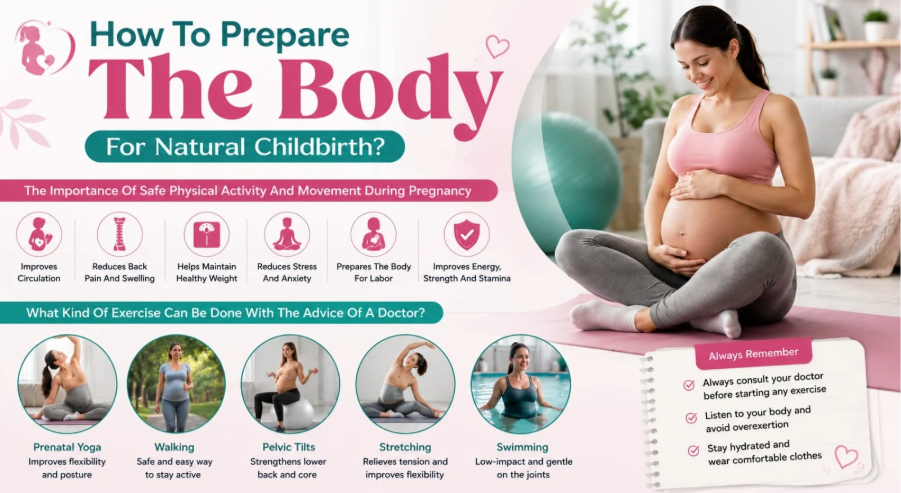
Following Natural Birth Tips, a balanced diet, adequate water, rest, and safe physical activity as recommended by your doctor are important in preparing your body.
Why is regular movement and light exercise so important during pregnancy?
Appropriate physical activity during a healthy pregnancy can help maintain strength and daily functioning. Adequate sleep, nutritious food, and regular prenatal checkups also help monitor changes in the body. However, not everyone’s pregnancy is the same—so it’s safe to consult a doctor before making any changes to your exercise or diet.
Surprisingly, small, regular habits often become a big foundation for preparation.
The Importance Of Safe Physical Activity And Movement During Pregnancy
- Regular exercise: Walking or light-to-moderate physical activity approved by a doctor can help keep the body active during pregnancy, unless there are complications.
- Start slowly: If you have not exercised regularly before, it is safe to increase your activity gradually rather than suddenly starting strenuous exercise.
- Pay attention to body signals: If you experience excessive fatigue, dizziness, shortness of breath, or unusual pain, you should stop the activity and consult a doctor.
- No guarantee of delivery: Being physically active does not guarantee a normal delivery; the type of delivery depends on various medical factors, including the health of the mother and baby.
- Not one-size-fits-all: If you have a high-risk pregnancy or specific medical problems, you should definitely discuss with your doctor which types of activities are safe.
What Kind Of Exercise Can Be Done With The Advice Of A Doctor?
| Exercise | Key Benefit | Safety Note |
| Walking | Keeps the body active | Maintain a comfortable pace |
| Swimming | Reduces pressure on joints | Stay hydrated |
| Prenatal Yoga | Supports flexibility and relaxation | Avoid difficult poses |
| Stationary Cycling | Provides gentle cardio | Adjust resistance comfortably |
| Pelvic Floor Exercises | Strengthens pelvic muscles | Learn proper technique |
Effective Ways To Mentally Prepare Before Childbirth

An important part of Natural Birth Tips is preparing yourself mentally before giving birth. It is normal to have fears or concerns about giving birth, but knowing the right information and discussing your feelings and expectations with your doctor can help you feel more confident.
Why is it so important to give mental preparation before giving birth so much importance?
Because realistic expectations, practicing slow breathing, and supporting those close to you can help you manage anxiety. Surprisingly, mental preparation doesn’t control every outcome of giving birth; but it can help you make calm and informed decisions even in uncertain situations.
Practical Strategies To Reduce Fear And Anxiety About Childbirth
Natural Birth Tips also helps reduce fear and anxiety about childbirth. Knowing what to expect during labor from your doctor or midwife in advance can help reduce fear of the unknown.
But is knowing the facts enough to prepare yourself mentally?
Talking about your concerns with a trusted person, practicing slow breathing, and setting realistic expectations can also help. It’s important to remember that it’s normal to be afraid; however, proper preparation can boost your confidence.
The most surprising thing is that preparation doesn’t control everything—it’s all about being safe and making decisions based on the situation.
Ways To Learn Accurate Information About Childbirth To Increase Confidence
| Information to Learn | How It Builds Confidence |
| Stages of labor | Helps you understand what may happen during labor. |
| Breathing and relaxation techniques | Provides practical ways to stay calm and focused. |
| Possible birth positions | Helps you discuss comfortable options with your care team. |
| Warning signs | Makes it easier to recognize when medical attention is needed. |
| Birth plan flexibility | Prepares you to adapt if medical circumstances change. |
| Reliable medical guidance | Reduces confusion caused by myths or unverified online advice |
Ways To Keep The Body Active And Comfortable During Labor
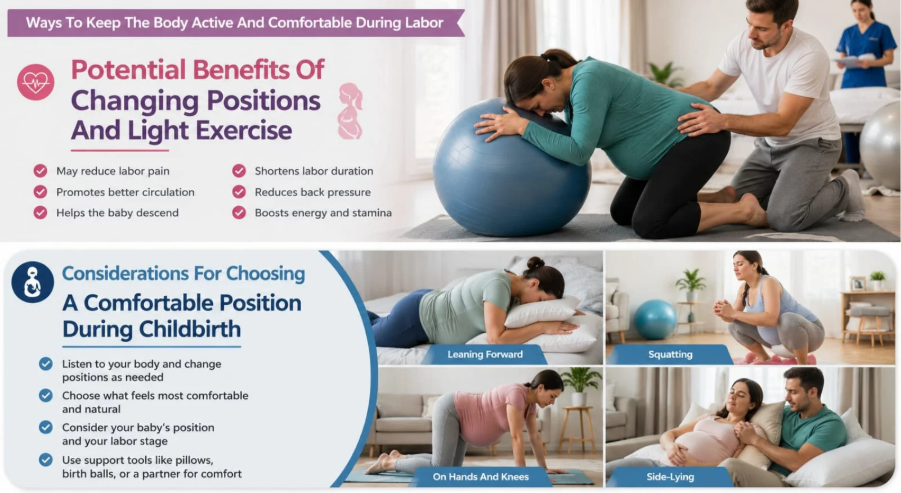
Keeping your body active and comfortable during labor can help you cope with discomfort and adapt to the situation.
Why are light movements and position changes important during labor?
Walking, standing, lying on your side, or changing positions can be relaxing for many, with the permission of your doctor or midwife. However, not all methods are suitable for everyone, especially if there are any medical complications. Therefore, it is safe to pay attention to your body’s signals and your doctor’s advice.
Surprisingly, sometimes even a small change in position can make a significant difference in the feeling of comfort during labor.
Potential Benefits Of Changing Positions And Light Exercise
Following Natural Birth Tips, changing positions and light movements can help keep your body comfortable while preparing for labor.
Why can changing positions help you avoid staying in the same position for long periods of time?
Walking, standing, lying on your side, or changing positions in a comfortable way can be relaxing for many. However, every mother’s situation is different, so it’s safe to move around as recommended by your doctor.
Surprisingly, even small changes in position can make a big difference in how comfortable you feel during labor.
Considerations For Choosing A Comfortable Position During Childbirth
- Prioritize comfort: Choose a position that is least uncomfortable.
- Change positions: Walking, standing, sitting, or reclining may provide relief.
- Avoid lying down for long periods of time: This can cause discomfort or dizziness.
- Get help: Get help from a partner or healthcare professional if needed in positions like standing or squatting.
- Put safety first: Choose a position based on your and your baby’s condition, as advised by your doctor.
Make A Realistic Plan For Childbirth In Advance
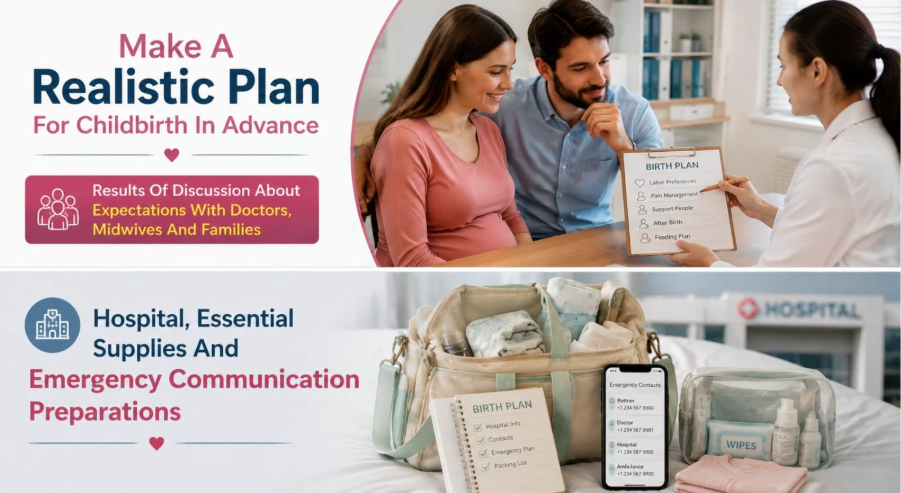
Creating a realistic plan before giving birth, following Natural Birth Tips, can make it easier to make important decisions in advance.
But why is such a plan important?
Discussing expectations for delivery, hospital selection, transportation, emergency contacts, and essential supplies with your doctor or midwife in advance makes preparation more effective. However, it is also important to be mentally prepared to change your plan depending on the circumstances of the birth.
Surprisingly, good planning doesn’t mean doing everything your way—it means prioritizing the safety of mother and baby.
Results Of Discussion About Expectations With Doctors, Midwives And Families
- Clarify expectations: You can communicate in advance what kind of support you want during labor.
- Get accurate information: You can get a realistic idea of possible delivery methods and medical conditions.
- Determine family roles: You can decide in advance who will be there and how to support them.
- Keep the plan flexible: It is easier to make decisions based on the doctor’s advice if the situation changes.
- Increase confidence: Discussing things in advance can reduce uncertainty and unnecessary anxiety.
Hospital, Essential Supplies And Emergency Communication Preparations
It is important to have a plan for going to the hospital, essential supplies, and emergency contacts in advance when preparing for Natural Birth Tips.
Why is it important to prepare so early if labor symptoms suddenly start?
Keep your expected date of delivery, doctor or hospital contact numbers, transportation arrangements, and necessary documents in an easily accessible place. It is also a good idea to pack necessary clothes, sanitary pads, and personal items for the mother and baby in advance.
The most important thing is to have a plan in place to get to the hospital quickly in case of an emergency—sometimes even a few minutes of preparation can make all the difference.
Why Partner Support Is Important During Childbirth
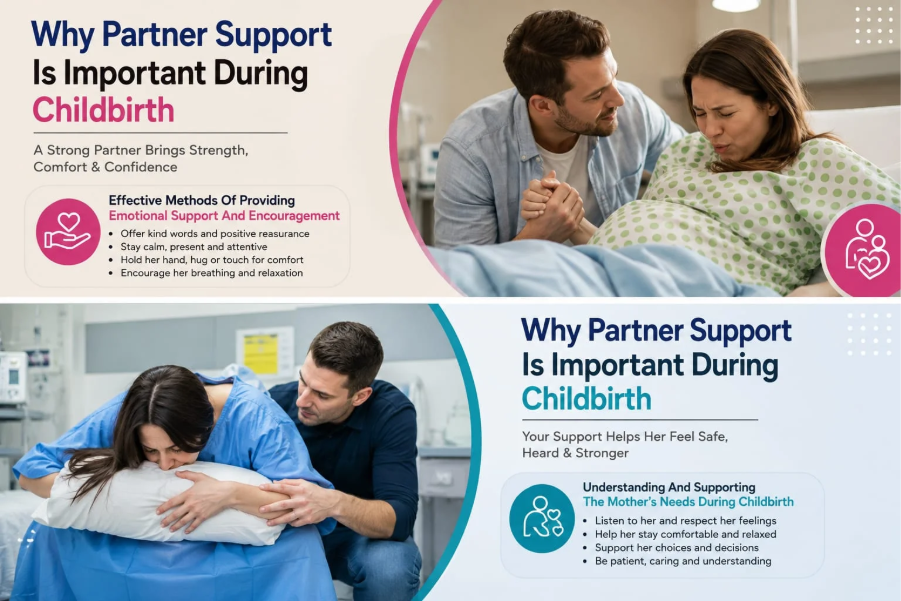
Natural Birth Tips suggests that having a partner during labor can be a key factor in maintaining a mother’s emotional comfort and confidence.
But how can a partner really provide effective support?
Being there during labor, talking calmly, offering water or other essentials, and cooperating according to the mother’s preferences and doctor’s instructions are all part of practical support. The calming presence of a partner can help reduce fear.
Surprisingly, sometimes it’s not the big task—just the reliable presence of someone you know—that becomes the most valuable thing for a mother.
Effective Methods Of Providing Emotional Support And Encouragement
- Staying calmly by the side: Staying by the side of the mother without adding unnecessary words and listening attentively to her can provide a sense of emotional security.
- Positive and realistic words: “You are not alone” or “I am by your side”—such reassuring words can help maintain confidence.
- Respecting her choice: You should know in advance how to ask for help and cooperate accordingly.
- Encouraging breathing: The partner can help remind you of the breathing techniques taught by the doctor or trainer.
- Taking care of small needs: Depending on permission and the situation, water, cold clothes, or creating a comfortable position can be helped.
- Staying calm yourself: If the partner becomes anxious, the mother’s anxiety can also increase; so it is important to remain calm and patient.
Understanding And Supporting The Mother’s Needs During Childbirth
As part of the Natural Birth Tips preparation, it is very important to understand the physical and emotional needs of the mother during labor.
How can support during labor make the situation a little more comfortable for the mother?
Talking calmly, offering water or approved drinks, helping to find a comfortable position, and following the doctor or midwife’s instructions can be effective aids. The feeling that the mother is not alone can also increase confidence. However, it is safer to cooperate with health workers rather than interfere with medical decisions if necessary.
Sometimes a calm voice and a reliable presence can provide tremendous emotional strength during the difficult moments of labor.
How To Take Primary Care Of Mother And Baby After Delivery?
- Give the mother adequate rest and help with daily activities.
- Ensure nutritious food and adequate water.
- Assist with breastfeeding as soon as possible.
- Keep the baby warm and clean and take care of the umbilical cord.
- Observe the baby’s feeding, breathing, and normal behavior.
- Seek immediate medical attention if the mother has excessive bleeding, fever, or severe pain.
- Get regular health checkups for the mother and baby.
- Ensure the mother’s emotional comfort and family support.
Final Words On Preparing For Childbirth With Confidence
The main goal of preparing for childbirth by following Natural Birth Tips should be to prepare the body and mind as much as possible and to give utmost importance to the safety of the mother and baby. A balanced diet during pregnancy, adequate rest, physical activity as advised by the doctor, regular prenatal check-ups and creating a realistic idea of delivery are important parts of preparation.
Is physical preparation alone enough?
No, mental preparation is equally important. It is natural to have fears or concerns about childbirth, but knowing the right information, practicing breathing and relaxation techniques and the support of trusted people can increase confidence. At the same time, planning the hospital, necessary supplies and emergency contacts in advance can make it easier to make decisions in real situations.
One thing is especially important to remember—the experience of childbirth is different for every mother. Therefore, instead of expecting to give birth in a certain way, it is more important to be mentally prepared.
Confidence does not mean having everything under control; rather, having the right preparation, realistic expectations and being ready to receive medical help if necessary.