
Breastfeeding is the usual process of a pregnant woman in the postnatal period when you are urged to feed your baby milk that comes from your body. Experts recommend extensive breastfeeding as your baby’s only or primary source of nutrition until he reaches 6 months or whenever it is possible up to 30 weeks old. This provides essential nutrients and necessary antibodies to support your baby’s natural health and maintains normal growth. Your baby continues to grow at a normal rate and benefits from breastmilk even after they start eating solids and other liquid foods.
In this article,we try to share all the possible outcomes,benefits of breastfeeding, how to breastfeed your child precisely and when you need to breastfeed your child as well.
What actually is breastfeeding?
Breastfeeding is the physiological process of feeding of your milk to your baby which is normal and it generally produces after delivery of the baby.When your baby attaches their mouth onto your single breast and a suckling reflex initiates a normal process by which your baby drinks milk. Your baby will likely initiate the process of breastfeeding soon after he comes out of the womb and it often takes place within the first few hours to get the benefits of breastfeeding .

At first, your body will make an early thick,nutritious form of milk, namely colostrum.This is highly rich in protein along with thick liquid and it’s full of antibodies that help protect your newborn against most infections.Your very first coming colostrum will change into mature and less thick milk at the same time after about three to five days from the onset of breastfeeding.By the end of the course of the time, your baby will normally lose a bit of weight.They’ll definitely regain it once your milk secretion starts in full phase.
How Breastfeeding Helps You and Your Baby Thrive
Regular breastfeeding provides numerous benefits for both you and your newborn baby, including reducing the risk of developing postpartum depression and psychosis. then eventually helps build your baby’s immune system along with a physiological bond.
If you maintain exclusive breastfeeding to your baby for their first six months of life,then you can start giving solid foods to your baby along with breast milk to get benefits of breastfeeding.This is because breastmilk has so many distinct positive health benefits that it demands you to keep providing it until your baby’s second birthday comes or slightly longer.
Where can you get a guide for breastfeeding and supplements?
There are different ways to nourish your baby, and your healthcare provider can help you choose the approach that best fits your needs. You may breastfeed directly, pump breast milk and offer it by bottle, combine breastfeeding with supplements, or use formula or donor milk when needed.
Your baby’s milk feeding demands may vary as they grow bigger, so flexibility is the ultimate key. The main goal is to make sure your baby receives the essential nutrients needed for healthy growth and development. Your healthcare provider can offer guidance and support to help you decide the most suitable feeding option to ensure benefits breastfeeding for your situation.
How does your breastfeeding process work?
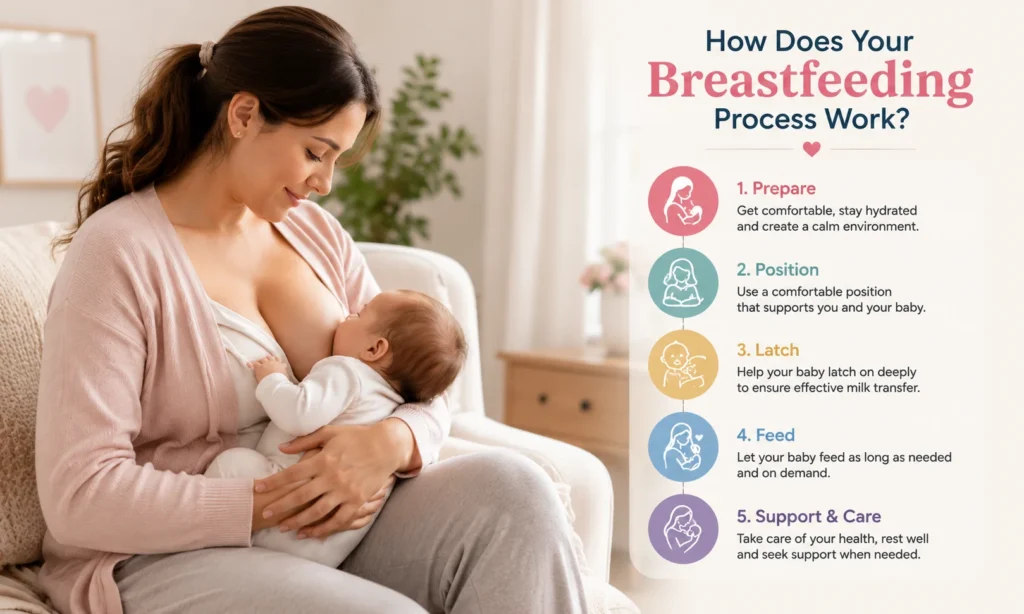
Milk production and ejection occur through a coordinated series of physiological processes that enable milk to move from the mother’s body to the baby through a sequence of steps.These comprise:
- Your baby latches or attaches to your nipple of the breast.
- Then the initiation of your baby’s suckling reflex occurs that stimulates nerve sensation and then tells your body to release certain endogenous hormones namely prolactin and oxytocin.
- After the release of prolactin,it tells your alveoli in your breast structure which are tiny sacs in your breasts to produce milk.
- Finally, oxytocin released by the posterior pituitary triggers the let-down reflex, which pushes milk into the ducts and allows it to be released through the nipples.Thus your baby gets benefits of breastfeeding.
You may be informed by your healthcare providers that lactation usually operates according to a supply-and-demand system.This means your body takes important notes from your baby’s daily demands for normal growth to know how much milk you eventually need to produce to meet up the demand of your baby.
If your baby empties your breast that you produce, your body then will replenish the supply with new production of milk. If your baby sucks or removes less milk than normal,it is because they’re on the supplement solids, your body will adjust with the situation and make less than before.
Positive and noticeable signs of baby’s craving for milk?
There are signs and symptoms that indicate that your baby might be hungry and craving for milk.these are:
- They usually act alert while crying.
- Then,they may turn their head to look at your breast or initiate a movement toward it.
- After that,they start sucking the milk on their hands and also smack their lips or stick out their tongue.
- After that, they bring their hands close to their mouth, often clenching their fists and sucking on their fingers.However, once they are beyond the newborn stage, this behavior may simply indicate curiosity or self-exploration rather than a sign of hunger.
What foods, drinks and supplements should I avoid while breastfeeding?
You need to pay attention to what you eat and drink when you’re breastfeeding and this is because you need to follow some strict rule during your pregnancy period.Though there aren’t as many restrictions when you’re breastfeeding in comparison with to pregnancy,there are some things you need to limit or avoid to get the benefits of breastfeeding.These are:
Curtail the use of caffeine:It’s OK to still have some amount of caffeine,but there is no need to consume or take more than 300 milligrams (mg) in each day.That’s about two 12-ounce mugs of coffee.Moreover,you also shouldn’t forget to count you regular tea consumption together with chocolates.
Limit consumption of alcohol:There aren’t any known noticeable risks in terms of evidence to drink alcohol and the limit is up to one standard drink in each day when you’re breastfeeding. But you must ensure that you drink less than that amount of it at least two hours before nursing.This lets your consumed alcohol clear from your digestive system and leaves no interference with breast milk and also ensures benefits of breastfeeding.
Some other substances to avoid
Avoid fish that is rich in mercury: Mercury from the fish you eat in lunch or dinner sometimes passes into your breastmilk.Then it can have a definite harmful impact on your baby’s brain and nervous system.You had better not to eat any sea fish that contain high mercury and these comprise king mackerel, marlin together with orange roughy, shark and swordfish.
Avoid regular use of nicotine:When you continue smoking or vaping,it then reduces the nutritional value of your breastmilk by lowering your milk supply.Secondly smoke raises your baby’s risk for allergies and causes frequent upper respiratory infections that also threaten sudden infant death syndrome.
How do you start breastfeeding after the delivery of the baby?
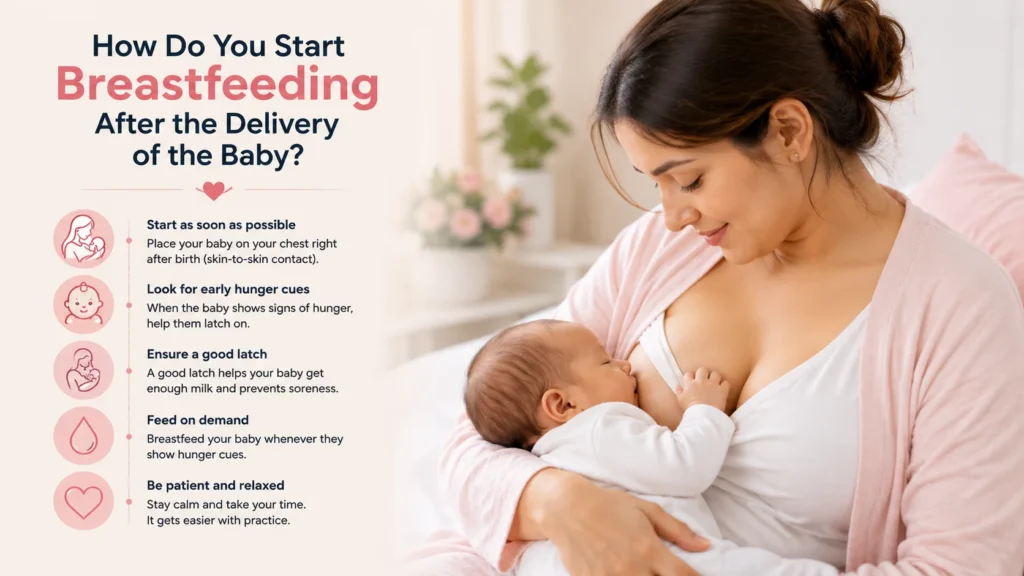
After delivery, your healthcare provider can help you begin breastfeeding when you and your baby are ready. If both of you are healthy, skin-to-skin contact for at least two hours helps keep your baby warm, build a bond, and encourage the first feeding. Find a comfortable position, bring your baby close, and help them latch properly by ensuring their mouth covers much of the areola. Your baby will naturally begin sucking and swallowing milk.
After feeding from one breast, offer the other side. For the next feeding, start with the breast that feels fuller.This is how you can acquire the benefits of breastfeeding.
Can I use birth control methods while I’m breastfeeding?
Yes, but you should talk with your healthcare provider first about the best best possible options for you and when you need to start taking it to prevent conception.In general, there are some several options for you while you are breastfeeding.These are:
- Barrier methods:These actually comprise a condom for both male and female or vaginal diaphragm for female only.
- IUDs: These are very potent and safe birth control methods which you may get implanted right after you deliver your baby.
- Progestin-only hormonal methods:These are pills that contain progesterone hormone only and thereby named as mini-pill.
Special note:Birth control methods that contain estrogen,such as some pills, patches, and vaginal rings usually tend to reduce your milk production and thereby lower supply. Your healthcare provider may recommend waiting until at least one month after delivery or advise you to choose a lower-dose option to get the benefits of breastfeeding.
What are the common struggles with breastfeeding?
If you run into some obstacles while you are breastfeeding or you have troubles getting started,it is a relief for you that you’re not alone to face those issues.There are some very common issues or obstacles that you might face during breastfeeding period.These comprise:
- Unilateral or bilateral breast engorgement along with oversuppling of milk namely,hyperlactation.
- Low supply of milk due to definite clog formation on milk ducts.
- Breast inflammation which is so called mastitis together with nipple blebs.
- Sometimes you may feel sore as well as cracked or painful nipples that may come up with pain or bleeding from your baby’s bite.
- Certain breastfeeding difficulties can occur because of nipple conditions like flat or inverted nipples.
- You may face obstacles with expressing milk by your own hand or with a breast pump.
- Difficulty weaning your baby.
Some FAQs
1.What are the very usual concerns about breastfeeding?
There might be some concerns in different aspects.But,it’s normal to have questions or concerns about getting benefits of breastfeeding.Always talk openly with your healthcare provider and get reliable guidance before making important decisions.
2.Can I breastfeed successfully if I have small breasts?
Yes.Breast size does not determine your ability to breastfeed. The amount of milk your breasts produce mainly depends on your overall health and how frequently your baby feeds.
3.Should breastfeeding hurt or feel uncomfortable?
Breastfeeding shouldn’t hurt you and If it does, it is due to inadequate latching of your baby onto your breast well.However you had better check them by the professionals.
4.Is breastfeeding stressful for new mothers?
Actually it is not always.Breastfeeding is a learning process, and every mother’s journey is different.It may feel challenging at first, but with practice and patience, it becomes easier over time.
Conclusion
Breastfeeding is a unique as well as complex journey that brings many benefits for both mother and baby, but it can also come with challenges along the way. From learning the right techniques to managing common concerns, every mother’s experience is different. It’s normal to feel unsure or face difficulties in the beginning, but with patience, support, and proper guidance, breastfeeding can become easier over time. Remember, asking for help is always okay. Your healthcare provider can support you with the right advice and solutions, helping you make the best choices for you and your baby.Thereby,it is easier to get the benefits of breastfeeding.