
What does it mean if you see brown blood on your pad at the beginning of pregnancy?
Light brown spotting or blood on the pad at the very beginning of pregnancy is a very common occurrence for many women. Simply put, when a new life forms in our body, a lot of ups and downs happen inside the uterus. If it is brown in color instead of bright red like period blood, then it is old blood that is being released from the body late.
During this time, if you do any heavy work, walk for a long time, or have sex with your spouse, a little blood may leak from the cervix. Since this blood does not come out immediately, it accumulates inside the uterus for a while, its color changes from red to brown or gray when exposed to air. According to doctors, as long as this brown spot is not accompanied by severe abdominal pain, cramps, or heavy bleeding, there is no reason to worry. This is considered a process of the body adapting.
What does brown blood actually mean?
When a woman sees light brown blood stains on her pad or underwear at the beginning of pregnancy, it is very natural to have various fears and superstitions in her mind. However, to put it simply, this brown blood is not a major illness of the body, but rather it is a bit of ‘old blood’. When our blood is fresh, it looks bright red. But if that blood is stored inside the uterus or vagina for a while, it mixes with the oxygen in the air and turns black or brown. In the first few weeks of pregnancy, when the baby tries to sit firmly on the wall of the uterus, a few drops of blood may come out. Doctors call this ‘implantation bleeding’. Since the blood is shed in very small amounts, it does not come out immediately. When it comes out after a while, you see it as brown discharge or stains. In addition, during pregnancy, the mouth of the uterus or cervix is very soft because there is a lot of blood flow there. In this situation, if there is a slight movement in the uterus or for any very simple reason, a few drops of old blood can come out. In most cases, it will be fixed within two to three days and it will not harm the fetus. However, it is a signal from your body that you need to be a little careful and rest now. When the body starts adapting to this new change, it is not uncommon for such small things to appear. So do not panic, but take a little extra care of your body.
Brown Blood Symptoms and Precautions
By paying attention to the following points, you can easily understand how common your condition is or when you need to be a little extra careful:
Signs of old blood: Brown spots mean that it is old blood that is coming out of the body late. It is usually not as dangerous as fresh bleeding.
Need for rest: Whenever you see such spots, immediately refrain from all kinds of strenuous work and give the body complete rest.
Pain monitoring: If these brown spots are not accompanied by severe twisting pain in the abdomen or back, then there is very little reason to fear.
Precautions for intercourse: If such spots appear in early pregnancy, the couple should refrain from intercourse or heavy lifting for at least a few weeks.
Why can brown blood occur in early pregnancy?
After getting the news of pregnancy, even a small spot of blood in the underwear can be a cause of panic for any new mother. However, remember that brown blood or discharge in early pregnancy does not mean anything bad. Simply put, during pregnancy, a huge storm of hormones flows through our body. During this time, blood flow in the uterus and the surrounding area increases several times. The most common cause of brown blood is ‘implantation bleeding’. When the small embryo firmly establishes itself in the uterine wall, some of the fine blood vessels there can tear. When that blood does not come out immediately and accumulates inside for a while, its color changes from red to brown due to the effect of oxygen. In other words, brown blood does not mean fresh blood but old blood inside the body. Apart from that, another major reason is the change in the cervix. During pregnancy, the cervix becomes very soft and sensitive. As a result, a little blood can leak from there after a slight movement, standing for a long time, doing heavy work, or having sex between husband and wife. Since the amount of blood is very small, it turns brown before coming out. In most cases, it appears for a day or two and stops on its own. According to doctors, such spots can sometimes appear even if the progesterone hormone level in the body decreases slightly. Therefore, it is important to be a little aware rather than panic if you see such brown discharge in the beginning of pregnancy. Accept it as part of a new experience of the body and try to keep yourself physically and mentally calm.
Main causes of brown blood
You can understand more clearly why this problem occurs from the following points:
Implantation or embryo placement: When the baby implants itself in the uterine wall, a little old blood is a very normal process.
ormonHal fluctuations: Due to the fluctuations of new pregnancy hormones in the body, sometimes a little brown spotting can appear around the date of the period.
Cervical Sensitivity: During pregnancy, the cervix becomes sensitive, which can cause slight bleeding with any physical pressure or intercourse.
Infection: Sometimes, even if there is a fungal or bacterial infection in the vagina, the discharge may change color to brown.
Difference between brown blood on pads and menstruation
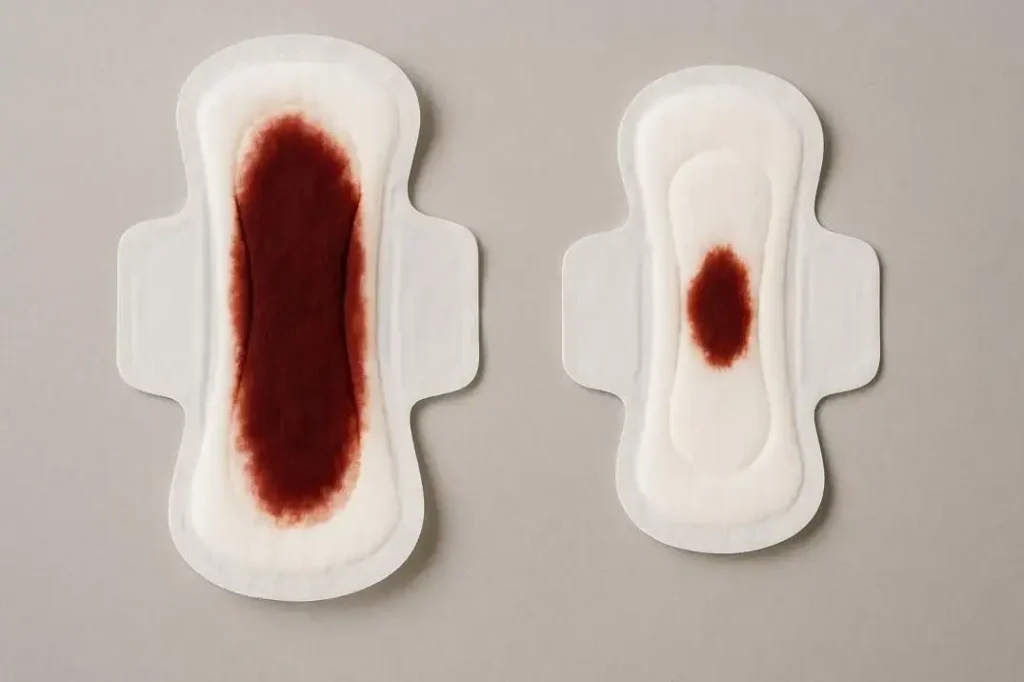
Many times, when people see light brown blood at the beginning of pregnancy, they think that menstruation or period has started. But in fact, there is a huge difference between menstruation and this brown blood. When menstruation or menstruation occurs, it has a certain pace. At first, it is light, then the amount of bleeding increases and the color of the blood is bright red. Menstrual blood usually lasts for 3 to 7 days continuously and in it, blood wheels or clots are often seen. But the brown blood that appears at the beginning of pregnancy is very small in quantity. It is better to call it ‘spotting’ rather than bleeding. This blood is not fresh at all, but because it is old, its color looks more like brown or rusty iron. Unlike menstruation, it does not soak the pad, but only leaves light stains on the underwear or tissue when wiping. Another big difference is the duration. While menstrual blood lasts for a few days, this brown blood or implantation bleeding lasts for a few hours to one or two days at most and stops on its own. In addition, during menstruation, there is severe cramping or pain in the lower abdomen which increases with time, but with this initial brown blood, there is usually no pain or if there is, it is very slight and can be easily tolerated. In simple terms, menstruation is the loss of the egg from your body and this brown blood is a sign of a new life taking place in your uterus. So, without mistaking it for a period, you can easily distinguish between the two by observing the changes in your body.
The main differences between menstruation and brown blood
By observing the following points, you can quickly be sure whether it is menstruation or a sign of pregnancy:
Color of blood: Menstrual blood is usually bright red in color, while the blood in early pregnancy is light pink or dark brown in color.
Amount of blood: Menstrual blood is heavy, which requires frequent changes of the pad, but brown blood is only in the form of drops or spots.
Duration: Menstruation lasts for several days while brown spotting during pregnancy lasts for a few hours or a maximum of two days.
Pain type: Menstrual pain is usually severe and radiates from the waist to the lower abdomen, but there is no pain at all during implantation or brown spotting.
How long can brown blood last?
When brown blood appears in early pregnancy, the biggest question that comes to mind is how long it can last. Simply put, this brown blood or spotting does not last very long. In most women, it can last from a few hours to a maximum of two or three days. Since it is not a regular bleeding like menstruation, it is not continuous. Maybe it appeared once now and then appeared a little after a few hours or the next day. The reason for this is that it is basically old blood inside the uterus which is slowly coming out of the body. When the embryo implants itself in the wall of the uterus (implantation), the body takes very little time to clear the little bleeding that occurs. However, sometimes such light brown spots can appear occasionally during the first three months of pregnancy, especially if you work very hard, stand for a long time or lift something heavy. The body then signals that you need to rest. If you see that this spotting is not lasting more than two-three days and its amount is not increasing, then there is usually nothing to worry about. But remember that not everyone’s body type is the same; in some cases, it stops as a drop only once, while in others it can continue lightly for two days. But if it continues for more than three days and gradually turns from brown to red blood, then it is not right to take the matter lightly. Simply put, it is a temporary issue that ends quickly with the new changes in the body.
Some important points about durability and symptoms
Understand how long or how long brown blood is normal and when it is scary from the following points:
Normal duration: Usually, brown spots stop completely within a few hours to a maximum of 48 hours or two days.
Irregularity: It is not continuous like menstruation and may stop with light spots once or twice a day.
Effect of rest: If you take complete rest after seeing the spots, it is seen that it will be fixed very quickly, i.e. within a few hours.
The amount is very small: It is usually so small that it does not completely soak a pad and only slightly stains underwear.
What does it mean if there is pain with brown blood?
Although it is normal to see light brown blood in early pregnancy, when it is accompanied by pain in the abdomen or waist, the matter should be taken seriously. In simple terms, if only brown spots appear, we do not assume that it is old blood that the body is cleansing. But when those spots are accompanied by twisting, cramping or pain in the lower abdomen, then it should be understood that some kind of instability has developed inside the uterus. Many times, when the uterus starts to grow, the surrounding muscles may be tense and cause mild pain, which is not very scary. However, if this pain is more than menstrual pain or if a sharp stinging is felt on one side of the abdomen, it can be a cause for concern. Especially in the case of ‘ectopic pregnancy’ (the baby is sitting outside the uterus), brown or red blood appears with such severe pain. Again, many times, this type of spotting begins with pain in the back or lower abdomen as an early sign of miscarriage. If you feel that the pain is continuous and does not subside even after resting, then you should understand that your body is giving you a danger signal. The early days of pregnancy are very sensitive, so when pain and bleeding occur together, your body tries to warn you. In most cases, mild cramping pain and brown spotting will resolve in a day or two with rest, but severe pain should never be ignored. It can be an early sign of some internal change or problem in the body.
Special symptoms of pain and brown blood occurring together
Here are some things to keep in mind if pain and brown spotting occur together and when to be careful:
Pay attention to the type of pain: If the pain is a very common cramp, it is not scary, but if it is severe, like menstruation, you should be careful.
Pain on one side of the abdomen: Severe pain in a specific place on the right or left side of the abdomen can be a danger sign.
Pain that does not subside with rest: If you see that the pain does not decrease even after lying down, but rather gradually increases, then it is not normal.
Color change: If the blood suddenly turns red while there is pain along with brown spots, you should seek medical advice immediately.
When is brown blood not normal?
While brown blood is usually not a cause for concern in early pregnancy, it is not always a good idea to take it lightly. In simple terms, there are certain signs that indicate that something is not right inside your body. If the brown blood or spotting is small and stops in a day or two, it is normal. But if you see that the amount of brown discharge or blood is increasing day by day and it becomes much more like a period, it is a sign of danger. Especially if the brown color is mixed with bright red blood, then you should understand that there is fresh bleeding inside. An even bigger reason for fear is if this spotting is accompanied by other problems in the body. For example, if you feel very dizzy, your body becomes completely weak, or you feel like fainting. Sometimes, brown blood is accompanied by a very bad odor from the vagina or if there is severe itching and burning, then you should understand that there is an infection or infection in the uterus or vagina. Another scary thing is the continuous pain of brown blood. If the pain is such that you cannot stand up straight or if someone is stabbing you with a knife in one corner of your stomach, it can be a sign of a bigger problem. Doctors say that if brown spots suddenly appear after 10 or 12 weeks of pregnancy, it is not normal. In simple words, any uncomfortable symptom that interferes with your normal lifestyle and does not subside even with rest should be considered ‘abnormal’ and immediate action should be taken.
Symptoms that you see will tell you that the situation is not normal
Keep the following points in mind. It is not right to delay at all if these things occur:
Color change: If the brown color suddenly changes to bright red or heavy bleeding starts, it is a sign of a big danger.
Severe pain and cramps: If you feel a biting or twisting pain in the abdomen or back that is much worse than menstrual pain.
Dizziness and weakness: If the brown spots are accompanied by cold hands and feet, your chest may palpitate or you may feel very weak.
Abnormal odor: If the brown discharge is accompanied by a very strong or rotten fishy odor, it could be a sign of a serious infection.
Chronic: If brown bleeding continues for more than 3 to 4 days and shows no signs of stopping.
What to do at this time
Whenever you see brown blood stains on your pad or underwear in the beginning of pregnancy, the first and foremost thing is to stay calm. Crying out of fear or nervousness puts extra pressure on the body, which is not good at all in this situation. The first thing you need to do is to stop all kinds of work and keep your body in complete rest. In simple words, stop doing any heavy work, standing for a long time, cooking or walking. Try to lie on your stomach and keep your legs a little elevated with a pillow under your feet, this reduces the pressure on the uterus. Drinking plenty of water is very important at this time because many complications are reduced if the body is moist. Be careful about what kind of pad you are using, of course use clean cotton cloth or good quality pad and try to count or keep track of how often you stain or how much blood is flowing. This will help you give the doctor accurate information later. Apart from that, read a light book or listen to music to keep your mind calm. Do not take any painkillers or herbs as you wish. Remember that this early stage of pregnancy is as fragile as glass, so a little bleeding does not mean that it is bad, but it is a warning that your body needs a little extra care and affection. So do not stress yourself and rest for at least two-three days.
Quick things to do and precautions in this situation
To manage the condition and keep yourself safe, follow the following points:
Complete Bed Rest: Go to bed as soon as you see the spotting. Do not do any heavy work or climb stairs for at least 24 to 48 hours.
Informing the doctor: Inform your doctor about the matter over the phone or in person. He may give you a supportive medicine (such as progesterone) that helps to maintain the pregnancy.
Avoiding physical intercourse: Until the bleeding stops completely and the doctor gives the green signal, avoid sexual intercourse between husband and wife.
Maintaining cleanliness: Do not use soap or any chemicals to keep the vagina clean, use only plain water and keep the area dry.
What can increase bleeding?
If you experience light brown spotting in early pregnancy, the first thing you should do is be careful because even if you forget something small, this small spot can turn into a large amount of bleeding. Many of us have the habit of continuing with all the household chores without paying attention to it even if we feel a little discomfort in our body. But remember that during pregnancy, doing things like lifting heavy buckets, sweeping the house, or moving heavy furniture puts a lot of pressure on the abdomen. This pressure can damage the delicate blood vessels inside the uterus and increase bleeding. In addition, standing for a long time, cooking, or walking for a long time can also create pressure on the lower part of the uterus, which can change the light brown blood into fresh red blood. Another important factor is mental stress or anxiety. If you are afraid or tense all the time, the hormonal balance in the body is disrupted, which can indirectly increase bleeding. Sometimes, due to constipation, even if you strain excessively during defecation, the uterine mouth is put under pressure and bleeding can start. In addition, consuming any medication or hot food (such as spicy food or raw papaya) without a doctor’s advice can increase uterine contractions and cause complications.
conclusion
In conclusion, brown blood on the pad at the beginning of pregnancy is not something to be afraid of, but rather a sign of a natural change in the body. In most cases, it resolves itself with a little rest and awareness. However, it is not right to ignore any small problem when it comes to the safety of your body and the baby in the womb. Instead of being afraid or worried about this beautiful journey of becoming a mother, be patient and try to understand the body’s language. Seeking doctor’s advice at the right time, eating nutritious food, and being worry-free are three things that can guarantee you a healthy and beautiful future. Remember, your awareness is the biggest protection for your child.