
Why does abdominal pain occur in early pregnancy?
It’s normal to feel a little cramping or mild pain in your abdomen early in pregnancy. This is medically known as pelvic cramping. This discomfort occurs when your body goes through hormonal changes and your uterus begins to expand to accommodate a new baby.
Many women experience mild cramping or pain in their lower abdomen early in pregnancy. This feeling is not very intense, but it can be uncomfortable. Sometimes it feels like your period is about to start. So it’s normal to be scared or confused about it at first.
In fact, early pregnancy cramps are normal in many cases. The body then starts to adapt to a new situation internally, and this type of cramping or pain is felt as part of that process.
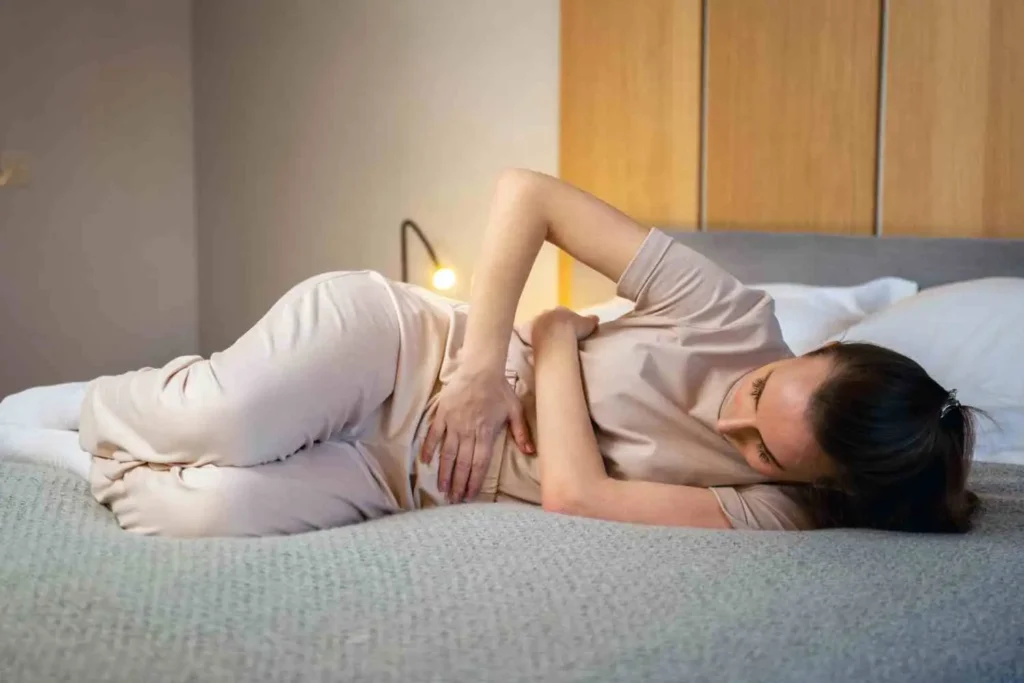
Why Cramps Occur in Early Pregnancy
A mild cramping or menstrual-like feeling in the lower abdomen is a very common symptom in early pregnancy. This is called ‘pregnancy cramps’. Many times, when this pain is accompanied by early pregnancy sporting look alike or light spotting, many people mistake it as a sign of the onset of the period. But in fact, it is a normal process of the body preparing for pregnancy.
Below are the main reasons for cramps or cramping in the abdomen in the beginning:
1. Implantation
When the embryo implants itself firmly in the uterine wall, the uterine muscles experience mild contractions or stretching. This usually happens a few days before your expected period. This is why you may experience mild pain and light bleeding.
2. Rapid growth and dilation of the uterus
To maintain the pregnancy, the uterus starts to grow beyond its normal size. When the ligaments and muscles supporting the uterus stretch, cramp-like pain is felt in the lower abdomen or on both sides.
3. Effect of progesterone hormone
As a result of the increase in progesterone hormone in the body, the muscles of the intestines relax. This slows down the digestion process and causes gas or constipation in the stomach. Sometimes the pressure of this gas can also feel like cramps in the lower abdomen.
4. Increased blood circulation
After pregnancy, the blood flow to the uterus increases many times. Due to this increased blood pressure, a kind of heaviness or mild tingling pain can sometimes be felt in the lower abdomen.
What can you do to reduce this discomfort?
- Change position: If you feel pain while lying on one side, turn to the other side. Sometimes even walking for a while reduces gas pain.
- Rest: Excessive physical exertion can increase cramps, so get enough rest.
- Warm compresses: Applying a warm water bag or warm towel to the lower abdomen relaxes the muscles and provides comfort.
- Loose clothing: Avoid tight clothing that puts pressure on the abdomen and wear comfortable cotton clothing.
What do these cramps usually feel like?
Early pregnancy cramps or cramping can vary from person to person. However, most women compare them to menstrual cramps, although they are usually less severe.
If you have early pregnancy spotting or light spotting, these cramps can also typically feel like:
1. Mild cramping or twisting sensations
Many describe them as a “squeezing” or mild cramping sensation in the abdomen. They are not continuous but come and go in and out.
2. Pre-period-like
These cramps are similar to the heaviness or discomfort you feel in your lower abdomen just before your period. Many women think they are about to get their period, but they are actually a sign of pregnancy.
3. A pulling sensation
As the uterus expands, it may feel as if someone is pulling the muscles in your lower abdomen. You may feel a sudden, sharp pulling sensation on one or both sides of your abdomen, especially when you sneeze, cough, or stand up quickly from a sitting position.
4. Mild pain on one side of your abdomen
After ovulation, a small cyst (Corpus Luteum) forms in the ovary where the egg came from. This can cause mild discomfort or pressure on either the left or right side of your abdomen.
H2: Difference between cramps and menstrual pain
It can be difficult to differentiate between early pregnancy cramps and period pain because both are felt in the lower abdomen. However, by paying attention to some very subtle things, you can understand whether it is your period or a sign of pregnancy.
If your body is experiencing early pregnancy sporting a look-alike (light spotting), it is important to compare the following differences:
1. Intensity of Pain
Pregnancy cramps: These are usually quite mild or mild. They feel like a slight pulling or squeezing sensation in the abdomen.
Menstrual pain: Period pain is usually much more intense and painful. It increases over time and often makes it difficult to perform daily activities.
2. Persistence and Nature of Pain
Pregnancy cramps: This pain is not continuous but comes and goes after a while. It can last for a few hours or a maximum of 1-2 days.
Menstrual cramps: Pain starts 1-2 days before the period starts and can last for several days during the period.
3. Location of pain
Pregnancy cramps: It is mainly felt in the middle of the lower abdomen or on one side (left or right). Sometimes it is limited to only one place.
Menstrual cramps: This pain occurs throughout the lower abdomen and often spreads to the waist or lower thighs (radiating pain).
4. Bleeding pattern
This is the biggest way to differentiate:
- During pregnancy (implantation): Light bleeding or early pregnancy-sporting look-alike occurs which is only seen in a few drops or smears. Its color is usually light pink or brown.
- Menstruation: Although the bleeding starts lightly, it quickly turns red and increases in amount. Small blood clots are often seen in this.
How long can early pregnancy cramps last?
These cramps or stomach cramps in early pregnancy usually do not last very long. However, they can last from a few days to a few weeks as the body adapts to pregnancy.
The timing is discussed in detail below:
1. Implantation Cramps
The pain that occurs when the fertilized egg implants itself in the uterine wall can usually last 1 to 3 days. It ends a few days before your expected period. This pain is mainly accompanied by early pregnancy spotting or light bleeding.
2. First Trimester
The tension felt due to the uterus growing and ligaments stretching may return occasionally during the first few weeks of pregnancy (usually up to 12 weeks). It is not continuous, you may feel this tension for a few seconds or minutes when you suddenly move or cough.
3. General persistence
For most women, this discomfort does not occur every day. It may be felt 1-2 times a week or at certain times of the day, and it will go away after a few weeks as the body adjusts to the hormones.
When is persistence a concern?
If your pain is like the following, it may not be a normal pregnancy cramp:
- Continuous for several days: If the pain is continuous for several days and does not subside at all.
- Increasing intensity: If the intensity of the pain increases instead of decreasing over time.
- Not relieved by rest: If the pain does not subside even after lying down or resting.
Some tips to reduce pain:
- Rest: When cramps start, lie down quietly for at least 20-30 minutes.
- Position change: Try to lie down without putting pressure on your stomach.
- Warmth: Drinking lukewarm water relaxes the muscles and reduces abdominal discomfort.
- Special Note: If these cramps persist for a long time and are accompanied by bright red bleeding, contact a doctor immediately.
Mild cramps or stomach cramps in early pregnancy can be uncomfortable. Since the body is very sensitive during this time, caution is essential before taking any action. Usually, following some simple home remedies can provide quick relief from this pain.
If you have early pregnancy sporting look alike or light spotting and are accompanied by cramps, you can follow the following methods:
1. Change body position and rest
When cramps start, stop all activities immediately and rest. Many times, standing or sitting continuously puts pressure on the ligaments of the uterus, causing pain.
- Lie on your left side: Lying on your left side increases blood circulation in the uterus and relaxes the muscles, which provides relief.
- Elevate your legs: While sleeping, placing your legs slightly higher with a pillow under your feet reduces pressure on your stomach.
2. Apply light heat
A hot water bath is very effective in reducing muscle contractions. However, care should be taken that the water is not too hot.
- Light hot water bag: You can keep a light warm water bag on your lower abdomen or below your waist for 10-15 minutes.
- Bath in warm water: Bathing with warm water relaxes the muscles of the whole body and brings mental peace.
3. Adequate water and liquid food
If there is a lack of water or dehydration in the body, the tendency to get muscle cramps increases.
- Drink at least 8-10 glasses of water a day.
- You can drink coconut water or fresh fruit juice, which will help maintain the balance of electrolytes in the body.
4. Control gas problems
During pregnancy, gas in the stomach can cause cramps due to the progesterone hormone. To reduce this:
- Make a habit of eating small meals frequently rather than eating too much at once.
- Avoid excessively oily, spicy or fried foods.
- Take a light walk indoors for 5-10 minutes without lying down immediately after eating.
5. Deep Breathing (Relaxation)
Sometimes, muscle tension can increase due to anxiety or stress. Take slow, deep breaths through your nose and exhale through your mouth. This relaxation technique helps to relax the muscles of the uterus.
While mild cramping or pulling is common in early pregnancy, not all cramps or pain should be considered normal. Some pain can be a sign of a serious medical condition. It is especially important to be alert if you experience any of the following symptoms especially if you are experiencing early pregnancy like cramping or bleeding.
Here are some signs of cramping that are not normal:
1. Severe and one-sided pain
If you experience sharp, stabbing pain on the right or left side of your abdomen instead of in the middle, it is not normal. This could be a sign of an ectopic pregnancy, where the embryo is growing outside the uterus (usually in the fallopian tube). This is a medical emergency.
2. Severe cramping
If the pain is much more severe than your normal menstrual cramps and is unbearable, it could be a sign of danger. Especially if the pain is accompanied by chills or heavy sweating.
3. Cramps with bleeding
Light spotting or bleeding can be normal in early pregnancy, but if the cramps are accompanied by bright red bleeding and clots, it can be an early sign of miscarriage.
4. Dizziness or fainting
If you feel extremely weak, dizzy, or faint with cramps, it can be a sign of internal bleeding or a serious hormonal imbalance.
5. Abdominal pain with fever
If abdominal cramps are accompanied by a high temperature (100.4°F or higher) and chills, it indicates an infection in the uterus or body.
6. Shoulder Tip Pain
This may sound strange to many, but if you experience severe pain in the tip of your shoulder along with abdominal cramps, it is a major sign of internal bleeding (which occurs in cases of ectopic pregnancy).
It is very common to confuse the two as both gas or digestive problems and pregnancy cramps are felt in the lower abdomen in early pregnancy. Interestingly, the pregnancy hormone (progesterone) is often the main cause of these gas and digestive problems.
Discover more here:
If you experience early pregnancy spotting or light spotting, look for the following differences to help you understand whether the pain is from gas or uterine dilation:
1. Type and location of pain
Gas pain: This pain is usually not in one specific place and can move around in the abdomen. It can feel like a sharp pinching or biting sensation, and sometimes it feels like something is stuck in the abdomen.
- Pregnancy cramps: This is usually felt in the lower or middle of the abdomen. It is a bit like menstrual cramps, a “crunching” or mild cramping sensation.
2. Associated symptoms
Gas or digestive problems: Along with pain, there are symptoms such as bloating, repeated passing of air sour belching or constipation. Many times this discomfort increases immediately after eating.
- Pregnancy cramps: This pain is not related to gas or belching. However, it may be accompanied by breast tenderness, fatigue or light spotting.
3. Ways to get relief
- Gas pain: This pain quickly decreases after walking for a while, exercising or passing air.
- Pregnancy cramps: This usually decreases when you rest or lie down. Walking or exercising can increase this pain.
Why is there more gas during pregnancy?
As soon as pregnancy begins, the hormone progesterone increases in the body. This hormone relaxes the muscles of your body, which slows down the digestive process. As a result, gas accumulates in the stomach and discomfort or cramps are felt due to the swollen stomach.
While mild discomfort or cramps are normal in early pregnancy, there are certain situations that should not be ignored. Especially if your body is experiencing early pregnancy-like or light spotting, it is very important to understand when the situation is becoming serious.
You should immediately consult a doctor if you experience any of the following symptoms:
1. Severe and unbearable pain
If the pain is so severe that you are unable to move or work normally, it is a danger signal. Especially if the pain is felt intensely on one side of the lower abdomen (right or left). This can be a sign of ‘ectopic pregnancy’ (pregnancy outside the uterus) which can be life-threatening if not treated promptly.
2. Heavy bleeding
Light spotting or spotting may be normal, but if bright red bleeding starts like a period and is accompanied by small or large blood clots, see a doctor immediately. This can be a sign of miscarriage.
3. Dizziness or fainting
If you feel extremely weak, your vision goes dark, or you faint, you may have internal bleeding or another serious problem.
4. Fever and chills
If you have abdominal pain during pregnancy and a body temperature of 100.4°F or higher, it indicates an infection in the uterus or bladder. If not treated on time, it can be risky for the pregnancy.
5. Burning or difficulty urinating
If you have frequent urination along with cramps or a severe burning sensation while urinating, you may have a urinary tract infection. It is not right to ignore a UTI during pregnancy.
6. Shoulder pain or unusual pressure
If you feel severe pain in the neck or shoulder joint while lying down, it can be an indirect sign of internal bleeding in the lower abdomen.
Things to bring with you before going to the doctor:
- The date of your last period.
- Whether you have taken a pregnancy test and what the results were.
- When did the pain start and what type of pain it is (gnawing or stabbing).
- Whether you are currently taking any other medications.
Conclusion
This early stage of pregnancy is very sensitive both physically and emotionally. It is natural to experience mild cramps or mild cramps in the abdomen due to the sudden hormonal changes in the body and the beginning of a new life. In most cases, these symptoms are nothing to worry about and are a positive sign that your body is preparing for a healthy pregnancy.
However, it is most important to be aware of your body and pay attention to the little things during this time. If you have mild pain with an early pregnancy-like appearance or light spotting, it could be good news for a new journey.