

How Early Can I Take a Pregnancy Test
A question that comes to many girls’ minds very quickly
How soon can I take a pregnancy test?
Especially when the body starts to feel a little different, you don’t want to wait any longer. But testing too early often doesn’t give accurate results. So it is very important to know when to test to get the best results.
This article will explain in simple terms how long after taking the test, what happens if you do it too early, and what is the best time to be sure.
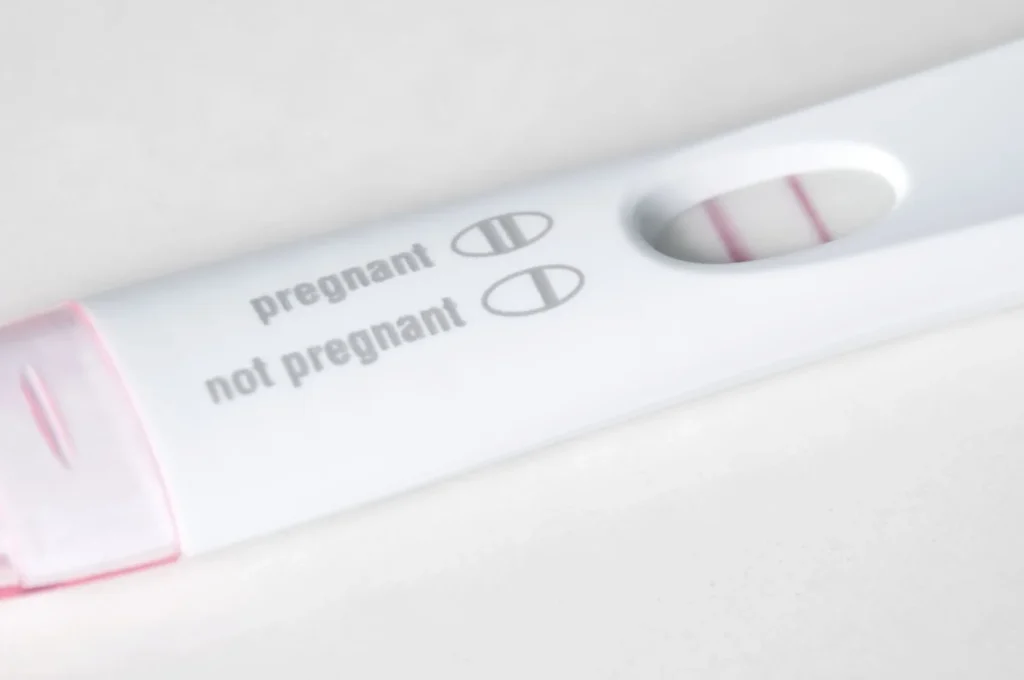
How pregnancy tests actually work
Pregnancy test kits or pregnancy testing methods work based on a very interesting biological process. The key to this is a special hormone called (Human Chorionic Gonadotropin).
1. Role of hCG hormone
When a fertilized egg attaches itself to the wall of the uterus, the body starts producing this hormone called hCG. It is often called the ‘pregnancy hormone’ because it is not usually present in the body except during pregnancy. Over time, the levels of this hormone in the blood and urine increase rapidly.
2. The charisma of antibodies
A pregnancy test kit contains special antibodies. These antibodies are designed in such a way that they bind to the hCG hormone in the urine.
3. Result window from the reaction zone
When you urinate on the kit, it is absorbed and flows through the strip inside the kit. There are three main stages:
Reaction zone: This is where the first antibodies that bind to hCG are found. If hCG is present, they start moving together.
Test zone: This is where some fixed antibodies are found. If hCG is present in the urine, they block the previous antibody-hCG complex. This is where the colored line appears through a chemical reaction.
Control zone: This is very important to understand whether the kit is working properly. A colored line will always appear in this area whether hCG is present in the urine or not. If no line appears here, it means that the test kit is damaged.
When is the earliest time to test?
The earliest time to take a pregnancy test depends on the type of test you are taking and how quickly your body is producing the hCG hormone. Here are the detailed timelines:
1. Blood test
This gives the fastest results. A blood test can confirm pregnancy within 7 to 12 days of intercourse or ovulation by going to a lab. It is much more sensitive than a urine test.
2. Home urine test
The following times are usually followed for testing with home kits:
Fastest: Some ‘early detection’ kits can give results 5-6 days before your missed period. However, the results are likely to be incorrect at this time.
Most accurate: Testing 1 day after your missed period is 99% accurate.
If you have irregular periods: If you are not sure about your period, you should test at least 21 days (3 weeks) after your last unprotected intercourse.
Why shouldn’t you test too early?
The level of hCG hormone in the body is very low right after conception. If you test too early, the kit may not detect the hormone even though you are pregnant (called a false negative). The level of this hormone doubles every day, so it is wisest to wait until you miss your period.
Some important tips when taking a quick test:
First morning urine: Test with your first urine after waking up early in the morning. This is when the hormone concentration is highest.
Don’t drink too much water: Drinking too much water before taking the test dilutes your urine, making it difficult to detect the hormone.
Can I take the test on the day I miss my period?
Yes, you can take a pregnancy test on the day of your missed period. However, there are some things you need to know to be 100% sure of the results.
Modern and ‘early detection’ kits available in the market are able to show results on the day of your missed period or 1-2 days before. Most kits claim that they can give up to 99% accurate results if you test on the day of your missed period.
However, keep in mind the following 3 things for accurate results:
1. Possibility of ‘false negative’
On the day of your missed period, your body may not have enough hormone levels (especially if your ovulation or ovulation is late). In this case, the kit may show a spot even though you are pregnant. This is called a ‘false negative’.
2. Use first morning urine
If you want to test on the day of your missed period, you must test with first morning urine. Because urine has been stored overnight, it has the highest concentration of hormones, which the kit can easily detect.
3. In case of irregular periods
If your period is not regular, it is difficult to accurately understand the day of your missed period. In that case, it is safest to test at least 21 days after unprotected sex.
What should you do next?
- If it is positive (two lines): Congratulations! You should contact a gynecologist and confirm it with a blood test.
- If it is negative (one line) but you do not have your period: Do not panic. Wait another 3 to 7 days and test again. If the hormone levels increase in the meantime, the result may be positive
When is the most reliable time?
Although everyone has different opinions about the most reliable or ideal time to take a pregnancy test, according to medical science, testing 1 week after a missed period is considered the most accurate.
1. Most reliable time: 7 days after a missed period
Although testing on the day of a missed period gives an accurate result in 99% of cases, sometimes the hormone levels in the body may be low due to late ovulation. If you test 1 week after a missed period, the amount of this hormone in the body increases so much that even a standard quality kit is unlikely to make a mistake.
2. Why is this time the best?
Hormone levels: Hormone levels double every 2-3 days after conception. These levels are much higher 1 week after a missed period.
Low risk of negative results: If you test too early, the kit can often come up negative even though you are pregnant. If you wait 1 week, this risk is almost non-existent.
- What time of day is the best?
- Although the test can be done at any time of day, the first morning urine is most reliable.
- Hormone concentrations are highest in urine in the morning.
- Drinking a lot of water at other times of the day can dilute the urine, making it difficult to detect the hormone.
What problems can arise from testing too early?
There are no major physical risks to taking a pregnancy test too early, but it can cause you some confusion and emotional anxiety. The main problems are:
1. ‘False negative’
This is the most common problem. The hormone levels in the body are very low right after conception. If you test too early or before your period is missed, the kit cannot detect that small amount of hormone. As a result, the kit may show a line or a negative result even though you are pregnant.
2. ‘Chemical pregnancy’ and emotional stress
Sometimes, if you test too early, the result comes out positive but your period comes a few days later. This is called a ‘chemical pregnancy’. This means that the egg was implanted in the uterus for a very short time but then it was destroyed. If you tested too late, you may not have known that you were pregnant (it would have been considered a normal period). Knowing this early can often cause severe emotional distress.
3. Risk of kit damage or misreading
If you test too early, the test line is often so faint that it is difficult to see with the naked eye. Does this confuse you as to whether it is positive or negative? This leads to wasting money and unnecessary anxiety by buying kits again and again.
4. False confidence
If the test comes back negative and you think you are not pregnant, you may not take the necessary precautions in your lifestyle (such as taking medication or avoiding heavy work). When in fact, you may be pregnant.
Advice for you
If you want to test too early due to any suspicion or symptoms:
- Test again after 3-4 days: If the first time comes back negative, try again after a few days.
- Do a blood test: A blood test is much more sensitive than a urine test. It can give accurate results as early as 10-12 days after intercourse.
Why is it better to test in the morning?
It is considered ideal to take a pregnancy test in the morning, especially after waking up in the early morning.
1. High concentration of hCG hormone
Pregnancy test kits mainly look for the presence of hCG hormone in urine. When you sleep all night, your urine is stored in the bladder for a long time. As a result, the concentration or amount of this hormone in the urine increases a lot. The higher the concentration of the hormone, the easier the test kit will be able to detect it.
2. There is no fear of urine becoming diluted
During the day, we drink tea, coffee, water or other liquids. As a result, the urine becomes diluted. If the urine is diluted, the concentration of hCG hormone decreases. In the very beginning of pregnancy (when the body already has low hormones), there is a possibility that the hormone will not be detected if the test is done during the day, which can give an incorrect or ‘false negative’ result.
3. Clear result or ‘die line’
When morning urine is used, the spots in the result window of the test kit are much clearer and darker. If you test at other times of the day, the spot often comes out very light or blurry, which can be confusing.
Some important information:
Are you careful about drinking water? If you want to test during the day, refrain from drinking water for at least 4 hours and try to hold your urine. This will slightly increase the concentration of hormones in the urine.
In the case of advanced kits: Currently, some well-known brands of ‘digital’ or ‘highly sensitive’ kits are available that can be used at any time of the day. However, for maximum certainty, doctors still prefer the first urine of the morning.
2: What to do if the first test comes back negative?
A negative test the first time does not mean that you are definitely not pregnant. Sometimes, the result can be negative because the hormone levels in the body are low at the very beginning of pregnancy.
If your result is negative but your period has not started, follow these steps:
1. Wait 3 to 5 days
This is the most important step. The hormone levels in the body double every 2-3 days in early pregnancy. Therefore, if you test again 3-5 days after the first test, there is a possibility that the hormone levels in the body have increased and the chances of the kit giving an accurate result increase.
2. Use the first urine of the morning
If you tested the first time at a different time of the day, then the second time you should definitely test with the first urine of the morning. This is when the hormone concentration is highest.
3. Recheck the kit usage instructions
Sometimes, even minor mistakes in using the kit can result in a negative result. Read the instructions on the kit package carefully and see how long it takes to see the results (. The results will no longer be accurate if the specified time has passed.
4. Get a blood test
If you miss your period and the home test repeatedly comes back negative, it is best to go to the lab and get a blood test done. Blood tests are much more sensitive and can detect pregnancy much earlier than urine tests.
5. Consult a doctor
If your period does not start after a week or more and the test comes back negative, consult a gynecologist. There may be other reasons for a late period besides pregnancy, such as:
- Excessive stress or anxiety.
- Hormonal imbalance.
- Rapid weight loss or gain.
- Side effects of illness or medication.
When is a blood test needed?
Blood tests are more sensitive and informative than urine tests for pregnancy testing. Doctors usually recommend blood tests in certain situations.
Blood tests are mainly needed in the following cases:
1. If you want to be sure very quickly
A blood test can be used to confirm pregnancy within 7 to 12 days of intercourse. If your urine test is still negative but you want to be sure very quickly, a blood test can be done.
2. Quantitative or beta hCG test
There are two types of blood tests, one that only tells you if you are pregnant and the other that measures the exact amount of hormone in the blood. The second is needed when:
To understand the stability of the pregnancy: Seeing whether the hormone levels are increasing properly can tell whether the fetus is healthy.
If there is a risk of miscarriage: If someone is bleeding, doctors check the blood every few days to see if the hormone levels are decreasing or increasing.
3. To identify an ectopic pregnancy
If the embryo grows outside the uterus (such as in the tube), it is called an ectopic pregnancy. This is an emergency. In this case, even if the urine test is positive, the level of the pregnancy in the blood is lower than normal or abnormal, which can be quickly detected through a blood test.
4. If the urine test results are unclear repeatedly
If your urine test results are very light or if you repeatedly get different results but your period has stopped, a blood test is done to make a final decision.
5. Before any special treatment
Before starting an operation or any strong medication that can harm the unborn baby, doctors recommend a blood test to be 100% sure.
Is it right to rely only on signs?
No, relying solely on symptoms is not right. Many early pregnancy symptoms (such as nausea, breast tenderness, fatigue, or bloating) are exactly the same as those experienced before your period.
Here are the main reasons why it is risky to base your decision solely on symptoms:
1. Similarities between PMS and pregnancy
A few days before your period, hormonal changes can cause mood swings, breast tenderness, or mild pain in the lower abdomen. These same symptoms are also caused by the increase in progesterone hormone in early pregnancy. So it is almost impossible to differentiate based on symptoms alone.
2. Effects of stress
If you want to have more children or are very worried about getting pregnant, your brain can create imaginary symptoms in your body. This is also called ‘pseudo-pregnancy’. Sometimes, excessive anxiety can cause your period to be late, which can confuse you.
3. Other physical causes
- Nausea: This can also be due to gastric problems or food poisoning.
- Fatigue: It can be due to anemia or excessive work pressure.
- Missed period: Periods can also be missed due to hormonal imbalance, thyroid problems, PCOS or sudden weight changes.
What should you do if you experience symptoms?
If you notice changes in your body, follow the steps below instead of relying on guesswork:
Use a test kit: Take a pregnancy test at least 1 day after your missed period. This is the easiest and most reliable way.
Watch for light bleeding: Sometimes, a little spotting or blood spotting may occur before your missed period (called implantation bleeding). It is only possible to confirm whether it is your period or pregnancy through a test.
When is it best to talk to a doctor?
Regardless of the results of the pregnancy test, it is very important to consult a doctor in certain situations. The main goal should be not only to test but also to ensure the overall well-being of your body.
1. If the test is positive
As soon as two lines appear on the kit, your first task is to make an appointment with a gynecologist. Reasons:
- Verification: The doctor will confirm the pregnancy through a blood test or ultrasonography.
- Folic acid and vitamins: It is very important to take folic acid for the first three months for the development of the baby’s brain, which the doctor will prescribe for you.
Initial checkup: Your blood pressure, weight and any other physical complications will be checked.
2. Test negative but no period
If the test comes negative even after 1 week of missing the period and the period does not start, you should go to the doctor. The reasons for this may be:
- Hormonal imbalance
- Excessive stress or nutritional deficiency.
- Pregnancy has occurred but the hormone levels are not detected in the blood.
- 3. Severe pain or bleeding
If you have any of the following problems, whether you have symptoms of pregnancy or not, it may be a medical emergency:
- Severe lower abdominal pain.
- Unusual bleeding or spotting.
- Dizziness or fainting.
- These could be signs of an ectopic pregnancy (pregnancy outside the uterus), which can be dangerous if not treated quickly.
conclusion
Taking a pregnancy test is a sensitive and important process. The gist of what we have discussed here is:
Right time: It is wise to test 1 week after your missed period for the most accurate results.
First morning urine: For the best results, use the first urine after waking up in the morning as it contains the highest concentration of hormones.
Negative result: Don’t panic if you get a negative result the first time, test again after 3-5 days or get a blood test to confirm.
Tests are more important than symptoms: You cannot be sure based on symptoms like nausea or dizziness because these can also occur before your period. Only chemical tests give a definitive result.