
It is very normal to have a lower back pain early pregnancy. Don’t be afraid of it at all. Actually, your uterus or the baby’s room inside is small, but when the baby starts coming, that room starts to grow slowly. This is why the uterus is getting bigger and getting stretched, which is why it twists or pulls in the abdomen. It is much like the cramping pain before your period. In simple words, your body is now busy making room for the baby and that is why your abdomen feels a little tight.
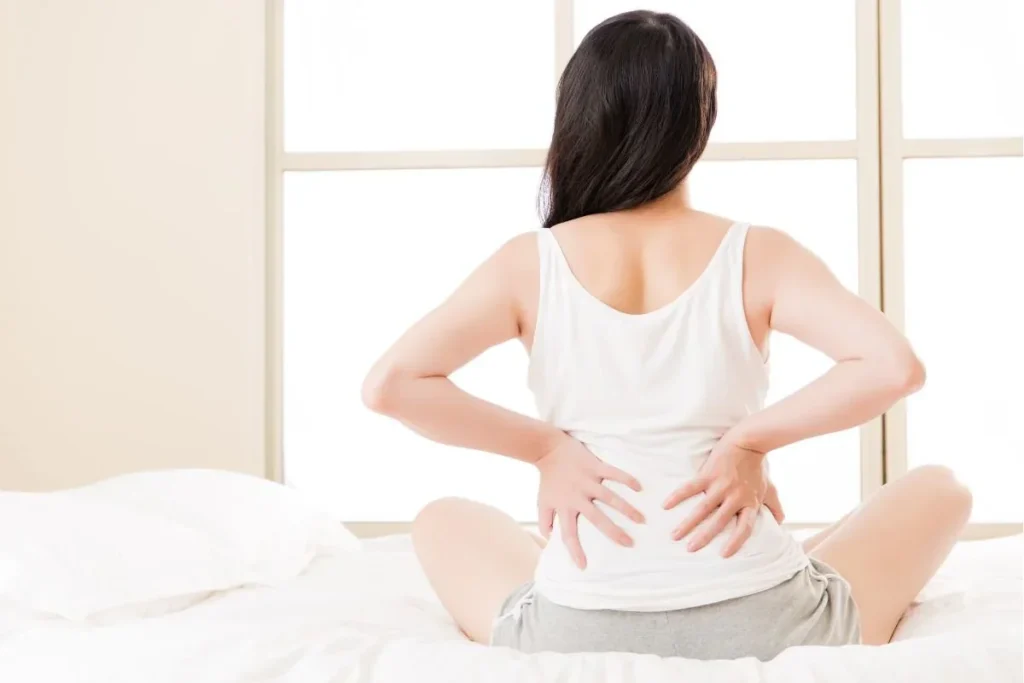
Why does back pain occur in early pregnancy2:
Back pain in early pregnancy is very normal and is a common complaint of almost every expectant mother. Even though your baby is very small now, your body has been preparing for him or her to grow up for a long time. As part of this preparation, some changes occur in the body that directly put pressure on your spine and waist muscles. In simple words, your body is now becoming a little ‘loose’ or loose so that it is easier to give birth to a baby in the future and this change is the reason for the tingling pain in the waist.
The main causes of back pain are given below:
Hormonal manipulation (Relaxin): During pregnancy, a hormone called ‘relaxin’ is released from the body. Its function is to soften and loosen your bone joints or ligaments. This causes the joints of your pelvis or waist bones to become a little loose, which results in back pain.
Change in Center of Gravity: As the uterus grows, your body’s center of gravity shifts forward. Maintaining this balance puts extra pressure on your spine and waist.
Stress: Sometimes, the muscles in your waist tighten due to pregnancy anxiety, which can cause pain.
Sleeping or sitting style: Since the body is now sensitive, sitting in one position for a long time or sleeping in the wrong position can strain your waist muscles.
Muscle stretching: When the abdominal muscles stretch to make room for the baby, the ability to support the waist muscles decreases slightly, which can cause back pain.
Things you can do to reduce pain:
1. Try to sit upright and place a small pillow or cushion behind your back.
2. Sleep on your left side and place a pillow between your knees.
3. When lifting something from below, sit with your knees bent without bending your waist.
How does lower back pain usually feel?
This lower back pain in early pregnancy is not the same for everyone. It affects each body differently. However, most mothers describe this pain as a ‘heavy weight’ or ‘twitching’ discomfort in the lower back. It is usually felt more in the lower back where the spine ends.
The pain can usually be felt in the following ways:
Dull Ache: It will feel like your lower back is constantly feeling heavy or aching. Much like it feels after sitting on a hard surface for a long time.
Sharp Pain: Sometimes when you suddenly get up from a chair, turn around in bed, or sneeze or cough, you will suddenly feel a sharp pain on one side of your back. It may feel like a flash of lightning.
Radiating Pain: Sometimes this pain is not confined to the waist, it can start from the waist and go down to the back of your buttocks or thighs. Many people think of this as sciatica pain.
Monotonous fatigue: After working all day, in the afternoon, you may feel like your waist is breaking or you no longer have the strength to stand straight. It decreases again when you rest.
When should you notice this type of pain? If you see that the pain is not in the middle but is only on one side, or if your legs are tingling or numb with the pain, then you should pay attention to it.
Does this pain feel like premenstrual cramps?
Yes, you’re right! Early in pregnancy, abdominal pain feels a lot like your period or menstrual cramps. Many times, women don’t even realize they’re pregnant, thinking that their stomach is clenching or twisting because it’s about to get its period.

Why does it feel like that?
Just like before menstruation, there is discomfort or cramping pain in the lower abdomen. When your uterus starts to grow, the muscles around it tighten, which looks and feels exactly like menstrual cramps. Just like your stomach feels a little heavy or swollen during menstruation, you may have the same feeling in early pregnancy due to hormones.
Just like many people experience pain in the waist during menstrual cramps, in early pregnancy, along with abdominal pain, your waist may also feel a little heavy. Menstrual cramps usually increase over time and become severe when you start bleeding. But pregnancy cramps are usually very mild and go away on their own with rest or lying down. They’re not as intense as periods, which means you’ll be bedridden.
How long is this back pain normal?
Back pain during pregnancy is not really a clock-based thing. To be honest, this pain can be more or less present throughout your pregnancy. However, in the beginning, when the body tries to adapt to all the new changes, this discomfort may be a little more in the first three months.
During this time, the bones soften due to hormones, so back pain starts. This is very normal. Sometimes the pain decreases a little around four to six months. Because the body gets used to it then. When the baby grows up and its weight increases, the pressure on the back starts to increase again. Then the pain may be a little more.
When should you not be afraid? If you find that your back hurts after standing for a long time at work or holding your back at night after running around all day, then you will understand that it is completely normal. If the pain subsides with rest or a warm compress, there is nothing to worry about. If the pain goes away after a few days, there is nothing to worry about. But if the pain persists for several weeks and you are unable to do anything, it is a good idea to inform your doctor.
Discover more here: Early pregnancy symptoms before missed period
In which condition is back pain more felt
Back pain is not always the same. This pain can increase from time to time based on your daily movement or work. In simple words, the pain is felt more whenever there is extra pressure on your back.
Back pain can increase more during the following times:
Standing for a long time: If you stand in the kitchen for a long time, work or stand in line, the back muscles get tired and start to hurt.
Sitting in one way: If you sit hunched over in a chair at the office or at home for a long time, the pressure on the lower back can cause pain.
Turning over in bed: When you suddenly turn from one side to the other from a lying position, you may feel a sharp pull on the back.
Lifting something heavy: When you try to lift a heavy bucket, small child or shopping bag from below, there is a direct pull on the back. This should not be done at this time.
Climbing stairs: Repeatedly climbing stairs puts pressure on the joints of the lumbar spine, which can increase pain.
At the end of the day or at night: When you go to bed at night after a day of running and work, the accumulated pain of the day comes back to you as soon as you stretch your body.
Ways to get instant relief:
1. Do not stand or sit for more than half an hour at a time. Take a walk.
2. Place a soft pillow or cushion behind your back while sitting.
3. If you need to lift something from below, kneel down and lift it without bending your waist.
What to do to get relief from lower back pain
You don’t have to do anything big to reduce back pain. If you make some small changes in your daily routine and take a little care of your body, you will see that the pain has reduced a lot. Below are some simple home remedies that will give you quick relief:
Decide the type of rest: Do not force yourself when the pain starts. Lie down for a while. It is better if the mattress is not too soft or too hard while sleeping.
Pillow magic: Try to sleep on your left side while sleeping. Place another pillow between your knees. You will see that the pressure on your waist has reduced a lot and you are sleeping better.
Hot or cold compress: You can apply hot water to the area of lower back pain with a hot water bag or a clean cloth. This softens the muscles and provides relief. In some cases, cold compresses also work well.
Sitting correctly: Whenever you sit, place a small soft pillow or cushion behind your back. Do not sit hunched over, try to sit straight. And do not sit with your legs dangling for a long time.
Light walking: Do not stop moving because of pain. Walk very slowly for a short time indoors. This improves blood circulation and reduces pain. But of course, unless your doctor has forbidden it.
Do not do anything forcefully: When you want to lift something from below, do not bend your waist, but rather bend your knees. Do not put any sudden pressure on your body.
When should you be a little more careful? If you see that the pain does not decrease at all after doing all this, but on the contrary, it increases, then do not take any painkillers on your own. Be sure to talk to your doctor for medication.
What kind of back pain is not normal
It is very common to have a little pain in the back during pregnancy, but it is not right to ignore all pain. There are some pains that are a big ‘danger signal’ for the body. If the type of pain is such that you can no longer tolerate it, do not consider it normal.
If you see the following signs, you will know that the pain is not normal:
Unbearable or severe pain: If the pain is so severe that you cannot stand straight or move from bed, then inform the doctor immediately.
Spreading pain: If the pain from the back goes to the feet like an electric shock and the legs feel tingling or numb, it may be due to nerve pressure.
Bleeding with pain: If you see blood or spotting in your vagina along with back pain, do not ignore it at all.
Fever: If you have a fever or chills along with back pain, it means that there is an infection or infection inside the body.
Burning sensation during urination: If you have pain in the back of your waist and it burns when you urinate or there is a foul smell in your urine, it may be a sign of a kidney or urinary tract infection.
If the pain is stabbing: If your waist is stabbing at regular intervals, like period pain (like every 5 or 10 minutes), it may be a sign of premature labor.
What you should do now: If you have any of the above symptoms, talk to your doctor without delay or go to a nearby hospital.
Can stress increase back pain?
The simple answer is yes, of course it can! Your mind and body are deeply connected. If you are upset or tense during pregnancy, it will directly affect your back.
When we are very worried or afraid about something, the muscles in our body become stiff or tense without us knowing. Especially the muscles in the neck, back and waist become the most stiff. If the muscles are stiff for a long time, there will be sharp pain. If you are mentally calm, then minor pain does not affect you. But if you are stressed, even minor pain can seem like a mountain to you. When you are under a lot of stress, the body produces some hormones that increase pain.
If you don’t get enough sleep at night due to anxiety, your body doesn’t get enough rest. This weakens the tired muscles in your back and increases the pain.
Some easy ways to lighten your mind:
1. Talk openly: Don’t keep any fears or worries in your mind. Talk to your partner, mother or a close friend.
2. Breathe deeply: Whenever you feel very tense, close your eyes and take long, deep breaths and exhale. This relaxes your muscles.
3. Do something good: Listen to your favorite music or read a book. Keeping yourself busy will prevent bad thoughts from coming to your mind.
When should you definitely consult a doctor?
There is no need to run to the doctor for every little thing during pregnancy, but there are some symptoms that you should not delay even for a moment. If your body gives the signals mentioned below, you will understand that now is not the time for home remedies or rest. You need to talk to the doctor directly.
If the following conditions occur, go to the doctor immediately:
If the pain comes with a bite like a period: If the pain in the waist or lower abdomen bites very hard after a while and this biting time is frequent (such as every 5-10 minutes), then do not delay.
If blood or water starts to break: If blood appears with the pain (whether it is light or heavy) or if something like water starts to come out of the vagina.
If any part of the body is numb: The pain goes from the waist to the legs and the legs become numb or it is difficult to move them.
If you have a fever: If you have a fever of 101 or 102 degrees along with back pain and chills.
If you have trouble urinating: If you have a burning sensation while urinating or if you have severe pain on both sides of your back (this may be a sign of a kidney infection).
If you want to take painkillers: Before using any painkillers or balms on your own, be sure to ask your doctor.
Things to keep in mind when going to the doctor:
1. Where exactly is the pain (in the middle or on one side).
2. Is the pain continuous or does it come and go?
3. Is there any other problem with the pain, such as nausea or dizziness?
Why does the waist become loose or loose due to hormones?
During pregnancy, your body produces a type of hormone called ‘Relaxin’. Just by hearing its name, you can understand that its function is to ‘relax’ or loosen the body.
Nature actually prepares your body in advance so that the baby can easily come out of your waist bone during childbirth. This hormone makes the ligaments that hold the joints or joints of your waist bone soft and loose like rubber.
What happens as a result of this:
Reduced waist strength: Since the joints of the bones are not as tightly held as before, the stability or balance of the waist decreases slightly. Even if you move a little, it feels like the waist is not supporting properly.
Easy strain: Due to the loosening of the ligaments, when you suddenly walk or turn to the side, there is extra pressure on the waist muscles. And because of this pressure, that familiar tingling pain starts.
Body swaying: Due to the loosening of the waist, the way you walk may also change a little. You may feel like you are wobbling a little or you are not getting strength in your waist.
What you should do at this time:
1. Do not move suddenly: When getting up from the sofa or bed, do not get up suddenly. First, lean to one side and then get up slowly with the weight of your hands.
2. Light walking: Do not lie down completely because your body has become loose. Walk a little at a very normal pace, this will keep the muscles active and the pain will be less.
3. Wear low shoes: Give up wearing high heels altogether. Wear very even and soft shoes so that the body feels less shaking while walking.
Sitting or sleeping in the wrong position can increase back pain
During pregnancy, the way you sit or sleep becomes more important than before. You may not be able to do it the way you used to sit or sleep on your stomach. Because the muscles of your body are now much softer, even a slight wrong position can cause severe tension in your back.
Common mistakes we make while sitting or sleeping:
Slouching: When we sit on a sofa or chair, we often bend our back or hunch over. This puts all the weight on the bones below your waist, which can cause severe pain.
Sitting for a long time continuously: Sitting with your legs hanging in one position for a long time causes the back muscles to tighten. This hinders blood circulation and causes the back to ache.
Sleeping upright: When you lie on your back or lie down straight during pregnancy, the entire weight of the uterus falls on your spine and blood vessels in your waist. This can cause back pain and can also make you feel short of breath or dizzy.
Getting up suddenly: When you suddenly get up from a lying position and sit up straight, it puts a lot of strain on the ligaments in your back. It’s like suddenly pulling on a rubber band.
In simple words, the last word
This early period of pregnancy is both joyful and a little bit of anxiety. The slight tingling pain that you are feeling in your waist or stomach is actually a natural fight of your body to make room for your little one inside you. So, don’t panic if you have a slight pain. Trust your body and keep your mind calm. Remember that in this journey of becoming a mother, your body will give you little signals, they are small proofs of your baby’s growth.
My last few simple tips for you:
Take care of yourself: Work will be there for the rest of your life, but now your rest is the most important. Whenever your body says “tired”, stop all your work and take a break.
Be careful but don’t be afraid: Only if the type of pain changes, such as heavy bleeding or unbearable stabbing pain, is there a reason to worry. Also, don’t increase your tension by unnecessarily googling about minor pain.
Get help from your partner: If you have back pain, ask your partner to massage you or move the cushion forward. At this time, everyone’s love and care will reduce half of your pain.