

Now you don’t have to wait months to find out whether you are going to become a mother or not. You can now confirm it by taking a home pregnancy test before your period or within a day or two of missing your period. This is what doctors call an ‘early detection test’. In simple words, it is a way to know the news of the baby in advance.
When a woman becomes pregnant, her body starts producing a special hormone called hCG. This hormone is only found in the body when she is pregnant. When you take a pregnancy test with a kit, the kit looks for this hormone in your urine. If it is found, the result is positive.
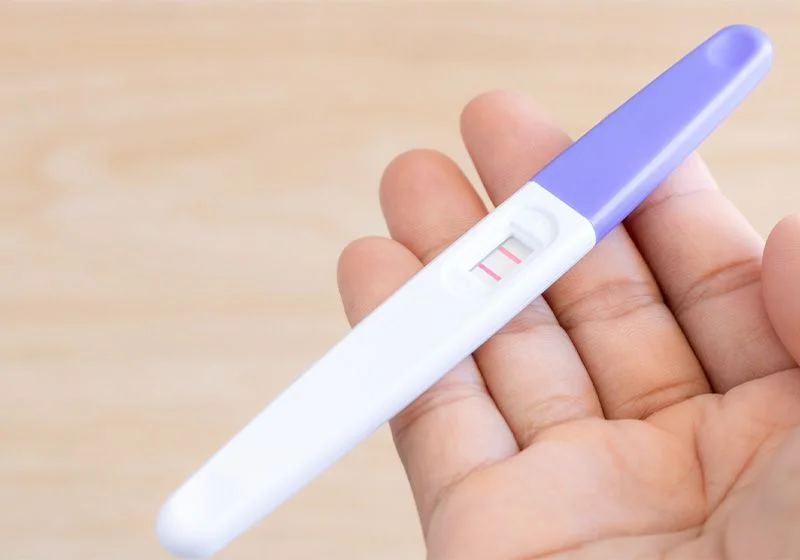
How does an early detection pregnancy test work?
Early detection pregnancy test actually detects a special signal inside your body. Simply put, it monitors a hormone produced in your body.
The simple steps to work are given below:
Detecting hCG hormone: When you are pregnant, your body starts producing a hormone called hCG (human chorionic gonadotropin). This hormone is only produced when the baby implants in the uterus. The job of this kit or stick is to detect that hormone in the urine.
Changing color like hemoglobin: A special type of chemical is given in that narrow part or window-like area of the pregnancy kit. When you urinate there, if that special hormone is present in it, the chemical mixes with it and creates a colored stain.
Why is it called ‘early’ or ‘early’? Normal test kits only work when the amount of hormone in the body increases a lot. But ‘early detection’ kits are so powerful that they can sense even a very small amount of hormone in the body. So they can give the right news a few days before your period.
The secret of the two lines: There are two types of antibodies inside the kit. The first one changes color if the hormone is present and the second one changes color only to make sure that the kit is working properly (which we call the control line). So the appearance of two lines means that you have that hormone in your body.
An important tip: Since it works with very small amounts of hormone, if you drink a lot of water during the test, the hormone gets diluted in the urine. Then the kit may not be able to detect it properly. So it is best to test with the first urine of the morning.
H2: How many days before can you take this test
If you can’t wait until your period is due, then this ‘early detection’ test is a great way for you. Usually, regular test kits work after your period is missed, but with these special kits, you can test even earlier.
I’ll explain the timing below in simple terms:
4-5 days before your period: There are several high-quality early detection kits (such as Clearblue or other well-known brands) that can give results 4 or 5 days before your expected period or menstruation.
10-12 days after intercourse: If you remember the exact day you had intercourse, you can take this test 10 to 12 days after that day. Because it takes at least this much time for hormones to be produced after the baby is implanted in the uterus.
The most accurate time: Although you can take the test 5 days before, doctors recommend taking it at least 1 or 2 days before your period. This greatly reduces the chance of error and makes the spot clearer.
A small caution:
If you test 5 days before your period and the result is ‘negative’ (one spot), don’t be discouraged. It may be that your body hasn’t produced enough hormones yet. If that’s the case, wait until your period is due and test again. Sometimes, a few days late can give you the real result.
What can happen if you test too early?
Many people are so eager to know about the baby that they test two to three days after intercourse. But if you do it too quickly, there can be some confusion that will put you under unnecessary tension.
What can happen if you test too quickly:
False Negative: This is the most common. You may be pregnant but your body has not yet produced enough hCG hormone. The kit cannot detect the hormone and shows a spot. You think the result is negative, but if you test a few days later, it might have been positive.
Very faint or light spot: If you test too early, the second spot on the kit is so light that it is not visible to the naked eye. This leaves a feeling of confusion in your mind as to what really happened?
Unnecessary tension: Once you see the result is negative, you feel upset. This mental stress is not good for the body at all. But if you had waited just 3-4 more days, you might have gotten the sure news.
Waste of money: The price of each early detection kit is a little higher than the regular kit. If the result is not clear after testing too early, you will have to buy a new kit again, which is actually a waste of money.
My simple advice: If you are in a hurry, be patient at least until 3 days before your period. And if you see the spotting is very light even after getting the positive news, don’t get upset and test again after 48 hours or two days. Because the amount of this hormone in the body doubles every two days, then the result will be completely clear.
Why is morning urine considered better
When it comes to pregnancy tests, everyone says “test with the first urine of the morning.” But this is not a superstition, there is a very clear reason behind it. Simply put, morning urine is the most ‘thick’ or ‘strong’.
Why is morning urine the best?
Hormone levels are high: When you are pregnant, the hCG hormone that is produced in your body is excreted through urine. When you sleep all night (about 6-8 hours), you do not drink water and do not urinate. As a result, the urine is stored in the bladder for a long time and the amount of hormone in it increases a lot.
Easy to detect: During the day, we drink water, tea or coffee repeatedly. This dilutes the urine. When the urine is diluted, the hormone also mixes with it and becomes lighter. Then the test kit does not detect that hormone properly. But since the hormone is completely concentrated in the first urine of the morning, the kit recognizes it very easily.
Less risk of error: At the very beginning of pregnancy (when it has only been a few days), the hormones in the body are very low. In that case, if you test during the day, there is a risk of getting a ‘negative’ result by mistake. But that risk is much less with morning urine.
What if you forget to test in the morning? If for some reason you cannot test in the morning, then do not drink water for at least 3 to 4 hours and then test. This will make the urine a little thicker and increase the chances of getting a good result.
Explore more here: lower back pain early pregnancy
What does faint line mean?
Often, one line is very dark red in pregnancy kits, but the second line is very light or blurry. Seeing this faint line can make you wonder if it is positive or negative?
In simple terms, understand its meanings:
1. You are pregnant (most common): A second line on the kit means that the hCG hormone has been found in your body. A faint line means that you are pregnant but the pregnancy is very early. The amount of hormone in your body is still very low, so the kit cannot show it very clearly.
2. Testing too early: If you test long before your period or very few days after intercourse, you will see such a faint line. If you test two or three days later, you will see that this line has become very dark.
3. Diluted urine: If you test after drinking a lot of water, the hormone becomes diluted. As a result, the line may not be very clear and may be light or blurry.
4. Evaporation Line: This is not positive. If you see the result much later than the time written on the kit package (such as 5 minutes), the urine may dry out and a dark or gray shade may appear there. Do not mistake this for a real spot.
What should you do now if you see a faint spot?
Wait 48 hours: The hormone doubles every two days during pregnancy. So if you see a light spot today, test again with your first morning urine exactly two days later. You will see that the spot is much darker than before.
Test in the morning: Test with your first urine tomorrow morning instead of at another time of the day.
Doctor’s advice: If the spot is light even after testing two or three times, go to the lab and get a Blood Test (Beta hCG). A blood test gives absolutely sure results.
H2: How reliable is early detection pregnancy test? Many of us rely on pregnancy kits a lot, but we must remember that it is a device. Early detection tests usually give up to 99% accurate results, but it depends on when and how you do the test.
The actual calculation of reliability is given below:
After missed period: If you test at least 1 day after your period or menstrual date, these kits give almost 100% accurate results. Then there is almost no chance of error.
Before missed period: If you test 4-5 days before your period, the reliability decreases slightly (about 60-75%). This is because hormones do not increase at the same speed in everyone’s body. Some may get the news early, while others may get it a little late.
Kit quality: Not all kits in the market are the same. Expensive kits from good brands can detect very subtle hormones, which ordinary or cheap kits may not. Therefore, reliability also depends to some extent on the quality of the kit.
Correct usage: If you do not follow the instructions on the packet (for example, urinating too much or reading the result after 10 minutes instead of 5 minutes), the kit may show you the wrong result.
When can the result be wrong?
1. Drug effects: If you have already taken any hormone injections or special drugs to conceive a child, the result may come out ‘positive’ even if you are not pregnant. 2. Expired kit: If the kit has expired, it is not reliable at all.
My advice: No matter what the result of the kit comes out, it is always most reliable to go to the doctor and get a blood test or an ultrasound to be completely sure.
What mistakes should be avoided?
Sometimes, due to minor mistakes, the correct result cannot be obtained due to some mistakes while taking a pregnancy test. So that you do not get unnecessarily worried, it is very important to avoid these common mistakes:
1. Drinking too much water
Many people think that drinking more water will make you urinate more and make the test easier. But this is a big mistake. Drinking too much water dilutes the urine, which reduces the concentration of the hCG hormone. This can cause the result to be ‘negative’ even though you are pregnant.
2. Seeing the result before the right time or seeing it too late
The kit package usually asks to wait 2 to 5 minutes. Many people get impatient and throw the kit away after 1 minute. Again, many people want to check the result after 1 hour.
Remember: The light spot that appears on the kit after a long time is called an ‘evaporation line’, which is not a real pregnancy.
3. Not seeing the expiration date of the kit
When buying a kit from a store, be sure to check its expiration date. The chemicals in an expired kit no longer work, so there is a high chance of getting an incorrect result.
4. Putting too much or too little urine in the dropper
Usually 2-3 drops of urine are added to the specific hole on the kit. If you pour too much urine, the kit may get wet and get ruined. If you pour too little, the chemical reaction will not take place properly.
5. Using a dirty container
You must use a clean and dry container to collect urine. If there is soap or water residue, the results may be messed up.
A special tip: If you drink too much tea or coffee at night, it is better to not eat anything for a few hours before testing with the first urine of the next morning.
When should you test again if you get a negative result?
A negative result in an early detection test does not always mean that you are not pregnant. Sometimes, it takes a few days for the body to produce enough hormones.
Correct steps to take after a negative result:
Wait at least 3 days: If you get a negative result before your period is due, wait for at least 3 to 4 days. Then test again. During this time, the hCG hormone level in the body increases significantly, so the result is likely to be accurate.
Wait until you miss your period: It is best if you wait until your period or period is due. Testing after a missed period gives the most accurate results.
Test in the morning: If you test at a different time of the day for the first time and it comes out negative, then the next time you should definitely test with your first urine in the morning.
What if you get a negative result again but don’t get your period?
If you see that even after several tests, you are still getting negative results but your period is not starting, don’t just sit at home. There may be other reasons behind this (such as hormonal problems or stress). In such a situation, it is important to consult a gynecologist or doctor and go to a lab for a blood test.
What to do next after getting positive
Getting two lines or a positive result on a pregnancy test is the beginning of a new chapter in your life. It is normal to feel happy at this time, but along with emotions, some urgent steps need to be taken so that both you and your unborn child are healthy.
What to do after the result is positive:
Make a doctor’s appointment: The first thing to do after getting a positive result is to see a gynecologist or an experienced doctor. He will calculate the estimated due date (EDD) of the baby according to the date of your last period (LMP) and do some necessary preliminary tests (such as an ultrasound).
Start folic acid: Doctors usually recommend taking folic acid tablets from the very beginning of pregnancy. It helps in maintaining the structure of the baby’s brain and spine. If you have not taken it before, start taking it as soon as possible after consulting a doctor.
Make lifestyle changes: *
- Avoid lifting heavy objects or doing excessive physical work.
- If you have a habit of smoking or drinking alcohol, completely avoid it.
- Reduce the amount of tea or coffee you drink.
Be careful before taking medicine: The medicines that we take for a common headache or gas can be harmful to the fetus during pregnancy. So do not take any medicine without consulting a doctor.
Nutritious food and plenty of water: Drink plenty of water from now on and make a habit of eating a balanced diet (vegetables, fruits, milk, eggs).
A special tip:
Many times, even if the home test comes out positive, doctors recommend going to the lab and doing a blood test (Beta hCG) to confirm the pregnancy 100%. So do not panic, this is just a confirmation process.
Why body symptoms are important without tests
Pregnancy kits or lab tests certainly give you sure news, but your body is the biggest signal provider. Many times it is seen that the test kit results are negative, but the body’s symptoms say that you are going to become a mother. Why it is important to give importance to these symptoms is given below:
Why the body speaks first:
The first effect of hormones: The body’s hormones start changing rapidly after the fetus settles in the uterus. Due to these hormonal changes, your mood, appetite or body strength changes before they are detected in the urine.
Helps to calculate: Many times, if your period is irregular, it is not clear when exactly you should test. Then, by seeing the body’s symptoms (such as breast tenderness or nausea), you can understand that now is the right time to test.
Recognize the danger signs: Sometimes, mild lower back pain or spotting (light bleeding) may occur in early pregnancy. By paying attention to the symptoms, you will be able to understand whether it is normal implantation bleeding or a sign of danger that requires a quick visit to the doctor.
Mental preparation: When you start to understand the symptoms of your body, you unknowingly start to walk carefully, do not lift anything heavy or take over-the-counter medications. This precaution plays a big role in the safety of your future child.
Some common symptoms of early pregnancy:
1. Chest heaviness or pain: This is slightly different from the pain before your period and lasts longer. 2. Excessive fatigue: Feeling sleepy all day or feeling very weak for no reason. 3. Frequent urination: Due to hormones, blood flow to the uterus increases, so you may have to go to the bathroom repeatedly. 4. Sensitivity to smells: Suddenly feeling nauseous at the smell of food or perfume.
Conclusion
Early Detection Pregnancy Test is a modern and reliable way to confirm pregnancy. But remember that taking care of your own body is more important than a test result. Whether the result is positive or negative, it is most important to be aware of your physical changes and stay calm during this time.
Be patient: If the result is negative before your period is missed, do not get upset and test again after a few days. Give your body some time to produce hormones.
Follow the correct method: Always use first morning urine to avoid false results and follow the instructions on the kit.
Pay attention to the symptoms: Test kits can be wrong many times, but do not ignore the body’s symptoms (such as fatigue or nausea).