
Well, we spend most of our day online; if you have come across an advertisement for chewable tablets that promises healthy gums and fresh breath, then you are likely already familiar with ProDentim. This review of the new ProDentim is written for new users who, before making a purchase, want to understand what the product is, how it works, and what its benefits are. To put it briefly, Prodentim is an oral probiotic supplement designed to support the health of your teeth and gums. They are formulated based on specific, scientifically tested probiotic strains. However, there is no record of this product ever having undergone clinical trials, and user feedback has been mixed. Furthermore, some users have reported significant difficulty in obtaining a refund; therefore, it is advisable to thoroughly understand all terms and conditions before placing an order.
Below, I will discuss the production process, real-world experiences from customers, and the necessary steps to keep you—as a buyer—protected.
Quick Answer: What This ProDentim Review Found
Most readers searching for a ProDentim review want to know three things: what is inside, whether it works and whether the company is trustworthy. Here is the summary in one table.
| Question | Short answer |
| What is it? | A chewable oral probiotic dietary supplement, 30 soft tablets per bottle |
| Main idea | Add selected “friendly” bacteria to the mouth to support a balanced oral microbiome |
| Is the finished formula clinically proven? | No independent clinical trial of ProDentim itself has been published |
| Is there research on its ingredients? | Yes, on some probiotic species and strains, with mixed and strain-specific results |
| Public reputation | Divided; prodentim.com scores 1.9 out of 5 on Trustpilot from 101 reviews |
| Price | From $49 to $79 per bottle depending on the package (at the time of writing) |
| Guarantee | 60-day money-back guarantee advertised; terms vary by seller |
| Does it replace brushing and dental visits? | No |
What Is ProDentim?
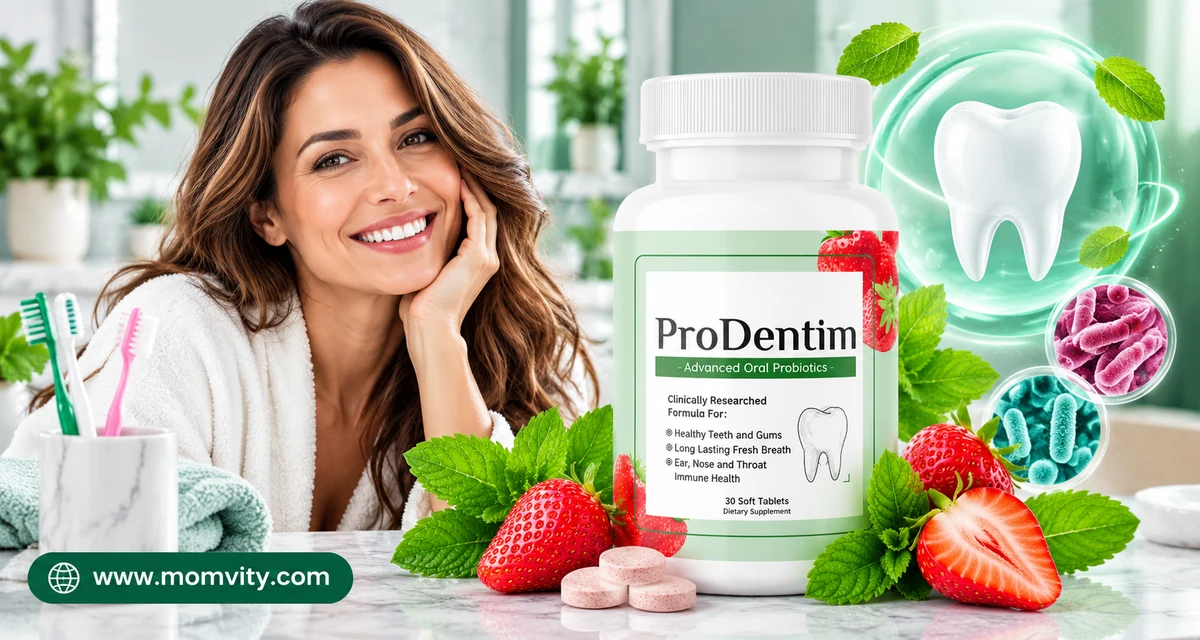
ProDentim is an oral probiotic supplement that is widely sold as a dietary supplement. These medicines or supplements come in a bottle as tablets, containing 30 soft, chewable tablets. The label “Advanced Oral Probiotics” on the bottle can be considered an attractive and common way to identify it. The small print on the bottle states that it is a laboratory-developed, approved product designed to promote healthy teeth and gums, ensure long-lasting fresh breath, and help prevent throat ailments.
The main reason behind the concept of this supplement is the oral microbiome. Hundreds of species of bacteria inhabit the human mouth; oral probiotic supplements introduce strains that counteract these bacteria, thereby preventing the bacteria responsible for gum inflammation and bad breath. For this reason, it is advised to chew the tablet slowly instead of swallowing it whole. According to the directions for use, one tablet should be chewed slowly every morning.
It is important to have a clear understanding of what benefits you will be deprived of or what you will not receive by using Prodentim. This is not a substitute for any toothpaste or dentist. The FDA never approves the safety or efficacy of products or dietary supplements sold on the market; therefore, it is foolish to assume that a supplement is completely safe simply because the label says “clinically tested.”
ProDentim Ingredients: What the Label Actually Shows
When evaluating a product, beginners often find themselves confused because the formula—as listed on the product’s official website—is described differently in various places.
On the homepage of the VitalWellGuide site, you will see that among the ingredients listed for the product, greater emphasis is placed on Lactobacillus paracasei, Lactobacillus reuteri, Bifidobacterium lactis, inulin, and malic acid. In July 2026, an analysis of the product’s label—conducted by comparing it against the National Institutes of Health’s Dietary Supplement Label Database and the product’s own supplement facts panel—revealed the following information for each serving.
| Label item | Amount listed | What it is |
| Inulin | 100 mg | A prebiotic fiber that some bacteria can feed on |
| Proprietary Probiotic Blend (3 strains) | 20 mg, 3.5 billion CFU | Reported as L. paracasei, L. reuteri and B. lactis BL-04 |
| Streptococcus salivarius | 20 mg | A probiotic species naturally found in the mouth; no separate CFU listed |
| Other ingredients | Not quantified | Tricalcium phosphate, microcrystalline cellulose, natural strawberry flavor, peppermint essential oil |
When you compare the advertisement with the ingredients listed on the product itself, you will notice two things. First, through analysis, you will discover that the malic acid—which the advertisement claims is present in this supplement for teeth whitening—cannot be found anywhere on the product’s label. Although Streptococcus salivarius is not particularly highlighted as a key ingredient in this product, it should certainly not be overlooked when you analyse the product or seek to learn more about it. The list of ingredients may vary slightly depending on factors such as the specific production batch or the site from which the product is purchased. Therefore, before purchasing any product or supplement, we should thoroughly examine and analyze each of its ingredients.
- List of ingredients: Check the ingredients listed on the packaging.
- Product authenticity: Ensure that you are purchasing a genuine product.
- Trusted seller: Whenever possible, verify product and ingredient information through the official website before making a purchase.
Why CFU numbers can mislead beginners
CFU stands for “Colony-Forming Units,” a term used to indicate the quantity of live microorganisms in a product. However, does a higher CFU count necessarily mean a probiotic is more effective? No; effectiveness cannot be determined solely by this number. Instead, when comparing a product against research findings, it is essential to consider the specific strain of microorganisms, the dosage used, the duration of consumption, and the characteristics of the individuals who participated in the research.
When you check any probiotic label, look for these details:
| What to check | Why it matters |
| Specific strain IDs (letters and numbers after the species name) | Research is tied to specific strains, not just species |
| CFU count and any viability date | Live bacteria decline over time |
| Serving size and directions | Studies used specific dosing schedules |
| Allergens and other ingredients | Important for sensitive users |
| Storage and expiration | Heat and moisture can reduce potency |
ProDentim’s label groups its three main strains inside a proprietary blend, so you cannot see how much of each strain is in a tablet. That makes it hard to compare the product with any single study.
What the Research Says About Oral Probiotics
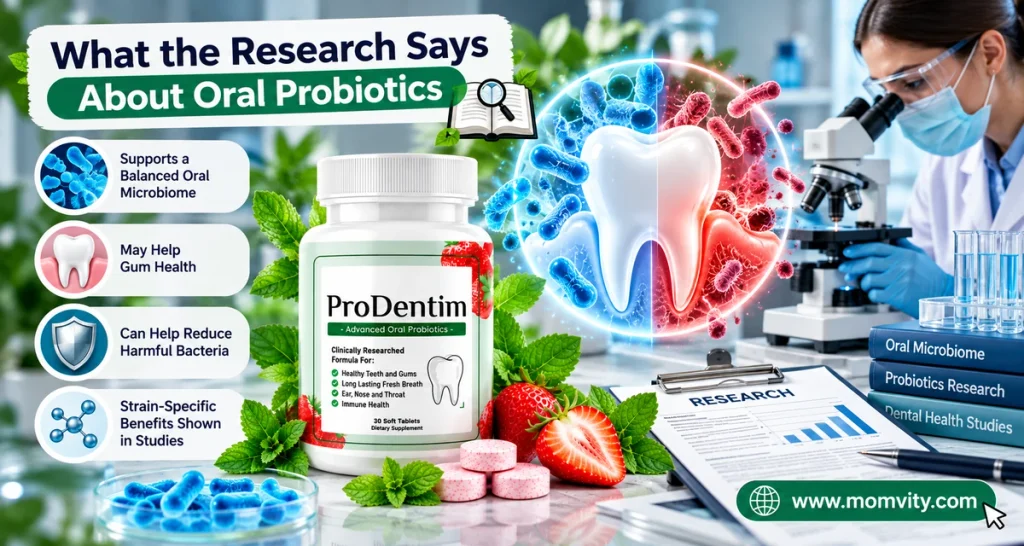
The science on oral probiotics is real and growing, and it is worth understanding at a basic level before you rely on any ProDentim review, including this one.
Lactobacillus reuteri and gum health
The best-known research involves specific Lactobacillus reuteri strains. In a randomized, placebo-controlled trial published in the Journal of Clinical Periodontology in 2013, Teughels and colleagues gave 30 adults with chronic periodontitis either placebo lozenges or lozenges containing two L. reuteri strains (DSM 17938 and ATCC PTA 5289) twice daily for 12 weeks, after a professional deep cleaning called scaling and root planing. The probiotic group showed greater reductions in deep gum pockets. The authors noted that their results cannot be applied to all probiotics or other ways of taking them.
A 2015 trial in the Journal of Periodontology, also with 30 patients, tested L. reuteri lozenges alongside deep cleaning and followed patients up to a year. It suggested the lozenges may help in moderately deep pockets.
Notice two things. These studies used specific named strains, and the probiotics were added to professional dental treatment, not used instead of it. ProDentim’s label does not publicly identify which L. reuteri strain it uses.
What the larger reviews show
A systematic review published in December 2024 in the Journal of Pharmacy and Bioallied Sciences (Abdul and colleagues) included 21 eligible studies on probiotics and periodontal health. Seventeen reported statistically significant improvements in selected outcomes. The authors called for more research on strains, doses and treatment length.
A 2025 systematic review and meta-analysis found improvements in some measures, including plaque index and bleeding on probing in periodontitis studies, while other measures were not consistently significant. It called for standardized methods and longer follow-up.
| Evidence | What it found | Important limitation |
| 2013 L. reuteri trial (30 patients) | Better pocket reduction with probiotic lozenges plus deep cleaning | Specific strains; used alongside professional treatment |
| 2024 systematic review (21 studies) | 17 studies reported improvements in selected outcomes | Different strains, doses and conditions |
| 2025 meta-analysis | Improvements in some gum measures | Not every outcome improved |
| ProDentim finished formula | Product claims only | No independent clinical trial published |
One common beginner mistake is reading “17 of 21 studies” as “81% of people got results.” That is not what it means. It counts studies, not people, and none of those studies tested ProDentim.
Real ProDentim Customer Reviews: The Good and the Bad
Search results for ProDentim are crowded with promotional pages that look like reviews but link straight to a sales page. Independent platforms tell a more mixed story.
On Trustpilot, the profile for prodentim.com showed a TrustScore of 1.9 out of 5 from 101 reviews at the time of writing, with about 81% one-star and 11% five-star ratings. The profile is unclaimed, and Trustpilot notes the company has not invited customers to review, so the sample may not represent all buyers. Only three reviews were posted in the past 12 months.
What satisfied customers report
The positive reviews are detailed and worth reading. In February 2026, one reviewer described taking ProDentim for nearly two years and said her dentist and periodontist told her that her gums kept improving. A reviewer posting in September 2025 said she had used it since 2022 and felt it eased oral discomfort. An 83-year-old reviewer in January 2025 said chewing on a painful side became more comfortable after starting the product and planned to reorder.
These are personal impressions, not verified dental outcomes. Some reviewers also describe choosing to rely on ProDentim instead of treatment for a known cavity, which is not something any supplement can safely replace.
What unhappy customers report
The negative reviews fall into a few repeating themes:
| Complaint theme | What reviewers described |
| No noticeable change | Several said they followed directions for months and saw no difference |
| Refund trouble | A December 2025 reviewer said she returned bottles at her own cost, then was told the 60-day window had passed |
| Guarantee timing | Some pointed out the company suggests about 90 days of use, longer than the 60-day guarantee |
| Digestive and other side effects | One 2024 reviewer reported ongoing gas and diarrhea; another in 2025 described headaches and stomach discomfort |
| Taste and texture | A 2025 reviewer said the tablet tasted chalky and took a long time to dissolve |
| Sales pressure | Reviewers described unexpected phone calls after starting or abandoning checkout, and upsell offers |
| Counterfeits | A three-star reviewer warned that cheaper bottles on marketplaces may be fake |
Taken together, the feedback suggests that ProDentim works for some users by their own account, does nothing noticeable for many others, and comes with a buying experience that frustrates a meaningful number of people.
ProDentim Price and Packages
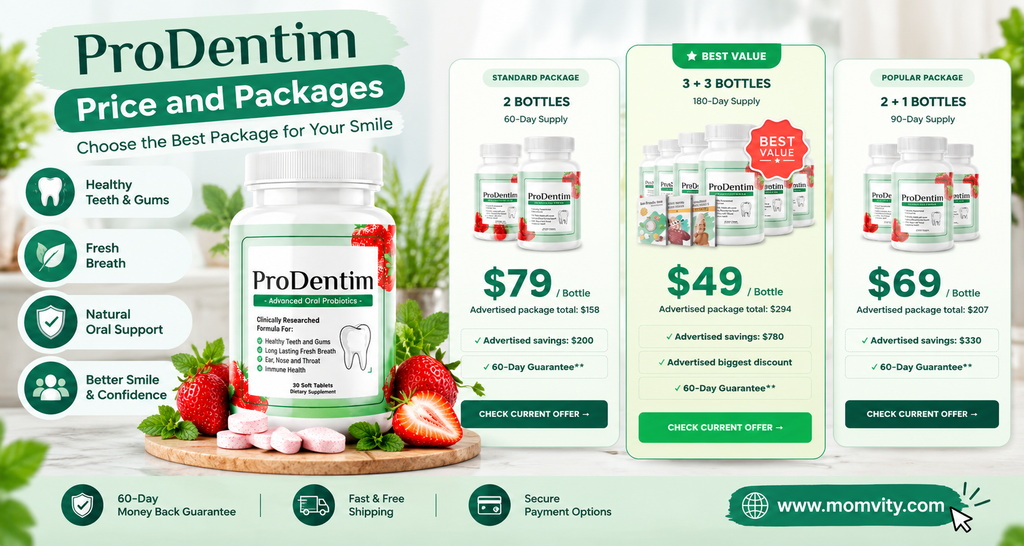
At the time of writing, the advertised packages were:
| Package | Supply | Price per bottle | Total | Advertised savings |
| 2 bottles | 60 days | $79 | $158 | $200 |
| 2 + 1 bottles | 90 days | $69 | $207 | $330 |
| 3 + 3 bottles | 180 days | $49 | $294 | $780 |
The six-bottle package includes bonus e-books, and all packages advertise a 60-day guarantee. Prices, bonuses and shipping costs can change, so confirm the final total at checkout.
For beginners, there is a practical point here. Because the guarantee lasts 60 days but some users report waiting longer for results, buying the largest package may leave you holding bottles after the refund window closes. Think about how long you are realistically willing to test it.
How to Buy Safely and Protect Your Refund
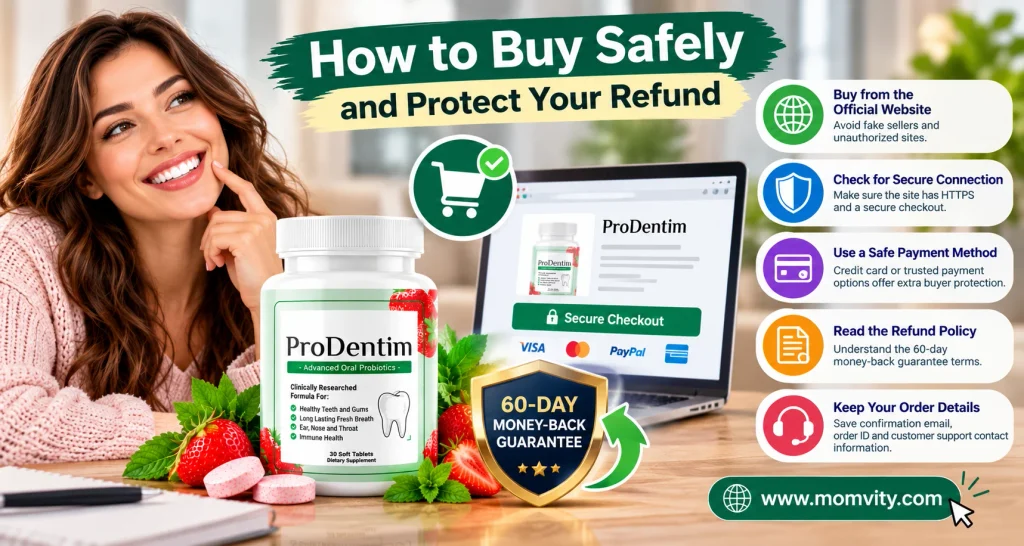
Refund problems are the single most repeated complaint in this ProDentim review research, so treat this section as essential. Before you pay, check:
| Question to answer | Why it matters |
| When does the 60 days start: order date or delivery date? | Shipping delays can eat into your window |
| Must you return bottles, even empty ones? | Some reviewers were asked to send unused product back |
| Who pays return shipping? | Several reviewers paid it themselves |
| Who processes the payment? | Orders often go through a third-party retailer; know who to contact |
| How do you reach support? | Save the email address and any order number |
Keep your order confirmation, take a screenshot of the guarantee terms shown at checkout and note the date your package arrives. Buying only through the official sales channel also lowers the risk of receiving a counterfeit product.
Is ProDentim FDA Approved?
No, and this confuses many beginners. In the United States, dietary supplements are regulated more like foods than drugs. The FDA does not review or approve supplements for safety or effectiveness before they are sold. Phrases like “made in an FDA-approved facility” can also mislead: the FDA registers and inspects some facilities, but it does not approve them in the way it approves a prescription drug. This is true for every supplement, not just ProDentim, but it means the product’s claims have not been checked by a regulator.
Side Effects and Who Should Be Careful
Probiotics are generally well tolerated, but they can cause digestive symptoms like gas or bloating in some people, which matches a few of the complaints above. Talk to a doctor first if you are immunocompromised, have a serious medical condition, are pregnant or nursing, or take medications that affect your immune system.
See a dentist rather than waiting on a supplement if you have tooth pain, gums that bleed persistently, loose teeth or ongoing mouth problems. ProDentim is not an established treatment for cavities, gum disease or any diagnosed dental condition.
How ProDentim Fits Into a Real Daily Routine
If, after encountering various types of advertisements and gaining some experience, you decide to try this product, please view it as a supplement to—not a replacement for—professional dental care. I must reiterate: this cannot serve as a substitute for proper dental habits. In this regard, you can follow a specific routine: brush your teeth at least twice a day using a fluoride-containing toothpaste, and clean the spaces between your teeth once a day using dental floss. Afterwards, take the tablet according to the provided instructions. It is generally best to use this after brushing your teeth.
You can follow this routine for a period of 7 to 30 days and keep your observation data organized in a notebook, which will make the process of tracking your observations much easier. In addition, you should consult a dentist regularly; when you visit the dentist for your next check-up, bring the data you collected during the first week and ask them whether there has been any change in the condition of your gums. You must inform your doctor about any supplement you are using.
While this may not definitively prove that the tablet is effective, you will need to determine for yourself whether the positive results stem from improvements in your habits or from the product you are using.
Pros and Cons
| Pros | Cons |
| Uses probiotic species that are actively researched for oral health | No independent clinical trial of the finished formula |
| Chewable format targets the mouth directly | Strain amounts hidden inside a proprietary blend |
| Simple once-daily routine | Label and sales copy do not fully match |
| Some long-term users report positive experiences | Low Trustpilot score with many refund complaints |
| 60-day guarantee advertised | Guarantee shorter than the time some users say results take |
| Multi-bottle discounts | Reports of sales pressure and counterfeit listings |
Final Verdict on This ProDentim Review
The core focus—or primary objective—of Prodentim is to create balance. This concept is based on scientific evidence suggesting that certain probiotic strains—specifically particular strains of Lactobacillus reuteri—can be effective for gum health when used in consultation with a dental professional; however, this should never be considered a substitute for professional dental care. However, Prodentim never discloses its ingredients, which makes it impossible to independently verify the effectiveness of the final formula. Furthermore, public reviews reveal mixed feedback; most users report seeing no results, and obtaining a refund is both difficult and risky.
However, if you are a curious person—or someone with a broad interest in learning about things—and the limitations do not seem all that significant to you, then you might consider giving Prodentim a try, while exercising due caution. In this case, you should use the smallest package first, read the refund terms carefully before purchasing the product and follow the advice of a dentist. However, if you are already experiencing gum disease—such as pain or bleeding—you must consult a dentist, not turn to supplements.
Health disclaimer: This article is for general information only and is not medical or dental advice. Dietary supplements are not intended to diagnose, treat, cure or prevent any disease.
Frequently Asked Questions
Does ProDentim really work?
There is no independent clinical trial of the finished ProDentim formula. Some of its probiotic species have been studied with encouraging but strain-specific results. Customer experiences range from strongly positive to no change at all.
How long does ProDentim take to work?
There is no verified timeline. Some reviewers report noticing changes within weeks, while others saw nothing after several months. Because the guarantee is 60 days, plan your trial period with that in mind.
Is ProDentim a scam?
It is a real product that ships to customers, but many public reviews describe refund difficulties, sales pressure and unmet expectations. Buying from the official channel, saving your order details and reading the refund terms carefully reduces your risk.
Are there side effects?
Some people may experience digestive symptoms such as gas, bloating or loose stools, and a few reviewers reported headaches or stomach discomfort. People with weakened immune systems or serious health conditions should ask a doctor first.
Can ProDentim replace brushing and flossing?
No. Brushing twice daily with fluoride toothpaste, cleaning between your teeth and seeing a dentist remain essential. Probiotics in research were studied as an addition to good oral care, not a substitute.
Is ProDentim FDA approved?
No dietary supplement is FDA approved before sale. The FDA does not review supplements for safety or effectiveness before they reach the market, and “FDA-approved facility” does not mean the product was approved.
Can I buy ProDentim on Amazon?
Some reviewers have warned about counterfeit listings on marketplaces. Buying through the official sales channel is the safer choice and is usually required for the money-back guarantee.
Does ProDentim have a money-back guarantee?
A 60-day money-back guarantee is advertised.