

This article may contain several affiliate links. If you make a purchase of ProstaVive through one of these links, we might earn a small commission; however, this will not result in any additional cost to you. However, if you have been experiencing symptoms related to your urinary tract for a long time, consulting a specialist doctor is undoubtedly the most effective course of action.

Supplement ads won’t tell you this, but plenty of men’s health products are researched by the women in their lives. A wife hears her husband get up for the third time in one night. A daughter notices her dad planning every car trip around restrooms. Then one of them searches online and lands on an ad for ProstaVive.
Are you considering purchasing ProstaVive, but feeling unsure if it is the right choice for you? It is only natural to have such questions when you are concerned about your prostate health. It is essential to be well-informed before investing in your health.
So, what should you know before making a decision about ProstaVive?
To find out, we have analyzed the product’s official website, refund policy, full list of ingredients, and existing medical research. We cover details such as pricing, the refund process, safety, feedback from actual users, and important points not mentioned on the sales page—all to help you make a decision based on factual information rather than just advertising promises.
The Quick Answer for Busy Readers
ProstaVive is a powdered drink supplement intended to be mixed with water. It significantly supports prostate health and helps regulate normal urinary flow; it is also marketed for its ability to boost physical energy. When you purchase or decide to take this supplement, you may notice some variation in price depending on the type of jar. This supplement is priced between approximately $39 and $79, and it comes with a 180-day refund guarantee—though there are quite strict terms and conditions that must be met to qualify for a refund.
However, among all the herbal ingredients used to create this, research-based information is available for only one—nettle root. However, the primary purpose of the other ingredients used here is to boost physical energy, reduce mental stress, and enhance sexual desire. However, there is another point you should be well aware of: this supplement has not yet been evaluated through clinical trials. This is not a medicine; therefore, if you are considering using it as a substitute for a doctor’s medical advice or treatment, you are mistaken.
Therefore, instead of paying attention to advertisements, we should all gather information through reliable means and make decisions based on an analysis of that information.
Why Families End Up Researching This in the First Place
Prostate problems are extremely common as men age. According to the National Institute of Diabetes and Digestive and Kidney Diseases, benign prostatic hyperplasia (BPH), a non-cancerous enlargement of the prostate, affects about half of men between 51 and 60 and up to 90% of men over 80.
First of all, we need to know what the prostate is. The prostate is a very small gland located just below the bladder. If, for any reason, this growth begins to enlarge, it exerts pressure on the urinary passage. As this problem intensifies, a man may notice that his urine stream becomes very weak, his bladder does not empty completely, or he needs to wake up repeatedly during the night to urinate.
And when a man suffers from this problem, it often leads to various kinds of difficulties for the entire family. Disrupted sleep at night, the cancellation of planned outings, or the need for breaks during a long journey—such minor occurrences affect the entire family. So, when an advertisement suddenly appears before your eyes—promising a deep, restful night’s sleep and guaranteeing that it will work 100%—it naturally catches your attention; however, you should not decide to purchase a product based solely on an advertisement.
Before You Trust Any Review, Spot the Fakes
Before reading the rest, take a moment to consider this important information. Many of the pages that appear when you search ProstaVive reviews are copy-and-paste marketing pieces posted on unrelated websites, sometimes as PDFs on event or school pages. They repeat the same wording and often get basic facts wrong.
Some common reporting mistakes are incorrectly listing 320 mg of saw palmetto, pygeum bark and beta-sitosterol in ProstaVive’s formula and recommending two capsules daily with meals. The official website lists none of those three ingredients and describes a powder taken as one scoop daily.
Some of these pages also quote “customers” with a first name, an age and a perfect result, yet those people can’t be found on any review platform. A simple rule helps: if a review doesn’t match the product’s own label, or quotes people you can’t trace, close the tab.
What ProstaVive Actually Is
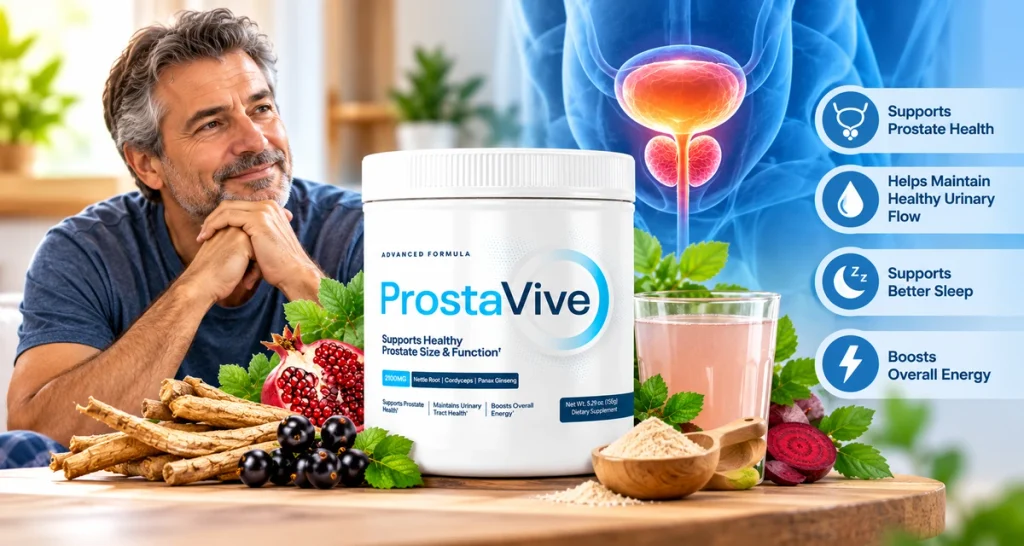
ProstaVive is a powdered dietary supplement aimed at men who want support for prostate health, stronger urine flow, better sleep, energy and sex drive. Each jar holds a 30-day supply. The seller recommends mixing one scoop into water or another drink once a day, ideally with a meal and at roughly the same time each day.
Orders on the official site are handled by ClickBank, a large online retailer for health and digital products. Questions about the product go to the ProstaVive support team, while questions about payment or an order can go directly to ClickBank.
One key disclaimer on the official website makes two things clear: the FDA has not evaluated the product’s claims, and the product is not meant to diagnose, treat, cure or prevent any disease.
What’s Inside the Jar
The official ProstaVive website lists the following ingredients. It shows a Supplement Facts image, but exact amounts aren’t written in the page text, so check the label on the jar for doses.
| Ingredient | What it is | What research mostly looks at |
| Nettle root | Herb | Urinary symptoms of BPH (mixed, short-term results) |
| Panax ginseng | Herb | Energy, sexual function, blood sugar |
| Ashwagandha | Herb | Stress, anxiety and sleep |
| Fenugreek | Herb | Libido, testosterone, blood sugar |
| Tongkat Ali | Herb | Testosterone and stress (small studies) |
| Maca root | Herb | Libido and mood (small studies) |
| Artichoke extract | Plant extract | Digestion and cholesterol |
| Boron | Trace mineral | Very limited human research |
| Zinc | Mineral | Essential nutrient; no proven BPH relief |
| Magnesium | Mineral | Essential nutrient; no proven effect on urine flow |
| Vitamin D | Vitamin | Essential nutrient; prostate evidence unclear |
Of everything on this list, nettle root is the only ingredient with a meaningful body of research on enlarged prostate symptoms. The National Center for Complementary and Integrative Health indicates that some men may experience short-term benefits from stinging nettle, but the small number of participants in trials and differences between products limit the strength of the evidence.
Most of the other ingredients are better known for energy, stress relief or libido. That makes ProstaVive more of a general men’s wellness blend with one prostate-focused herb than a traditional prostate formula. It also leaves out saw palmetto, the herb most people connect with prostate health. The absence may be less concerning because an NIH-referenced review published in 2023 analyzed 27 studies and found that saw palmetto alone provided minimal or no relief from prostate enlargement symptoms.
Just as important, no independent clinical trial has been published on the finished ProstaVive formula. The sales page refers to a 2023 study from Fukushima Medical University in Japan about blood flow around the prostate, but that study didn’t test ProstaVive.
A Note for Couples Trying to Conceive
For those who have learned about this supplement through advertisements—many of whom are planning to start or expand their families but have not yet succeeded—this supplement could prove to be highly effective. This is because it contains potent natural ingredients—such as maca, ashwagandha, and zinc—which, when consumed regularly, help increase a person’s sperm count and ensure the sperm remain sufficiently motile. The ingredients in this product can have a significant impact on male reproductive health, and each of these components has been the subject of prior research; however, the product ProstaVive itself has never been tested for its ability to enhance reproductive capacity, nor is it marketed as a treatment for reproductive health issues.
However, if you and your partner are facing various challenges in conceiving, you should consult a specialist. They will arrange for various tests and, based on the results, provide you with appropriate medical treatment and expert guidance.
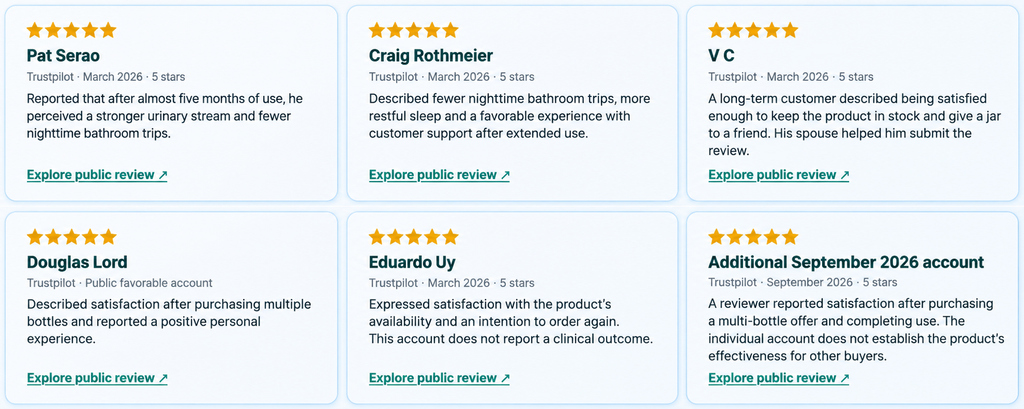
Real Customer ProstaVive Reviews
ProstaVive Price and Packages
As of the time this article was written, customers could choose from three packages on the official website. Prices and promotions can change, so double-check the final total before you pay.
| Package | Lasts | Price per jar | Total | Bonuses |
| 1 jar | 30 days | $79 | $79 | None |
| 3 jars | 90 days | $59 | $177 | 2 free e-books |
| 6 jars | 180 days | $39 | $234 | 2 free e-books |
The bonus e-books are a prostate health smoothie recipe guide and a “Healthy Sex Drive Plan.” The one- and three-jar packages appear to include a shipping fee, so look for it at checkout. According to the company’s shipping information, most orders within the US reach customers within three to five business days following processing.
For a family budget, the six-jar package works out to about $1.30 a day, while a single jar comes to about $2.63 a day. The bigger bundle is cheaper per serving, but it means paying $234 upfront for something he hasn’t tried yet. Starting with one jar is usually the more sensible test, even if it costs a bit more per day.
One more thing to expect: the seller says each jar is filled by weight rather than volume, contains more than 4 ounces and 30 servings, and comes with a measuring scoop. So if the jar looks partly empty when you open it, that doesn’t necessarily mean it’s short.
Where to Buy (and Where Not To)
ProstaVive’s official website claims that the product cannot be purchased through Amazon, Walmart, eBay or any other third-party seller. If you come across it on a marketplace or an unfamiliar website, be cautious.
You can’t be sure a third-party listing is the genuine product, you have no way of knowing how it was stored, and the seller’s 180-day guarantee may not cover you. Shopping through the official website helps reduce the risk of payment issues and protects your eligibility under the refund policy.
The 180-Day Money-Back Guarantee, Step by Step
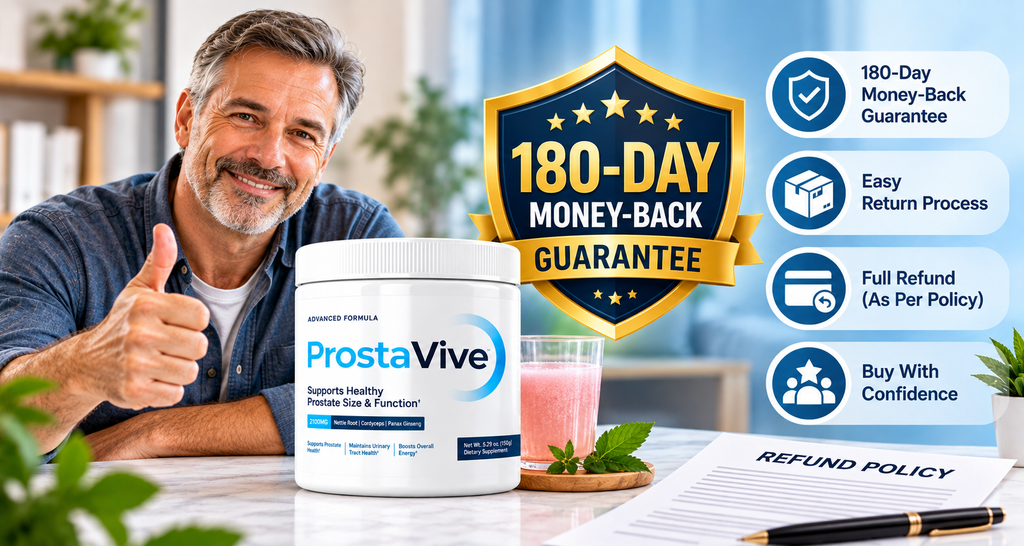
The official refund policy gives buyers 180 days from the order date. That’s a generous window, but the process has rules that are easy to overlook, so here’s how it works.
First, confirm you’re still within six months of the order date by checking the order confirmation email. After that, email the support team with the subject line “Refund Request.” Do not mail anything until a support agent responds. Third, return all the jars, both empty and unopened, to the returns address in Tallmadge, Ohio, with a note listing the buyer’s full name, order number and the email used for the order. No return label is needed, but you pay the postage, and you should email the tracking number to support.
Once the return arrives and is logged, the seller says the full refund usually appears on your statement within five to ten days. A practical family tip: keep a small box in the cupboard for empty jars and save the order email in a folder. If you ever need a refund, everything will be ready.
Safety: The Questions to Ask First
The official website describes ProstaVive as generally well tolerated and advises stopping it and seeing a doctor if any side effects appear. Because the formula contains several active herbs, the bigger concern for most older men is how it mixes with medicines they already take.
Since ginseng and fenugreek may decrease blood sugar levels, people taking diabetes medication should be aware of possible interactions. Potential interactions may occur when ginseng or nettle is used alongside medicines that thin the blood or lower blood pressure. Information from the NIH Office of Dietary Supplements indicates that ashwagandha may affect thyroid hormone levels and has been associated with rare instances of liver damage. Tongkat Ali has very little long-term safety data.
If he already takes a prescription for his prostate, such as tamsulosin or finasteride, he shouldn’t stop it or swap it for a supplement without his doctor’s approval. Here’s an easy way to help: take a photo of the ProstaVive label and his medication list to your local pharmacist and ask whether anything clashes.
Why a Doctor’s Visit Should Come First
Frequent nighttime urination and a weak stream don’t always come from the prostate. Bladder problems, diabetes, sleep apnea, certain medicines and, in some cases, prostate cancer can cause similar symptoms. The Urology Care Foundation recommends having urinary symptoms checked by a doctor instead of self-treating.
Family history matters as well. The American Cancer Society recommends discussing prostate cancer screening with a healthcare professional at age 50 for men at average risk. Black men and men whose father or brother developed prostate cancer before age 65 face a higher risk and should discuss screening from age 45. Men with more than one close relative diagnosed at a young age should start at 40. If your husband or dad has a family history, that’s another reason to see a doctor before trying any supplement, and it’s helpful information for the sons in the family too.
Get medical help quickly if he can’t pass urine, notices blood in his urine, or has a fever along with urinary symptoms.
A Simple Family Sleep Log
If he decides to try ProstaVive, a basic log will tell you far more than memory alone. For one week before he starts, note how many times he gets up each night, what time he had his last drink, and whether he had coffee, tea or alcohol in the evening. Keep the same notes during his first month on the supplement.
Putting the two side by side makes it much easier to judge whether anything truly changed, and it’s valuable information to bring to a doctor’s appointment. Just remember that a home log can’t prove what caused a difference.
Who It Might Suit, and Who Should Skip It
ProstaVive may suit a man whose doctor has already checked his symptoms, who would rather drink a mix than swallow pills, who’s comfortable spending $39 to $79 a month, and who understands that results aren’t guaranteed. It may also appeal to men looking for a general energy and vitality blend.
It’s probably not the right fit for a man who wants the strongest research behind his prostate supplement, who dislikes the idea of a daily powder drink, who takes blood thinners, diabetes, blood pressure or thyroid medicines without medical approval, or who has already been advised to start treatment.
Our Honest Verdict
After thoroughly examining the composition of this supplement, its refund policy, and various research-based findings, we can confidently describe it as an appealing beverage for maintaining men’s health and well-being. It contains an effective herbal ingredient that helps maintain proper prostate hormone levels and supports prostate health, yielding excellent results. Furthermore, it comes with an appealing money-back guarantee, though certain conditions must be met. Moreover, this final product has not yet undergone any necessary clinical testing. However, if you would like to learn more about this product, you could look at the experiences shared by actual buyers; this will help you gain a clearer understanding of it. That said, no matter how many supplements you take, they can never serve as a substitute for a qualified medical professional.
Check the Current ProstaVive Offer →
Frequently Asked Questions
Can I buy ProstaVive as a gift for my husband or dad?
Yes, but talk with him and his doctor first, especially if he takes any medication. A supplement he doesn’t want, or one that clashes with his prescriptions, isn’t a helpful gift.
Is ProstaVive taken as a pill, or does it come as a powder?
It’s a powder. He consumes one scoop per day by mixing it into water or another beverage, ideally when eating a meal.
Does ProstaVive contain saw palmetto?
No. As outlined in the official ingredient list, ProstaVive combines several herbal ingredients—including nettle root, Panax ginseng, ashwagandha, fenugreek, Tongkat Ali, maca root and artichoke extract—with boron, zinc, magnesium and vitamin D.
How soon will he notice a difference?
The seller reports that changes may become noticeable within weeks for some users. However, results vary from person to person, and the finished formula has no scientifically established timeline for effectiveness.
Does ProstaVive help with fertility?
It has never been tested for fertility and isn’t sold as a fertility treatment. Couples having trouble conceiving should see a fertility specialist for proper testing.
What’s the cheapest way to buy ProstaVive?
At the time of writing, the six-jar package was cheapest at $39 per jar, or $234 in total. A single jar costs $79 but puts less money at risk.
Can ProstaVive replace his prostate medication?
No. ProstaVive is a dietary supplement, not a medication. He shouldn’t stop any prescribed drug without his doctor’s approval.
Is ProstaVive FDA-approved?
No.Before dietary supplements are sold, the FDA does not approve them based on effectiveness. ProstaVive also acknowledges on its website that its claims have not been evaluated by the agency.