ProDentim Reviews: An Honest, No-Hype Look for Busy Families

Tahmina Noor

Published: 24/10/2026
Updated: 28/10/2026

As of October 2026, a check of ProDentim Reviews on Trustpilot revealed a TrustScore of approximately 1.9 out of 5, based on around 101 reviews—a detail rarely found on the product’s own sales pages. Conversely, there are many positive reviews for ProDentim online, claiming benefits such as reducing bad breath, improving gum health, and brightening one’s smile. However, neither the promotional hype nor the low TrustScore should be the sole basis for drawing a definitive conclusion about the product’s efficacy. To get an accurate picture, one must independently examine research findings, consumer experiences, and the product’s ingredients.
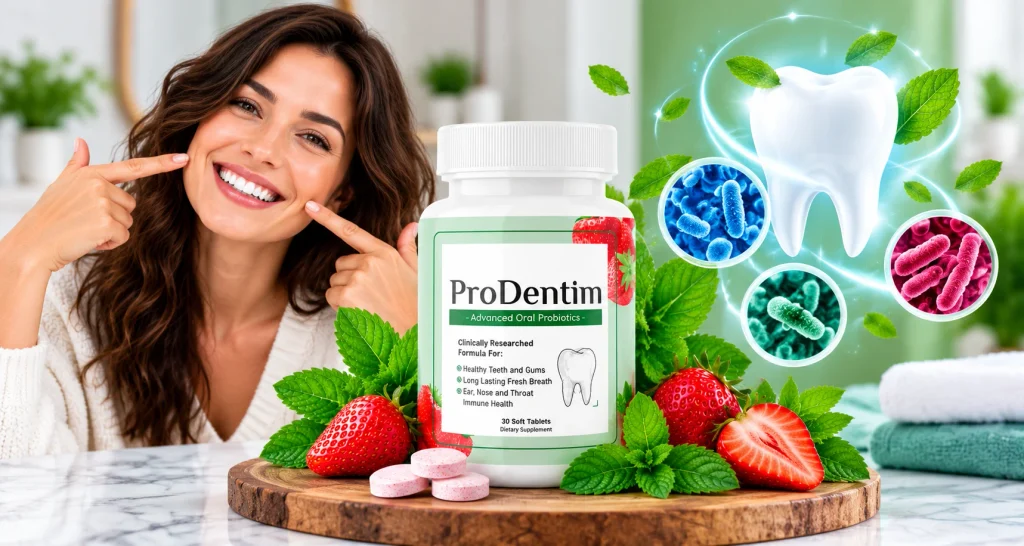
If you are trying to manage your dental health amidst the demands of daily life—such as the school run and other routine commitments—distinguishing between advertising claims and factual reality can be quite challenging. So, what is most important to know before purchasing ProDentim?

This guide explores the product’s ingredients, the potential role of probiotics in oral health, findings from scientific research, public feedback from actual buyers, and the product’s pricing. Additionally, it offers advice on how to mitigate financial risk by reviewing the terms of sale and refund policies before making a purchase.

The Short Answer

ProDentim is a chewable oral probiotic built around three named bacterial strains plus a few supporting ingredients. Some of those strain types have encouraging early research for gum health, but no independent clinical trial has tested the finished ProDentim formula. Public ProDentim reviews are sharply divided, and the most common complaints are about refunds, delivery and look-alike websites rather than taste.

For those who already brush their teeth regularly or visit a dentist on a consistent basis, this could be considered a sensible product. However, this product should not be used to address cavity-related issues or gum disease, nor should it be considered a substitute for a dentist or a toothbrush.

What ProDentim Actually Is

ProDentim is a special dietary supplement that is sold in the form of soft tablets. There are specific instructions for taking this supplement; for instance, this soft tablet should be chewed slowly and allowed to dissolve inside the mouth. The core concept stems from a specific observation: instead of delivering beneficial bacteria directly to the stomach—or packaging them into capsules—they are introduced into the oral cavity, which is precisely where they are needed.

Label and Product Detail What We Found 
Product type Oral probiotic dietary supplement 
Label name “Advanced Oral Probiotics” 
Format Soft chewable tablet 
Bottle size 30 soft tablets 
Directions (official FAQ) Slowly chew one tablet every morning 
Named probiotic strains Lactobacillus paracasei, Bifidobacterium lactis BL-04, Lactobacillus reuteri 
Supporting ingredients Inulin, malic acid, tricalcium phosphate, peppermint (listed as a proprietary blend) 
Total probiotic count Official site states “3.5 billion”; no per-strain breakdown 
Retailer ClickBank 
Independent trial of finished formula None published 

Two details deserve attention. The supporting ingredients sit inside a proprietary blend, so their individual amounts aren’t disclosed. And while the official FAQ mentions five strains, only three are named on the page we reviewed. If those gaps matter to you, ask customer support for the complete Supplement Facts label before you order.

How Oral Probiotics Are Supposed to Work


Hundreds of species of bacteria reside in your mouth, not all of which are harmful. In fact, many bacteria help maintain the natural balance of the oral environment. However, an overgrowth of certain harmful bacteria can lead to issues such as plaque accumulation, gum inflammation, and bad breath. This is where the concept of oral probiotics becomes relevant.

When interpreting research findings in this field, the term “strain” is crucial. A bacterium is typically identified by its genus, species, and strain. Two strains belonging to the same species can differ in their characteristics and effectiveness. Therefore, positive results from a study on one specific strain cannot be assumed to apply to other strains of the same species.

A Closer Look at Each Ingredient
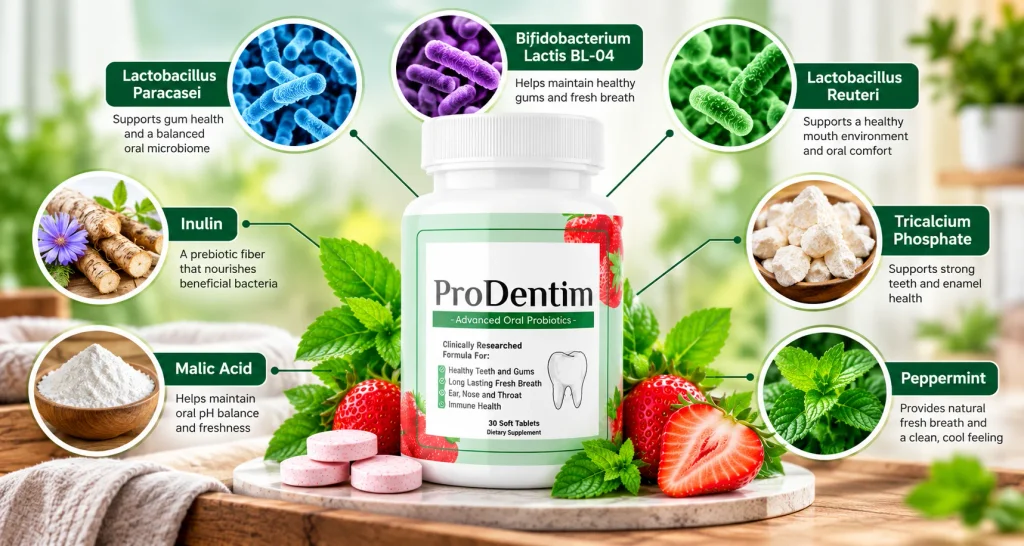
Ingredient Why It’s Included What to Keep in Mind 
Lactobacillus reuteri The best-studied of the three for gum health Strain identifier not listed, so specific studies may not apply 
Lactobacillus paracasei Studied in oral and gut health Results vary widely by strain 
Bifidobacterium lactis BL-04 A named commercial strain, researched mostly for gut and immune health Limited direct research on teeth and gums 
Inulin A plant fiber that acts as a prebiotic food for bacteria Some people notice gas or bloating with fiber supplements 
Malic acid A fruit acid often used for flavor Amount not disclosed; frequent acid exposure is something enamel doesn’t love 
Tricalcium phosphate A calcium source, also commonly used as a filler or anti-caking agent Amount not disclosed 
Peppermint Flavor and a fresher-feeling mouth Freshness from mint is temporary, not proof of a microbiome change 

Among the listed ingredients, the research concerning L. reuteri is particularly noteworthy. A Swedish study, published in the Swedish Dental Journal in 2006, examined 59 adults suffering from moderate to severe gum inflammation. For two weeks, the participants used chewing gum containing two specific strains of L. reuteri. The results showed a reduction in both gum bleeding and dental plaque accumulation compared to the placebo group. However, as this was a small-scale, short-term study, these findings—while suggesting potential benefits of probiotics—cannot be taken as definitive proof that ProDentim is equally effective. This is because there may be differences in the specific strains used, the product formulation, and the method of administration.

What the Research Can and Cannot Tell You

Several larger reviews have looked at probiotics for gum health as a whole. They are useful for understanding the field, though none of them tested ProDentim.

Evidence What It Looked At The Catch 
2024 systematic review (Abdul et al., Journal of Pharmacy and Bioallied Sciences) 21 eligible studies on probiotics and periodontal health; 17 reported significant improvements in selected outcomes Studies used different strains, doses and conditions 
2025 systematic review and meta-analysis Gingivitis and periodontitis outcomes; some measures such as plaque index and bleeding on probing improved Not every outcome improved; longer, standardized studies are still needed 
ProDentim finished formula Brand claims only No independent clinical trial establishes a success rate 

One easy misreading is worth clearing up. “17 of 21 studies showed improvement” does not mean 81% of people benefited. It means most of the studies found a measurable change in at least some outcomes, using a variety of products. That is encouraging for the research area, and it still says nothing direct about this particular chewable.

Watch Out for Fake Sites and Look-Alike Listings

Searching for ProDentim brings up dozens of pages styled like news reports, university-hosted PDFs and blog posts claiming the writer “tried it for a year.” Many of these are promotional placements, and some sit on unrelated domains. They often repeat the same figures without a source.

The safest habit is simple. Buy only from the official site linked from a page you trust, check that checkout runs through ClickBank, save your order confirmation email, and be wary of third-party marketplace listings with unusually low prices, foreign-language labels or missing seals.

ProDentim Price and Packages
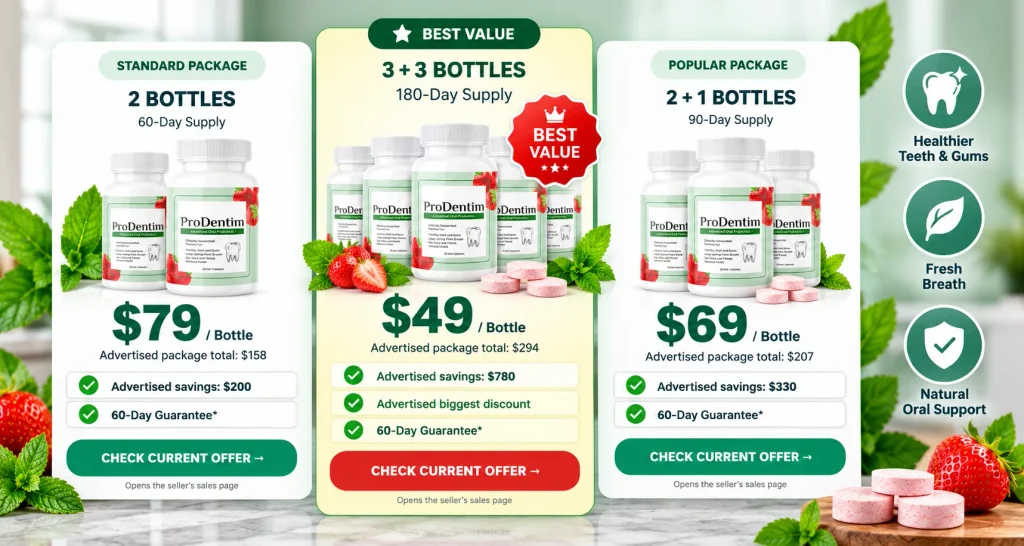
ProDentim pricing depends on which offer page you land on, and it changes over time. The offer page our partner review links to advertised these packages:

Package Supply Price per Bottle Total Advertised Savings 
2 bottles 60 days $79 $158 $200 
2 + 1 bottles 90 days $69 $207 $330 
3 + 3 bottles 180 days $49 $294 $780 

The official homepage we checked in October 2026 showed 1-, 3- and 6-bottle options with free US shipping and international shipping fees, but the totals didn’t display in the page text. Its 3- and 6-bottle packages listed two digital bonuses, “Bad Breath Gone. One Day Detox” and “Hollywood White Teeth at Home.” The “savings” and bonus values are the seller’s own calculations, so confirm the exact price at checkout.

Before You Buy: A Refund Checklist
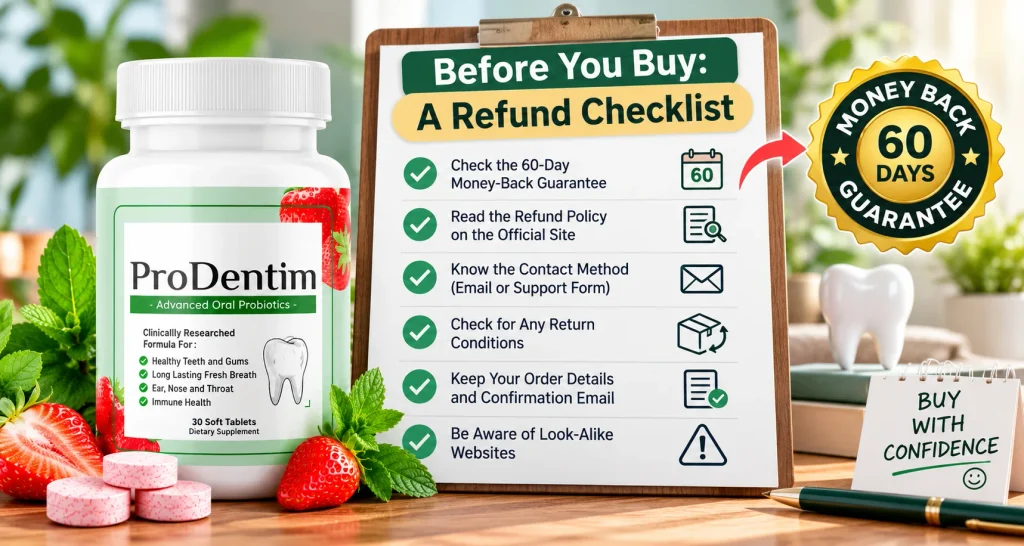
The official site outlines several details regarding its return policy, such as a 100% money-back guarantee within 60 days, and states that unused bottles can be returned. We know that returning an item or obtaining a refund after an online purchase can often be a hassle; therefore, it is essential to thoroughly understand the relevant policies or terms and conditions before buying any product. This product is eligible for return for 60 days from the date you receive it. Additionally, please clarify whether all bottles—including any empty ones—must be returned, and who will bear the shipping costs for returning the product.

Since ClickBank handles order-related matters, you can seek assistance from ClickBank if the seller does not respond. Now, after purchasing this product, make sure to note the final date for requesting a refund in your calendar. This simple step will help you keep track of the days ahead and ensure that most issues are resolved according to the established policy.

Fitting It Into a Busy Household Routine

Mornings in a family home are rarely calm, so keep the routine simple. Brush with fluoride toothpaste first, then chew the tablet slowly after breakfast and avoid rinsing or drinking right away, so it has time in your mouth. Keep the bottle somewhere cool and dry, and out of reach of children, since a soft chewable can look a lot like candy.

If you want to judge it fairly, keep a short 30-day journal on your phone. Note whether your gums bleed when you floss, how your breath feels by mid-morning, and any stomach changes in the first week. Bring those notes to your next dental checkup and ask your dentist whether your gum measurements have changed. That’s far more reliable than a feeling.

The most common buying mistakes are trusting the billion-count number as proof of quality, ignoring the refund terms and buying from an unofficial seller. The most common use mistake is quietly letting flossing slide because “the probiotic is handling it.”

Who May Want to Skip It

Individuals who are in a weakened state of health—such as those with a compromised immune system, those suffering from serious, long-standing health issues, or those who have undergone surgery within the last few months—must consult a doctor before taking this probiotic. The same applies to pregnant women; they must consult a healthcare provider before taking this probiotic. Consuming inulin and probiotics may cause issues such as gas or bloating in some individuals.

The official website for this product provides no guidelines regarding its use by young children; therefore, if you wish to give this supplement to a child, you must consult a dentist. Failure to do so could potentially lead to serious harm. Furthermore, if you are experiencing various dental issues—such as toothache, bleeding gums, or sores in your mouth—that have persisted for a long time, consulting a qualified dentist would be the best course of action. If you are experiencing these issues, it indicates that you do not need this supplement; rather, you require the assistance of a professional medical doctor.

ProDentim Pros and Cons

Pros Cons 
Uses probiotic species that are actively researched for oral health No independent clinical trial of the finished formula 
Chewable format keeps the probiotic in the mouth L. reuteri and L. paracasei strain codes not listed 
Easy once-a-day morning routine Supporting ingredients hidden in a proprietary blend 
Advertised 60-day money-back guarantee Many public complaints about refunds and delivery 
Lower per-bottle cost on larger packages Lots of fake or promotional review sites to navigate 

Final Verdict on ProDentim Reviews

After weighing the label, the research and public ProDentim reviews, our view is cautious. The science behind oral probiotics is real and developing, and ProDentim includes species that researchers take seriously. 

If you’re an adult with a solid dental routine who is curious about adding an oral probiotic, ProDentim may be worth a careful 60-day trial, bought only from the official source with your refund deadline written down. If you have active gum problems or dental pain, your dentist should come first.

Health disclaimer: This article is for general information only and isn’t medical or dental advice. Dietary supplements are not intended to diagnose, treat, cure or prevent any disease. Talk with your dentist or doctor before starting a supplement, especially if you are pregnant, breastfeeding, taking medication or managing a health condition.

Frequently Asked Questions

Are ProDentim reviews online trustworthy?
Many are not independent. A large number of pages are paid placements or affiliate content made to look like news or personal testimonials. Independent platforms such as Trustpilot give a more mixed picture, though they also reflect a small group of motivated reviewers.

What do real customers complain about most?
On Trustpilot, the most common complaints involve refunds not being honored, delayed or missing deliveries and concerns about fake websites. A smaller number mention stomach upset or no visible change in gum health.

What is in ProDentim?
The official site lists three probiotic strains, Lactobacillus paracasei, Bifidobacterium lactis BL-04 and Lactobacillus reuteri, along with inulin, malic acid, tricalcium phosphate and peppermint in a proprietary blend. It states a total of 3.5 billion probiotics without a per-strain breakdown.

Is ProDentim clinically proven?
No independent clinical trial has tested the finished ProDentim formula. Some of its probiotic species have encouraging research for gum health, but those results came from specific strains and doses that may differ from what is in this product.

How do you take ProDentim?
The official FAQ says to slowly chew one tablet every morning. Brushing first and avoiding drinks for a little while afterward gives the tablet more time in your mouth.

Can ProDentim replace brushing and flossing?
No. Brushing twice a day with fluoride toothpaste, cleaning between your teeth and regular dental visits remain the foundation of oral health. An oral probiotic can only ever be an add-on.

Is ProDentim safe for kids?
The official page we reviewed doesn’t give directions for children. Speak with a pediatric dentist or pediatrician before giving any probiotic supplement to a child, and store the chewables out of reach since they resemble candy.

Does ProDentim have side effects?
Probiotics and fiber such as inulin can cause gas, bloating or mild stomach upset in some people, usually early on. People with weakened immune systems or serious health conditions should get medical advice before using it.

How does the ProDentim refund work?
The official site advertises a 60-day money-back guarantee for unused bottles. Before ordering, confirm when the window starts, what must be returned, who pays return postage and how to contact support, and keep your order confirmation.

Where should I buy ProDentim?
Buy through the official website, where checkout is handled by ClickBank. Avoid third-party listings with unusual prices, foreign-language labels or damaged packaging, which several reviewers linked to counterfeit products.


Related Articles

early pregnancy vitamins

Early Pregnancy Vitamins: What You Need and Why It Matters

Did you know that during the first few weeks of pregnancy, the brain and spinal cord of your developing baby begin to form? 

At this stage, many mothers may not even be aware that a new life is on the way. Seeing two red lines on a pregnancy test often brings a mix of joy and a flurry of questions. 

What foods are best for the baby? Which vitamins support brain development? And with so many products available on the market, which one is truly right for your needs?

Exploring these questions makes it essential to learn about “early pregnancy vitamins.” Certain nutrients play a vital role in the healthy development of your baby during the early stages of pregnancy.

Dear mother, consider this: you might not have given much thought to your daily diet before, but now that you are expecting, you likely find yourself wanting to know about every component of what you eat. This is a beautiful transformation that comes with motherhood. However, keep in mind that more vitamins do not necessarily mean greater benefits for your baby. It is important to understand which nutrients are required, which can be obtained from food, and which might be needed as supplements. 

Let’s explore the most important nutrients for both your body and your unborn baby during the early stages of pregnancy.

Early Pregnancy Vitamins at a Glance

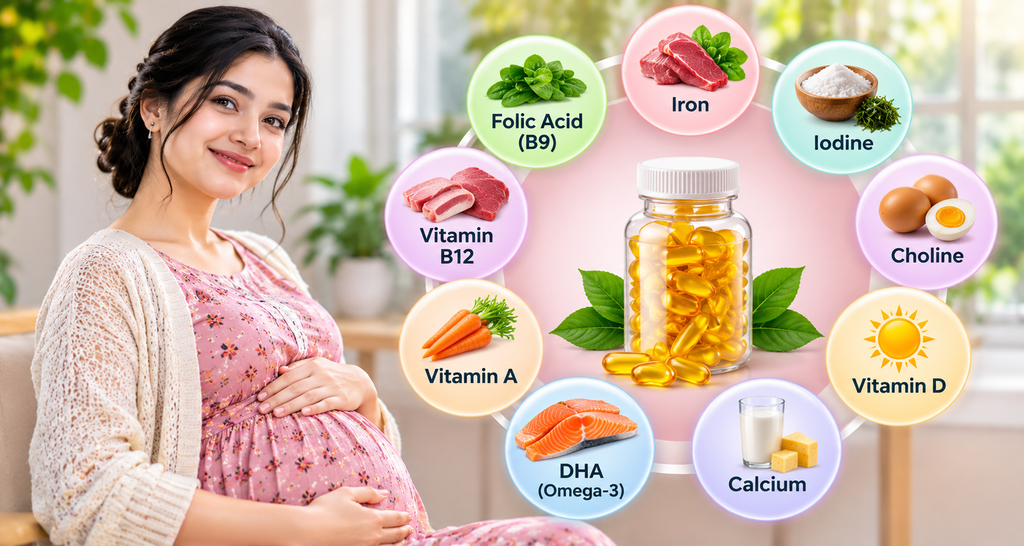
During pregnancy, your body’s nutritional needs change. In the first three months in particular, the baby’s brain, nervous system, bones, and other vital organs begin to develop. Therefore, in addition to your daily meals, it is essential to pay special attention to the intake of certain vitamins and minerals.

For your convenience, the daily nutritional requirements for pregnant women aged 19 and older are presented in the table below.

NutrientDaily RequirementMain Benefits
Folic Acid400 mcg (600 mcg DFE total folate)Brain and spinal cord development
Iron27 mgRed blood cell production
Iodine220 mcgBrain and thyroid development
Choline450 mgBrain and spinal cord development
Vitamin D15 mcg (600 IU)Bone development
Calcium1,000 mgStrong bones and teeth
Vitamin B122.6 mcgNerve and blood cell health
Vitamin A770 mcg RAEEye, skin and immune health
DHANo official RDABrain and eye development

Keep in mind that the amounts listed in the table represent your total daily nutritional requirements. This does not mean that you must obtain all of these nutrients solely from prenatal vitamins; you can meet these requirements through a combination of your diet and supplements.

Why Vitamins Matter So Much in Early Pregnancy

Have you ever wondered why early fetal development is so critical?

The answer lies in the initial formation of the baby’s body. During this period, a specialized structure called the “neural tube” develops, which eventually forms the baby’s brain and spinal cord.

Remarkably, this neural tube closes as early as the third or fourth week of pregnancy—often before a woman has even taken a pregnancy test. This means that by the time you discover you are pregnant, a vital stage of your baby’s development may have already been completed. A lack of sufficient folic acid can increase the risk of “neural tube defects”—congenital issues affecting the brain and spinal cord. According to the CDC, consuming 400 micrograms of folic acid daily helps prevent some of these birth defects.

This is why doctors recommend taking appropriate vitamins as soon as you begin planning for pregnancy. However, if you haven’t been taking any supplements, don’t blame yourself. Once you learn you are pregnant, consult your doctor and start taking them as soon as possible. Remember, it is never too late to start taking care of yourself.

The Most Important Early Pregnancy Vitamins and Minerals

Folic Acid: The Top Priority

Folic acid is one of the most important nutrients during the early stages of pregnancy. It is a form of vitamin B9 that aids in the creation of new cells and supports the healthy development of a baby’s brain and spinal cord. This vitamin is particularly crucial for the proper formation and closure of the neural tube.

Generally, a daily intake of 400 micrograms of folic acid is recommended. Ideally, one should begin taking it at least one month before conception. During pregnancy, the total daily requirement for folate is 600 micrograms DFE (Dietary Folate Equivalents). Since these two measurements are not the same, it is important to keep this in mind when reading product labels.

For women who have previously given birth to a child with a neural tube defect, a doctor may recommend a daily intake of 4,000 micrograms of folic acid. However, as this is a significantly higher dose than the standard recommendation, it should never be taken in such large amounts without a doctor’s explicit guidance.

Why Is Folic Acid So Important Before Pregnancy?

Many mothers believe that it is sufficient to start taking folic acid only after a pregnancy test comes back positive. In reality, however, the baby’s neural tube develops very rapidly; therefore, it is crucial to have adequate levels of folic acid in the body even before conception.

Also, be aware that, in addition to folic acid, an alternative form of vitamin B9—known as methylfolate or 5-MTHF—is available on the market. However, there is not yet sufficient evidence for methylfolate that matches the proven efficacy of folic acid in preventing neural tube defects. Consequently, when purchasing prenatal vitamins, check the label to ensure that it specifically lists “folic acid.”

Iron: For Your Growing Blood Supply

During pregnancy, the volume of blood in your body increases, as extra blood is required to deliver oxygen to both your own body and that of your baby. Iron plays a crucial role in the production of red blood cells.

Pregnant women aged 19 or older require approximately 27 milligrams of iron daily. A deficiency can lead to anemia, which may cause symptoms such as excessive fatigue, weakness, and dizziness.

Good sources of iron include beef, chicken, fish, lentils, beans, spinach, and iron-fortified cereals. However, consuming iron-rich foods is not enough; how well your body absorbs that iron is also important. For instance, consuming plant-based sources of iron—such as lentils or spinach—alongside lemon, oranges, or other foods rich in Vitamin C can enhance iron absorption.

It is also important not to consume an excessive amount of iron. For adult pregnant women, the upper tolerable intake limit is 45 milligrams per day. If a blood test reveals a deficiency, your doctor may recommend additional supplements.

Iodine: Often Missing From the Label

Iodine is a mineral that helps in the production of thyroid hormones. These hormones are essential for the normal development of a baby’s brain and nervous system.

During pregnancy, approximately 220 micrograms of iodine are required daily. Various health organizations recommend obtaining about 150 micrograms of iodine through prenatal supplements.

However, many mothers overlook an important detail: not all prenatal vitamins contain an adequate amount of iodine. Therefore, one should not simply rely on the label “Prenatal Vitamin” on the bottle; be sure to check the list of ingredients.

Iodine can also be obtained from sources such as iodized salt, milk, eggs, and saltwater fish. That said, if you have any thyroid-related issues, do not take iodine supplements on your own. A doctor will determine the appropriate dosage based on your specific health condition.

Choline: The Nutrient Many Moms Have Never Heard Of

Choline is an essential nutrient that many mothers may not have heard of before. Yet, it plays a crucial role in the development of a baby’s brain and spinal cord.

During pregnancy, about 450 milligrams of choline are required daily. Eggs are an excellent source of this nutrient. Choline can also be found in fish, meat, milk, lentils, and broccoli.

It is important to note that many prenatal vitamins contain little to no choline. Therefore, do not assume that taking a vitamin supplement alone meets all your nutritional needs. Be sure to consider whether you are obtaining enough choline from your daily diet.

Vitamin D and Calcium: Building Strong Bones

Calcium is essential for the development of strong bones and teeth in a baby. Vitamin D, on the other hand, helps the body absorb calcium; these two nutrients are therefore interconnected.

Pregnant women aged 19 or older require approximately 1,000 milligrams of calcium and 15 micrograms (or 600 IU) of Vitamin D daily.

Good sources include milk, yogurt, cheese, calcium-fortified plant-based milk, and certain types of fish that can be eaten with their bones. Check the calcium content in your prenatal vitamins, and aim to obtain the remainder from your diet.

Vitamin B12: Especially for Vegetarians and Vegans

Vitamin B12 helps maintain a healthy nervous system and supports the production of red blood cells. During pregnancy, the daily requirement is approximately 2.6 micrograms.

Vitamin B12 is typically found in meat, fish, eggs, and dairy products. Consequently, individuals who follow a strictly plant-based diet may be at a higher risk of a deficiency in this vitamin.

If you follow a vegan or vegetarian diet, ensure you pay attention not only to Vitamin B12 but also to iodine, choline, iron, and omega-3 fatty acids. If necessary, consult a doctor or a nutritionist to help you create an appropriate dietary plan.

DHA and Omega-3s

DHA is an important type of omega-3 fatty acid that supports the development of a baby’s brain and eyes. It is particularly important to pay attention to this nutrient if you do not consume fish regularly.

Fish with low mercury content, such as salmon, sardines, and trout, are good sources of DHA. Some prenatal vitamins contain DHA, while others do not.

There is no specific government-mandated daily requirement for DHA. However, experts generally recommend a combined intake of at least 250 mg of DHA and EPA, along with an additional 100–200 mg of DHA. If you rarely eat fish, consult your doctor to determine whether a separate DHA supplement is necessary for you.

What to Avoid: Too Much of Some Vitamins

Be Careful With Vitamin A

Vitamin A is essential for eye health, skin, and immune function. However, excessive intake during pregnancy can be dangerous.

In particular, consuming too much “preformed” Vitamin A—known as retinol or retinyl—can increase the risk of birth defects. For pregnant women, the upper limit for this form of Vitamin A is 3,000 micrograms per day.

On the other hand, beta-carotene—found in foods like carrots, sweet potatoes, and green leafy vegetables—is converted into Vitamin A by the body only as needed.

Therefore, do not take general multivitamins, beauty supplements, and prenatal vitamins simultaneously without first having them reviewed by a doctor. Remember, taking an excessive amount of vitamins during pregnancy is not a sign of good maternal care; rather, consuming the right amount based on actual needs is a sign of being a responsible and informed expectant mother.

Herbal Supplements

Many mothers believe that products made from natural or herbal ingredients are completely safe during pregnancy. In reality, however, there is not enough research on the safety of all such herbal ingredients.

Therefore, consult a doctor or pharmacist before taking any herbal pills, special tea blends, or herbal powders. This precaution is especially important if you are already taking other medications.

How to Choose a Prenatal Vitamin

There are many types of prenatal vitamins available on the market. Some come as tablets, others as capsules, and some are sold in the form of gummies. However, there is no guarantee that the most expensive bottle will be the best one for you.

Consider the following factors when choosing a suitable prenatal vitamin.

CheckWhat to Look For
Folic Acid400 mcg
IronClose to 27 mg
IodineAbout 150 mcg
Vitamin ASafe amount of preformed vitamin A
Vitamin D15 mcg (600 IU)
CholineIncluded or obtained through food
DHAIncluded or obtained through food
Third-Party TestingUSP, NSF or ConsumerLab

Gummies vs. Pills

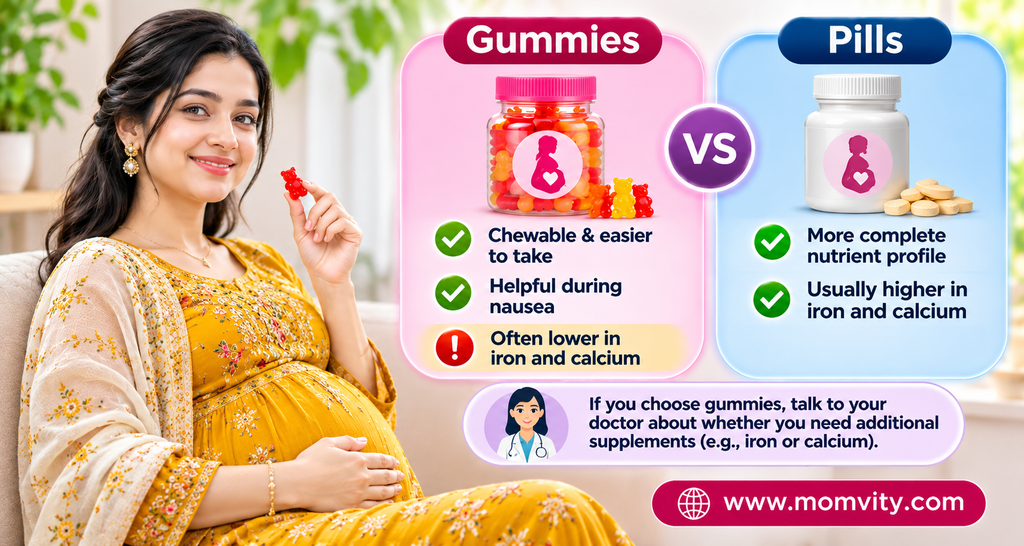
For those who experience significant nausea during early pregnancy, gummy vitamins may be a more manageable option. They are chewable, which many find convenient to take.

However, there is a drawback: many gummy prenatal vitamins do not contain sufficient amounts of iron or calcium. Therefore, if you choose to take gummies, consult your doctor about whether you need any additional supplements.

Managing Side Effects of Prenatal Vitamins

Nausea

Many women experience nausea during the early stages of pregnancy, and taking prenatal vitamins can sometimes make this discomfort worse.

Have you ever felt stomach discomfort throughout the day after taking your vitamins in the morning? If so, you might consider—with your doctor’s approval—taking them at night alongside a light snack. This approach proves helpful for some women.

However, if you experience persistent vomiting or are unable to keep any food or medication down, please consult your doctor. They may be able to recommend a different type of supplement if necessary.

Constipation

Taking prenatal vitamins that contain iron can sometimes lead to constipation. This can be particularly uncomfortable for those who already have digestive issues.

You can follow a few steps to help alleviate this problem.

  • Drink plenty of water every day.
  • Eat fruits, vegetables, and fiber-rich foods.
  • Engage in light walking, provided you have your doctor’s approval.
  • Consult your doctor about using a stool softener, if necessary.

Also, keep in mind that you should not stop taking iron supplements on your own just because you are experiencing constipation. If you inform your doctor about the issue, they can adjust the type of supplement or the method of administration as needed.

Conclusion: A Healthy Beginning for Your Little One

By now, you surely understand that taking care of yourself during early pregnancy is not just about eating more food or taking a large number of vitamins at once. Rather, the most important thing is to know which nutrients are needed, when they are required, and how to consume them safely. A high-quality prenatal vitamin, a nutritious diet, and regular medical consultations will help ensure a healthy start to your pregnancy.

Health Disclaimer: This article is intended solely for general health education purposes. It is not a substitute for professional medical advice. Always consult with your doctor, OB-GYN, or midwife before starting, stopping, or changing any vitamins or supplements during pregnancy.

Frequently Asked Questions

What Vitamins Should I Take in Early Pregnancy?

Generally, an appropriate prenatal vitamin—rich in folic acid, iron, iodine, and vitamin D—is necessary. Choline and DHA are also important. However, specific requirements may vary depending on your diet and physical condition.

When Should I Start Taking Prenatal Vitamins?

Ideally, it is best to start taking prenatal vitamins containing folic acid at least one month before planning a pregnancy. However, if you have not started by then, begin taking them after consulting your doctor once you learn that you are pregnant.

Can I Take a Regular Multivitamin Instead of a Prenatal Vitamin?

It is better to choose prenatal vitamins instead of regular multivitamins, as the levels of folic acid, iron, or iodine in regular multivitamins may not be suitable for pregnancy. Some products may also contain excessive amounts of vitamin A.

Are Gummy Prenatal Vitamins as Good as Pills?

Taking gummy vitamins can be easy, especially for those experiencing nausea. However, many gummy vitamins do not contain sufficient amounts of iron and calcium. Therefore, consult with a doctor before taking them.

Is Methylfolate Better Than Folic Acid?

Methylfolate, or 5-MTHF, is an alternative form of vitamin B9. However, the effectiveness of folic acid in preventing neural tube defects is well-established. Therefore, when choosing prenatal vitamins, check to ensure they contain folic acid.

Why Does My Prenatal Vitamin Make Me Nauseous?

Nausea can occur during early pregnancy due to hormonal changes. Taking vitamins may further increase this discomfort. In some cases, taking them at night along with a light meal can be helpful.

Can I Take Too Many Vitamins During Pregnancy?

Yes, taking excessive amounts of vitamins can be harmful. In particular, high levels of preformed vitamin A can increase the risk of birth defects. Therefore, do not take multiple multivitamins or supplements at the same time.

Do I Need a DHA Supplement in Early Pregnancy?

Not everyone needs a separate DHA supplement. DHA can be obtained from fish low in mercury, such as salmon and sardines. If you do not eat fish regularly, consult your doctor about whether an additional supplement is necessary for you.

Scroll to Top