

When the clock strikes 2:00 AM, breaking the silence of the night, the sound of a bathroom door opening often follows. Sleep is interrupted again, and the same thing happens around 4:00 AM. When sleep is disrupted night after night in this manner, it leaves not only the individual but the entire family feeling exhausted. In particular, if a husband or father in the household repeatedly wakes up due to the need to urinate, it causes both personal discomfort for him and concern among the rest of the family. But what could be the underlying cause of such an issue, and what should one know before purchasing a product to address it? In search of answers, many families turn to reviews of “ProstaVive.” Driven by a desire to restore comfort to their loved ones, they often become interested in exploring new products.
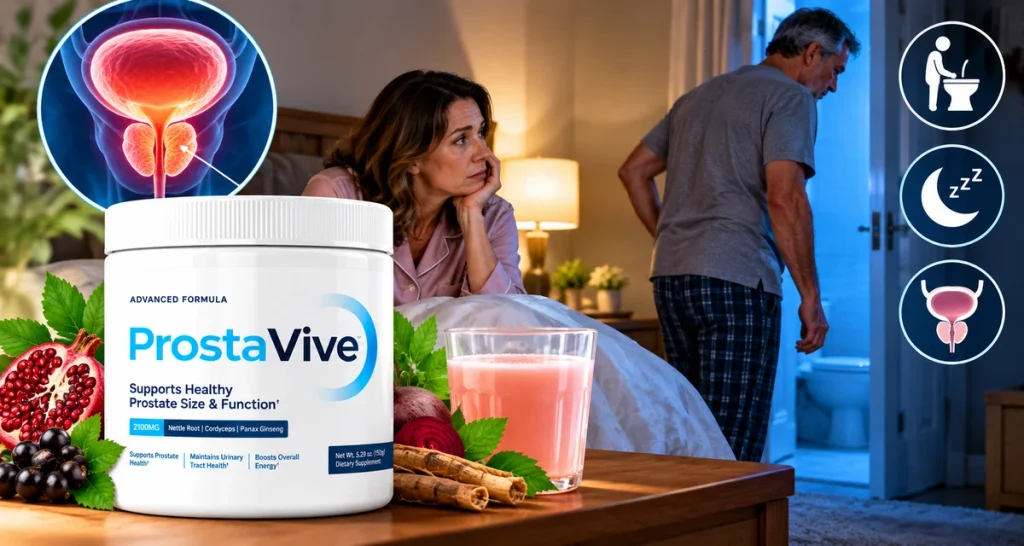
In many cases, it becomes quite difficult to ascertain the exact quantities of the various ingredients used in the composition of this product. Consequently, the opinions or experiences of each individual who uses this supplement vary, as no two people’s experiences can ever be identical—due to differences in their surrounding environments or their unique physical constitutions. However, the most significant issue that has emerged concerns the problem of an enlarged prostate; it is entirely irrational to use ProstaVive as an alternative to conventional medical treatments for this condition. Therefore, instead of relying on advertising claims, we should all make decisions based on scientific research and the actual experiences of those who use the product.
Below, some key information about this supplement is presented in simple terms, which should make it a bit easier for you to make a decision.
Quick Summary
| What You Want to Know | The Short Answer |
| What it is | A flavored powder you mix into a drink once a day |
| Who it’s sold to | Adult men interested in prostate and urinary comfort |
| Key named ingredients | Boron, tongkat ali, ashwagandha, fenugreek, Panax ginseng, maca root, artichoke extract, nettle root, zinc, magnesium, vitamin D |
| Saw palmetto? | Not listed on the official ingredient list |
| Price at the time of writing | $79 for one jar, down to $39 per jar in the six-jar bundle |
| Guarantee | 180-day money-back guarantee, according to the official FAQ |
| Clinical trial of the formula | None publicly available |
| Public rating | 3.6 out of 5 on Trustpilot from 13 reviews (October 2026) |
Why So Many Families Search for a ProstaVive Review
Are prostate issues merely a personal struggle for an individual, or do they affect the lives of everyone in the family? In reality, the need to visit the restroom repeatedly during the night disrupts a couple’s sleep; long journeys require frequent stops; and even when attending family gatherings, the first thing some individuals do is look for the nearest restroom. But do family members truly grasp the discomfort and mental stress underlying these changes? Often, they do not—largely because the person affected may feel too embarrassed to speak openly about their condition. An enlarged prostate can lead to symptoms such as frequent urination, a weak urinary stream, and repeated awakenings throughout the night, all of which cause significant discomfort in daily life. Frequently, family members notice these changes before the individual even mentions them. In such situations, the most valuable support one can offer is to stand by the person with empathy—avoiding any behaviour that might cause them embarrassment—and, if necessary, encouraging them to seek professional medical advice.
That is not unusual. The National Institute of Diabetes and Digestive and Kidney Diseases (NIDDK) estimates that benign prostatic hyperplasia (BPH), the medical name for an enlarged prostate that is not cancer, affects about 5% to 6% of men aged 40 to 64 and 29% to 33% of men aged 65 and older. It is the most common prostate problem in men over 50.
One detail from the public reviews says a lot about who is doing the research. A long-time ProstaVive customer on Trustpilot mentioned that his wife wrote the review for him because he isn’t comfortable with technology, and that she is the one who makes sure the product stays in stock. If you are reading this ProstaVive review on behalf of someone you love, you are in very good company.
Prostate Basics in Plain English
The prostate is a small gland that sits just below the bladder and wraps around part of the urethra, the tube that carries urine out of the body. NIDDK explains that the prostate goes through a second, slow growth phase that starts around age 25 and continues for life. When it grows large enough to squeeze the urethra, symptoms can follow.
According to NIDDK, common BPH symptoms include trouble starting to urinate, a weak or interrupted stream, dribbling at the end, waking at night to urinate (called nocturia), sudden urgency and needing to go more often. The tricky part is that these same symptoms can also come from bladder problems, urinary tract infections, prostatitis or prostate cancer. That is why a doctor’s visit matters before anyone settles on a supplement.
NIDDK also notes that some everyday medicines can make urinary symptoms worse, including decongestant and antihistamine cold medicines, diuretics, tranquilizers and certain antidepressants. That is worth checking in the medicine cabinet before blaming the prostate alone.
What Is ProstaVive?
ProstaVive is sold as an all-natural powder taken as one scoop a day. The official sales page promotes it for prostate health, stronger urine flow, deeper sleep, energy and an active sex life, and it leans heavily on the idea of supporting blood flow and nitric oxide around the prostate.
The sales page points to a 2023 study from Fukushima Medical University in Japan about prostate blood circulation. The page does not present that research as a trial of the ProstaVive formula itself, and we could not find any published clinical trial testing ProstaVive as a finished product. Like all supplements, ProstaVive was not reviewed by the FDA for effectiveness before going on sale, and its own website states that its claims have not been evaluated by the FDA.
Orders go through ClickBank, which the website names as the product’s reseller. Product questions go to the seller, while order and refund questions can go to ClickBank. That split matters if you ever need a refund.
ProstaVive Ingredients: What’s Really on the List
This is where an honest ProstaVive review has to slow down. Many third-party articles online claim ProstaVive contains saw palmetto, pygeum or beta-sitosterol. The official website’s own ingredient list does not include any of them.
Here is what the official site actually names, along with what independent research says about each ingredient.
| Ingredient | What the Brand Says | What Independent Research Suggests |
| Nettle root | Supports urinary tract health and prostate health | The most relevant ingredient here. An NIH review found limited evidence it may ease some BPH-related urinary symptoms |
| Boron | Supports a healthy inflammation response | Research on prostate symptoms specifically is limited |
| Ashwagandha | Supports prostate health and detoxification | Small trials link it to lower stress and better sleep, not prostate symptoms |
| Tongkat ali | Supports sexual function and prostate blood flow | Mostly studied for testosterone and libido, not urinary flow |
| Fenugreek | Supports sex hormones and libido | Studied mainly for libido and hormones |
| Panax ginseng | Supports blood flow and energy | Studied for energy, cognition and erectile function |
| Maca root | Supports energy and sex drive | Studied mainly for libido and mood |
| Artichoke extract | Antioxidant support | Evidence for prostate symptoms is lacking |
| Zinc, magnesium, vitamin D | General male health, sleep and mood | Essential nutrients, but not proven to shrink the prostate or fix urinary symptoms |
Notice the pattern. Only one named ingredient, nettle root, has a meaningful link to urinary symptoms in the research, and even that evidence is described by the NIH as limited. Most of the remaining herbs belong to the energy and libido category. That doesn’t make the product useless, but it does mean the formula is closer to a general men’s vitality blend than a targeted prostate formula.
The other missing piece is dosing. The ingredient amounts appear only in a Supplement Facts image on the official site, and we could not confirm a full text transcription of every amount. Before buying, zoom in on the current label and check whether ingredients are listed individually or bundled into a proprietary blend, since a blend makes it hard to compare doses with published studies.
A Note on Saw Palmetto
Many online articles highlight the connection between ProstaVive and saw palmetto. But what does scientific research say about the efficacy of this ingredient?
According to research findings from the NCCIH—which are included in the NIH’s database—a total of 27 studies on ‘saw palmetto’ were conducted as of 2023. These studies indicate that when taken on its own, saw palmetto neither alters the symptoms of BPH (benign prostatic hyperplasia) nor provides any benefit. Of these 27 studies, two were conducted with funding from the NIH, in which the substance was administered at a dose three times higher than the typical amount; yet, no health improvements were observed. Therefore, research-based knowledge does not suggest that the presence of this ingredient guarantees the effectiveness of the supplement.
So if a website sells you on ProstaVive because of saw palmetto, that is a red flag twice over. The ingredient isn’t on the official list, and the strongest evidence on it is disappointing.
How to Take ProstaVive
The official FAQ says to mix one scoop of powder into water or another drink once a day, ideally with a meal, and at roughly the same time each day. Each jar contains 30 servings and comes with a measuring scoop.
If you wish to incorporate a new habit into your life and sustain it over the long term, the most effective way to do so is to integrate it into your existing daily routine. Let’s illustrate this with a simple example. Suppose you want to make a habit of drinking fruit juice every day; you could have a glass in the morning before your coffee, and another during lunch. Additionally, if you wish to support your partner in this, you could—for the first two weeks—jot down small notes on a calendar, which will help these new actions evolve into a lasting habit.
However, many customers have reported seeing good results within just a few weeks of using Prostavibe; yet, we have not come across any independent data or evidence to support a specific timeframe.
What Real Customers Are Saying
As of October 2026, ProstaVive’s Trustpilot profile (prostavive.org) shows a 3.6 out of 5 score from just 13 reviews. About 69% are five stars, 8% are three stars and 23% are one star. Trustpilot also notes that the company hasn’t invited customers to leave reviews recently, so the sample is small and may not represent everyone.
On the positive side, a 73-year-old reviewer in March 2026 said that after a few weeks he stopped noticing the constant urge to find a restroom while shopping. Another, posting the same month, said that after almost five months he had a stronger stream and only one or two nighttime trips. A long-term user described fewer night trips, better sleep and helpful customer support, and a September 2026 reviewer said he was satisfied after finishing a multi-jar order.
The negative reviews are just as specific. In August 2026, one buyer said he was still getting up four times a night after three weeks. In June 2026, another said six months of daily use did nothing and called it a waste of money. A May 2026 reviewer said his doctor had diagnosed an enlarged prostate and recommended medication, but he chose ProstaVive instead; six months later, he reported that his PSA had risen from 3.7 to 4.6 and his prostate had grown. A three-star review complained that the jar looked barely filled, and the company replied that jars are filled by weight, contain over four ounces and provide 30 servings.
Upon visiting the official website, you will find that in the product reviews section, there are many individuals who gave the product a five-star rating—yet, even after using the supplement for four to five months, they have not noticed any physical improvement, nor are they even certain whether any improvement has occurred at all. These reviews do not represent personal experiences or medically proven results; however, they are highly valuable for gaining a general understanding of a subject or for forming an idea about the potential outcomes one might expect. However, if you have any physical health issues or have been suffering from a complex or serious long-term illness, you must consult a medical specialist before taking it.
ProstaVive Price, Bonuses and Refund Policy
Prices on the official website at the time of writing:
| Package | Supply | Price per Jar | Total |
| 1 jar | 30 days | $79 | $79 |
| 3 jars | 90 days | $59 | $177 |
| 6 jars | 180 days | $39 | $234 |
TThis supplement is sold to customers in special packages; the 3-jar and 6-jar packages include two digital bonuses. Two digital books are provided here as a gift: the first is a guide to prostate health smoothie recipes, and the second is a plan for a healthy sex drive. Through various Q&A sessions, it has been clarified that for orders placed within the United States, the product will typically reach its destination within three to five business days after processing.
Furthermore, through various Q&A sessions, we have learned that this product comes with a 180-day money-back guarantee—a point that has been emphasised very strongly. If you encounter any issues with the product, or if you do not achieve the desired results after using it, you may return the product and receive a full refund. However, before placing an order, be sure to click the checkout link and carefully read the refund policy. You may also want to note down the date you confirmed your order; this will help you keep track of exactly how much time you have left. Most financial issues between buyers and sellers of supplements arise because the return policy terms were not known beforehand.
Another tip regarding purchase: The official website states that ProstaVive is not sold on Amazon, Walmart, or eBay; yet, one Trustpilot reviewer mentioned purchasing it from Amazon.
Compare the Current ProstaVive Packages →
Safety, Side Effects and Who Should Skip It
The official FAQ says ProstaVive is generally well tolerated and advises stopping use and contacting a doctor if side effects appear. Because the formula is a blend of active herbs, a few ingredient-level cautions deserve attention.
The NIH Office of Dietary Supplements reports that ashwagandha appears well tolerated for about three months but its long-term safety isn’t known. It has been linked to rare cases of liver injury, it may affect thyroid function, and it may interact with thyroid, diabetes, blood pressure, immune-suppressing and sedative medications. Ashwagandha may also raise testosterone, so experts say it might not be safe for men with hormone-sensitive prostate cancer. Several other ingredients, including tongkat ali and fenugreek, are also promoted for hormone effects.
That makes a pharmacist or doctor check especially important for men who take prescription medicine, have a thyroid or liver condition, or have any history of prostate cancer.
When to See a Doctor First
No supplement should replace a proper checkup for urinary symptoms.
| Warning Sign | Why It Matters |
| Being unable to urinate at all | Possible urinary retention, which needs urgent care |
| Painful, frequent urination with fever and chills | Could signal an infection |
| Blood in the urine | Needs prompt evaluation |
| Strong pain in the lower belly or urinary tract | Can point to complications |
However, if you experience only very mild symptoms, you can find relief by making a few routine changes. For instance, ensure you consume fluids before going to bed or heading out; reduce your intake of alcoholic beverages; stay physically active; and avoid holding in urine for long periods.
Pros and Cons
| Pros | Cons |
| Easy once-a-day powder, no pills to swallow | No clinical trial of the finished formula |
| Includes nettle root, which has limited supportive evidence | Most ingredients target libido and energy, not urinary symptoms |
| Clear bundle pricing and a 180-day guarantee | Ingredient amounts are hard to verify from the label image |
| Some buyers report fewer night trips and better sleep | Mixed public reviews, including six-month “no change” reports |
| Ships in the U.S. within a few business days | Hormone-active herbs may not suit every man |
Our ProstaVive Review Verdict
After checking the official label list, the research on each ingredient and the full public review profile, our ProstaVive review lands in the middle. ProstaVive is a convenient daily powder with one ingredient, nettle root, that has some limited support for urinary symptoms and several others that are really aimed at energy and libido.
It may be worth trying for a man who has already seen his doctor, has ruled out anything serious, has the go-ahead to add a supplement and is comfortable with results that aren’t guaranteed. It is not a good substitute for prescribed BPH treatment, and the May 2026 review about a rising PSA shows exactly why. If you decide to go ahead, the six-jar bundle is the cheapest per jar, but a single jar is the lower-risk way to see how he tolerates it.
Medical Disclaimer: This content is for general informational and educational purposes only and isn’t intended to diagnose, treat, cure or prevent any disease or replace advice from a physician or other qualified healthcare professional. Urinary symptoms should always be checked by a doctor.
Affiliate Disclosure: This article may contain affiliate links. If you purchase through one of these links, Momvity may receive a commission at no additional cost to you.
Frequently Asked Questions
How long does ProstaVive take to work?
The brand says many users notice changes within a few weeks, but there is no independent data to confirm any timeline. Some reviewers reported changes within weeks or months, while others saw nothing after three weeks or even six months.
Can ProstaVive shrink an enlarged prostate?
There’s no evidence that it does. It is a dietary supplement, not a treatment for BPH, and one reviewer reported that his prostate grew and his PSA rose while he used it instead of his doctor’s recommended medication.
How much does ProstaVive cost?
At the time of writing, one jar costs $79, three jars cost 177(59 each) and six jars cost 234(39 each). The three- and six-jar packages include two digital bonus guides.
What is the ProstaVive refund policy?
The official FAQ describes a 180-day money-back guarantee with a full refund if the product is returned within that window. Read the full written refund policy before ordering and keep your order confirmation handy.
Are there any ProstaVive side effects?
The company describes it as generally well tolerated. Ask a pharmacist or doctor first, especially if he takes prescription medicine.
Is ProstaVive FDA approved?
No. Dietary supplements aren’t approved by the FDA for effectiveness before they are sold, and ProstaVive’s own website says its statements have not been evaluated by the FDA.