
The Brain Song Reviews for Busy Moms: Is This Audio Routine Worth Your Time?

Tahmina Noor

Published: 07/10/2026
Updated: 28/10/2026

If you have a few minutes to spare, you might want to learn the answer to this question. “Brain Songs” function much like wave signals; they are digital audio programs created based on the concept of releasing gamma waves. Using them requires no medication, and they can easily be incorporated into a brief period of your daily routine.

Good Fit If You…Probably Not for You If You…
It is the best choice for those who want to avoid the hassle of taking medication.Need a proven memory treatment
Can find 10 to 20 quiet minutes a dayRarely get a moment to yourself
Enjoy audio-based relaxation or focus toolsExpect noticeable results in days
Are fine with results that aren’t guaranteedPrefer products with strong clinical evidence

Why So Many Moms Are Searching for The Brain Song Reviews

You might prepare lunch boxes for your family at the start of the day but forget your own amidst the pressure of work. Or, while shopping, you might wonder if a product has actually run out at home or if you had merely thought about buying it the previous night. It is also possible that you intended to complete a specific task a short while ago but forgot about it due to a clutter of other thoughts.

Many attribute this issue simply to a mother’s tendency to be forgetful; it is often a subject of lighthearted teasing within families. However, this persistent issue can potentially lead to more complex problems. Factors such as inadequate sleep, long to-do lists, and the lack of any break from daily routines contribute to this tendency among mothers.

A search for solutions online leads to “The Brain Song.” By looking at The Brain Song Reviews, one can gain detailed insight into the subject. Cultivating a habit of listening to it for just a few minutes can help improve your concentration.

Here, we also discuss how the program works, whether there are any alternatives, and what science has to say about it. So, please read on carefully.

The Brain Song in Plain English

In essence, this is an audio recording designed to help people relax. Headphones must be used to listen to it. Since it is readily available on various websites and online platforms, there is no hassle involved in purchasing it from a store.

Another major advantage is that there is no need to worry about keeping it out of the reach of children.

According to its creators, this utilizes gamma brain waves. Gamma waves are known to enhance brain function, making them highly effective for improving concentration and information processing. It is particularly beneficial for those wishing to boost their attention span, sharpen their memory, or overcome mental sluggishness. No medication or physical exercise is required in conjunction with it.

How It Compares With Other Options

A lot of moms who read The Brain Song reviews are also weighing other ways to feel sharper. Here’s how the main choices stack up.

OptionWhat You DoCostEvidence Level
The Brain SongListen to a gamma-themed audio recordingPaid, set by the vendorLimited for this specific recording
Memory supplementsTake capsules dailyOngoing monthly costVaries widely by ingredient
Meditation appsFollow guided sessionsFree or subscriptionResearch on meditation in general is broader
Free habitsSleep, walks, short breaks, brain gamesFreeStrong support for sleep and exercise

The honest takeaway is that The Brain Song isn’t competing with sleep and exercise. It’s competing with other easy daily routines, like a meditation app or a quiet cup of tea. If you already have a calming habit that works, you may not need another one.

Does the Gamma-Wave Science Hold Up?

Gamma oscillations are a genuine subject of neuroscience research. Researchers study whether rhythmic sounds can elicit measurable brain responses; thus, the underlying concept is not merely fabricated.

Merely observing a measurable brain response in a laboratory setting does not prove that you will remember a dentist appointment, avoid losing your train of thought while writing a work email, or stop forgetting why you walked into the kitchen.

Furthermore, current research has not established that “The Brain Song” recording actually delivers the benefits claimed by its sellers.

Therefore, it is important to keep this distinction in mind when reading reviews. While someone’s personal experience may be valid for them, personal experience is not the same as clinical evidence.

If you wish to examine the research yourself, you can find published studies on gamma oscillations and sound stimulation on PubMed. You will notice that researchers generally state their conclusions very cautiously. This serves as a good standard when evaluating claims made by wellness products regarding focus, memory, or brain function.

Fitting It Into a Real Family Day

The biggest question for parents isn’t really whether the audio works. It’s whether you’ll actually get to listen. Here are the windows that tend to work best in a busy household.

Time of DayWhy It Can WorkWatch Out For
Early morning, before the kids wake upThe house is quiet, and it sets a calm toneIt can be tempting to skip it for extra sleep
Nap timeA predictable break most daysNap times shift as kids grow
After school drop-offA reset before work or choresNot ideal if you’re driving
After bedtimeHelps you wind downYou may be too tired to stay consistent

Picture a mom of two who works part-time from home. She keeps her headphones next to the coffee maker and listens right after the school run, before opening her laptop.

Or think of a new mother on maternity leave. Her baby’s naps are short and unpredictable, so she saves one listening session for the longest nap of the day. Some days she falls asleep halfway through. That might be the most useful outcome of all.

One important note: never use it while driving or while you need to be fully alert to your kids. Listen only when you can safely relax.

Honest Pros and Honest Drawbacks

What Parents May Like

It’s simple. There’s no learning curve, no pills to remember and no gear to charge beyond your phone. It’s also something you can do without leaving the house, which matters when a babysitter isn’t always an option. And for many people, the biggest benefit is simply ten quiet minutes that belong to them.

What Might Disappoint You

The evidence for this specific recording is limited, and results vary from person to person. Some listeners notice a calmer mood. Others notice nothing at all. It also asks for consistency, which is hard to promise when your schedule belongs to small people. Finally, the vendor controls the price and refund terms, so you need to read them carefully before buying.

Red Flags to Watch for in The Brain Song Reviews Online

Not every review you find is written with your interests in mind. Be cautious when you see any of the following.

Red FlagWhy It Matters
Promises of dramatic memory gains in daysNo listening program can honestly promise that
Countdown timers and “only a few left” bannersDigital products don’t run out of stock
Claims that it treats a medical conditionIt’s a wellness product, not a treatment
No mention of any drawbacksEvery product has limits, and honest reviews say so

Balanced The Brain Song reviews usually sound ordinary. They mention small changes, admit doubts and talk about the routine as much as the results.

Before You Click Buy

Take five minutes to check a few things on the official site. Look at exactly what’s in the package and whether any upsells appear at checkout.You confirm that it plays on the phone or tablet you actually use the program on. Most importantly, you read the refund conditions, including the time limit, so you know your options if it doesn’t suit you.

It’s also worth asking yourself one simple question: when would I really listen? If you can’t name a time, the program will probably end up forgotten in your email inbox.

The Bottom Line on The Brain Song Reviews

After going through the product details, the science and the patterns in The Brain Song reviews, our view is balanced. It’s an easy, pill-free listening routine built on a real research topic, but there’s no solid proof that this particular recording sharpens memory or focus.

For a busy mom who wants a small, calming ritual and keeps her expectations realistic, it may be worth trying. If forgetfulness is new, getting worse or worrying you, please talk to your doctor first, since sleep problems, stress and some medical issues can all affect memory. When you’re ready, you can check the current price, package and refund terms on the official website.

Health note: This article is for general information only and is not medical advice. No improvement in memory or focus is guaranteed. Please speak with a qualified healthcare provider about any health concerns.

Frequently Asked Questions

Are The Brain Song reviews mostly positive?
Many The Brain Song reviews describe the listening routine as relaxing and easy to stick with. Others report little or no change. Results vary, and nothing is guaranteed.

Can I listen to The Brain Song during my baby’s nap?
Yes, nap time can be a good window because it gives you a predictable quiet break. Just keep the volume low enough that you can still hear your baby.

Is The Brain Song safe during pregnancy or while breastfeeding?
It’s an audio program with no ingredients, so there’s nothing to swallow. Still, if you’re pregnant, breastfeeding or have any health concerns, it’s sensible to check with your doctor before starting a new wellness routine.

Is The Brain Song a supplement?
No. It’s a digital audio program. There are no capsules, powders or physical products involved.


Related Articles

early pregnancy vitamins

Early Pregnancy Vitamins: What You Need and Why It Matters

Did you know that during the first few weeks of pregnancy, the brain and spinal cord of your developing baby begin to form? 

At this stage, many mothers may not even be aware that a new life is on the way. Seeing two red lines on a pregnancy test often brings a mix of joy and a flurry of questions. 

What foods are best for the baby? Which vitamins support brain development? And with so many products available on the market, which one is truly right for your needs?

Exploring these questions makes it essential to learn about “early pregnancy vitamins.” Certain nutrients play a vital role in the healthy development of your baby during the early stages of pregnancy.

Dear mother, consider this: you might not have given much thought to your daily diet before, but now that you are expecting, you likely find yourself wanting to know about every component of what you eat. This is a beautiful transformation that comes with motherhood. However, keep in mind that more vitamins do not necessarily mean greater benefits for your baby. It is important to understand which nutrients are required, which can be obtained from food, and which might be needed as supplements. 

Let’s explore the most important nutrients for both your body and your unborn baby during the early stages of pregnancy.

Early Pregnancy Vitamins at a Glance

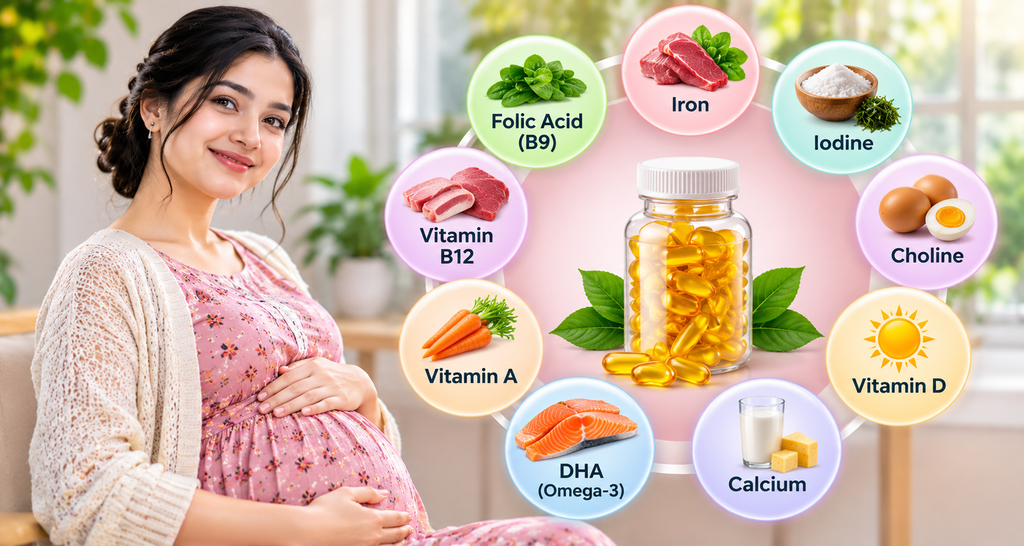
During pregnancy, your body’s nutritional needs change. In the first three months in particular, the baby’s brain, nervous system, bones, and other vital organs begin to develop. Therefore, in addition to your daily meals, it is essential to pay special attention to the intake of certain vitamins and minerals.

For your convenience, the daily nutritional requirements for pregnant women aged 19 and older are presented in the table below.

NutrientDaily RequirementMain Benefits
Folic Acid400 mcg (600 mcg DFE total folate)Brain and spinal cord development
Iron27 mgRed blood cell production
Iodine220 mcgBrain and thyroid development
Choline450 mgBrain and spinal cord development
Vitamin D15 mcg (600 IU)Bone development
Calcium1,000 mgStrong bones and teeth
Vitamin B122.6 mcgNerve and blood cell health
Vitamin A770 mcg RAEEye, skin and immune health
DHANo official RDABrain and eye development

Keep in mind that the amounts listed in the table represent your total daily nutritional requirements. This does not mean that you must obtain all of these nutrients solely from prenatal vitamins; you can meet these requirements through a combination of your diet and supplements.

Why Vitamins Matter So Much in Early Pregnancy

Have you ever wondered why early fetal development is so critical?

The answer lies in the initial formation of the baby’s body. During this period, a specialized structure called the “neural tube” develops, which eventually forms the baby’s brain and spinal cord.

Remarkably, this neural tube closes as early as the third or fourth week of pregnancy—often before a woman has even taken a pregnancy test. This means that by the time you discover you are pregnant, a vital stage of your baby’s development may have already been completed. A lack of sufficient folic acid can increase the risk of “neural tube defects”—congenital issues affecting the brain and spinal cord. According to the CDC, consuming 400 micrograms of folic acid daily helps prevent some of these birth defects.

This is why doctors recommend taking appropriate vitamins as soon as you begin planning for pregnancy. However, if you haven’t been taking any supplements, don’t blame yourself. Once you learn you are pregnant, consult your doctor and start taking them as soon as possible. Remember, it is never too late to start taking care of yourself.

The Most Important Early Pregnancy Vitamins and Minerals

Folic Acid: The Top Priority

Folic acid is one of the most important nutrients during the early stages of pregnancy. It is a form of vitamin B9 that aids in the creation of new cells and supports the healthy development of a baby’s brain and spinal cord. This vitamin is particularly crucial for the proper formation and closure of the neural tube.

Generally, a daily intake of 400 micrograms of folic acid is recommended. Ideally, one should begin taking it at least one month before conception. During pregnancy, the total daily requirement for folate is 600 micrograms DFE (Dietary Folate Equivalents). Since these two measurements are not the same, it is important to keep this in mind when reading product labels.

For women who have previously given birth to a child with a neural tube defect, a doctor may recommend a daily intake of 4,000 micrograms of folic acid. However, as this is a significantly higher dose than the standard recommendation, it should never be taken in such large amounts without a doctor’s explicit guidance.

Why Is Folic Acid So Important Before Pregnancy?

Many mothers believe that it is sufficient to start taking folic acid only after a pregnancy test comes back positive. In reality, however, the baby’s neural tube develops very rapidly; therefore, it is crucial to have adequate levels of folic acid in the body even before conception.

Also, be aware that, in addition to folic acid, an alternative form of vitamin B9—known as methylfolate or 5-MTHF—is available on the market. However, there is not yet sufficient evidence for methylfolate that matches the proven efficacy of folic acid in preventing neural tube defects. Consequently, when purchasing prenatal vitamins, check the label to ensure that it specifically lists “folic acid.”

Iron: For Your Growing Blood Supply

During pregnancy, the volume of blood in your body increases, as extra blood is required to deliver oxygen to both your own body and that of your baby. Iron plays a crucial role in the production of red blood cells.

Pregnant women aged 19 or older require approximately 27 milligrams of iron daily. A deficiency can lead to anemia, which may cause symptoms such as excessive fatigue, weakness, and dizziness.

Good sources of iron include beef, chicken, fish, lentils, beans, spinach, and iron-fortified cereals. However, consuming iron-rich foods is not enough; how well your body absorbs that iron is also important. For instance, consuming plant-based sources of iron—such as lentils or spinach—alongside lemon, oranges, or other foods rich in Vitamin C can enhance iron absorption.

It is also important not to consume an excessive amount of iron. For adult pregnant women, the upper tolerable intake limit is 45 milligrams per day. If a blood test reveals a deficiency, your doctor may recommend additional supplements.

Iodine: Often Missing From the Label

Iodine is a mineral that helps in the production of thyroid hormones. These hormones are essential for the normal development of a baby’s brain and nervous system.

During pregnancy, approximately 220 micrograms of iodine are required daily. Various health organizations recommend obtaining about 150 micrograms of iodine through prenatal supplements.

However, many mothers overlook an important detail: not all prenatal vitamins contain an adequate amount of iodine. Therefore, one should not simply rely on the label “Prenatal Vitamin” on the bottle; be sure to check the list of ingredients.

Iodine can also be obtained from sources such as iodized salt, milk, eggs, and saltwater fish. That said, if you have any thyroid-related issues, do not take iodine supplements on your own. A doctor will determine the appropriate dosage based on your specific health condition.

Choline: The Nutrient Many Moms Have Never Heard Of

Choline is an essential nutrient that many mothers may not have heard of before. Yet, it plays a crucial role in the development of a baby’s brain and spinal cord.

During pregnancy, about 450 milligrams of choline are required daily. Eggs are an excellent source of this nutrient. Choline can also be found in fish, meat, milk, lentils, and broccoli.

It is important to note that many prenatal vitamins contain little to no choline. Therefore, do not assume that taking a vitamin supplement alone meets all your nutritional needs. Be sure to consider whether you are obtaining enough choline from your daily diet.

Vitamin D and Calcium: Building Strong Bones

Calcium is essential for the development of strong bones and teeth in a baby. Vitamin D, on the other hand, helps the body absorb calcium; these two nutrients are therefore interconnected.

Pregnant women aged 19 or older require approximately 1,000 milligrams of calcium and 15 micrograms (or 600 IU) of Vitamin D daily.

Good sources include milk, yogurt, cheese, calcium-fortified plant-based milk, and certain types of fish that can be eaten with their bones. Check the calcium content in your prenatal vitamins, and aim to obtain the remainder from your diet.

Vitamin B12: Especially for Vegetarians and Vegans

Vitamin B12 helps maintain a healthy nervous system and supports the production of red blood cells. During pregnancy, the daily requirement is approximately 2.6 micrograms.

Vitamin B12 is typically found in meat, fish, eggs, and dairy products. Consequently, individuals who follow a strictly plant-based diet may be at a higher risk of a deficiency in this vitamin.

If you follow a vegan or vegetarian diet, ensure you pay attention not only to Vitamin B12 but also to iodine, choline, iron, and omega-3 fatty acids. If necessary, consult a doctor or a nutritionist to help you create an appropriate dietary plan.

DHA and Omega-3s

DHA is an important type of omega-3 fatty acid that supports the development of a baby’s brain and eyes. It is particularly important to pay attention to this nutrient if you do not consume fish regularly.

Fish with low mercury content, such as salmon, sardines, and trout, are good sources of DHA. Some prenatal vitamins contain DHA, while others do not.

There is no specific government-mandated daily requirement for DHA. However, experts generally recommend a combined intake of at least 250 mg of DHA and EPA, along with an additional 100–200 mg of DHA. If you rarely eat fish, consult your doctor to determine whether a separate DHA supplement is necessary for you.

What to Avoid: Too Much of Some Vitamins

Be Careful With Vitamin A

Vitamin A is essential for eye health, skin, and immune function. However, excessive intake during pregnancy can be dangerous.

In particular, consuming too much “preformed” Vitamin A—known as retinol or retinyl—can increase the risk of birth defects. For pregnant women, the upper limit for this form of Vitamin A is 3,000 micrograms per day.

On the other hand, beta-carotene—found in foods like carrots, sweet potatoes, and green leafy vegetables—is converted into Vitamin A by the body only as needed.

Therefore, do not take general multivitamins, beauty supplements, and prenatal vitamins simultaneously without first having them reviewed by a doctor. Remember, taking an excessive amount of vitamins during pregnancy is not a sign of good maternal care; rather, consuming the right amount based on actual needs is a sign of being a responsible and informed expectant mother.

Herbal Supplements

Many mothers believe that products made from natural or herbal ingredients are completely safe during pregnancy. In reality, however, there is not enough research on the safety of all such herbal ingredients.

Therefore, consult a doctor or pharmacist before taking any herbal pills, special tea blends, or herbal powders. This precaution is especially important if you are already taking other medications.

How to Choose a Prenatal Vitamin

There are many types of prenatal vitamins available on the market. Some come as tablets, others as capsules, and some are sold in the form of gummies. However, there is no guarantee that the most expensive bottle will be the best one for you.

Consider the following factors when choosing a suitable prenatal vitamin.

CheckWhat to Look For
Folic Acid400 mcg
IronClose to 27 mg
IodineAbout 150 mcg
Vitamin ASafe amount of preformed vitamin A
Vitamin D15 mcg (600 IU)
CholineIncluded or obtained through food
DHAIncluded or obtained through food
Third-Party TestingUSP, NSF or ConsumerLab

Gummies vs. Pills

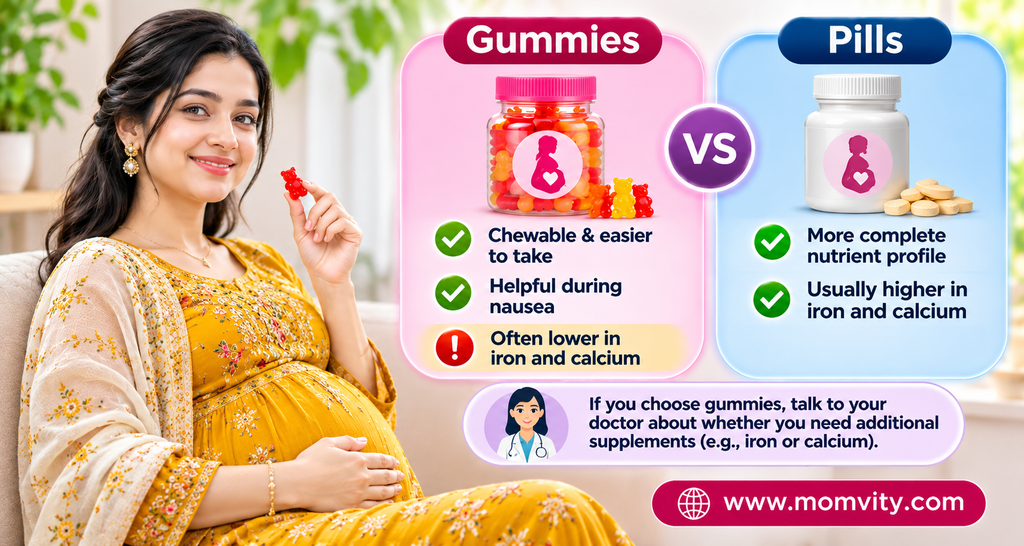
For those who experience significant nausea during early pregnancy, gummy vitamins may be a more manageable option. They are chewable, which many find convenient to take.

However, there is a drawback: many gummy prenatal vitamins do not contain sufficient amounts of iron or calcium. Therefore, if you choose to take gummies, consult your doctor about whether you need any additional supplements.

Managing Side Effects of Prenatal Vitamins

Nausea

Many women experience nausea during the early stages of pregnancy, and taking prenatal vitamins can sometimes make this discomfort worse.

Have you ever felt stomach discomfort throughout the day after taking your vitamins in the morning? If so, you might consider—with your doctor’s approval—taking them at night alongside a light snack. This approach proves helpful for some women.

However, if you experience persistent vomiting or are unable to keep any food or medication down, please consult your doctor. They may be able to recommend a different type of supplement if necessary.

Constipation

Taking prenatal vitamins that contain iron can sometimes lead to constipation. This can be particularly uncomfortable for those who already have digestive issues.

You can follow a few steps to help alleviate this problem.

  • Drink plenty of water every day.
  • Eat fruits, vegetables, and fiber-rich foods.
  • Engage in light walking, provided you have your doctor’s approval.
  • Consult your doctor about using a stool softener, if necessary.

Also, keep in mind that you should not stop taking iron supplements on your own just because you are experiencing constipation. If you inform your doctor about the issue, they can adjust the type of supplement or the method of administration as needed.

Conclusion: A Healthy Beginning for Your Little One

By now, you surely understand that taking care of yourself during early pregnancy is not just about eating more food or taking a large number of vitamins at once. Rather, the most important thing is to know which nutrients are needed, when they are required, and how to consume them safely. A high-quality prenatal vitamin, a nutritious diet, and regular medical consultations will help ensure a healthy start to your pregnancy.

Health Disclaimer: This article is intended solely for general health education purposes. It is not a substitute for professional medical advice. Always consult with your doctor, OB-GYN, or midwife before starting, stopping, or changing any vitamins or supplements during pregnancy.

Frequently Asked Questions

What Vitamins Should I Take in Early Pregnancy?

Generally, an appropriate prenatal vitamin—rich in folic acid, iron, iodine, and vitamin D—is necessary. Choline and DHA are also important. However, specific requirements may vary depending on your diet and physical condition.

When Should I Start Taking Prenatal Vitamins?

Ideally, it is best to start taking prenatal vitamins containing folic acid at least one month before planning a pregnancy. However, if you have not started by then, begin taking them after consulting your doctor once you learn that you are pregnant.

Can I Take a Regular Multivitamin Instead of a Prenatal Vitamin?

It is better to choose prenatal vitamins instead of regular multivitamins, as the levels of folic acid, iron, or iodine in regular multivitamins may not be suitable for pregnancy. Some products may also contain excessive amounts of vitamin A.

Are Gummy Prenatal Vitamins as Good as Pills?

Taking gummy vitamins can be easy, especially for those experiencing nausea. However, many gummy vitamins do not contain sufficient amounts of iron and calcium. Therefore, consult with a doctor before taking them.

Is Methylfolate Better Than Folic Acid?

Methylfolate, or 5-MTHF, is an alternative form of vitamin B9. However, the effectiveness of folic acid in preventing neural tube defects is well-established. Therefore, when choosing prenatal vitamins, check to ensure they contain folic acid.

Why Does My Prenatal Vitamin Make Me Nauseous?

Nausea can occur during early pregnancy due to hormonal changes. Taking vitamins may further increase this discomfort. In some cases, taking them at night along with a light meal can be helpful.

Can I Take Too Many Vitamins During Pregnancy?

Yes, taking excessive amounts of vitamins can be harmful. In particular, high levels of preformed vitamin A can increase the risk of birth defects. Therefore, do not take multiple multivitamins or supplements at the same time.

Do I Need a DHA Supplement in Early Pregnancy?

Not everyone needs a separate DHA supplement. DHA can be obtained from fish low in mercury, such as salmon and sardines. If you do not eat fish regularly, consult your doctor about whether an additional supplement is necessary for you.

Scroll to Top