Relaxation Techniques Pregnancy Simple Ways To Feel Calm And Comfortable 

Tahmina Noor

Published: 18/09/2026
Updated: 18/09/2026

There are various Relaxation Techniques Pregnancy that new mothers should certainly be aware of. By following these guidelines, pregnant women can feel very calm and find relief from the mental stress of daily life. 

Upon discovering a pregnancy, many people experience a mix of questions and fascinating emotions. 

Sometimes, during pregnancy, you may feel restless or unsettled for no apparent reason. 

Feeling a bit anxious or vulnerable in this state is not unusual. Creating small, quiet moments for yourself can make this experience much more beautiful and enjoyable. The NHS recommends activities such as breathing exercises, meditation, walking, swimming, and appropriate yoga to help manage anxiety and stress during pregnancy. 

However, simply sitting with your eyes closed isn’t the only way to relax; that is a common misconception. 

Relaxation can sometimes be achieved through a few minutes of slow, deep breathing, listening to your favorite music, or going for an outing. It can also come from talking to a loved one—someone with whom you feel completely comfortable sharing your fears. 

What If Your Body Is Resting But Your Mind Is Not? 
Have you ever wondered about this? Why is it that while you are lying down during pregnancy—with the surroundings completely quiet—a thousand questions keep swirling in your mind? 

The primary reason for this is the constant fluctuation of hormones during this period. 

The excessive thoughts include— 

  • “Why did the baby’s movements feel a bit different today?” 
  • “How will I manage over the next few months?” 
  • “Will everything be okay?” 

However, there are several important aspects here that are crucial for us to understand deeply. Resting the body is not the same as resting the mind. 

The primary goal of relaxation techniques pregnancy is to address the root causes of such issues—specifically, carving out a little time for oneself amidst a hectic schedule. 

You do not always need to close your eyes to find mental peace. Instead, simply setting aside some time to engage in activities you enjoy can significantly uplift your mood.

Visit For More Tips 

Could A Few Quiet Minutes Really Matter? 

Yes, taking a few minutes of quiet time during pregnancy can be truly beneficial for both body and mind. Practices such as deep breathing, resting with eyes closed, or simply sitting in silence—as part of relaxation techniques pregnancy—can help reduce stress and restore a sense of calm. 

But it is remarkable how just a few minutes of mindful pause can transform the restlessness of an entire day. 

The answer lies in the fact that regular, short breaks teach the mind to slow down; this makes it easier to manage anxiety and creates an opportunity for self-care. 

The takeaway: You don’t always need a long stretch of time to find peace—sometimes, just a few mindful minutes are enough! 

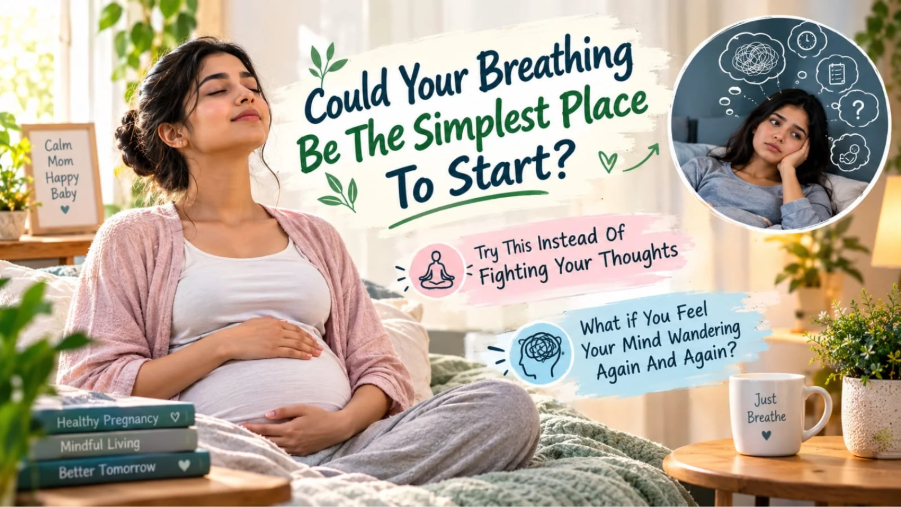
Could Your Breathing Be The Simplest Place To Start? 

Have you ever noticed how your breathing changes when you are worried? 

Sometimes your breathing quickens, or your chest feels tight. At other times, we are so busy that we don’t even pay attention to our breathing. 

That is why breathing exercises can be such an easy starting point for Relaxation Techniques Pregnancy. The NHS recommends breathing exercises to help manage pregnancy-related anxiety. 

Try This Instead Of Fighting Your Thoughts 

  • Observe your thoughts without trying to stop them: Simply notice the thoughts arising naturally, without feeling the need to accept them as absolute truth. 
  • Breathe slowly: Taking a few slow, deep breaths can help calm your body and bring your focus back to the present moment. 
  • Take a break from thinking: Instead of dwelling on the same issue, give yourself a quiet break for a few minutes. 
  • Return to the present moment: Focusing on what you can see, hear, and feel around you can help divert your mind from overthinking. 

What If You Feel Your Mind Wandering Again And Again? 

That is only natural. 

There is no need to expect your mind to remain steady for five minutes on the very first day. If your mind wanders ten times, bring it back ten times. 

There is no such thing as failure here. 

On the contrary, every moment you bring your mind back counts as practice. 

Why Does Mindfulness Feel Different From Simply “Relaxing”? 
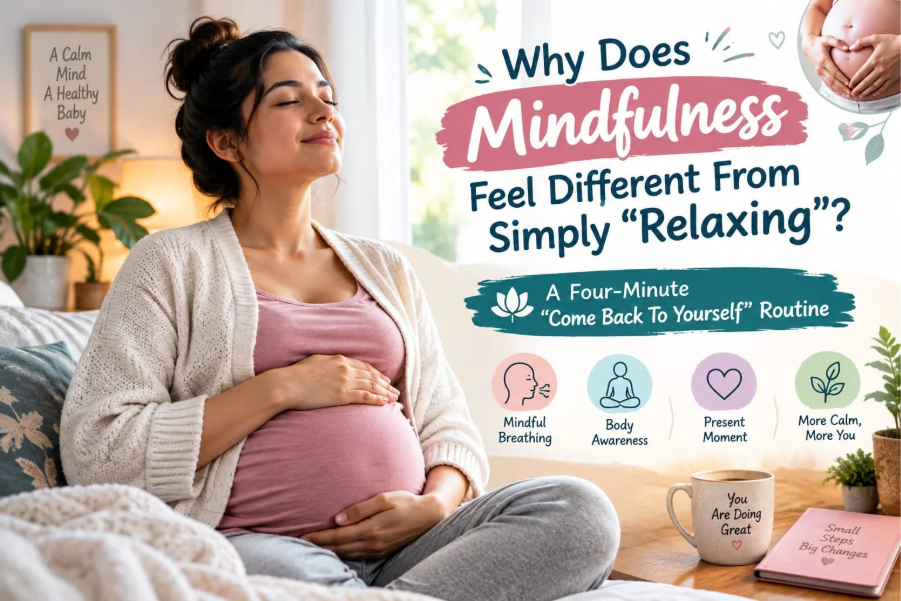
For many, relaxation simply means soothing the body. However, even when the body is at ease, thoughts may continue to race through the mind. 

Mindfulness works a bit differently in this regard. It teaches you to focus on the present moment—what you are hearing, feeling, and thinking. 

When practicing mindfulness as part of relaxation techniques during pregnancy, you might ask yourself: 

  • “At this moment—right now—what am I actually feeling?” 
  • Perhaps the answer will be, “I am tired.” 
  • Perhaps, “I am afraid.” 
  • Or, “I am restless, without any specific reason.” 

Meditation and mindfulness can help reduce anxiety symptoms for some people, although their effectiveness and safety may vary depending on the individual and the situation. 

A Four-Minute “Come Back To Yourself” Routine 

  • Minute 1: Observe your breathing. 
  • Minute 2: Notice where there is tension in your body. 
  • Minute 3: Listen for three sounds around you. 
  • Minute 4: Simply observe the thoughts passing through your mind. 

What If Moving Your Body Helps Your Mind Slow Down? 
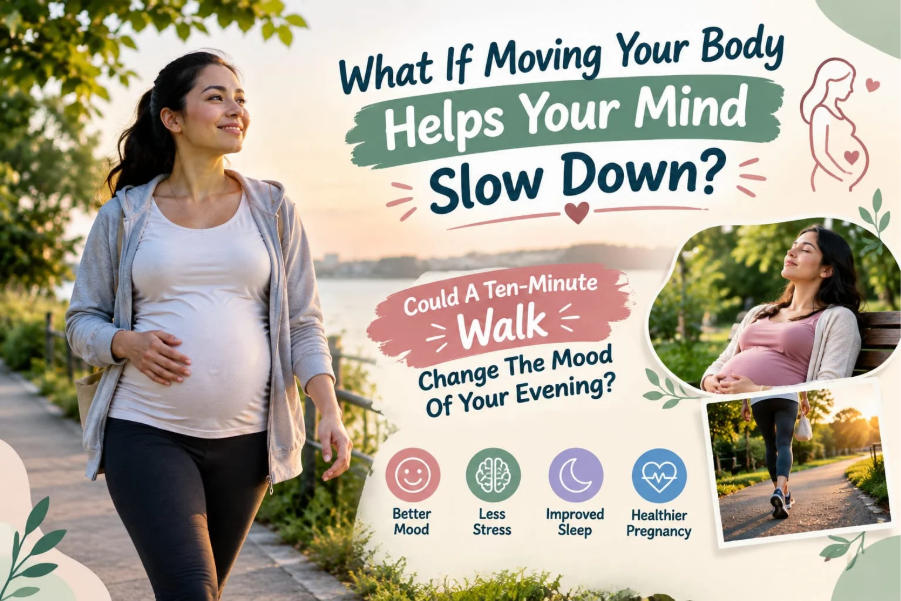
Relaxation doesn’t always mean sitting perfectly still. 

Sometimes, moving your body a little can be more helpful for calming your mind. 

For instance, suppose you feel weighed down mentally in the evening after staying indoors all day. If you have medical clearance and feel comfortable, a short, gentle walk might provide the mental break you need. 

The NHS cites pregnancy-appropriate physical activities—such as walking, swimming, and yoga—as helpful ways to reduce stress and anxiety. 

Could A Ten-Minute Walk Change The Mood Of Your Evening? 

It might not change your entire day. 

But it can shift your mood for the evening. 

A breath of fresh air, a leisurely walk, taking in the surrounding greenery, and stepping away from your phone for a while—all of this can help shift your attention away from worries and bring you into the present moment. 

Is Prenatal Yoga Really About Flexibility? 

Many people think, “My body isn’t flexible enough for yoga!” 

However, the goal of practicing yoga for relaxation during pregnancy is not to perfect difficult poses. 

Prenatal yoga—incorporating Relaxation Techniques Pregnancy—aims to provide opportunities for gentle movement, breathing, and mental relaxation. 

According to the NCCIH, yoga can be safe for many pregnant women when proper precautions are taken and may offer potential benefits in reducing stress, anxiety, and depressive symptoms. However, certain poses may need to be modified for pregnancy, and hot yoga should be avoided. 

What Should You Never Do Just To “Keep Up”? 

But surprisingly, can the very attempt to stay calm sometimes create unnecessary stress? 

Yes, it can—especially if you compare your pregnancy to the experiences of others. Therefore, it is essential to perform breathing exercises, rest, and light stretching in a way that feels comfortable for you. 

Remember, the most important principle during pregnancy is not trying to “keep up” with others, but listening to your own body. 

Could Music Change The Way Your Evening Feels? 

A familiar song can sometimes work wonders in lifting your spirits. 

Why? 

Because relaxation is not merely a physical process; your surroundings are also linked to your mood. 

If you wish, you can incorporate a “quiet music moment” into your Relaxation Techniques Pregnancy  routine. 

At night— 

  • Dim the lights a little 
  • Turn off phone notifications 
  • Play your favorite calming music 
  • Sit back and relax 
  • Just listen to the music for a few minutes 

There is no need to combine the music with any complicated meditation technique here. 

Just listen. 

According to NCCIH data, music-based interventions can help reduce anxiety in certain situations, although the evidence is not consistent across all scenarios. 

Could A Bedtime Routine Give Your Mind A Signal? 

A consistent bedtime routine can allow the body and mind to gradually prepare for sleep. 

For pregnancy, a bedtime routine incorporating Relaxation Techniques Pregnancy might look like this: 

Before Bed Try This 
30 minutes ago Reduce screen time. 
15 minutes ago Soften the lighting and the environment. 
10 minutes ago Calm music or reading 

What If One Technique Does Not Work For You? 

A misconception needs to be cleared up here. 

What is relaxing for one person might be annoying for another. 

  • Some people enjoy breathing exercises. 
  • Some, music. 
  • Some, walking. 

On the other hand, sitting quietly might cause some people to overthink—so, gentle movement might be more comfortable for them. 

Therefore, when choosing Relaxation Techniques Pregnancy, the question “Which one is comfortable for me?” is more important than “Which technique is the most popular?” 

If You Feel… You Could Try… 
A lot on my mind Slow breathing 
My body feels stiff Gentle movement 
I feel lonely Talking to a trusted person 
The mind is active at night Quiet bedtime routine 
My mind keeps wandering elsewhere Mindfulness 
Stressful environment Music ও quieter surroundings 

Could Talking Be A Form Of Relaxation Too? 

Yes, talking can also be a comforting way to cope. 

Sharing your feelings with a loved one, partner, or someone you trust can help alleviate some of the anxiety and stress associated with pregnancy. Therefore, when it comes to relaxation techniques during pregnancy, safe and heartfelt conversations are just as important as breathing exercises or light physical activity. 

Why Keep Everything Inside? 

Bottling up all your thoughts can leave you feeling even more overwhelmed. So, when you feel like saying, “I don’t want to bother anyone,” just pause for a moment. 

Your feelings matter. 

Are There Relaxation Habits That Can Actually Make Things Worse? 

Yes—especially when you start putting excessive strain on your body in the name of relaxation. 

Avoid: 

  • Continuing with uncomfortable exercises 
  • Attempting extreme yoga poses 
  • Practicing hot yoga or exercising in excessively hot environments 
  • Ignoring the body’s warning signs 
  • Starting a new exercise routine without knowing pregnancy-related restrictions 
  • Mistaking relaxation techniques for a substitute for medical treatment 

The NCCIH advises discussing individual needs with a healthcare provider regarding yoga during pregnancy and modifying poses as necessary. 

Important Note: Do not ignore signals from your body if something does not feel right, even while practicing relaxation techniques. 

How Do You Know When Stress Has Become More Than Everyday Worry? 

Minor daily worries are normal; however, when anxiety becomes persistent and begins to affect sleep, concentration, eating habits, or routine activities, it may go beyond ordinary concern. Relaxation techniques pregnancy can help calm both the mind and body in such situations. 

But one might wonder: when does a minor worry gradually evolve into significant mental stress? 

The answer lies in when the same anxiety keeps recurring, causing physical restlessness that does not easily subside even with rest. It is wise not to ignore such symptoms and to consult a doctor if necessary. 

The takeaway: Even if mental stress seems minor, caring for your mental well-being is never a trivial matter. 

When Should You Stop Trying To Handle It Alone? 

  • You feel anxious almost all the time. 
  • Your sleep is frequently disrupted. 
  • It becomes difficult to control your thoughts. 
  • Normal daily activities are affected. 
  • You experience recurring fear or panic. 

Conclusion 

It is not always possible to remain calm during pregnancy. There may well be days when you feel worried, tired, or overwhelmed for no apparent reason. This does not mean you are failing to handle your pregnancy well. 

Instead, simple actions—such as acknowledging your feelings, taking deep breaths, going for a walk, listening to calming music, practicing mindfulness, or talking to a loved one—can help you reconnect with yourself. 

The true purpose of Relaxation Techniques Pregnancy is not to achieve a “perfect” pregnancy. 

Related Articles

Vaccination in Pregnancy

The Overall Role of Vaccination in Pregnancy for the Protection of Mother and Baby

Pregnancy is a special period when a woman’s immune system changes over the course of it in order to support the developing baby in her womb.These changes in their body can put them more vulnerable to get certain infections easily.Vaccine not only provide protection to both both mother and her baby but also it also plays important role to combat against diseases before,during and even after the period of the delivery of the baby. 

Vaccine in pregnancy is not only about the mere protection of the mother rather some of them help produce antibody in mother and then transferred to her fetus via placenta to provide further protection.This is how the baby remain safe from any kind of infection attack as well as get primary protection from microorganisms even before the development of their own immune system which usually takes a few months to develop.

In this article,we try to cover all the important aspects you need to know about the necessity of vaccination in pregnancy in order to get protection for both you as a mother and your baby from any kind of harmful health impacts. 

Why Are Vaccines so Important During Pregnancy?

Though all infections are not always that much dangerous to you in non-pregnant state but can arise dangerous complications if you are not vaccinated before the onset of pregnancy.Certain infections like influenza, whooping cough, and COVID-19 can have the potentiality to make your pregnancy period complicated than the normal physiological one.These can further trigger urgent hospital admission,premature delivery of the baby and also put negative health impacts on the your baby. 

This is why vaccination is important as it is generally beneficial in protecting you and your baby from infection by producing antibodies in your body without causing the disease itself in you.Vaccinations further help respond you immune system quickly by using memory cells against any entrance of the organism in later life.This is how vaccination in pregnancy can significantly reduce the risk of dangerous infections and provide protection for both you as a mother and your baby.

How Do Vaccines Protect the Baby?

There are plenty of antibodies which are produced in the mother during pregnancy and thereby cross the placenta in order to enter the baby’s blood stream to provide natural protection.The natural passage of antibodies ultimately provide temporary protection from some disease before getting any vaccines after birth.

This natural protection is very important for the babies as they are not to get all the vaccines just after their birth and thereby require temporal protection to aid their immature immune system.For instance if the mother get whooping cough vaccination in pregnancy,it will then provide essential protection during their very month of life when the disease can be potentially life threatening. 

Which Vaccines Are Recommended During Pregnancy?

The recommendations of vaccines actually depends on current health guidelines,pregnancy along with the individual risk factors.The professionals in this sectors usually recommend certain vaccines in pregnancy due to their strong scientific safety evidence which ensure the protection of both mother and the child.The recommended vaccines comprises:

Influenza (Flu) Vaccine

The currently evolved flu vaccination in pregnancy not only protects pregnant women from severe influenza complications but also help improve the overall immune system of the mother.This is because,pregnancy tends to increase the risks to get flu in severe form due to certain physiological changes like in mothers immune system, heart, and lungs.Influenza infection during pregnancy may increase the potential risk to get:

Potential risks involvement 
Hay fever with chills Increase the risk of premature delivery
Difficulty to breath normallyMay induce low birth weight
Demands urgent hospitalizationsAcute respiratory distress syndrome

The seasonal currently available flu vaccine helps reduce these risks and also provides necessary antibodies that can protect the baby even after the birth of the baby.

Tdap Vaccine (Tetanus, Diphtheria, and Pertussis)

Tdap is another very important vaccine that potentially protects newborn babies from getting dangerous whooping cough in their early life.This whooping cough infection can be dangerous for them if they get the exposure of bordetella pertussis bacteria before getting vaccinated at their early developing moths.

However if the mother gets the whooping cough vaccine during pregnancy,it can then help produce protective antibodies which further transfer to their fetus via placenta and thereby provide protection from getting infection.

The main beneficial effects of it includes:

  • Provide protection during the early few months of life.
  • Redduses the risk of complications development from whooping cough.
  • Help lowering the urgency to get hospital admission.

COVID-19 Vaccine

COVID-19 vaccination in pregnancy helps reduce the risk of getting affected by severe illness during pregnancy.However Pregnant women infected with COVID-19 may have actually possessed a higher risk of severe disease in comparison with non-pregnant individuals of similar age.

This covid 19 vaccination during pregnancy can help reduce the risk having:

  • Severe infection that can also threaten the risk of pregnancy outcome.
  • May augment the necessity to acquire long term hospital admission.
  • Pregnancy complications that may result in serious illness.

Researchers now focus heavily on evidence that helps consider the merits and demerits of using ofCOVID-19 vaccines during pregnancy for safety purposes.

Are Vaccines Usually Avoided During Pregnancy?

Experts generally do not encourage people to take live vaccines during pregnancy as some of these vaccines contain weakened forms of live viruses.Moreover pregnancy involves special immune considerations and these vaccinations in pregnancy are thereby usually avoided unless there is a specific medical as well as physiological reason.

These vaccines comprise Measles, mumps, rubella (MMR) for the protection of measles ,mumps and rubella virus along with varicella or namely chicken pox.However,if a woman needs these vaccines to get the protection and safety as well, healthcare providers often recommend receiving them before conception occurs or after delivery of the baby.

Are Vaccines Safe During Pregnancy?

Many vaccines are available in the healthcare market which experts recommend during pregnancy because of their strong safety records.Vaccines recommendation for pregnant women go through careful evaluation of her overall health status along with continuous monitoring.

Experts usually consider safety studies in order to look at mother’s health,baby’s development,pregnancy outcomes and also possible side effects of those vaccines.Therefore common temporary side effects of them may include:

  • Pain at the injection site.
  • Mild fever with rash eruptions sometimes.
  • Tiredness and fatigue.
  • Muscle aches of varying degree.

Luckily,these effects of vaccination in pregnancy are usually short-termed and are signs that the immune system is responding at its regular pace.

Can Vaccines Cause Significant Birth Defects?

Recommended vaccines during pregnancy have not been shown to cause birth defects in developing babies in mothers womb.However,it remains as a major concern for many couples who want to be parents whether the vaccines can potentially harm the growing baby or not.

There are no scientifically proven facts about whether vaccines could harm the developing baby. Scientific evidence from large studies has not shown an increased risk of birth defects from recommended non-live vaccines.Healthcare professionals consider the benefits of preventing serious infections to be much greater than the potential risks of vaccination.

The proper Timing of Vaccines During Pregnancy

The timing of vaccination in pregnancy solely depends on the type of vaccine that is recommended to get and the stage of pregnancy.The healthcare providers usually recommend to take some vaccines during specific periods to provide the best possible protection from any kind of complications or side effects.The current guidelines recommendations are:

  • Flu vaccine:It is usually preferred to get it during flu season at any stage of pregnancy.
  • Tdap vaccine:It is specially designed to get this vaccine during the third trimester of pregnancy in order to maximize antibody transfer to the baby.
  • COVID-19 vaccines: Timing may depend on current evolved recommendations along with personal health factors.

Pregnant women must discuss the best vaccination in pregnancy schedule prior to getting any of them with their healthcare provider.

What Happens If a Pregnant Woman Misses a Vaccine?

Healthcare providers can carefully guide you and also help create a catch-up vaccination plan.If there are missing ones which you should take in time,it does not always mean that protection is impossible from here on. Doctors can review your past vaccination history and thereby direct you to get the safest timing.After delivery, some vaccines can still provide protection for the mother and reduce the chance of spreading infections to the newborn.

Importance of Vaccines Before the onset of Pregnancy

Getting preferred vaccination status before pregnancy can help prevent complications of pregnancy and the pregnant woman must review their vaccine history with a healthcare professional before they get pregnant.The professionals in this sectors generally recommend to check immune status of a woman against some diseases who want to get pregnant.These comprise:

  • Rubella which occurs by rubella virus.
  • Chickenpox in case of varicella zoster virus infection.
  • Hepatitis infections which are caused by several hepatitis viruses.

Some vaccines are best designed to give before pregnancy because they are usually no longer safer or can not provide protection during pregnancy.

The Role of Vaccines to Prevent and Combat Pregnancy Complications

Vaccination in pregnancy help not only lower infection-related risks but also they significantly give rise to get positive pregnancy outcomes.That is why experts recommend vaccinations on pregnancy as certain infections during pregnancy can actually increase risks such as:

  • Premature delivery of the baby.
  • Raises the concern of maternal hospitalization
  • Pregnancy-related complications which may have negative impacts on both mother and her baby.
  • Serious illness in newborns that may deteriorate the baby’s overall well being.

So,it is advisable for a pregnant woman to get recommended vaccination in pregnancy in order to prevent these infections that eventually support a healthier pregnancy journey.

Importance of Healthcare Guidance on vaccination

When anyone wants to get vaccination in pregnancy,it should always be considered as per the directions of the medical professionals.As every pregnancy is unique to one another,some crucial factors like existing medical conditions, pregnancy complications, travel plans, and potential exposure risks may have impacts on vaccine recommendations. 

A healthcare provider can evaluate the mother’s individual situation and thereby create a vaccination plan that best suits her specific health needs along with pregnancy circumstances.

FAQs

Is it necessary and safer to get vaccines while pregnant?

Yes, many recommended vaccines are indeed necessary as well as safer during pregnancy and some vaccines like influenza, Tdap, and COVID-19 vaccines are commonly encouraged to get because they protect both mother and baby.

Do vaccines during pregnancy protect the coming newborn?

Yes, some vaccination in pregnancy ensure early protection to newborns because the preformed antibodies against the vaccine generally transfer from the mother can help protect babies during their first months of life.

Can taking vaccines in pregnancy cause some degree of sickness?

Yes,they sometimes can.Vaccines are well designed to provide protection from infections,yet they can make you feel some mild side effects that are usually temporary in nature.

Should I avoid recommended vaccines during  pregnancy in fear of safety?

No.You should not fear.To avoid recommended vaccines during pregnancy may increase infection risks and this is  because they are selective in terms of benefits that help outweigh potential risks.

Conclusion

Vaccination in pregnancy is actually a crucial part of a healthy pregnancy plan especially when we wonder and ensure safe pregnancy outcomes.Vaccinations potentially provide protection by transferring produced antibodies from mother to their baby when they are inside their womb.Experts recommend vaccines namely influenza, Tdap, and COVID-19 vaccines due to their extreme importance in reducing  health risks during pregnancy.

However vaccination program should always be directed and provided by the healthcare professionals as the vaccination guidelines can change over new scientific evidence.This is how you can ensure that you receive the right ones at the right time to get the maximum impacts of vaccines.Thus a well-planned vaccination schedule helps create a safer environment for both mother and baby by supporting a healthier start to life.

Scroll to Top