

Learn about Miscarriage Recovery Tips how to heal physically, cope with emotional distress, recognize warning signs, and prepare for future pregnancies.

How long does it actually take for the body and mind to return to a normal state after a miscarriage?
If you are truly seeking the answer to this, it has not yet been possible to determine a definitive answer through scientific means. The primary reason is that every woman’s physical condition and mental health are entirely unique. Some women may regain their physical well-being within just a few weeks, while others may take much longer to achieve mental peace and recovery.
Therefore, during this time, it is important to get adequate rest and consume nutritious food without placing excessive pressure on oneself. Additionally, one should regularly consult a specialist doctor.
In the event of a miscarriage, along with bleeding, various physical and mental changes—such as excruciating abdominal pain and extreme fatigue—may occur. Feelings of grief, emptiness, and fears regarding future motherhood may also arise. From their perspective, however, these emotions are not at all unusual.
A question may now arise in your mind: does a single miscarriage reduce the chances of a healthy pregnancy in the future?
Surprisingly, in most cases, a single miscarriage does not compromise the likelihood of a healthy pregnancy later on. However, consulting a specialist doctor beforehand is considered the best course of action.
In this situation, we should allow them the time needed to recover and ensure that any decisions regarding the future are made with great care and awareness.
Understanding Recovery After Pregnancy Loss
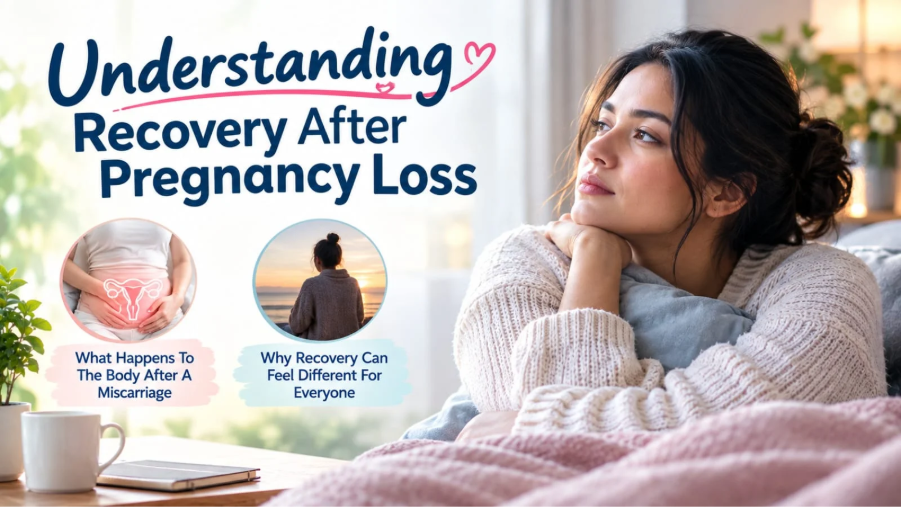
The first step in understanding Miscarriage Recovery Tips is realizing that physical and emotional healing does not progress at the same pace for everyone. Bleeding, abdominal pain, and fatigue may persist for days or even weeks, while the emotional distress can last much longer.
But how do you know if your body is recovering normally?
A gradual reduction in symptoms is generally a positive sign; however, it is crucial to seek immediate medical attention if you experience excessive bleeding, severe pain, or a fever.
What Happens To The Body After A Miscarriage
To understand tips for recovery after a miscarriage, one must first know the natural physical changes that occur following the event. After pregnancy tissue is expelled from the uterus, symptoms such as bleeding, lower abdominal pain or cramping, and weakness may persist for some time.
But does the body immediately return to its pre-pregnancy state?
No—it can take some time for hormones and the menstrual cycle to normalize. Therefore, adequate rest and medical advice are crucial. Immediate medical attention should be sought if there is excessive bleeding, severe pain, or fever.
However, it is important to remember that recovery should not be judged solely by counting the days on a calendar. Factors such as whether your bleeding is decreasing, the nature of the pain, the return of your physical strength, and the appearance of any new symptoms are also significant.
Why Recovery Can Feel Different For Everyone
Not everyone’s body and mind recover in the same way after a miscarriage. Depending on factors such as the amount of bleeding, the stage of pregnancy, the type of medical treatment, and individual physical health, some may find physical relief within a few days, while others might take several weeks.
But why does the duration of emotional distress vary so much, even after the same experience?
Surprisingly, even though the body may heal quickly, feelings of grief, guilt, or anxiety can persist for a much longer time—and this, too, is normal. Therefore, the most practical approach is to prioritize the needs of your own body and mind rather than comparing your recovery process with that of others.
Caring For Your Body During Recovery

Taking care of your body Miscarriage Recovery Tips does not mean staying in bed all day. Instead, it involves resting, eating well, staying hydrated, and gradually returning to normal activities while being mindful of your body’s capabilities.
Rest Hydration And Gentle Activity
When following recovery tips after a miscarriage, getting adequate rest, staying hydrated, and engaging in light movement suited to your physical capacity are important.
But is it best to stay in bed all day after a miscarriage?
Not necessarily—if your body allows, gentle walking or light daily activities can be beneficial. Stay hydrated and rest if you feel weak or fatigued. Surprisingly, gradually returning to normal movement rather than remaining completely inactive can improve physical and mental well-being for many. However, if you experience pain, excessive bleeding, dizziness, or worsening illness, it is crucial to stop the activity and consult a doctor.
Managing Bleeding And Physical Discomfort
Many people experience bleeding and cramping Miscarriage Recovery Tips. Initially, the bleeding may seem heavier than a menstrual period but gradually decreases. Using a sanitary pad makes it easier to monitor the amount of bleeding. The RCOG recommends using sanitary towels instead of tampons to reduce the risk of infection.
| Physical Change | What May Happen | What To Watch |
| Vaginal Bleeding | May gradually become lighter | Heavy or prolonged bleeding |
| Abdominal Cramps | May feel like period pain | Increasing or severe pain |
| Tiredness | May occur during healing | Extreme weakness or dizziness |
| Discharge | May change during recovery | Foul-smelling discharge |
| Daily Activity | Should return gradually | Activity that causes worsening pain |
What can be done to relieve pain may depend on your medical and personal circumstances. Therefore, it is safer to follow a doctor’s instructions rather than starting medication on your own.
Supporting Emotional Healing

There is no reason to downplay the emotional distress following a miscarriage; feelings of grief, emptiness, fear, or guilt are all natural responses.
So, how can one gradually cope during this difficult time?
It is important to share your feelings with loved ones, get plenty of rest, and avoid being too hard on yourself. For many, speaking with a counselor or joining a support group can also be beneficial. Medical professionals, too, emphasize the importance of emotional support and counseling as needed after a miscarriage.
Dealing With Grief Guilt And Changing Emotions
An important part of Miscarriage Recovery Tips is accepting your emotions naturally. You might feel like crying at times, experience anger at others, or perhaps feel nothing at all on some days. These emotions may arise either simultaneously or individually.
One of the most distressing feelings can be guilt—wondering, “Did this happen because of something I did?”
However, the specific cause of many early Miscarriage Recovery Tips remains unknown, and they can be linked to various biological factors, including chromosomal abnormalities. The RCOG also notes that there is no evidence to suggest stress causes miscarriages.
Therefore, instead of blaming yourself, it is important to acknowledge your pain.
Allow yourself to cry if you feel the urge. Talk to someone you trust if you wish to share your feelings. And if you prefer to be alone, it is perfectly fine to take some personal space.
When Emotional Support May Be Helpful
There is no rule stating that you must handle all the pain on your own.
Sharing your feelings with a partner, family member, or close friend can be helpful for many. Having someone by your side provides not only emotional comfort but also assistance with daily tasks.
If you feel unable to cope for an extended period, cannot return to your normal routine, or find that grief and anxiety are deeply affecting your daily life, it is advisable to speak with a healthcare professional or a counselor. The NHS also highlights the availability of counseling and support following a miscarriage.
Remember, seeking help is not a sign of weakness; rather, it is a powerful decision to take care of yourself.
Warning Signs That Need Medical Attention

During recovery, it is crucial to distinguish between normal changes and warning signs.
You should not ignore serious symptoms by simply assuming, “This might just be part of the recovery process.”
Heavy Bleeding And Severe Pain
Regarding Miscarriage Recovery Tips, if bleeding becomes excessive, prolonged, or starts increasing again instead of gradually subsiding, it is important to consult a doctor.
Similarly, if abdominal pain progressively worsens or does not subside with standard pain relief, a medical assessment may be necessary.
The NHS advises seeking urgent medical help for symptoms such as severe pain, excessive bleeding, dizziness, fainting, or shoulder pain.
Fever Unusual Discharge And Feeling Very Unwell
Fever, flu-like symptoms, foul-smelling vaginal discharge, increasing abdominal pain, or feeling very unwell can be warning signs of an infection or other complications. In such situations, one should contact a doctor without delay.
| Warning Sign | Why It Matters | Recommended Action |
| Very Heavy Bleeding | May require urgent assessment | Seek urgent medical care |
| Severe Abdominal Pain | Can indicate a complication | Contact a healthcare professional promptly |
| Fever | May indicate infection | Seek medical advice |
| Foul-Smelling Discharge | May indicate infection | Contact a healthcare professional |
| Dizziness or Fainting | May occur with significant bleeding or other problems | Seek urgent medical help |
The most important point to note here is that attempting to self-diagnose a condition is bound to fail; if there is best to consult a doctor.
Returning To Your Normal Routine

As the body gradually regains its strength, the question arises for many: “When will I be back to my old self?”
There is no single, definitive answer to this that applies to everyone.
Work Exercise And Everyday Activities
Is the timeline for returning to work, exercise, and daily activities the same for everyone after a miscarriage?
Certainly not—it depends on factors such as physical recovery, bleeding, pain, and emotional well-being. If you feel up to it, you can gradually start with light walking and simple household chores, but it is crucial to rest if you experience increased fatigue or pain.
Does rushing back to work lead to a faster recovery?
On the contrary, ignoring your body’s signals can actually increase discomfort.
When Intimacy And Personal Activities Can Resume
Many people have doubts about this, yet it is completely normal.
According to various RCOG reports, sexual activity may be engaged in with mutual consent if one feels physically well and pain and bleeding have subsided.
However, if your doctor has provided specific instructions, those take precedence.
There is no need to rush; even if the body is ready, the mind might not be—and that, too, is normal.
Preparing For A Future Pregnancy

“What if the same thing happens again?”
This is a very natural question to ask.
However, a miscarriage does not mean that a future pregnancy will end the same way. According to the RCOG, most miscarriages are one-off events, and there is a good chance of a successful pregnancy in the future.
When Can You Try Again
Regarding recovery Miscarriage Recovery Tips, both physical and emotional readiness are important when planning a future pregnancy. According to RCOG guidelines, you and your partner can try to conceive again once you feel both physically and emotionally prepared.
However, if you repeatedly experience miscarriages due to physical complications or other reasons, you must strictly follow your doctor’s advice. Every step should be taken after careful consideration, in accordance with your doctor’s recommendations.
Simple Habits That Can Support Recovery
There is no magical formula to make recovery easier. Instead, small acts of care often make a big difference.
- Eat nutritious food: A balanced diet aids the body’s recovery.
- Gradually increase activity: Return to daily activities as you feel better.
- Express your feelings: You can talk to someone you trust.
- Do not blame yourself: Often, the cause of a miscarriage is unknown.
Conclusion
Miscarriage Recovery Tips involves more than just the cessation of physical bleeding or pain; it entails a long journey involving the mind, emotions, self-confidence, and rethinking the future. Therefore, it is best not to compare your recovery process with that of others.
The thought of future pregnancies can evoke both joy and fear. However, a miscarriage does not mean the end of the possibility of a successful pregnancy in the future. Most miscarriages are isolated incidents, and there is a strong likelihood of a successful pregnancy later on.