
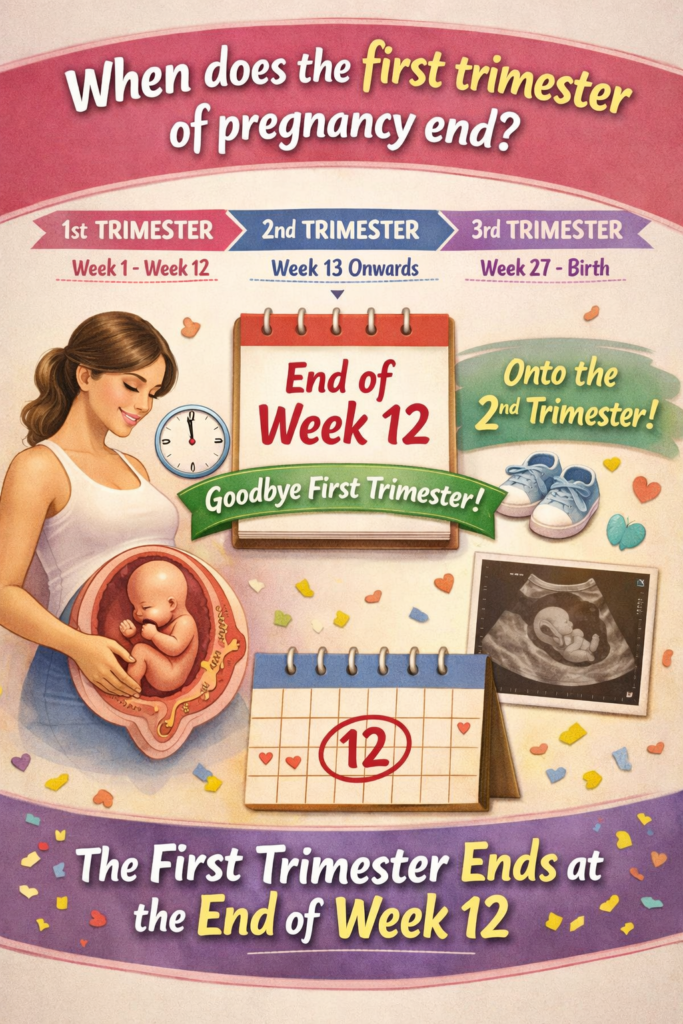
The first trimester of pregnancy officially ends at 13 weeks and 6 days. According to medical science, your second trimester begins when you reach the 14th week. This is roughly the end of the third month of pregnancy in terms of calendar months.
This is a major milestone for mothers, as the end of this stage marks the completion of the baby’s major body parts and, for most mothers, a sign of relief from the initial physical discomforts.
The exact time of the end of the first trimester
The exact time of the end of When Does the First Trimester End
of pregnancy is 13 weeks and 6 days. Whenever you enter the 14th week, your second trimester or the middle stage of pregnancy officially begins. In medical science, pregnancy is usually considered a journey of 40 weeks which is divided into three parts. The first part begins from the first day of your last menstrual period (LMP). Although many people call it 3 months in terms of month the most accurate calculation for the proper development of pregnancy is the week calculation. This period of 13 weeks and 6 days is very important because during this time all the vital organs of the fetus are formed and the placenta or womb start functioning fully.
Some specific information regarding the end of the first trimester and its calculation is given below:
- The exact period: The period from the 1st day of pregnancy to the 97th day (i.e. 13 weeks and 6 days) is called the first trimester.
- Weeks vs. Months: Even after the end of the 3 calendar months, there are still about 2 weeks left until the end of the first trimester, so it is important to keep track of the weeks.
- Hormonal Changes: As this period ends, the hCG hormone levels start to decrease and the placenta takes over the responsibility of producing hormone resulting in a decrease in physical discomfort.
- Physical Signs: Towards the end of the 13th week, your uterus rises above the pelvic bone, as a result of which the lower abdomen of many begins to swell slightly or become visible.
- Risk Reduction: After this specific period, the natural risk of miscarriage decreases by about 65-80 percent.
- Ultrasound Confirmation: Sometimes, if the date is not correct due to irregular periods, doctors confirm the end of the first trimester by looking at the size of the baby through ultrasound.
Why is the first trimester considered up to twelve weeks?
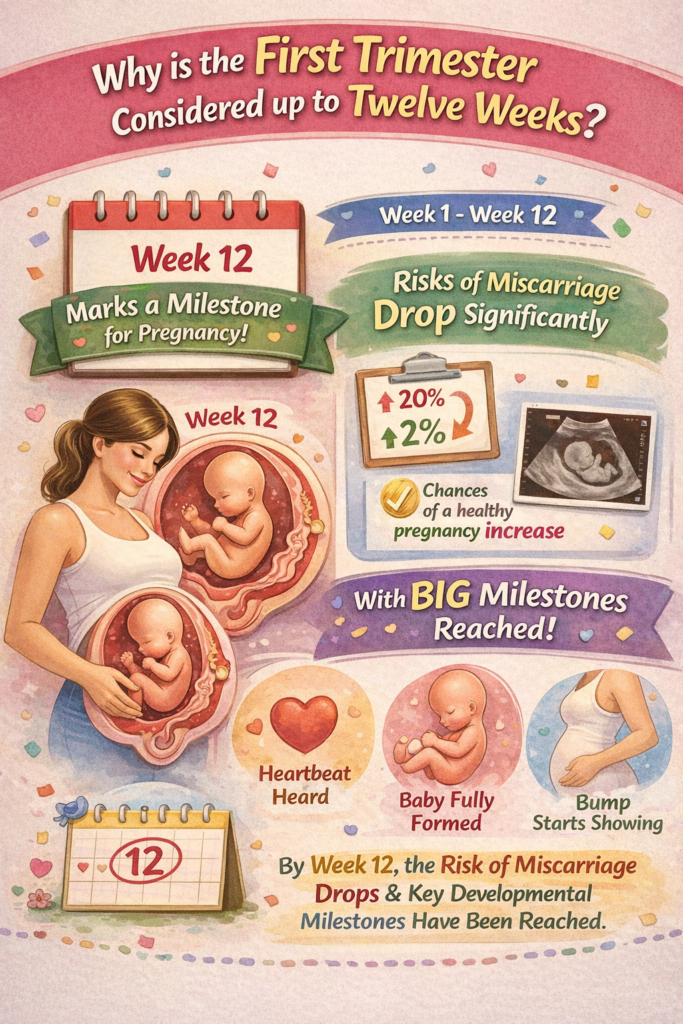
The main reason behind considering the first 12 to 13 weeks of pregnancy as a specific stage or trimester is the process of organogenesis of the fetu. Within this period after conception, the primary structure of the baby’s heart, brain, spine, arms and legs and other internal organs is formed from a single cell. At the end of 12 weeks, the baby get a complete form, where each of its organs is well organized in its own place. In addition, towards the end of this period, the ‘placenta’ or womb is fully formed and take over the responsibility of supplying the baby with nutrition and oxygen from the mother’s body. Since after this stage, no new organs of the baby are formed, but rather the existing organs continue to grow in size, this major change is identified as a specific chapter or ‘first trimester’.
The specific reasons why these twelve to thirteen weeks are considered a separate stage are given below:
- Completion of organ formation: After the end of 12 weeks, all the major systems of the baby’s body (such as the digestive system, circulatory system) start functioning.
- Hormone stabilization: Up to this time, the pregnancy hormone (hCG) in the mother’s body increases very rapidly; by the end of 13 weeks, this hormone level stabilizes which marks the beginning of a new stage.
- Renaming of the fetus: After passing this stage, the fetus is no longer called an ’embryo’, it is now known as a ‘fetus’.
- Reduced risk of miscarriage: Statistics show that when the baby’s organs are formed properly and the placenta takes over, the risk of miscarriage decreases dramatically, which is a major success of this stage.
- Medical Monitoring: Doctors confirm the baby’s initial health through important tests like the ‘NT Scan’ at the end of this period, which marks the end of this trimester.
- Physical Adaptation: The mother’s body adapts to pregnancy during these thirteen weeks, as a result of which the intense discomforts of the beginning subside and a new sense of comfort returns.
What changes after 12 weeks
Twelve to thirteen weeks of pregnancy means you are entering the second trimester, which is often called the ‘honeymoon’ or most comfortable period of pregnancy. The biggest change in the mother’s body during this time is in the hormonal area; the intense surge of progesterone and hCG hormones that was there at the beginning now begins to stabilize. As a result, most mothers experience morning sickness and extreme fatigue, and a kind of freshness returns. The uterus now grows and moves over the pelvic bones, which reduces pressure on the bladder and temporarily relieves the problem of frequent urination. There are also big changes in the baby; all the major organs of his body are now formed and he starts moving in full swing inside the uterus, although as a mother, you will feel it for a few more weeks.
Explore more here: Second trimester weeks
The changes that become most evident after twelve weeks or the first trimester are:
- Physical relief: Nausea decreases and appetite returns are the main features of this period.
- Baby bump: As the uterus becomes like a large orange, a slight bulge or ‘baby bump’ begins to appear in the lower abdomen.
- Skin glow: Due to increased blood circulation in the body, a kind of special glow or ‘Pregnancy Glow’ is seen on the skin of many mothers.
- Placental takeover: From now on, the placenta starts working as the main factory for producing oxygen and nutrients for the baby.
- Mental stability: As the risk of miscarriage is greatly reduced, the mother’s anxiety decreases and mental peace returns.
- Baby development: The baby can now urinate, fingerprints are formed on his hands, and he begins a cycle of sleeping and waking.
Does it end at the same time for everyone?
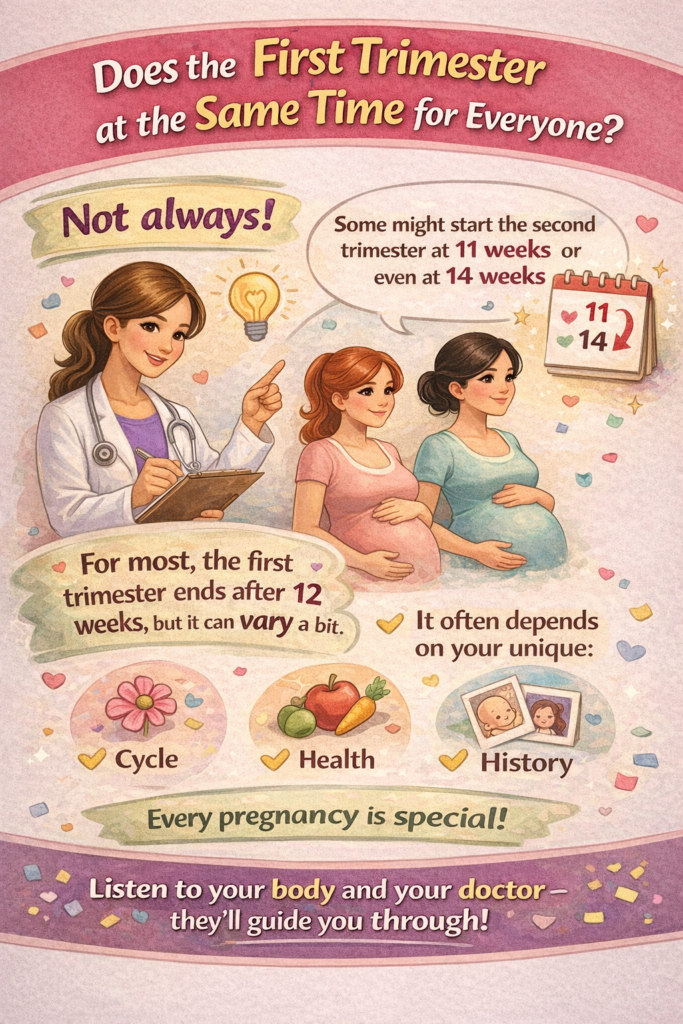
Although the first trimester of pregnancy is theoretically When Does the First Trimester End
to last 13 weeks and 6 days, in practice it does not end at the same time for everyone. This calculation in medical science is based on a regular menstrual cycle of 28 days. However, in women whose periods are irregular or whose ovulation is a little late, the actual age of the baby may be 1 to 2 weeks more or less than the calendar calculation. As a result, the physical changes or relief that come at 12 weeks for one person may take up to 14 or 15 weeks for another. In addition, the main symptoms of the first trimester—such as nausea or fatigue—end within 10 weeks for some, and for others it lasts up to 16 weeks. Therefore, this calculation of time is only a general guide, which may vary from person to person and based on the body’s hormonal response.
The main reasons why the first trimester doesn’t end at the same time for everyone are as follows:
- Variation in the menstrual cycle: If your menstrual cycle is shorter or longer than 28 days, your pregnancy week will change.
- Timing of ovulation: Two women who start their periods on the same day may have different conception dates because their egg fertilization date were not the same.
- Hormonal sensitivity: Physical discomfort ends at different times for each person based on the hCG hormone levels.
- Ultrasound effects: The time determined by the baby’s size (CRL) on the first ultrasound report is more accurate than the date of the period and may not match the calendar.
- Placental development: The placenta or embryo develops at different rates in everyone; if the placenta is late in taking full responsibility, first trimester symptoms may be prolonged.
- Twins: If you are carrying twins or more than one baby, hormone levels are much higher, which can cause the effects of the first trimester to last longer.
What are the symptoms at the end of the first trimester?
When Does the First Trimester End (between 11 and 13 weeks), your body goes through a transition. Many mothers start to feel relief as the initial hormonal shock subsides. However, as the uterus grows rapidly, some new physical symptoms appear. During this time, the uterus takes on the shape of a large lemon and begins to rise from the pelvic cavity to the upper abdomen, which changes the shape of your waist. The nausea or severe aversion to food that was present at the beginning decreases towards the end, and in many cases, a strong desire or ‘craving’ for food develops. This is when you can first experience the special glow of pregnancy or ‘pregnancy glow’ due to the increase in blood circulation in the body.
The main symptoms of the end of the first trimester are given below:
- Reduction of nausea: Morning sickness or nausea decreases significantly for most women by around 13 weeks.
- Regaining energy: The body’s tirednes disappears and new energy and strength are felt, which is a sign of the second trimester.
- The onset of the baby bump: The lower abdomen may feel a little harder and swollen than before, because the uterus is now growing.
- Increased appetite: The reluctance to eat is eliminated, and interest in nutritious foods increases and a craving for certain foods develop.
- Mild cramping or pulling: Due to the enlargement of the uterine ligaments, there may be occasional mild pulling pain in the lower abdomen.
- Breast changes: The size of the breasts continues to increase and the areola (the area around the nipple) becomes darker.
- Improved mood: As hormone levels stabilize, mood swings are much more under control than before.
When to be extra careful
Since When Does the First Trimester Endare the main time for the baby’s organs to form, any unusual changes in the body should be taken seriously during this time. Although mild dizziness or slight fatigue is normal during pregnancy, there are some specific symptoms that indicate a major risk to the mother or baby. Especially if you experience vaginal bleeding or severe twisting pain in the lower abdomen, you should not ignore it at all. Sometimes this can be due to an ectopic pregnancy or any other complication. The body’s immune system is somewhat low during this time, so if any infection or unusual symptoms occur, it can be life-saving to consult a specialist doctor quickly rather than waiting at home.
It is important for you to seek immediate medical advice or be alert in the following situations:
- Vaginal bleeding: Light spotting or heavy bleeding—any type of bleeding can be a danger signal in the first trimester.
- Severe abdominal pain: Severe twisting pain on one side or in the middle of the lower abdomen that doesn’t go away with rest.
- Excessive vomiting and dehydration: Vomiting after eating and dehydration (very little or dark urine).
- High fever and chills: Fever over 100.4 degrees Fahrenheit, as infection can interfere with fetal development.
- Severe headache and blurred vision: Chronic headache or sudden blurred vision can be a sign of high blood pressure.
- Burning during urination: Pain or frequent urge to urinate, which can be a sign of a urinary tract infection (UTI).
- Abnormal vaginal discharge: If the discharge smells bad or is accompanied by itching and a change in color (green or gray).
How much does baby develop in 12 weeks
By the end of 12 weeks of pregnancy, your baby is undergoing an amazing transformation. At this time, the fetus takes on the shape of a fetus and is about 2 to 2.5 inches long (the size of a large lemon). The biggest development this week is the development of reflexes the baby can now clench his fingers, wiggle his toes and even suck with his mouth. All the major internal organs of his body, such as the kidneys, liver and intestines, are now functioning. It is also during this time that the baby’s bone marrow begins to produce white blood cells, which form the basis of his immune system. The baby’s face now looks much more human than before, as his eyes have moved from the sides of his head to the front and his ears have moved into their correct positions.
The main milestones of the baby’s development at twelve weeks are given below:
Kidney function: The baby can now swallow amniotic fluid and its kidneys filter it and excrete it as urine.
- Heart function: The baby’s heart now beats about 160 times per minute, which can be clearly heard with a Doppler device.
- Bone formation: The baby’s soft cartilage is now slowly transforming into hard bone.
- Digestion: The baby’s intestines, which were previously inside the umbilical cord, are now in their correct place inside the abdomen.
- Nail and hair development: Tiny nails start growing on the tips of the fingers and very fine fur-like hair appears on the body.
- Nervous system: The baby’s nervous system is now much more developed so he can move his arms and legs spontaneously inside the uterus.
How to take care of yourself after the first trimester
When Does the First Trimester Endstarting from the 14th week of pregnancy, is usually called the ‘golden period’, as this is when body discomforts start to subside and strength returns. The main goal of self-care during this stage should be to ensure the rapid growth of the baby and maintain the mother’s physical fitness. Since the baby’s bones and brain are forming rapidly during this period, special emphasis should be placed on foods rich in calcium, iron and omega-3. In addition, it is important to practice sitting and lying in the right posture to prevent back pain or leg muscle strain as the uterus increases in size. Light yoga for mental peace and adequate sleep will help prepare your body for the next stage of labor during this time.
Here are some specific self-care tips after the first trimester:
- Eat a nutritious diet: Eat more milk and cheese (calcium) for your baby’s bone structure and more leafy greens, liver or red meat (iron) to prevent anemia.
- Drink enough water: Make sure to drink at least 3 liters of water a day to relieve constipation and maintain amniotic fluid levels.
- Correct sleeping position: From now on, make it a habit to sleep on your left side instead of lying on your back, which improves blood circulation to the placenta.
- Skin care: Stretch marks or itching may occur due to the stretching of the skin on the abdomen and thighs, so use moisturizer or coconut oil regularly.
- Light exercise: Walk for at least 20-30 minutes every day or you can start prenatal yoga with the advice of an expert.
- Dental care: Hormone can cause bleeding or infection in the gums so brush your teeth regularly and see a dentist if necessary.
- Loose clothing: Start using cotton and loose clothing and comfortable low-heeled shoes for body comfort.
Conclusion
When Does the First Trimester End or the first 13 weeks and 6 days is not just a time measurement, but it is also a woman’s rebirth as a mother and the foundation for the existence of a new life. The end of these thirteen weeks means that you have successfully passed the most uncertain and sensitive stage of motherhood. Although this time is spent with nausea, fatigue and mental anxiety, it is at the end of this stage that every important organ of the baby takes its full form. The awareness and care for your body gained during this time will make you more confident in the coming months. As you overcome the obstacles of the first trimester and enter the second trimester, remember that your well-being is the first condition for your child’s beautiful future. May every step of this long journey be safe and joyful.