
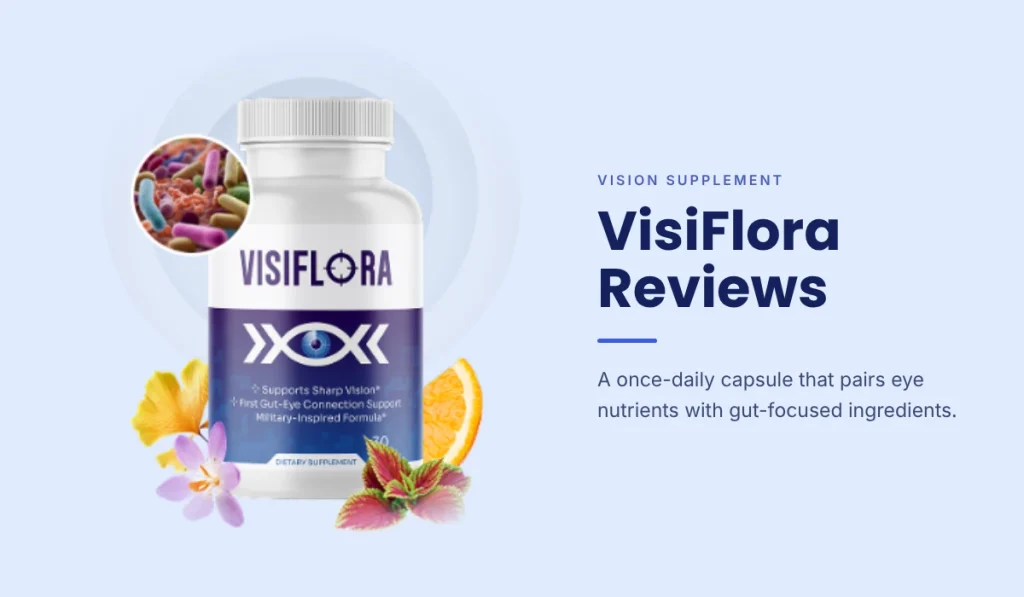
It has to be started in a very calm, composed, and clear manner. After working for several hours at a laptop or computer screen, if you look at a wall clock on the other side of the room, the numbers appear somewhat blurred, or it takes a few seconds for them to come into focus. Alternatively, it could be that you are over 40 and now need to wear the glasses—which you previously used only occasionally—all the time. This is precisely the time when many people start looking for eye supplements, so we should read the reviews carefully and gather the relevant information. VisiFlora reviews help people explore these details. VisiFlora is now available in the global market as a vision-enhancing supplement that aims to support eye health from within the body, particularly through the gut. This is creating an unconventional perspective in today’s competitive world; therefore, one must certainly exercise caution regarding this matter.
Today’s discussion highlights three important points in an easy-to-understand format, simplifying concepts that were challenging to comprehend from the supplement’s original pages. There are three main things to examine: the manufacturer’s statements about the supplement, the scientific evidence supporting those claims, and the information that is still missing. For the sake of discussion, we would like to inform you that we have not personally used Visiflora, nor are we speaking from our own personal experience.
What Is VisiFlora?
VisiFlora is a highly effective supplement designed for once-daily use; it is important to remember that it should be taken only once a day. This supplement has been marketed globally as the ’22-in-1 Vision Essential Formula’. This supplement is formulated using 21 ingredients, including well-known eye-health nutrients, various antioxidants, botanicals, and components considered highly beneficial for supporting gut health. The manufacturer’s website highlights four features of the product: non-GMO ingredients, no stimulants, suitability for vegetarians, and processing in a certified facility.
| Detail | What the Official Page Says |
| Product type | Vision and gut-eye dietary supplement |
| Format | Capsules |
| Daily use | One capsule daily with a meal and a glass of water |
| Formula | Marketed as 22-in-1; 21 ingredients are individually named |
| Disclosed dose | Zinc 11 mg (other amounts not listed on the sales page) |
| Dietary claims | Non-GMO, stimulant-free, vegetarian-friendly |
| Retailer | ClickBank |
| Billing name | ClickBank or CLKBANK*COM |
| Subscription | Brand says one-time purchase with no auto-ship |
| Guarantee | 60 days from the date you receive the order |
| Clinical trial of the finished formula | None published |
The first point that requires our special attention is that the official website lists 21 ingredients used in the product; however, the specific quantities of these ingredients are not clearly indicated—only the quantity of one ingredient has been disclosed. This is a crucial point; in the field of nutritional science, the dosage of the ingredients determines how effective a supplement or medication will be—otherwise, there is no way to gauge its efficacy.
The Gut-Eye Connection Behind the Formula
In most reviews of Visiflora, we have observed a specific mention of the “gut-eye axis”—a concept indicating a unique connection between the gut (the digestive system) and our eyes. However, a particular question might arise in your mind: how could the secret to improving eyesight be linked to the health of the digestive system?
Various studies have demonstrated that the bacteria present in our digestive system play a significant role in disease prevention and are also effective in controlling various types of inflammatory conditions. This is presented as a real-world example within a study; an article published on the PubMed website in 2023 explores how microorganisms in the digestive system can help in treating complex and challenging eye conditions. The research also draws attention to a possible link between the gut microbiome and conditions such as age-related macular degeneration, uveitis, and glaucoma.
Now, another question that might arise here is: how does this supplement leverage this particular connection? The ‘gut-eye barrier complex’ used in this product does not contain any probiotics; instead, it incorporates various natural extracts, such as antioxidants derived from grape seeds, among others. This antioxidant component provides specific protection to cells against oxidative damage and plays an integral role in various normal bodily functions. However, the mere fact that all these ingredients are mentioned here does not necessarily mean that they can cure various types of eye problems.
VisiFlora Ingredients: A Closer Look
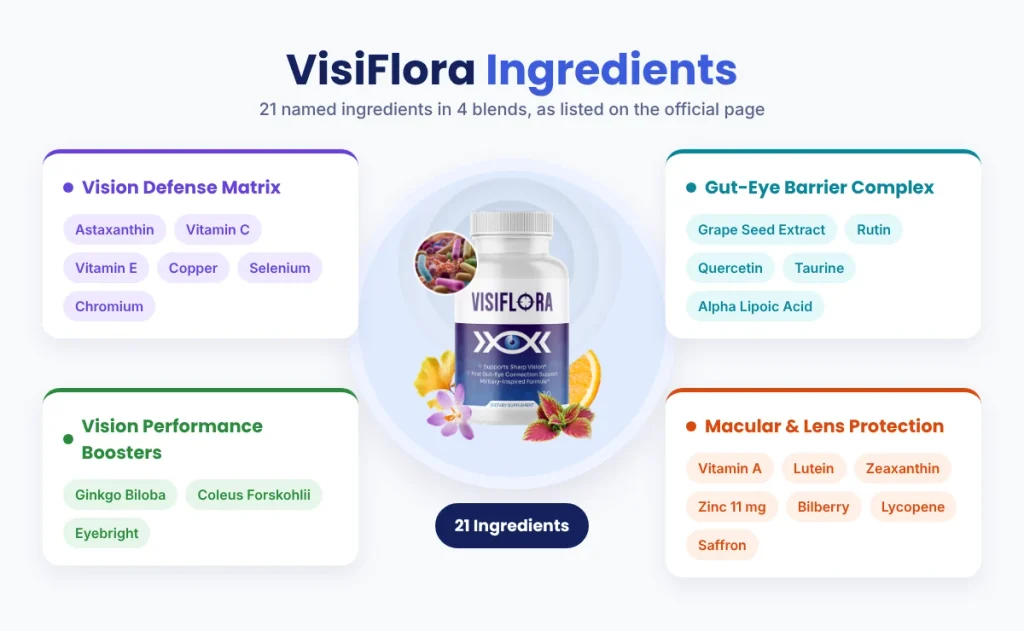
The brand groups its ingredients into four blends. Here is the full named list, with a plain-English note on how each ingredient is usually discussed in research. These notes describe the ingredient in general, not proven effects of VisiFlora.
| Blend | Ingredients | What the Research Generally Looks At |
| Vision Defense Matrix | Astaxanthin, vitamin C, vitamin E, copper, selenium, chromium | Antioxidant defense; vitamin C, E and copper also appear in the AREDS2 formula |
| Gut-Eye Barrier Complex | Grape seed extract, rutin, quercetin, taurine, alpha lipoic acid | Bioflavonoids and antioxidants studied for vascular and cellular support; taurine is abundant in the retina |
| Vision Performance Boosters | Ginkgo biloba, coleus forskohlii, eyebright | Ginkgo has been studied for circulation; coleus forskohlii is studied mainly for eye pressure in eye-drop form; eyebright is a traditional herb with limited modern evidence |
| Macular & Lens Protection Blend | Vitamin A (beta carotene), lutein and zeaxanthin (from marigold), zinc (11 mg), bilberry, lycopene, saffron | Lutein and zeaxanthin are the best-studied macular pigments; saffron has small trials in early macular degeneration; bilberry evidence for night vision is mixed |
The strongest names on this list are lutein, zeaxanthin, zinc and the antioxidant vitamins, because they connect to the large AREDS and AREDS2 trials run by the U.S. National Eye Institute. Most of the ingredients used to create this supplement provide vitamins and natural probiotics that are highly important for eye health; however, some of the claims—such as those regarding the herb eyebright and the fruit bilberry—are not as well-supported. It is a common belief in various folk traditions that these fruits are highly effective for improving night vision; however, no scientific evidence has been found to support this. Therefore, there is no basis to strongly believe this claim.
And since the official website does not specify the quantities for 20 of the 21 ingredients used in the product, it would be neither logical nor wise to base a purchasing decision solely on the reviews found on that site. However, if you still wish to purchase this product, try to understand the ‘supplement facts’ panel provided on it; if necessary, you can also request the full label from the customer support center.
How VisiFlora Compares With the AREDS2 Formula
When people read VisiFlora reviews, they often wonder how it stacks up against the eye formula that doctors actually recommend for certain patients. The following comparison reflects the ingredient amounts used in the National Eye Institute’s AREDS2 study.
| Nutrient | AREDS2 Formula | VisiFlora (Official Page) |
| Vitamin C | 500 mg | Included, amount not disclosed |
| Vitamin E | 400 IU | Included, amount not disclosed |
| Lutein | 10 mg | Included, amount not disclosed |
| Zeaxanthin | 2 mg | Included, amount not disclosed |
| Zinc | 80 mg (25 mg also tested) | 11 mg |
| Copper | 2 mg | Included, amount not disclosed |
| Beta carotene | Removed | Included as vitamin A source |
| Astaxanthin, saffron, bilberry, ginkgo and others | Not part of the formula | Included |
However, upon reviewing the aforementioned points, we have observed two things. First, the level of zinc used in VisiFlora is significantly lower than that found in the AREDS formulation. A lower dosage does not necessarily mean the supplement is of poor quality; it simply means that one should not consider using VisiFlora as a substitute for the AREDS-2 formulation. Another significant change worth noting is the complete removal of beta-carotene from the original AREDS2 formula. The primary reason for this is that administering this component to smokers—or those who have smoked in the past—increases their risk of developing cancer.
The benefits of this research generally applied to a specific group of people, including those with intermediate-stage age-related macular degeneration (AMD) or those who have developed advanced-stage AMD in one eye. However, we can be certain that this formula helps prevent AMD in people with healthy eyes, and it has not been tested in any published clinical trial.
What VisiFlora Reviews Get Right and What They Leave Out
A lot of what you find online under VisiFlora reviews is not independent. Currently, many websites have published detailed articles about this supplement; among these are several sites that make one-sided claims based solely on reviews, without citing any sources.
However, those who conduct in-depth research are able to provide an accurate understanding of several aspects—for instance, the formula incorporates ingredients that have already been the subject of scientific study. Additionally, purchasing a larger pack will result in a significant reduction in the overall cost. You also get a 60-day money-back guarantee here, which is considered sufficient time for you to make your decision.
However, several issues remain unresolved; for instance, this supplement has not undergone any clinically tested trials. Through various reviews, we have gathered information from customers, some of whom have reported that their issues began to show signs of improvement within just a few days of using the product.
Reading VisiFlora reviews with those gaps in mind will save you from expecting too much.
Who Might Consider VisiFlora
Consider a realistic situation. A 46-year-old accountant spends nine hours a day on two monitors, eats lunch at her desk and rarely eats leafy greens. Her eye doctor has told her that her eyes are healthy, but she wants a simple daily habit that adds lutein, zeaxanthin and antioxidants she is probably not getting from food.
Glare and blur at night often come from early cataract changes, an outdated prescription or dry eye, and all of those need an eye exam first. Supplements may complement medical care, but they cannot replace the care recommended by a healthcare professional.
Who Should Be Cautious
Some ingredients in VisiFlora may interact with certain medications or affect existing health conditions. For instance, Ginkgo biloba and vitamin E can increase the risk of bleeding—particularly for individuals taking blood-thinning medications like Warfarin or those preparing for surgery. Meanwhile, chromium and alpha-lipoic acid can lower blood sugar levels; therefore, it is essential for those taking diabetes medication to consult a doctor beforehand. Additionally, individuals who currently smoke or have a history of smoking should carefully consider the risks associated with taking supplements that contain beta-carotene.
These signs may suggest retinal damage, such as a tear or detachment, which cannot be corrected by taking capsules.
How to Take It and What to Track
The brand’s instructions call for one capsule a day, taken with a meal and water.
If you decide to try VisiFlora, treat the first 60 days as a period for observing your own experience, rather than relying on blind faith. Make a note of a few points at the start so that you can easily tell later on whether any changes have occurred.
1)How much discomfort do you feel in your eyes at the end of the day?
2)How many times a day do you use eye drops?
3)How is your vision when driving at night?
After four and seven weeks, compare your new experiences with the notes you made at the beginning. However, it cannot be stated with certainty that any observed changes are solely due to VisiFlora. Therefore, try to keep your other habits as consistent as possible during the trial period. If you were to simultaneously start taking a new supplement, begin using blue-light-blocking glasses, or adjust your monitor’s brightness, it would become difficult to determine which specific change is responsible for the benefits you are experiencing.
A few common mistakes are worth avoiding. People often skip doses and then judge the product, take it on an empty stomach with only coffee, or expect a stronger prescription to disappear. A supplement cannot reshape the eye or reverse refractive error. Others ignore the 20-20-20 habit, which means looking at something about 20 feet away for 20 seconds every 20 minutes, even though it costs nothing and directly targets screen strain.
VisiFlora Price, Packages and Bonuses
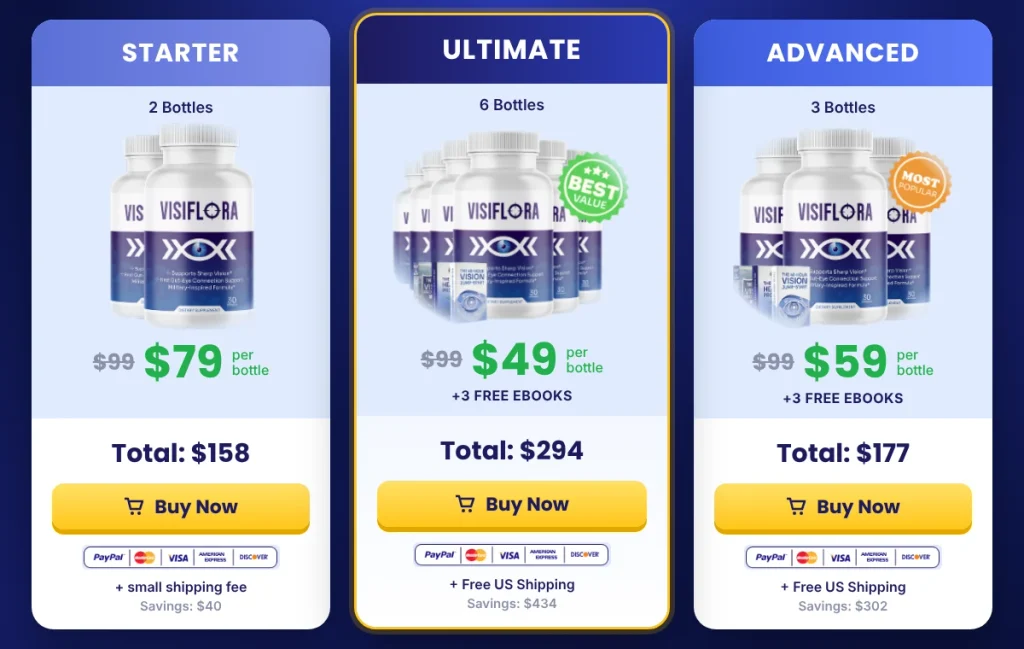
These were the prices on the official sales page when we checked in October 2026. The “$99” reference price and the savings figures are the brand’s own calculations. Prices change, so confirm them at checkout.
| Package | Bottles | Price per Bottle | Total | Shipping |
| Starter | 2 | $79 | $158 | Small shipping fee |
| Advanced | 3 | $59 | $177 | Free US shipping |
| Ultimate | 6 | $49 | $294 | Free US shipping |
Every package currently includes three digital ebooks. They are downloads, not physical items.
| Bonus | Brand’s Stated Value | What It Covers |
| The Vision Protection Manual | $97 | Daily eye exercises and lifestyle habits for strain, focus and night vision |
| The Gut-Eye Nutrition Protocol | $67 | A 7-day nutrition plan with 21 recipes |
| The 48-Hour Vision Jump-Start | $50 | Quick tips for tired eyes and comfort |
The sales page does not state the number of capsules per bottle. Since the dose is one capsule a day, it is reasonable to ask support how many days one bottle lasts before choosing a package, especially if you plan to test the product within the 60-day window.
Shipping and Refund Policy

According to the official shipping policy, orders ship within 24 to 48 hours after payment is confirmed, and you receive a tracking link by email.
| Destination | Shipping Fee | Delivery Time |
| Mainland USA | $9.95 or free, depending on quantity | 5 to 8 business days |
| Alaska and Hawaii | $9.95 or free, depending on quantity | 12 to 20 business days |
| Canada | $19.95 | 12 to 20 business days |
| UK and Ireland | $19.95 | 12 to 20 business days |
| Australia and New Zealand | $19.95 | 12 to 20 business days |
The refund window starts on the day you receive your package, not the day you submit your order. To get your money back, you must return all the items you received to the warehouse at 19655 E 35th Dr #100, Aurora, CO 80011, USA. Return shipping is at your expense, and the refund will be issued after deducting applicable shipping charges. The policy says a package sent on day 59 is still accepted even if it arrives a few days later.
VisiFlora Pros and Cons
| Pros | Cons |
| Includes lutein, zeaxanthin, zinc and antioxidant vitamins with real research history | No published clinical trial of the finished formula |
| Simple one-capsule daily routine | Only one ingredient dose (zinc 11 mg) disclosed on the sales page |
| Vegetarian-friendly, non-GMO and stimulant-free according to the brand | Contains beta carotene, a concern for smokers and former smokers |
| Lower price per bottle on larger packages | Several ingredients may interact with blood thinners or diabetes medication |
| 60-day refund window from delivery | Buyer pays return shipping and refund excludes shipping fees |
| Brand states no subscription or auto-ship | Not a replacement for AREDS2 when an eye doctor recommends it |
Final Verdict on VisiFlora Reviews
After weighing the official claims against the published science, our reading of VisiFlora reviews is cautiously balanced. VisiFlora brings together several eye nutrients that are worth having in your diet and wraps them in a genuinely interesting research idea, the gut-eye axis. What it does not offer yet is direct evidence that this particular formula improves vision, and the lack of full dose information makes it harder to judge than it should be.
If you are an adult with healthy eyes who wants a convenient nutritional add-on, you have checked the label for interactions, and you understand the refund terms, VisiFlora may be a reasonable product to try for 60 days with clear notes on how you feel. If you have macular degeneration, glaucoma, diabetes-related eye disease or any new vision symptoms, start with your eye doctor, not a supplement.
For the full breakdown of the evidence and the latest offer details, see our main VisiFlora Review. If you decide to buy, you can Check Current VisiFlora Offer. This is a sponsored affiliate link, and we may receive compensation for purchases made through it. VitalWellGuide does not sell VisiFlora, process orders or issue refunds.
Medical Disclaimer: The content of this article is intended for general educational purposes and does not replace advice from a qualified healthcare professional. No dietary supplement is intended to diagnose, treat, cure, or prevent any disease. Check with your doctor or eye care specialist before adding a supplement to your routine, particularly if you take prescription medicines, are pregnant or nursing, or have an existing health issue.
Frequently Asked Questions
Are VisiFlora reviews trustworthy?
Some may be, but that does not apply to many others. A large share of online reviews come from affiliate sites, and the official testimonials use changed names with results the brand itself says are not typical. Look for reviews that cite independent science and clearly separate brand claims from evidence.
What is VisiFlora supposed to do?
The brand says it supports eye comfort, clarity and overall eye wellness by combining eye nutrients with ingredients tied to the gut-eye connection. These are marketing claims, and the finished formula has not been tested in a published clinical trial.
What ingredients are in VisiFlora?
The sales page names 21 ingredients, including lutein, zeaxanthin, zinc, astaxanthin, vitamins A, C and E, saffron, bilberry, ginkgo biloba, quercetin, taurine and alpha lipoic acid. Only zinc has a disclosed dose, at 11 mg.
Does VisiFlora contain probiotics?
No probiotic strain is listed on the official sales page. The gut-supporting blend features plant compounds and antioxidants, including grape seed extract, rutin, quercetin, taurine, and alpha-lipoic acid.
Does VisiFlora contain the same formula as AREDS2 supplements?
No. AREDS2 uses specific doses, including 80 mg of zinc and 10 mg of lutein, and leaves out beta carotene. VisiFlora uses 11 mg of zinc, does not disclose its lutein dose and includes beta carotene, so it should not replace AREDS2 if your eye doctor recommended it.
How much does VisiFlora cost?
In October 2026, the official page listed 2 bottles for $158, 3 bottles for $177 and 6 bottles for $294. The two larger packages include free US shipping, while the smaller one adds a shipping fee.
How does the VisiFlora refund work?
The return period lasts 60 days from the date your order is delivered. Customers must cover the cost of returning all items to the Aurora, Colorado warehouse, and shipping fees will not be included in the refund.
Is VisiFlora safe to take with medication?
It may not be for everyone. Ginkgo and vitamin E can raise bleeding risk with blood thinners, chromium and alpha lipoic acid can affect blood sugar, and beta carotene is a concern for smokers. Check with your doctor first if you take any regular medication.
When might you begin to notice the effects?
The brand says some people notice changes within a few weeks, but that is not a verified or typical result. If you try it, give it a consistent trial within the 60-day refund window and track how your eyes feel.
Is VisiFlora effective for blurry vision, and can it replace eyeglasses?
No supplement can reverse nearsightedness, farsightedness or the natural loss of close focus with age. Any noticeable increase in blurred vision should be assessed by an eye specialist, while sudden vision changes should never be ignored and require urgent care.