
If you have been searching for online reviews of YU SLEEP, you may have noticed significant discrepancies in the information provided across various websites. Parts of the content feel more like marketing material, and several claims are challenging to substantiate with dependable evidence. You might even encounter conflicting information regarding refund policies. So, which details can you trust, and which claims require further verification? This guide aims to answer these questions. It examines the ingredients of YU SLEEP—based on the manufacturer’s disclosed formula—along with what scientific research reveals about their efficacy and what remains uncertain. Additionally, it offers guidance on how to evaluate product pricing and online reviews, empowering you to make an informed, evidence-based decision rather than relying solely on enticing advertisements or exaggerated promises. For the full product breakdown with package options, you can also read our detailed YU SLEEP review.
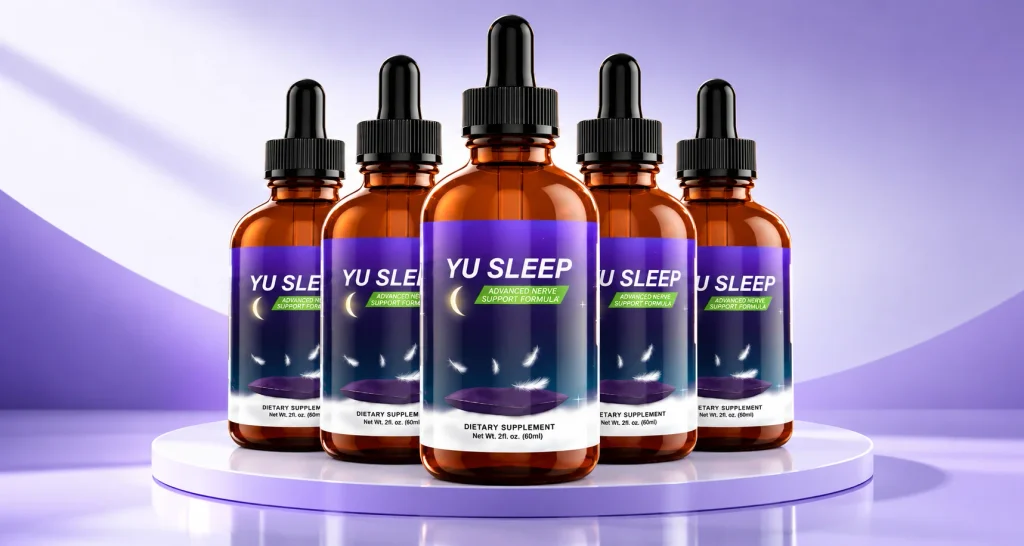
In today’s article, we will include additional information for new users—details not mentioned in the advertisements—along with guidelines to follow to ensure that the ‘YU-Sleep’ supplement proves truly effective.
YU SLEEP at a Glance
Before getting into the reviews themselves, it helps to know the basic facts. The YU SLEEP supplement is available as a liquid in a dropper bottle and is promoted for nighttime calming and sleep support. It is sold through ClickBank via the vendor’s official offer page rather than through regular pharmacy shelves.
| Detail | Published Information |
| Format | Liquid in a dropper bottle |
| Serving size | 2 mL (about two full droppers) |
| Servings per bottle | Approximately 30 |
| Suggested timing | About 30 minutes before bedtime |
| Melatonin | 0.9 mg per serving |
| Vitamin B2 | 0.5 mg |
| Vitamin B6 | 0.5 mg |
| Proprietary blend | 637 mg total, seven ingredients |
| Return window | 60 days from purchase date |
These details come from the manufacturer’s August 2026 formula announcement. As formulas can change, rely on the information printed on the bottle you receive rather than older product descriptions.
What Online YU SLEEP Reviews Get Right and What They Get Wrong
When searching for online reviews of YU SLEEP, one thing quickly becomes apparent: the information varies from site to site. Many articles appear on press release platforms, free page-building services, or community forums; while these may look like impartial reviews, they could actually be written with the sole intent of selling the product. So, which information should you trust, and which claims require further verification? Not all promotional content is false, but there are a few key points to consider before making a decision.
- Inconsistencies in Refund Policy: While some third-party websites claim a 90-day money-back guarantee, the manufacturer’s statement from August 2026 specifies a 60-day window. Therefore, be sure to verify the official terms and conditions, as well as the rules displayed at checkout, before making a purchase.
- Exaggerated Marketing Claims: It is essential to check whether there is reliable scientific evidence to support claims such as “nano-enhanced,” “rapid absorption,” or “more effective than pills.” There is no independent research confirming that the final formula of YU SLEEP is absorbed faster or is more effective than other capsules.
- Unverified Customer Experiences: Some websites feature testimonials attributed to customers or sleep experts; however, there is no way to verify the identities of these individuals, the dates of their statements, or the authenticity of their claims. Consequently, one should not judge the product’s efficacy solely based on positive reviews.
- Discrepancies in Usage Instructions: The manufacturer’s guidelines recommend taking 2 millilitres approximately 30 minutes before bedtime, or following the instructions provided on the bottle.
- Overlooked Safety Concerns: YU SLEEP contains melatonin and 5-HTP. It is important to consider the potential side effects and possible drug interactions associated with these ingredients—especially if you are taking other medications, or if you are pregnant or breastfeeding.
On the other hand, if reliable information regarding a product’s ingredients is available, it is important to verify it. According to the manufacturer’s disclosed formula, it contains a blend of melatonin, B vitamins, tart cherry, magnesium glycinate, apigenin, lemon balm, L-theanine, GABA, and 5-HTP. However, the mere accuracy of the ingredient list does not guarantee that the overall formula will be effective for improving sleep. Therefore, before making a purchase decision, consider factors such as ingredient dosages, scientific evidence, safety, and the refund policy.
What Is Inside YU SLEEP
The formula combines one clearly dosed sleep hormone, two vitamins and a proprietary blend. Understanding each part helps you judge the claims you read in YU SLEEP reviews.
Melatonin at 0.9 mg
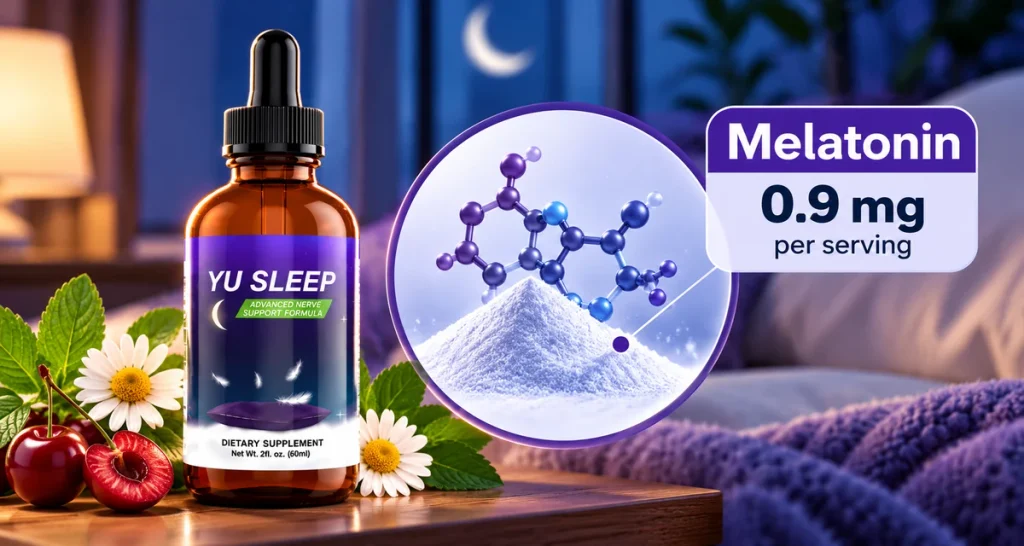
Melatonin is a hormone your brain produces in response to darkness, and it helps time your internal 24-hour clock. YU SLEEP discloses 0.9 mg per serving, which is lower than many retail melatonin products that are sold in 3 mg, 5 mg or 10 mg strengths.
A lower dose is not automatically weaker in a meaningful way. Melatonin’s effect depends heavily on dose, timing and the reason a person is struggling with sleep. According to the National Center for Complementary and Integrative Health, melatonin has reasonable evidence for jet lag and certain circadian rhythm problems, while major medical guidelines say there is not enough strong evidence to recommend it for chronic insomnia. Short-term use appears safe for most adults, but long-term safety data is limited, and older adults may experience melatonin staying active longer, which can cause daytime drowsiness.
Vitamins B2 and B6
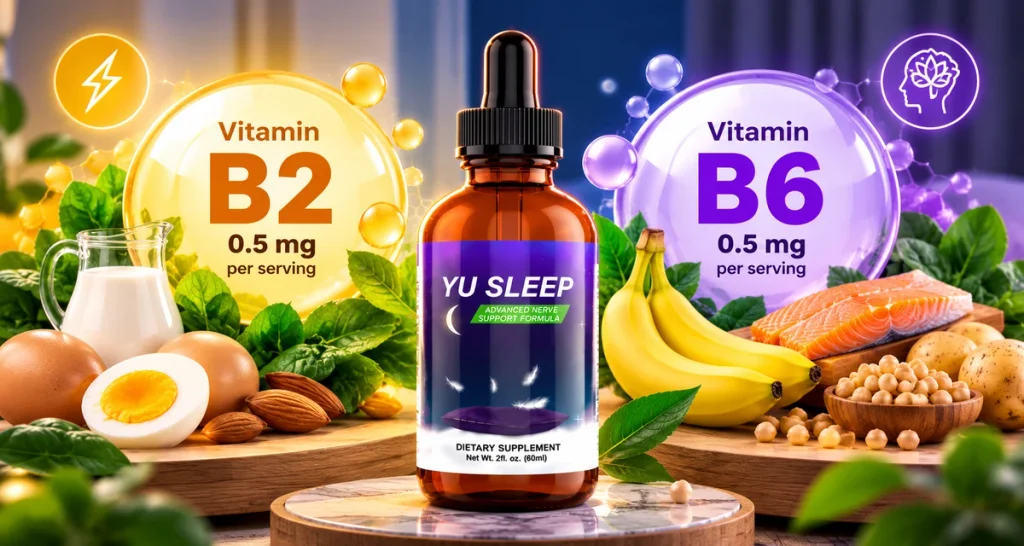
This formula contains 0.5 mg each of Vitamin B2 (riboflavin) and Vitamin B6. Both nutrients are involved in normal energy metabolism and are necessary for the nervous system to function as it should. Vitamin B6, in particular, assists in the production of neurotransmitters. While the inclusion of these nutrients is logical, there is no evidence to suggest that their presence alone allows YU SLEEP to provide any additional sleep-related benefits.
Apigenin
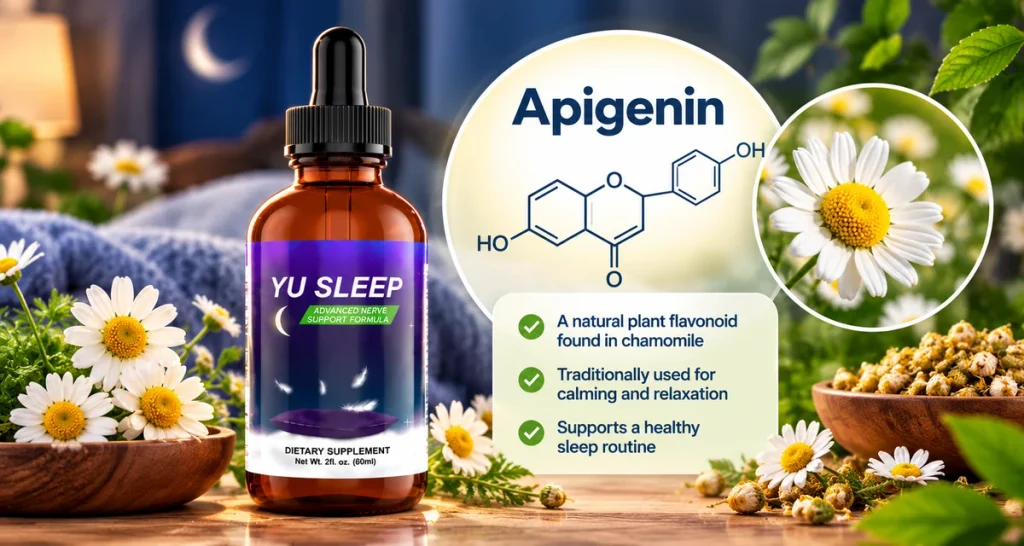
Apigenin is a natural plant compound belonging to the flavonoid group and is present in parsley, chamomile, and other plants. Scientists are interested in its potential calming effects on certain receptors in the brain. But is it effective on its own for sleep issues? Research involving human subjects remains limited. It is also worth noting that the YU SLEEP formula specifies apigenin, rather than the whole chamomile plant.
Lemon Balm
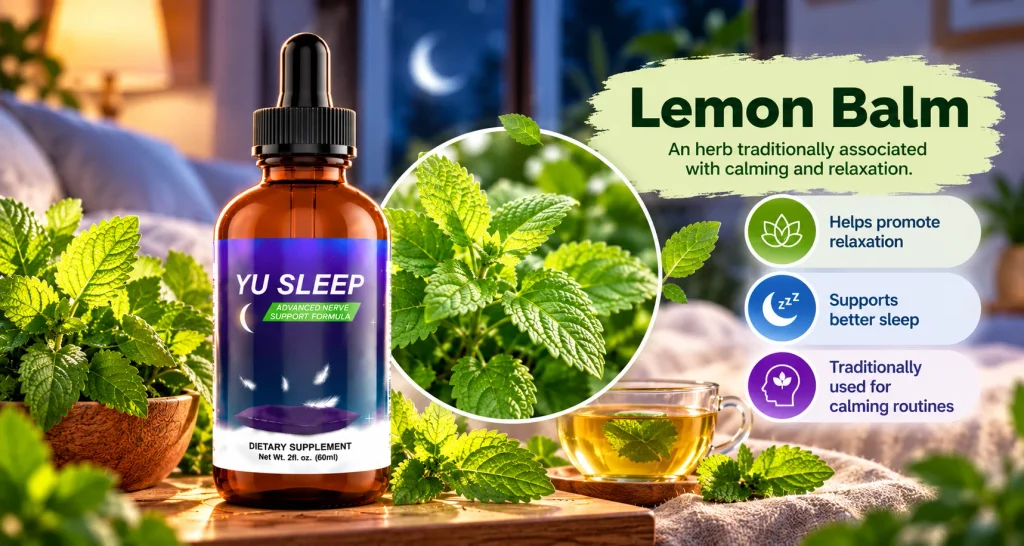
Known as Melissa officinalis, this herb has long been used traditionally to promote calmness and relaxation. Some studies have examined it—both on its own and in combination with other herbs like valerian—but the findings are not yet definitive. Furthermore, the results of such research can depend on how the herb has been prepared.
L-Theanine
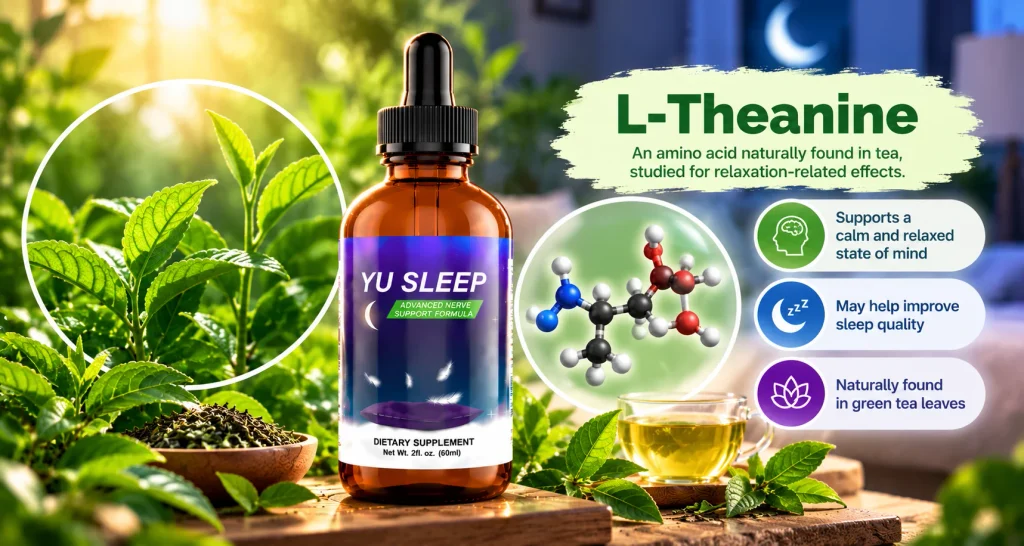
Found naturally in tea leaves, this amino acid has been the subject of research regarding its potential to promote relaxation and improve sleep quality. In these studies, a dosage of approximately 200 mg is typically used. However, the exact amount of L-theanine contained in YU SLEEP is unknown; therefore, it is difficult to say with certainty how applicable the research findings are to this specific product.
GABA
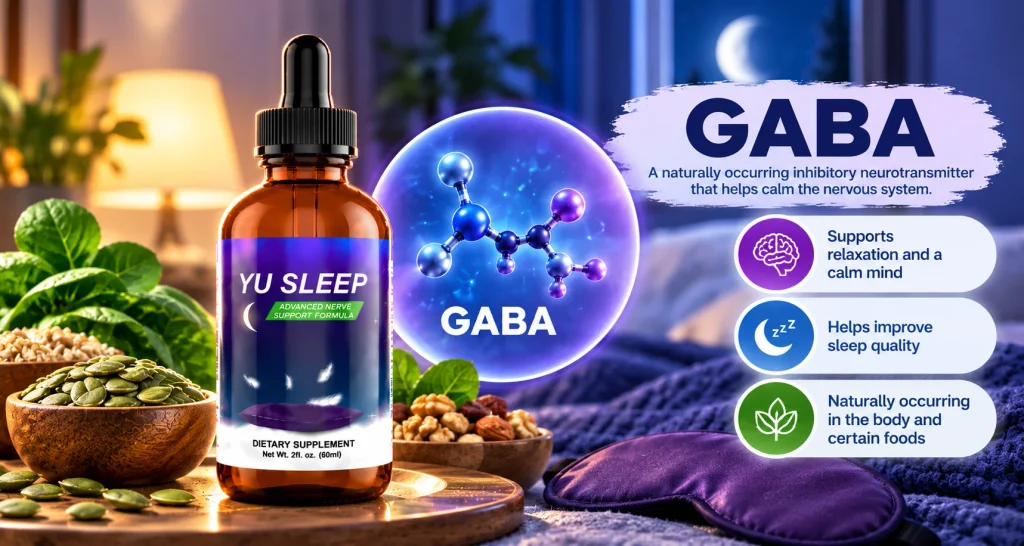
GABA, short for gamma-aminobutyric acid, plays a key role in regulating brain activity as its main inhibitory neurotransmitter. Research has explored whether exogenous GABA supplementation can promote relaxation or improve sleep. Nevertheless, researchers are still investigating how much GABA taken as an oral supplement can cross into the brain.
5-HTP
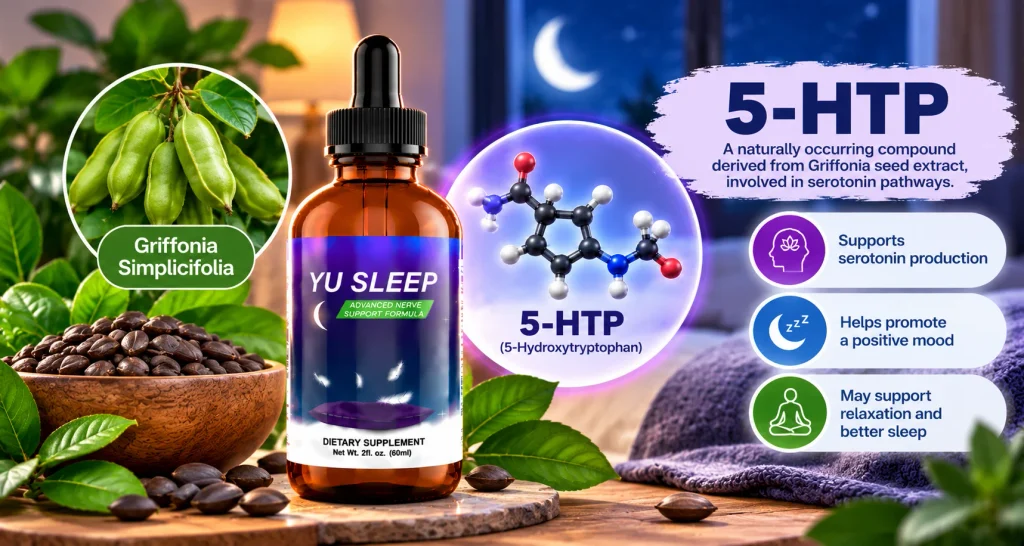
Sourced from Griffonia simplicifolia seeds, this substance contributes to serotonin production in the body, and serotonin acts as a precursor to melatonin. While this connection to sleep is intriguing, the use of 5-HTP requires particular caution:
– It may cause harmful interactions with certain medications, especially those that increase serotonin levels.
– When assessing a product, it is important to account for possible side effects and individual medical circumstances.
– It is advisable to consult a physician or pharmacist before use.
In summary, YU SLEEP contains ingredients that have been discussed in research in relation to relaxation or sleep. However, the potential benefits of individual components are not the same as the proven efficacy of the complete formula. Given that the precise dosages of some ingredients are unknown and there is a lack of research on the full formulation, it would be premature to conclude that it will improve sleep for everyone.
Does YU SLEEP Work? A Realistic View of the Evidence
This is the question behind almost every search for YU SLEEP reviews, and the honest answer has two parts.
First, the ingredient choices are logical. Melatonin addresses sleep timing, while magnesium, L-theanine, lemon balm, GABA and apigenin are associated with relaxation, and 5-HTP and B6 relate to the serotonin and melatonin pathway. On paper, the formula targets both the “wind down” and the “body clock” side of sleep.
Second, there is a gap between ingredient research and product results. No product-specific clinical trial on the finished YU SLEEP formula has been independently established. Studies on individual ingredients used particular doses and preparations, and because the blend amounts are hidden, nobody outside the company can confirm whether YU SLEEP matches those doses. Research on single ingredients does not prove the complete formula will produce the same results.
So the fairest expectation is this: YU SLEEP may help some adults feel more settled at bedtime, especially those whose sleep trouble is linked to an irregular schedule or evening restlessness. It is not a treatment for insomnia or any sleep disorder, and results will vary from person to person.
Pros and Cons Based on Verified Information
Weighing the product against only what can be confirmed gives a cleaner picture than most promotional reviews.
Pros
- Melatonin dose is clearly disclosed and sits on the lower end of common retail strengths
- Liquid dropper format suits people who dislike swallowing pills
- Combines several well-researched relaxation-related ingredients in one serving
- Published 60-day return period
- Multi-bottle packages lower the cost per bottle
Cons
- Seven ingredient amounts are hidden inside a proprietary blend
- No independent clinical trial on the finished formula
- Contains 5-HTP, which can interact with common medications
- Sold mainly online through the vendor’s offer page
- Returns require approval and all bottles, including empty ones, must be sent back
Safety Points Most YU SLEEP Reviews Skip
Because this is a multi-ingredient sleep formula, safety deserves more than a one-line disclaimer.
5-HTP and serotonergic medicines. 5-HTP increases serotonin production. Taking it alongside antidepressants such as SSRIs, SNRIs or MAO inhibitors, or other medicines that affect serotonin, may raise the risk of excess serotonin activity. Anyone taking these medications should speak with a healthcare professional before using YU SLEEP.
Melatonin considerations. Reported side effects in short-term studies have generally been mild and include headache, dizziness, nausea and sleepiness. People with epilepsy and those taking blood thinners are advised to use melatonin only under medical supervision.
Pregnancy, breastfeeding and medical conditions. There is not enough research on melatonin and several of these ingredients during pregnancy or breastfeeding. Anyone pregnant, nursing, managing a health condition or taking prescription medication should consult a doctor first.
Children. Keep the bottle out of reach of children. Accidental melatonin ingestion among young children has risen sharply in recent years, according to U.S. public health data.
Combining sleep products. Avoid stacking YU SLEEP with other sleep aids, sedatives or alcohol unless a healthcare provider approves it.
Persistent sleep problems. Regular trouble sleeping for weeks or months can signal conditions like sleep apnea, anxiety or restless legs syndrome. A supplement does not replace proper evaluation.
How to Give YU SLEEP a Fair Trial
If you decide to try it, using it correctly makes your own experience easier to judge.
Take 2 mL, about two full droppers, around 30 minutes before bedtime, or follow the directions printed on your bottle. Use the supplied dropper so your serving stays consistent each night.
Pair it with simple sleep habits that research consistently supports. Go to bed and wake up at roughly the same time every day, dim the lights and put screens away during the last hour before bed, keep the bedroom cool and dark, and limit caffeine in the afternoon. Melatonin works with your body clock, so a steady schedule gives it the best chance to help.
Keeping a short sleep note for two to three weeks, recording bedtime, wake time and how rested you feel, will tell you far more than any testimonial you read online.
YU SLEEP Price and Value
Previously published offers have shown three package options. These are historical reference prices, not a live quote, so always check the current price, shipping and any bonuses on the official offer page before ordering.
| Package | Previously Published Price | Approx. Cost per Bottle | Approx. Cost per Serving |
| 1 bottle (about 30 servings) | $69 | $69 | $2.30 |
| 3 bottles (about 90 servings) | $177 | $59 | $1.97 |
| 6 bottles (about 180 servings) | $234 | $39 | $1.30 |
A single bottle is the sensible way to test tolerance and see whether the product suits you. Larger packages make sense only after you know it agrees with you, partly because of the return conditions explained below. You can compare package details on our YU SLEEP review page.
Understanding the YU SLEEP Return Policy
According to the manufacturer’s August 2026 announcement, YU SLEEP comes with a 60-day return period that starts from the purchase date, not the delivery date. You must contact customer support for approval before sending anything back.
All bottles from the order must be returned, including used or empty ones. Return shipping costs and any deductions should be confirmed directly with the vendor. If your order includes a subscription or a special promotional package, read those specific terms carefully, and save your order confirmation and support emails.
A Simple Checklist for Reading YU SLEEP Reviews
Since review quality varies so widely, these questions help separate useful information from marketing:
- Does the review state the 0.9 mg melatonin dose and mention the 637 mg proprietary blend
- Does it give the refund period that matches the vendor’s published terms
- Does it discuss 5-HTP and medication interactions
- Does it separate ingredient research from proof that the finished product works
- Are testimonials or experts named with any way to verify them
A review that passes most of these checks is far more trustworthy than one built on bold promises.
Final Verdict on YU SLEEP Reviews
After looking past the promotional noise, most YU SLEEP reviews come down to the same core facts. YU SLEEP is a liquid nighttime supplement with a modest 0.9 mg melatonin dose, two B vitamins and a 637 mg blend of relaxation-related ingredients. The formula is thoughtfully built on paper, and the low melatonin dose and dropper format will appeal to many adults.
Its weaknesses are just as clear. The blend hides individual amounts, there is no clinical trial on the finished product, and the 5-HTP content means people on serotonergic medications must check with a doctor first. Treat YU SLEEP as one possible part of a healthy evening routine, not a fix for ongoing sleep problems. If you want to explore it further, start with a single bottle, follow the label, and judge it by your own consistent experience rather than online testimonials.
Frequently Asked Questions
Are YU SLEEP reviews trustworthy?
Some are, but many are promotional pages written to drive sales. Look for reviews that state the published formula accurately, mention the 60-day return period and include safety information about 5-HTP and melatonin. Unverified testimonials should not be treated as typical results.
How much melatonin is in YU SLEEP?
Each 2 mL serving contains 0.9 mg of melatonin, according to the manufacturer’s August 2026 formula announcement. This is lower than many retail melatonin products. Always confirm the amount on the bottle you receive.
What ingredients does YU SLEEP contain?
The formula includes melatonin, vitamin B2, vitamin B6 and a 637 mg proprietary blend of red tart cherry concentrate, magnesium glycinate, apigenin, lemon balm extract, L-theanine, GABA and 5-HTP from Griffonia seed extract. The individual amounts within the blend are not published.
Is YU SLEEP clinically proven?
No product-specific clinical trial on the finished YU SLEEP formula has been independently established. Several of its ingredients have been studied individually, but those results do not prove the complete formula will work the same way.
How should I take YU SLEEP?
The published direction is 2 mL, about two full droppers, around 30 minutes before bedtime. Follow the directions printed on your bottle if they differ. A consistent bedtime routine will support your results.
Can I take YU SLEEP with antidepressants?
Talk to a healthcare professional first. YU SLEEP contains 5-HTP, which can interact with antidepressants and other medicines that affect serotonin. This combination should not be started without medical advice.
Does YU SLEEP cause grogginess?
Individual responses vary. Melatonin can cause sleepiness, headache or dizziness in some people, and it may stay active longer in older adults. Taking it at a consistent time and allowing a full night of sleep may reduce morning drowsiness.
How much does YU SLEEP cost?
Previously published prices were $69 for one bottle, $177 for three bottles and $234 for six bottles. These are historical figures, so check the official offer page for the current price, shipping and bonuses.
What is the YU SLEEP refund policy?
The manufacturer describes a 60-day return period starting from the purchase date. You need approval from customer support before returning, and all bottles from the order, including used or empty ones, must be sent back. Confirm shipping costs and deductions with the vendor.
Is YU SLEEP a treatment for insomnia?
No. YU SLEEP is a dietary supplement marketed for nighttime relaxation and sleep support, not a treatment for insomnia or any medical condition. Persistent sleep problems should be evaluated by a healthcare professional.