First Trimester Care Tips A Simple Guide for a Healthy Start

Tahmina Noor

Published: 25/11/2026
Updated: 25/11/2026

You are going to be a mother! 

Upon learning this news, you are likely experiencing a mix of great joy and a multitude of questions. What should you eat now? Which activities are safe? What can you do about daily nausea? You might also find yourself wondering about the many changes occurring within your body—unsure of what is normal and what might be a cause for concern, right?

The first three months of pregnancy are a crucial period for an expectant mother. During this time, your body undergoes significant changes, while the vital organs of your baby begin to develop. Consequently, you must focus not only on your own well-being but also on the health of your unborn child. But there is no need to worry! With the right information and a few simple habits, you can navigate this period with much greater confidence.

So, where do you begin? What habits should you start cultivating now?

In this guide, we will discuss everything in simple, accessible language. Our primary goal is to provide First Trimester Care Tips, empowering you to make informed decisions in your daily life and helping you avoid unnecessary worry.

Understanding the First Trimester

The first trimester of pregnancy generally refers to the period from conception up to about 13 or 14 weeks. Doctors typically track the duration of a pregnancy in weeks. During this time, the baby’s brain, spinal cord, heart, and other vital organs begin to form.

Meanwhile, your own body also begins to adapt to these new changes. Some people may experience nausea upon waking, persistent fatigue throughout the day, breast tenderness, or frequent urination. Mood swings can also occur.

However, keep in mind that every mother’s experience is unique. Some may have many symptoms, while others may notice very few changes. Do not draw conclusions about your pregnancy based solely on the number or intensity of your symptoms. If you have any concerns, consult your doctor.

First Trimester Care Tips at a Glance

During the first three months, you have to manage many things at once. To help you figure out which tasks to prioritize, please refer to the table below.

Important StepWhat You Should DoWhy It Matters
First Prenatal VisitSchedule an early appointmentHelps monitor your health and baby’s growth
Folic AcidTake a prenatal vitamin with 400 mcg folic acidHelps prevent neural tube defects
Healthy EatingChoose nutritious and safe foodsSupports your changing nutritional needs
Alcohol and SmokingAvoid alcohol, smoking, vaping, and drugsNo known safe amount of alcohol during pregnancy
CaffeineKeep total caffeine below 200 mg dailyFollows ACOG guidance
Food SafetyAvoid risky and undercooked foodsReduces the risk of foodborne infection
Gentle ExerciseAim for 150 minutes weekly if medically appropriateSupports general health
RestTake breaks and sleep when neededHelps manage pregnancy-related tiredness
Warning SignsLearn when to contact your providerHelps you seek care without delay

This list can serve as a simple guide for your daily routine. However, do not try to do everything perfectly all at once; it is more important to build habits gradually.

Schedule Your First Prenatal Visit

What should be the first step after a positive pregnancy test? Many expectant mothers begin by changing their diet, while others start looking for various vitamins. However, it is also crucial to schedule a prenatal appointment as soon as possible.

Did you know that early medical consultation can provide vital insights into both your health and that of your baby? 

According to the American College of Obstetricians and Gynecologists (ACOG), it is generally recommended to have the first prenatal visit within the first 10 weeks of pregnancy. That said, if it happens later for any reason, do not panic—simply contact your doctor as soon as you can.

The first appointment is often longer than subsequent visits, as the doctor will want to gain a comprehensive understanding of your overall health.

Common topics that may be discussed include:

  • History of your past medical conditions or health issues.
  • Details regarding any previous pregnancies.
  • Current medications or supplements you are taking.
  • Necessary blood tests and physical examinations.
  • An initial ultrasound to determine the estimated due date.
  • Discussion regarding genetic screening, if required.

A simple step can be very helpful: write down your questions on your mobile phone before heading to your appointment. For example, you might want to ask about taking allergy medication, whether activities like walking or running are safe, or if there are any specific foods you should avoid.

According to ACOG guidelines from April 2025, prenatal care can be tailored to a mother’s individual needs. For some low-risk pregnancies, a combination of in-person visits and telehealth options may be considered. However, higher-risk pregnancies may require more frequent monitoring.

Take Prenatal Vitamins With Folic Acid

Folic acid plays a crucial role when your baby’s vital body parts are beginning to form. It is a type of B vitamin that helps the body create new cells.

But why is so much emphasis placed on it right from the start of pregnancy?

This is because folic acid is linked to the development of the baby’s brain and spine. According to the CDC, individuals who could become pregnant are advised to consume 400 micrograms of folic acid daily. This helps reduce the risk of neural tube defects—serious birth defects affecting the brain and spine.

Prenatal vitamins typically contain folic acid. They may also include iron, along with other essential vitamins and minerals.

However, keep in mind that consuming more does not necessarily provide greater benefits. Some individuals may require a higher dose of folic acid for specific reasons; for example, if there is a history of neural tube defects in a previous pregnancy, a doctor may prescribe a different dosage. Do not increase the dose on your own.

What should you do if taking prenatal vitamins causes nausea?

You can consult your doctor about taking them with a small snack—rather than on an empty stomach—or perhaps right before going to bed at night.

While ensuring adequate folic acid intake is an important part of your daily First Trimester Care Tips, it is best to follow your doctor’s guidance to determine the correct dosage and choose the most appropriate supplement.

Eat Healthy Without Eating for Two

Once pregnant, many people say that you now need to “eat for two.” But is it really necessary to consume twice as much food during the first three months?

No, generally it is not. According to the ACOG (American College of Obstetricians and Gynecologists), most women do not require extra calories during the first trimester. Additional caloric intake may be needed during the second and third trimesters of pregnancy.

So, what should you eat?

Try to include nutritious and safe foods in your diet. Your daily meals can consist of a variety of fruits, vegetables, whole grains, lentils, well-cooked eggs, lean meats, and pasteurized dairy products. Staying well-hydrated by drinking enough water is also essential.

According to the Mayo Clinic, women who were at a healthy weight before becoming pregnant typically gain about 1–4 pounds (0.5–1.8 kg) during the first few months. However, some may experience a slight weight loss due to nausea. If you are concerned about your weight, consult your doctor.

Fish and Seafood Choices

Do you enjoy fish? There is no need to cut out all fish during pregnancy. In fact, you can consume appropriate amounts of fish that are low in mercury.

According to recommendations from the FDA and EPA, pregnant women can eat about 8–12 ounces (225–340 grams) of low-mercury fish per week. This is generally equivalent to 2–3 servings.

Lower-Mercury ChoicesHigh-Mercury Fish to Avoid
SalmonShark
CodSwordfish
TilapiaKing mackerel
Canned light tunaTilefish

When it comes to eating fish, it is important to choose the right type and ensure it is cooked properly. Consider not just the portion size, but also whether the food is safe to eat.

Follow Food Safety Rules

During pregnancy, it is important to pay close attention not only to the choice of food but also to food safety, as certain foodborne infections can pose risks to both the mother and the baby.

In particular, one should be cautious about infections caused by a bacterium called *Listeria*. According to the FDA, pregnant women are approximately 10 times more likely to contract listeriosis compared to other healthy adults.

Does this sound alarming? There is no need to panic. Staying safe is simple once you know which foods to avoid and how to select safe food options.

Foods to Avoid or Handle Carefully

  • Do not consume cold deli meats, hot dogs, or lunch meats unless they are heated until steaming hot.
  • Avoid unpasteurized milk and juices.
  • Do not eat soft cheeses made with raw milk.
  • Avoid refrigerated pâtés or meat spreads.
  • Avoid refrigerated smoked seafood.
  • Do not consume raw or undercooked eggs, meat, poultry, or fish.
  • Stay away from fish that are high in mercury.

Safer Food Choices

Food CategorySafer Choice
Deli MeatHeated until steaming hot
Milk and JuicePasteurized products
CheeseCheese made with pasteurized milk
PâtéCanned or shelf-stable options
Smoked SeafoodCooked in a hot dish
Eggs and MeatFully cooked
FishProperly cooked, lower-mercury fish

It is not enough to simply change the types of food you eat; you must also maintain cleanliness in the kitchen. Wash fruits and vegetables thoroughly. After handling raw meat, clean your hands, knives, and cutting boards. Keep raw food separate from cooked food.

These may seem like small tasks, but they are worth following as part of your daily routine—especially as part of the First Trimester Care Tips—to ensure food safety.

Limit Caffeine During Pregnancy

Are you in the habit of having a cup of coffee every morning? Now that you know you are pregnant, you might be wondering: do you need to give up coffee entirely?

Generally, there is no need to stop drinking it altogether; however, it is important to keep an eye on the amount you consume.

According to ACOG guidelines, total daily caffeine intake during pregnancy should be kept below 200 milligrams. At this level, moderate caffeine consumption is not considered a significant risk factor for miscarriage or preterm birth.

However, many people overlook one important point: caffeine is not found only in coffee. It is also present in tea, soft drinks, chocolate, and energy drinks. Therefore, you should track the total amount of caffeine you consume from all sources throughout the day.

Some drinks served at coffee shops may contain higher levels of caffeine than standard coffee, so be cautious if you are unsure about the exact amount. If you prefer, you can opt for decaffeinated or “half-caf” (half-caffeine) beverages.

Manage Morning Sickness

During the first three months, nausea can make daily life difficult for many mothers. Although it often begins upon waking in the morning, it is not limited to the morning hours; nausea can occur at any time of the day.

According to ACOG guidelines, approximately 70–85 percent of pregnant women experience some degree of nausea. For many, this issue subsides by the second trimester.

So, how can you manage it?

To begin with, you might consider making some adjustments to your eating schedule. Instead of consuming large meals, try eating smaller portions more frequently throughout the day.

Practical Ways to Relieve Nausea

  1. Before getting out of bed in the morning, you can eat some crackers or a light, dry snack kept nearby.
  2. Instead of eating large meals, opt for smaller, more frequent portions.
  3. Sip water in small amounts between meals.
  4. Avoid any smells or foods that trigger or worsen nausea.
  5. Rest whenever you feel tired.
  6. Consult your doctor before using any herbal products or home remedies.

For instance, you might feel perfectly fine upon waking up, but suddenly experience nausea after getting into a vehicle or heading out. For such situations, it is a good idea to keep some light snacks and a bottle of water in your bag.

However, if the situation escalates to the point where you cannot keep any food or water down, do not wait—contact your doctor. According to the ACOG (American College of Obstetricians and Gynecologists), issues involving nausea and vomiting are often not given the serious attention they deserve. If necessary, your doctor can recommend safe medications.

Get Enough Rest and Listen to Your Body

During the first three months, fatigue can sometimes increase unexpectedly. Tasks that you once found easy to perform may now require more energy.

If this happens, do not label yourself as lazy! Your body is adapting to new changes, so give yourself time to rest whenever you need it.

A few simple habits can be helpful:

  • Go to bed a little earlier at night.
  • Take short rests during the day if needed.
  • Do not pressure yourself to complete all household chores in a single day.
  • Accept help from family members.
  • Choose meals that are easy to prepare.
  • Take a break whenever your body feels tired.

Remember, you do not have to maintain the same pace every single day. There will be days when you can get more done, and other days when you may need more rest. Pay attention to the signals your body gives you.

Stay Active With Safe Exercise

Is it safe to exercise during pregnancy? 

Many expectant mothers ask this question. Those who were already in the habit of regular walking or exercising, in particular, often want to know if they can continue these activities.

Generally, for most women with a healthy pregnancy, moderate physical activity can be both safe and beneficial. However, if you have any underlying health issues or pregnancy-related complications, you must consult your doctor first.

According to ACOG, individuals with no medical contraindications to exercise can aim for about 150 minutes of moderate physical activity per week—that is, approximately 30 minutes a day, five days a week.

It is not necessary to complete all 30 minutes in a single session; you can break it up into smaller segments, such as several 10-minute sessions throughout the day.

Suitable Activities

  • Walking.
  • Swimming.
  • Stationary cycling.
  • Prenatal yoga.
  • Light strength-training exercises.

Moderate-intensity exercise refers to activities during which you can talk, but cannot sing.

Activities to Avoid or Discuss With Your Provider

Avoid sports or activities that carry a high risk of physical impact or falling. If you have not exercised before, start gradually.

Additionally, certain medical conditions or pregnancy-related complications may require you to limit your exercise. Do not exercise in excessively hot environments. Many doctors advise avoiding hot tubs and saunas during early pregnancy.

Consult with your doctor to determine which types of exercise are appropriate for you.

Pregnancy Warning Signs You Should Never Ignore

Certain physical changes are normal during the first three months. However, if specific symptoms appear, it is essential to seek medical attention promptly. It is crucial to know which symptoms allow for a wait-and-see approach and which require immediate action.

Please review the table below carefully:

Warning SignWhat You Should Do
Light spottingContact your healthcare provider for advice
Heavy bleeding, soaking a pad in an hour, or passing clotsSeek emergency care immediately
Severe abdominal pain or sharp one-sided painSeek emergency care immediately
Shoulder pain, fainting, or severe dizzinessSeek emergency care immediately
Persistent vomiting and inability to keep fluids downContact your provider the same day
Very dark urine or much less urinationContact your provider the same day
Fever of 100.4°F (38°C) or higherContact your healthcare provider
Burning or pain during urinationContact your healthcare provider
Severe anxiety, hopelessness, or thoughts of self-harmSeek help immediately or call/text 988

Conclusion

The first trimester of pregnancy marks a new chapter in your life. During this period, you may experience a mix of joy, excitement, fatigue, nausea, and various concerns. Remember, you do not need to figure everything out all at once.

Schedule your first prenatal appointment, take folic acid as advised by your doctor, consume safe and nutritious food, and avoid alcohol, smoking, and drugs. Additionally, ensure you get adequate rest, engage in appropriate physical activity, and stay informed about potential warning signs.

It is not always possible to do everything perfectly. There may be days when your eating routine is off, or you feel exceptionally tired—do not blame yourself. Small, positive habits will gradually help build your confidence.

Finally, while keeping these first trimester care tips in mind, listen to your body and consult your doctor if any issues arise. You are not alone; with the right care and proper guidance, you can navigate this new journey with greater confidence.

Medical Disclaimer: This article is intended for general health information purposes only. It is not a substitute for professional medical advice, diagnosis, or treatment. Please consult an OB-GYN, midwife, or qualified healthcare provider to make decisions tailored to your specific health needs and pregnancy status.


Related Articles

tween parenting guide

Tween Parenting Guide How to Stay Close While Your 9 to 12 Year Old Grows Up

There was a time when your child would return from school, open the door, and immediately start sharing stories about their day—what happened with friends, what someone said at school, what they had for lunch—they wanted to tell you everything. But is that familiar scene beginning to change?

Perhaps your 10 or 11-year-old now comes home from school and heads straight to their room, closing the door behind them—or, when asked about their day, simply replies, “Nothing happened!”

Naturally, this might lead you to wonder: is your child drifting away from you, or are they simply growing up?

In truth, the period between the ages of 9 and 12 is a time of significant transition in a child’s life. Their bodies change, their way of thinking evolves, friendships become increasingly important, and they begin to develop a desire to make their own decisions. During this phase, a good “tween parenting guide“ can be an invaluable resource for parents, helping them understand their child’s behavior and providing the support they need.

However, keep in mind that allowing your child to grow up does not mean leaving them to navigate things entirely on their own. Instead, it is about granting them a bit more independence while simultaneously creating a safe space—a place where they feel secure enough to return to you whenever they make a mistake, feel afraid, or are simply feeling down.

Understanding Your Growing Tween

Children between the ages of 9 and 12 are generally referred to as “tweens.” However, not all children develop at the same pace. Some may begin to seek their own personal space as early as age 8, while others might still prefer spending time with their parents just as they did when they were younger, even at the age of 12 or 13.

At this age, you may easily notice certain changes in your child:

  • Becoming more conscious of their own room and personal belongings.
  • Placing greater importance on the opinions of friends.
  • Developing an interest in clothing, hairstyles, and their own appearance.
  • Questioning some of the rules set by parents.
  • Attempting to make their own decisions.
  • Experiencing mood swings—ranging from great joy to becoming easily irritated.

Seeing these changes does not necessarily mean that your child is becoming disobedient. Often, these are simply a normal part of the growing-up process.

Why Parenting Tweens Feels Different

When your child was younger, you had to make most of the decisions—what they would eat, when they would sleep, and which toys they would play with. Now, however, they want to express their own preferences. Sometimes they may disagree with your choices, and at other times, they might insist on doing things their own way.

This is where a new chapter of parenting begins.

At this stage, the primary goal of “Tween Parenting Guide” is not to exert total control over your child, but rather to teach them the skills needed to make sound decisions.

For instance, suppose your child forgets to complete a school project. You could scold them immediately; but if, instead, you ask, “How do you think you could remember to do it next time?” you give them an opportunity to reflect on their own mistake.

These small, everyday experiences help them learn to become responsible.

What Happens Inside Your Tween’s Brain

Why does your child sometimes make excellent decisions, yet at other times—perhaps to prove something to their friends—do something bizarre? This is partly due to how their brain is developing.

According to the National Institute of Mental Health (NIMH), the adolescent brain undergoes significant changes. In particular, the prefrontal cortex—the area responsible for planning, setting priorities, and making decisions—matures relatively late.

At the same time, relationships with friends and social experiences take on increasing importance.

Consequently, your child might sometimes prioritize what their friends will think over their own safety or long-term well-being.

In such situations, avoid simply telling them, “You don’t understand anything!” Instead, calmly help them consider the potential consequences of a decision before they make it.

Body Changes and Puberty During the Tween Years

Is your child suddenly becoming more concerned about their appearance? Are they no longer happy with the clothes they used to like? Are they asking questions about changes in their body?

These could be early signs of puberty.

Puberty is a natural process during which a child’s body gradually transitions toward adulthood. According to the National Institute of Child Health and Human Development (NICHD), puberty typically begins between the ages of 8 and 13 for girls, and between 9 and 14 for boys.

However, every child’s body is different; therefore, please do not compare the changes your child is experiencing with those of other children.

Common Puberty Changes in Girls and Boys

During puberty, changes occur in the bodies of both boys and girls. However, some of these changes may differ.

ChangesGirlsBoys
GrowthHeight increases rapidlyHeight increases rapidly
Body HairUnderarm and pubic hair may appearFacial, underarm and pubic hair may appear
SkinAcne may developAcne may develop
Body ShapeHips may become widerMuscles may develop
Other ChangesBreast development and menstruationVoice may become deeper

You should never shame your child or make fun of them regarding these changes. These bodily changes might feel new to them; therefore, explain in simple terms that they are completely normal and a natural part of growing up.

How to Start Conversations About Puberty

Many parents believe that sitting down with their child just once to explain everything about puberty is sufficient. In reality, however, a series of smaller, informal conversations can be far more effective.

For instance, if your daughter asks about menstruation for the first time, avoid alarming her. Instead, explain that it is a natural bodily change and show her how to use a sanitary pad, should the need arise.

Similarly, with your son, discuss topics like physical development, voice changes, the growth of body hair, and personal hygiene in a natural, matter-of-fact way.

Keep a few points in mind during these conversations:

  1. Use the correct anatomical terms for body parts.
  2. Listen carefully to your child’s questions.
  3. Never treat any question as ridiculous or a source of shame.
  4. If you don’t know the answer, look for reliable information together.
  5. Reassure your child that asking questions about their own body is completely normal.

Ultimately, you want your child to feel comfortable coming to you first whenever they feel concerned about changes in their body. Building this level of trust is a crucial aspect of effectively Tween Parenting Guide.

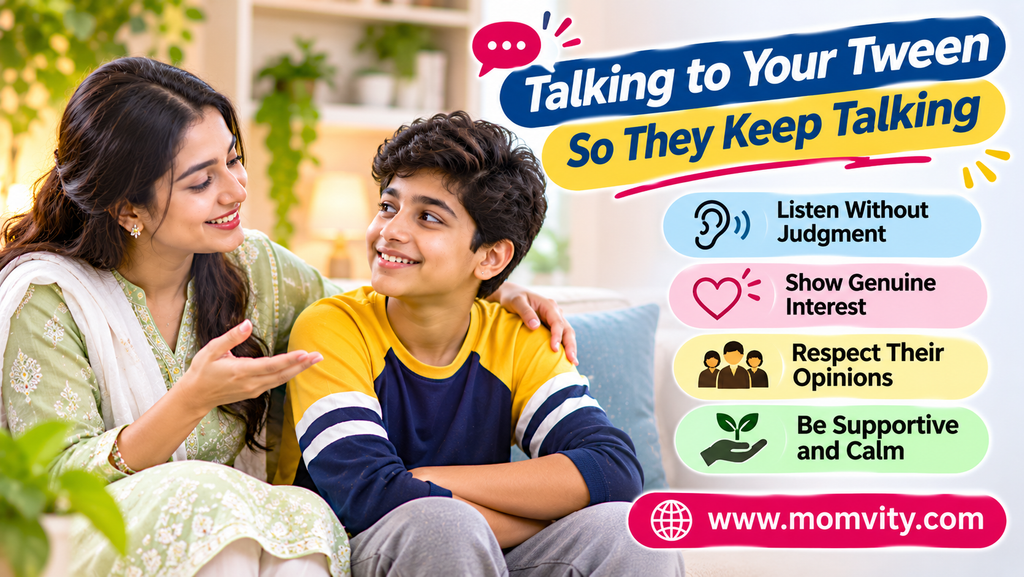
Talking to Your Tween So They Keep Talking

When your child doesn’t want to open up, do you find yourself asking questions repeatedly—”What’s wrong?”, “Why are you so quiet?”, “Did something happen at school?”

Even though your intentions are good, asking the same questions over and over can be annoying. At this age, children often feel uncomfortable answering direct questions.

So, how can you improve communication with them?

Start by letting them know that your goal isn’t just to solve their problems, but also to understand how they are feeling.

Listen First and Give Advice Later

Suppose your child comes home from school and mentions that their best friend is now spending more time with someone else. To you, this might seem like a trivial matter, but for your child, it could be a source of significant distress.

In such a moment, avoid saying, “Why are you upset over something so small?”

Instead, try saying, “I can see that you’re feeling down. Would you like to tell me what happened?”

Then, listen attentively.

You don’t need to provide an immediate solution to every problem. Sometimes, a child simply wants someone to listen to them and acknowledge the importance of their feelings.

Best Moments to Talk With Your Tween

It is not always necessary to sit face-to-face to have a conversation. Many children feel more comfortable talking while engaged in an activity side-by-side.

For example:

  • While walking together.
  • During a car ride.
  • While cooking or doing small household chores.
  • In a calm environment before bedtime.
  • While playing a game together or watching a favorite show.

During these moments, avoid asking questions in a forced or demanding way. Instead, try to understand their feelings through natural, casual conversation.

Also, keep in mind that if your child shares a difficult or embarrassing experience with you, do not react with anger. If they feel that telling the truth will only lead to being scolded, they may choose not to share anything with you in the future.

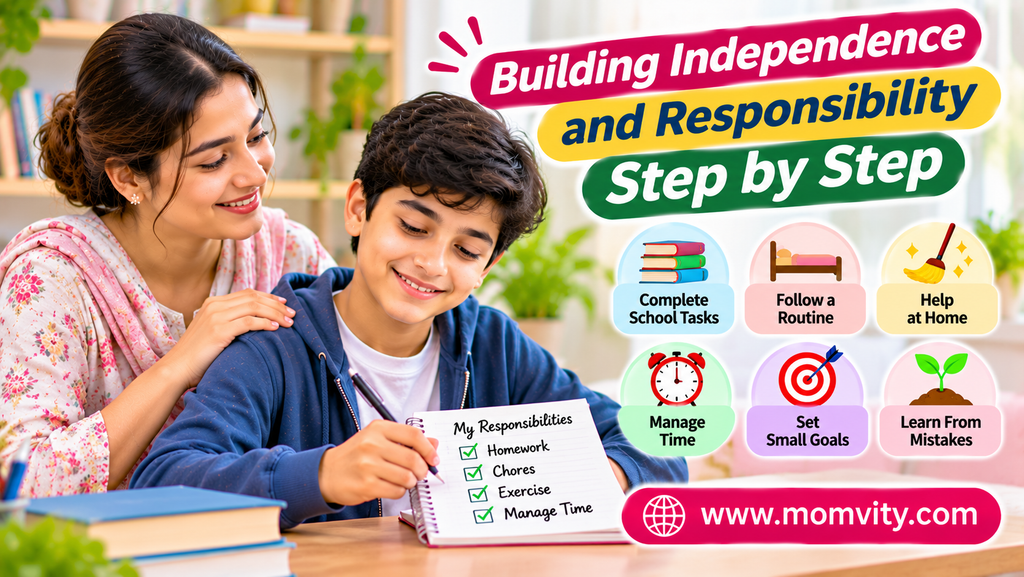
Building Independence and Responsibility Step by Step

Your child is growing up. They now want to do things on their own, go out with friends, and make decisions based on their own preferences. This is natural.

But how much freedom should you grant?

On one hand, excessive control denies them the opportunity to make their own decisions. On the other hand, granting complete freedom without any rules can lead to issues regarding safety and responsibility.

Therefore, freedom should be granted gradually, taking into account your child’s age and level of maturity.

Small Responsibilities That Build Confidence

To begin with, you can assign them small household tasks:

  • Packing their own school bag.
  • Creating a study schedule.
  • Organizing their own room and books.
  • Keeping track of a set amount of pocket money.
  • Choosing their own clothes.
  • Offering their opinion on minor family decisions.

If a task is done incorrectly, do not immediately take over the entire responsibility yourself. Instead, let them figure out how to set things right after a mistake.

ResponsibilityFirst StepNext Step
SchoolworkUse a homework checklistPlan weekly assignments
MoneyManage a small allowanceSave for a chosen item
Household TasksOrganize personal belongingsHelp with simple chores
FoodChoose a healthy snackPrepare a simple meal with supervision
Time ManagementFollow a daily routinePlan study and free time

Managing Screens, Smartphones and Social Media

In today’s world, it is impossible to completely separate technology from children’s lives. Smartphones, tablets, and the internet are frequently used for various purposes, including education, entertainment, and communication.

However, problems arise when screen time gradually begins to encroach upon time that should be spent on sleep, physical activity, studies, and interacting with family.

A 2026 study conducted in the United States by Common Sense Media revealed that children aged 9 to 12 spend, on average, about 5 hours a day using screens for entertainment. The same study found that 24% of 9-year-olds, 47% of 10-year-olds, and 57% of 11-year-olds own their own smartphones.

It is important to note, however, that these statistics are based on research involving children in the United States. The same patterns cannot necessarily be assumed to apply to all children in Bangladesh or other countries.

When Is the Right Time for a First Phone?

This is a common question among many parents: should you give your child a phone at age 10, or should you wait until they are 12?

There is no single, universal answer. You must consider your child’s individual needs, their sense of responsibility, and their ability to use technology safely.

Before giving them a phone, consider the following:

  1. Can they follow family rules?
  2. Will they tell you if they receive any uncomfortable or inappropriate messages?
  3. Can they turn off the phone at designated times?
  4. Do they understand the risks of sharing personal information online?
  5. Can they exercise caution when interacting with strangers?

The American Academy of Pediatrics (AAP) suggests that when providing a child with their first phone, you should clearly outline your family’s rules and expectations. Having a phone does not automatically grant permission to use social media.

According to the AAP, it is best to wait until a child is at least 13 years old before allowing them to create accounts on social media platforms like Instagram, Snapchat, or TikTok. Even then, it is essential to consider your child’s personal level of maturity.

Everyday Health Basics for Growing Tweens

Beyond a child’s academics, friendships, phone use, and other responsibilities, their day-to-day health is equally important.

Often, parents focus primarily on good grades or behavior. However, a lack of sufficient sleep, nutritious food, and regular physical activity can negatively affect a child’s concentration and mood.

Therefore, a guide for parenting pre-teens should also place significant emphasis on daily health habits.

Friendships, Mood Swings and Big Feelings

Is your child suddenly wanting to spend more time with friends? Are they having disagreements with a friend they used to play with every day? Do they sometimes get deeply hurt by a seemingly small remark?

At this age, friendships become increasingly important. What friends think, who includes them in a group, and who chooses to exclude them—all of these can have a significant impact on a child.

In particular, being left out of a group chat or having friends stop talking to them can make a child feel all alone.

How to Handle Friendship Problems

If your child tells you about a problem with a friend, do not immediately go to that friend’s parents to lodge a complaint.

First, try to understand the situation.

You could ask them, “What would you like right now? Should I just listen, or shall we look for a solution together?”

This simple question will help them articulate what they need.

However, if the situation involves bullying, threats, humiliation, or persistent harassment, you must take the matter seriously. If necessary, speak with the school authorities.

When Should You Contact a Pediatrician?

Not all changes are normal. Sometimes, a child’s behavior may exhibit signs that require professional advice.

According to the American Academy of Pediatrics, key indicators of depression in children include feeling sad or irritable for longer periods than usual, and losing interest in activities they once enjoyed.

Pay particular attention to the following:

  1. Feeling sad or excessively irritable for several weeks.
  2. Withdrawing from friends, sports, or previously enjoyed activities.
  3. Significant changes in sleeping or eating habits.
  4. A sudden decline in academic performance.
  5. Persistent reluctance to attend school.
  6. Expressing very negative thoughts about oneself.
  7. Talking about self-harm or suicide.

If you notice such changes, do not blame the child. Listen to them calmly and seek advice from a pediatrician or a child and adolescent mental health specialist.

If a child speaks about suicide or self-harm, treat it as an emergency. Do not leave the child alone, and immediately seek help from local emergency medical services or the nearest hospital.

Conclusion

As a child grows, their world gradually expands. The child who once held your hand while walking now wants to make their own decisions. The child who used to share stories about their school day might now prefer to keep some things to themselves.

It is natural to feel hurt by this. But remember, just because your child seeks independence, it does not mean that your love or your importance in their life is diminishing.

Instead, what matters most during this phase is being there for them, listening to what they have to say, allowing them to learn from their mistakes, and setting boundaries when necessary.

While no Tween Parenting Guide can offer a magical solution to every problem, such resources can help you understand how to support your child as they grow.

You don’t need to be a perfect parent every single day. There will be times when you make mistakes, times when your child doesn’t understand you, and moments when you simply disagree. But always strive to mend and nurture the relationship.

Ultimately, your child won’t just remember the rules you set. They will remember that you listened when they were feeling down, allowed them to learn from their mistakes, and stood by their side during difficult times.

May love, patience, and trust be your greatest strengths as you accompany your child on their journey of growing up!

Frequently Asked Questions

What Age Is Considered a Tween?

Children between the ages of 9 and 12 are generally referred to as ‘tweens.’ However, this age range may vary slightly depending on a child’s physical, mental, and social development.

What Is the Hardest Part of Parenting a Tween?

The greatest challenge lies in granting a child independence while simultaneously ensuring their safety. At this age, children want to make their own decisions, yet their decision-making skills are still in the process of developing.

How Much Sleep Does a Tween Need?

Children aged 6 to 12 years need 9 to 12 hours of sleep every day. Establishing a regular sleep schedule makes it easier to maintain a balance between rest and daily activities.

When Does Puberty Usually Start?

Puberty can generally begin between the ages of 8 and 13 for girls, and between 9 and 14 for boys. However, the timing of development varies for each child.

Should a 10-Year-Old Have a Smartphone?

There is no single, definitive answer to this. The decision should be made by taking into account the child’s needs, their sense of responsibility, their ability to understand safety, and their habit of following family rules.

Scroll to Top