

Spotting during first trimester is common in early pregnancy. Learn the causes, warning signs, and when you should contact your doctor.
It makes you feel anxious when you see a light pink or brown stain on your toilet paper, doesn’t it?
It makes you feel bad when you see light pink or brown spots on the toilet paper, doesn’t it?
Light bleeding or spotting is common in many women during the first few weeks of pregnancy, and it’s not uncommon.Many women experience this at this time. Everyone feels a little queasy at first, there’s no hiding it.
Those who search for “Spotting in the first trimester” have only one question in mind – is this normal, or is there something wrong? For first-time mothers, this dilemma is even greater. Because they have no previous experience to compare which changes in the body are normal and which are abnormal. That’s why they are more afraid.
After reading this article, you will be able to understand the reasons for this easily. What is the difference between spotting and normal bleeding, it will also be clear to you. And the most important question is when should the matter really be brought to the attention of the doctor? The answer to this question will also be given here so that everyone can understand it better. To know these, you have to read all the topics below carefully.
Why Spotting Occurs in the First Trimester
A lot happens inside the body during the first few weeks of pregnancy, although most of it goes unnoticed. New blood vessels grow in the uterus, hormones fluctuate, and the entire body tries to adapt to a new situation.
One of the visible signs of this normal process is “first trimester bleeding.” It will be easier if you know one fact – research says that one in five pregnant women experience this in the first 12 weeks. Hearing the number may seem surprising at first. But when you understand what’s actually happening inside the body, you’ll realize that the reasons behind it are mostly safe or unsafe.
Implantation Bleeding
This small process of the embryo implanting in the uterine wall does not always happen silently. Some of the surrounding fine blood vessels are then slightly damaged, and a small amount of light pink or brown blood comes out of there. This usually happens six to twelve days after intercourse. The problem is that at this time, most people do not know whether they are pregnant.This is why this bleeding is often mistaken for the beginning of menstruation. It does not last more than a day or two and is quite heavy in quantity.
There may also be a feeling of slight twisting in the lower abdomen, which many people do not pay attention to, thinking it is just a gas problem. This misunderstanding is so common that even doctors themselves recognize it as a possible first sign of pregnancy.
Hormonal and Cervical Changes
After pregnancy, estrogen levels increase rapidly. Blood circulation around the cervix also increases at the same rate, and this is where the real story begins. The cervix is much more sensitive than usual. So it is not surprising if a little blood appears after intercourse or after a routine gynecological examination.
Although it may seem scary, most of the time there is nothing serious behind it. In medical science, this condition also has a name – cervical ectropion. In this, the soft cells inside the cervix are more exposed to the outside, much like gums – blood comes out easily with a slight injury.
You may also read: Early pregnancy rash pictures
Difference between spotting and normal bleeding
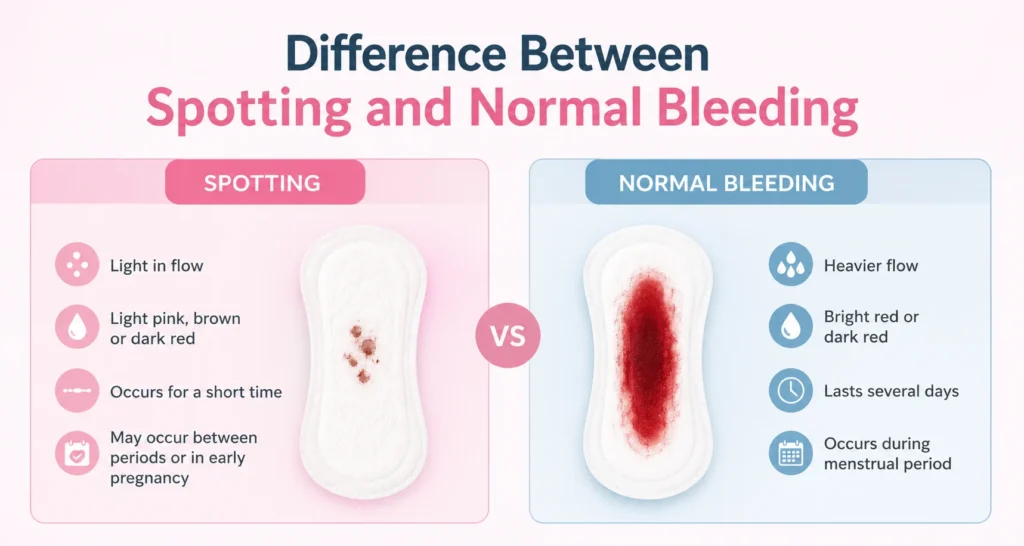
The two words are often used together, but in medical terms, there is a clear line drawn between them. Knowing this line makes it much easier to understand your condition. Not only that, but it also helps you choose the right word when describing it to a doctor over the phone.
Just think, how much will the person on the other end understand if you just say “I’m bleeding”?
Specific details really do the trick when it comes to conveying the seriousness of the situation.
Identifying by color and amount
The fertilized egg usually implants itself into the wall of the uterus within six to twelve days.At that moment, some of the delicate blood vessels are slightly injured, and a light pink or brown spot emerges from it.
The funny thing is, many people don’t realize they are pregnant at this point. As a result, many people assume that the spotting is the beginning of their period, and that is where the mistake is made.It usually goes away on its own within a day or two, and is small in amount, about the size of a handful.Some may also feel a slight twisting in the lower abdomen—which is usually ignored, thinking it is gas pain.
So many people make the same mistake that it is now a familiar pattern to doctors, as they keep in mind as a possible first sign of pregnancy.
Spotting vs. Full Wetness on a Pad
Just as a minor injury to the gums causes bleeding, the cervix can also bleed during pregnancy. The reason lies in estrogen. After pregnancy, the levels of this hormone increase so rapidly that blood circulation around the cervix increases dramatically.
As a result, the cervix becomes much more sensitive than before. There is even a specific name for this condition—cervical ectropion, where the soft cells inside the cervix are more exposed to the outside. This is why it is not uncommon to see a small spot of blood after intercourse or during a routine examination. As scary as the scene may be, in reality there is nothing serious behind it most of the time.
What is the color of blood
A brown color usually indicates old blood, which the body is slowly expelling. Bright red is a sign of relatively recent bleeding, and it is better to be a little more cautious if you see such a color, especially if it is accompanied by pain.
Dark red or black color sometimes indicates clotted blood, which may seem cause for concern on its own, but a doctor’s evaluation is the most reliable way to determine the cause.
Some Causes Are Usually Not a Cause for Concern
No matter how much you fear spotting during first trimester, the reality is that most of them are completely safe. However, it is good to know each cause separately, as it reduces unnecessary panic and helps you understand your body’s reaction.
Light bleeding after intercourse or a test
During pregnancy, the tissue of the cervix is softer and more sensitive than before. Therefore, even the slightest friction during intercourse can cause bleeding.
A similar reaction can occur after a routine test such as a Pap smear. This type of bleeding usually stops within a few hours, and it is usually enough to wait a few days before having sex again. Many couples consider stopping sex altogether after this experience, although doctors usually do not see the need for such a drastic measure unless there is a risk of other complications during the pregnancy.
Cervical Polyps and Other Causes
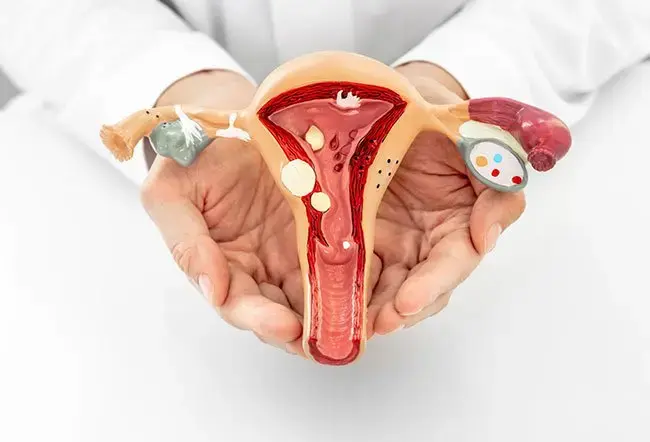
Sometimes a small, harmless growth called a cervical polyp can develop on the cervix. Polyps are a recognized sign of sensitivity to the effects of the estrogen hormone during pregnancy, which can cause various bleeding.
However, spotting is not due to regular bowel movements — it can be a part of the urine or vaginal fluid, and if it doesn’t go well, it’s not difficult to practice early.In some cases, vitamin deficiencies or blood thinners can also be associated with light spotting, although this is relatively rare. For this reason, it is always a good practice to tell your doctor your full list of medications.
The table below shows a brief comparison of some common causes, which will give you a quick idea.
| Cause | When does it usually occur | What color is the blood | Is there pain? |
| Implantation bleeding | 6-12 days (after intercourse) | Pink or brown | Not common |
| Cervical changes | After intercourse or examination | Light red | Not to mention |
| Subchorionic hematoma | 10-20 weeks | Brown or red | Occasionally light |
| Miscarriage | Any time in the first trimester | Bright red, clotted | Usually |
When it can be dangerous
In most cases, spotting is safe, but there are some signs that should not be ignored at all, but rather given immediate attention. If you understand these body signals well, it is easy to know when to take action.These symptoms are not always obvious, so it is wise not to delay if you suspect your body is reacting.
Symptoms of miscarriage and ectopic pregnancy
There is a familiar picture of miscarriage—bright red bleeding, severe abdominal pain, and blood clots.
When all three come together, it is not a case to take lightly. However, one fact needs to be kept in mind—even among women with heavy bleeding, about half of the pregnancies eventually progress normally, while the other half miscarry. So it is not right to assume the worst just by seeing one symptom.
The type of pain also says a lot. If the pain is sharp on only one side, and is accompanied by dizziness or fainting—then it points to an ectopic pregnancy, where the fetus is growing outside the uterus. Even shoulder pain needs to be alerted, because it is a lesser-known symptom of ectopic pregnancy, which many people do not notice at first. This condition is not worth waiting for at all—if it is delayed, the mother’s life may also be at risk.
And if there is a fever, or the discharge smells bad? Then it may indicate an infection, and that too needs to be brought to the attention of a doctor without wasting time.
What to do and care for spotting
When spotting occurs, the first thing you need is not information, but calmness. Instead of making a hasty decision in panic, it is more useful to stop and notice the amount and color of the blood.
Using a pantyliner can help you see exactly how much bleeding is happening—this makes it easier for you to understand yourself, and it is also convenient to tell the doctor later. Remembering when it started, how long it lasted, and what else you are feeling—makes it easier for the doctor to reach the right decision quickly.
A little extra care is needed for the body during this time, and most of that care is actually a matter of common sense. For example, using pads instead of tampons—this can help avoid the risk of infection.
It is also important to refrain from sex until the cause is confirmed. Many people find mental relief from resting with their legs elevated instead of doing heavy work or standing for long periods of time—although the science behind this is not very strong. Along with this, drinking enough water and trying to reduce stress as much as possible, both help with overall well-being, although there is no guarantee that these will stop spotting directly. And if you don’t carry your worries alone and share your thoughts with your loved ones, you feel a lot lighter mentally – the body and the mind are actually not separate.
One thing is the most important of all – no matter how minor the spotting seems, it is better to inform the doctor. Talking on the phone can often be reassuring. However, if necessary, checking the fetal heartbeat on an ultrasound is the most reliable way. If the blood group is negative, the doctor can also check the need for anti-D injections, which is also an important step for the safety of future pregnancies.
Conclusion
It is a very normal reaction to see light spotting in early pregnancy, because this time is already full of uncertainty. However, research shows that a large proportion of “spotting during the first trimester” experiences ultimately lead to healthy pregnancies. Knowing the causes –
implantation, hormonal changes, or cervical sensitivity – can help reduce unnecessary anxiety. Still, it’s important to pay attention to the color, amount, and other accompanying symptoms, especially in the case of severe pain or clots. Every pregnancy is different, so it’s not right to judge someone else’s experience based on their experience.
No information can replace direct medical advice, so if spotting occurs, the safest course is to talk to a doctor rather than make a decision on your own. In most cases, both mother and baby move on healthily after overcoming this minor discomfort, and remembering this reassurance makes the rest of the journey much easier. With time, it becomes easier to understand your own body language, and every question on this journey is normal, every worry is logical.