
Did you know that some of the most critical developmental processes for your unborn baby can begin even before you are aware that you are pregnant?
Long before you might realize that a new life is growing within you, the initial formation of the baby’s brain, spinal cord, and other organs is already underway. Just consider how significant your daily diet, the beverages you consume, and even your routine habits can be during this time! Things you may never have thought twice about before—such as having a morning cup of coffee, eating a favorite food, or taking a common medication for a headache—can suddenly become matters of concern during pregnancy. Which foods are safe? What habits might need to be changed? And if you happened to do something “wrong” before discovering you were pregnant, could it have harmed your baby?
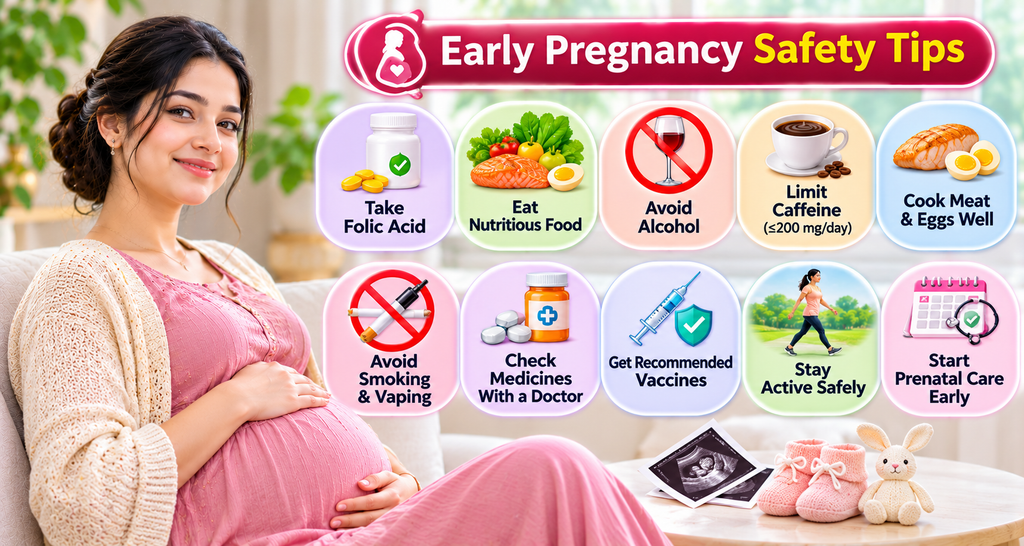
Seeking answers to these questions makes it essential to understand “Early Pregnancy Safety Tips.”
However, the beginning of pregnancy does not mean you must spend every moment in fear. You cannot control everything, and should any issue arise, it does not necessarily mean it was due to your own carelessness. In fact, knowing what is truly important—and how to manage those aspects—can significantly reduce unnecessary worry. Let’s explore, in detail, how to take care of yourself and your unborn baby during the first trimester.
Why the First Trimester Needs Extra Care
The first three months of pregnancy are known as the “first trimester.” This period typically spans from the first week of pregnancy through the 12th week. During these weeks, the essential structures of the baby’s body begin to form; the brain, spinal cord, heart, and other organs undergo their initial development.
One fact that may come as a surprise to many mothers is that the critical process of forming and closing the baby’s “neural tube” usually takes place within the third and fourth weeks of pregnancy. This structure later develops into the brain and spinal cord. In other words, by the time many mothers take their first pregnancy test, a vital stage of the baby’s development has already begun.
Does this mean everything should have been perfectly in place before discovering the pregnancy?
Ideally, it is beneficial to take certain preparatory steps in advance; however, if you find out later, there is no reason to blame yourself. What matters most now is making the right decisions, undergoing necessary medical tests, and following your doctor’s advice. Ultimately, the purpose of following “early pregnancy safety tips” is to take proactive, informed steps to ensure the healthy development of both mother and baby.
Early Pregnancy Safety Tips at a Glance
There is a lot to keep in mind during the first three months. So, you might want to take a quick look at the important points right from the start.
| What to Do | Why It Matters |
| Take 400 mcg Folic Acid Daily | Supports early brain and spinal cord development |
| Avoid Alcohol Completely | No known safe amount during pregnancy |
| Limit Caffeine to Below 200 mg Daily | Helps avoid excessive caffeine intake |
| Cook Meat and Eggs Thoroughly | Reduces foodborne infection risks |
| Choose Low-Mercury Fish | Provides important nutrients |
| Avoid Smoking and Vaping | Protects fetal growth and development |
| Check Before Taking Medicines | Some medicines may affect pregnancy |
| Follow Appropriate Vaccine Advice | Helps protect mother and baby |
| Stay Physically Active Safely | Supports maternal health |
| Arrange Prenatal Care Early | Helps monitor pregnancy progress |
There are specific reasons behind each item on this list. It is more effective to understand why these rules should be followed, rather than simply memorizing them.
Start Taking Folic Acid Right Away
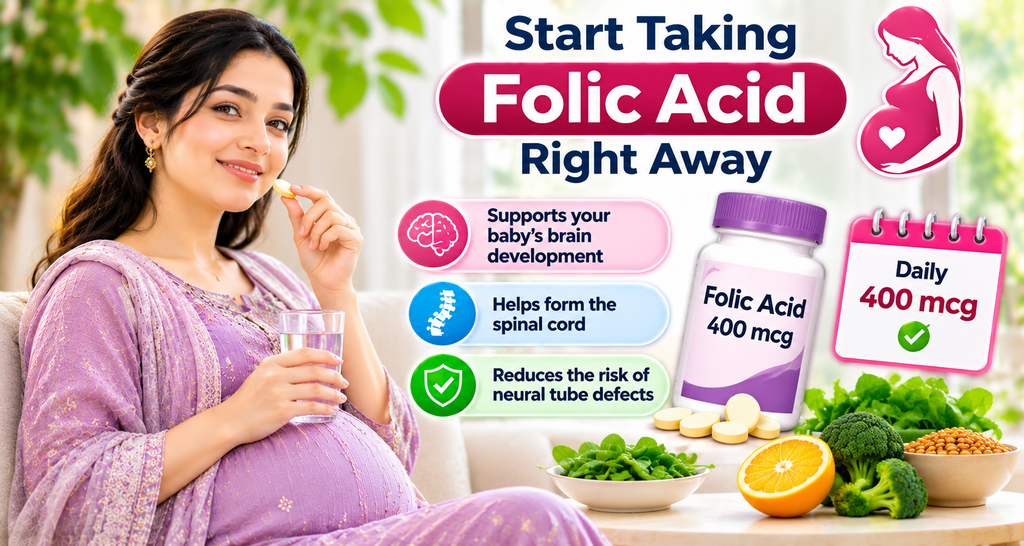
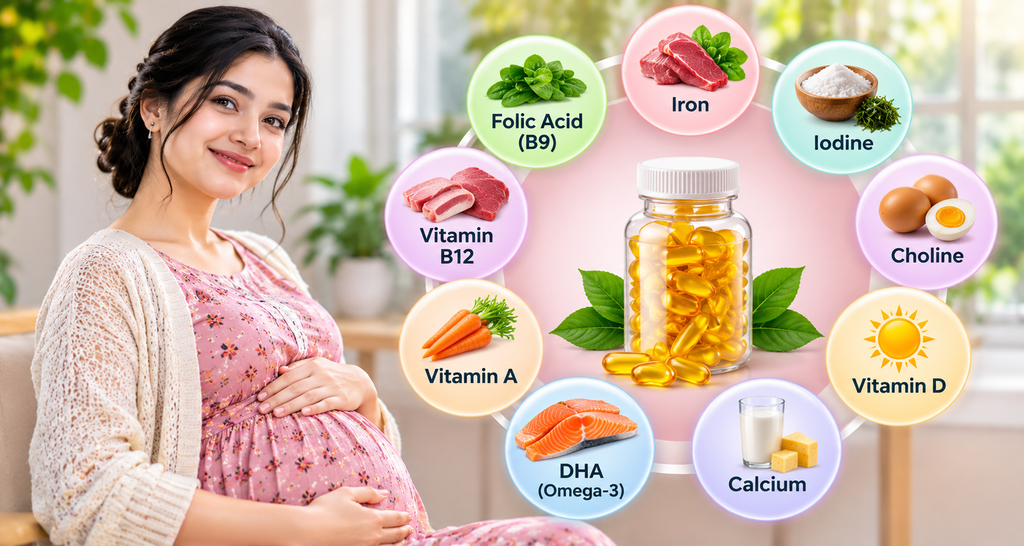
If there is one nutrient that deserves special attention during early pregnancy, it is folic acid. A form of vitamin B9, it supports the creation of new cells in the body and aids in the baby’s early development. In particular, an adequate intake of folic acid is essential for the proper formation of the baby’s neural tube.
The CDC generally recommends that women who could become pregnant consume 400 micrograms of folic acid daily. Ideally, one should begin taking it at least one month before conception. Many prenatal vitamins contain 400–800 micrograms of folic acid; therefore, ensuring an adequate intake of folic acid from the very beginning of pregnancy is a crucial step in following Early Pregnancy Safety Tips.
Eat Well and Practice Food Safety
During pregnancy, you may receive countless pieces of advice regarding your diet. Some people might tell you to avoid certain foods, while others might suggest increasing your intake of others. In reality, unless you have specific health complications, there is no need to unnecessarily exclude various foods from your diet. Instead, it is far more important to focus on choosing nutritious foods, maintaining proper hygiene, and ensuring that food is cooked correctly.
During pregnancy, the body’s immune system undergoes certain changes. Consequently, infections from specific foodborne pathogens—such as Listeria—can pose a higher risk to both the mother and the baby. Therefore, when following Early Pregnancy Safety Tips, it is essential to pay close attention not only to the nutritional value of your food but also to its safety.
Watch Out for Listeria
*Listeria* is a bacterium that can enter the body through contaminated food. An unusual characteristic of this bacterium is its ability to survive and grow even in the cold environment of a refrigerator. According to the CDC, pregnant women are approximately 10 times more likely to contract a *Listeria* infection compared to other healthy adults.
Does this mean that food is completely safe just because it is kept in the refrigerator? No. It is essential to store and prepare refrigerated food properly.
Before consuming deli meats, cold cuts, or hot dogs, heat them to a temperature of 165°F (approximately 74°C), or until they are steaming hot throughout. Avoid raw milk, unpasteurized juice, and soft cheeses made from unpasteurized milk.
| Food | Safer Choice | Avoid |
| Deli Meat | Heated Until Steaming Hot | Cold Deli Meat |
| Hot Dogs | Fully Heated | Unheated Hot Dogs |
| Cheese | Pasteurized Cheese | Unpasteurized Soft Cheese |
| Milk | Pasteurized Milk | Raw Milk |
| Juice | Pasteurized Juice | Unpasteurized Juice |
| Meat | Fully Cooked Meat | Raw or Undercooked Meat |
| Eggs | Fully Cooked Eggs | Runny Egg Yolks |
Choose Fish Wisely
Many mothers believe that all types of fish should be avoided during pregnancy. However, this is a misconception. Fish provide essential nutrients such as protein, omega-3 fatty acids, iodine, and choline, which support a baby’s development.
According to FDA and EPA guidelines, pregnant women can consume 2–3 servings per week of fish categorized as “Best Choices” (those low in mercury). For an adult, one serving is approximately 4 ounces or 113 grams.
Some examples of “Best Choices” include:
- Salmon
- Shrimp
- Cod
- Tilapia
- Sardines
On the other hand, you should avoid fish with high mercury content, such as King Mackerel, Marlin, Orange Roughy, Shark, Swordfish, Gulf of Mexico Tilefish, and Bigeye Tuna.
Keep in mind that not all tuna contain the same amount of mercury. For instance, canned light tuna and Bigeye Tuna do not fall into the same category. Therefore, instead of excluding all fish labeled as “tuna,” check the mercury levels for the specific species.
Cut Out Alcohol and Limit Caffeine
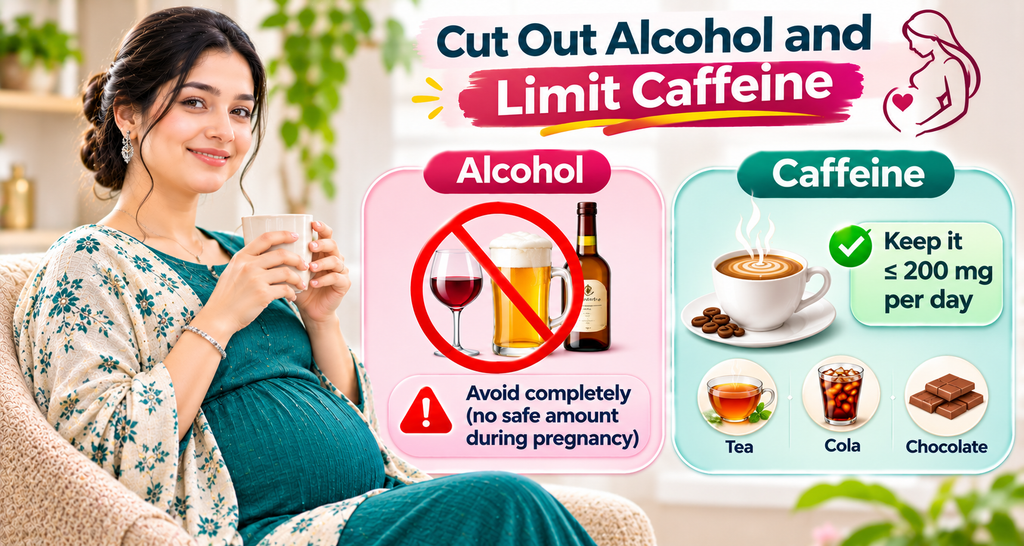
It is essential to make some changes regarding your choice of beverages during pregnancy. In particular, you need to be mindful about the consumption of alcohol and excessive caffeine. If you wish to follow Early Pregnancy Safety Tips, it is important to have a clear understanding of which drinks are safe to consume and which ones should be avoided.
Is Any Amount of Alcohol Safe During Pregnancy?
According to CDC guidelines, there is no proven safe amount or time for alcohol consumption during pregnancy. All forms of alcohol—whether beer, wine, or liquor—can negatively affect a baby’s development and increase the risk of Fetal Alcohol Spectrum Disorders (FASDs).
However, if you consumed alcohol unknowingly before realizing you were pregnant, do not panic or blame yourself. Simply avoid alcohol from this point forward and inform your doctor. Making informed decisions at the right time is a crucial aspect of Early Pregnancy Safety Tips.
How Much Caffeine Can You Have?
Can’t start your day without a cup of coffee? Don’t worry—discovering you’re pregnant doesn’t mean you have to give up coffee entirely.
According to ACOG guidelines, it is advisable to limit daily caffeine intake to less than 200 milligrams during pregnancy. This is roughly equivalent to 12 ounces of coffee, though the actual caffeine content can vary depending on the type of coffee and how it is prepared.
Keep in mind that caffeine isn’t just found in coffee; it can also be present in tea, chocolate, soft drinks, energy drinks, and even some headache medications. Therefore, be sure to account for all these sources when calculating your total daily caffeine intake.
Avoid Smoking, Vaping and Marijuana
During pregnancy, can your own smoking harm the baby, or is exposure to secondhand smoke also a risk?
In reality, both are causes for concern. Cigarette smoke and vaping can hinder a baby’s normal development; therefore, exposure to others’ smoking should also be avoided.
Furthermore, using marijuana to alleviate morning sickness is not safe. Its potential effects pose a risk to the baby’s developing brain. As part of following Early Pregnancy Safety Tips, avoid smoking, vaping, and marijuana. If you struggle to quit any of these habits, do not hide the issue out of guilt—instead, seek help from a healthcare professional.
Protect Yourself From Infections
Do You Need to Stay Away From Your Cat?
Do you have a pet cat at home?
Upon learning about a pregnancy, many people begin to wonder: should they now stay away from the cat?
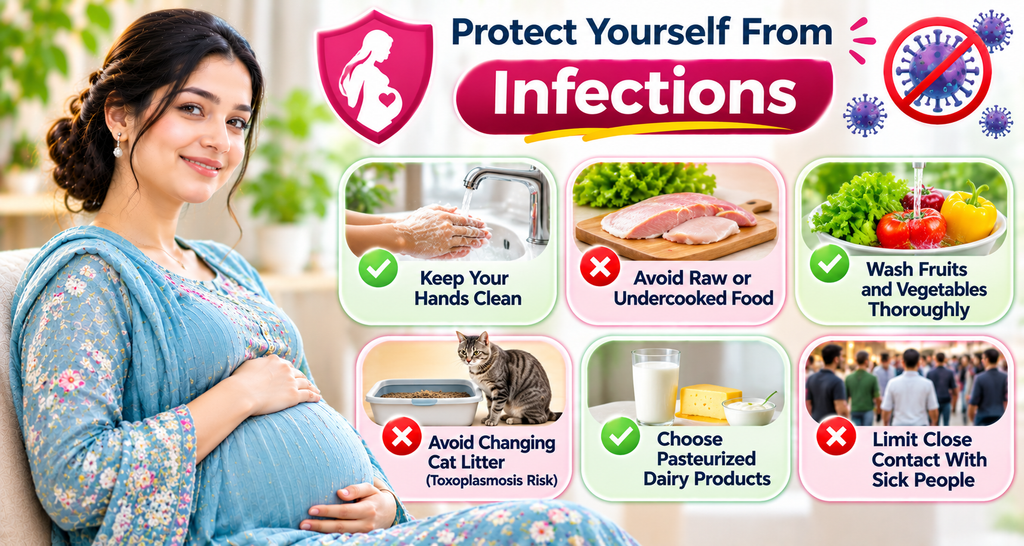
The good news is that, in most cases, there is no need to remove the cat from your home. However, it is important to be cautious about a parasitic infection called toxoplasmosis.
The parasite responsible for this infection can be transmitted through cat feces, contaminated soil, and raw or undercooked meat. If a new infection occurs during pregnancy, it could, in some instances, cause harm to the baby.
To stay safe, follow a few simple precautions.
- If possible, ask someone else to clean the cat litter daily.
- If you clean it yourself, use disposable gloves.
- Wash your hands thoroughly with soap after finishing the task.
- Wear gloves when working in the garden.
- Wash fruits and vegetables thoroughly before eating.
- Ensure meat is cooked completely before consumption.
- Keep cooking utensils and cutting boards clean.
Here is a relatively little-known fact: after being excreted in a cat’s feces, the *Toxoplasma* parasite typically takes 1–5 days to become infectious. Therefore, cleaning the litter box daily can help reduce the risk of infection.
Exercise and Heat Safety
Can You Exercise During Early Pregnancy?
Can exercising during pregnancy actually harm the baby?
Although many mothers may have this concern, appropriate exercise is generally safe and beneficial during a healthy, uncomplicated pregnancy. According to ACOG guidelines, and in consultation with a healthcare provider, one can engage in approximately 150 minutes of moderate physical activity per week. For instance, walking or performing light exercise for 30 minutes a day, five days a week, is a good practice to follow for Early Pregnancy Safety Tips.
| Exercise Type | General Guidance |
| Walking | Generally Suitable |
| Swimming | Generally Suitable |
| Stationary Cycling | Generally Suitable |
| Prenatal Yoga | Generally Suitable |
| Contact Sports | Avoid |
| High-Fall-Risk Activities | Avoid |
| Scuba Diving | Avoid |
| Hot Yoga | Avoid |
Moderate exercise refers to physical activity during which you can talk, but cannot sing normally. If you are not used to exercising, start with a short duration and gradually increase it.
Everyday Tips for a More Comfortable Pregnancy
During the first three months, it is not just major health risks that matter; small, everyday habits are also significant. In particular, morning sickness, fatigue, and emotional anxiety can make daily life difficult for many mothers.
How to Manage Morning Sickness
Nausea during early pregnancy is a very common issue. For many, it is worse in the morning, while others may experience discomfort throughout the day. It is typically most noticeable during the first three months.
Adopting a few simple habits can be helpful.
- Instead of eating large meals, eat smaller portions more frequently.
- You might keep some plain crackers by your bedside.
- Avoid going for long periods on an empty stomach.
- Drink water in small, frequent sips.
- For some mothers, ginger can be helpful.
- If the problem persists or becomes severe, consult a doctor for safe treatment advice.
But what if the vomiting is so severe that you cannot keep any food or water down—should you wait?
Certainly not. This can lead to dehydration and may require prompt medical attention. Therefore, in addition to following ‘Early Pregnancy Safety Tips,’ seek medical advice without delay if such a situation arises.
Take Care of Your Mind and Daily Routine
In addition to physical care, pay attention to your mental health. The prospect of taking on the responsibility for a new life can bring both joy and anxiety. Share your feelings with those close to you. Get plenty of rest, and do not try to handle everything on your own.
If your work environment involves lifting heavy objects, exposure to harmful chemicals, or standing for long periods, consult your doctor to ensure appropriate safety measures are in place.
Always wear a seat belt when traveling in a vehicle. Position the lap belt low across your hips—not over your abdomen—and place the shoulder belt across the center of your chest.
Finally, once you have a positive pregnancy test, contact your doctor to schedule your first prenatal appointment. The timing of this initial visit and the necessary medical tests will be determined based on your specific health needs.
When to Call Your Doctor or Midwife
Some physical changes during pregnancy are normal, such as mild nausea or slight fatigue. However, ignoring certain symptoms can be dangerous.
It is particularly important to be aware of an ectopic pregnancy. In this condition, the pregnancy occurs outside the uterus—most commonly in a fallopian tube. This can be dangerous and may present with symptoms such as severe, one-sided abdominal pain, bleeding, or dizziness.
Seek medical attention immediately if you experience any of the following symptoms.
| Warning Sign | What to Do |
| Heavy Bleeding or Passing Clots | Seek Emergency Medical Care |
| Severe One-Sided Abdominal Pain | Get Immediate Medical Evaluation |
| Chest Pain | Seek Emergency Care |
| Trouble Breathing | Call Emergency Services |
| Fainting | Get Immediate Medical Attention |
| Fever of 100.4°F (38°C) or Higher | Contact Your Provider Promptly |
| Unable to Keep Fluids Down | Contact Your Provider |
| Persistent Severe Headache | Seek Medical Advice Promptly |
| Vision Changes | Contact Your Provider Immediately |
| Thoughts of Self-Harm | Seek Emergency Mental Health Support |
Light spotting is not always a sign of a serious problem. However, it is advisable to inform your doctor about any bleeding during pregnancy. In particular, do not wait if you experience symptoms such as heavy bleeding, the passing of blood clots, severe pain, or fainting.
Final Thoughts
Should you live in constant fear just because something went wrong before you knew you were pregnant?
Certainly not. Instead of worrying about the past, the most important thing is to make informed, conscious decisions moving forward.
Take 400 micrograms of folic acid daily, avoid alcohol and smoking, keep your caffeine intake below 200 milligrams per day, and ensure that all food is thoroughly cooked. Consult your doctor before taking any medication.
Remember, the purpose of following “early pregnancy safety tips” is not to instill fear, but to provide the right information to help ensure the well-being of both mother and baby. Take care of yourself, stay in touch with your doctor, and seek medical attention promptly if you notice any unusual symptoms.
Health Disclaimer: This article is for general health education purposes and is not a substitute for professional medical advice. Always consult your doctor before taking any medication, supplements, or making lifestyle changes during pregnancy.
Frequently Asked Questions About Early Pregnancy Safety
What Are the Most Important Safety Tips During Early Pregnancy?
During the first three months, it is important to take 400 micrograms of folic acid daily, avoid alcohol completely, keep caffeine intake below 200 milligrams, and choose safe food options. Additionally, do not take any medication without consulting a doctor.
Can I Drink Coffee During the First Trimester?
Yes, coffee can generally be consumed in moderate amounts. The ACOG recommends a daily caffeine intake of less than 200 milligrams. However, you should also account for the caffeine you get from tea, chocolate, and other beverages.
What Should I Avoid Eating During Early Pregnancy?
You should avoid raw or undercooked meat, raw eggs, unpasteurized milk, certain soft cheeses, and fish with high mercury content. Make sure to heat deli meats and hot dogs thoroughly before consuming them.
Is It Safe to Exercise During the First Trimester?
During a healthy, uncomplicated pregnancy, activities such as walking, swimming, and appropriate prenatal yoga are generally safe. However, avoid contact sports, scuba diving, and any activities that carry a high risk of falling.