

The subject of a woman giving birth brings all the emotions of curiosity, anxiety, joy, and fear. Especially for those who are going to be mothers for the first time, questions arise in their minds – do I feel pregnant? What changes occur in the body when pregnancy begins? Is there any problem with stopping menstruation? Many women cannot feel happiness or pain due to extreme circumstances. So they search for “early signs of pregnancy” on Google.
When does pregnancy actually begin?
Many people have a common misconception that pregnancy begins after the end of menstruation. This is often the case, especially for new mothers or those who have had little experience with pregnancy. But the reality is that pregnancy begins inside the body long before menstruation stops. The cessation of menstruation is a sign of pregnancy, but it is not the beginning.
Pregnancy begins when a man’s sperm meets a woman’s egg. This union usually occurs inside the woman’s fallopian tube. During this time, a new cell is formed, which contains all the genetic characteristics of the future baby. This stage is called fertilization.
After fertilization, the fertilized egg slowly moves towards the uterus. After a few days of travel, it travels to the inner wall of the uterus and becomes firmly fixed. The process of reaching the uterus and fixing itself is called implantation. Only when this implantation is successfully completed does pregnancy permanently begin.
From this time on, various hormonal changes begin in the woman’s body. In particular, the levels of hormones called hCG and progesterone increase. Due to these hormones, the early symptoms of pregnancy gradually appear. Such as fatigue, nausea, heaviness in the chest or mood swings
Why are early pregnancy symptoms not the same for everyone?
It is really important to remember that early pregnancy symptoms are not the same for everyone. Many women think that everyone will experience the same symptoms when they get pregnant. But in reality, this is not the case at all. This is because every woman’s body is different, and the way hormones work is also different. Some bodies adapt to changes very quickly, while others change slowly. Therefore, early pregnancy symptoms can be understood very early in some cases, and in others it can be understood very late.
For some women, nausea, fatigue, chest pain, or problems with smell begin at the very beginning of pregnancy. On the other hand, there are many women whose bodies do not show any symptoms. It sometimes happens that they do not realize that they are pregnant even after their period has stopped. On the other hand, some are aware of changes in their body before their period has stopped. These differences are completely normal.
In addition, a woman’s age, body type, stress, previous pregnancy experiences, and even daily life affect pregnancy symptoms. Therefore, it is not right to conclude that pregnancy is not happening just because there are few symptoms, or that pregnancy is definitely happening just because there are many symptoms. This is very important to remember.
Why are symptoms different for each person?
- Not all women’s bodies and hormones work the same
- Some people’s hormones work quickly, while others work slowly
- Some people may notice symptoms before their period stops
- Some people find it difficult to notice symptoms even after their period stops
- It is important to remember that pregnancy can occur even if symptoms are few.
Light bleeding or spotting (implantation bleeding)

Many women are very confused about one thing in the very beginning of pregnancy, and that is light bleeding or spotting. Many times, women think that their period has started. But in reality, it may not always be their period. A normal phenomenon can occur in early pregnancy, which is called implantation bleeding.
When the man’s sperm combines with the woman’s egg to form a fertilized egg, that egg implants itself in the inner wall of the uterus a few days later. During this implantation, the fine blood vessels inside the uterus can be slightly injured. This results in a little bleeding. This bleeding is usually not very heavy and most of the time the woman does not feel any pain.
Implantation bleeding usually occurs in the very beginning of pregnancy, often close to the expected date of menstruation. Therefore, many women mistake it for light menstruation. However, it is not as heavy or long-lasting as menstruation. Therefore, knowing about it reduces unnecessary anxiety.
Common symptoms of implantation bleeding
- The bleeding is very light
- The color is usually pink or light brown
- Does not last more than 1 to 2 days
- There is no severe pain
- It is common to mistake it for menstruation at times.
Chest tightness and pain
The first change many women notice in their bodies at the very beginning of pregnancy is chest tightness and pain. During this time, a woman’s hormone levels suddenly increase, especially the hormones estrogen and progesterone. Due to these hormonal changes, blood circulation in the tissues inside the chest increases, causing the breasts to swell and become more sensitive than before.
Many women say that they feel a kind of tightness in the chest, even with a light touch. In some cases, the chest feels heavy, while in others, wearing a bra creates discomfort. Although this feeling is much like the period before menstruation, it is usually more pronounced and lasts longer during pregnancy. Chest pain before menstruation subsides within a few days, but this problem can last for several weeks during pregnancy.
In addition, many women’s nipples may also become a little darker in color and become more sensitive during this time. These changes are part of the body’s natural preparation, as the body gradually begins to prepare itself for future breastfeeding. So, if your breasts feel heavy or sore, there is no reason to panic, it is a very common symptom of pregnancy.
Common symptoms of breast heaviness and soreness
- Breast swelling or a heavy feeling
- Tightness and pain when touched
- Discomfort when wearing a bra
- Like cramps before menstruation, but longer
- More sensitive nipples
Excessive fatigue and weakness
A very common but often overlooked symptom of early pregnancy is excessive fatigue and weakness. Many women suddenly notice at this time that they are not as alert as before. The body is sluggish from the morning, they feel tired after doing little work, and even the body feels heavy after doing nothing. Many people want to lie down all the time, find it difficult to sleep and maintain concentration.
The main reason for this type of fatigue is the major changes that occur inside the body. At the beginning of pregnancy, the woman’s body is busy creating a new life. During this time, a large part of the body’s energy is used for this internal work. In addition, hormone levels also change rapidly, especially the hormone progesterone increases, which makes the body more lethargic and sleepy.
Many women think that perhaps they are not eating properly or that it is due to high workload. But if this is accompanied by a missed period or other changes in the body, it is not right to take it lightly. Excessive fatigue can be an important symptom of the early stages of pregnancy.
Why do you feel tired during pregnancy?
- Your body is busy creating new life
- Your hormone levels are changing rapidly
- Progesterone makes your body more sluggish
- You run out of energy quickly even after doing little work
- You need more rest than usual
Frequent urination

Many women notice a strange change in early pregnancy, and that is the feeling of frequent urination. Many women wonder, “I didn’t have to go to the toilet so often before, why do I have to go so often now?” Although this change occurs suddenly, it is a completely normal sign of pregnancy.
As soon as pregnancy begins, hormone levels in a woman’s body begin to increase. This has a direct effect on the kidneys. During this time, blood flow to the kidneys increases compared to before, causing the kidneys to filter more waste products and produce urine. Therefore, the amount of urine increases and the need to go to the toilet more often is felt.
Also, in early pregnancy, the uterus begins to grow gradually. Although it is not very large at that time, it can still put mild pressure on the urinary bladder. Due to this pressure, even small amounts of urine accumulate and the urge to urinate quickly arises. Sometimes, you have to go to the toilet repeatedly even during sleep at night, which can be annoying for women.
However, frequent urination during this time does not mean there is an infection or problem. It is a normal part of pregnancy. However, if there is burning, pain, or fever while urinating, you should definitely contact your doctor.
Causes of frequent urination during pregnancy
- Increased blood flow to the kidneys
- Increased hormone levels in the body
- Pressure on the bladder due to the uterus
- Urgent urination even after urinating a small amount
- Frequent need to go to the toilet at night
Unusual mood swings
A very common but confusing change that many women experience in early pregnancy is unusual mood swings. During this time, you may suddenly feel great, and then a little later you may feel sad for no reason. Sometimes you may laugh, and sometimes your eyes may well up for small reasons. Many women themselves do not understand why they are behaving this way.
During this time, you may suddenly get angry with yourself or get annoyed by the slightest thing someone in your family says. Little things that you did not pay much attention to before, now hurt a lot. Sometimes it also happens that for some special reason, you feel good and everything around you seems beautiful. This change in behavior often surprises women too.
The main reason for these mood swings is the major hormonal changes in the body. At the beginning of pregnancy, the hormones estrogen and progesterone increase rapidly, which directly affect the part of the brain that controls emotions. In addition, new responsibilities, anxiety about the future, physical discomfort – all this together also creates stress. So it is very important to be patient and not to get angry with yourself during this time. This time becomes much easier if you get support from family and close people.
Common signs of mood swings during pregnancy
- Getting angry over small things
- Getting annoyed over small things
- Crying sometimes for no reason
- Suddenly feeling very good again
- Hormones are behind everything
High Body Temperature
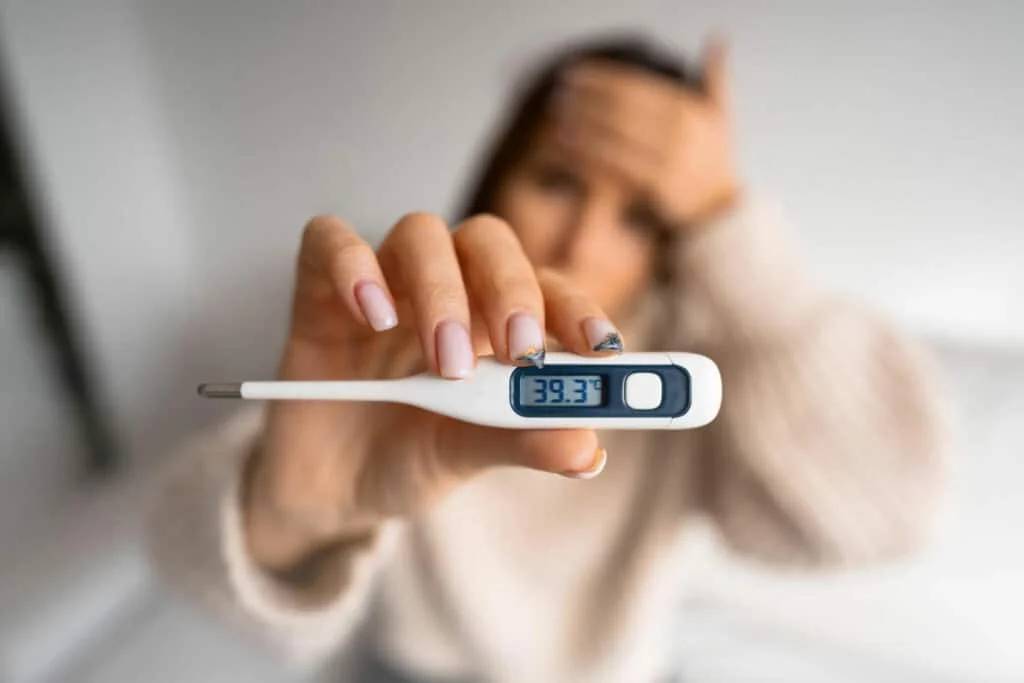
In the early stages of pregnancy, there are some changes inside the body that are not very noticeable from the outside, but if you pay attention, you can detect them. One important thing is that the body temperature is higher than normal. Many women notice that after ovulation, their body feels a kind of heat inside or the body feels a little warmer than before. Usually, the body temperature increases slightly after ovulation, but if that temperature remains the same for a long time and does not decrease, then this can be a possible sign of pregnancy.
Usually, if pregnancy does not occur after ovulation, the body temperature returns to normal within a few days and menstruation begins. But if pregnancy occurs, the temperature remains slightly higher for a long time due to the high levels of the hormone progesterone in the body. Many times, the woman herself does not realize this change, but those who regularly measure their body temperature can notice it.
A high body temperature alone does not confirm pregnancy, but if it is accompanied by a missed period or other signs of pregnancy, the matter should be taken seriously.
Symptoms of increased body temperature
- Higher than normal temperature after ovulation
- Temperature does not decrease after a few days
- Feeling hot inside the body
- This change occurs when menstruation is delayed
When is the best time to take a pregnancy test?
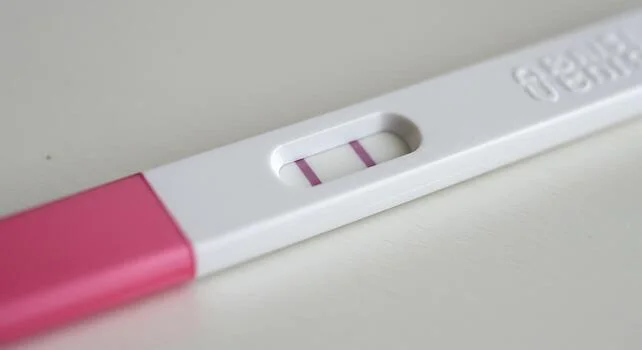
Many women are confused about when is the best time to take a pregnancy test. Testing too early can lead to a negative result, while testing too late can increase anxiety. Therefore, knowing the right time is very important. Generally speaking, the best time to take a pregnancy test is 5 to 7 days after the end of menstruation. During this time, the level of pregnancy hormones in the body reaches a level that the test kit can easily detect.
When a woman becomes pregnant, a hormone called hCG is produced in her body. This hormone is detected in pregnancy tests. This hormone is not very high immediately after menstruation stops. Therefore, waiting a few days after menstruation stops makes the results more reliable. Many women get impatient and test before their period, which can lead to inaccurate results.
Another important point is to test with the first urine of the morning. This is because the concentration of hCG hormone is highest in the morning urine. Therefore, the test gives relatively more accurate results at this time. Testing at the right time and in the right way reduces unnecessary anxiety and makes it easier to make a quick decision.
The correct way to test for pregnancy
- Test 5-7 days after your period stops
- Don’t test too early
- Use first morning urine
- Follow the test instructions carefully
- If in doubt, test again after a few days
What to do if pregnancy is confirmed?
The news of pregnancy confirmation brings a woman joy and also a worry. At this time, property cannot be raised, what should be done. In fact, after confirming pregnancy, it is very important to take care of yourself and the unborn baby. So, you should actively write something at this time.
First of all, you should contact a good doctor. If you start a checkup as per the doctor’s advice, there will be problems. Also, the doctor usually advises folic acid. Folic acid helps in the proper formation of the baby’s heart and spine, so it is very important to start it.
Smoking and alcohol should be completely avoided at this time. Consumption can be harmful to the baby. Special attention should be paid to food. You should try to eat healthy and nutritious food every day, such as vegetables, fruits, milk, pulses and enough water. At the same time, it is also very important to keep calm. You can try to stay calm without worrying or fearing too much.
Things to do if pregnancy is confirmed
- Seek immediate medical advice
- Start taking folic acid packs
- Quit drinking alcohol completely
- Eat healthy and nutritious food
- Try to stay calm and positive
Conclusion
A woman can prepare herself much better if she knows the early signs of pregnancy. In my mind, the same thing happens in all cases. So if in doubt, consult your pregnancy counselor and talk to your doctor.