

Affiliate Notice: Some of the links included in this article are affiliate links. If you click on one of these links and make a purchase, we may earn a small commission. This will not result in any additional cost to you.
When you repeatedly pick up your baby for feeding, you might suddenly feel pain and discomfort in your knees, even at the slightest movement or sound. A little while later, while sitting on the floor playing with your child, you find it quite easy to sit down; however, when you try to stand back up, you have to place your hands on the sofa and use it for support to get up. An intriguing question might now arise in your mind: what is it like for a person to navigate their daily life when tasks that were once effortless gradually become difficult to perform?
The aforementioned issue has become a common problem for most parents today; the root cause is that they did not follow any proper guidelines in how they lived their own lives. In the process of managing responsibilities related to their families and children, they end up forgetting to take care of their own well-being. If you are currently experiencing this issue, or if you are looking for a supplement to address it, Joint Genesis could be an excellent solution for you. Since there is no complex regimen for this supplement—only one capsule needs to be taken daily—the instructions for its use are quite simple. There are many among us who want to know whether this supplement is truly effective in reducing joint discomfort, or if it is just another product being sold like so many others.
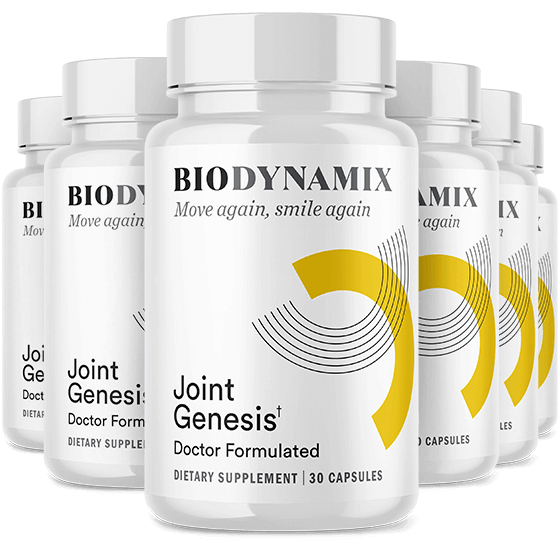
Developed by BioDynamix, Joint Genesis is a daily capsule whose formula centres on the branded ingredient Mobilee®. In today’s discussion, we will examine the ingredients of Joint Genesis and what scientific research says about their efficacy. We will also analyze user reviews to see whether people have experienced greater ease of movement after taking the supplement, or if they have noticed no significant change at all.
| Good Fit If You… | Probably Not for You If You… |
| Want a simple one-capsule daily routine | Need treatment for a diagnosed joint condition |
| Are fine with gradual, uncertain results | Expect noticeable relief within days |
| Can check the label with your doctor first | Are pregnant or breastfeeding and haven’t asked your doctor |
| Like trying a product with a long refund window | Prefer products tested as a finished formula |
Why So Many Moms Are Searching for Joint Genesis Reviews

After giving birth, the process of raising a child places a strain on the body’s joints—a fact about which no one provides any prior warning. Your daily routine involves various physical tasks: for instance, you may need to lift a child’s car seat, carry baskets full of laundry up and down the stairs, bend down low to tie your shoelaces, or sit on the floor for long periods while telling stories to children. As one passes the age of 35 or 40—after years of engaging in activities that strain these muscles—experiencing daily stiffness becomes a distinct phase of life.
Many devoted children seek solutions to the complex and difficult health challenges their parents face. Perhaps noticing that their mother walks much more slowly than before, or wanting to help their father keep pace with his grandchildren. Whatever the reason, the core question remains: are joint health supplements truly effective, or are they merely ordinary products sold through clever marketing? It is only natural for such a question to cross your mind.
However, the real problem arises when you seek detailed information about this supplement, only to find that no website offers a unique or distinct review; instead, almost every site contains the same type of content—the kind specifically designed solely to sell the product. So, without further ado, let’s dive straight into the discussion and explore the actual facts.
Joint Genesis at a Glance
| Detail | What the Manufacturer Lists |
| Brand | BioDynamix |
| Format | Capsules, 30 per bottle |
| Serving | 1 capsule daily |
| Key ingredient | Mobilee® hyaluronic acid matrix |
| Other ingredients featured | French maritime pine bark, Boswellia serrata, ginger root, BioPerine® black pepper |
| Label notes | Gluten free, “Doctor Formulated” |
| Advertised guarantee | 180 days |
| Marketed for | Everyday joint comfort, flexibility and mobility |
How Joint Genesis Is Supposed to Work
Think about a squeaky door hinge. A little oil and the door swings smoothly again. Your movable joints have their own version of that oil, called synovial fluid. It cushions and lubricates the joint so the surfaces glide instead of grind.
A big part of what makes synovial fluid thick and slippery is hyaluronan, also known as hyaluronic acid. Many joint supplements focus on cartilage ingredients like glucosamine. Joint Genesis takes a different angle and highlights hyaluronan and joint lubrication instead.
Here is the honest catch. Hyaluronan clearly matters inside the joint, but that does not prove that swallowing a capsule raises your synovial fluid levels by any specific amount. Any claim about the finished product needs evidence about the finished product, and that evidence is still missing.
What’s Inside Each Capsule
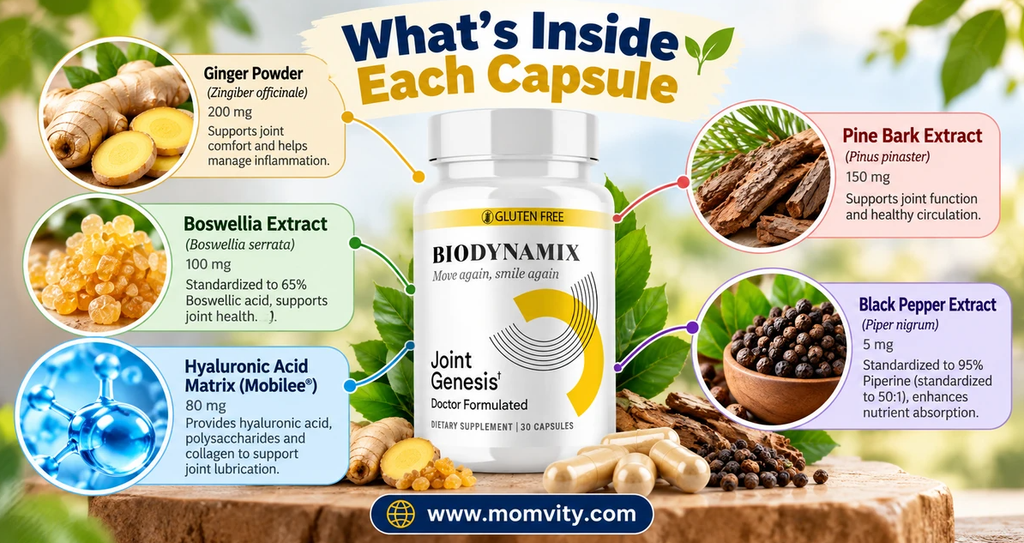
Here is the Supplement Facts panel as listed for one capsule. Formulas can change over time, so check the label on your bottle for the most accurate information.
| Ingredient | Amount per Capsule |
| Ginger powder (Zingiber officinale root) | 200 mg |
| French maritime pine bark extract (Pinus pinaster) | 150 mg |
| Boswellia serrata extract (65% boswellic acid) | 100 mg |
| Mobilee® hyaluronic acid matrix (polysaccharides, hyaluronic acid, collagen type II) | 80 mg |
| BioPerine® black pepper extract (95% piperine) | 5 mg |
Other ingredients are cellulose (the capsule), magnesium stearate and silica.
Mobilee®, the Star Ingredient
Mobilee is made by the Spanish company Bioiberica. It is a matrix that combines hyaluronic acid with other polysaccharides and collagen. According to Bioiberica, it is extracted from rooster comb, so vegetarian and vegan moms should keep that in mind before buying.
The Four Supporting Ingredients
French maritime pine bark supplies polyphenols that researchers have studied for antioxidant activity. Boswellia, also called Indian frankincense, has been tested in standardized extracts for osteoarthritis symptoms. Ginger is the same root you may already grate into a stir-fry, studied here for joint discomfort. BioPerine is a black pepper extract added mainly to support absorption, though it can also affect how some medications are absorbed.
What Does the Research Actually Say?
This is where reading carefully pays off. Looking at the evidence for individual ingredients can help explain the choices made when designing a formula. It does not prove that the finished capsule works.
| Research | Who Was Studied | What It Can Tell You |
| Mobilee yogurt study | 40 adults with mild knee discomfort, 90 days | Mobilee in a yogurt matrix improved some knee-strength measures vs. placebo |
| NIH (NCCIH) Boswellia overview | Several relatively small studies | Some encouraging findings; larger trials are needed |
| Cochrane review of oral herbal therapies | 49 studies, 5,980 participants | Results vary by extract, formula and study quality |
| Oral hyaluronic acid study | 60 adults with early knee osteoarthritis | Evidence about that regimen, not Joint Genesis |
| Joint Genesis as a finished formula | No independent product trial found | No verified success rate can be claimed |
The Mobilee findings are interesting, but notice the details. Those participants ate Mobilee in yogurt, not in a five-ingredient capsule. Bioiberica also funded and helped run some of that research, which is common in the supplement world but worth knowing.
The Cochrane review offers another useful example. Across two studies involving 85 participants, a 90-day trial of 100 mg7 of enriched Boswellia extract produced an average 17-point difference in pain scores compared with placebo, measured on a scale ranging from 0 to 100. That result applies to that specific extract and those trial conditions.Individual experiences with Joint Genesis may differ, so these findings are not a prediction of personal results.
The simple lesson is this: when you see a study quoted next to an ingredient, check whether the form, dose, length of use and type of person studied actually match the product you are buying.
What Joint Genesis Reviews Online Really Tell You
If you search for joint genesis reviews, you will notice something strange very quickly. Many results are not real reviews at all.
The Spam Problem
A lot of pages that rank for this product are promotional PDFs uploaded to unrelated websites, including university servers, or forum posts stuffed with order links. They repeat the same paragraphs, promise big results and send you straight to a checkout page. These are ads dressed up as joint genesis reviews, and they deserve no weight in your decision.
Positive Themes in Genuine Feedback
When buyers do describe their experience, the positive comments usually focus on convenience. One small capsule a day is easier to stick with than a handful of pills, and some people report that their routine walks or stairs feel a bit more comfortable over time.
Common Joint Genesis Complaints
The negative feedback tends to fall into a few groups. Some buyers say they felt no change. Others say results came more slowly than expected or that the price felt high for one bottle. Shipping delays and confusion over refund steps also show up, along with warnings about lookalike websites selling the product.
How to Read a Review Like a Pro
| Red Flag | Why It Matters |
| Promises to cure arthritis or rebuild cartilage | No supplement can honestly promise that |
| No drawbacks mentioned at all | Every product has limits |
| Countdown timers and “only 3 left” banners | Pressure tactics, not information |
| An order link in every paragraph | Likely an ad, not an experience |
| No way to tell if the buyer is real | Unverified stories can’t be trusted |
Balanced joint genesis reviews usually sound ordinary. They mention small changes, admit doubts and separate delivery problems from how the product felt. You can also check public listings on Trustpilot, but confirm that the business named is the actual manufacturer and not a similarly named site.
Read more: The Brain Song Reviews for Busy Moms: Is This Audio Routine Worth Your Time?
Fitting One Capsule Into a Busy Family Day
The best supplement routine is the one you actually remember. With a houseful of kids, that means tying it to something you already do.
| Time of Day | Why It Can Work | Watch Out For |
| With breakfast | Easy to pair with your coffee | Mornings can get chaotic |
| After school drop-off | A calm reset before work or chores | Skipped on days off |
| With dinner | The whole family is at the table | Busy evenings may push it aside |
Picture a mom who keeps the bottle next to the coffee maker, on a high shelf away from little hands. She takes one capsule while the kids eat cereal and makes a quick note in her phone. That habit is the whole routine.
Try a Simple Seven-Day Journal
Before and during any supplement, track a few things for a week at a time. Make a note of how long you walk, your comfort score from 1 to 5, any strenuous or unusual tasks, such as moving furniture, and any new medication. A journal won’t prove that Joint Genesis caused a change, but it will show you patterns that a fuzzy memory misses. It also gives your doctor something useful to look at.
Pros and Cons
| Pros | Cons |
| Only one capsule per day | No independent trial of the finished formula |
| Built around a researched ingredient, Mobilee | Mobilee is from rooster comb, not vegetarian |
| Gluten free | Single-bottle price is on the higher side |
| Long advertised 180-day guarantee | Results vary and may take weeks |
| Clear Supplement Facts with listed amounts | Piperine and herbs may interact with medicines |
Joint Genesis Price and Packages

These were the one-time prices listed by the manufacturer at the time of writing.
| Package | Price per Bottle | Total | Supply |
| 1 bottle | $59 | $59 | 30 days |
| 3 bottles | $49 | $147 | 90 days |
| 6 bottles | $39 | $234 | 180 days |
Your actual price, taxes, shipping and any discount may differ. Check the final total at checkout and make sure you have chosen a one-time purchase and not a recurring subscription.
A Quick Checklist Before You Click Buy
| Check | Why |
| You’re on the official sales page | Lookalike sites are a known complaint |
| The label matches the facts above | Formulas can change |
| You understand the refund rules | Know the deadline and return steps |
| You’ve saved your order confirmation | You’ll need it for any refund |
| Your doctor or pharmacist has seen the label | Especially if you take medication |
Side Effects and Safety: Pregnancy, Breastfeeding and Medications
Natural does not automatically mean safe for everyone. Ginger, Boswellia, pine bark and piperine can each cause side effects in some people or interact with medicines, particularly where absorption or bleeding risk matters.
If you are pregnant, trying to conceive or breastfeeding, talk to your OB or midwife before starting any multi-ingredient supplement, including this one. The same applies if you take prescription medicine, have a diagnosed condition or are recovering from surgery.
Some joint symptoms need a doctor rather than a supplement. Do not ignore persistent or worsening pain, obvious swelling, warmth, redness, or any sudden change in your ability to move. These symptoms need medical attention. Keep in mind that Joint Genesis is a dietary supplement, not an established therapy for arthritis. Continue following the treatment plan provided by your doctor.
Buying Joint Genesis for Your Mom or Dad?
Many people exploring this product are doing so with an aging parent in mind. If that’s you, bring the bottle or a photo of the label to their next doctor’s appointment. Older adults are more likely to take several medications, and a quick review with a pharmacist can catch an interaction before it becomes a problem.
It also helps to set expectations together. Agree on a few weeks of use, keep the seven-day journal going and decide in advance what result would make it worth continuing.
The Bottom Line on Joint Genesis Reviews

After examining the research behind this supplement and reading genuine reviews of ‘Joint Genesis,’ it is clear that customer feedback is mixed. Some users reported an improvement in their physical condition, while others stated that it failed to provide any such benefit—and, furthermore, that they encountered significant issues when attempting to utilise the refund policy. Joint Genesis is a capsule-form supplement that is easy to use on a daily basis, and it has been formulated with a focus on ingredients that support mobility. This substance has been researched previously, and somewhat positive results were obtained. However, this supplement has not undergone any independent clinical trial testing.
This could be suggested for a busy mother, or for a caring adult child who wishes to explore a simpler, more convenient option while maintaining realistic expectations. However, consult a doctor before ordering this supplement, keep an honest record of your physical progress, and—most importantly—ensure that you strictly adhere to the refund terms and conditions.
When you’re ready, you can Check the Current Joint Genesis Offer → and confirm the latest price and package. Affiliate link · Pricing and terms are confirmed at checkout · Individual results vary.
Health Information Disclaimer: Nothing in this article should be interpreted as personalised medical advice or a substitute for professional care. Dietary supplements are not substitutes for medical care and are not intended to diagnose, treat, cure, or prevent any disease. Any questions or concerns about your health should be discussed with a qualified medical professional.
Frequently Asked Questions
Are joint genesis reviews mostly positive?
Feedback is mixed. Some buyers describe gradual comfort improvements and like the one-capsule routine, while others report no change, slow results or frustration with price and shipping. Many pages that look like reviews are actually promotional ads.
What is Mobilee in Joint Genesis?
Mobilee is a branded ingredient from Bioiberica that combines hyaluronic acid with other polysaccharides and collagen. It is the main ingredient in Joint Genesis, at 80 mg per capsule.
How many Joint Genesis capsules should I take each day?
The manufacturer lists one capsule daily. Follow the directions on the label you receive, and ask your doctor if you’re unsure.
Can I take Joint Genesis while pregnant or breastfeeding?
Talk to your OB, midwife or doctor first. The formula contains several herbal ingredients, and safety during pregnancy and breastfeeding should be checked by a professional who knows your health history.
Is Joint Genesis vegetarian?
According to its maker Bioiberica, Mobilee is extracted from rooster comb, so the formula is not considered vegetarian or vegan. Check the current label if this matters to you.
Is Joint Genesis FDA-approved?
No dietary supplement is FDA-approved for effectiveness the way prescription drugs are. Supplements can be sold without proving they work before reaching the market.
How much does Joint Genesis cost?
The manufacturer listed $59 for one bottle, $49 per bottle for three and $39 per bottle for six at the time of writing. Always confirm the final total at checkout.
Does Joint Genesis have a money-back guarantee?
BioDynamix advertises a 180-day money-back guarantee. Read the eligibility rules, deadline and return steps carefully before you order.