Joint Genesis Review: An Honest Beginner’s Guide to the Mobilee Joint Supplement

Tahmina Noor

Published: 25/10/2026
Updated: 28/10/2026

Affiliate Notice: Some of the links included in this article are affiliate links. If you click on one of these links and make a purchase, we may earn a small commission. This will not result in any additional cost to you.

Suppose you plan to watch a football match once a week; you are sitting on a folding chair by the pitch with your child on your lap. Before the match—or even the half-time—is over, you begin to feel pain in your knees. You might start to wonder why these issues seem to be getting worse over time, and you may ask yourself: what should be done to address them?
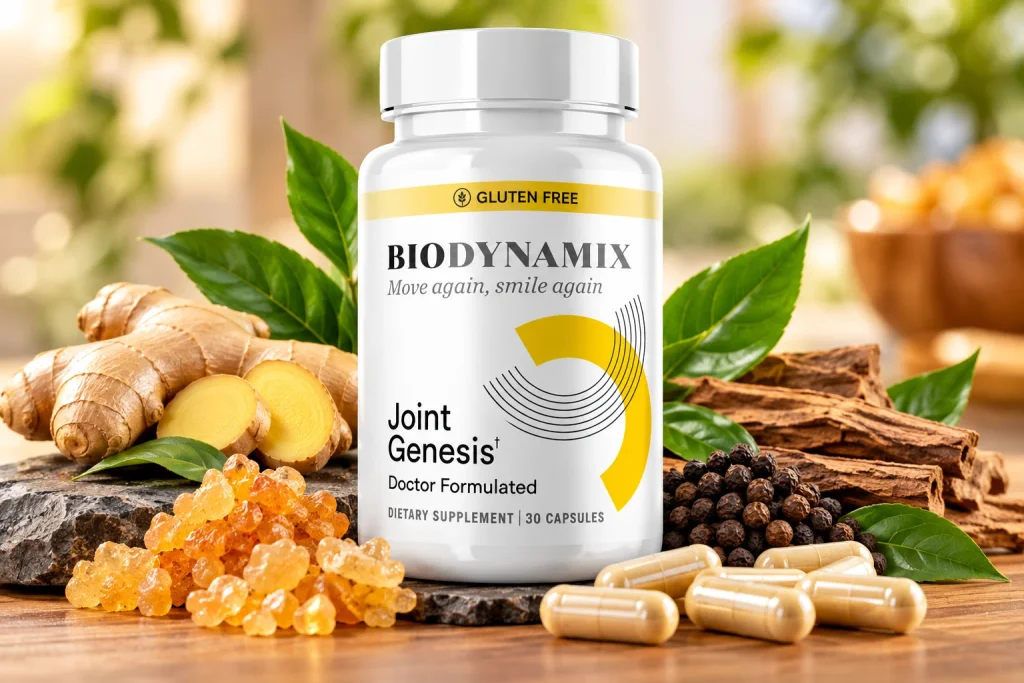
To address these issues, a supplement that has gained significant popularity is known as Joint Genesis. But can this supplement actually deliver the results claimed in its advertisements? This discussion is intended specifically for those who are unsure about where to begin, how to source products, or how to understand the ins and outs of returns and return policies. If you have never purchased joint pain supplements before, you will need to familiarise yourself with the product labels, usage instructions, and the official website; however, if you are new to this, you might find the process somewhat confusing.

Below, we will discuss in detail ‘Joint Genesis’ by BioDynamix. I will discuss how this supplement works, what its ingredients are, and also cover various scientific studies related to it. Along with this, I will try to provide precise information regarding its price, the target audience for whom such supplements are created, and the situations in which one should avoid using them. Once you have finished reading this entire discussion, you will be able to decide for yourself whether or not you need to take the supplement.

Joint Genesis Review in 60 Seconds

If you only have a minute between school pickup and dinner, here is the short version of this joint genesis review.

Question Short Answer 
What is it? A daily joint supplement from BioDynamix 
Main ingredient Mobilee®, a hyaluronic acid matrix 
How do you take it? One capsule per day 
Is the finished formula clinically tested? No independent trial of the full product was found 
Price range $39 to $59 per bottle, depending on package 
Refund window 180 days, as advertised 
Who should ask a doctor first? Anyone pregnant, breastfeeding, on medication or with a diagnosed condition 

What Is Joint Genesis?

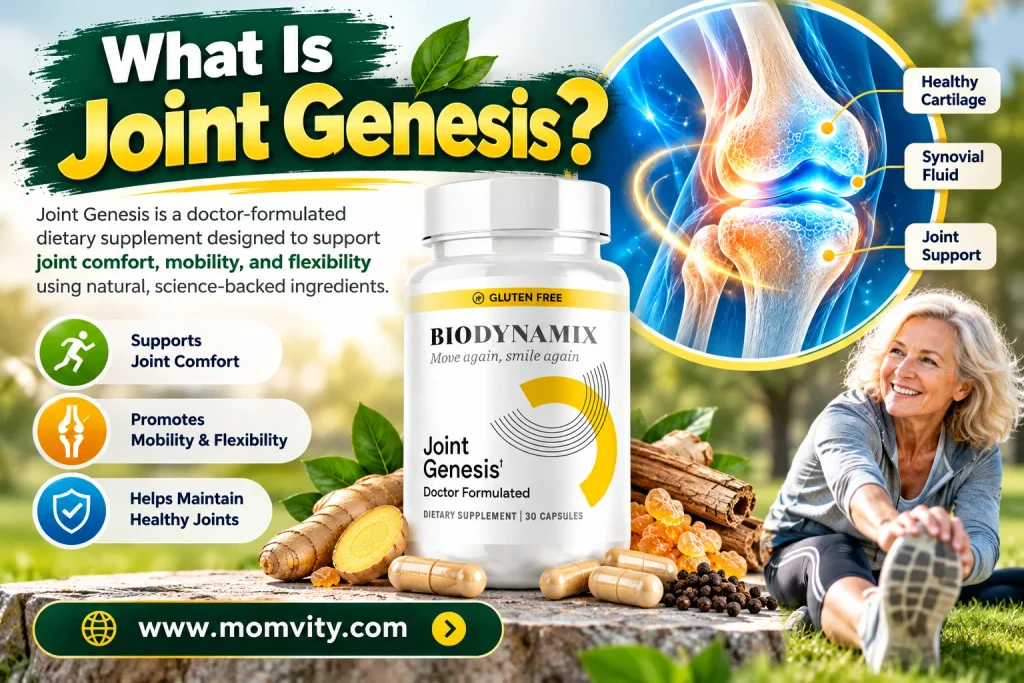
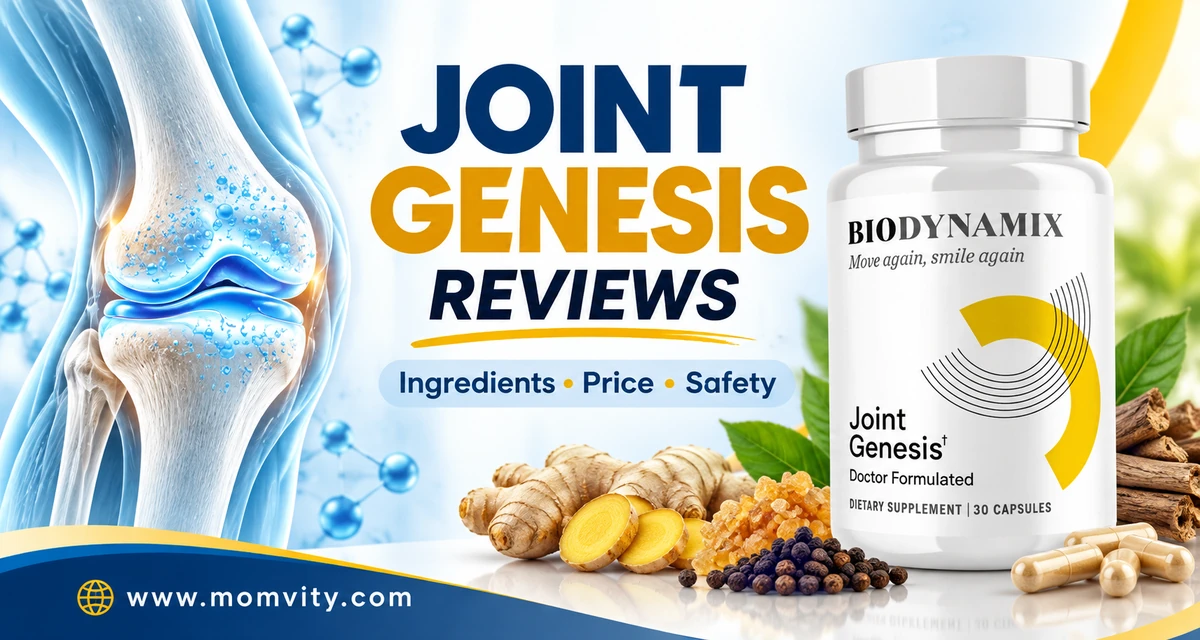
Joint Genesis is a dietary supplement produced under the Biodynamix brand. This supplement has been specially formulated to provide relief from joint pain in humans, and it comes with a tagline that says: “Move again, smile again.” Each bottle of this supplement contains 30 capsules, to be taken at a rate of one per day according to specific instructions; each bottle is designed to last for one month.

Its official site explicitly states that the product is gluten-free and formulated by doctors. This same trend has been observed in several advertisements; however, in none of the products we have handled or reviewed does it appear that any doctor is involved. No clinical test reports are available yet; therefore, this can be considered merely a one-sided promotional claim within the context of marketing—it is insufficient to substantiate the quality or effectiveness of the supplement.

How Joint Genesis Claims to Work

A Beginner’s Guide to Joint Fluid

Every joint in your body is contained within a fluid-filled capsule known as a synovial capsule. Every joint, including your knees and hips, remains filled with this fluid. You could describe this as a factor that contributes to the joint’s own regression. Let’s clarify this with a simple example: just as grease is used to ensure a bicycle chain moves smoothly, a similar thick, slippery substance allows bones—which are covered in cartilage—to glide over one another with minimal friction. This is why, initially, you do not experience joint pain.

Hyaluronan is marketed in an acid form; it is one of the primary factors responsible for the gel-like consistency of synovial fluid. Researchers have previously demonstrated, through numerous studies, that the substance hyaluronan plays a crucial role in maintaining the health of joints.

Where the Claim Stops

Here is the part sales pages tend to skip. Knowing that hyaluronan matters inside the joint is very different from proving that a swallowed capsule increases it by a meaningful amount. Your digestive system breaks down much of what you eat before it ever reaches a joint.

So the idea behind Joint Genesis is reasonable, but it is still an idea. A fair joint genesis review has to say clearly that the finished product has not been shown to raise joint fluid levels in buyers.

Read more: The Brain Song Reviews for Busy Moms

Joint Genesis Ingredients, Explained Simply

Below is the Supplement Facts panel listed for one capsule. Compare it with the bottle you receive, because manufacturers can update formulas.

Ingredient Amount What It Is in Plain English 
Ginger powder (root) 200 mg The kitchen spice, studied for joint discomfort 
French maritime pine bark extract 150 mg A tree bark extract rich in plant antioxidants 
Boswellia serrata extract (65% boswellic acid) 100 mg A resin known as Indian frankincense 
Mobilee® hyaluronic acid matrix 80 mg Hyaluronic acid blended with polysaccharides and collagen 
BioPerine® black pepper extract 5 mg Piperine, added to support absorption 

The capsule itself is made from cellulose, with magnesium stearate and silica as other ingredients.

Why Mobilee Gets Top Billing

Mobilee is a branded ingredient from the Spanish company Bioiberica. According to them, it is extracted from a specific part of a rooster’s anatomy and contains hyaluronic acid, along with other polysaccharides and collagen—a highly effective combination of ingredients. And if you follow a vegetarian diet or adhere to similar dietary restrictions, it is very important to be aware of the aforementioned source. Therefore, please be sure to take this into consideration before ordering this supplement.

The Supporting Cast

There has been significant prior research on the use of a specific, high-quality natural extract of Boswellia for various symptoms of osteoarthritis. An interesting source of polyphenols is the bark of the French maritime pine tree. This is a plant compound developed through research for its antioxidant activity. We know that BioPerine primarily aids in the absorption of various substances, but piperine can also significantly alter the mechanisms by which certain medications are absorbed.

What Does Science Say? A Beginner-Friendly Look

This is the most important part of any joint genesis review, because it separates what is known from what is marketed. A common beginner mistake is seeing a study next to an ingredient name and assuming the whole product has been proven. Let’s look at what the research actually covers.

Study or Review What Was Tested What It Means for You 
Mobilee yogurt trial 40 adults with mild knee discomfort ate Mobilee in yogurt for 90 days Some knee-strength measures improved vs. placebo, in a food form 
NIH (NCCIH) Boswellia summary Several small studies Encouraging hints, but larger trials are needed 
Cochrane review of herbal therapies 49 studies with 5,980 people Results depend heavily on the extract and study quality 
Oral hyaluronic acid trial 60 adults with early knee osteoarthritis Applies to that regimen, not to Joint Genesis 
The finished Joint Genesis capsule No independent trial found No proven success rate exists 

How to Read a Study Like a Smart Shopper

Ask four simple questions whenever a product quotes research. Was the ingredient in the same form? Was the dose the same? Did people take it for the same length of time? Were the participants similar to you?

Take the Cochrane review as an example. Two studies with 85 people found that an enriched Boswellia extract at 100 mg over 90 days produced an average 17-point drop on a 0 to 100 pain scale compared with placebo. That sounds impressive, but it applies to that specific extract under trial conditions. It doesn’t tell you what Joint Genesis will do for you.

It’s also worth knowing that much of the Mobilee research was supported by Bioiberica, the company that makes it. Industry-funded studies are normal in this field, but independent confirmation carries more weight.

How Joint Genesis Compares With Other Joint Options

Beginners often wonder whether a supplement is even the right first step. No joint genesis review is complete without that context, so here is how it fits next to other common choices.

Option What You Do Cost Evidence Snapshot 
Joint Genesis Take one capsule daily 39–59 per month Ingredient studies only; finished formula untested 
Glucosamine and chondroitin Take capsules daily Usually lower monthly cost Major U.S. rheumatology guidance advises against them for knee and hip osteoarthritis 
Regular exercise and strength work Walk, stretch, build leg muscles Free or low cost Strongly recommended by arthritis guidelines 
Weight management Gradual, steady changes Varies Strongly recommended for knee and hip osteoarthritis 
Doctor-guided treatment Medical evaluation and care Varies with insurance The right path for diagnosed conditions 

The honest takeaway is that Joint Genesis is not competing with exercise. Movement and strength work have the strongest support for joint comfort. A supplement, if you choose one, belongs alongside those habits rather than in place of them.

What to Expect in Your First 90 Days
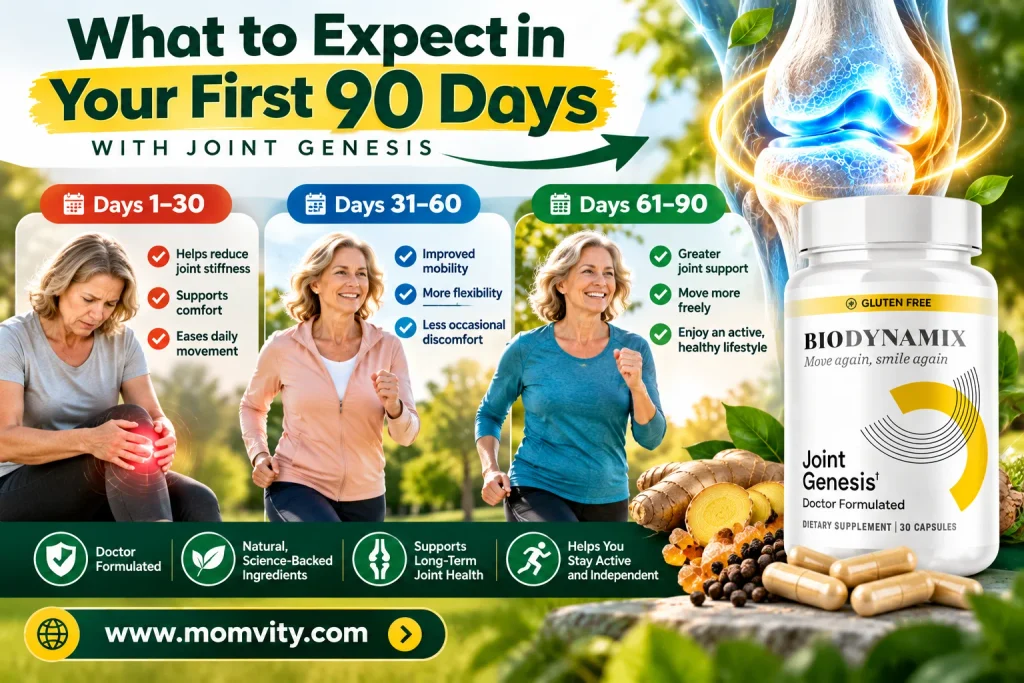
Supplement results, when they happen, are usually slow and subtle. Here is a realistic way to think about the first three months.

Timeframe What’s Realistic What to Do 
Weeks 1–2 Most people notice little or nothing Build the habit and watch for stomach upset 
Weeks 3–6 Some people notice small changes; many don’t Keep a simple comfort journal 
Weeks 7–12 A fair point to judge whether it’s worth continuing Compare your notes with week one 

Keep a Simple Joint Journal

In today’s discussion, we will examine the ingredients of Joint Genesis and what scientific research says about their efficacy. We will also analyse user reviews to determine whether individuals have experienced any benefits after using the supplement, or if there has been little to no change in their condition. Additionally, we will cover details such as pricing, purchasing terms, and other important aspects. However, should one decide to purchase a supplement based solely on the positive experiences of others? To answer this, it is necessary to look beyond promotional material and consider reliable information. Therefore, the purpose of this article is not to advertise Joint Genesis, but rather to help you make an informed, realistic decision—based on its potential benefits, scientific evidence, and cost—regarding whether it is the right fit for your specific needs.

Pros and Cons of Joint Genesis

What We Like What Gives Us Pause 
Simple one-capsule routine No independent trial of the finished product 
Clear Supplement Facts with listed doses Mobilee comes from rooster comb, so it isn’t vegetarian 
Focus on joint fluid is different from typical formulas Single bottle costs more than many joint supplements 
Long advertised 180-day refund window “Doctor Formulated” isn’t explained 
Gluten free Piperine and herbs may interact with some medications 

Joint Genesis Price: Which Package Makes Sense?
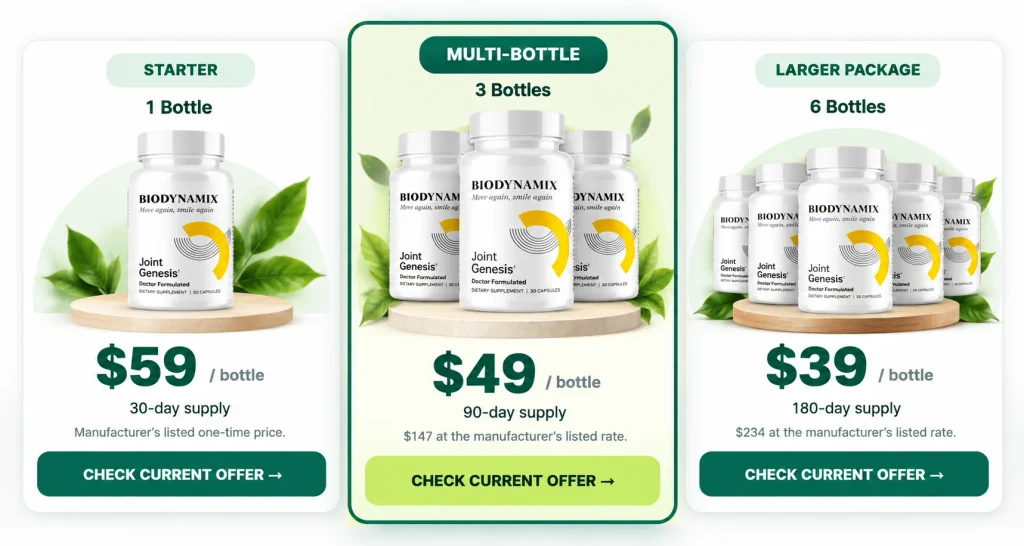
These one-time prices were listed by the manufacturer at the time of writing.

Package Per Bottle Total Supply 
1 bottle $59 $59 30 days 
3 bottles $49 $147 90 days 
6 bottles $39 $234 180 days 

For a first-time buyer, the three-bottle option lines up neatly with the 90-day test period described above. The six-bottle package has the lowest per-bottle cost, but it’s a bigger upfront commitment for a product you haven’t tried. Whichever you choose, check the final total at checkout and confirm whether you’ve selected a one-time purchase or a recurring subscription. Taxes, shipping and discounts may differ from these figures.

Understanding the 180-Day Guarantee

BioDynamix advertises a six-month money-back guarantee that includes an empty-bottle policy. Before ordering, read the exact rules: the refund deadline, whether bottles must be returned, who pays return shipping and how to contact support. Save your order confirmation email in a folder you can find later, because you’ll need it for any refund request.

Side Effects and Safety: Who Should Talk to a Doctor First

“Natural” doesn’t mean risk-free. Ginger, Boswellia, pine bark and piperine can cause side effects in some people and may interact with medicines, especially those where absorption or bleeding risk matters.

Please check with a healthcare professional before taking Joint Genesis if you are pregnant, trying to conceive or breastfeeding, if you take prescription medication, if you have a diagnosed medical condition, or if you have surgery coming up. As with any supplement, store the bottle well out of reach of children.

Some joint symptoms need medical attention rather than a supplement. Pain that keeps getting worse, noticeable swelling, warmth, redness or a sudden loss of movement should be checked by a doctor. Joint Genesis is a dietary supplement, not an established treatment for arthritis, and it shouldn’t replace any care your doctor has prescribed.

Our Verdict: Is Joint Genesis Worth Trying?

After examining the research behind this supplement and reading genuine reviews of ‘Joint Genesis,’ it is clear that customer feedback is mixed. Some users reported an improvement in their physical condition, while others stated that it failed to provide any such benefit—and, furthermore, that they encountered significant issues when attempting to utilise the refund policy. Joint Genesis is a capsule-form supplement that is easy to use on a daily basis, and it has been formulated with a focus on ingredients that support mobility. This substance has been researched previously, and somewhat positive results were obtained. However, this supplement has not undergone any independent clinical trial testing.

When you’re ready, you can Check the Current Joint Genesis Offer → and confirm the latest price and package. Affiliate link · Pricing and terms are confirmed at checkout · Individual results vary.

Health note: This article is for general information only and is not medical advice. Dietary supplements are not intended to diagnose, treat, cure or prevent any disease. Please speak with a qualified healthcare provider about any health concerns.

Frequently Asked Questions

Is this joint genesis review based on personal testing?
No. This review is based on the manufacturer’s product information, the Supplement Facts label and published research on the ingredients. We did not run a clinical test of the product.

What is the main ingredient in Joint Genesis?
The main ingredient is Mobilee®, a hyaluronic acid matrix that also contains polysaccharides and collagen. Each capsule lists 80 mg.

Can Joint Genesis replace my arthritis medication?
No. It’s a dietary supplement, not an arthritis treatment. Never stop or change prescribed medication without talking to your doctor.

Is Joint Genesis safe during pregnancy or breastfeeding?
Ask your OB, midwife or doctor before using it. The formula includes several herbal ingredients, and their safety should be reviewed by someone who knows your health history.

Is Joint Genesis sold in stores?
BioDynamix promotes buying through its official sales page. If you see it elsewhere, confirm the seller is legitimate and compare the label with the official one.

How long should I try Joint Genesis before deciding?
A fair trial is about 8 to 12 weeks, which fits within the advertised 180-day refund window. Keeping a short weekly journal makes that decision much easier.


Related Articles

early pregnancy vitamins

Early Pregnancy Vitamins: What You Need and Why It Matters

Did you know that during the first few weeks of pregnancy, the brain and spinal cord of your developing baby begin to form? 

At this stage, many mothers may not even be aware that a new life is on the way. Seeing two red lines on a pregnancy test often brings a mix of joy and a flurry of questions. 

What foods are best for the baby? Which vitamins support brain development? And with so many products available on the market, which one is truly right for your needs?

Exploring these questions makes it essential to learn about “early pregnancy vitamins.” Certain nutrients play a vital role in the healthy development of your baby during the early stages of pregnancy.

Dear mother, consider this: you might not have given much thought to your daily diet before, but now that you are expecting, you likely find yourself wanting to know about every component of what you eat. This is a beautiful transformation that comes with motherhood. However, keep in mind that more vitamins do not necessarily mean greater benefits for your baby. It is important to understand which nutrients are required, which can be obtained from food, and which might be needed as supplements. 

Let’s explore the most important nutrients for both your body and your unborn baby during the early stages of pregnancy.

Early Pregnancy Vitamins at a Glance

During pregnancy, your body’s nutritional needs change. In the first three months in particular, the baby’s brain, nervous system, bones, and other vital organs begin to develop. Therefore, in addition to your daily meals, it is essential to pay special attention to the intake of certain vitamins and minerals.

For your convenience, the daily nutritional requirements for pregnant women aged 19 and older are presented in the table below.

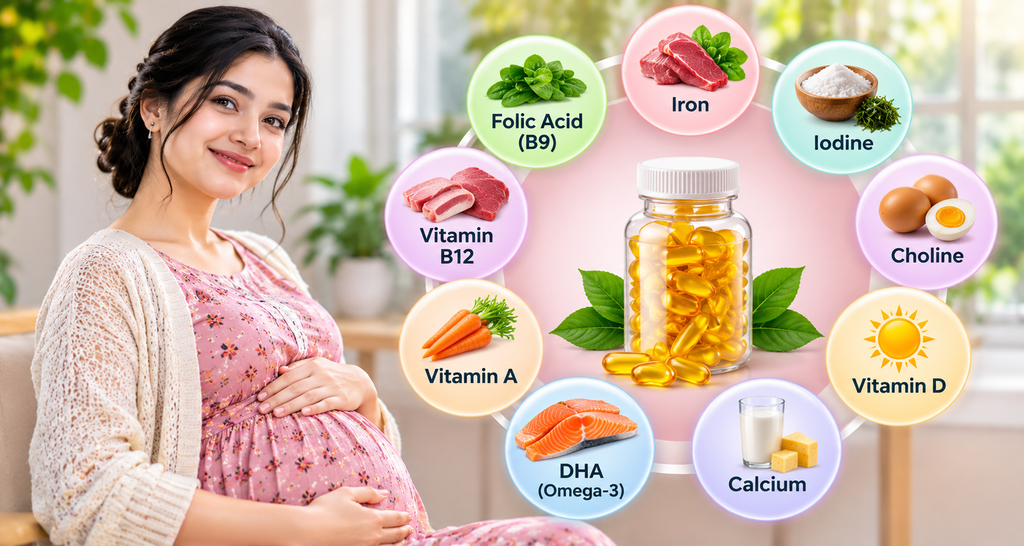
NutrientDaily RequirementMain Benefits
Folic Acid400 mcg (600 mcg DFE total folate)Brain and spinal cord development
Iron27 mgRed blood cell production
Iodine220 mcgBrain and thyroid development
Choline450 mgBrain and spinal cord development
Vitamin D15 mcg (600 IU)Bone development
Calcium1,000 mgStrong bones and teeth
Vitamin B122.6 mcgNerve and blood cell health
Vitamin A770 mcg RAEEye, skin and immune health
DHANo official RDABrain and eye development

Keep in mind that the amounts listed in the table represent your total daily nutritional requirements. This does not mean that you must obtain all of these nutrients solely from prenatal vitamins; you can meet these requirements through a combination of your diet and supplements.

Why Vitamins Matter So Much in Early Pregnancy

Have you ever wondered why early fetal development is so critical?

The answer lies in the initial formation of the baby’s body. During this period, a specialized structure called the “neural tube” develops, which eventually forms the baby’s brain and spinal cord.

Remarkably, this neural tube closes as early as the third or fourth week of pregnancy—often before a woman has even taken a pregnancy test. This means that by the time you discover you are pregnant, a vital stage of your baby’s development may have already been completed. A lack of sufficient folic acid can increase the risk of “neural tube defects”—congenital issues affecting the brain and spinal cord. According to the CDC, consuming 400 micrograms of folic acid daily helps prevent some of these birth defects.

This is why doctors recommend taking appropriate vitamins as soon as you begin planning for pregnancy. However, if you haven’t been taking any supplements, don’t blame yourself. Once you learn you are pregnant, consult your doctor and start taking them as soon as possible. Remember, it is never too late to start taking care of yourself.

The Most Important Early Pregnancy Vitamins and Minerals

Folic Acid: The Top Priority

Folic acid is one of the most important nutrients during the early stages of pregnancy. It is a form of vitamin B9 that aids in the creation of new cells and supports the healthy development of a baby’s brain and spinal cord. This vitamin is particularly crucial for the proper formation and closure of the neural tube.

Generally, a daily intake of 400 micrograms of folic acid is recommended. Ideally, one should begin taking it at least one month before conception. During pregnancy, the total daily requirement for folate is 600 micrograms DFE (Dietary Folate Equivalents). Since these two measurements are not the same, it is important to keep this in mind when reading product labels.

For women who have previously given birth to a child with a neural tube defect, a doctor may recommend a daily intake of 4,000 micrograms of folic acid. However, as this is a significantly higher dose than the standard recommendation, it should never be taken in such large amounts without a doctor’s explicit guidance.

Why Is Folic Acid So Important Before Pregnancy?

Many mothers believe that it is sufficient to start taking folic acid only after a pregnancy test comes back positive. In reality, however, the baby’s neural tube develops very rapidly; therefore, it is crucial to have adequate levels of folic acid in the body even before conception.

Also, be aware that, in addition to folic acid, an alternative form of vitamin B9—known as methylfolate or 5-MTHF—is available on the market. However, there is not yet sufficient evidence for methylfolate that matches the proven efficacy of folic acid in preventing neural tube defects. Consequently, when purchasing prenatal vitamins, check the label to ensure that it specifically lists “folic acid.”

Iron: For Your Growing Blood Supply

During pregnancy, the volume of blood in your body increases, as extra blood is required to deliver oxygen to both your own body and that of your baby. Iron plays a crucial role in the production of red blood cells.

Pregnant women aged 19 or older require approximately 27 milligrams of iron daily. A deficiency can lead to anemia, which may cause symptoms such as excessive fatigue, weakness, and dizziness.

Good sources of iron include beef, chicken, fish, lentils, beans, spinach, and iron-fortified cereals. However, consuming iron-rich foods is not enough; how well your body absorbs that iron is also important. For instance, consuming plant-based sources of iron—such as lentils or spinach—alongside lemon, oranges, or other foods rich in Vitamin C can enhance iron absorption.

It is also important not to consume an excessive amount of iron. For adult pregnant women, the upper tolerable intake limit is 45 milligrams per day. If a blood test reveals a deficiency, your doctor may recommend additional supplements.

Iodine: Often Missing From the Label

Iodine is a mineral that helps in the production of thyroid hormones. These hormones are essential for the normal development of a baby’s brain and nervous system.

During pregnancy, approximately 220 micrograms of iodine are required daily. Various health organizations recommend obtaining about 150 micrograms of iodine through prenatal supplements.

However, many mothers overlook an important detail: not all prenatal vitamins contain an adequate amount of iodine. Therefore, one should not simply rely on the label “Prenatal Vitamin” on the bottle; be sure to check the list of ingredients.

Iodine can also be obtained from sources such as iodized salt, milk, eggs, and saltwater fish. That said, if you have any thyroid-related issues, do not take iodine supplements on your own. A doctor will determine the appropriate dosage based on your specific health condition.

Choline: The Nutrient Many Moms Have Never Heard Of

Choline is an essential nutrient that many mothers may not have heard of before. Yet, it plays a crucial role in the development of a baby’s brain and spinal cord.

During pregnancy, about 450 milligrams of choline are required daily. Eggs are an excellent source of this nutrient. Choline can also be found in fish, meat, milk, lentils, and broccoli.

It is important to note that many prenatal vitamins contain little to no choline. Therefore, do not assume that taking a vitamin supplement alone meets all your nutritional needs. Be sure to consider whether you are obtaining enough choline from your daily diet.

Vitamin D and Calcium: Building Strong Bones

Calcium is essential for the development of strong bones and teeth in a baby. Vitamin D, on the other hand, helps the body absorb calcium; these two nutrients are therefore interconnected.

Pregnant women aged 19 or older require approximately 1,000 milligrams of calcium and 15 micrograms (or 600 IU) of Vitamin D daily.

Good sources include milk, yogurt, cheese, calcium-fortified plant-based milk, and certain types of fish that can be eaten with their bones. Check the calcium content in your prenatal vitamins, and aim to obtain the remainder from your diet.

Vitamin B12: Especially for Vegetarians and Vegans

Vitamin B12 helps maintain a healthy nervous system and supports the production of red blood cells. During pregnancy, the daily requirement is approximately 2.6 micrograms.

Vitamin B12 is typically found in meat, fish, eggs, and dairy products. Consequently, individuals who follow a strictly plant-based diet may be at a higher risk of a deficiency in this vitamin.

If you follow a vegan or vegetarian diet, ensure you pay attention not only to Vitamin B12 but also to iodine, choline, iron, and omega-3 fatty acids. If necessary, consult a doctor or a nutritionist to help you create an appropriate dietary plan.

DHA and Omega-3s

DHA is an important type of omega-3 fatty acid that supports the development of a baby’s brain and eyes. It is particularly important to pay attention to this nutrient if you do not consume fish regularly.

Fish with low mercury content, such as salmon, sardines, and trout, are good sources of DHA. Some prenatal vitamins contain DHA, while others do not.

There is no specific government-mandated daily requirement for DHA. However, experts generally recommend a combined intake of at least 250 mg of DHA and EPA, along with an additional 100–200 mg of DHA. If you rarely eat fish, consult your doctor to determine whether a separate DHA supplement is necessary for you.

What to Avoid: Too Much of Some Vitamins

Be Careful With Vitamin A

Vitamin A is essential for eye health, skin, and immune function. However, excessive intake during pregnancy can be dangerous.

In particular, consuming too much “preformed” Vitamin A—known as retinol or retinyl—can increase the risk of birth defects. For pregnant women, the upper limit for this form of Vitamin A is 3,000 micrograms per day.

On the other hand, beta-carotene—found in foods like carrots, sweet potatoes, and green leafy vegetables—is converted into Vitamin A by the body only as needed.

Therefore, do not take general multivitamins, beauty supplements, and prenatal vitamins simultaneously without first having them reviewed by a doctor. Remember, taking an excessive amount of vitamins during pregnancy is not a sign of good maternal care; rather, consuming the right amount based on actual needs is a sign of being a responsible and informed expectant mother.

Herbal Supplements

Many mothers believe that products made from natural or herbal ingredients are completely safe during pregnancy. In reality, however, there is not enough research on the safety of all such herbal ingredients.

Therefore, consult a doctor or pharmacist before taking any herbal pills, special tea blends, or herbal powders. This precaution is especially important if you are already taking other medications.

How to Choose a Prenatal Vitamin

There are many types of prenatal vitamins available on the market. Some come as tablets, others as capsules, and some are sold in the form of gummies. However, there is no guarantee that the most expensive bottle will be the best one for you.

Consider the following factors when choosing a suitable prenatal vitamin.

CheckWhat to Look For
Folic Acid400 mcg
IronClose to 27 mg
IodineAbout 150 mcg
Vitamin ASafe amount of preformed vitamin A
Vitamin D15 mcg (600 IU)
CholineIncluded or obtained through food
DHAIncluded or obtained through food
Third-Party TestingUSP, NSF or ConsumerLab

Gummies vs. Pills

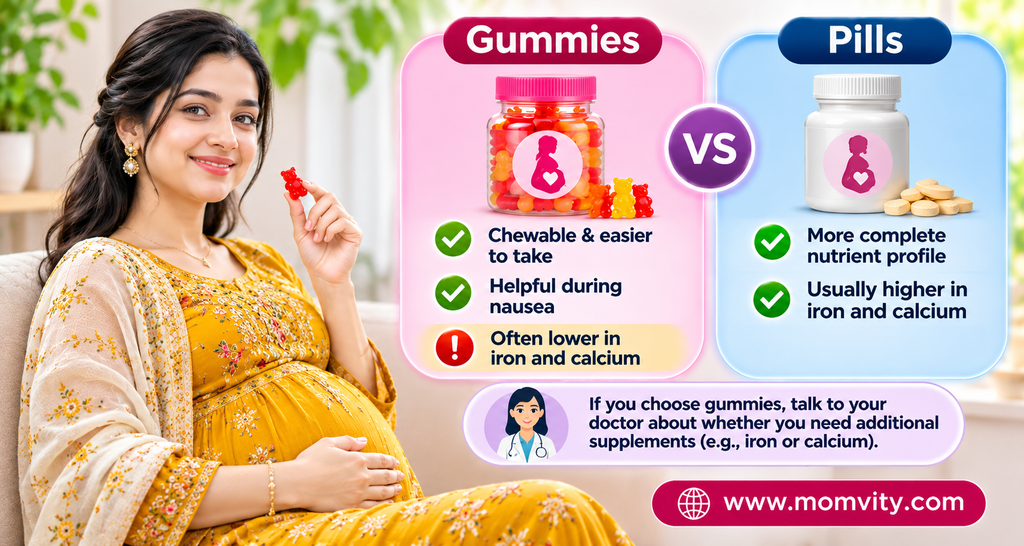
For those who experience significant nausea during early pregnancy, gummy vitamins may be a more manageable option. They are chewable, which many find convenient to take.

However, there is a drawback: many gummy prenatal vitamins do not contain sufficient amounts of iron or calcium. Therefore, if you choose to take gummies, consult your doctor about whether you need any additional supplements.

Managing Side Effects of Prenatal Vitamins

Nausea

Many women experience nausea during the early stages of pregnancy, and taking prenatal vitamins can sometimes make this discomfort worse.

Have you ever felt stomach discomfort throughout the day after taking your vitamins in the morning? If so, you might consider—with your doctor’s approval—taking them at night alongside a light snack. This approach proves helpful for some women.

However, if you experience persistent vomiting or are unable to keep any food or medication down, please consult your doctor. They may be able to recommend a different type of supplement if necessary.

Constipation

Taking prenatal vitamins that contain iron can sometimes lead to constipation. This can be particularly uncomfortable for those who already have digestive issues.

You can follow a few steps to help alleviate this problem.

  • Drink plenty of water every day.
  • Eat fruits, vegetables, and fiber-rich foods.
  • Engage in light walking, provided you have your doctor’s approval.
  • Consult your doctor about using a stool softener, if necessary.

Also, keep in mind that you should not stop taking iron supplements on your own just because you are experiencing constipation. If you inform your doctor about the issue, they can adjust the type of supplement or the method of administration as needed.

Conclusion: A Healthy Beginning for Your Little One

By now, you surely understand that taking care of yourself during early pregnancy is not just about eating more food or taking a large number of vitamins at once. Rather, the most important thing is to know which nutrients are needed, when they are required, and how to consume them safely. A high-quality prenatal vitamin, a nutritious diet, and regular medical consultations will help ensure a healthy start to your pregnancy.

Health Disclaimer: This article is intended solely for general health education purposes. It is not a substitute for professional medical advice. Always consult with your doctor, OB-GYN, or midwife before starting, stopping, or changing any vitamins or supplements during pregnancy.

Frequently Asked Questions

What Vitamins Should I Take in Early Pregnancy?

Generally, an appropriate prenatal vitamin—rich in folic acid, iron, iodine, and vitamin D—is necessary. Choline and DHA are also important. However, specific requirements may vary depending on your diet and physical condition.

When Should I Start Taking Prenatal Vitamins?

Ideally, it is best to start taking prenatal vitamins containing folic acid at least one month before planning a pregnancy. However, if you have not started by then, begin taking them after consulting your doctor once you learn that you are pregnant.

Can I Take a Regular Multivitamin Instead of a Prenatal Vitamin?

It is better to choose prenatal vitamins instead of regular multivitamins, as the levels of folic acid, iron, or iodine in regular multivitamins may not be suitable for pregnancy. Some products may also contain excessive amounts of vitamin A.

Are Gummy Prenatal Vitamins as Good as Pills?

Taking gummy vitamins can be easy, especially for those experiencing nausea. However, many gummy vitamins do not contain sufficient amounts of iron and calcium. Therefore, consult with a doctor before taking them.

Is Methylfolate Better Than Folic Acid?

Methylfolate, or 5-MTHF, is an alternative form of vitamin B9. However, the effectiveness of folic acid in preventing neural tube defects is well-established. Therefore, when choosing prenatal vitamins, check to ensure they contain folic acid.

Why Does My Prenatal Vitamin Make Me Nauseous?

Nausea can occur during early pregnancy due to hormonal changes. Taking vitamins may further increase this discomfort. In some cases, taking them at night along with a light meal can be helpful.

Can I Take Too Many Vitamins During Pregnancy?

Yes, taking excessive amounts of vitamins can be harmful. In particular, high levels of preformed vitamin A can increase the risk of birth defects. Therefore, do not take multiple multivitamins or supplements at the same time.

Do I Need a DHA Supplement in Early Pregnancy?

Not everyone needs a separate DHA supplement. DHA can be obtained from fish low in mercury, such as salmon and sardines. If you do not eat fish regularly, consult your doctor about whether an additional supplement is necessary for you.

Scroll to Top