Mum-to-be household Routine: Simple and safe home routine guide for pregnant mothers

Tahmina Noor

Published: 25/07/2026
Updated: 26/07/2026

Mum-to-be household routine tips help pregnant women manage daily chores safely without exhausting themselves during pregnancy. 

When a pregnant mother is busy with household chores, her body and mind both require completely different care. Without a proper routine, fatigue sets in very quickly.

Many mothers think that pregnancy means that they have to completely stop all household chores. But in reality, it is not that difficult. If you understand the condition of your body, dividing the tasks a little bit can make the whole day much easier. Even making small changes in tasks like managing the kitchen, cleaning the house, or going to the market, you will see a huge difference. 

Nowadays, many families have a very open discussion about dividing the tasks, which is really commendable. The most important thing when setting up a well-organized mum-to-be household routine is to listen to your body—everything else comes after that. Let’s take a look at how to easily spend the entire day from morning to night.

What should be the morning routine 

If the day starts well, the rest of the day will be spent in peace. It is not right to rush to work during pregnancy. After waking up, the body needs some time to wake up, otherwise it can get dizzy. After sitting in bed, stretch your arms and legs for five minutes and then get up slowly, the body will feel quite relaxed.

Many people have the habit of running straight to the kitchen as soon as they wake up in the morning. But before that, drinking some light water is a very good habit to keep the body healthy. 

Honestly, a perfect mum-to-be household routine starts from these first few minutes of the morning. If you keep the first hour of the day light and do not do any heavy work, it is easier to maintain your energy for the whole day. By removing the window curtains and letting the sweet sunshine and light enter the room, your mind will become alert in an instant. You should start the morning in the way that you like, whether it is moving your arms and legs lightly in the morning or sitting on the balcony and getting fresh air.

When you wake up and do your first task

When you get out of bed, do not get up in a hurry, but first turn to one side. Lie down like that for a while and then sit up slowly. Hang your legs down and sit for a few seconds and then stand up. Drinking a glass of lukewarm water after waking up will keep your stomach clean and your body will feel very refreshed. Do not rush for the first 10-15 minutes of the morning.

Easy way to make breakfast

Keep a stool or chair in the kitchen instead of standing while making breakfast. If you cut vegetables or cooking ingredients the night before, you can finish the work quickly in the morning. It is better to choose boiled eggs, oats or nutritious foods that are prepared quickly in the morning. This will fill your stomach with less effort and keep your body healthy.

How to make kitchen work easier
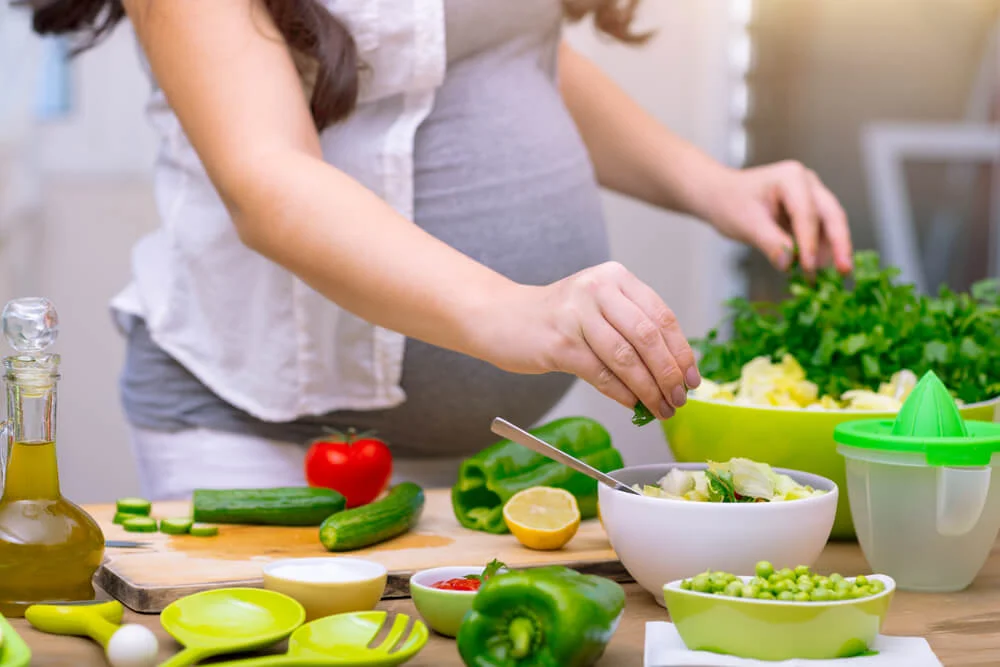
The kitchen is the busiest place in the house, and this is where pregnant mothers need to take extra care. Standing continuously while cooking can cause back and waist pain, which can be quite painful at the end of the day. Therefore, it is very important to have seating arrangements in the kitchen.

It is better not to do heavy tasks like lifting or moving pots and pans during this time. And you should keep a close eye on the kitchen floor so that it is not wet or slippery in any way. If you make a weekly cooking list in advance, you do not have to worry too much about ‘what to cook’ every day. If you sit on a stool instead of standing in between cooking, your body does not get tired all of a sudden. When creating a practical mum-to-be household routine, it is important to give the most priority to the kitchen time.

Tricks to avoid heavy work

Ask someone else in the family to do the work of moving heavy rice and dal bins, gas cylinders or buckets filled with water. Do the work of making curry or batter while sitting down or at the table. There is no need to finish all the work at once, divide the work into small parts.

Safety while cooking

It is not safe to wear loose or hanging clothes while working near the stove. If there is adequate lighting and ventilation in the kitchen, you will not have to pant in the heat. Keep water or wet towels close at hand for emergency use.

Rules for standing near the gas

As the belly grows, it is better to stand at a greater distance from the stove. Working with your sleeves rolled up greatly reduces the risk of fire.

Alternative to lifting heavy pots

Use small pots instead of cooking in one large pot. And if you always use both hands while lifting the pot, the pressure on the body is evenly distributed.

Find out more here: How to maintain mental health during pregnancy

Shopping and Market Management

Even though market shopping is a regular part of life, you need to be a little careful during this time. Walking with heavy bags puts pressure on your lower abdomen and waist. If you make a small plan of what you need before going to the market, your shopping will be completed quickly.

It is better to go out in the morning or afternoon to avoid the crowds. You can also plan this market trip perfectly within your favorite mum-to-be household routine. If you take someone from the family with you, the worry of carrying heavy bags will be completely eliminated.

Ways to avoid carrying heavy things

Instead of bringing heavy things like rice, pulses or oil yourself, have another member of the family bring them. If you shop yourself, divide them into small bags. Nowadays, if you order online, all the groceries are delivered to your home, you can take advantage of this facility. This saves you the risk of going out and also saves your body.

Evening routine and family time

After a day’s work, the evening should be all about yourself and rest. Just as the body is tired at this time, the mind also wants a little refreshment. Spending time with the whole family or watching something light makes the mind feel much better.

It is wise not to engage in any heavy work after the evening. At the end of the day, talking to your loved ones relieves a lot of the inner stress. When you calm down a little, close your eyes and take a deep breath, both the mind and body feel light. The sweetest part of a beautiful mum-to-be household routine is this quiet evening spent with the family.

Importance of light walking

A slow walk of 10-15 minutes in the yard or at home in the evening keeps the body fresh and sleep is also good at night. However, if you feel tired, there is no need to force yourself to walk, go straight to rest.

Preparation before bed

If the night’s sleep is deep and good, the next day will be quite restful. Eating a heavy meal just before going to bed or scrolling on the phone for hours is the biggest enemy of sleep. Try to keep the bedroom as quiet, cool and dark as possible.

If you make a habit of going to bed at a specific time every day, your body’s internal clock will work properly. Reading a light book or listening to music before going to bed works great to calm the mind. Avoid tea or coffee at night.

What should dinner be like

The dinner should be very light and easily digestible. Finish eating at least two hours before going to bed, this will not cause heartburn or acidity problems. It is better not to eat excessively spicy and fried foods at night.

Creating a sleep environment

Do not keep the room completely dark, but keep a light night light on, so that it is convenient to get up at night to go to the bathroom. Always keep the bed sheets and pillow covers clean and tidy, so that you sleep well.

Use of comfortable pillows

When sleeping, make it a habit to sleep with pillows between your legs, behind your back and under your stomach. There are special ‘pregnancy pillows’ available in the market for pregnant mothers, which make the sleeping position very comfortable.

Maintain the right room temperature

It is very normal to feel a little hotter than usual during this time. Therefore, if you keep the room a little cool and ventilated, you will not have the problem of waking up frequently at night.

What to do in an emergency

No matter how organized all the household chores are, if you feel a little unwell, leave everything and go straight to rest. Do not force yourself to do any work if you feel dizzy, have a stomachache or are very tired.

Write the phone number of the doctor, ambulance or the nearest hospital in front of your eyes or on the fridge to contact them in case of emergency. Save the numbers on your mobile phone as well. Do not ignore any discomfort or unusual changes in the body, inform your family members immediately and seek medical advice. The main purpose of a safe mum-to-be household routine is to keep you and your child safe from risk.

When to stop work and rest

If you suddenly experience shaking hands and feet, palpitations, difficulty breathing or feel extremely weak, immediately stop all work and lie down. If you see these symptoms, talk to your doctor without delay.

How to plan your week

It is better to make a small draft plan at the beginning of the week than to wake up every morning and think about it anew. If you know in advance what you will do on a given day, you won’t suddenly be overwhelmed with work.

You can organize some light extra work on the days when your body feels good, and keep the work to a minimum on the days when your body is struggling. When making plans, write down your rest time first. A realistic mum-to-be household routine will never tie you down, but will make your days more worry-free.

Prepare a to-do list in advance

Write down the urgent tasks of the week in a diary or on a mobile note. Sticking the list on the fridge or at work will save you from having to think about it again and again.

Daily small goals

There is no need to do the whole house in one day. Complete one or two small tasks every day. This will get the work done, and you will also have a peace of mind that the work has been done today.

Decision

Taking care of the household during pregnancy does not mean locking yourself in a corner of the house, nor does it mean sacrificing your body by working continuously. The main thing is to understand the rhythm of your body and adjust the pace of work.

Accept small help from family members, share the work. Remember, a good mum-to-be household routine does not mean any strict rules – rather, taking care of yourself and organizing your day beautifully. Don’t blame yourself if you have less work or can’t do it at all on some days. Your body is asking for rest, which means that it is the most important thing now. Enjoy this wonderful journey of motherhood by responding to this call of your body.
Related Articles

early pregnancy safety tips

Early Pregnancy Safety Tips A Simple First Trimester Guide for Moms

Did you know that some of the most critical developmental processes for your unborn baby can begin even before you are aware that you are pregnant?

Long before you might realize that a new life is growing within you, the initial formation of the baby’s brain, spinal cord, and other organs is already underway. Just consider how significant your daily diet, the beverages you consume, and even your routine habits can be during this time! Things you may never have thought twice about before—such as having a morning cup of coffee, eating a favorite food, or taking a common medication for a headache—can suddenly become matters of concern during pregnancy. Which foods are safe? What habits might need to be changed? And if you happened to do something “wrong” before discovering you were pregnant, could it have harmed your baby?

Seeking answers to these questions makes it essential to understand “Early Pregnancy Safety Tips.”

However, the beginning of pregnancy does not mean you must spend every moment in fear. You cannot control everything, and should any issue arise, it does not necessarily mean it was due to your own carelessness. In fact, knowing what is truly important—and how to manage those aspects—can significantly reduce unnecessary worry. Let’s explore, in detail, how to take care of yourself and your unborn baby during the first trimester.

Why the First Trimester Needs Extra Care

The first three months of pregnancy are known as the “first trimester.” This period typically spans from the first week of pregnancy through the 12th week. During these weeks, the essential structures of the baby’s body begin to form; the brain, spinal cord, heart, and other organs undergo their initial development.

One fact that may come as a surprise to many mothers is that the critical process of forming and closing the baby’s “neural tube” usually takes place within the third and fourth weeks of pregnancy. This structure later develops into the brain and spinal cord. In other words, by the time many mothers take their first pregnancy test, a vital stage of the baby’s development has already begun.

Does this mean everything should have been perfectly in place before discovering the pregnancy?

Ideally, it is beneficial to take certain preparatory steps in advance; however, if you find out later, there is no reason to blame yourself. What matters most now is making the right decisions, undergoing necessary medical tests, and following your doctor’s advice. Ultimately, the purpose of following “early pregnancy safety tips” is to take proactive, informed steps to ensure the healthy development of both mother and baby.

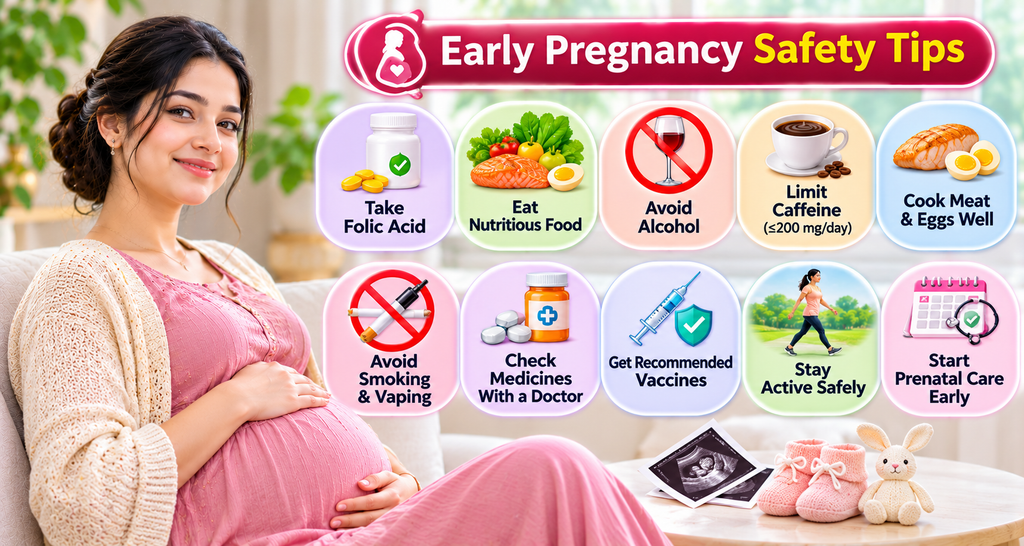
Early Pregnancy Safety Tips at a Glance

There is a lot to keep in mind during the first three months. So, you might want to take a quick look at the important points right from the start.

What to DoWhy It Matters
Take 400 mcg Folic Acid DailySupports early brain and spinal cord development
Avoid Alcohol CompletelyNo known safe amount during pregnancy
Limit Caffeine to Below 200 mg DailyHelps avoid excessive caffeine intake
Cook Meat and Eggs ThoroughlyReduces foodborne infection risks
Choose Low-Mercury FishProvides important nutrients
Avoid Smoking and VapingProtects fetal growth and development
Check Before Taking MedicinesSome medicines may affect pregnancy
Follow Appropriate Vaccine AdviceHelps protect mother and baby
Stay Physically Active SafelySupports maternal health
Arrange Prenatal Care EarlyHelps monitor pregnancy progress

There are specific reasons behind each item on this list. It is more effective to understand why these rules should be followed, rather than simply memorizing them.

Start Taking Folic Acid Right Away


If there is one nutrient that deserves special attention during early pregnancy, it is folic acid. A form of vitamin B9, it supports the creation of new cells in the body and aids in the baby’s early development. In particular, an adequate intake of folic acid is essential for the proper formation of the baby’s neural tube.

The CDC generally recommends that women who could become pregnant consume 400 micrograms of folic acid daily. Ideally, one should begin taking it at least one month before conception. Many prenatal vitamins contain 400–800 micrograms of folic acid; therefore, ensuring an adequate intake of folic acid from the very beginning of pregnancy is a crucial step in following Early Pregnancy Safety Tips.

Eat Well and Practice Food Safety

During pregnancy, you may receive countless pieces of advice regarding your diet. Some people might tell you to avoid certain foods, while others might suggest increasing your intake of others. In reality, unless you have specific health complications, there is no need to unnecessarily exclude various foods from your diet. Instead, it is far more important to focus on choosing nutritious foods, maintaining proper hygiene, and ensuring that food is cooked correctly.

During pregnancy, the body’s immune system undergoes certain changes. Consequently, infections from specific foodborne pathogens—such as Listeria—can pose a higher risk to both the mother and the baby. Therefore, when following Early Pregnancy Safety Tips, it is essential to pay close attention not only to the nutritional value of your food but also to its safety.

Watch Out for Listeria

*Listeria* is a bacterium that can enter the body through contaminated food. An unusual characteristic of this bacterium is its ability to survive and grow even in the cold environment of a refrigerator. According to the CDC, pregnant women are approximately 10 times more likely to contract a *Listeria* infection compared to other healthy adults.

Does this mean that food is completely safe just because it is kept in the refrigerator? No. It is essential to store and prepare refrigerated food properly.

Before consuming deli meats, cold cuts, or hot dogs, heat them to a temperature of 165°F (approximately 74°C), or until they are steaming hot throughout. Avoid raw milk, unpasteurized juice, and soft cheeses made from unpasteurized milk.

FoodSafer ChoiceAvoid
Deli MeatHeated Until Steaming HotCold Deli Meat
Hot DogsFully HeatedUnheated Hot Dogs
CheesePasteurized CheeseUnpasteurized Soft Cheese
MilkPasteurized MilkRaw Milk
JuicePasteurized JuiceUnpasteurized Juice
MeatFully Cooked MeatRaw or Undercooked Meat
EggsFully Cooked EggsRunny Egg Yolks

Choose Fish Wisely

Many mothers believe that all types of fish should be avoided during pregnancy. However, this is a misconception. Fish provide essential nutrients such as protein, omega-3 fatty acids, iodine, and choline, which support a baby’s development.

According to FDA and EPA guidelines, pregnant women can consume 2–3 servings per week of fish categorized as “Best Choices” (those low in mercury). For an adult, one serving is approximately 4 ounces or 113 grams.

Some examples of “Best Choices” include:

  • Salmon
  • Shrimp
  • Cod
  • Tilapia
  • Sardines

On the other hand, you should avoid fish with high mercury content, such as King Mackerel, Marlin, Orange Roughy, Shark, Swordfish, Gulf of Mexico Tilefish, and Bigeye Tuna.

Keep in mind that not all tuna contain the same amount of mercury. For instance, canned light tuna and Bigeye Tuna do not fall into the same category. Therefore, instead of excluding all fish labeled as “tuna,” check the mercury levels for the specific species.

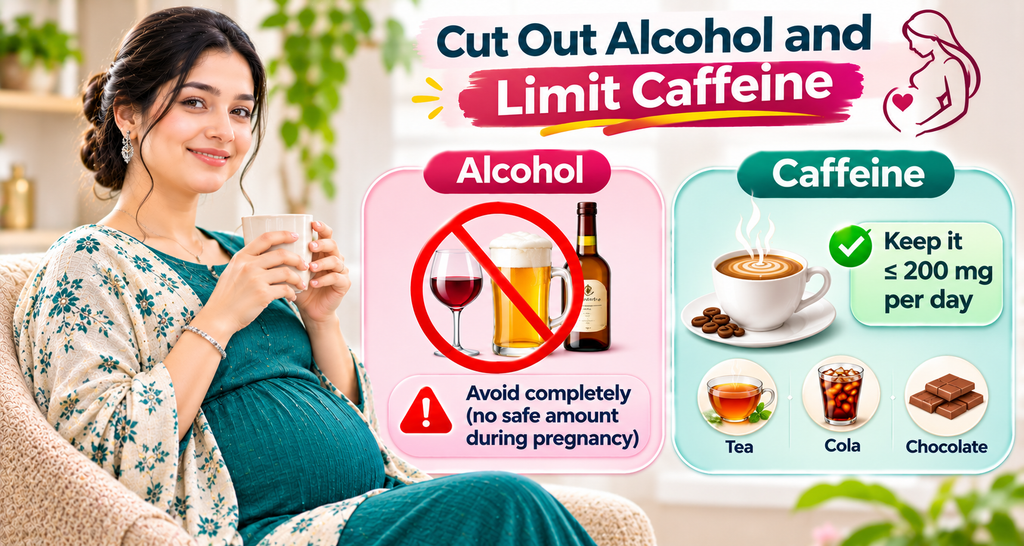
Cut Out Alcohol and Limit Caffeine


It is essential to make some changes regarding your choice of beverages during pregnancy. In particular, you need to be mindful about the consumption of alcohol and excessive caffeine. If you wish to follow Early Pregnancy Safety Tips, it is important to have a clear understanding of which drinks are safe to consume and which ones should be avoided.

Is Any Amount of Alcohol Safe During Pregnancy?

According to CDC guidelines, there is no proven safe amount or time for alcohol consumption during pregnancy. All forms of alcohol—whether beer, wine, or liquor—can negatively affect a baby’s development and increase the risk of Fetal Alcohol Spectrum Disorders (FASDs).

However, if you consumed alcohol unknowingly before realizing you were pregnant, do not panic or blame yourself. Simply avoid alcohol from this point forward and inform your doctor. Making informed decisions at the right time is a crucial aspect of Early Pregnancy Safety Tips.

How Much Caffeine Can You Have?

Can’t start your day without a cup of coffee? Don’t worry—discovering you’re pregnant doesn’t mean you have to give up coffee entirely.

According to ACOG guidelines, it is advisable to limit daily caffeine intake to less than 200 milligrams during pregnancy. This is roughly equivalent to 12 ounces of coffee, though the actual caffeine content can vary depending on the type of coffee and how it is prepared.

Keep in mind that caffeine isn’t just found in coffee; it can also be present in tea, chocolate, soft drinks, energy drinks, and even some headache medications. Therefore, be sure to account for all these sources when calculating your total daily caffeine intake.

Avoid Smoking, Vaping and Marijuana

During pregnancy, can your own smoking harm the baby, or is exposure to secondhand smoke also a risk? 

In reality, both are causes for concern. Cigarette smoke and vaping can hinder a baby’s normal development; therefore, exposure to others’ smoking should also be avoided.

Furthermore, using marijuana to alleviate morning sickness is not safe. Its potential effects pose a risk to the baby’s developing brain. As part of following Early Pregnancy Safety Tips, avoid smoking, vaping, and marijuana. If you struggle to quit any of these habits, do not hide the issue out of guilt—instead, seek help from a healthcare professional.

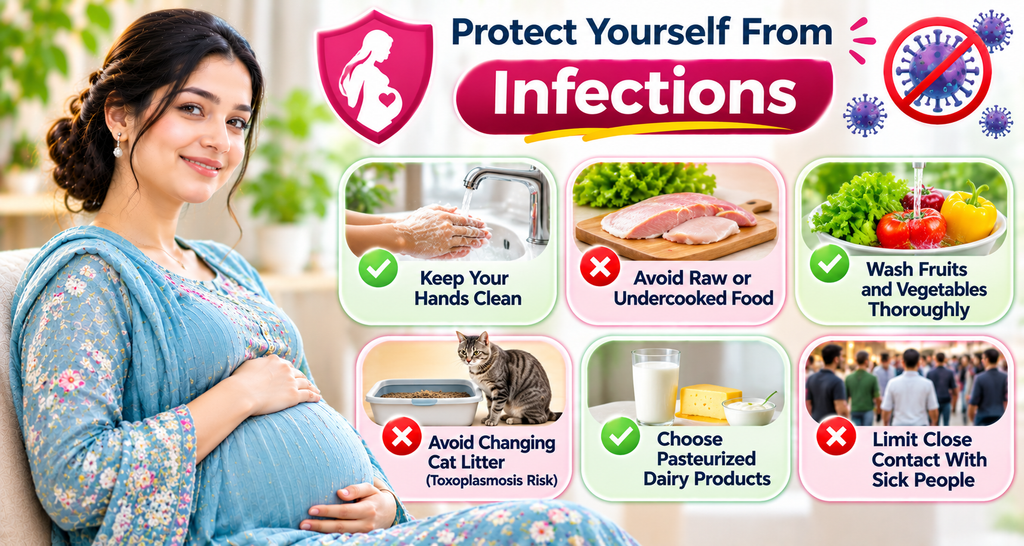
Protect Yourself From Infections

Do You Need to Stay Away From Your Cat?

Do you have a pet cat at home? 

Upon learning about a pregnancy, many people begin to wonder: should they now stay away from the cat?

The good news is that, in most cases, there is no need to remove the cat from your home. However, it is important to be cautious about a parasitic infection called toxoplasmosis.

The parasite responsible for this infection can be transmitted through cat feces, contaminated soil, and raw or undercooked meat. If a new infection occurs during pregnancy, it could, in some instances, cause harm to the baby.

To stay safe, follow a few simple precautions.

  • If possible, ask someone else to clean the cat litter daily.
  • If you clean it yourself, use disposable gloves.
  • Wash your hands thoroughly with soap after finishing the task.
  • Wear gloves when working in the garden.
  • Wash fruits and vegetables thoroughly before eating.
  • Ensure meat is cooked completely before consumption.
  • Keep cooking utensils and cutting boards clean.

Here is a relatively little-known fact: after being excreted in a cat’s feces, the *Toxoplasma* parasite typically takes 1–5 days to become infectious. Therefore, cleaning the litter box daily can help reduce the risk of infection.

Exercise and Heat Safety

Can You Exercise During Early Pregnancy?

Can exercising during pregnancy actually harm the baby?

Although many mothers may have this concern, appropriate exercise is generally safe and beneficial during a healthy, uncomplicated pregnancy. According to ACOG guidelines, and in consultation with a healthcare provider, one can engage in approximately 150 minutes of moderate physical activity per week. For instance, walking or performing light exercise for 30 minutes a day, five days a week, is a good practice to follow for Early Pregnancy Safety Tips.

Exercise TypeGeneral Guidance
WalkingGenerally Suitable
SwimmingGenerally Suitable
Stationary CyclingGenerally Suitable
Prenatal YogaGenerally Suitable
Contact SportsAvoid
High-Fall-Risk ActivitiesAvoid
Scuba DivingAvoid
Hot YogaAvoid

Moderate exercise refers to physical activity during which you can talk, but cannot sing normally. If you are not used to exercising, start with a short duration and gradually increase it.

Everyday Tips for a More Comfortable Pregnancy

During the first three months, it is not just major health risks that matter; small, everyday habits are also significant. In particular, morning sickness, fatigue, and emotional anxiety can make daily life difficult for many mothers.

How to Manage Morning Sickness

Nausea during early pregnancy is a very common issue. For many, it is worse in the morning, while others may experience discomfort throughout the day. It is typically most noticeable during the first three months.

Adopting a few simple habits can be helpful.

  • Instead of eating large meals, eat smaller portions more frequently.
  • You might keep some plain crackers by your bedside.
  • Avoid going for long periods on an empty stomach.
  • Drink water in small, frequent sips.
  • For some mothers, ginger can be helpful.
  • If the problem persists or becomes severe, consult a doctor for safe treatment advice.

But what if the vomiting is so severe that you cannot keep any food or water down—should you wait?

Certainly not. This can lead to dehydration and may require prompt medical attention. Therefore, in addition to following ‘Early Pregnancy Safety Tips,’ seek medical advice without delay if such a situation arises.

Take Care of Your Mind and Daily Routine

In addition to physical care, pay attention to your mental health. The prospect of taking on the responsibility for a new life can bring both joy and anxiety. Share your feelings with those close to you. Get plenty of rest, and do not try to handle everything on your own.

If your work environment involves lifting heavy objects, exposure to harmful chemicals, or standing for long periods, consult your doctor to ensure appropriate safety measures are in place.

Always wear a seat belt when traveling in a vehicle. Position the lap belt low across your hips—not over your abdomen—and place the shoulder belt across the center of your chest.

Finally, once you have a positive pregnancy test, contact your doctor to schedule your first prenatal appointment. The timing of this initial visit and the necessary medical tests will be determined based on your specific health needs.

When to Call Your Doctor or Midwife

Some physical changes during pregnancy are normal, such as mild nausea or slight fatigue. However, ignoring certain symptoms can be dangerous.

It is particularly important to be aware of an ectopic pregnancy. In this condition, the pregnancy occurs outside the uterus—most commonly in a fallopian tube. This can be dangerous and may present with symptoms such as severe, one-sided abdominal pain, bleeding, or dizziness.

Seek medical attention immediately if you experience any of the following symptoms.

Warning SignWhat to Do
Heavy Bleeding or Passing ClotsSeek Emergency Medical Care
Severe One-Sided Abdominal PainGet Immediate Medical Evaluation
Chest PainSeek Emergency Care
Trouble BreathingCall Emergency Services
FaintingGet Immediate Medical Attention
Fever of 100.4°F (38°C) or HigherContact Your Provider Promptly
Unable to Keep Fluids DownContact Your Provider
Persistent Severe HeadacheSeek Medical Advice Promptly
Vision ChangesContact Your Provider Immediately
Thoughts of Self-HarmSeek Emergency Mental Health Support

Light spotting is not always a sign of a serious problem. However, it is advisable to inform your doctor about any bleeding during pregnancy. In particular, do not wait if you experience symptoms such as heavy bleeding, the passing of blood clots, severe pain, or fainting.

Final Thoughts

Should you live in constant fear just because something went wrong before you knew you were pregnant? 

Certainly not. Instead of worrying about the past, the most important thing is to make informed, conscious decisions moving forward.

Take 400 micrograms of folic acid daily, avoid alcohol and smoking, keep your caffeine intake below 200 milligrams per day, and ensure that all food is thoroughly cooked. Consult your doctor before taking any medication.

Remember, the purpose of following “early pregnancy safety tips” is not to instill fear, but to provide the right information to help ensure the well-being of both mother and baby. Take care of yourself, stay in touch with your doctor, and seek medical attention promptly if you notice any unusual symptoms.

Health Disclaimer: This article is for general health education purposes and is not a substitute for professional medical advice. Always consult your doctor before taking any medication, supplements, or making lifestyle changes during pregnancy.

Frequently Asked Questions About Early Pregnancy Safety

What Are the Most Important Safety Tips During Early Pregnancy?

During the first three months, it is important to take 400 micrograms of folic acid daily, avoid alcohol completely, keep caffeine intake below 200 milligrams, and choose safe food options. Additionally, do not take any medication without consulting a doctor.

Can I Drink Coffee During the First Trimester?

Yes, coffee can generally be consumed in moderate amounts. The ACOG recommends a daily caffeine intake of less than 200 milligrams. However, you should also account for the caffeine you get from tea, chocolate, and other beverages.

What Should I Avoid Eating During Early Pregnancy?

You should avoid raw or undercooked meat, raw eggs, unpasteurized milk, certain soft cheeses, and fish with high mercury content. Make sure to heat deli meats and hot dogs thoroughly before consuming them.

Is It Safe to Exercise During the First Trimester?

During a healthy, uncomplicated pregnancy, activities such as walking, swimming, and appropriate prenatal yoga are generally safe. However, avoid contact sports, scuba diving, and any activities that carry a high risk of falling.

Scroll to Top