

Every moment spent with family gives rise to special feelings. This article will discuss in detail some wonderful Family Bonding Ideas, so that family relationships will be even sweeter and stronger.

Have you ever felt that even though everyone in the family is staying in the same room, they are moving away from each other a lot?
From morning to night, people nowadays spend their busy time in the office, school through smartphone screens. Due to all these problems, even though we live in the same room, we are moving away from each other mentally. Nowadays, it is not possible to open up a little with family or loved ones and share a smile or story like before. In all these thousands of busyness, day by day I am getting lost.
However, there is no need to plan a big trip to reduce this distance from relationships. It is possible to re-establish the family in the same formula as before by changing some small, common habits of the day. For example, spending time with family and relatives at the dinner table at night or on lazy afternoons on holidays brings an indescribable joy.
By expressing a little desire and love, it is possible to change the atmosphere of the house and put a smile on everyone’s face.
In our article today, we will discuss all the simple, practical and effective ways to bring all the family members closer. Which will make your daily moments more colorful.
Why Spending Time Together Is So Important
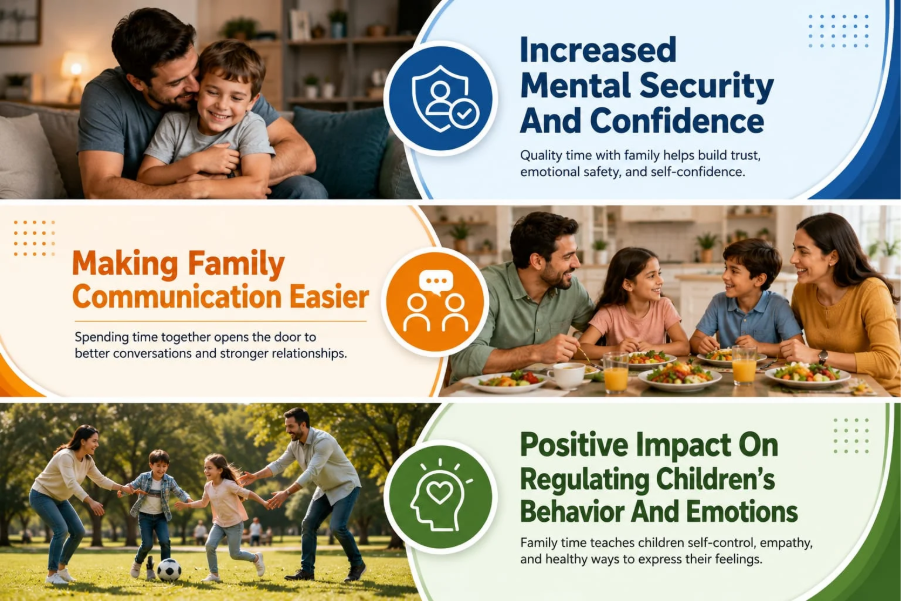
Family Bonding Ideas reminds us that spending time with family is not only important for happiness, but also for human well-being.
Spending some time every day talking to family, eating together, or sharing small tasks can help build trust and confidence.
Studies have shown that regular family time can boost children’s self-confidence and reduce stress in adults. Even in the midst of busy lives, these times play a very effective role in strengthening family relationships.
Increased Mental Security And Confidence
The key to safety is to give importance to the opinions of family members effectively and to create a mindset of standing by them without criticizing their mistakes. If family members receive a lot of love and strong support, then everyone’s confidence increases. This confidence plays a very effective role in facing every challenge.
| Subject | Key Steps | Positive Impact |
| To Speak Openly | Listen attentively without judging. | Fear of the mind is removed and the bond is strengthened. |
| Admitting Mistakes | Help them learn without scolding them if they make mistakes. | Reducing the fear of failure increases confidence. |
| Celebrate Small Successes | Appreciate the small achievements of the family. | Self-confidence and interest in work increase. |
Making Family Communication Easier
Family Bonding Ideas play a major role in making communication easier and more natural among family members. When a family member spends so much time with his family, he is able to openly share his feelings and problems with the family members.
As a result, the number of misunderstandings among family members is greatly reduced and the habit of listening to each other attentively is developed. Especially children and adolescents especially feel comfortable expressing their opinions fully in such an environment.
As a result, trust and confidence increase among all family members.
Positive Impact On Regulating Children’s Behavior And Emotions
- Proper emotional development: When children receive love, they can easily express fear or anger without holding back.
- Increasing tolerance: Family bonds keep children patient and calm in any situation.
- Reducing screen time: A beautiful home environment keeps children away from mobile or digital addiction.
- Behavioral changes: The habit of sharing, empathy, and respect for elders is easily formed.
- Reducing loneliness and stubbornness: Adequate attention from parents removes stubbornness and loneliness in children.
Simple Daily Habits That Strengthen Relationships

Family Bonding Ideas Small daily habits play a very effective role in making your family relationship deeper and stronger.
For example, greeting each other in the morning, knowing each other about the daily news, making a habit of eating together every day, and talking about all the family members after dinner at night, family relationships are very strong. Although these tasks may seem very small, these small tasks are very effective in strengthening the relationship.
Teaching family members to appreciate each other, that is, praising each other in return for small help, creates a bridge of respect between each other.
As a result, each family member can create their own feelings for each other and achieve mental peace even in the midst of a busy life.
Find out more here: Mum-to-be household routine
Eat At Least One Meal Together
At least one meal should be eaten together with family members. This creates natural communication and emotional connection with all family members.
Talking about each day’s experiences and small successes and special concerns at the dinner table helps us understand each other better. At the same time, it is considered a helper for children’s language skills and confidence.
The habit of eating together attentively without mobile or TV makes family relationships closer and more stable.
10 Minutes Of Talking About The Day’s Experiences
The easiest ways to get ideas are by following Family Bonding Ideas. For example, one should spend at least 10 to 15 minutes daily sharing one’s daily experiences with family members and listening to other family members’ daily experiences.
Who learned what? Or who liked something of the day? Or a matter of the day is the reason for someone’s special concern?
Constantly discussing all these issues increases mutual understanding. This small amount of time in the middle of a busy life goes a long way in reducing stress and helping everyone gain the ability to speak with confidence and a free mind.
When such a habit is formed regularly, family members become more open, sympathetic and close to each other.
Fun Activities To Do At Home

Conducting enjoyable activities creates a natural connection between family members by laughing and spending time together, playing games together, watching old movies, or telling short stories. Also, every family should organize family quizzes, which can be organized at very low cost.
If everyone participates in these activities together, the creativity of the children in the family increases and the stress of the adults also decreases a lot.
If such time can be spent regularly, the atmosphere of the house will become more lively and lively.
Board Games And Puzzle Games
Playing board games and puzzles is one of the easiest and most enjoyable ways to engage in family bonding ideas. Games like Ludo, chess, or jigsaw puzzles teach family members to laugh, think, and cooperate together, which makes relationships closer and more vibrant.
| Game Name / Type | Why Play? (Advantages) | Who Is It Suitable For? |
| Ludo And Carrom | The rules are easy to understand and everyone can have great fun together. | Everyone from children to adults |
| Scrabble | Along with learning new words, intelligence and talent develop. | Children and adults 8+ years old |
| Chess | Attention increases and strategic thinking improves. | Children and adults 10+ years old |
| Fun Puzzles And Quizzes | A cheerful atmosphere is created and quick thinking skills are enhanced. | For everyone of all ages |
Organize A Family Movie Or Story Night
As part of Family Bonding Ideas, family story night should be organized at least once a week. If they spend time together at night, they learn to laugh together and share their feelings with the whole family.
- Stress reduction: Spending a fun time together quickly relieves fatigue and mental stress throughout the day.
- Generation gap is reduced: The exchange of life stories of adults and thoughts of children bridges the gap.
- Creating memories and values: These family gatherings create beautiful memories and children learn moral lessons from educational stories.
- Reduced personal screen time: The habit of spending time alone on mobile phones is reduced and the depth of communication between everyone increases.
Effective Ways To Spend Time Outdoors

There are many people among us who like to spend time outdoors but do not have good relationships within the family. An effective way for them is to practice outdoors, including the environment.
That is, walking in the park with the family, sitting in an open area nearby and talking with all the family members, or playing light sports in the afternoon and planning a short trip on weekends are particularly useful in this regard.
Nowadays, people spend most of their time in front of smart phones or bar display lights, practicing the above activities regularly teaches all the family members to enjoy natural light and fresh air.
At the same time, the use of smartphones and TVs is greatly reduced. As a result, all the family members feel more comfortable talking to each other.
Benefits Of Walking Or Going To The Park In The Evening
By following Family Bonding Ideas, we will be able to know very well about the benefits of going to the park and going to the park in the evening. Spending time in the open environment of the park improves the mind and reduces excess stress from the brain. When excess stress is reduced from the brain, the body remains active and it is possible to maintain more attention in every task of daily life.
- Mental refreshment: Fresh air and green nature increase the body’s ‘happy hormones’, which instantly relieves the stress of the day.
- Opportunity to communicate openly: Easy and meaningful conversations can be had while walking without the distraction of any digital device.
- Physical benefits and better sleep: Light walking increases blood circulation and digestion and helps in deep sleep at night.
- Screen free time: This time of the evening keeps the eyes and brain calm from the harmful blue-light of mobile phones and TVs.
Planning A Short Weekend Trip
- Closest place: Choose a place within 1-2 hours.
- Budget and Opinion: Consider everyone’s preferences and convenience.
- Light bag: Only bring emergency clothing and medicine.
- Food and water: Keep dry food and water with you.
- Flexible time: Relax without rushing.
Strategies For Deepening Relationships By Age

By following Family Bonding Ideas, we will learn about effective strategies to deepen the relationship between family members of all ages. By making some small changes in family rules, relationships can be deepened according to age.
Playing games or telling stories with young children can help them bond with them and increase their sense of security. And an interesting way to deepen the relationship with teenage family members is to listen to them carefully and create opportunities for them to participate in decision-making.
An effective way to deepen the relationship with adult family members is to share responsibilities with them and discuss openly and respect them. Also, giving an adult member a set time and helping with their daily tasks can create a strong sense of family connection.
Practical Strategies For Maintaining Warm Relationships In The Long Term

To maintain a good family relationship in the long term, you need to maintain constant communication and show mutual respect and small positive behaviors. If all family members gather together at some time every day, listen to each other carefully and express gratitude, the foundation of the relationship will be much stronger.
Even in the midst of the current busy life, taking some time out and enjoying those times with the family actually provides mental peace and reduces family distance a lot. Even if there is a disagreement, discussing it calmly, avoiding insults or harsh language, trust and emotional security will be maintained for a long time.
Conclusion
Family Bonding Ideas reminds us that strong family relationships are built through small daily acts of care, attention, and time spent together. While it may be difficult to find time to spend together in a busy life, a few minutes of open conversation every day, eating together, going for a walk, or having a specific family activity each week can go a long way in keeping relationships strong. Children, teenagers, adults, and the elderly—everyone has different needs, so listening to and respecting their feelings is the most effective way to deepen relationships.
Instead of waiting for a perfect plan, take small steps to spend quality time with your family today. This consistent practice will make family bonds deeper, warmer, and more lasting.