

Are you very worried about Pregnancy Mood Swings? Then through today’s article, you will know the simple and daily habits to manage hormonal emotional changes. Which will play a very effective role in maintaining your daily mental balance.

Do you suddenly feel very happy during pregnancy, and then suddenly feel sad within a short time? Are these feelings really normal symptoms of pregnancy?
Those who are going to be new mothers get very worried after seeing these changes. However, you have to keep in mind that with the development of a new life in the body, hormonal fluctuations in the body are almost constant. Along with this, physical fatigue and various thoughts about the future can go through your head at the same time. As a result, sometimes emotions become very sensitive and sometimes they can become tearful.
Many of us have the wrong idea, thinking that these mental changes are mainly due to weakness. However, scientific research has proven that these are not due to mental weakness, but rather it is a special process of natural adaptation of the body and mind. However, if expectant mothers develop small habits every day, such as getting enough rest, eating nutritious food on time, and talking openly with loved ones, it becomes easier to maintain mental balance.
By developing these small habits, it becomes easier to maintain mental balance.
Why Do Emotional Changes Occur During Pregnancy?
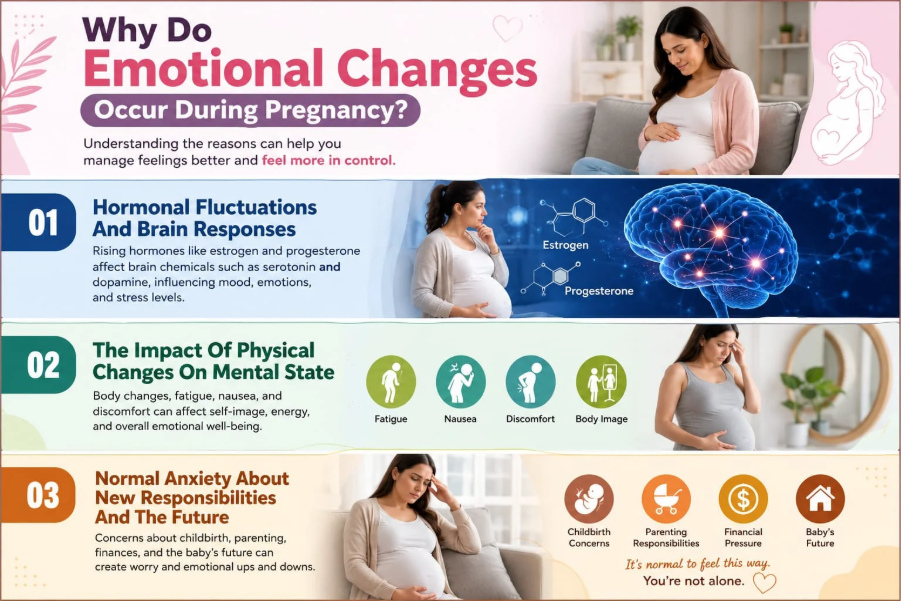
Pregnancy Mood Swings This is the most common problem and a normal experience of pregnancy. This problem is mainly due to rapid hormonal changes. When the levels of estrogen and progesterone hormones are low or high, the part of the brain that controls emotions is particularly affected.
Along with physical instability, sleep changes, and the new responsibilities of motherhood, deep anxiety and depression about various future issues lead to more sensitive emotions.
Therefore, pregnancy suddenly reveals a variety of emotions, including joy, tears, and annoyance, which is very common for most women.
Hormonal Fluctuations And Brain Responses
- Estrogen and progesterone levels rise and fall rapidly during pregnancy.
- These changes can affect the part of the brain that controls emotions.
- Changes in the functioning of serotonin and dopamine can cause mood swings.
- It can be normal to feel tearful, irritable, or overly sensitive.
- Emotional reactions can be more intense if you are sleep deprived and physically tired.
- So mood swings don’t necessarily mean you’re weak; they’re often a normal biological reaction.
The Impact Of Physical Changes On Mental State
Pregnancy Mood Swings are often directly related to the rapid changes in the body during pregnancy. There are some changes that can particularly affect a woman’s self-confidence and feelings of discomfort.
For example: weight gain, nausea, sleep problems and changes in body shape, etc.
Difficulty in performing daily tasks can increase the amount of depression and anxiety. However, in most cases, these changes are an important part of the body’s various adaptation processes. Therefore, adequate rest and nutritious food should be consumed in this situation. Along with this, family support plays an important role in maintaining mental comfort in this situation.
Normal Anxiety About New Responsibilities And The Future
It is normal to feel anxious about the future when you suddenly face new responsibilities. Many expectant mothers wonder during pregnancy, will I really be able to handle everything properly?
These thoughts are most prevalent during pregnancy. Because this is a very important and special stage in a woman’s life.
In reality, self-confidence is built through gradually adapting to new situations. Breaking down daily tasks into small steps, sharing feelings with loved ones, and recognizing your progress can play an effective role in reducing stress.
At What Times Are Emotional Changes More Common?
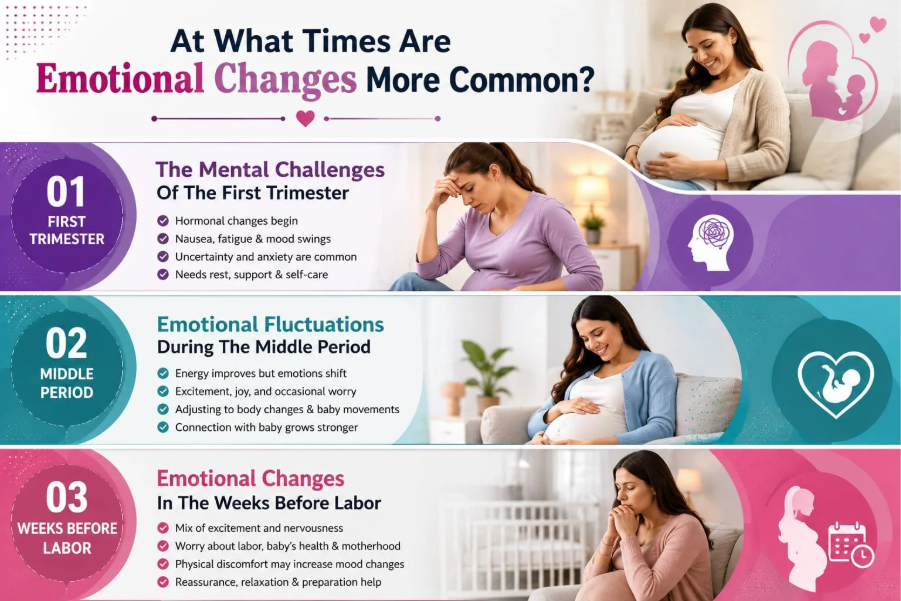
Pregnancy Mood Swings are most common in the first trimester of pregnancy. The main reason for frequent mood swings during this time is that hormonal changes change very quickly and effectively during this time.
Nausea or fatigue or the additional pressure of adapting to a new reality can also cause frequent mood swings.
Most women’s mental state is somewhat stable in the second trimester. However, in the last trimester, various types of emotional changes are particularly noticeable again. Preparation for childbirth and sleep problems and worries about the child’s future plans may increase.
Therefore, we should view such changes as normal without putting any special pressure on them.
The Mental Challenges Of The First Trimester
| Challenge | When is it most common? |
| Rapid Emotional Fluctuations | 6–10 weeks |
| Pregnancy Anxiety | Before the first ultrasound |
| Irritable Mood | If nausea and fatigue are severe |
| Accepting Yourself Alone | Time to adapt to change |
| Decreased Self-Confidence | Body changes begin |
| Stress Due To Sleep | If discomfort increases at night |
When Is Medical Advice Necessary?
When this anxiety or depression persists for a long time, that is, for 2 weeks or more in a row. If excessive depression disrupts daily activities or leads to negative thoughts such as harming yourself, then you should definitely seek medical attention.
Emotional Fluctuations During The Middle Period
Pregnancy Mood Swings Many women experience a variety of emotions during the middle of pregnancy. During this time, the emotional state may be somewhat relaxed, but the baby’s movements may begin.
Along with this, thoughts about the baby’s future increase, and the burden of daily responsibilities and various emotional fluctuations also increase excessively. Sometimes the feeling of joy is greater, and sometimes there is increased excitement or you may feel restless for no reason.
Adequate rest, regular light exercise, nutritious food, and open communication with family help maintain mental balance.
Emotional Changes In The Weeks Before Labor
- Increased joy and excitement of seeing the baby
- Natural anxiety about the pain and process of labor
- Becoming more emotional or sensitive about small things
- Feeling restless during the day due to lack of sleep at night
- Repeatedly thinking about preparing for going to the hospital
- Wanting to seek more emotional support from family
- Thinking about the future responsibilities after the birth of the child
- Sometimes increased confidence, sometimes feeling fear or uncertainty
- Moments of loneliness or excessive thinking
- Increased need for rest, breathing exercises, and positive mental preparation to stay calm
How To Recognize Common Symptoms
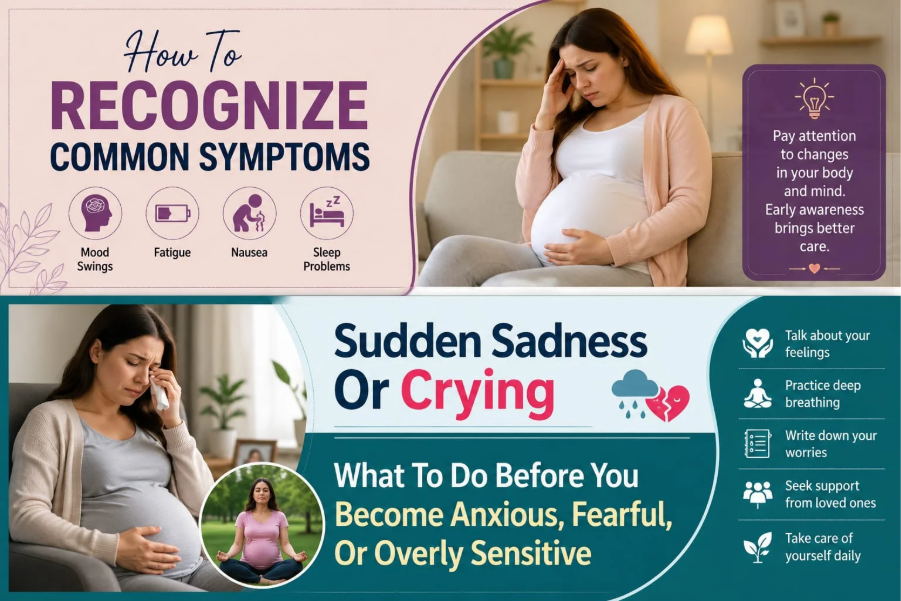
Pregnancy Mood Swings are usually easily recognized by some everyday behaviors and feelings. For example, suddenly feeling sad, crying for no reason, feeling excessively angry or annoyed even over small things, and sometimes being very happy and then anxious after a while.
Changes in sleep, restlessness, decreased attention, and difficulty controlling your emotions can also be important symptoms. If these changes occur repeatedly, it may indicate that something is more important than normal emotional fluctuations.
Explore more here: Family Bonding Ideas
Sudden Sadness Or Crying
- Hormonal changes can cause emotions to suddenly become intense.
- It can be normal to feel tearful or upset for little reasons.
- Fatigue and lack of sleep can exacerbate these feelings.
- Worries about the future and the baby’s health can contribute to emotional ups and downs.
- Rest, open communication, and emotional support usually help calm the mind quickly.
What To Do Before You Become Anxious, Fearful, Or Overly Sensitive
When anxiety or fear starts to build up, it’s important to first notice the changes in your body and mind. Getting enough rest, practicing deep breathing, and staying away from unnecessary negative information can help reduce stress. Talking openly with a family member can often help ease anxiety quickly.
- Try to calm your mind slowly by taking deep breaths
- Ensure adequate sleep and regular rest
- Share your feelings with trusted people
- Avoid misleading information on the internet without medical advice
- Take a light walk or practice relaxation
Effective Ways To Reduce Stress

Some simple daily habits can play a very effective role in reducing Pregnancy Mood Swings. Adequate sleep, regular rest, and eating nutritious food on time keep the body as well as the mind stable. Taking a light walk for 15–20 minutes every day or exercising as per the doctor’s permission can reduce stress and improve mood.
Talking openly with family members or someone close to you, expressing your feelings, and staying away from unnecessary negative information can help reduce anxiety. If necessary, meditation or deep breathing exercises can also be beneficial.
Simple Exercises Of Deep Breathing And Meditation
| Practice | Simple Method | What Are The Benefits? |
| Deep Breathing | Breathe in slowly through your nose and out through your mouth. | Decreased anxiety and restlessness |
| Counting Breaths | Count from 1–4 as you breathe in. | Increases focus and reduces worry |
| Sitting With Eyes Closed | Just feel the fluctuations of the breath. | The mind calms down. |
| Light Meditation | Focus on a quiet word or phrase. | Reduced stress |
| Relax The Body | Sit comfortably with your shoulders and arms relaxed. | Reduced body tension |
Important tips: Practicing these exercises for just 5-10 minutes every morning or night can help you control your stress.
The Benefits Of Making Time For Things You Love
Setting aside some time each day to do something you enjoy can be very beneficial mentally to help manage pregnancy mood swings. Reading a book, listening to music, light painting, or gardening can help calm the mind, reduce anxiety, and increase positive feelings.
- By making time for your favorite activities, stress and unnecessary worries gradually begin to decrease.
- Doing such activities regularly keeps the mind calm and it becomes relatively easier to control emotional fluctuations.
- By engaging in a pleasant activity, you can divert your mind from negative thoughts and increase positive feelings.
- By setting aside a specific time for yourself during the day, you can improve the quality of your sleep and feel less tired throughout the day.
Long-Term Habits To Maintain Mental Balance
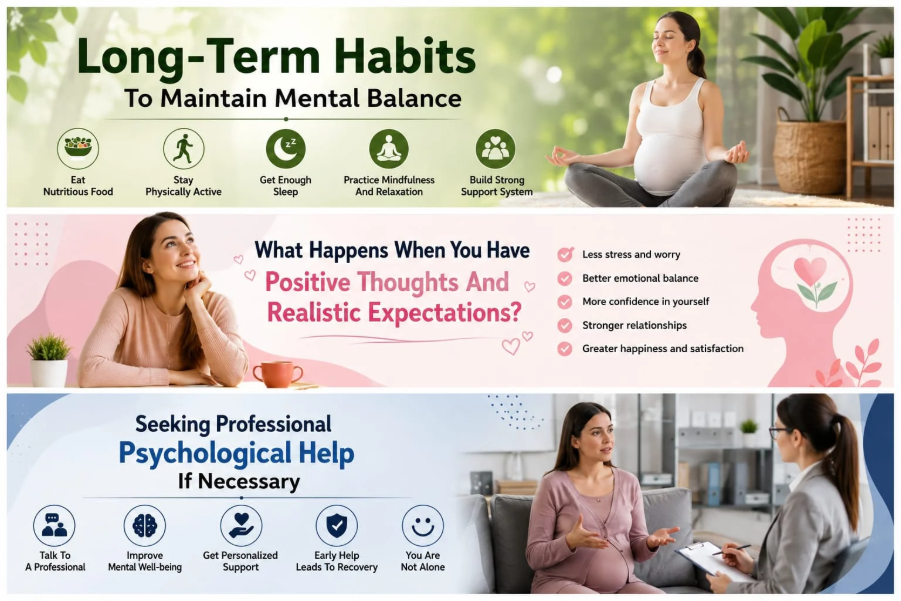
One of the most effective ways to control pregnancy mood swings is to develop some long-term habits. Going to bed and waking up at a regular time every day, eating nutritious food, and drinking enough water help maintain mental stability.
Regular light exercise or walking keeps the body active and also keeps the mood good. Open communication with family members, expressing your feelings, and seeking advice from a mental health professional if necessary play an important role in maintaining emotional balance in the long run.
What Happens When You Have Positive Thoughts And Realistic Expectations?
Having positive thoughts and realistic expectations can help you manage stress. Accepting that you won’t feel the same way every day during pregnancy can help reduce unnecessary frustration. Accepting the changes in your body, appreciating small progress, and not comparing yourself to others can help you build confidence.
This can help you reduce anxiety, manage your emotional ups and downs, and make your entire pregnancy more peaceful and positive.
Seeking Professional Psychological Help If Necessary
If anxiety, excessive fear, or prolonged sadness during pregnancy begins to affect daily functioning, sleep, or relationships, it is important to seek professional psychological help. Talking to a counselor, psychiatrist, or trained mental health worker in a timely manner can help you manage your emotions and maintain your mental health.
- If you have been feeling down for a long time, it is best not to ignore it.
- If you are having trouble sleeping, eating, or performing daily tasks, you should talk to your doctor.
- Counseling can often help reduce anxiety without medication.
- It is beneficial to share your feelings with trusted people rather than hiding them.
Perfection
While Pregnancy Mood Swings are a normal part of pregnancy, they should not be completely ignored, but we must take them seriously. During pregnancy, hormonal changes or physical illness and mental preparation begins with the new member coming into the family and his future plans. It can also create a lot of emotional swings.
However, regular rest, nutritious food, drinking enough water, light exercise and the habit of expressing one’s feelings openly play a major role in maintaining mental balance.
Besides, if you can form the habit of deep breathing or meditation for a few minutes every day during pregnancy, you can easily keep your mind calm. In this situation, if a certain time of the day can find time to do something he likes, this can also be an effective way to keep his mind calm.
It is also important to have realistic expectations and not compare yourself to the experiences of others. Emotional support from family and close people plays an effective role in boosting confidence and reducing anxiety during this time.