
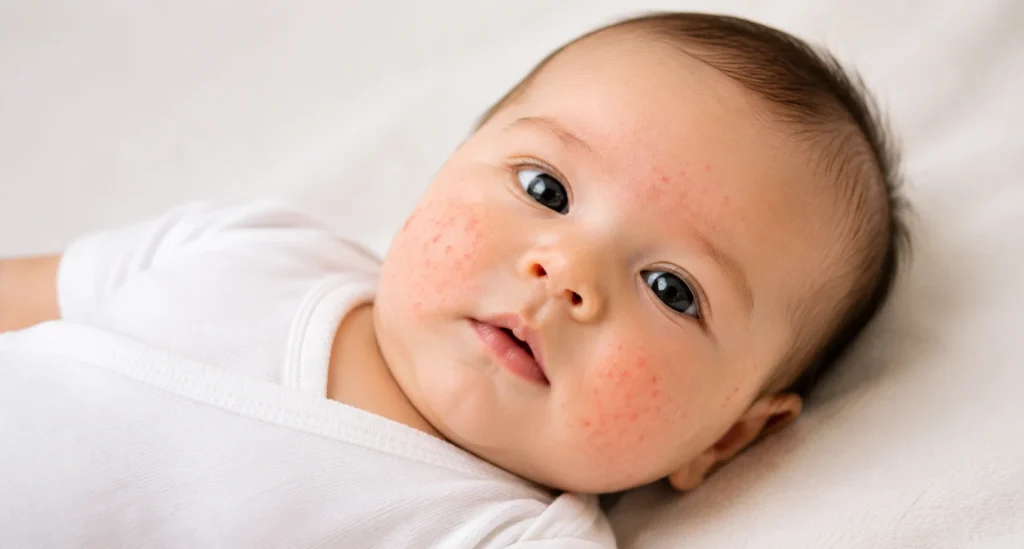
Care givers and healthcare professionals face a spectrum of health presentations in terms of caring for early infancy and it ranges from psychological changes to critical medical emergencies.Neonatal acne places at one end of the health spectrum which is a common and transient dermatological condition in babies.Though it apparently creates a concern among new parents,it resolves spontaneously and leaves no threat to the baby.
On the other hand,it may represent some severe skin conditions and it generally has some close associations with other skin disorders.It is very important for the parents to understand the relation between these distinct pediatric situations which help them recognise early presentation of these conditions.
In this article,we try to share the whole concept of baby acne eruptions in different parts of the baby’s body.Then we try to navigate the understanding of these two variations of health spectrum and guide you well on how to tackle neonatal acne in the baby.
What is baby’s acne on skin?
Baby acne is one of the commonest skin conditions and it generally can affect babies who are between 3 weeks to 2 years of age.It consists of two distinct variations that comprise neonatal acne and infantile acne.
Neonatal acne
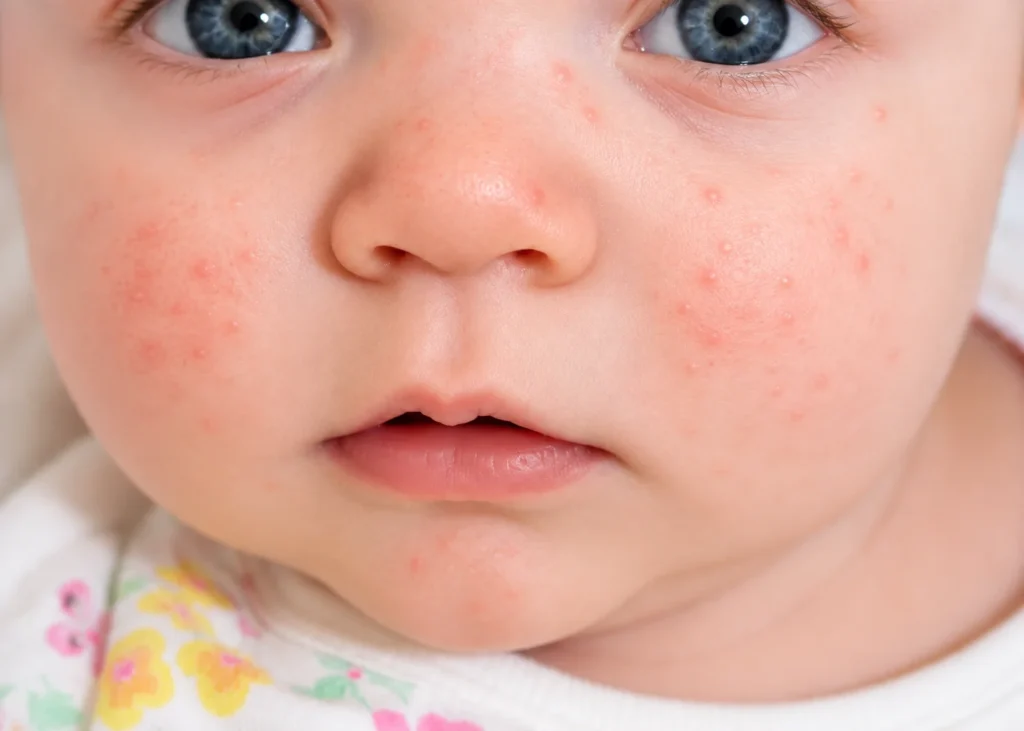
Neonatal acne can erupt at any time when your baby is between 3 weeks and 3 months of age and its ratio of occurrence is about 1 in 5 babies.When there is any degree of hormonal imbalance in the baby’s body,it can then end up with eruptions of temporary (short-term) acne which may happen before birth.At first it starts up with eruptions of small red bumps on your baby’s skin and then spread on the face, neck or upper body.
Infantile acne
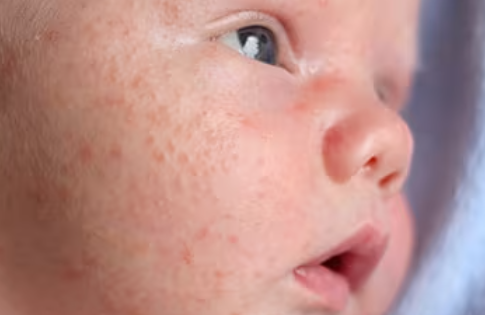
Infantile acne is that form of acne that can occur when your baby is between 3 months and 2 years of age.When oil glands in your baby’s skin become overactive than normal,it creates these acne infantile acne.It may result in production of blackheads which is blocked pores on the surface of the skin and also whiteheads around your baby’s face and neck.
What are the symptoms of acne in a baby?
The symptoms of baby acne consists of a variety of changes in the skin of the baby which most of the time consists of:
- Small and red bumps in the chicks and chin.
- Whiteheads around the face and neck.
- Blackheads in the skin of the upper part of the baby’s body,specially in the forehead.
- Cysts are generally deep, fluid-filled lumps under the skin.
What causes acne on the skin of your baby?
Neonatal acne is generally due to passage of hormones on to your baby before they are actually delivered outside the mothers womb.These hormones within the baby’s body can sometimes last for up to 3 months from the first very moment of birth and may end up with formation of skin that changes the baby.But in some rare condition,
infantile acne may be due to hormone production by your baby like testosterone.Testeron then can make the oil glands in your baby’s skin overactive and produce the formation of acne in various site of the baby’s body including face,chick,chin and forehead.
When should I see my doctor?
It is very important for you as a new parents to look after any unusual changes in your baby’s skin and seek urgent medical attentions.The conditions that demands you paying a visit to a doctor comprise:
| Conditions that demands urgent medical attentions | |
| Acne with severe pyrexia over 38°C | Co-existance of other skin diseases. |
| Redness and swelling around the acne f | Disfigurement of genital skin condition |
| Acne that persist for longer period | Abnormal crying of your baby |
| Acne with no sign of improvement | Chronic pain with body odours |
How is acne on the baby diagnosed?
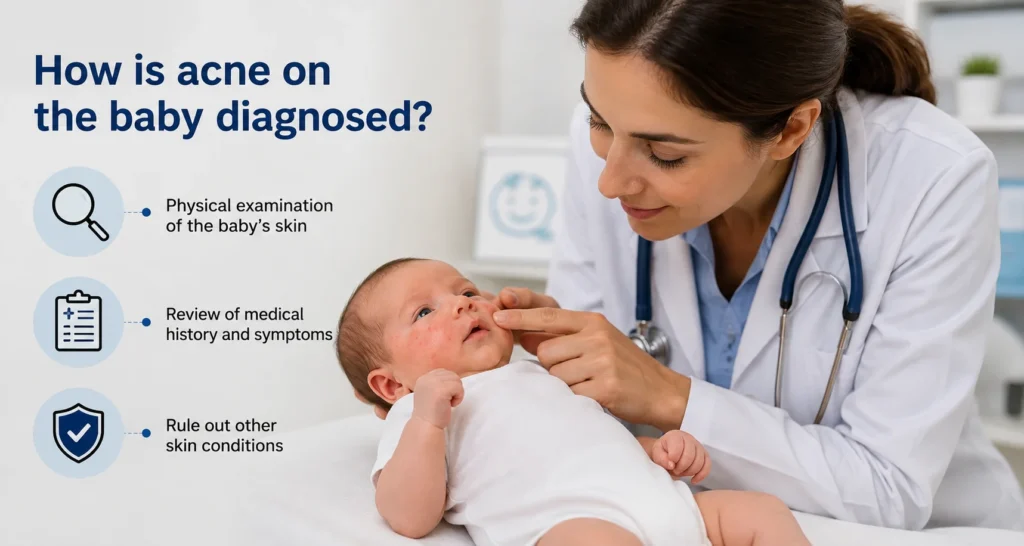
Your doctor can easily diagnose baby acne using a simple examination method and there is hardly any need for further tests for the diagnosis of acne in the baby’s body.When your baby is older than 2 years of age and comes up with developing acne, your doctor may then recommend the tests that measure their hormone levels.A simple blood sample is necessary to confirm whether there is any kind of hormonal deficiency or not.
Different skin conditions along with acne
Your doctor or professional health workers can definitely help work out if your baby has acne, or just possess another definitive skin conditions.These includes:
- Milia:It is one kind of white bumps which generally develop when there is a certain degree of blockage in the pores of skin on your baby’s face.Commonly involved areas are the nose, cheek and around the eyes or peri-ocular area.
- Erythema toxicum:This is a common rash in newly borne babies and it produces red and yellow pimples on the superficial layer of the skin.It generally and frequently appears on the face, chest and tummy.
- Eczema:This happens when the sensitive or allergic skin on the scalp, arms and legs becomes dry, red and irritated.
- Heat rash:When your baby gets too warm and simultaneously their sweat glands get blocked,they may then end up with a red rash. You might see heat rash in those areas of the body where sweat becomes trapped and thus these areas comprise the baby’s neck, chest and back.
Does breastfeeding help erupt baby acne?
It’s possible that hormones from a mother’s breast milk can certainly affect your baby’s hormones and therefore it can lead to erupt acne on baby’s skin.You need not fear at all and that’s because it is a temporary skin condition that clears up, most often without any medical treatment.
Breastfeeding or feeding your newborn should continue as usual, as baby acne does not interfere with your baby’s nutrition. In most cases, this skin condition naturally improves as your baby grows and their body adapts to life outside the womb. If you have any concerns about whether your breast milk or feeding routine may be affecting your baby’s skin, it is best to consult your healthcare provider for guidance.
Do kisses to your baby cause acne?
No.It is unlikely due to affectionate kisses on your baby’s cheeks when they’re born and thereby they don’t cause baby acne at all. Temporary changes in hormones can increase oil production in a baby’s skin, leading to blocked pores and the appearance of baby acne.
How is acne on a baby’s body treated?
Treatment for baby acne will depend on your baby’s symptoms and presentations and in most cases acne will get better as well as resolve without treatment. If your baby has chronic or persistent acne, your doctor may then recommend treatment with some topical medications which you need to apply on the skin surface.These comprises:
- Benzoyl peroxide –This topical medication generally helps kill the bacteria on the trapped places and thereby reduce blocked pores.
- Retinoid cream –It is the topical cream which usually minimises inflammation on the affected skin portions.
- Antibiotic gel –This topical antibacterial gel generally helps kill bacteria and prevent infection of the skin which helps resolve or treat acne.
Special note:Your doctor may suggest giving your baby antibiotics and it is because it can help prevent scar formation.They usually recommend antibiotics in those cases where the acne becomes more severe and progressive at the same time.
What are the complications of acne on your baby?
Complications from baby acne are actually a rare thing to get if your baby remain well nourished.However,some distinct complications still may happen in baby’s body and these comprise:
- Ugly scar tissue formation after the acne gets resolved and healed.
- If the acne happens in teenage girls or boys,it may turn into a progressive and long lasting acne.
- Infection with suppuration from the acne.
Can acne on baby’s skin be prevented?
Though acne is not preventable most of the time,you need to keep your little ones protected from developing acne as their skin is still developing and growing.You must avoid harsh soap with bubble baths and rather you can use gentle P-H neutral wash.
If their skin feels dry, a simple fragrance-free moisturizer works wonderfully and it’s also important to keep them comfortable with light, breathable cotton clothing and bedding that prevent overheating.Finally,you can just make sure to gently wipe their skin clean after each feed and outdoor playtime to keep them happy and playful.
The Bottom Line
In conclusion,Baby acne is a common and usually temporary skin condition that can cause concern for new parents, but understanding its causes, symptoms, and treatment options helps provide confidence and proper care. In most cases, neonatal and infantile acne improve naturally as the baby’s skin develops and adjusts after birth.
Parents should focus on gentle skincare practices, avoid unnecessary treatments, and seek medical advice when symptoms appear unusual or persistent.With proper awareness and guidance from healthcare professionals, baby acne can be managed safely without affecting the baby’s overall health and comfort.Proper recognition with when to monitor and when to seek help ensures better outcomes and supports a healthy start for every little one.