

According to Parenting Advice, learn about the most important and practical advice for parents to develop healthy child development, good habits and effective communication channels.
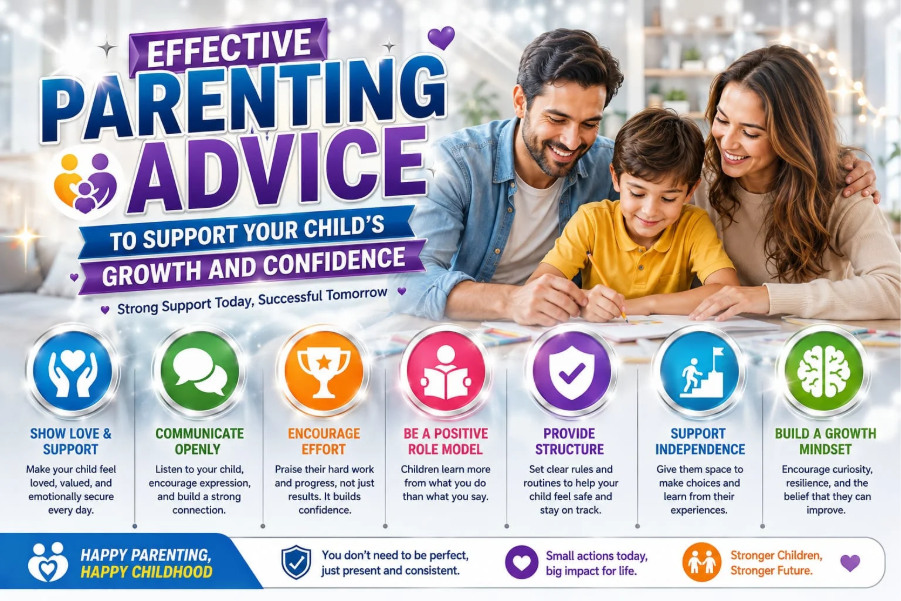
As a parent, have you ever thought about how much your small daily behaviors can affect the formation of your child’s future personality?
A child’s growth is not limited to food, clothing, education or ensuring a safe environment. His mental development, confidence, social skills and decision-making ability are equally important. How a child will speak, how he will react if he makes a mistake or how confident he will be in new situations – all these depend a lot on the family environment and the behavior of adults. Therefore, in addition to disciplining a child, it is also necessary to understand him, listen carefully and give him the opportunity to learn independently according to his age.
So, instead of correcting every mistake of a child, would it be more effective to give him the opportunity to learn on his own?
In reality, not all children learn in the same way or react in the same way. Some need more encouragement, while others need patience and regular guidance. Excessive pressure, comparison or harsh criticism can sometimes reduce self-confidence. On the contrary, love, clear boundaries, positive communication, and age-appropriate responsibilities help build a child’s self-reliance and confidence.
The most effective education is not just teaching a child to be a good person, but also setting an example of being good through your own behavior.
Why The Role Of The Family Is Important In The Healthy Development Of A Child
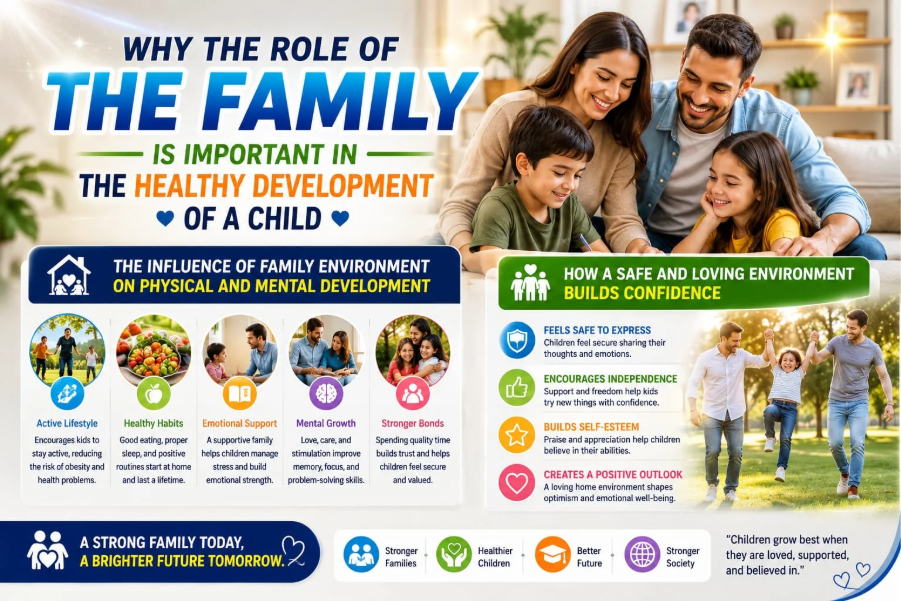
Parenting Advice Understanding the role of the family in the healthy development of a child is an important aspect. A safe environment, love, regular communication, and age-appropriate independence help build a child’s confidence and mental skills. Parental behavior is also one of the main means of learning for a child.
So does the family environment influence a child’s future behavior so much?
Yes, because children learn a lot by observing daily experiences and the behavior of adults. Therefore, along with care, setting positive examples is also important.
The Influence Of Family Environment On Physical And Mental Development
- Nutritious food and adequate sleep help a child grow healthy physically.
- A loving environment increases a child’s confidence and emotional security.
- Positive communication helps to express emotions and develop social skills.
- Opportunities for play play a role in developing physical abilities and thinking skills.
- Avoiding comparisons and excessive criticism helps to maintain self-confidence.
- Positive behavior from parents sets real learning examples for the child.
How A Safe And Loving Environment Builds Confidence
An important aspect of Parenting Advice is to create an environment for the child where he feels loved, safe and accepted. When parents listen attentively and do not humiliate for mistakes, the child is brave enough to express his opinions.
But does praise alone build confidence?
No, along with regular encouragement, age-appropriate independence and opportunities to learn from mistakes are also needed. Because safe relationships gradually teach the child to believe in his own abilities.
How To Develop Effective Communication With Your Child
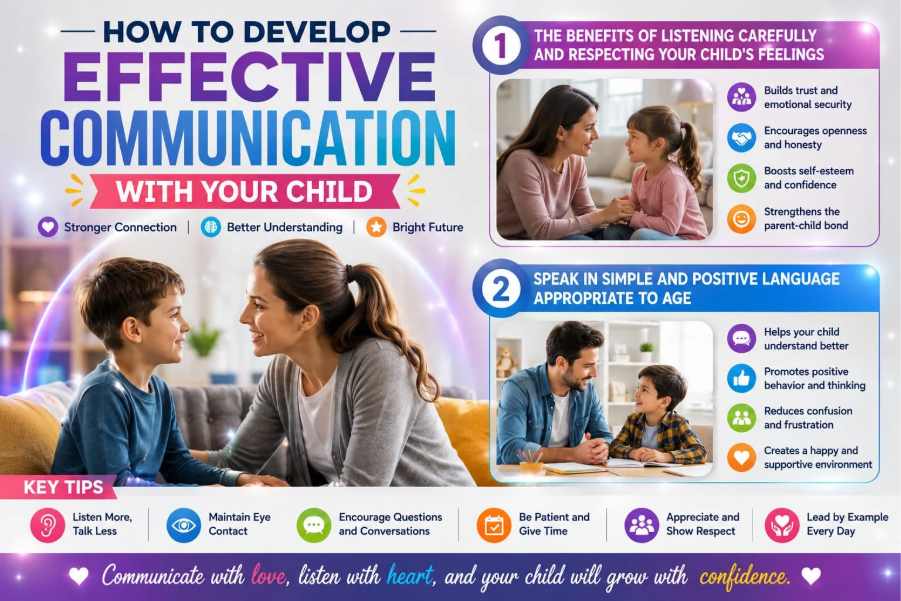
Good communication with children is not just about talking; it also involves listening attentively, making eye contact, giving importance to feelings, and explaining in simple language appropriate to the child’s age.
But do we really listen to our children when they are talking, or do we quickly start giving advice?
Active listening helps children feel valued and safe, and makes them more comfortable expressing their feelings. So the answer is—“Good communication starts with listening carefully, then explaining calmly and clearly as needed.”
The Benefits Of Listening Carefully And Respecting Your Child’s Feelings
- Trust increases: the child learns to talk to his parents easily.
- Confidence increases: he becomes interested in expressing his feelings and opinions.
- Helps in controlling emotions: he learns to understand feelings of anger, fear or sadness.
- Misunderstandings decrease: it becomes easier to understand the real reason for the child’s behavior.
- Emotional security is created: the child feels valuable and accepted.
- Family bonds are strengthened: mutual understanding between parents and child increases.
Speak In Simple And Positive Language Appropriate To Age
In Parenting Advice, it is important to use simple language according to the child’s age and ability to understand. It is more effective to explain things clearly in short sentences to young children rather than giving them complex instructions. Making eye contact while speaking, listening patiently, and explaining the reasons instead of threatening them will increase their confidence.
So, will speaking in difficult language help children learn faster?
No, simple and positive language appropriate to their age helps children understand the subject, ask questions, and express their opinions with confidence.
How To Control Your Speech When Angry Or Mistaken
| Situation | Avoid Saying | Better Approach | Why It Helps |
| Child gets angry | “Stop crying!” | “I can see you’re upset. Let’s talk.” | Helps the child feel understood |
| Child makes a mistake | “You always do this!” | “Mistakes happen. Let’s find a better way.” | Builds confidence and learning |
| Child refuses to listen | “You’re so stubborn!” | “Tell me why you don’t want to do it.” | Encourages communication |
| Child breaks a rule | “You are a bad child.” | “That behavior is not okay. Let’s discuss why.” | Corrects behavior without attacking the child |
| Parent feels angry | Shouting or threatening | Pause, breathe, then respond calmly | Prevents unnecessary conflict |
What Needs To Be Done To Raise A Confident Child?
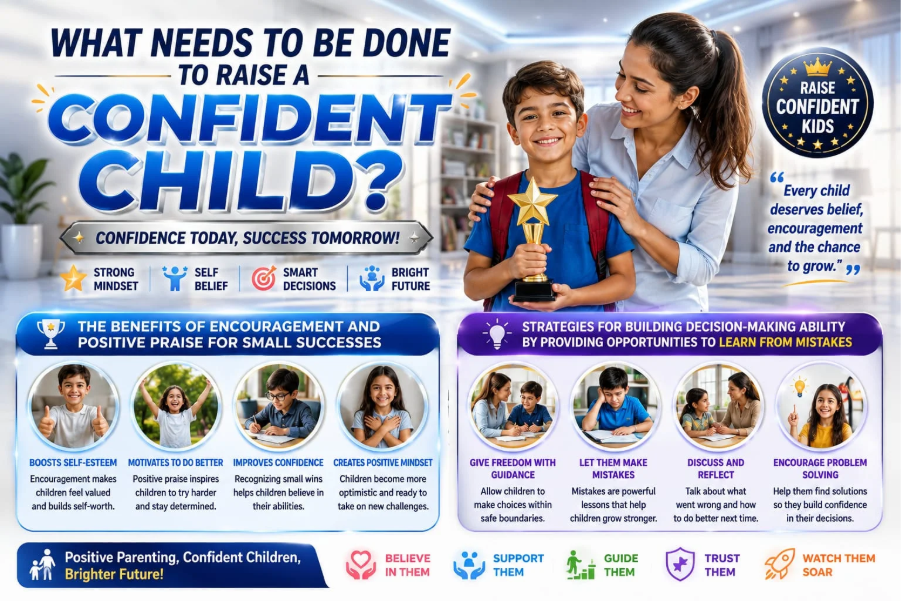
Parenting Advice teaches a balance of love, encouragement, and age-appropriate independence to build a child’s self-confidence. Paying attention to your child’s small successes, giving them opportunities to learn without being insulted when they make mistakes, and listening carefully to their opinions are effective in building their self-confidence.
But how do you know if your encouragement is really working?
The most tangible evidence of this is your child’s willingness to do their own work, the courage to try new things, and the mindset to try again after failure. So, freedom within safe limits, not excessive control, is an effective way to build self-confidence.
The Benefits Of Encouragement And Positive Praise For Small Successes
- Increases self-confidence: The child builds faith in his own abilities.
- Reduces the fear of mistakes: Gives the courage to try again after failure.
- Develops positive behavior: Increases the desire to repeat good deeds.
- Builds self-reliance: Increases the confidence to do his own work.
- Strengthens relationships: The child feels security and acceptance from parents.
Strategies For Building Decision-Making Ability By Providing Opportunities To Learn From Mistakes
An important part of parenting advice is to give your child the opportunity to learn from mistakes, so that he gradually understands the consequences of his decisions. Instead of immediately scolding or correcting every mistake, let him think within safe limits.
But does allowing a child to make mistakes make them more responsible?
Yes, because learning from his own experience improves his decision-making skills. When parents ask questions, explain possible consequences, and provide guidance when necessary, children learn to make future decisions with confidence.
Effective And Positive Ways To Teach Discipline
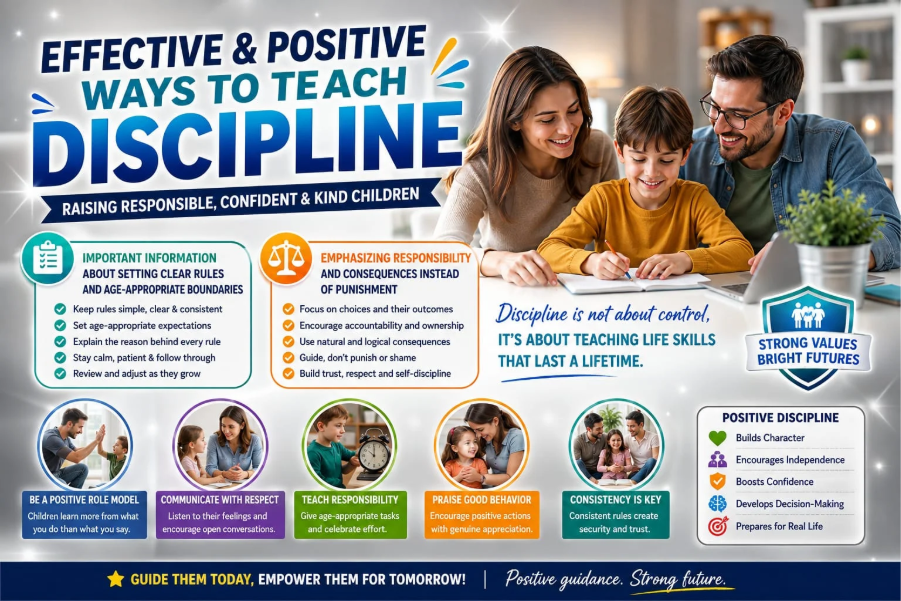
According to Parenting Advice, teaching discipline does not mean scaring or harshly punishing a child; rather, it means explaining correct behavior and giving them regular opportunities to practice it. Clear rules according to age, specific boundaries, and natural consequences for mistakes help children become responsible.
So how is it most effective to correct them when they make a mistake?
Calmly explaining the reason, showing alternative behavior, and setting reasonable consequences if necessary are the best methods. This not only teaches discipline, but also builds a child’s self-control and confidence.
Important Information About Setting Clear Rules And Age-Appropriate Boundaries
- Keep the rules clear: Create simple and clear rules according to age.
- Explain the reasons: Don’t just forbid, explain the reason for the rule.
- Follow the same rules: It is important to be consistent in the rules of parents.
- Set reasonable limits: Set expectations according to the child’s age and ability.
- Praise good behavior: Give positive encouragement when the rules are followed.
- Give freedom as they grow older: Increase responsibilities by changing the boundaries over time.
Emphasizing Responsibility And Consequences Instead Of Punishment
Instead of punishing a child for misbehavior, it can be more effective to teach them the natural consequences of that behavior. For example, if they leave their toys lying around, they can be given the responsibility to tidy them up for a while. This helps the child not only obey the rules out of fear, but also learns to understand the consequences of their actions.
How does this create a sense of responsibility?
Because when children experience the consequences of their decisions, they gradually develop the habit of correcting mistakes and making better decisions in the future. Therefore, explaining responsibility and consequences is more educational in the long run than punishment.
What To Avoid When Correcting Misbehavior
| Avoid | Better Approach |
| Shouting or yelling | Stay calm and speak clearly |
| Harsh punishment | Use reasonable consequences |
| Comparing children | Focus on individual progress |
| Name-calling | Correct the specific behavior |
| Public embarrassment | Talk privately and respectfully |
| Unrealistic expectations | Set age-appropriate goals |
How To Increase Your Child’s Independence And Sense Of Responsibility
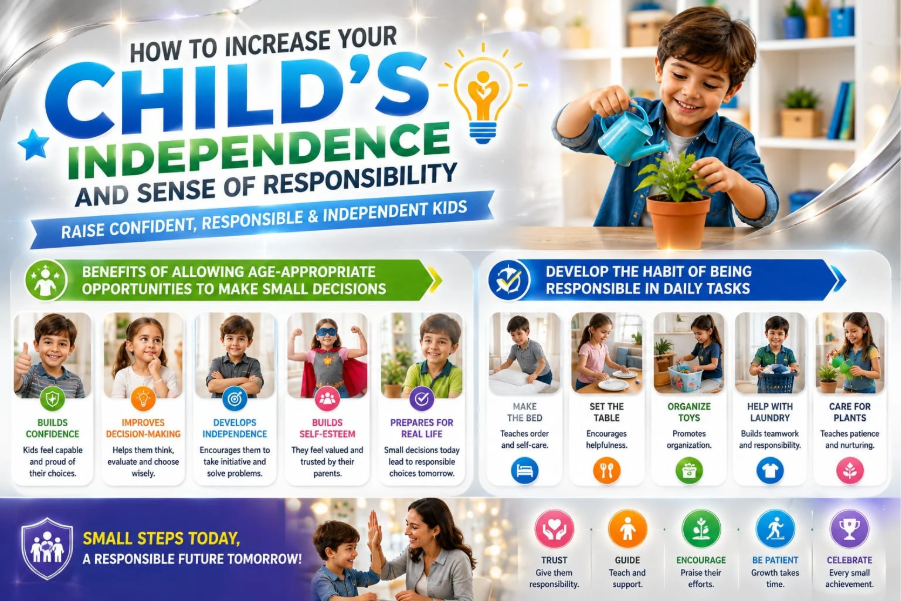
An important part of parenting advice is to give children the opportunity to work independently and teach them a sense of responsibility according to their age. Folding their own clothes, putting away toys, or making small decisions increases self-reliance.
How much freedom should be given to a child to keep them safe and responsible?
The answer is to set clear boundaries and necessary guidelines with freedom. When parents encourage their children instead of always giving them work, they learn from their mistakes, learn to make decisions, and gradually become confident.
Benefits Of Allowing Age-Appropriate Opportunities To Make Small Decisions
- Increases self-confidence: The opportunity to express one’s own choices and make decisions builds self-confidence in the child.
- Develops a sense of responsibility: Teaches to understand the consequences of one’s own decisions, builds a habit of responsibility.
- Improves problem-solving skills: The habit of making small decisions helps to handle complex situations in the future.
- Learns to think independently: Can form one’s own opinions without depending on parents for everything.
- Provides an opportunity to learn from mistakes: The experience of making mistakes within safe limits helps the child understand real situations.
- Improves communication skills: Develops the habit of expressing one’s own choices, reasoning, and feelings.
Develop The Habit Of Being Responsible In Daily Tasks
An important part of Parenting Advice is to give your child the opportunity to do small daily chores. Tasks like tidying up their toys, putting books away, clearing away plates after meals, or following a reading schedule build a sense of responsibility.
Do parents have to do everything?
No, giving children the opportunity to do things according to their age and ability increases their self-reliance and helps them understand the consequences of their actions. Therefore, giving them regular responsibilities within safe limits is an effective method.
Why Is The Behavior Of Parents So Important?
Children not only listen to their parents, they also closely observe their behavior and often imitate it without realizing it. Reactions when angry, the mentality of admitting mistakes, or respect for others—all become part of the child’s learning.
So what is the most effective education in building a child’s confidence and behavior?
The answer is, setting a positive example in everyday life. When parents speak calmly, apologize when they make mistakes, and behave responsibly, the child gradually acquires the same values
Conclusion
Parenting Advice is not just about teaching a child what to do; rather, it is a continuous process of giving the right direction in daily behavior and decisions to build his healthy development, confidence and future personality. In addition to love, a child needs a safe environment, clear boundaries, attentive listening and the opportunity to learn independently according to age.
When a parent listens to the child carefully, tries to understand the reasons for mistakes without insulting them, and recognizes even small successes, then a sense of confidence and responsibility gradually builds in the child. Similarly, excessive comparison, intimidation, harsh criticism or the tendency to keep all decisions in one’s own hands can hinder the child’s natural self-reliance. Therefore, it is important to maintain a balance between discipline and independence.
Change your own behavior before changing the child, because your daily example is one of the most important lessons in his life.