
Labor and birth positions are the strategic movements and postures a mother adopts to ease pain and help the baby navigate the birth canal. In that final moment of pregnancy, when every second feels like an hour, the way you sit or lie down will determine how easy your journey will be. Did you know that just lying on one side or walking around a bit can shorten your labor by a few hours? In this busy American life, we always rely on modern medicine, but nature has some physical tricks that will make your motherhood battle easier like magic.
Come on, lying on your side in the delivery room means fighting against gravity. Have you ever asked yourself why in primitive times, mothers used to give birth sitting or standing? Because our bodies are designed in such a way that movement paves the way for the baby to descend. Using every muscle in the body properly is the real mantra for conquering labor pains that will establish you as a fighting mother in the diaspora. If you know these magical positions while lying on the bed of that modern hospital in America, your fear of childbirth will vanish in an instant. Are you ready to learn about those mysterious positions that will make your motherhood victory more magical and worthwhile?
| Position | Benefits | When to Use |
| Walking & Swaying | Uses gravity to help baby descend | Early and Active Labour |
| Hands and Knees | Relieves back pain & rotates baby | If baby is in “sunny-side up” |
| Squatting | Opens the pelvic outlet widely | During the Pushing Stage |
| Sitting on Ball | Relaxes pelvic muscles & rhythmic | Throughout the First Stage |
| Side-Lying | Best for resting & slow progress | When needing sleep or rest |
Use of gravity and active movement
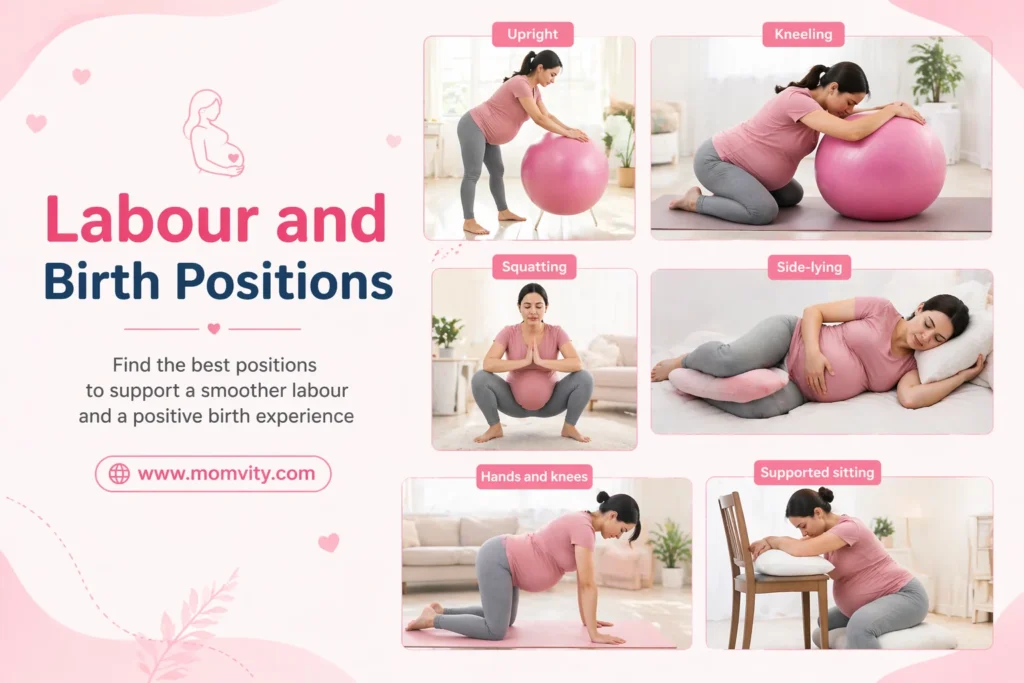
When the first stage of labor begins, walking around is the best medicine for you instead of sitting still. Walking or standing while rocking your waist helps your baby to descend deeper into your pelvis. Can you imagine how each step you take helps your cervix to open? Many hospitals in America now allow mothers to move freely as it shortens the labor time. This walking is not only to keep the body active but also to relieve your mental fears.
Come on, when there is no one by your side in this lonely battle of exile, this movement will be your greatest ally. Did you know that standing and leaning against a wall reduces the pressure of the baby on your back? In this mechanical life of America, we seek comfort, but real comfort can only be found if we are a little bit active during childbirth. This is the ultimate satisfaction of being a brave mother. Talk to your baby in your heart with every step, you will see that the inertia of your body is washed away in an instant and you have become a reservoir of magical power.
The magical touch of birthing ball or fitness ball
In almost every delivery room in America, you can now see large rubber balls called birthing balls. At this stage of labor and birth positions, sitting on the ball and rotating your waist in circles relaxes your pelvic muscles a lot. Can you feel the rhythmic movement that is making your baby’s way slippery? It reduces the pressure on your spine and gives you a kind of mental peace. Sitting on this ball means that you are preparing your body for a battle drill, which is a unique benefit of motherhood.
Lying on your knees and hands
If the baby is facing the opposite side of your stomach, then there can be severe back pain, which is called back labor. At this time, doing a cat-like pose or the ‘hands and knees’ position, resting on all fours, can be a blessing for you. Did you know that by doing this pose, the baby gets a place to turn around in the right position on its own? American doctors highly appreciate this pose because it helps increase the baby’s oxygen supply. Keeping your body in this position in this loneliness of exile means that you are standing as a shield for your baby’s protection, which will complete your victory story.
Climbing stairs and slow pace
If labor pains stop midway, doctors often advise you to stand with one leg raised or climb stairs carefully. This unique technique of labor and birth positions stretches your pelvic bones unevenly, which makes room for the baby’s head. Can you imagine the scene where every time you break a stair means your baby is one step closer to the world? Your brave walk in the corridors of this modern American hospital will amaze everyone. This is how overcoming your limitations will introduce you to the world as a fighter and a successful mother.
The final position and the moment of victory of pushing
When the final stage of labor, that is, the time to take the baby out, comes, the right position will prevent wasting your energy. Squatting or sitting upright is considered the most effective method at this stage of labor and birth positions. Did you know that your pelvic outlet opens up to 30 percent more when you sit on your back? Many modern delivery beds in America now have special bars that you can hold while sitting on your back. This position ensures full use of gravity on the way down for your baby, which brings your long struggle to a successful conclusion.

Come on, during this final push, you will feel a kind of indescribable exhilaration that will make you stand up in a new identity. Have you ever wondered why our grandmothers used to give birth sitting on the ground? Because it was much easier for the baby to come out in that position. Even in this advanced technology in America, these primitive laws of nature will make your delivery worthwhile. Believe in yourself and when the doctor tells you to push, press down with your full body weight. This giving your all, this is the epic of motherhood that you will remember for a lifetime and which will give your child a strong life.
Side-lying
If you are very tired, lying on your side with one leg elevated or on a pillow may be good for you. This posture of Labor and Birth positions helps you to save energy and keeps the pace of delivery a little slower but safe. Can you feel the touch of peace when there is no pressure on your back? This position will keep you mentally calm when you are alone in this American hospital. This preparation for war even during rest is a unique identity of your prudent motherhood that will make you a successful mother.
Magical use of water or birthing pool
Many hospitals in America now have the opportunity to give birth in a water birth or warm water tub, which will overcome all the inertia of your body. The buoyancy of water reduces the weight of your body, which allows you to take any position very easily. Did you know that lukewarm water greatly reduces the risk of your labor tearing? The touch of this magical water will make your pain much more bearable and your mind will be filled with heavenly peace. Fulfilling your motherhood with this element of nature will be a memorable experience of your expatriate life, which is a worthwhile celebration of motherhood.
Toilet Position
Although it may sound a bit strange, the toilet position works great to open the cervix during labor. The magical aspect of this labor and birth position is that it helps your muscles relax naturally. Can you imagine how a simple sitting position can end your long pain? This position will make your job much easier when you feel the urge to go to the bathroom repeatedly in American hospitals. This is what will establish you as a wise and fighting mother in the exile, which will be the greatest victory of your life.
Body Guard and Postpartum Care
After this long battle of childbirth, getting your body back to its previous state is a great feat of heroism. The way you showed the light of the world to your baby through labor and birth positions will remain in every pore of your body. In this mechanical exile of America, it is very important to take care of your bones and muscles after delivery so that you can run with your baby in the future. Be your own guard and report every little pain to your doctor, which will make your motherhood journey worthwhile.
- Avoid lifting anything heavy for the first few days after delivery and do not put pressure on your stomach.
- Start Kegel exercises or pelvic floor exercises, which will help your muscles tighten or strengthen again.
- Follow the nutritious food and calcium-rich diet of America, which will replenish your bone loss.
- Along with taking care of your baby, keep your sleeping posture correct so that you do not have chronic pain in your back or waist.
- Do not be upset by this loneliness of exile, but celebrate this impossible achievement of your body.
Come on, following these rules is not a hobby for you, but a huge investment for your future. If your body is in good shape in this exile in America, you will be able to handle everything. If you take care of your body, you will be able to recover very quickly after handling the stress of delivery and will be able to nurture the baby properly. This awareness of yours will make you stand before the world as a successful and modern mother, which will be the greatest victory story of your life.
Toilet Position
Although it may sound a bit strange, the toilet position works great to open the cervix during labor. The magic of labor and birth positions is that it helps your muscles relax naturally. Can you imagine how a simple sitting position can end your long labor? This position will make your job much easier when you feel the urge to go to the bathroom repeatedly in the American hospital. This is what will establish you as a smart and fighting mother in the expatriate country, which will be the greatest victory of your life.
C-position
Lying down on the bed with your knees pulled to your chest is called the C-position, which is very popular for pushing. In this position, your spine bends like a bow, which makes it easier for the baby to come out. Can you feel the pressure that is trying to bring a new life into your lap? American doctors like this position because it puts direct pressure on the baby’s head, which speeds up labor. This combination of science and nature will give your motherhood a modern and meaningful form. This awareness will make your delivery much easier and sweeter, which is a unique meaning of motherhood.
Birthing Pool and the Magical Power of Water
Many hospitals in America now have the opportunity to give birth in a tub of warm water, which will overcome all the inertia of your body. For labor and birth positions, the buoyancy of water reduces the weight of your body, so that you can take any position very easily. Did you know that the touch of this magical water will make your pain much more bearable and your mind will be filled with heavenly peace? Fulfilling your motherhood with the elements of nature will be a memorable experience of your expatriate life, which is a worthwhile celebration of motherhood. Floating in this sea of peace, you will reach your dream destination where a new world awaits you.
Body Guard and Postpartum Care
After this long battle of childbirth, it is a great feat of heroism to bring your body back to its previous state. The way you showed the light of the world to your baby through labor and birth positions will remain in every pore of your body. In this mechanical exile in America, it is very important to take care of your bones and muscles after delivery so that you can run with your baby in the future. Be your own guard and report every little pain to your doctor, which will make your motherhood journey worthwhile.
- Refrain from lifting anything heavy for the first few days after delivery and do not put pressure on your stomach.
- Start Kegel exercises or pelvic floor exercises that will help strengthen your muscles again.
- Follow a nutritious American diet and calcium-rich diet that will replenish your bone loss.
- Along with taking care of your baby, keep your sleeping posture correct so that you do not have chronic back or waist pain.
- Do not be upset by this loneliness of exile, but celebrate this impossible achievement of your body.
Following these rules is not a hobby for you, but a huge investment for your future. If your body is in good shape in this exile in America, you will be able to handle everything and establish yourself as a super mom. If you take care of your body, you will be able to recover very quickly after handling the stress of delivery and will be able to nurture the baby properly. This awareness of yours will make you stand before the world as a successful and modern mother, which will be the greatest victory story of your life.
The final victory and the significance of the baby’s first breath
When the doctor instructs you to push hard for the last time, you will feel that your whole body is tense like a bow. Did you know that if you are in the squatting or C-position among labor and birth positions, the baby’s head is much easier to come out? When your life partner holds your hand tightly in that modern labor room in America, every second may seem like an era to you. But the amazing thing is, as soon as you hear the first sound of your baby’s cry, all your troubles will vanish in an instant. Can you imagine that heavenly scene, when your piece of liver is placed on your chest for the first time? This falling from the peak of pain into the ocean of peace, this is the best magic in the world that only a mother can experience.
Bye go, the combination of tears and laughter that will be in your eyes at this time will wash away all the loneliness of your life in exile. Have you ever asked yourself how your body completed such a difficult task so smoothly? The answer is the combination of your indomitable willpower and proper physical technique. Because of the physical freedom that labor and birth positions gave you, a healthy, strong moon particle is smiling in your lap today. In this mechanical society of America, you are not just a working woman now, you are a life-giving mother whose sacrifice has created a new history. This is the greatest achievement of your life, which will bring you the fulfillment of being a successful mother.
Golden Hour and First Touch of Maya
The first hour of a child’s birth is the most precious time of his life when he learns to recognize the scent and warmth of your body. At this time, when you place the baby on your chest, your uterus starts contracting rapidly, which works like magic to reduce excess bleeding. Do you feel that magical pull, when the baby’s little hand is hugging your finger? In American hospitals, this bond of love is given great importance because it is the first step of the child’s mental development. This transformation from the bond of the pulse to the bond of the heart, this is the permanent solution to the loneliness of your expatriate life that will make you a fighting mother.
Placenta Delivery and Physical Liberation
After having a baby, the placenta or the afterbirth comes out is the last chapter of labor and completely frees your body. The way you fought for a long time through labor and birth positions, now lying on one side will be absolute peace for you. Did you know that at this time your body releases a hormone called prolactin, which makes you more affectionate towards your baby? When American nurses help you freshen up, you will see a new fighting form of yourself standing in front of the mirror. This is a meaningful sign of your motherhood that you will remember for a lifetime.
First cry and baby’s new world
The sound of a baby’s first cry means that he has won the fight against the outside air and his lungs have become active. Can you imagine the moment when this baby’s cry will ring in your ears like a sweet song? This cry is the end of all your expectations that will make you forget all the sorrows of being alone in a foreign country. Because of the ability that labor and birth positions gave you, today your baby is making his existence known by tearing the chest of the world. This melody of victory will add a golden chapter to the epic of your motherhood, which will be the best victory story of your life.
Postpartum Recovery and Victory
After the great battle of childbirth is over, it is a huge responsibility to bring your body back to its previous state. The stress you have put on your pelvic bones and muscles through labor and birth positions takes some time to recover. In this mechanical exile of America, your first job after delivery is to pay close attention to your diet and sleep. Be your own guard and inform your doctor about every small physical change that will protect your motherhood journey.
- Keep yourself away from any heavy work for the first 40 days after delivery and get adequate rest.
- Follow a diet rich in water and iron that will replenish your lost blood.
- Pay attention to your personal hygiene and be careful to avoid any kind of infection.
- Along with taking care of your baby, take out at least 20 minutes of time for yourself every day, which will increase your mental peace.
- Don’t be afraid of being alone in your American expatriate life, but trust in your courage.
- Always try to breastfeed your baby in the right position to avoid back and waist pain.
- Always thank your superiors because they have given you a heavenly responsibility.
Bye, for the first few months when you wake up at night for your baby, you may feel that your life has come to a standstill. But the real truth is, you are now the creator of a new creation that will make you stand in front of new surprises every day. The torch of your own courage in this exile in America is the guarantee of your child’s safety. Your sacrifice and love will give your child a strong foundation on which he will conquer the world of tomorrow. You are a successful mother and your victory story is a huge inspiration for all of us that you will carry with pride for the rest of your life.
Conclusion
The correct application of labor and birth positions in this exciting journey of childbirth has taken you to a unique height. You have proven that it is possible to conquer any impossible with patience and the right strategy. The bravery that you have single-handedly left in this mechanical and lonely life of exile in America truly deserves a worthwhile epic. Motherhood is not just about giving birth to a life, it is about awakening the latent divinity within you that will guide you on the right path for the rest of your life. Take care of your body in the days after delivery and accept every small change with love because your health means the bright future of your child. Have faith in yourself and strengthen this bond of love that will bring heavenly peace to your family. May this new journey of yours be sweet and may your home always be filled with the laughter of your child. May your courage triumph and may this eternal hymn of motherhood that you are writing with every step of your motherhood be fruitful.