
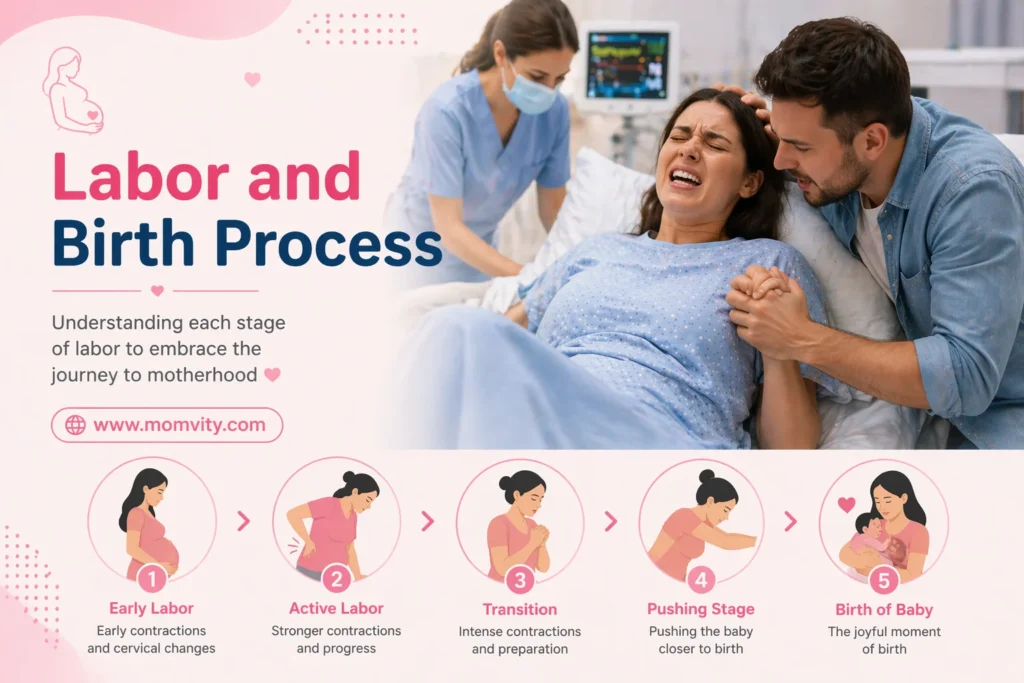
“Labor and birth process” is the greatest struggle of life where a woman gives all her strength and patience to show the light of a new life to this world. In this busy life abroad, especially in America or Europe where there is no one to support you, there is so much fear in the mind about this labor pain. Bye go, remember that labor pain is not a disease but rather a wonderful preparation of your body that works to deliver your baby to your lap. Do you know that this labor pain or pain is actually your friend? Because every wave of pain means that your baby is taking another step forward on the way out of your uterus. This strange struggle that only women who are going to be mothers understand is the greatest act of worship and sacrifice in the world that will take you to a unique height.
When you are lying alone in a hospital bed in a foreign country, writhing in pain, have the courage to remember that at the end of this pain lies the greatest gift of your entire life. Can you imagine the moment when your unborn child will enter the world with a cry? This strange wait and the glimmer of laughter at the end of the pain is a magical history in your motherhood diary that you will carry with pride for the rest of your life. Doctors in America or Europe have made so many modern arrangements to make this time much easier for you. Are you ready to learn about the mysterious journey that will transform you from an ordinary woman to a successful mother? This eagerness to know is what will compel you to read this entire article today because every word of it contains prayers and courage for you.
| Stage Name | Physical Status & Symptoms | Duration (For First Baby) |
| Stage 1: Early & Active Labor | Cervix opens (0-10 cm) | 12 to 20 hours on average |
| Stage 2: Pushing & Birth | Cervix fully dilated, pushing begins | 30 minutes to 2 hours |
| Stage 3: Placenta Delivery | Delivery of the afterbirth (Placenta) | 5 to 30 minutes |
| Stage 4: Immediate Recovery | First bonding and skin-to-skin | 1 to 2 hours after birth |
The first arrival of pain and preparation for going to the hospital
When your labor pains or labor pains begin, the pain may be a little irregular at first, such as biting in the waist or coming like a wave from the lower abdomen. Doctors call this first stage of the “labor and birth process” the latent phase or the early stage. Can you feel the headache that tells you that your waiting time is about to end? If you call a hospital in America or Europe, they may tell you to stay home until the pain comes every 5 minutes. This time is very important for you because taking a walk at home or taking a bath in warm water will keep your mind very calm, which is very important for the baby to come to the world safely.
Don’t rush during this time, pack the baby’s clothes and your necessary things in your bag.
Did you know that peace of mind is your pain medicine at this time?
Hospitals in the Western world now have so many beautiful arrangements for natural pain management. This preparation for this lonely battle will make you a brave fighting mother in exile, which is a sign of your first love for your little piece of your heart. Don’t you think that every moment is taking you one step closer to your prince or princess?
Water break or water breaking signal
If you suddenly see your pants getting wet or a lot of water is flowing out of the vagina, then this is called water breaking. Foreign doctors say that even if there is no pain, if your water breaks, you should go to the hospital immediately because it risks infection in the baby. This is the sign of your awareness by following these small medical advice.
Active labor and that turbulent tide of pain
When your cervix opens to 5 to 6 centimeters, you will enter active labor or active delivery. At this stage of the “Labor and birth process”, the pain will be very frequent and intense, which may make you a little restless. Can you imagine the heroism that you are enduring at this time? At this time in the hospital in America or Europe, doctors or nurses will be by your side to give you courage and check your baby’s heartbeat regularly. This is the primitive illusion of motherhood, which will make you a successful mother through this pain.
At this time, you can take painkillers or epidurals if you want, which will give you a lot of comfort, but the mother nature inside you will give you real strength. In the hospital in the Western world, if you want, you can stay in a different position during the pain, which will make your baby’s path easier. This is your great achievement in this lonely life of expatriation. Are you ready for that magical moment when the doctor tells you that it is time to deliver the baby? This wonderful call will make all your fatigue disappear in an instant, which will make your mind very anxious to know.
Breathing exercises to deal with labor pain
When the pain is too much, take a long breath through your nose and slowly release it through your mouth, which doctors call breathing technique. By doing this, a lot of oxygen will enter your body, which will keep your baby safe. These small tricks will make your delivery time much easier and sweeter.
Pushing stage: That heroic moment of struggle and victory
When your cervix is fully dilated to 10 centimeters, the final time of pushing or pushing the baby out will begin. This stage of the “Labor and birth process” is the ordeal of your motherhood where you have to show your little piece of liver to the world with all your strength. Can you feel the thrill when the doctor tells you that the baby’s head is visible? This one word will dispel all the darkness in your mind and bring a tide of light that cannot be compared to any wealth in the world. When you give your last push with the help of this advanced treatment in exile, a crescent moon will come across your lap, ending all the pain.
As soon as the baby is born in a hospital in America or Europe, they will place it on your chest, which is called skin-to-skin contact. Can you imagine the heavenly feeling when the first sound of the baby’s voice rings in your eardrums? This strange bond of love is the heavenly meaning of motherhood that you will remember with pride for the rest of your life. This brave victory will establish you as a fighting mother in exile. Don’t you think that this is the moment you have been waiting so patiently for the past nine months?
Use of vacuum or forceps during delivery
Sometimes if the baby is late in coming, doctors may use vacuum or special devices. There is nothing to worry about because they do it for the good of you and the baby. This modern science from abroad will eliminate all your risks in an instant and give you a sure safe delivery.
Placenta delivery: The last part of the battle
After the baby comes into the world, you will think that the battle is over, but there is one more small step left in the “Labor and birth process”. Which our village people call ‘placenta’ and doctors call placenta delivery. Did you know that this placenta has been your baby’s home and food provider for so long? Within a few minutes of giving birth, your stomach will twist slightly and if you push a little, the placenta will come out of your body. Doctors in hospitals in America or Europe will cut your umbilical cord at this time and check whether the placenta has fallen properly or not. This is the release of all unnecessary substances from the body, which will give you a strange light feeling that will bring absolute peace to your tired body.
Hospitals in the Western world now conduct a lot of research on this placenta and they ensure that there is no blood loss in your body. This is the new compassion that is created for your own body, which will introduce you as a successful mother abroad. Can you imagine the moment when all your troubles are washed away and only the soft touch of your baby remains in your chest? This is the primitive magic of motherhood that will take you to a unique height after sacrifice. Passing this last step of your heroism in this lonely life of exile with a smile is your greatest act of bravery.
The importance of uterine contractions after delivery
After the birth of the baby, the nurses will occasionally massage your abdomen with light pressure so that the uterus quickly returns to its previous position. This may make you feel a little uncomfortable, but it will help stop your bleeding. This modern nursing care from America will keep an eye on your every pulse so that you recover quickly.
Suture and incision care: Taking care of yourself in exile
During normal delivery, there may be a small tear around the vagina or the doctors will make a small cut in the area so that the baby can come out easily, which is called an episiotomy. Immediately after the “Labor and birth process” is over, the doctors will apply local anesthesia and stitch the wound. Are you afraid of the stitches? Don’t be scared. In America or Europe, threads are now used that dissolve on their own over time, so you don’t have to cut the stitches separately. This touch of advanced science will make your postpartum life much easier.
In a foreign hospital, you will be given an ice pack or special gel for the pain in the stitched area, which will help you get relief very quickly. Do you know that staying clean and taking hot water vapor during this time will greatly reduce your risk of infection? In this busy life of expatriation, it is your first responsibility to take some time for yourself and take care of your body. This is what will establish you as a brave and fighting mother in expatriation.
Are you ready for the next step where your health will be your baby’s greatest strength?
Postpartum hygiene and peri-bottle use
In hospitals in America or Europe, you will be given a special peri-bottle with which you have to spray lukewarm water to keep your lower body clean. Just as the villagers say to wash with neem leaves, this modern method from abroad will make the task easier. These small cares will protect you from infection and sing the praises of your motherhood.
First breast milk and the heavenly bond between mother and child
Within the first hour of your baby’s birth, doctors will encourage you to breastfeed your baby, which is called the ‘golden hour’. After the long fatigue of the “labor and birth process”, when the baby’s little face comes to your breast, you will forget all the sorrows of the world for a moment. Can you feel the heavenly thrill that is binding your liver and the baby’s liver for life? This first milk, called colostrum, is the first shield of your baby’s life that will protect him from all diseases.
In hospitals in America or Europe, there are lactation consultants or special nurses who will teach you how to hold your baby to get milk easily. This is the first lesson in nurturing a new life, this is your greatest strength in this lonely life of exile. Can you imagine the love that will flow from your chest like a canal for your baby? This is the ultimate meaning of motherhood, giving up everything you have and surrendering yourself to another light. Don’t you think that this is the moment you have waited so patiently for the past nine months?
The nectar of colostrum or colostrum
Although colostrum is very small in quantity, it acts as the baby’s first vaccine. Doctors abroad say that these few drops of milk protect the baby’s intestines and keep him free from diseases. The people of the village also consider it as the nectar of the child and even foreign science is saying the same thing today. Your child’s world will begin along the path of this light.
Cesarean vs. Normal Delivery: The Right Decision Abroad
Doctors try their best for normal delivery in foreign lands, but sometimes a cesarean or C-section is required to avoid risk to the life of the mother or the baby. During the “labor and birth process”, if it is seen that the baby’s heartbeat is decreasing or the baby is upside down, the doctors decide to operate quickly. Did you know that having a cesarean in a hospital in America or Europe means ensuring maximum safety for you and your baby?
After a cesarean, you may need a little more time to recover, but with the help of modern science, the stitches in the cut area now dry very quickly. Putting your body under the scissors for the sake of the baby’s life is the mark of that primitive sacrifice of motherhood that will establish you as a heroic mother in the diaspora.
Whether it is a cesarean or a normal one, remember that the real victory is the birth of a healthy baby in your lap. Doctors in the Western world give many good medicines to keep you pain-free after a cesarean, which will help you walk very quickly. Can you imagine the day when your scars will disappear behind your child’s smile? In this mechanical life of expatriation, where work is the responsibility, your first responsibility is to arrange a little extra rest for yourself after a cesarean. This is what will give you the status of an undefeated warrior and take your motherhood to a unique height. Don’t you think that a healthy child is the best medal of your life?
Special precautions and movement after a cesarean
After a cesarean, lifting heavy objects or climbing stairs is prohibited for at least six weeks. Doctors abroad say that using a belt on your stomach during this time and taking regular medications are the keys to your speedy recovery. Instead of doing oil massages like the villagers say after a cesarean, it is really wise to follow the doctor’s advice and dry bandages.
Rules for leaving the hospital and getting your baby’s birth certificate
Two to three days after delivery, when your body is a little tired, the hospital will say goodbye to you. Before leaving the hospital in America or Europe, they will make sure that your car seat is properly installed for your baby. Do you know how conscious Western countries are about the safety of children? Following these rules will give your baby a secure future in the foreign land. Before leaving the hospital, they will hand over all the papers related to the birth of the baby to you, with which you will later get the baby’s birth certificate or birth certificate and passport. The addition of the name of a new citizen to your diary will bring a magical meaning to your maternity diary, which your mind will be anxious to know.
These papers of the birth of a baby in a foreign land are more valuable than gold, so keep them carefully organized in a file. When you return from the hospital, they will also give you an appointment for your baby’s first check-up, which you absolutely cannot miss. Can you imagine the joyous journey when you enter your home for the first time with your precious baby? This is the beginning of a new life, this is your greatest asset in the lonely life of expatriation. Being aware of your rights and the legal protection of your child is what will introduce you to expatriation as a modern mother. Don’t you think that each of these steps is the first foundation for the bright future of your little piece of your heart?
Final warning: When to call a doctor without delay
After returning home after delivery, you need to keep a close eye on your body. Even after the “Labor and birth process” is over, if you see that you have a high fever or pus or a foul odor is coming out of the stitching area, then it would not be right to delay. Did you know that postpartum infection can increase the risk of your life? Hospitals abroad will provide you with emergency numbers so that you can contact them immediately in case of any problem. Do not neglect any discomfort in your body because your baby’s life depends on your well-being.
If you see that your mood is very irritable or you are crying for no reason, it is called ‘baby blues’ or ‘postpartum depression’. In America or Europe, a lot of importance is given to treating this mental condition of mothers, so tell your spouse or counselor about your feelings. Can you imagine the peace when you are mentally healthy and cherish your child? Keeping your mind and body in check in this lonely life of expatriation is your heroic act that will make you a successful mother. This awareness and courage will sing the praises of your motherhood and will make your child’s safety flawless.
Excessive bleeding or postpartum hemorrhage
If you see that the pad is getting wet very quickly after delivery or large blood wheels are coming out, consider it a danger sign. Doctors in the Western world tell you to take it seriously because excessive bleeding can weaken your body. This is the best defense for you and your child.
Conclusion: A meaningful epic of motherhood
This long discussion about the last struggle of pregnancy or “Labor and birth process” has taught you that becoming a mother is not an ordinary event but a divine struggle. When you hear the melody of your baby’s first cry, you will feel that all the mechanics of the world and all the sorrows of exile have disappeared under your feet. Be it America or any city in Europe, your lonely journey has received a light of meaning today. Motherhood does not just mean giving birth to a new life, but it is about developing the indomitable courage within yourself that will keep you alive as a fighter for life.
Bye Go, take care of yourself in this journey of becoming a new mother and embrace every small and big smile of your baby with love because your smiling mind will be the best playground for your baby. Have faith in yourself and strengthen this heavenly bond of love that will bring heavenly peace to your family. May this new journey of yours be successful and may your home always be filled with the laughter of your child. This hymn of “Labor and birth process” will bring an immortal meaning to your motherhood which you will carry with pride throughout your life. In this busy life of exile, you alone have created a new history for your piece of heart today.