Managing Daily Life as a Mum-to-Be: Easy Daily Habits

Tahmina Noor

Published: 21/07/2026
Updated: 21/07/2026

 Managing daily life as a mum-to-be becomes simple with balanced routines for sleep, food, work, and emotional care, built for 2026 lifestyles.

Every day during pregnancy feels a little different.As your body changes, so does your mind, and it’s not unusual for these changes to occur. Managing your daily routine can be a challenge for many. Many women are experiencing these changes for the first time and don’t know where to start.

Some continue working as before, some just give up and go on vacation. None of them is the right solution. This is where the importance of managing your daily routine begins. With proper planning, this journey becomes much easier and more enjoyable, and the rest of the family can also help easily.

What is the topic? 

Managing daily life tasks as an expectant mother means creating an easy balance between eating, sleeping, working, and mental peace during pregnancy.

Rather, it is a collection of small daily decisions that keep both body and mind healthy. Many people think that it is just following the doctor’s advice. In fact, it is more than that. Managing daily routines is the name of managing these four things together: housework, office responsibilities, family needs, and the needs of your own body.

In 2026, a lot of new research and simple digital tools have become available to people, making this task much easier than before. For example, from mobile apps to easy diary writing methods, everything is now at your fingertips.

Daily routine during pregnancy  

A light breakfast after waking up in the morning, followed by a short walk—these small habits actually form the foundation of the day. 

During pregnancy, your body’s energy levels fluctuate, which can be uncomfortable, so you can’t keep your routine completely static. Being flexible is the key. Some people feel more energetic in the morning, while others feel more refreshed in the afternoon.

Why is it different 

A normal routine is not the same as a pregnancy routine. It is normal to feel tired, nauseous, or suddenly feel down. So, you need to structure your routine in such a way that you can listen to your body when it speaks. It is more important to understand your body’s signals than to force yourself to continue working. When your body wants to rest, ignoring those signals can only make you more tired later. Sometimes, a short nap can help you cope with the rest of the day.

Why is it necessary? 

If you cannot manage your daily life properly and according to the rules, then both fatigue and stress will increase in your life during pregnancy. This affects not only physical matters but also mental health.

Those who plan their daily activities at the beginning of the day feel less tired. The same has been said in the Maternal Health Advisory 2026-2027.

By organizing your daily tasks a little, you will feel a little lighter and your mind will feel calmer. In fact, a pregnant mother’s mental state throughout the day depends a lot on her work. Many times, it is seen that if you follow a routine according to the rules, the restlessness in your mind will be much less than before. 

For example, when you wake up, when you eat, or when you take a nap, when all these things come into a rhythm, then the busy thoughts in your head will also reduce automatically.

Uses and Benefits  

Having a structured routine reduces the fatigue of making decisions. You do not have to think about what to eat, when to rest, etc. repeatedly. As a result, mental energy is saved for other important tasks. This extra energy can be used for family and work. The amount of fatigue at the end of the day is relatively low, although slight.

Needs 

This management is even more necessary for those who have a job or business. Because the stress of the office and the physical changes of pregnancy have to be managed together. Having a specific structure helps both sides work better and reduces anxiety about the quality of work. Talking openly with colleagues can often lead to some relaxation in office work, which is very helpful at this time.

Who can do this? 

The practice of “Managing daily life as a mum-to-be” is applicable to any pregnant woman, but especially those who are working, are first-time mothers, or have fewer people to help at home. Regardless of age or profession, these practices are useful for everyone. Even for those who have already been mothers once, this routine may need to be arranged a little differently the second time.

Qualifications 

No special qualifications are needed. Just the desire to notice the changes in your body is enough. It becomes easier if you have regular advice from a doctor. The process goes smoother if you have family support.

Target Audience 

First-time mothers, working women, and mothers expecting twins benefit the most from this routine. Because their time management needs are relatively high.

Age and situation differences

After 35, the body needs more rest than before during pregnancy, so it’s best to give yourself a little more time during this time. Again, in the case of the first child, the issue of mental preparation also becomes a bit more important.

What do you need? 

You don’t need anything complicated to get started. A simple diary or phone note app, a list of nutritious foods, enough water and rest time, a way to track doctor’s appointments, and the support of a family member are all that is needed. Having these things together makes planning your day much easier. Some women also write down their daily feelings in a small notebook, which is useful when talking to the doctor later.

Essentials 

Comfortable lightweight shoes, loose, soft clothing, and a good pillow—these little things can go a long way toward increasing your daily comfort. Plus, having a lightweight bag makes it easier to get around outside.

Documentation 

Information from each checkup should be recorded in a pregnancy record book or app. This will help the doctor at the next visit easily understand what the previous report was like.

Explore more here: Safe Healthy Routine for Pregnant Mothers

Step-by-step rules  

The practice of thinking before the day starts is actually very helpful. When exactly you need to discuss it in your mind, if you make up your mind in advance, you can understand the rest of the day. Then comes the turn of work. 

Ask what needs to be completed today. After a day or two, basically put these types of tasks aside. And there is no harm in not messing with the work for now, give it to your head temporarily. If you divide yourself, the pressure on your head becomes a lot. You can understand the worst of the body on the good side, so try to keep trying for twenty minutes during this time. In the north, if you take six walks or stretching, the body regains its strength.

Try to stay away from screens before going to bed at night. If you develop the habit of going to bed at the same time every day, your body’s rhythm will be in order and you will feel a lot of peace in your body.Writing down a general plan at the beginning of the week makes it easier to manage the entire week. Reviewing that plan at the end of the month will also help you understand where changes need to be made.

The table below provides a simple comparison of daily routines by trimester.

TopicsFirst TrimesterSecond TrimesterThird Trimester
Energy levelsLow, fatigue highRoughly stableDecreases again
WorkloadIt is better to keep it lightWork normallyIt should be reduced gradually
Rest timeTwo short breaks a dayOne medium breakMultiple breaks a day
Physical activityBrisk walkingModerate exerciseLight stretching

How much might it cost? 

According to estimates from 2026, the cost of regular monthly pregnancy checkups, lab tests, and necessary supplements in the United States without health insurance can be very high. However, for those who have health insurance, this cost is significantly reduced. 

The variation in this cost varies greatly from state to state. Because in some places, hospital fees are very high, while in other places, clinic fees are relatively low.

Ways to reduce costs 

Many families are now taking help from community health centers or maternity assistance programs to save money. Some also make a list of essential items in advance so that they don’t have to deal with sudden large expenses. There is no need to buy new baby items. Many people are turning to used items because they are available at affordable prices in the market. But while buying, you should be careful whether the items are usable or not.

Advantages and Disadvantages 

The biggest benefit of following a structured routine is that it reduces stress. Since the body knows when it needs rest, the chances of feeling suddenly tired are reduced. It becomes easier for me to manage both work and family. Many of those who follow the rules of “the daily life of an expectant mother” say that their days now seem much more organized than before.  .

Sometimes, following a routine can suppress your will, and some people get bored of following the same rules every day. If you suddenly feel unwell or something unexpected happens, the routine does not always work the same way. Therefore, it is better to view the routine as a guideline rather than as a strict rule.

Main advantages  

Getting enough rest, eating regularly, and reducing stress are the three biggest positives of pregnancy. Both the body and mind are stable during this time, so fatigue or anxiety are less likely to set in. In addition, you get more time to spend with your family than ever before.

Possible difficulties  

Excessive strict routines can sometimes cause boredom. Without flexibility, even small changes can upset you.

Ways to maintain balance 

A short break from the routine can be taken once a week. This keeps the mind light.

Common mistakes  

The first mistake many people make in “Managing daily life as a mum-to-be” is ignoring their own fatigue. Many people do not rest due to work pressure, which later affects the body. Some try to do everything alone, hesitate to ask for help from family. 

A common mistake when it comes to food is eating at irregular times of the day. In addition, missing doctor’s appointments or not talking about their mental state also becomes a big problem. Many people increase their anxiety by comparing themselves with other pregnancies on social media, which is better to avoid. Another common mistake is drinking less water, which increases fatigue.

FAQ 

Question 1: How many times should you rest during pregnancy?

Usually, two to three short breaks a day are enough.

Question 2: What should you do if you feel tired while working?

It is good to immediately sit down and rest for a while and drink water.

Question 3: Do you have to keep the routine the same every day?

No, the routine can be changed according to your body’s condition.

Question 4: Are there any special tips for working mothers?

Yes, taking short breaks at the office and talking openly with colleagues is helpful.

Question 5: What can you do for yourself to reduce stress?

Closing your eyes for a short time and meditating calmly can help calm your mind. Talking openly with your loved ones can also help.

Question 6: What should you do immediately if you can’t sleep at night?

Stay away from your mobile or TV screen right before going to bed, as this delays sleep. Instead, drinking lukewarm milk relaxes your body. This helps you fall asleep faster.

Question 7: What should you do if you don’t get help from your family?

There is no need to fight alone in such a situation. You can also seek help from a social support group or a known neighbor, which will do you good.

Question 8: What should you do if you get bored of following a routine?

There is no need to change the entire routine, just make small changes. For example, changing the daily walking route or introducing a little novelty in your diet.

Conclusion 

Every day of pregnancy actually teaches something new. For an expectant mother, managing her daily life is not a difficult task. It is a matter of small daily habits. Creating a natural rhythm between eating, sleeping, working and resting the body at the right time is the most important thing here. A new study from 2026 or 2027 has also said the same thing. Listening to your body and seeking help from others when needed – these two habits give the expectant mother the most relief. The simpler the routine, the more comfortable it will feel to pass the days.

Some of them may be employed and some may be housewives.Some are becoming mothers for the first time or some for the second time. This journey is completely different for every woman and the experience of all mothers is equally important.Small changes in life can have a big positive impact. Money, time and your own energy – if you understand these three things a little, the entire pregnancy period becomes much more enjoyable. If you have the support of family and loved ones by your side, then this path becomes much easier. 

At the end of the day – taking proper care of yourself is what matters. Start making small changes now, and you’ll see your days go by more smoothly and every morning will start with a great sense of peace.


Related Articles

early pregnancy vitamins

Early Pregnancy Vitamins: What You Need and Why It Matters

Did you know that during the first few weeks of pregnancy, the brain and spinal cord of your developing baby begin to form? 

At this stage, many mothers may not even be aware that a new life is on the way. Seeing two red lines on a pregnancy test often brings a mix of joy and a flurry of questions. 

What foods are best for the baby? Which vitamins support brain development? And with so many products available on the market, which one is truly right for your needs?

Exploring these questions makes it essential to learn about “early pregnancy vitamins.” Certain nutrients play a vital role in the healthy development of your baby during the early stages of pregnancy.

Dear mother, consider this: you might not have given much thought to your daily diet before, but now that you are expecting, you likely find yourself wanting to know about every component of what you eat. This is a beautiful transformation that comes with motherhood. However, keep in mind that more vitamins do not necessarily mean greater benefits for your baby. It is important to understand which nutrients are required, which can be obtained from food, and which might be needed as supplements. 

Let’s explore the most important nutrients for both your body and your unborn baby during the early stages of pregnancy.

Early Pregnancy Vitamins at a Glance

During pregnancy, your body’s nutritional needs change. In the first three months in particular, the baby’s brain, nervous system, bones, and other vital organs begin to develop. Therefore, in addition to your daily meals, it is essential to pay special attention to the intake of certain vitamins and minerals.

For your convenience, the daily nutritional requirements for pregnant women aged 19 and older are presented in the table below.

NutrientDaily RequirementMain Benefits
Folic Acid400 mcg (600 mcg DFE total folate)Brain and spinal cord development
Iron27 mgRed blood cell production
Iodine220 mcgBrain and thyroid development
Choline450 mgBrain and spinal cord development
Vitamin D15 mcg (600 IU)Bone development
Calcium1,000 mgStrong bones and teeth
Vitamin B122.6 mcgNerve and blood cell health
Vitamin A770 mcg RAEEye, skin and immune health
DHANo official RDABrain and eye development

Keep in mind that the amounts listed in the table represent your total daily nutritional requirements. This does not mean that you must obtain all of these nutrients solely from prenatal vitamins; you can meet these requirements through a combination of your diet and supplements.

Why Vitamins Matter So Much in Early Pregnancy

Have you ever wondered why early fetal development is so critical?

The answer lies in the initial formation of the baby’s body. During this period, a specialized structure called the “neural tube” develops, which eventually forms the baby’s brain and spinal cord.

Remarkably, this neural tube closes as early as the third or fourth week of pregnancy—often before a woman has even taken a pregnancy test. This means that by the time you discover you are pregnant, a vital stage of your baby’s development may have already been completed. A lack of sufficient folic acid can increase the risk of “neural tube defects”—congenital issues affecting the brain and spinal cord. According to the CDC, consuming 400 micrograms of folic acid daily helps prevent some of these birth defects.

This is why doctors recommend taking appropriate vitamins as soon as you begin planning for pregnancy. However, if you haven’t been taking any supplements, don’t blame yourself. Once you learn you are pregnant, consult your doctor and start taking them as soon as possible. Remember, it is never too late to start taking care of yourself.

The Most Important Early Pregnancy Vitamins and Minerals

Folic Acid: The Top Priority

Folic acid is one of the most important nutrients during the early stages of pregnancy. It is a form of vitamin B9 that aids in the creation of new cells and supports the healthy development of a baby’s brain and spinal cord. This vitamin is particularly crucial for the proper formation and closure of the neural tube.

Generally, a daily intake of 400 micrograms of folic acid is recommended. Ideally, one should begin taking it at least one month before conception. During pregnancy, the total daily requirement for folate is 600 micrograms DFE (Dietary Folate Equivalents). Since these two measurements are not the same, it is important to keep this in mind when reading product labels.

For women who have previously given birth to a child with a neural tube defect, a doctor may recommend a daily intake of 4,000 micrograms of folic acid. However, as this is a significantly higher dose than the standard recommendation, it should never be taken in such large amounts without a doctor’s explicit guidance.

Why Is Folic Acid So Important Before Pregnancy?

Many mothers believe that it is sufficient to start taking folic acid only after a pregnancy test comes back positive. In reality, however, the baby’s neural tube develops very rapidly; therefore, it is crucial to have adequate levels of folic acid in the body even before conception.

Also, be aware that, in addition to folic acid, an alternative form of vitamin B9—known as methylfolate or 5-MTHF—is available on the market. However, there is not yet sufficient evidence for methylfolate that matches the proven efficacy of folic acid in preventing neural tube defects. Consequently, when purchasing prenatal vitamins, check the label to ensure that it specifically lists “folic acid.”

Iron: For Your Growing Blood Supply

During pregnancy, the volume of blood in your body increases, as extra blood is required to deliver oxygen to both your own body and that of your baby. Iron plays a crucial role in the production of red blood cells.

Pregnant women aged 19 or older require approximately 27 milligrams of iron daily. A deficiency can lead to anemia, which may cause symptoms such as excessive fatigue, weakness, and dizziness.

Good sources of iron include beef, chicken, fish, lentils, beans, spinach, and iron-fortified cereals. However, consuming iron-rich foods is not enough; how well your body absorbs that iron is also important. For instance, consuming plant-based sources of iron—such as lentils or spinach—alongside lemon, oranges, or other foods rich in Vitamin C can enhance iron absorption.

It is also important not to consume an excessive amount of iron. For adult pregnant women, the upper tolerable intake limit is 45 milligrams per day. If a blood test reveals a deficiency, your doctor may recommend additional supplements.

Iodine: Often Missing From the Label

Iodine is a mineral that helps in the production of thyroid hormones. These hormones are essential for the normal development of a baby’s brain and nervous system.

During pregnancy, approximately 220 micrograms of iodine are required daily. Various health organizations recommend obtaining about 150 micrograms of iodine through prenatal supplements.

However, many mothers overlook an important detail: not all prenatal vitamins contain an adequate amount of iodine. Therefore, one should not simply rely on the label “Prenatal Vitamin” on the bottle; be sure to check the list of ingredients.

Iodine can also be obtained from sources such as iodized salt, milk, eggs, and saltwater fish. That said, if you have any thyroid-related issues, do not take iodine supplements on your own. A doctor will determine the appropriate dosage based on your specific health condition.

Choline: The Nutrient Many Moms Have Never Heard Of

Choline is an essential nutrient that many mothers may not have heard of before. Yet, it plays a crucial role in the development of a baby’s brain and spinal cord.

During pregnancy, about 450 milligrams of choline are required daily. Eggs are an excellent source of this nutrient. Choline can also be found in fish, meat, milk, lentils, and broccoli.

It is important to note that many prenatal vitamins contain little to no choline. Therefore, do not assume that taking a vitamin supplement alone meets all your nutritional needs. Be sure to consider whether you are obtaining enough choline from your daily diet.

Vitamin D and Calcium: Building Strong Bones

Calcium is essential for the development of strong bones and teeth in a baby. Vitamin D, on the other hand, helps the body absorb calcium; these two nutrients are therefore interconnected.

Pregnant women aged 19 or older require approximately 1,000 milligrams of calcium and 15 micrograms (or 600 IU) of Vitamin D daily.

Good sources include milk, yogurt, cheese, calcium-fortified plant-based milk, and certain types of fish that can be eaten with their bones. Check the calcium content in your prenatal vitamins, and aim to obtain the remainder from your diet.

Vitamin B12: Especially for Vegetarians and Vegans

Vitamin B12 helps maintain a healthy nervous system and supports the production of red blood cells. During pregnancy, the daily requirement is approximately 2.6 micrograms.

Vitamin B12 is typically found in meat, fish, eggs, and dairy products. Consequently, individuals who follow a strictly plant-based diet may be at a higher risk of a deficiency in this vitamin.

If you follow a vegan or vegetarian diet, ensure you pay attention not only to Vitamin B12 but also to iodine, choline, iron, and omega-3 fatty acids. If necessary, consult a doctor or a nutritionist to help you create an appropriate dietary plan.

DHA and Omega-3s

DHA is an important type of omega-3 fatty acid that supports the development of a baby’s brain and eyes. It is particularly important to pay attention to this nutrient if you do not consume fish regularly.

Fish with low mercury content, such as salmon, sardines, and trout, are good sources of DHA. Some prenatal vitamins contain DHA, while others do not.

There is no specific government-mandated daily requirement for DHA. However, experts generally recommend a combined intake of at least 250 mg of DHA and EPA, along with an additional 100–200 mg of DHA. If you rarely eat fish, consult your doctor to determine whether a separate DHA supplement is necessary for you.

What to Avoid: Too Much of Some Vitamins

Be Careful With Vitamin A

Vitamin A is essential for eye health, skin, and immune function. However, excessive intake during pregnancy can be dangerous.

In particular, consuming too much “preformed” Vitamin A—known as retinol or retinyl—can increase the risk of birth defects. For pregnant women, the upper limit for this form of Vitamin A is 3,000 micrograms per day.

On the other hand, beta-carotene—found in foods like carrots, sweet potatoes, and green leafy vegetables—is converted into Vitamin A by the body only as needed.

Therefore, do not take general multivitamins, beauty supplements, and prenatal vitamins simultaneously without first having them reviewed by a doctor. Remember, taking an excessive amount of vitamins during pregnancy is not a sign of good maternal care; rather, consuming the right amount based on actual needs is a sign of being a responsible and informed expectant mother.

Herbal Supplements

Many mothers believe that products made from natural or herbal ingredients are completely safe during pregnancy. In reality, however, there is not enough research on the safety of all such herbal ingredients.

Therefore, consult a doctor or pharmacist before taking any herbal pills, special tea blends, or herbal powders. This precaution is especially important if you are already taking other medications.

How to Choose a Prenatal Vitamin

There are many types of prenatal vitamins available on the market. Some come as tablets, others as capsules, and some are sold in the form of gummies. However, there is no guarantee that the most expensive bottle will be the best one for you.

Consider the following factors when choosing a suitable prenatal vitamin.

CheckWhat to Look For
Folic Acid400 mcg
IronClose to 27 mg
IodineAbout 150 mcg
Vitamin ASafe amount of preformed vitamin A
Vitamin D15 mcg (600 IU)
CholineIncluded or obtained through food
DHAIncluded or obtained through food
Third-Party TestingUSP, NSF or ConsumerLab

Gummies vs. Pills

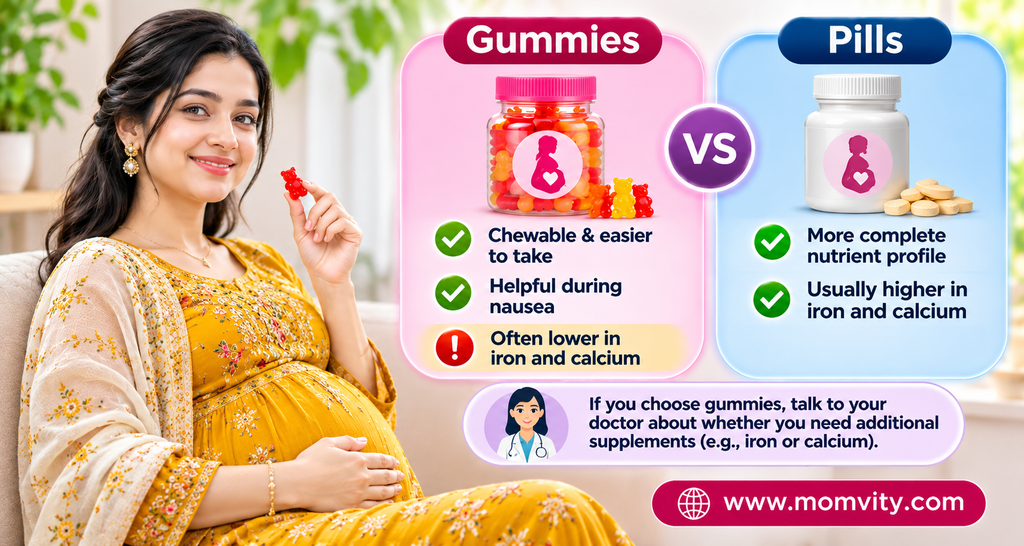
For those who experience significant nausea during early pregnancy, gummy vitamins may be a more manageable option. They are chewable, which many find convenient to take.

However, there is a drawback: many gummy prenatal vitamins do not contain sufficient amounts of iron or calcium. Therefore, if you choose to take gummies, consult your doctor about whether you need any additional supplements.

Managing Side Effects of Prenatal Vitamins

Nausea

Many women experience nausea during the early stages of pregnancy, and taking prenatal vitamins can sometimes make this discomfort worse.

Have you ever felt stomach discomfort throughout the day after taking your vitamins in the morning? If so, you might consider—with your doctor’s approval—taking them at night alongside a light snack. This approach proves helpful for some women.

However, if you experience persistent vomiting or are unable to keep any food or medication down, please consult your doctor. They may be able to recommend a different type of supplement if necessary.

Constipation

Taking prenatal vitamins that contain iron can sometimes lead to constipation. This can be particularly uncomfortable for those who already have digestive issues.

You can follow a few steps to help alleviate this problem.

  • Drink plenty of water every day.
  • Eat fruits, vegetables, and fiber-rich foods.
  • Engage in light walking, provided you have your doctor’s approval.
  • Consult your doctor about using a stool softener, if necessary.

Also, keep in mind that you should not stop taking iron supplements on your own just because you are experiencing constipation. If you inform your doctor about the issue, they can adjust the type of supplement or the method of administration as needed.

Conclusion: A Healthy Beginning for Your Little One

By now, you surely understand that taking care of yourself during early pregnancy is not just about eating more food or taking a large number of vitamins at once. Rather, the most important thing is to know which nutrients are needed, when they are required, and how to consume them safely. A high-quality prenatal vitamin, a nutritious diet, and regular medical consultations will help ensure a healthy start to your pregnancy.

Health Disclaimer: This article is intended solely for general health education purposes. It is not a substitute for professional medical advice. Always consult with your doctor, OB-GYN, or midwife before starting, stopping, or changing any vitamins or supplements during pregnancy.

Frequently Asked Questions

What Vitamins Should I Take in Early Pregnancy?

Generally, an appropriate prenatal vitamin—rich in folic acid, iron, iodine, and vitamin D—is necessary. Choline and DHA are also important. However, specific requirements may vary depending on your diet and physical condition.

When Should I Start Taking Prenatal Vitamins?

Ideally, it is best to start taking prenatal vitamins containing folic acid at least one month before planning a pregnancy. However, if you have not started by then, begin taking them after consulting your doctor once you learn that you are pregnant.

Can I Take a Regular Multivitamin Instead of a Prenatal Vitamin?

It is better to choose prenatal vitamins instead of regular multivitamins, as the levels of folic acid, iron, or iodine in regular multivitamins may not be suitable for pregnancy. Some products may also contain excessive amounts of vitamin A.

Are Gummy Prenatal Vitamins as Good as Pills?

Taking gummy vitamins can be easy, especially for those experiencing nausea. However, many gummy vitamins do not contain sufficient amounts of iron and calcium. Therefore, consult with a doctor before taking them.

Is Methylfolate Better Than Folic Acid?

Methylfolate, or 5-MTHF, is an alternative form of vitamin B9. However, the effectiveness of folic acid in preventing neural tube defects is well-established. Therefore, when choosing prenatal vitamins, check to ensure they contain folic acid.

Why Does My Prenatal Vitamin Make Me Nauseous?

Nausea can occur during early pregnancy due to hormonal changes. Taking vitamins may further increase this discomfort. In some cases, taking them at night along with a light meal can be helpful.

Can I Take Too Many Vitamins During Pregnancy?

Yes, taking excessive amounts of vitamins can be harmful. In particular, high levels of preformed vitamin A can increase the risk of birth defects. Therefore, do not take multiple multivitamins or supplements at the same time.

Do I Need a DHA Supplement in Early Pregnancy?

Not everyone needs a separate DHA supplement. DHA can be obtained from fish low in mercury, such as salmon and sardines. If you do not eat fish regularly, consult your doctor about whether an additional supplement is necessary for you.

Scroll to Top