Positive Parenting Tips For Raising Confident Happy And Responsible Children 

Sanjit

Sanjit Das is the founder and primary content creator behind meragadi.com, a dedicated platform for accurate, practical, and easy-to-understand information about cars, bikes, cycles, and scooties. With a strong passion for automobiles and a deep curiosity for how machines work, Sanjit started Carbaar to help everyday users make informed decisions—whether they’re buying a vehicle, comparing models, troubleshooting issues, or simply learning about the latest industry updates. Backed by years of hands-on exploration and real-world experience, Sanjit focuses on delivering content that is simple, reliable, and user-friendly. His goal is to make Carbaar a go-to hub for anyone looking for trustworthy vehicle-related tips, reviews, maintenance guides, and news. When he’s not researching new models or breaking down technical features, Sanjit enjoys riding, testing new vehicles, and helping people choose the right machine based on their needs. Through Carbaar, he aims to empower readers with the knowledge they need to drive smarter, ride safer, and stay updated in the fast-evolving world of automobiles.
Published: 18/09/2026
Updated: 18/09/2026

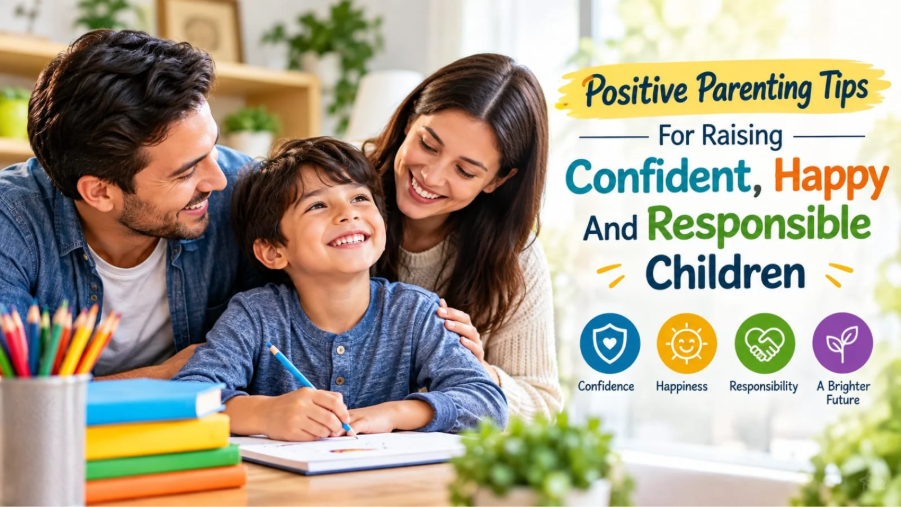
Discover simple and effective “Positive Parenting Tips” tips regarding the role of positive parenting in a child’s behavior, self-confidence, and mental development—tips that can help enrich daily family relationships. 
Do you know what is most important for raising a child into a good human being? 

When it comes to a child becoming a good person, the behavior of their parents and the surrounding environment are far more significant than just their diet, education, or physical safety. These factors shape the child’s future life. 

In reality, a child learns how to grow up from their parents, not merely from school or textbooks. We all know that a child’s first school is their own home; they learn to speak from their parents. A child learns from the family how to behave when angry and how to treat others when they make mistakes. 

Therefore, alongside disciplining a child, we must ensure they have good mental health and a safe environment. 

This raises a question, amidst the busyness of daily life, how can a parent build a strong relationship with their child? 

First and foremost, parents should listen attentively to what the child says and value their feelings. When a child makes a mistake, explaining the situation gently—rather than humiliating them—can be highly effective. Being overly harsh causes the child to fear you, leading them to hide things from you. 

To be a good parent, one must first correct one’s own behavior and then build a positive relationship with the child. 

“A child’s self-confidence is often built not through grand gifts, but through a parent’s attentive words and reassuring behavior.” 

Understanding The Foundation Of Healthy Parenting 

The primary goal of positive parenting tips is not merely to keep the child happy at all times; rather, it is about providing love, a sense of security, a sense of responsibility, and the opportunity to express their feelings. 

Does positive parenting mean always letting the child do whatever they want? 

No. Positive parenting tips involve not only love but also clear rules, appropriate boundaries, and age-appropriate responsibilities. If a child behaves inappropriately, it is often more effective to explain why the specific behavior is wrong rather than labeling the child themselves as “bad.” 

Why is this distinction so important? 

Because the statements “You are bad” and “What you did was wrong” do not have the same impact on a child’s mind. The former can foster a negative self-image, whereas the latter helps the child understand that it is possible to change the behavior. 

Surprisingly, simple, everyday conversations can often lay the foundation for a child’s self-confidence and behavior. 

Why Emotional Connection Matters 

When a strong emotional bond is established with a child, they can express their problems or fears relatively easily. This does not mean that parents must solve every problem; rather, the child needs to feel that there is someone by their side who is ready to listen. 

  • Safe communication: Instead of shouting immediately when a mistake or problem is mentioned, it is better to try to understand the situation first. 
  • Regular time: Spending even a short amount of time talking privately with your child every day can strengthen the relationship. 

Building Trust Through Everyday Actions 

Trust is not built overnight. It is through their parents’ daily behavior that a child learns to gauge the reliability of their words. 

How can this trust be gradually cultivated? 

Fulfilling promises whenever possible, refraining from unnecessarily sharing a child’s private matters with others, and treating their questions with importance can serve as a good starting point. Furthermore, admitting “I don’t know; let’s find out together” when the answer is unknown teaches the child that it is not essential to have all the answers. 

In the context of positive parenting tips, trust is viewed as the foundation of a long-term relationship. When a child knows they will be heard even after making a mistake, they are more likely to seek help rather than hide the problem. 

Communicating With Patience And Respect 
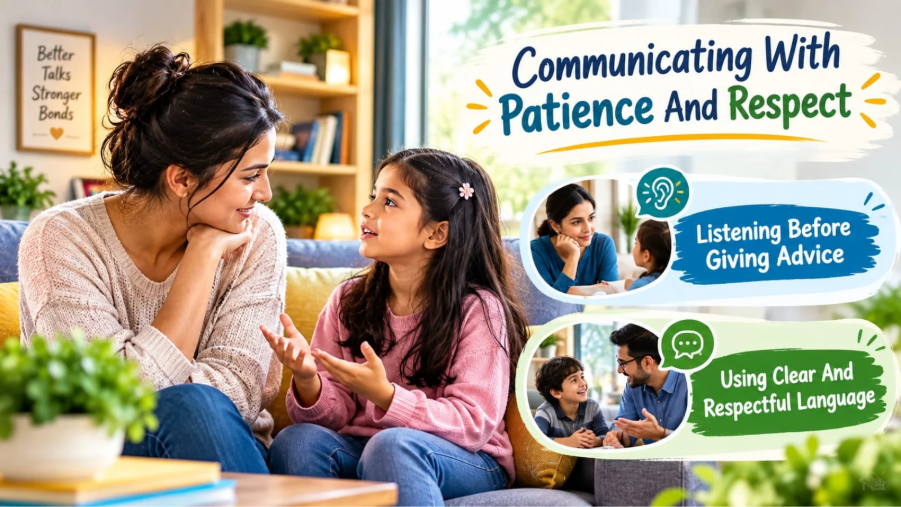
The way you speak to a child can profoundly influence their behavior. The same instruction can be given either calmly or in a demeaning manner—yet the outcomes differ significantly. 

So, how can parents control their language in moments of anger? 

One approach is to pause for a few seconds, then briefly state the issue and clearly explain what is expected. Lengthy lectures or recounting past mistakes can cause the child to lose focus on the main point. 

Surprisingly, speaking less can sometimes be more effective. A single clear sentence delivered calmly may be easier for a child to grasp than a long scolding. 

Listening Before Giving Advice 

Often, when a child recounts an incident, parents immediately want to offer a solution. However, at that moment, what the child might need is not a solution, but rather the opportunity to finish what they are saying. 

Therefore, one could first ask, “Do you want my advice, or do you just want to tell me what happened?” 

This gives the child a chance to express their needs. While the matter might seem trivial to adults, it could be significant to the child. 

A key aspect of positive parenting tips is viewing the act of listening to your child not merely as a way to solve problems, but as an opportunity to build a relationship. 

Using Clear And Respectful Language 

Using short and clear sentences can be helpful when giving instructions to a child. For example, “Put away your toys now” is more specific than “You never put anything away.” 

  • Focus on the behavior, not the person. 
  • Avoid using insulting names or comparisons. 
  • Do not keep bringing up past incidents for the same mistake. 
  • Clearly state what should be done. 
  • Give the child some time to respond. 

Setting Boundaries Without Fear 
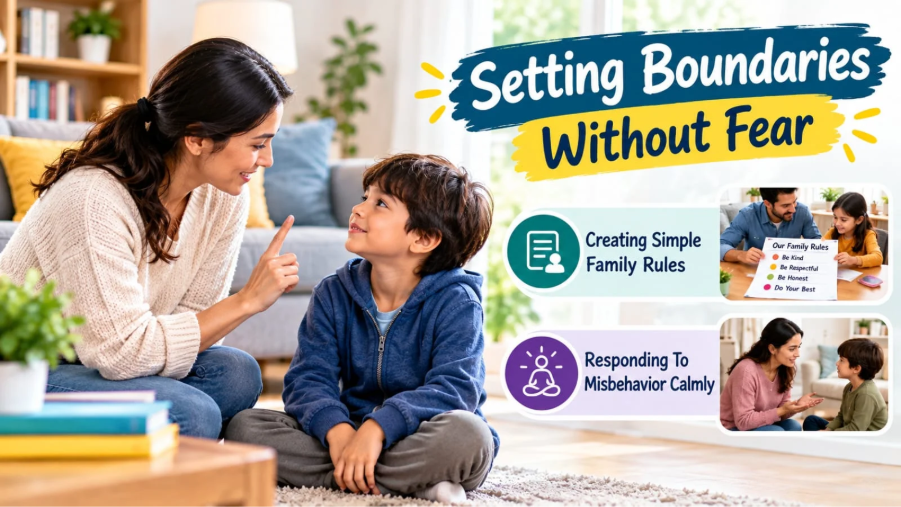
Why are rules and boundaries necessary for a child? 

Because boundaries help a child understand which behaviors are acceptable and which are not. However, setting boundaries is not the same as using intimidation. A parent can be firm while remaining respectful. 

For instance, if a child wants to keep using their mobile phone past the allotted time, instead of shouting, you can simply remind them of the pre-agreed time limit. If the rule is broken, a pre-determined and age-appropriate consequence can be applied. 

Why is it beneficial to establish rules in advance? 

Because it reduces the likelihood of devising a new punishment in the heat of the moment out of anger. The child already knows what is expected and what the consequences of breaking the rule will be. 

Creating Simple Family Rules 

The clearer the family rules are, the easier it may be for the child to follow them. Naturally, the number and strictness of the rules need to be adjusted according to age. 

  • Maintain a fairly consistent sleep and wake-up schedule. 
  • Strike a balance between studying, playing, and resting. 
  • Limit excessive screen use during meal times. 
  • Use respectful language when speaking with others. 
  • Tidy up toys or personal belongings according to one’s ability. 

Responding To Misbehavior Calmly 

Children are bound to make mistakes. Viewing every mistake as a major crisis can create unnecessary tension in the home environment. 

When dealing with misbehavior, the approach could be to first ensure safety, then calm the child down, and finally discuss the matter. For very young children, simply reminding them of the rule in plain language is often more effective than providing a lengthy explanation. 

An important point to remember is to avoid using physical punishment or humiliation to correct behavior. The goal of positive discipline should be to teach the child, not to instill fear. 

Therefore, when putting positive parenting tips into practice, adopting the mindset of “How can I help them learn from this behavior?” rather than “How should I punish them?” can be far more helpful. 

Examples Of Healthy Boundaries 

Situation Helpful Response Main Goal 
Excessive Screen Time Set a clear time limit Build routine 
Toy Conflict Encourage taking turns Learn sharing 
Homework Avoidance Offer a simple schedule Build responsibility 
Angry Behavior Allow calm-down time Manage emotions 

Encouraging Confidence And Independence 
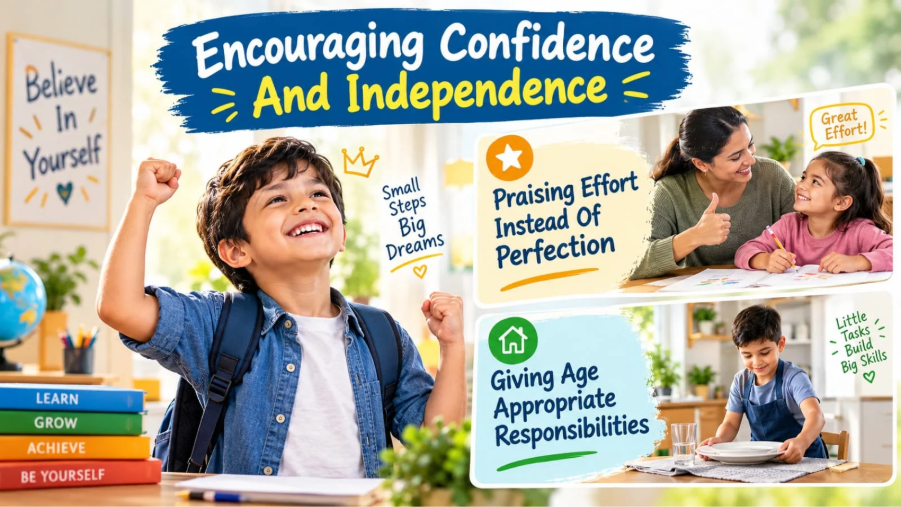
Is it always beneficial to help a child with every task? 

No. Having the opportunity to perform certain age-appropriate tasks independently can help build a child’s self-confidence and sense of responsibility. It is important to strike a balance where parents are present to support the child but do not do everything for them. 

When a child tidies up their clothes, packs their school bag, or makes a small decision, they gradually develop an understanding of their own capabilities. 

This aspect of positive parenting tips is particularly important, as excessive control can sometimes make a child feel unsure about making their own decisions. 

Praising Effort Instead Of Perfection 

When a child gets good marks on a test, instead of just praising the result, one can also acknowledge the effort they put in. 

Saying something like “You tried really hard” teaches the child that the effort made towards improvement is valuable. This can help alleviate some of the pressure to be perfect in every task. 

However, it is best to be specific with praise. Instead of simply saying “You are the best,” a comment like “You tried a different method to solve the problem” helps the child recognize the good work they have done. 

Giving Age Appropriate Responsibilities 

Responsibility does not necessarily mean a major undertaking. Young children can be assigned simple tasks, such as putting their books away, tidying up their toys, or placing their plates in a designated spot after a meal. 

Responsibilities can be gradually increased as the child grows older. However, if a task is too difficult for the child’s capabilities, it may lead to frustration rather than encouragement. 

Surprisingly, the habit of handling small responsibilities can lay a strong foundation for self-reliance later in life. 

Supporting Emotional And Social Development 
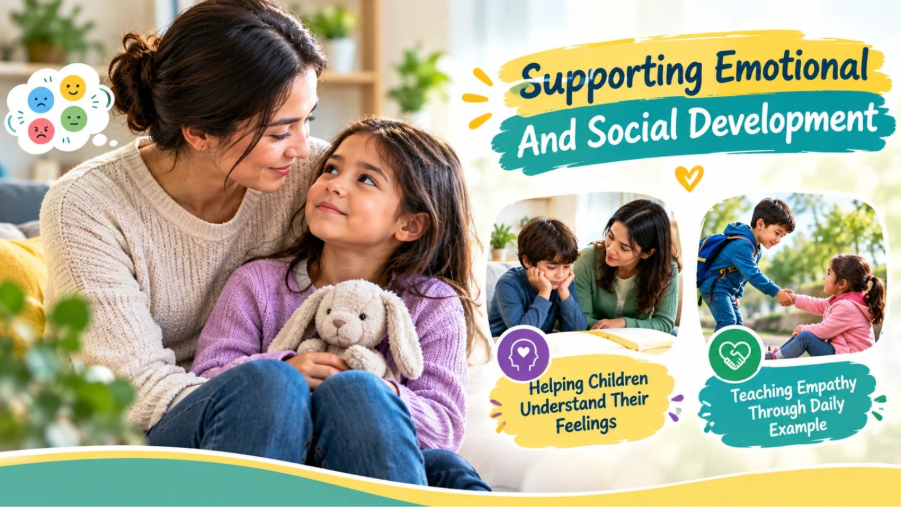
Should a child’s crying, anger, fear, or frustration always be stopped? 

No. Experiencing emotions is natural. It is more important to teach the child appropriate ways to express those emotions. Instead of telling them “don’t cry,” one can try to understand why they are upset. 

When a child gets angry, the first step is to ensure their safety. Once they have calmed down, it is possible to talk about their feelings. Through this, they gradually learn that feeling angry is natural, but hurting others is not acceptable. 

Helping Children Understand Their Feelings 

Young children cannot always name their feelings correctly. Parents can help them by using simple words. 

  • “Are you feeling down?” 
  • “Are you angry?” 
  • “Are you scared?” 
  • “Are you disappointed?” 

When emotions are named in this way, a child can gradually learn to express their feelings. 

Through positive parenting tips, it is important to teach healthy ways of coping with emotions rather than denying them. 

Teaching Empathy Through Daily Example 

Showing empathy when someone is hurting, helping out when a family member is ill, or trying to understand the feelings of younger siblings—such instances can serve as real-life lessons for a child. 

Teaching a child to put themselves in someone else’s shoes is also important. Asking questions like, “How would you feel if you were in their place?” can help them consider the feelings of others. 

Building Healthy Daily Family Habits 

Creating a good environment for a child involves more than just conversation; daily family habits play a crucial role as well. 

So, what are some small habits that can enrich family relationships? 

Simple practices—such as eating meals together, setting aside time to talk, reading before bedtime, or spending time playing or going for walks as a family—can strengthen family bonds. 

Simple Habits For A Positive Home 

Daily Habit Possible Benefit 
Family Conversation Stronger connection 
Shared Meals Better communication 
Reading Together Learning and bonding 
Outdoor Play Active family time 
Consistent Bedtime Predictable routine 

Common Mistakes Parents Should Avoid 

Even with the best of intentions, certain common behaviors can have a negative impact on a child. This does not mean that parents will never make such mistakes; rather, recognizing these errors makes it easier to change them. 

Which mistakes are best avoided? 

Things we should especially avoid are: 

  • Comparing one’s own child to other children. 
  • Showing love after giving different conditions. 
  • Do not patiently analyze the child’s mistakes. 
  • Excessive chirping. 
  • Without understanding the words of the child’s mind or without giving importance to their words, then forcing a decision

Conclusion 

Merely providing a good school, expensive toys, or strict rules is not enough to build a bright future for a child. What a child needs is an environment where they feel loved, have the opportunity to express themselves and learn from their mistakes, and gradually learn to take responsibility for their actions. Positive parenting tips can help parents navigate this path more consciously. 

“Conscious parenting is not about striving to raise a perfect child, but rather about standing by them every day with love, respect, boundaries, and understanding.” 
Related Articles

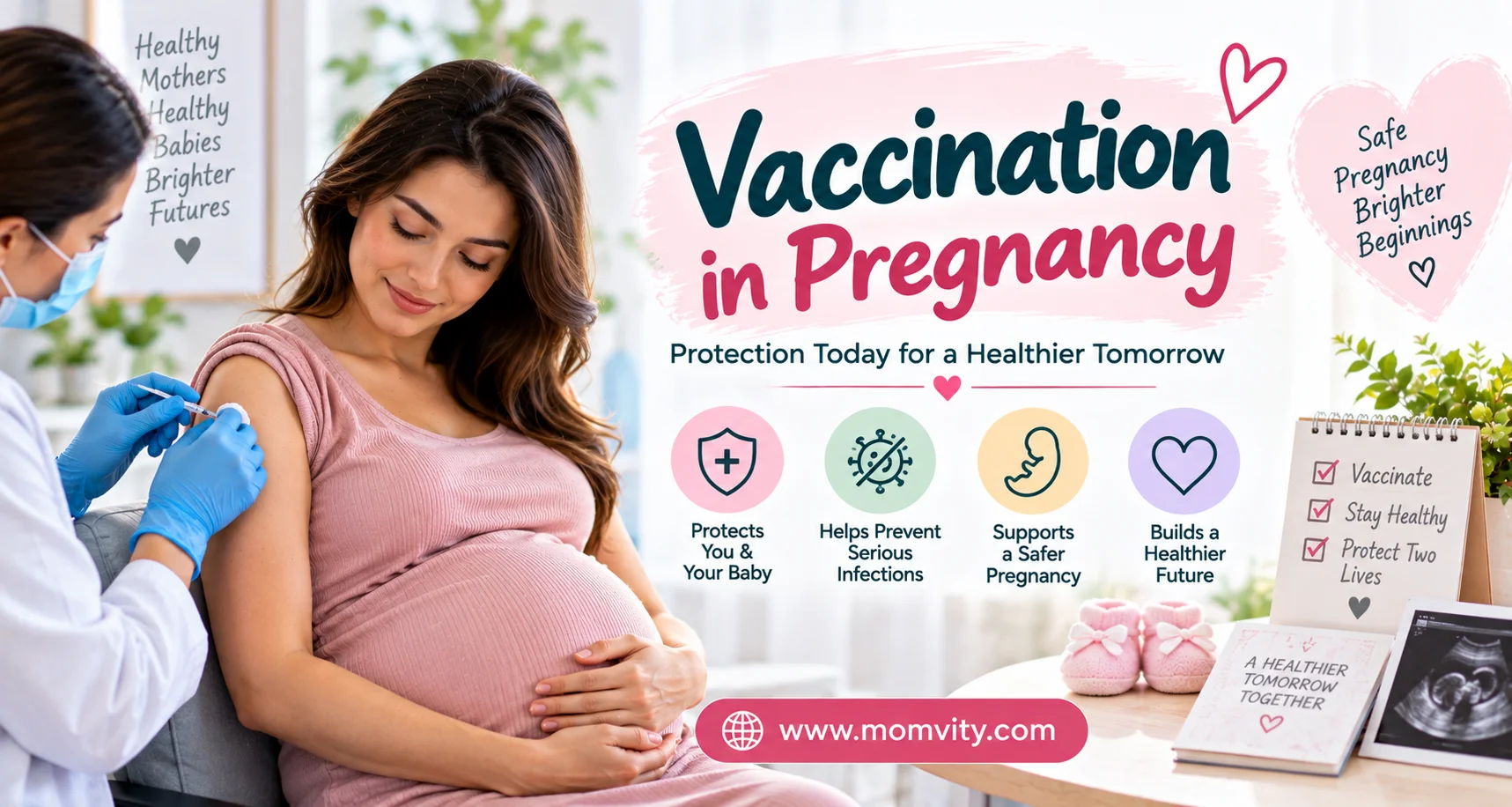
Vaccination in Pregnancy

The Overall Role of Vaccination in Pregnancy for the Protection of Mother and Baby

Pregnancy is a special period when a woman’s immune system changes over the course of it in order to support the developing baby in her womb.These changes in their body can put them more vulnerable to get certain infections easily.Vaccine not only provide protection to both both mother and her baby but also it also plays important role to combat against diseases before,during and even after the period of the delivery of the baby. 

Vaccine in pregnancy is not only about the mere protection of the mother rather some of them help produce antibody in mother and then transferred to her fetus via placenta to provide further protection.This is how the baby remain safe from any kind of infection attack as well as get primary protection from microorganisms even before the development of their own immune system which usually takes a few months to develop.

In this article,we try to cover all the important aspects you need to know about the necessity of vaccination in pregnancy in order to get protection for both you as a mother and your baby from any kind of harmful health impacts. 

Why Are Vaccines so Important During Pregnancy?

Though all infections are not always that much dangerous to you in non-pregnant state but can arise dangerous complications if you are not vaccinated before the onset of pregnancy.Certain infections like influenza, whooping cough, and COVID-19 can have the potentiality to make your pregnancy period complicated than the normal physiological one.These can further trigger urgent hospital admission,premature delivery of the baby and also put negative health impacts on the your baby. 

This is why vaccination is important as it is generally beneficial in protecting you and your baby from infection by producing antibodies in your body without causing the disease itself in you.Vaccinations further help respond you immune system quickly by using memory cells against any entrance of the organism in later life.This is how vaccination in pregnancy can significantly reduce the risk of dangerous infections and provide protection for both you as a mother and your baby.

How Do Vaccines Protect the Baby?

There are plenty of antibodies which are produced in the mother during pregnancy and thereby cross the placenta in order to enter the baby’s blood stream to provide natural protection.The natural passage of antibodies ultimately provide temporary protection from some disease before getting any vaccines after birth.

This natural protection is very important for the babies as they are not to get all the vaccines just after their birth and thereby require temporal protection to aid their immature immune system.For instance if the mother get whooping cough vaccination in pregnancy,it will then provide essential protection during their very month of life when the disease can be potentially life threatening. 

Which Vaccines Are Recommended During Pregnancy?

The recommendations of vaccines actually depends on current health guidelines,pregnancy along with the individual risk factors.The professionals in this sectors usually recommend certain vaccines in pregnancy due to their strong scientific safety evidence which ensure the protection of both mother and the child.The recommended vaccines comprises:

Influenza (Flu) Vaccine

The currently evolved flu vaccination in pregnancy not only protects pregnant women from severe influenza complications but also help improve the overall immune system of the mother.This is because,pregnancy tends to increase the risks to get flu in severe form due to certain physiological changes like in mothers immune system, heart, and lungs.Influenza infection during pregnancy may increase the potential risk to get:

Potential risks involvement 
Hay fever with chills Increase the risk of premature delivery
Difficulty to breath normallyMay induce low birth weight
Demands urgent hospitalizationsAcute respiratory distress syndrome

The seasonal currently available flu vaccine helps reduce these risks and also provides necessary antibodies that can protect the baby even after the birth of the baby.

Tdap Vaccine (Tetanus, Diphtheria, and Pertussis)

Tdap is another very important vaccine that potentially protects newborn babies from getting dangerous whooping cough in their early life.This whooping cough infection can be dangerous for them if they get the exposure of bordetella pertussis bacteria before getting vaccinated at their early developing moths.

However if the mother gets the whooping cough vaccine during pregnancy,it can then help produce protective antibodies which further transfer to their fetus via placenta and thereby provide protection from getting infection.

The main beneficial effects of it includes:

  • Provide protection during the early few months of life.
  • Redduses the risk of complications development from whooping cough.
  • Help lowering the urgency to get hospital admission.

COVID-19 Vaccine

COVID-19 vaccination in pregnancy helps reduce the risk of getting affected by severe illness during pregnancy.However Pregnant women infected with COVID-19 may have actually possessed a higher risk of severe disease in comparison with non-pregnant individuals of similar age.

This covid 19 vaccination during pregnancy can help reduce the risk having:

  • Severe infection that can also threaten the risk of pregnancy outcome.
  • May augment the necessity to acquire long term hospital admission.
  • Pregnancy complications that may result in serious illness.

Researchers now focus heavily on evidence that helps consider the merits and demerits of using ofCOVID-19 vaccines during pregnancy for safety purposes.

Are Vaccines Usually Avoided During Pregnancy?

Experts generally do not encourage people to take live vaccines during pregnancy as some of these vaccines contain weakened forms of live viruses.Moreover pregnancy involves special immune considerations and these vaccinations in pregnancy are thereby usually avoided unless there is a specific medical as well as physiological reason.

These vaccines comprise Measles, mumps, rubella (MMR) for the protection of measles ,mumps and rubella virus along with varicella or namely chicken pox.However,if a woman needs these vaccines to get the protection and safety as well, healthcare providers often recommend receiving them before conception occurs or after delivery of the baby.

Are Vaccines Safe During Pregnancy?

Many vaccines are available in the healthcare market which experts recommend during pregnancy because of their strong safety records.Vaccines recommendation for pregnant women go through careful evaluation of her overall health status along with continuous monitoring.

Experts usually consider safety studies in order to look at mother’s health,baby’s development,pregnancy outcomes and also possible side effects of those vaccines.Therefore common temporary side effects of them may include:

  • Pain at the injection site.
  • Mild fever with rash eruptions sometimes.
  • Tiredness and fatigue.
  • Muscle aches of varying degree.

Luckily,these effects of vaccination in pregnancy are usually short-termed and are signs that the immune system is responding at its regular pace.

Can Vaccines Cause Significant Birth Defects?

Recommended vaccines during pregnancy have not been shown to cause birth defects in developing babies in mothers womb.However,it remains as a major concern for many couples who want to be parents whether the vaccines can potentially harm the growing baby or not.

There are no scientifically proven facts about whether vaccines could harm the developing baby. Scientific evidence from large studies has not shown an increased risk of birth defects from recommended non-live vaccines.Healthcare professionals consider the benefits of preventing serious infections to be much greater than the potential risks of vaccination.

The proper Timing of Vaccines During Pregnancy

The timing of vaccination in pregnancy solely depends on the type of vaccine that is recommended to get and the stage of pregnancy.The healthcare providers usually recommend to take some vaccines during specific periods to provide the best possible protection from any kind of complications or side effects.The current guidelines recommendations are:

  • Flu vaccine:It is usually preferred to get it during flu season at any stage of pregnancy.
  • Tdap vaccine:It is specially designed to get this vaccine during the third trimester of pregnancy in order to maximize antibody transfer to the baby.
  • COVID-19 vaccines: Timing may depend on current evolved recommendations along with personal health factors.

Pregnant women must discuss the best vaccination in pregnancy schedule prior to getting any of them with their healthcare provider.

What Happens If a Pregnant Woman Misses a Vaccine?

Healthcare providers can carefully guide you and also help create a catch-up vaccination plan.If there are missing ones which you should take in time,it does not always mean that protection is impossible from here on. Doctors can review your past vaccination history and thereby direct you to get the safest timing.After delivery, some vaccines can still provide protection for the mother and reduce the chance of spreading infections to the newborn.

Importance of Vaccines Before the onset of Pregnancy

Getting preferred vaccination status before pregnancy can help prevent complications of pregnancy and the pregnant woman must review their vaccine history with a healthcare professional before they get pregnant.The professionals in this sectors generally recommend to check immune status of a woman against some diseases who want to get pregnant.These comprise:

  • Rubella which occurs by rubella virus.
  • Chickenpox in case of varicella zoster virus infection.
  • Hepatitis infections which are caused by several hepatitis viruses.

Some vaccines are best designed to give before pregnancy because they are usually no longer safer or can not provide protection during pregnancy.

The Role of Vaccines to Prevent and Combat Pregnancy Complications

Vaccination in pregnancy help not only lower infection-related risks but also they significantly give rise to get positive pregnancy outcomes.That is why experts recommend vaccinations on pregnancy as certain infections during pregnancy can actually increase risks such as:

  • Premature delivery of the baby.
  • Raises the concern of maternal hospitalization
  • Pregnancy-related complications which may have negative impacts on both mother and her baby.
  • Serious illness in newborns that may deteriorate the baby’s overall well being.

So,it is advisable for a pregnant woman to get recommended vaccination in pregnancy in order to prevent these infections that eventually support a healthier pregnancy journey.

Importance of Healthcare Guidance on vaccination

When anyone wants to get vaccination in pregnancy,it should always be considered as per the directions of the medical professionals.As every pregnancy is unique to one another,some crucial factors like existing medical conditions, pregnancy complications, travel plans, and potential exposure risks may have impacts on vaccine recommendations. 

A healthcare provider can evaluate the mother’s individual situation and thereby create a vaccination plan that best suits her specific health needs along with pregnancy circumstances.

FAQs

Is it necessary and safer to get vaccines while pregnant?

Yes, many recommended vaccines are indeed necessary as well as safer during pregnancy and some vaccines like influenza, Tdap, and COVID-19 vaccines are commonly encouraged to get because they protect both mother and baby.

Do vaccines during pregnancy protect the coming newborn?

Yes, some vaccination in pregnancy ensure early protection to newborns because the preformed antibodies against the vaccine generally transfer from the mother can help protect babies during their first months of life.

Can taking vaccines in pregnancy cause some degree of sickness?

Yes,they sometimes can.Vaccines are well designed to provide protection from infections,yet they can make you feel some mild side effects that are usually temporary in nature.

Should I avoid recommended vaccines during  pregnancy in fear of safety?

No.You should not fear.To avoid recommended vaccines during pregnancy may increase infection risks and this is  because they are selective in terms of benefits that help outweigh potential risks.

Conclusion

Vaccination in pregnancy is actually a crucial part of a healthy pregnancy plan especially when we wonder and ensure safe pregnancy outcomes.Vaccinations potentially provide protection by transferring produced antibodies from mother to their baby when they are inside their womb.Experts recommend vaccines namely influenza, Tdap, and COVID-19 vaccines due to their extreme importance in reducing  health risks during pregnancy.

However vaccination program should always be directed and provided by the healthcare professionals as the vaccination guidelines can change over new scientific evidence.This is how you can ensure that you receive the right ones at the right time to get the maximum impacts of vaccines.Thus a well-planned vaccination schedule helps create a safer environment for both mother and baby by supporting a healthier start to life.

Scroll to Top