
Learn about the real-world advice on Teen Health Tips and ensure good sleep, nutrition, and mental health in a prescribed manner. These tips are most important in developing long-term healthy habits during adolescence.

Have you ever thought about how much impact small good habits formed during adolescence can have on future health and self-confidence?
At this age, the body starts to grow very quickly, along with the fluctuations of hormones. The pressure of studies increases and sometimes neglect of sleep, food, and mental health increases day by day. There are many of us who think that to stay healthy we always have to do complicated procedures and difficult exercises. But the matter is actually not that complicated. In fact, following some simple rules every day can make a big difference in the long run.
Changing these small habits such as getting enough sleep, eating nutritious food, exercising regularly, and reducing excessive screen time not only strengthens the body but also improves attention and memory. It also prepares us mentally to maintain good relationships with family and friends and express our feelings.
Our article today highlights practical and easy ways to build a healthy lifestyle as a teenager. It also gives ideas about some effective good habits that can be started today to build a healthy future. Which will make you more productive and confident.
Why Healthy Habits Are Most Important In Adolescence

Following Teen Health Tips Healthy and good habits developed during adolescence, i.e. the age of physical activity, can create an important foundation for future physical and mental well-being. During adolescence, physical changes increase very rapidly, along with various hormonal changes. Academic and social pressures also increase suddenly at this age.
Therefore, adequate sleep and a balanced diet should be taken at this age according to a specific time, and mental care is one of the most important things at this age.
Studies have shown that if good habits are developed at this age, the risk of weight gain, sleep problems and long-term illness is greatly reduced, and the person becomes confident and focused.
The Effects Of Rapid Physical Change
Compared to other ages of human life, the growth of the body begins very rapidly and suddenly during adolescence. Due to hormonal changes, changes in body height, weight and skin color are seen.
At the same time, the body’s need for adequate nutrition and rest increases to a great extent at this age. Therefore, maintaining a balance of proper eating habits and adequate sleep is very important at this age.
Notable Effects
- Rapid height and weight gain – the body needs extra nutrition.
- Hormonal changes – acne and increased sweating may occur on the skin.
- Energy fluctuations – fatigue occurs quickly if there is little rest.
- Emotional changes – mood can change rapidly.
- Confidence challenges – discomfort may arise with body changes.
The Foundation For Future Health And Performance
By following Teen Health Tips, you can gain an idea about the healthy habits developed during adolescence. These habits will play an important role in maintaining physical fitness and mental stability in the future. Nutritious food and physical exercise can protect people from major long-term risk diseases and are very effective in increasing productivity.
| Habit | Long-Term Benefits |
| Get Enough Sleep | Increased memory and attention |
| Balanced Diet | Increased energy and immunity |
| Regular Exercise | Keeping bones and muscles strong |
| Mental Care | Coping with stress and increasing confidence |
Ways To Develop Proper Daily Eating Habits
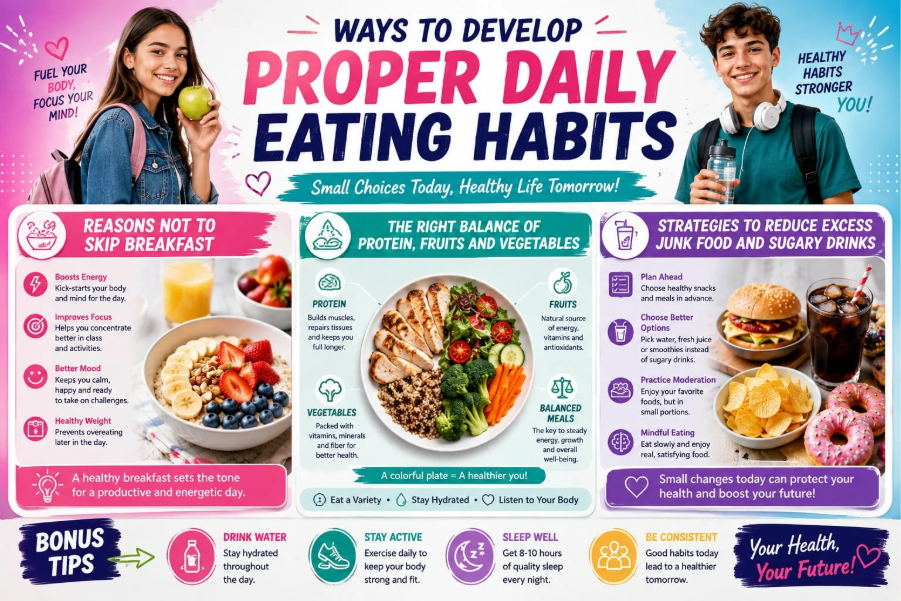
To develop a proper daily diet, you should eat a balanced diet at a specific time. Nowadays, there are many people who sleep late and skip breakfast. This should not be done at all. A balance of carbohydrates, proteins and other vegetables should be maintained in each meal.
Physical growth occurs very rapidly during adolescence, so eggs, fish, pulses and other green vegetables should be included in your daily diet. Along with this, you should eat less fried foods or fast food and soft drinks. Drinking enough water improves digestion and increases attention and learning ability.
Reasons Not To Skip Breakfast
According to Teen Health Tips, we should never skip breakfast. The main reason for this is that after a long night’s sleep, the body needs to get new energy and nutrients. Eating nutritious foods in the morning helps the blood sugar levels return to normal.
As a result, the day starts well, attention can be maintained in any task and memory works well. Along with this, excessive fatigue is also eliminated.
Breakfast should include eggs, milk, fruits, etc. in teenagers. These contain the necessary proteins, vitamins and other energy that effectively help them stay active and focused throughout the day.
The Right Balance Of Protein, Fruits And Vegetables
| Food Ingredients | Simple Daily Goals | Benefits |
| Protein | 2–3 Times | Helps build, grow, and maintain muscle strength for a long time |
| Fruit | 2 Times | Provides vitamins, minerals and antioxidants |
| Vegetables | 3–5 Times | Increases fiber, improves digestion, and helps prevent disease |
| A Perfect Plate For A Meal |
| 1/4 portion: protein (eggs, fish, chicken, lentils or chickpeas) |
| 1/4 portion: Carbohydrates like rice, bread, or oats |
| 1/2 portion: colorful vegetables and a little fruit |
[Special Note: Try to include at least one protein source, one fruit, and one cup of vegetables in your daily meals.]
Strategies To Reduce Excess Junk Food And Sugary Drinks
Following Teen Health Tips makes it much easier to cut down on excess junk food and sugary drinks. Eating too much of these foods during adolescence can increase the risk of weight gain, tooth decay, and fatigue. Therefore, making small but consistent changes to your daily diet will yield the most effective results in the long run.
- Soft drink replacement: Choose water, lemonade or coconut water
- Healthy snack choice: Eat fruits, nuts or yogurt instead of chips
- Portion control: Eat small portions of food instead of large packets
- Sugar reduction: Gradually reduce your daily sugary drinks
- Label checking: Avoid products with “Added Sugar”
- Smart habit: Reduce eating while watching TV or using your mobile phone
The Importance Of Adequate Sleep And Good Sleep Habits
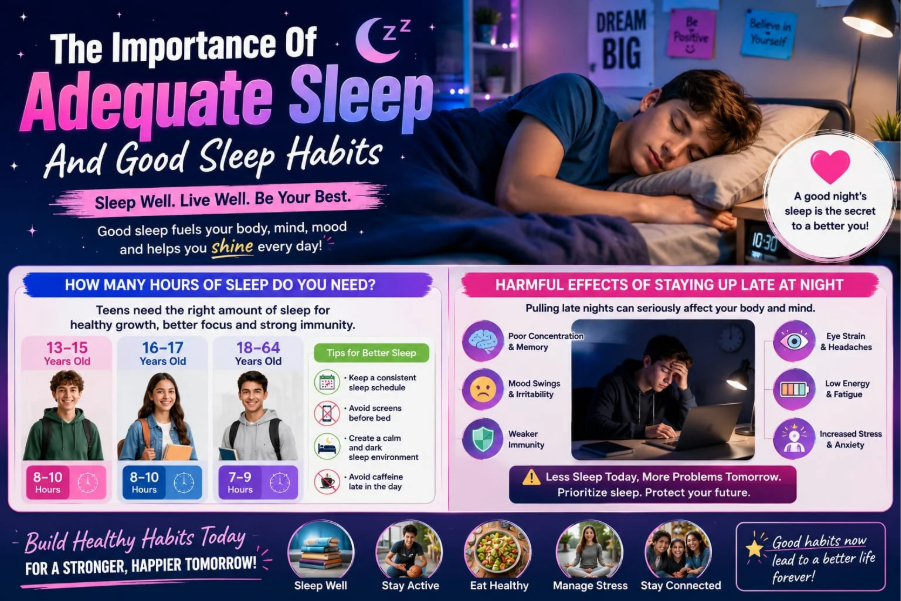
According to Teen Health Tips, adequate sleep is very important for the physical growth and brain function of teenagers. Therefore, a teenager should sleep for 8 to 10 hours every day. This adequate sleep will increase his memory, helping greatly in improving attention and immunity.
To create a good sleep habit, you should go to bed at a specific time every day and wake up at a specific time. Along with this, you should stop using mobile or other 3D screens before sleeping.
You should create a slightly dark and comfortable environment for sleeping. This will reduce fatigue and maintain the body’s performance throughout the day.
How Many Hours Of Sleep Do You Need?
| Age | Daily Sleep |
| 6–12 Years | 9-12 hours |
| 13-18 Years | 8-10 hours |
| 18-25 Years | 7-9 hours |
| 26-64 Years | 7-9 hours |
| 65+ Years | 7-8 hours |
Tips: 8–10 hours of sleep per day is most beneficial for teenagers. It improves attention, memory, and physical growth.
Harmful Effects Of Staying Up Late At Night
- Decreased attention: Not getting enough sleep makes it difficult to stay focused while studying or working and increases the tendency to make mistakes.
- Weakened memory: The brain stores and organizes information during sleep. Regular nighttime waking can make it difficult to remember new information.
- Irritable mood: Lack of sleep can increase irritability, anxiety, and stress.
- Decreased immunity: Prolonged lack of sleep can make the body less effective at fighting infections.
- Risk of weight gain: Waking up at night can disrupt the balance of hormones that control appetite, leading to an increased tendency to overeat.
How Regular Exercise Changes Daily Life

If a teenager follows Teen Health Tips in his daily life, then in the future he will be able to get rid of long-term complex and difficult diseases.
Because regular physical exercise not only keeps the body fit but also plays an important role in increasing the performance of daily life. A teenager should walk for 30 to 60 minutes every day, cycling or light exercise increases energy and keeps the mind fresh. If the mind is cheerful, it becomes very easy to maintain attention to anything.
You may also read: Baby Sleep Routine By Age From Newborn To 12 Months
Physical exercise improves the quality of sleep, reduces mental stress and is very effective in reducing the risk of various complex and difficult diseases. As a result, a teenager learns to live a more confident and autonomous life.
Benefits Of Walking, Running And Sports
According to Teen Health Tips, if a teenager can consistently practice small habits, he will be able to notice significant changes in his future life and his current life. He will be less affected than others and will be able to maintain a lot more attention.
- 🔹 Heart health: Regular walking and running help increase the efficiency of the heart.
- 🔹 Lungs work better: Oxygen supply to the body increases and breathing becomes more efficient.
- 🔹 Stamina increases: Energy is created to work or play for a long time.
- 🔹 Stress is reduced: Physical exercise increases the release of feel-good chemicals in the brain.
- 🔹 Sleep quality improves: Regular physical activity helps in deep and restful sleep.
Personal Hygiene And Health Protection
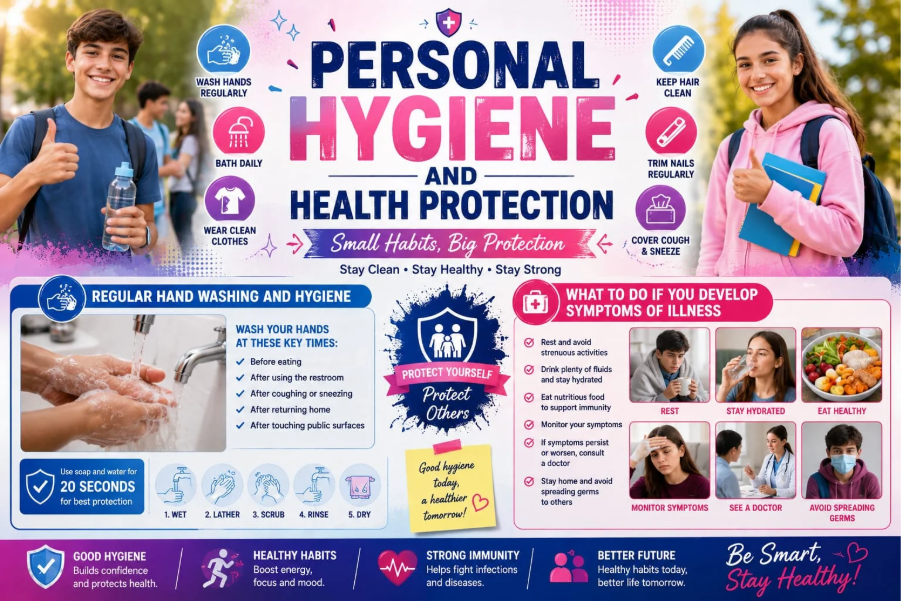
Personal hygiene is very important for staying healthy during adolescence. Bathing daily, washing hands regularly with soap, wearing clean clothes, and taking care of your teeth and nails can help reduce the risk of infection. Washing your hands after coming from outside and before eating can help prevent the spread of many germs.
Clean habits not only keep your body healthy, but also boost your confidence and help you feel more comfortable in school, sports, and social activities.
Regular Hand Washing And Hygiene
By following Teen Health Tips, it is possible to form some small good habits regularly. For example, regular hand washing is a very important personal hygiene habit to stay healthy in the long term.
We must wash our hands for at least one minute before eating and after using the toilet. Also, we must wash our hands very well with soap or hand wash after returning home from outside. As a result, the risk of life-threatening infections is greatly reduced.
In addition, wearing clean clothes, keeping nails short, and bathing daily are very important habits. Also, keeping your personal belongings clean is very important to stay healthy in the long term.
What To Do If You Develop Symptoms Of Illness
- If you feel unwell, get adequate rest first.
- If you have symptoms such as fever, cough, sore throat or shortness of breath, seek immediate medical attention.
- Drink plenty of water and fluids to avoid dehydration.
- Try to eat nutritious and easily digestible foods.
- Do not take antibiotics or additional medications on your own.
- Monitor your body temperature and other symptoms regularly.
- Use a mask if necessary to avoid infecting others and keep your hands clean.
- Seek emergency medical attention if you have severe shortness of breath, chest pain, unconsciousness or seizures.
Key Lessons For Building A Healthy Life In The Long Term

The key to building a long-term healthy life is to make small good habits a part of your daily life. Regular exercise, adequate sleep, nutritious food, drinking enough water, and stress management—all of these things together help maintain a healthy body and mind. In addition, personal hygiene, controlling screen time, and the habit of taking necessary measures quickly when sick reduce the risk of various diseases in the future. A healthy life is not built in a day; it is the result of conscious and consistent decisions.
Conclusion
Following Teen Health Tips is not only important for staying healthy during adolescence, but also for long-term health protection in the future.
Adolescence is a time when habits form that affect a lifetime of lifestyle choices. Simple habits like exercising regularly, eating nutritious foods, getting enough sleep, and drinking enough water help keep the body healthy and functioning. At the same time, maintaining personal hygiene, washing hands regularly, and taking necessary measures quickly when symptoms of illness appear reduce infections and other health risks.
Creating healthy routines today is a meaningful investment that supports a healthier future.