
“Crystals for birth and labor” can bring quiet strength and calm to your delivery room, if you know which stones to pick and how to use them.
On the day of childbirth, every mother wants one thing the most – to be calm, to be safe and to feel an invisible power within herself. This is exactly why many expectant mothers around the world are turning to “crystals for birth and labor“. They keep it by their side or in their hands in the delivery room as a soft and silent companion.
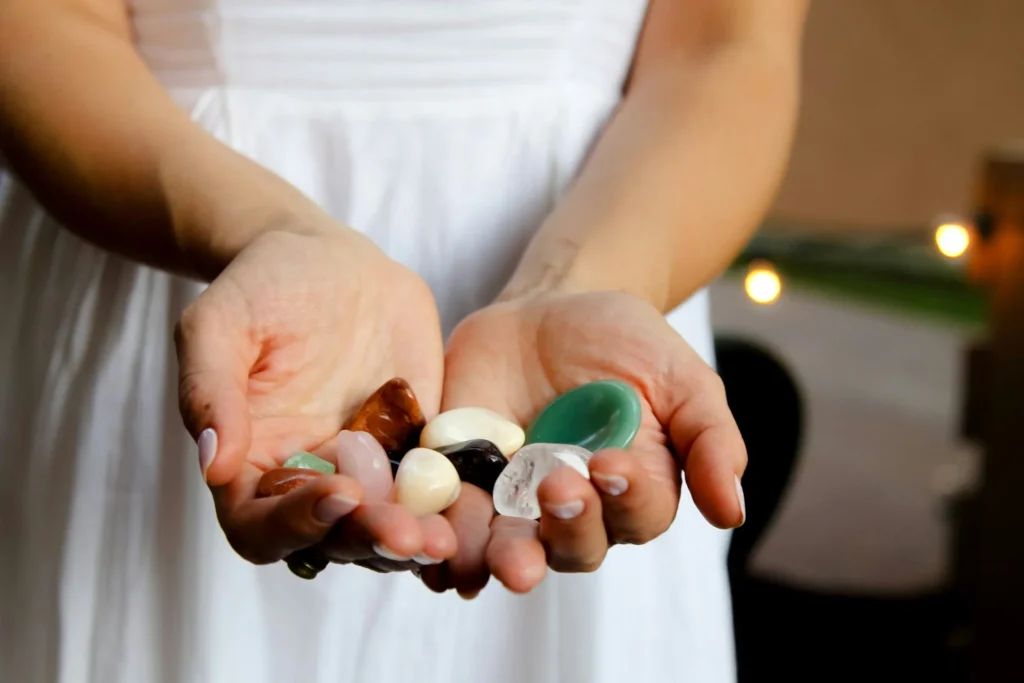
A question may arise here – do you have to believe in the power of this stone or chakra? Not at all. Sometimes, in the intense moments of childbirth, the human mind seeks a support that can give it some hope. When the labor pains increase very quickly and a thousand thoughts and fears swirl in the head, it is necessary to touch something that does not depend on the artificial beeping of the hospital monitor or the constant coming and going of nurses. This is completely a personal matter for you.
In this detailed article, we will know in very simple language what these stones actually are and why mothers use them. Whether you are a first-time or second-time mother, I will try to present a clear picture of how these stones can help in your birth plan, what their costs might be around 2026-2027, and what their real advantages and disadvantages are – without any exaggerated fairy tales. This will help you decide for yourself whether you should keep it in your hospital emergency bag or not.
What is it and what is its history?
Simply put, “crystals for birth and labor” are certain natural stones or minerals that mothers use to gain emotional comfort, confidence, and a sense of calm during pregnancy or delivery. They are usually placed in the palms of mothers’ hands, worn as jewelry, or beautifully arranged around the delivery room.
Beautiful smooth stones like rose quartz, moonstone, or purple amethyst are now making their way onto the hospital checklists of conscious mothers-to-be.
Many may think this is just a new fad or trend of the internet age. But did you know that this idea is actually nothing new? Midwives and doulas of ancient times have been carrying this tradition for generations, centuries before the advent of modern medicine.
This practice existed in societies long before the modern buzzword “wellness” was coined. Back then, it was just a simple smooth stone that an experienced grandmother would place in the palm of her hand with utmost compassion during the difficult time of childbirth for her granddaughter or daughter, behind which no hard scientific explanation was sought, only the touch of love was real.
Where did this tradition begin?
A look into the ancient history of the world shows that there was a custom of using special stones during childbirth among the indigenous peoples of ancient Egypt, Greece and America. The grandmothers of that era would place smooth and cold pebbles collected from the riverbank in the hands of the laboring mother.
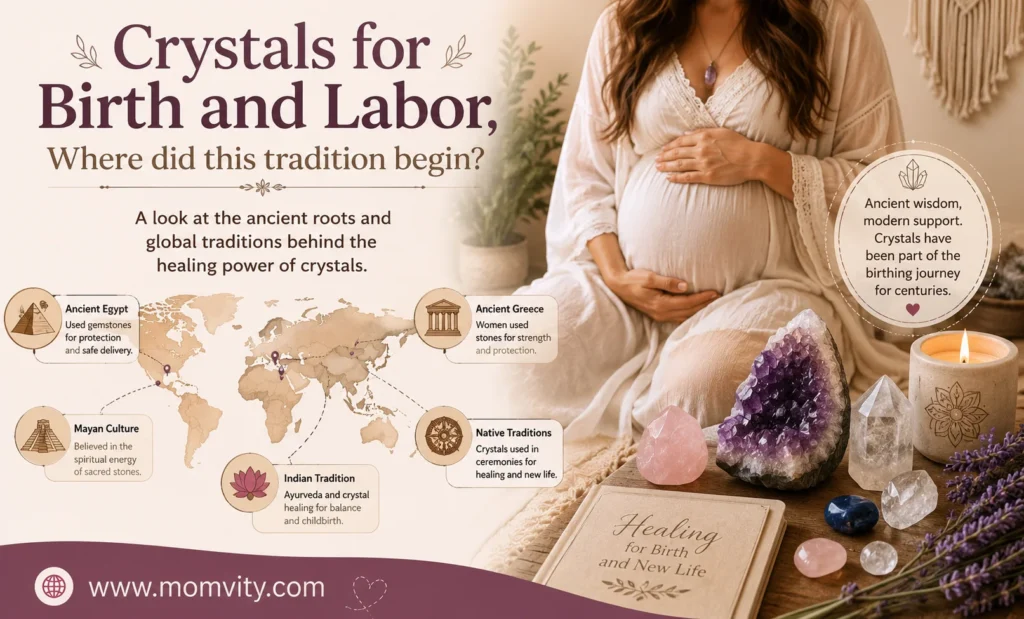
They believed that the cool touch of this stone would reduce the excess heat of the mother’s body and bring a strange comfort to the mind. That old instinct of the mother has not disappeared from us even today. Only with the change of time, now instead of collecting it from the riverbank itself, it is sold in a beautiful small velvet bag in the modern market.
How do mothers use it these days?
Today’s mothers have brought this tradition back to their delivery rooms in a very modern and beautiful way. Most mothers just keep a small palm-stone with them during labor. Many also wear it as a bracelet or necklace from the beginning of pregnancy, so that the touch of the stone calms the mind.
Many people hold onto this stone tightly during the intense pain of labor, instead of screaming, by pulling the hand of their husband or partner. Some people make a small beautiful corner or ‘birth altar’ by the bed in the delivery room with a scented candle, a picture of their choice and a couple of stones.
However,
one thing needs to be clear here – no mother expects this stone to be a substitute for medical epidural or painkiller injections. It is only used to relieve fear in the mind and keep the focus in one place. It is wrong to think of the stone as an alternative to medicine, it is just a psychological therapy.
Why might this be necessary during labor?
The entire process of labor is very uncertain and one of the biggest tests in a woman’s life. Sometimes, the fear of the unknown in the mind seems more difficult and painful for expectant mothers than physical pain.
During this mental struggle, “crystals for birth and labor” provide a mother with an excellent physical support or anchor. When the hospital environment around her, the busyness of doctors, and the injection syringes seem to be losing control of her mind, mothers find a little hope by holding this stone. This small touch practice can slow and calm the mother’s frequent breathing during labor without saying anything. And we all know that slow and deep breathing during labor is the biggest natural tool for enduring a difficult contraction or labor pain.
Natural ways to distract
Holding something smooth and cold in the palm of your hand during pain can divert the attention of the human brain to some extent. In medical science, this is called ‘distraction therapy’.
It is not a magical spell, but rather keeping the mind busy on a specific object. And this busyness helps many mothers get through the most difficult and painful moments of childbirth. Experienced nurses in the hospital also say the same.
Holding this beautiful stone feels much more meaningful and sacred to mothers than counting the ceiling fan or tiles or holding onto the bed rail tightly during childbirth.
A silent refuge of emotions
Many times, these stones are not just a piece of mineral for mothers. If the stone is a gift from one’s mother, sister or a dear friend, it carries much more emotion than its shape. When a mother touches it while alone in the delivery room, she can feel that she is not alone even in the midst of intense pain.
It is as if the prayers and love of her loved ones from afar are mixed with the touch of that stone. For many mothers, this silent emotional and family connection becomes much more valuable and powerful than any qualities written on the stone.
Explore more here: early pregnancy rash pictures
Who can include it in their birth plan?
The best part about using this stone is that any pregnant mother can easily add “crystals for birth and labor” to her birth plan. It does not require any special initiation or qualification.
Whether you deliver in a large government hospital, have a cesarean section in a reputable private clinic, or plan a ‘home birth’ or ‘water birth’ in the quiet environment of your home – it adapts very easily everywhere. Most importantly, it does not create any obstacles or side effects in any medical decisions taken by doctors or nurses or in medicine.
For first-time mothers

First-time mothers are most curious and anxious about childbirth. Since they have not experienced this before, not knowing what is going to happen is a big fear. Having the stone that you have been holding regularly in your hand for the last few weeks of pregnancy or with which you have developed a familiar feeling, will help you calm down very quickly on the day of delivery. The touch of familiar things gives the mind a sense of security.
Those who have had previous childbirth experiences
Those who are becoming mothers for the second or third time often take the same stone used during the previous childbirth out of the cupboard with utmost care and use it again. They turn it into a beautiful personal family tradition. Many mothers beautifully preserve these stones from the time of their child’s birth and give them to their daughter or daughter-in-law as a gift twenty years later on the day of their daughter’s birth. In this way, an ordinary stone becomes a small piece of family history.
What do you need to do this?
You don’t need to take a thousand-dollar course or fill your dressing table with products to start this method. It’s very easy and hassle-free
- Keystone: One or two natural stones of your choice, not too large and easy to hold in your hand. The stones should be smooth or polished, not sharp, so that they don’t cut your hand even if you press hard during labor.
- Small pouch or bag: A small velvet or cotton cloth bag to keep the stones safe from dust and to make them easy to find in your hospital bag.
- Bracelet or jewelry (optional): Some mothers choose bracelets for fear of the stones falling out of their hands during active labor. When contractions are intense, the stones stay on their wrists even if they are held onto the bed rails with their hands.
If you are confused about which stone will be perfect for you in the modern era of 2026, you can see the list of 3 most favorite stones of mothers around the world:
- Rose Quartz: It looks light pink. This stone is number one on the list of mothers for calming the mind, softening the surrounding environment, and instilling a feeling of selfless love of motherhood.
- Moonstone: This stone is associated with women’s fertility and the beginning of a new life. Mothers like it to adapt to the hormonal changes and mental transformations of the body during childbirth.
- Amethyst: It looks beautiful purple. This stone is unmatched in keeping the mind calm and cool by eliminating the thousand negative thoughts or panic attacks that come into the head before the main task of childbirth begin
How much does it cost?
The good news is that you don’t have to spend a lot of money or get into debt to use these natural birthstones. A small, beautifully polished palm-stone like rose quartz or moonstone is usually available in most crystal or gift shops in the US for between $5 and $15, based on current market prices in 2026-2027.
If you want to buy a beautiful maternity bracelet to wear instead of a regular stone, it can cost anywhere from $20 to $45, depending on the quality of the stone and its metal. And if you want to buy an entire custom “birth set” of 3 to 4 different stones for different stages of labor, the total cost can reach closer to $40 to $70. Larger stones are a bit more expensive because they take longer to cut and polish, but a small pebble-shaped stone is just as effective.
Advantages and Disadvantages
Before packing anything in a hospital bag, a wise mother should know its pros and cons. Like all other common comfort items in the delivery room, “crystals for birth and labor” also have their own limitations and benefits:
Pros:
- Emotional anchor: Provides a calm and cool place to hold on to during the intense labor pains.
- Budget-friendly: It is very cheap and affordable compared to other popular maternity or childbirth comfort gadgets.
- Memory value: When held in the hands of a loved one, it becomes a symbol of deep family love and silent emotional strength.
- Safe: It does not conflict with any of your birth plan treatments like injections, saline, or cesarean.
Cons:
- No medical power: It has no scientific power to magically reduce the physical pain of labor or speed up labor.
- Hospital rules: Some hospitals have strict rules about bringing any personal metal or stone items into the sterile zone of the ICU or OT.
- Fear of getting lost: In the hustle and bustle of labor, it is very common for small stones to fall under the bed and get lost.
- False hope: If someone thinks that keeping a stone nearby will make childbirth completely painless, then false expectations may be formed in the mind and the pain may increase later.
Final Thoughts
The truth is, there are no set rules in the book about how someone will feel or what they will find comfort in on the day of delivery. Some mothers find deep peace in the cold touch of this stone, while many mothers smile after giving birth and say that they forgot that a stone was in their hands for so long due to the intense pain! Both experiences are completely normal and equally beautiful.
Ultimately, “crystals for birth and labor” are a small, inexpensive, and beautiful way to add a little extra comfort and peace of mind to the biggest and most memorable day of your life. It is in no way a substitute for your experienced doctor, skilled nurse, or epidural injection, and no one should ever make such false promises.
However, when everything around the hospital seems so unknown and uncertain, this little stone will give you a silent signal. It will remind you that you are very strong from within, that you are calm and are fully capable of getting through this difficult time and holding your little one in your arms very soon! Choose the stone that appeals to you today with utmost care, keep it in a familiar place in your bag and leave the rest of your worries to nature. The real source of strength is not in any stone outside, it has always been placed within you by the Creator!