
Rash on the body in early pregnancy? Know the real reason

Nusrat Ayaan

Published: 22/07/2026
Updated: 22/07/2026

 Any expectant mother who suddenly notices an unknown red spot or rash on her skin at the beginning of pregnancy feels nervous. 

A thousand thoughts come to mind—will the baby be harmed?

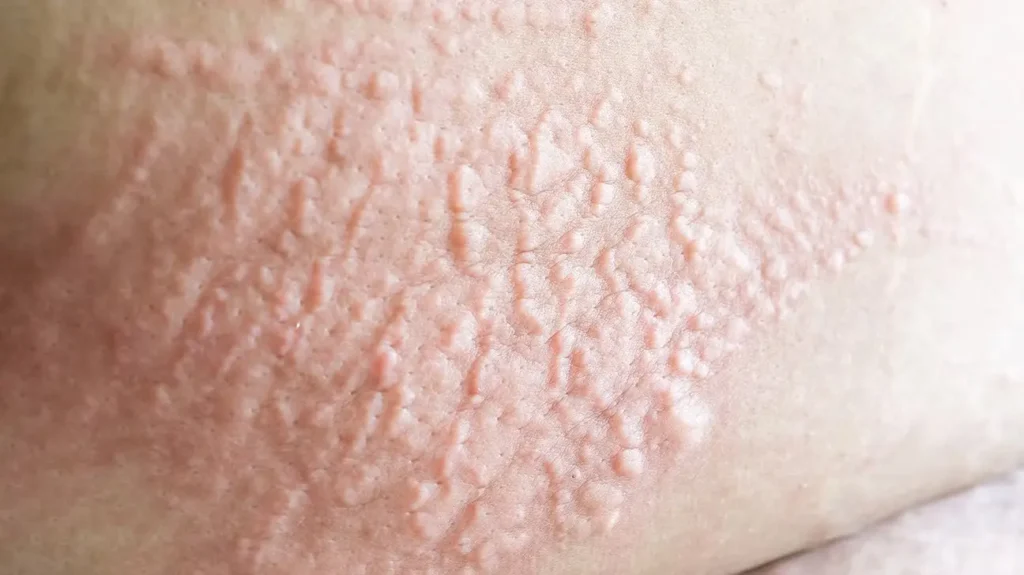
Rash around the abdomen

This fear is completely normal. But here’s an interesting fact: Most of the time, these rashes are actually nothing to worry about. When the body starts to adapt to the new journey of pregnancy, some such changes appear on the skin. Those who search for “early pregnancy rash pictures” on Google want to be sure of one thing—is what they see on their skin normal?

Let’s understand in very simple terms—why does this rash occur, what does it look like, and what exactly should you do at this time.

What causes a rash so quickly?

When there are big changes going on inside your body, your skin is the first to let you know. “From the very first day of pregnancy, the body’s hormones begin to fluctuate very rapidly.” As a result, blood circulation to the surface of the skin increases a lot.

Many people have a nice rosy glow on their cheeks before the two lines on the pregnancy test appear. A few weeks later, due to that extra blood circulation, small red spots may appear on the lower body, such as on the chest, or the skin on the stomach may become much softer and smoother. It’s like the first rain on dry land. You may not immediately notice anything from the outside, but inside, preparations for a new life are in full swing.

What does this rash actually look like? 

This experience may be different for each mother. Many say that they have seen small red dots on their stomach, some have a little hotter and redder cheeks, and some say that the rash looks more like light scratches. Some may have a slight itch, while others may just have red skin without any itching.

An important thing: Looking at “early pregnancy rash pictures” on the Internet and matching them with your own rash can only give you a preliminary idea. However, remember that no picture can replace a direct consultation with a doctor.

Why is it important to know about this?

It is very important to understand which rashes are normal and which are signs of danger in early pregnancy. When people are alone at home and thinking about it, fear increases very quickly. And when you understand the real reason for this skin change, all fears will disappear from your mind in an instant.

In fact, mothers who search for “early pregnancy rash pictures” or these pictures online in the middle of the night do not want to get a serious diagnosis; they just want some peace of mind. In most cases, this rash is nothing to worry about. However, in very rare cases, the rash can be a sign of another serious problem, which requires an urgent visit to the doctor.

How long does this rash usually last?

Rashes that occur due to hormonal fluctuations usually resolve on their own within 1 to 3 weeks. “Actually, during this time the body fully adapts to this new regime.” If you know this information in advance, you will not panic unnecessarily and will be able to refrain from running to the doctor or using any harmful harsh creams.

Can it ever be serious?
Although very rare, sometimes it can be serious. For example, in a problem called ‘intrahepatic cholestasis’, a pregnant woman experiences severe itching on the palms and soles of her hands due to liver problems, but no rash is visible from the outside.

So if you have a fever with the rash, swelling of the body, or itching that makes you unable to sleep at night, then inform the doctor immediately instead of staying at home.

You may also read: Gender Prediction Myths

Who is more likely to get this rash? 

“It’s not like everyone will get a rash when they’re pregnant. It behaves differently in each person’s body, so it’s difficult to pinpoint the cause.” However, for those who search “early pregnancy rash pictures” on Google in the middle of the night, here are some common things to note:

  • Sensitive skin: Do you have a history of eczema, asthma, or allergies? Your skin will react quickly to any hormonal changes. There’s nothing to worry about, it’s just your skin’s natural response.
  • First-time moms: For first-time moms, these hormones are completely new to their bodies. So the changes in their skin are a little more noticeable. Your body may adjust a bit during your second or third pregnancy.

What do you need for your skin care?

You don’t need to fill your dressing table with expensive products to deal with this skin problem. A few simple things at home are enough for this.

What to put in your skincare basket:-

  • A simple moisturizer without any fragrance or scent.
  • A mild cleanser or soap without alcohol or alkali.
  • Light and loose cotton clothing.

Tips: During this time, it is absolutely not advisable to bathe with hot water; it is better to use normal temperature water. When wiping, do not rub the skin with a towel or washcloth, but gently pat dry the water. If the air inside the house is dry, the skin may become more itchy, so use a humidifier if necessary.

What to watch out for and what to do? 

  • Take pictures: Take a picture in good light on the day you first notice the rash and write the date.
  • Make a diary note: Write down whether you have recently tried any new soaps, detergents, lotions or new foods. These are often the real culprits of the rash.
  • Stop scratching: No matter how much you want to, don’t scratch the rash. When your skin cracks during pregnancy, it doesn’t dry out easily and there is a risk of infection.
  • Change products: Stop using all scented products for at least a week.
  • Doctor’s advice: Take pictures every day in the same light so that you can compare your pictures with the “early pregnancy rash pictures” on the Internet. If the rash doesn’t improve within 5 to 7 days, contact your doctor or midwife for a regular check-up.

How much does it cost? 

Treatment of common pregnancy rashes does not require much expense. You can get by with common items in your bathroom. A good quality fragrance-free moisturizer and gentle cleanser can usually cost $8 to $18 at current market prices in 2026.

If you need to see a doctor, most health insurance plans cover it. That too can cost a $20 to $50 co-pay, depending on the plan. If you are given a medicated cream, it can cost another $15 to $40.

However, the real cost is not money, it is your ‘time’. Because if you spend hours scrolling through “early pregnancy rash pictures” on the Internet and worrying instead of calling a doctor on the phone, you will waste both your valuable time and peace of mind. Nowadays, many maternity plans offer the facility of seeing a dermatologist via video call from home, which is quite affordable

Pros and cons

Everything has its pros and cons. The same is true for pregnancy rashes:

ProsCons
Most rashes heal on their own.Severe itching can make it difficult to sleep at night.
It does not harm the unborn child.Excessive scratching can cause permanent marks or scars on the skin.
Knowing the right time eliminates unnecessary fear.In rare cases, medication may be required.

Common mistakes mothers make

Many people start using strong steroid creams without checking whether they are safe during pregnancy after looking at them on the Internet, which does more harm than good. Many people ignore the rash and put it off until a doctor’s appointment.

It is a big mistake to compare your skin to the pictures on the Internet with the naked eye, because the rash may look different in the picture due to lighting or skin color. In addition, if you start using many new cosmetics at once, it becomes difficult to determine which one you are actually allergic to. And if you ignore itching on the palms of your hands or soles of your feet as just “dry skin”, it may be too late to diagnose a serious internal disease.

Some common questions and answers 

Question: Is a rash in early pregnancy dangerous?

 Answer: Not at all. Most rashes occur due to hormonal changes in the first trimester and resolve themselves within a few weeks.

Question: How do I know if the rash is serious?

 Answer: If the rash is accompanied by severe itching (especially on the palms and soles of the hands), high fever, or swelling, see a doctor immediately.

Question: Can I buy any cream from the pharmacy and apply it myself?

 Answer: It is safe to use a simple fragrance-free moisturizer. However, you must get permission from your doctor before using any medicated or steroid cream.

Question: Can I be sure what happened to me by looking at “early pregnancy rash pictures” online? 

Answer: Online pictures can only give you an idea. However, due to differences in skin color and lighting, it is absolutely not a good idea to diagnose the disease yourself by looking at the pictures.

Question: How long does this rash usually last? 

Answer: It usually goes away within 1 to 3 weeks when hormone levels return to normal.

Question: Is there any reason to worry if the rash spreads to the face? 

Answer: Spreading only to the face does not mean it is dangerous. However, to be safe, take a picture and show it to the doctor at your next visit.

Last words

It’s natural to be scared when you suddenly see a red spot on your skin, but knowing the reason puts your mind at ease. The storm of hormones that are raging in the body in the first few weeks, the skin is just a reflection of it. So take a picture of the rash in the same light every day, keep your skin clean and hydrated – that’s it, you will get a lot of relief.

But remember, there is no point in carrying around worries alone. If the itching is severe or you can’t sleep at night, call the doctor today, don’t wait for tomorrow. Stay calm, take care of yourself – your skin is fully capable of handling these changes!


Related Articles

Newborn Baby Care

Newborn Baby Care Guide To Build Healthy Daily Habits 

This article will give some very nice tips about easy and practical ways to do Newborn Baby Care. By following which, you can develop healthy habits in the health, cleanliness and safe daily care of the newborn. 

How many times a day should a newborn baby be fed? Or how to create a safe sleeping environment for a newborn baby? 

Those who have already become new parents are quite worried about the above issues. From this worry, numerous questions naturally start to think about them. Those who have become new parents want to understand the needs of the little baby and create a reliable routine of proper daily care but cannot find the right information anywhere. 

You will be happy to hear that this article has been arranged with easy and effective solutions to this problem. 

New parents often make some simple small mistakes without knowing it. Most parents choose the same reason every time as the reason for the baby to cry. On the other hand, there are many who do not give much importance to the issue of sleep safety. 

There are also people who over-cleanse their babies, causing problems for their sensitive skin. 

Table Of Contents 

What Habits Are Most Important When Feeding A Newborn? 

The healthy growth of a newborn depends on the correct habits and rules of Newborn Baby Care. Especially, proper eating habits play a very effective role in this regard. 

A newborn baby shows various signals like taking hands to mouth or becoming restless when he is hungry. We should understand all these signs and breastfeed the newborn on time, latch on properly. Along with this, helping a newborn baby to look after itself after feeding is also a very important task. 

It is a good habit to give the most importance to his natural needs rather than force-feeding a baby. 

How Often And How Should A Baby Be Fed? 

  • Watch for hunger cues: It is better to feed your baby based on his/her signs of hunger—looking for his/her mouth, putting his/her hand to his/her mouth, or being restless—than by the clock. 
  • Regular feeding: A breastfed newborn can usually feed about 8-12 times in 24 hours. However, not every baby has the same needs. 
  • Latch correctly: It is important to insert not only the nipple but also some parts around it into the baby’s mouth well. This makes milk intake easier and reduces mother’s discomfort. 
  • Feed at the baby’s pace: There is no need to force feed again if the baby lets go or signals satisfaction. 
  • Burping after feeding: If necessary, hold the baby upright and gently pat the back to help him/her burp. 

How Do You Understand The Signs Of Getting Enough Milk? 

To do Newborn Baby Care, I have to pay special attention to several things. One of them is to ensure that the baby has enough milk. This can be confirmed by looking at several signs. 

For example, if the baby is calm and satisfied after feeding, urinates regularly, and gradually gains weight. If these things occur, it should be assumed that the baby is getting enough milk. In some cases, the baby’s face and skin may also show signs of looking naturally fresh. 

It is not right to make decisions based only on the amount of crying or the softness of the breasts. If the weight does not increase or the urine output decreases abnormally, it is important to consult a doctor. 

What Common Mistakes Should You Avoid When Feeding? 

Common Mistake Why Avoid It? Better Approach 
Feeding on a strict clock only Baby’s hunger needs may vary Watch hunger cues 
Poor latch May reduce effective milk transfer Ensure a deep, comfortable latch 
Forcing the baby to finish Can ignore fullness cues Let the baby stop naturally 
Skipping feeds regularly May affect milk intake Feed frequently as needed 
Ignoring feeding difficulties May delay help when needed Seek professional guidance if concerns persist 

How To Keep A Baby’s Sleeping Environment Safe And Comfortable? 

An important and special part of Newborn Baby Care is creating a safe sleeping environment for a newborn baby. 

A baby should always be placed on a firm and flat bed. Pillows, heavy blankets or soft toys or loose clothes should be avoided in the bed. It is best to keep the room temperature at a tolerable level at all times, it is not advisable to create an environment that is excessively cold or excessively hot. 

A newborn baby’s sleeping place should be kept close to the parents. Along with this, the bed should be cleaned regularly. It should be kept away from any smoke and odorous substances. 

What Things Should Not Be Kept In The Sleeping Area? 

  • Pillows: Pillows should not be placed under a newborn’s head. A flat, firm sleeping surface is safest. 
  • Soft toys: Do not place teddy bears or other soft toys in the baby’s sleeping area. 
  • Loose blankets and sheets: These can cover the baby’s face. Use appropriately fitted sleepwear if necessary. 
  • Bumpers or soft bedding: There is no need to place soft bumpers or extra padding around the crib. 
  • Bottles or feeding items: Bottles should not be placed next to the baby during sleep. 
  • Extra warming materials: Avoid using hot water bags, electric blankets, or extra heavy blankets. 

What Is The Role Of Parents In Creating A Baby’s Sleep Routine? 

As an important part of Newborn Baby Care, parents should maintain patience and consistency in sleep routine. By turning on the dream light every night, creating a sleep environment according to a calm and set temperature, and following some similar simple habits, the baby gradually learns to understand sleep times. 

Discover more here: Causes Of Miscarriage

How To Clean And Care For A Newborn’s Navel? 

Maintaining cleanliness is also a very important aspect of Newborn Baby Care. In addition to keeping the environment around a newborn baby and the baby’s body clean, extra precautions should be taken in caring for the umbilical cord. 

Before touching a newborn’s umbilical cord, you must wash your hands thoroughly with soap and water and clean the area around the umbilical cord and keep the umbilical cord and the area around the umbilical cord dry. 

Using oil, powder, or any household items on the umbilical cord can be harmful. And while putting on a diaper, it should be done in such a way that it is below the umbilical cord. If the umbilical cord is red, swollen, or has a foul-smelling discharge, consult a doctor immediately. 

What Should You Know About Keeping The Navel Area Clean And Dry? 

  • Do not apply any substances: Avoid using oil, powder, ash, turmeric or any household substances on the navel. 
  • Allow for ventilation: Do not wear tight clothing over the navel, but use loose and clean clothing. 
  • Fold the diaper down: Place the front of the diaper below the navel, so that there is no friction or wetness at the base of the navel. 
  • Do not pull on your own: Do not try to pull or tear the remaining part of the navel, even if it is dry; let it fall off naturally. 
  • Watch for unusual symptoms: Seek medical advice immediately if there is redness, swelling, pus or foul-smelling fluid around the navel, or a fever. 

How To Keep Hands And Baby Items Clean? 

Item How to Keep It Clean Important Tip 
Baby’s Hands Gently clean with clean water when needed Keep nails short and clean 
Parents’ Hands Wash with soap and water before touching the baby Especially before feeding 
Feeding Bottles Wash thoroughly after every use Follow proper sterilization guidance 
Pacifiers Clean and sterilize regularly Never clean by putting it in your own mouth 
Towels & Clothes Wash regularly and dry completely Keep them separate and clean 

What Should Parents Know About Baby Skin Care And Bathing? 

In the case of Newborn Baby Care, we should always keep in mind that a newborn’s skin is very soft and sensitive. So we should take extra precautions in this regard. 

Especially when bathing a newborn, lukewarm water should be used. Also, it is better to finish bathing quickly. Gently Clean The Skin With A Mild, Fragrance-Free Cleanser When Needed. After bathing, the water should be gently dried with a soft towel. Try to keep the newborn’s skin folds as dry as possible. 

If the skin is dry, a baby-friendly moisturizer can be used. 

What Gentle Approaches Can Help Care For Sensitive Skin? 

Newborn Baby Care should be as simple and gentle as possible for sensitive skin. Fragrance-free and gentle products can be used before bathing, and the skin should be gently dried with a soft cloth after bathing. 

  • Use gentle products: Avoid products with fragrances and alcohol. 
  • Keep baths short: Do not soak in water for long periods of time. 
  • Handle The Skin Gently: Avoid rubbing and pat it dry with a soft towel. 
  • Wear soft clothing: Choose clean and airy clothing. 
  • Avoid unnecessary products: Consult a specialist before using oils, powders or household ingredients. 
  • Watch for skin changes: Consult a doctor if a rash, sores or unusual redness persists. 

What Should You Do When Your Skin Becomes Red Or Irritated? 

If redness or irritation appears on the skin, the first thing to do is to find out the cause of this rash. This irritation can be caused by various reasons, such as using a new cosmetic, rubbing the skin too much to dry it after bathing, etc. If these problems are noticed, then you should definitely stop using those things. 

If the rash spreads quickly, blisters, pus comes out, or the child has a fever, it is important to consult a doctor without delay. 

What Mistakes Do First-Time Parents Commonly Make In Childcare? 

Those who are new to Newborn Baby Care tend to make some common mistakes due to excessive caution or various misconceptions prevalent in the society. 

Such as dressing the newborn baby with extra clothes, keeping pillows or other soft things in the baby’s sleeping place, feeding the baby at a specific time without understanding the baby’s wetness signals. Along with using different types of oils and home remedies on the navel. Usually these things can be observed significantly. 

Again, it is not right to use unnecessary products just because of a slight rash or crying. If in doubt, it is safe to seek medical advice. 

What Is The Problem With Overdressing Or Covering A Child? 

  • Risk of overheating: Wearing too many clothes can increase a baby’s body temperature. 
  • Discomfort and sweating: If your baby is sweating excessively on their neck, chest, or back, you may need to reduce their clothing. 
  • Choose light clothing: Wear comfortable, soft, and breathable clothing according to the weather. 
  • Check the neck or chest: There is no need to add extra clothing if your hands and feet feel cold; try to feel your baby’s neck or chest to see if they are overheated. 
  • Watch out for unusual symptoms: Seek medical attention immediately if you notice excessive sweating, very hot skin, rapid breathing, or unusual lethargy. 

Conclusion 

The main goal of Newborn Baby Care is to create a safe, clean and comfortable environment for the newborn, where his normal growth and development are not hindered. It is very important to feed the baby by understanding his hunger signals, observing whether he is getting enough milk, and maintaining proper habits while feeding. Similarly, it is important to arrange safe sleep, remove pillows and soft objects from the sleeping area, and not cover the baby with excess clothes. 

Keeping the umbilical cord clean and dry, taking gentle care of the baby’s skin, and not using various cosmetics or household items unnecessarily are also part of the newborn’s protection. The biggest responsibility of new parents is to understand the baby’s natural signals and respond patiently. Remember, regular small safe habits create a strong foundation for the baby’s well-being rather than any big event in newborn care. 

Scroll to Top