

Urine leakage during pregnancy second trimester is common. Learn the causes, how to manage it, and when to see a doctor for bladder control.
If you sneeze and release a light amount of urine, you’ll bow your head in shame, right?

Many pregnant women experience this during the second trimester, but few dare to talk about it openly. Research on “Urine leakage during pregnancy second trimester” suggests that more than one-third of pregnant women experience some degree of urinary control during this time. This number may come as a surprise, as it’s a topic that is not usually discussed. In this article, we’ll explore why it happens, how to tell if it’s normal or a sign of something else, and some practical ways to deal with it in your daily life. The goal is not just to explain the reasons, but to provide some practical advice that can really help you in your daily life.
Why does urine leakage occur in the second trimester
After the first three months of pregnancy, changes in the body become noticeable.
The uterus then starts to grow rapidly, and the effect of this growth directly affects the surrounding organs. “Urine leakage in the second trimester of pregnancy” is actually a part of this normal physical change.
During this time, additional pressure begins to be placed on the bladder and the muscles around it. As a result, what was previously easily controlled now sometimes gets out of hand. When something like this happens for the first time, many people are scared, assuming that a serious problem has arisen. However, there is no mystery behind this reaction of the body — it is a completely normal physiological process.
While it may seem completely unfamiliar during the first child, many can predict what is going to happen during the second or third pregnancy, because the body follows a similar pattern.
Uterine pressure and bladder position
The uterus is located just behind the bladder, so as the baby grows, the uterus also expands and starts to press on the bladder. Because of this pressure, the bladder is not able to store as much urine as before, resulting in the need to go to the bathroom more frequently.
Not only does the capacity decrease — the bladder wall also becomes extra sensitive at this time, reacting quickly to even the slightest pressure.So even a slight sneeze or cough can cause a sudden increase in internal pressure, causing a small amount of urine to leak out.
This is why many people first complain about “urine leakage during pregnancy second trimester” during a sudden sneeze. Studies have shown that while the normal capacity of the bladder is around four hundred milliliters in the first trimester, it gradually decreases in the second trimester due to the increasing size of the uterus. This is why the need to go to the toilet more frequently than before is felt.
Pelvic floor relaxation due to hormonal effects
As progesterone levels increase during pregnancy, the ligaments and joints of the body gradually relax, so that the body can open more easily during childbirth.
But this same relaxation also affects the pelvic floor muscles, which are responsible for holding urine in. When the muscles become weak, control over the urethra is also reduced. The result is involuntary leakage, which for many is a sudden and embarrassing experience. Although this hormonal effect is temporary, it remains more or less constant throughout pregnancy, especially as the body gains weight. It becomes more pronounced as the body gains weight.
Discover more here: spotting during the first trimester
Stress Incontinence vs. Urge Incontinence
The experience of urine leakage during pregnancy is not the same for every woman — some people experience a few drops of urine with a slight cough, while others experience such a sudden, intense pressure that it becomes difficult to control before reaching the toilet.
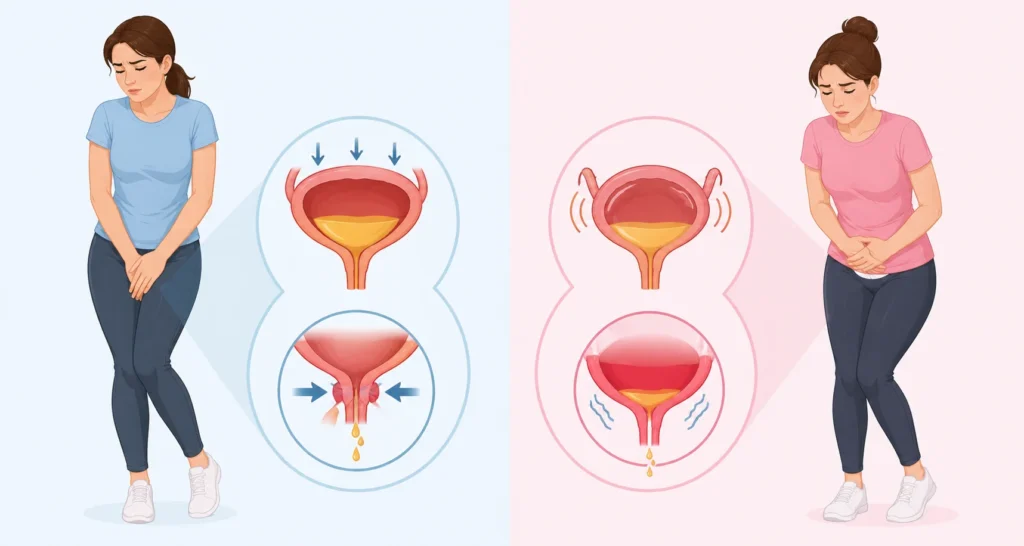
Most of the discussion about “Urine leakage during pregnancy second trimester” revolves around these two types of leakage. Identifying which type of problem is causing the problem can help clarify the treatment or care options — because the causes behind the two types are different, and the ways to deal with them are also completely different.
How to recognize stress incontinence
This type of leakage occurs due to physical stress. When the pressure inside the bladder suddenly increases, and the pelvic floor cannot hold that pressure, a small amount of urine leaks out.
This is the most common problem during pregnancy. For many women, it is first noticed at a certain moment – maybe while walking in the market, or while trying to pick up the baby. After such an incident, many people shy away from the subject, but it is so common that doctors hear the same complaint every day.
When walking or standing
Not only sneezing and coughing, but also standing for a long time or suddenly increasing your walking speed can cause leakage in some people. This shows how deep the weakness of your pelvic floor is, and sharing this information with your doctor makes it easier to get the right advice.
How to recognize urge incontinence
In this problem, the urge to urinate comes on suddenly, and some of it leaks out before it reaches the toilet. The bladder muscles then start to contract on their own, and the body cannot stop it. Physical stress is not the cause here; the real cause lies in the disruption in the signals in the nervous system.
Sometimes stress and this problem occur together, which doctors call mixed incontinence.The doctor usually asks when exactly the urine is leaking, and how much. There are additional symptoms that you want to know about, because your support is showing up to take a stand for you. In reality, it’s quite difficult for many people to tell you exactly from memory. A simple clue can be found here — keeping a gap for a few days, exactly where this discharge is occurring.In this way, instead of going to the doctor and guessing, if you can show the written information directly, the diagnosis of the disease is also much faster and more accurate.
It is important to understand the difference between urine and amniotic fluid

Many people have a fear in the second trimester—is it really urine or a sign of water breaking? This worry is not unfounded, because it is not always easy to understand the difference between the two.
Differentiating by color, smell, and quantity
Normal urine is usually light yellow in color, and has a familiar ammonia-like odor. Amniotic fluid looks completely different — clear or light straw-colored, almost odorless, and in some cases, it may even have a slightly sweet taste. The difference in quantity is also noticeable. Urine usually comes out in small amounts and then stops on its own, but once amniotic fluid starts to come out, it cannot be stopped in any way.
There is an easy way to understand the difference between the two. If you try to hold it in for a while when you urinate, the fluid will stop coming out, because it is a voluntary process of the body. In the case of amniotic fluid, this technique does not work, no matter how hard you try, the fluid keeps coming out, because the body has no conscious control over it. Many people use pantyliners for a few days to see what color the fluid is, what kind of stain it looks like when it dries — these small observations often help in making a decision.
When to worry
Urine leakage is usually a temporary side effect of pregnancy and resolves on its own after delivery. However, if you have any symptoms, it is important to talk to your doctor, and it is important for every pregnant woman to be aware of them.
Management and Daily Care
There is no magic solution to stop leakage completely, but some practices can make the situation much more bearable. The first thing that almost every doctor says when you ask for advice on “Urine leakage during pregnancy second trimester” is to start Kegel exercises. The reason is simple—this exercise directly strengthens the muscles of the pelvic floor. Contract the muscles as if you are holding urine while lying down, hold for three to five seconds, and then release completely—doing this simple exercise regularly can make a difference in a few weeks. Finding the right muscles can be a little difficult at first, so it is better to learn the correct method from a doctor or physiotherapist.
Pressing the wrong muscles reduces the effectiveness of the exercise, so it is wise to practice under someone’s supervision for the first few times. You can start with ten three times a day, and gradually increase the number as you get used to it. Many people give up after noticing any changes in the first two or three weeks, but consistency is the key—it is not possible to see results in a few days of practice.
Some small changes in diet can also help. Caffeine overstimulates the bladder, so reducing the amount of tea and coffee you drink can also reduce the frequency of urination. It is also good to limit spicy or acidic foods for the same reason, because they create additional irritation on the bladder wall.
Many people believe that drinking less water will reduce the problem, but in reality, the opposite is true. When the body is dehydrated, the bladder becomes more sensitive. So, there is no need to stop drinking water during the day, just drink a little less at night just before going to bed. If you drink water regularly during the rest of the day, the body stays healthy, and the bladder is also protected from unnecessary irritation. The same logic applies to carbonated drinks; it is better to avoid them as the gas in them can create additional pressure on the bladder. The habit of eating whole fruits instead of fruit juice also works here, because it fills the stomach and does not put additional pressure on the bladder.
There is a direct link to this problem with body weight. Being overweight increases the pressure on the bladder, so following the doctor’s advice and keeping your weight within a certain range during pregnancy can greatly reduce the severity of leakage. You also need to pay a little attention to your sitting or standing posture — sitting with your spine straight naturally reduces the pressure on the stomach. Making a habit of bending your knees instead of bending your waist when lifting heavy objects also helps to control the sudden pressure on your abdomen. Regular light walking keeps the blood circulation in the pelvic floor active, the benefits of which can be felt in the long term.
There is nothing to be ashamed of about using a pad — it is rather a practical way to continue your daily activities as normal. Putting a pad in your bag before going out can provide an extra sense of peace of mind, and that peace of mind often reduces unnecessary anxiety.
Conclusion
Urine leakage during the second trimester is nothing to be ashamed of, but rather a normal physiological reaction to pregnancy. As the uterus grows, there is additional pressure, and the way the pelvic floor relaxes under the influence of the moon — this is the main reason for the “glory level urine leakage in the second trimester”. No matter how much fear or embarrassment you have about this problem, the reality is that countless women’s group democracy appears in some way or another. Kegel exercises, small changes in diet and control can be managed.
However, if you feel blocked, if there is a lot of fluid coming out, you should oppose the excitement and general leak. It is a matter of expressing your desire to the doctor openly about these changes by keeping quiet so that you don’t get me. No matter how embarrassed you feel about talking about this journey, it is an everyday and very familiar thing for doctors. There is no need for this single fight, for me, even talking to me openly can be a big burden. This problem of childbirth is usually understood by yourself, and this small habit can make life easier in a few days.
Frequently Asked Questions (FAQ)
Question1 : How long does it take to see results from Kegel exercises?
Answer: If done regularly, you can usually see a difference within a few weeks, but consistency is the most important thing here.
Question 2: How do I tell the difference between urine and amniotic fluid?
Answer: It can be understood by the smell and consistency – urination stops and has an ammonia smell, amniotic fluid flows continuously and is almost odorless.