

Learn about “Emotional Changes in Pregnancy“ in simple terms, including causes, symptoms, ways to cope, and when to see a doctor, a complete guide for American mothers.
One day you are smiling, the next moment your eyes are watering. There is no reason, but you are still upset.
You are not alone in these feelings. During pregnancy, your mind also changes along with your body. Many mothers are initially afraid, wondering if this is happening to them, or if it happens to everyone.
In fact, “Emotional changes in pregnancy” are a very normal part of every pregnant mother’s life, although many hesitate to talk about it openly.
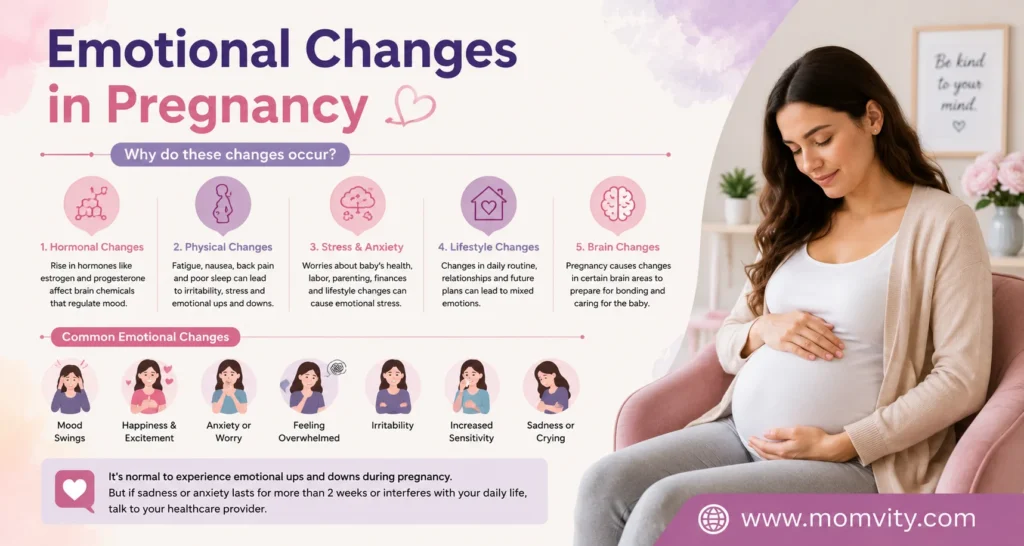
In America, mental health is now given equal importance during pregnancy as physical health. Doctors now ask about your blood pressure and weight as well as your mental state at every checkup, so they can learn about your current condition. Questions like how you sleep and whether you feel down for no reason have now become part of routine checkups. Years of research have shown that repressing the emotional stress of pregnancy can also affect the growth of your unborn child.
There is a sign to understand whether it is simple fatigue or something deeper. If you have no interest in small activities that you used to enjoy for two weeks in a row, then it can no longer be called just fatigue. Eyes can suddenly get wet at any very ordinary moment. You can’t sleep even after the night is late, and this can continue day after day. When such symptoms appear, it is not safe to ignore them as just a hormonal game. At this time, the best decision is to go to the doctor and tell him everything openly.
The first step to feeling better is to shake off the shame and talk honestly about your state of mind. Talking to people close to you regularly, taking walks, and maintaining a good sleep routine also help. Many clinics now also have a therapist referral system so that help can be obtained before the problem worsens.
What is the issue?
“Emotional changes in pregnancy” means the fluctuations in mental state during pregnancy. Sometimes joy, sometimes crying, sometimes unreasonable anger. It is not a disease, but a normal reaction to major changes inside the body. The brain and body are making room for a new guest together, and in this process the mind also responds in its own way.
What do these fluctuations in emotions look like
A mother may be cheerful in the morning, suddenly tearful in the afternoon, and feel very lonely in the evening. These changes can happen several times during the day, even within the same hour.
For some, it is mild, for others it is a little more intense. Every mother’s experience is different, so there is no need to compare your feelings with others, because each person’s unique situation is unique. It is not right to measure your feelings by the experience of a friend who had a calm pregnancy.
Is this normal or something to worry about
In most cases, this feeling of sadness is completely normal, and it will subside on its own over time. There is nothing to worry about. However, if this mood swing lasts for more than two weeks, then the matter needs to be looked at a little differently. There may be reluctance to do daily tasksBefore doing anything, you might think, what is the benefit of working so hard? Of course there is benefit.Yes, there is.This feeling of helplessness is different from ordinary fatigue.
It is important to understand this difference. If you ask for help in time, both the mother and the child will be better. Many times, the mother herself cannot understand whether her condition is normal or serious. In this place, the eyes of the people around her are more useful. If your husband, mother, sister, or anyone notices that she is not talking like before or is not interested in work, that observation can be the first clue to get help in time.
Why do these changes occur?

There are multiple reasons behind “Emotional changes in pregnancy”. Hormones are the biggest reason, but not the only reason. Lifestyle, environment and mental preparation also play a role here.
Role of hormones
During pregnancy, the levels of certain hormones in the body suddenly increase. These hormones are linked to the part of the brain that controls mood. So, feeling sad or having mood swings during this time is a natural result of these changes in the body.
As a result, feelings become intense even in small things. Much like mood changes before menstruation, but their levels are much higher and the duration is longer. These hormones fluctuate most rapidly in the first three months, so emotions are also most unstable during this time.
Accepting the new reality of life
Not only hormones, but also major changes in life affect the mind. Changing body shape, worries about future responsibilities, financial stress, uncertainty about what life will be like after having a child, lack of sleep, all combine to make the mind tired. When a mother becomes a mother for the first time, this pressure is felt even more, because every decision is new to her. Planning to take time off from work, preparing for the child, and even the fear of changing the relationship equation also work in the mind at this time.
Lack of sleep and physical fatigue
Repeatedly waking up at night, body discomfort, back pain, all these combine to reduce the quality of sleep. When sleep is poor, the brain finds it difficult to control emotions, as a result, reactions to even small things seem more intense.
Who is more likely to experience this?
Not all mothers have the same experience. In certain situations, “Emotional changes in pregnancy” can be more intense.
First-time mothers
Those who are pregnant for the first time are more likely to experience fear of the unknown. Questions like how the birth will be and whether they will be able to raise the child are on their minds. As a result, emotional fluctuations are also felt more. For many second- or third-time mothers, this uncertainty is somewhat less due to their experience.
Stressed mothers
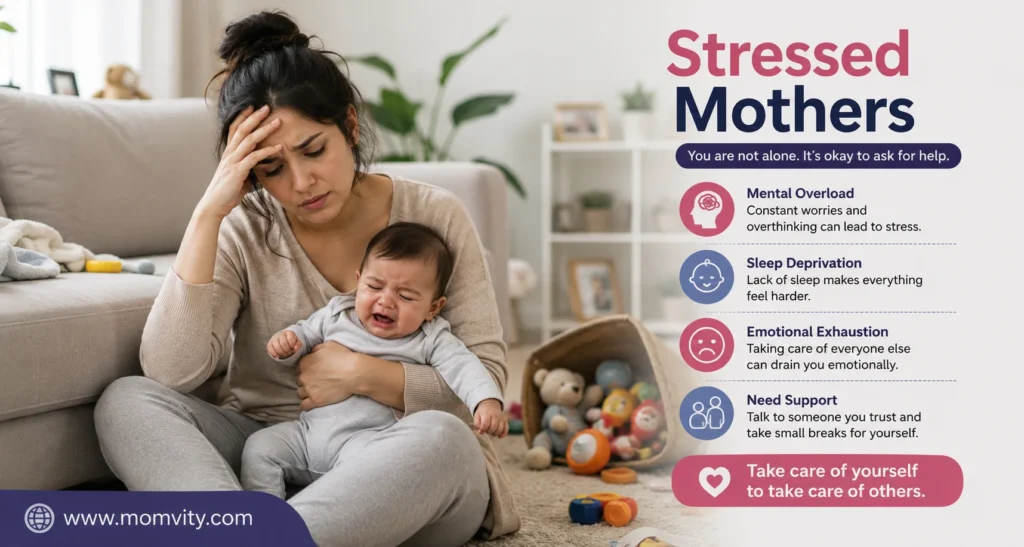
Those who have high pressure at work, strained relationships, or low family support, this change becomes more pronounced. Lack of social support directly affects their state of mind. For those who have few people to talk to, loneliness often increases the level of depression.
If you have a history of previous mental problems
If you have a history of depression or anxiety, you are more likely to experience this problem during pregnancy. In this case, it is better to inform the doctor from the beginning, so that help can be obtained quickly if needed. If you hide this information, it may become difficult to deal with the problem later.
Find out more here: Managing daily life as a mum-to-be
What are the symptoms that may appear?
To recognize “Emotional changes in pregnancy”, you need to know some common symptoms, so that you can understand your condition in time. Some symptoms are very mild, some are a little more obvious.
Everyday symptoms
Unexplained tears, getting angry over small things, sleeping less or more, losing or increasing appetite, and having difficulty maintaining attention are very common symptoms. Many times, you may feel like you don’t understand why you feel this way.
This is a normal reaction, nothing to be ashamed of or regret.Some people suddenly cry when remembering old memories, while others hesitate to make even small decisions.
When should you take it seriously
If you don’t feel like doing your daily tasks, feel different from everyone, or are always feeling hopeless about the future, then you need to see if it is not just a simple mood swing but is heading towards depression.
If you feel this way, don’t make the decision alone, but talk to your doctor, the doctor who sees you regularly.There is no reason to blame yourself, it is not a mental weakness, it is just a reaction of the body.
How to cope, step by step
You don’t need to do anything big to keep your mind healthy. Small habits help a lot in managing “Emotional changes in pregnancy”. Consistency works the most here.
Small changes in daily routine
Take a light walk every day, get enough sleep and eat nutritious food. If your body is healthy, your mind will also be much lighter.Take some time for yourself during the day, listening to your favorite songs or reading a book helps to keep your mind calm. Many studies have shown that sitting in the sun for a while in the morning also helps to keep your mood good.
Talking to people around you
There is no need to keep your feelings bottled up. You can share them with your husband, family, or close friends. Sometimes just talking can help. Many hospitals in America now offer prenatal counseling. You can also take that if you want.
Talking to other mothers who have gone through the same experience can be a great way to ease your mind. Joining a local parenting group can make this kind of connection easier.
Simple breathing exercises
A few minutes a day of slow breathing, sitting with your eyes closed, these simple practices also help to keep the mind calm. It does not take much time, but the results are good.
When is it necessary to see a doctor?
In some situations, “Emotional changes in pregnancy” become difficult to manage on your own. Then the best decision is to seek help from those who know or understand this matter. Delaying the problem can make it more complicated.
What symptoms to watch out for
If you experience these symptoms, such as persistent sadness, feeling worthless, not sleeping well, or having thoughts of harming yourself, see a doctor without delay. These are not normal mood swings, but signals that help is needed.
If someone in the family notices that the mother has become unusually quiet or does not want to talk to anyone, this should also be discussed.
What kind of help is available?
Most OB-GYNs in America now ask about mental health during prenatal checkups.If necessary, you may be referred to a therapist or counselor. In some cases, medication may also be needed. However, one thing to keep in mind here is that it is better to follow what the doctor says without making any decisions on your own.
Another thing to make sure of first is whether the medication is safe to take during pregnancy.
| Situation | What to do |
| Mild mood swings | Resting, talking to family |
| Frequent crying | Nutritious food, proper sleep |
| Feeling down for more than two weeks | Discussion with a doctor |
| Completely unable to work | Counseling or therapy |
| Thoughts of self-harm | Get emergency help immediately |
Consider the pros and cons
It is important to understand the positive aspects of emotional changes rather than just seeing them as problems. Every feeling has a purpose.
Positive aspects
These emotional fluctuations actually help the mother to connect deeply with her child. They teach her to value her own feelings and strengthen her relationship with her family. Many mothers say that they have learned a new thing about their inner strength during this time.
Potential disadvantages
However, if this change is not managed, then distance can arise in relationships, attention to work may decrease, and physical health may also be affected. Eating and sleeping disorders may also be involved.
Long-term effects
If timely care is not taken, this mental stress can remain even after delivery, which is called postpartum depression. Therefore, it is important to be aware of this issue during pregnancy, because if you are prepared in advance, the period after delivery will also be easier.
Common questions
Is it normal to cry suddenly during pregnancy?
Yes, it is due to hormonal changes and is normal for most mothers.
How long can this emotional change last?
It is usually more common in the first three months, but it can return at any time during pregnancy.
How can a husband or family help?
Listening patiently and helping with household chores are the biggest help.
Does it affect the baby?
Mild mood swings usually do not affect, but long-term stress can affect the baby’s growth.
Is it possible to fix it without medication?
In most cases, good results are obtained with lifestyle changes and counseling.
When should I consider it an emergency?
If you have thoughts of harming yourself or are unable to live a completely normal life, seek help immediately.
Conclusion
Feeling sad, crying for no reason, or getting angry during pregnancy are all normal parts of the “emotional changes of pregnancy”. There is nothing to be ashamed of. These feelings are just a reflection of the huge changes that are happening inside the body. Hormonal fluctuations are behind this.
The pressure of new responsibilities is added. Uncertainty about the future is also added. Almost every mother experiences these feelings in some way or the other.
The most important thing is not to deny your feelings. Talk openly with your family. Get enough rest. Do not hesitate to seek help from a doctor if you feel the need. Remember, if the mother is healthy, the child is healthy too.
You are not alone. Millions of mothers have gone through the same feelings on this path, and have given birth to their children healthily. Be a little gentle with yourself, give it time, and you will see that everything will gradually become easier.